Our young architect colleague Bavand Behpoor — whose graduation thesis was titled "Persian Aesthetics" — takes up an old debate in this article in a different way. We invite readers and specialists to participate in this discussion.
They say we Persians have a rich cultural heritage. O.k., I agree. But how can we put it into use? How would we ever dare bridge the gap between our present and our antiquated past? Antiquity-devotees would nod in sympathy: "you should drop the covering, the product, and hold on to the process. It's the Permanent Values of Traditional Architecture that you should resort and hang on to." O.k.! I'll try to learn the permanent values of our traditional architecture. But do I not need first to penetrate through the minds of our ancestors to understand their way of thinking and living? I personally believe we would feel rather disappointed if we did. We would feel exactly the same as we feel when we see a building restored with full awareness of its original mood: wasn't it more beautiful before restoration? Hadn't its weathering itself made it beautiful?
All the works of our forebears appear pleasant and gentle: Genghis Khan's sword in the museum is no longer terrifying; we find the pistols of those long ago interesting. They also seem flawless: the hand of time has wiped away their bad architectural works and only the most enduring ones remain. This is not the fate of architectural works alone — other arts share a similar destiny: clumsy "boudoir-painters" gather dust in the museum stores, while the houris glow in the display cases. One can add that an air of mystery always flutters above anything old: a grandfather's life — too simple, plain and tedious for him — is now the dreamed Kaaba of his grandchildren!
Today we need different products. The process of our art-making has changed; our values have not remained unchanged either. Have we taken refuge in the past simply because we are weary of the cold and hollow products of our own time? Or do we know what is "good" and yet not know what is "Persian"? Whatever was "good" and "scientific" in our past architecture has now become part of the global culture of architecture, since "good things" sooner or later go global. We may even have arrived too late to register the coin under our own name.
If we wished to behave like our ancestors, who used to take "good things" from others, we would still be at a loss as to how this "taking" should be — so as to look Persian. This is where I believe the value of "form" has been underestimated. I asked Edward Lucy-Smith why, despite the claim that modern art is universal, even Western modern art is in fact Western — what makes a modern French artwork French? In my opinion such a work is "modern" in content and "French" in form. It is not at all important whether the theme of a French work is French or not. Mostly, good themes are global rather than local. To consider a work French, its form must be a reflection of the French sense of beauty.
Most forms are local; the few global forms are countable on one hand, and pertain to the primitive necessities of the human soul. This is where I think the value of form has been underestimated. You will find no great work of art that has not grown on the soil of a mature national culture. In my view, what we really need is to formulate, for our own art, a "Persian aesthetics" rather than a "Persian world-view"; for the beautiful is beautiful in the context of its culture, while the world has its own objective standards. It is this Persian aesthetics and culture that draws us to itself, and as long as we understand it, that is itself the best proof that it exists and is alive.
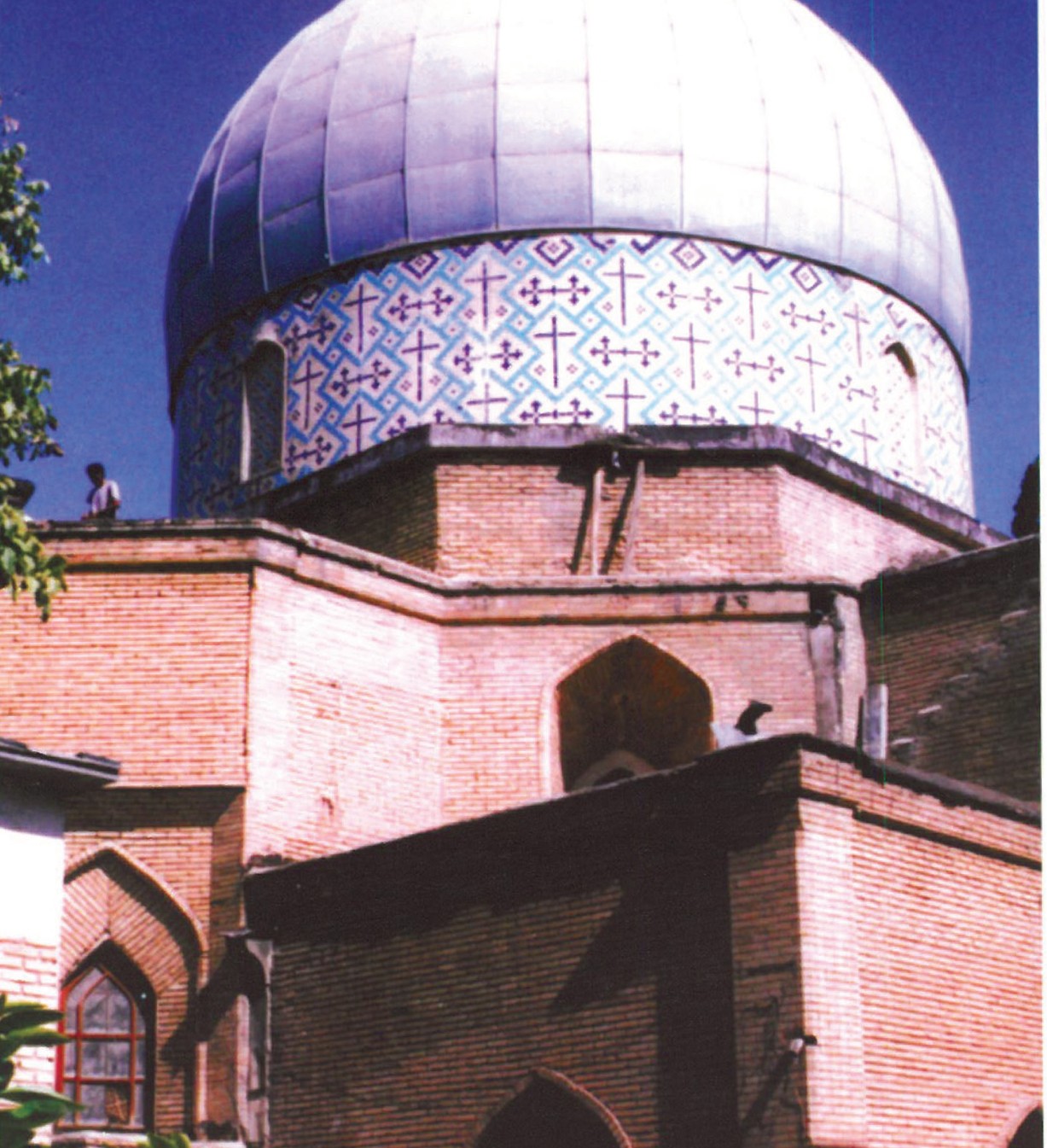
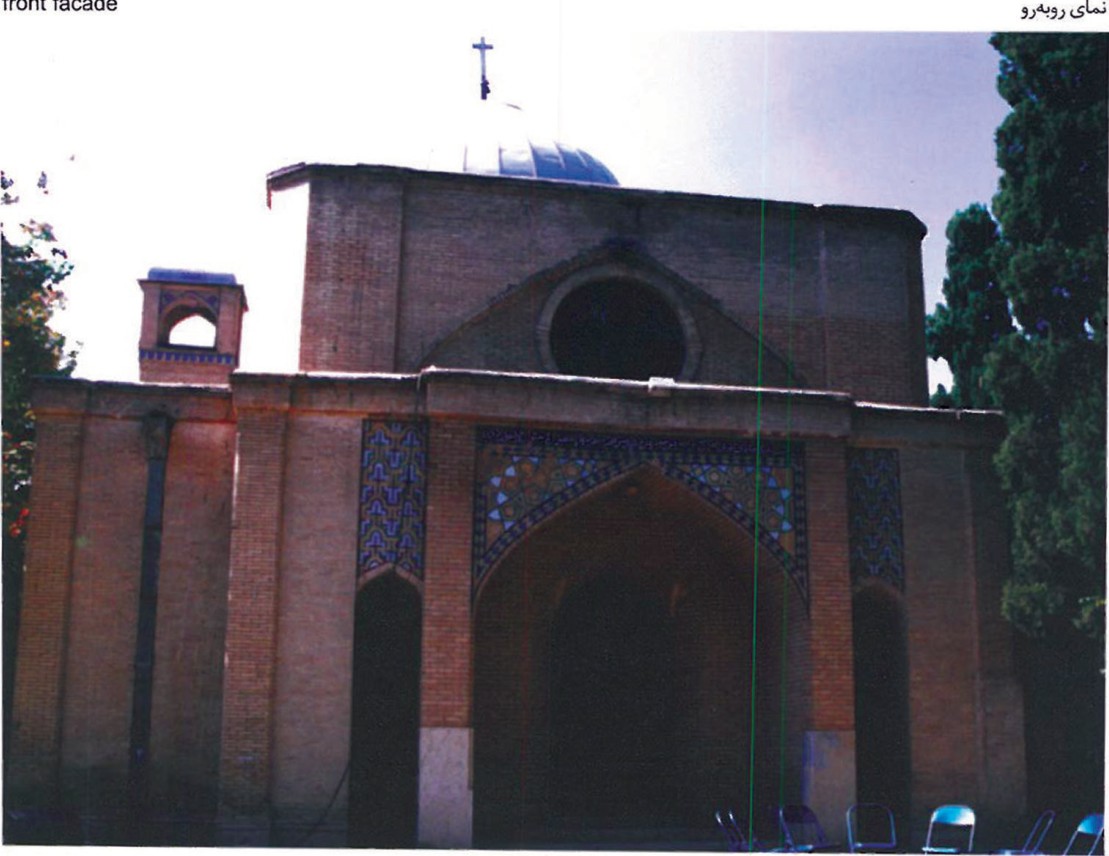
Here I introduce a building that may bring out the questions of this discussion more sharply. The building (whether instructive or cautionary) is not a brilliant work; but in some respects it is unique. I do not think we have many examples in which a foreign architect — using Persian traditional elements without the slightest interference in the spirit of the work — has created another traditional work, this time with completely European content: Zealous Simon's Church in Shiraz is such a building.
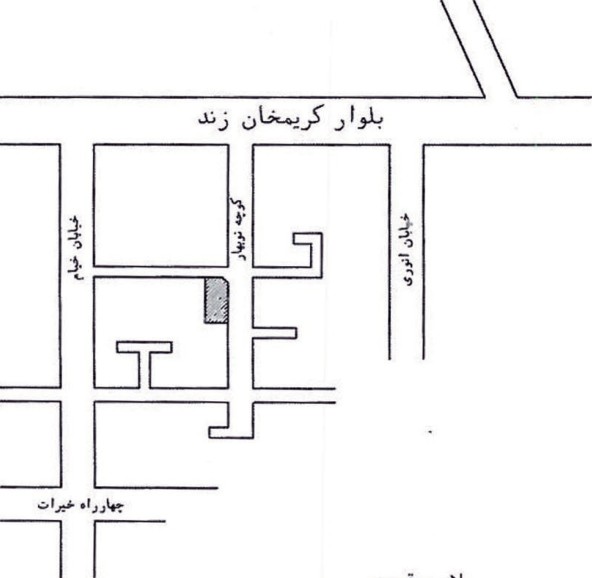
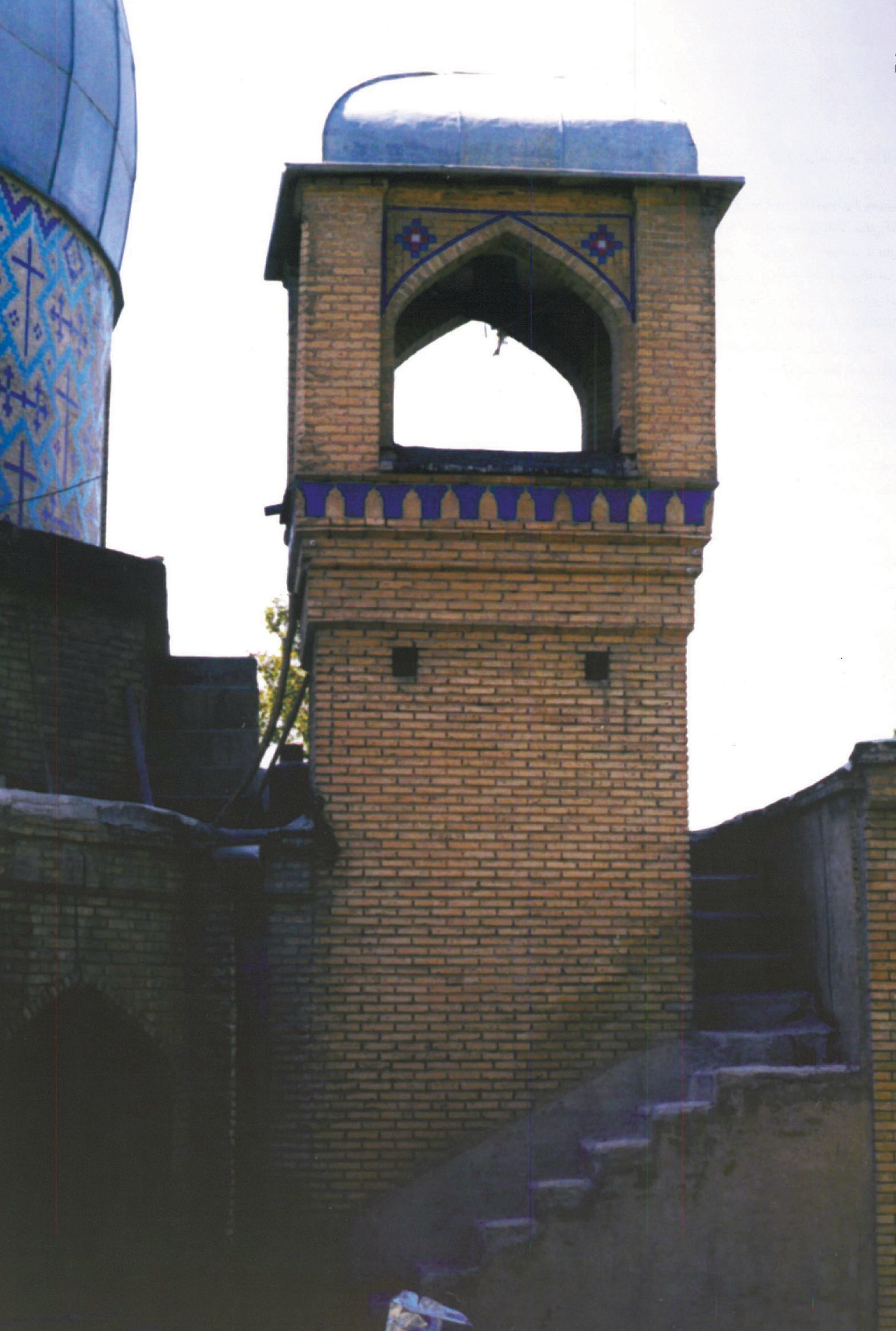
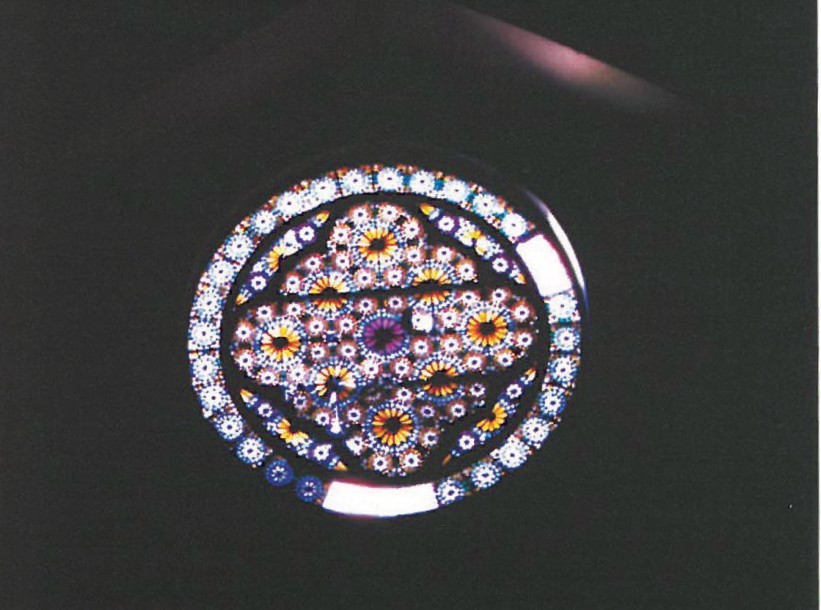
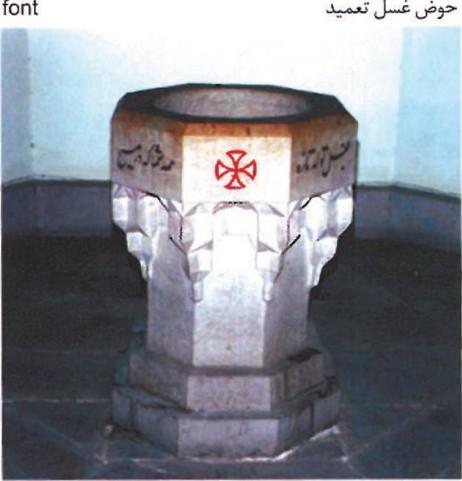
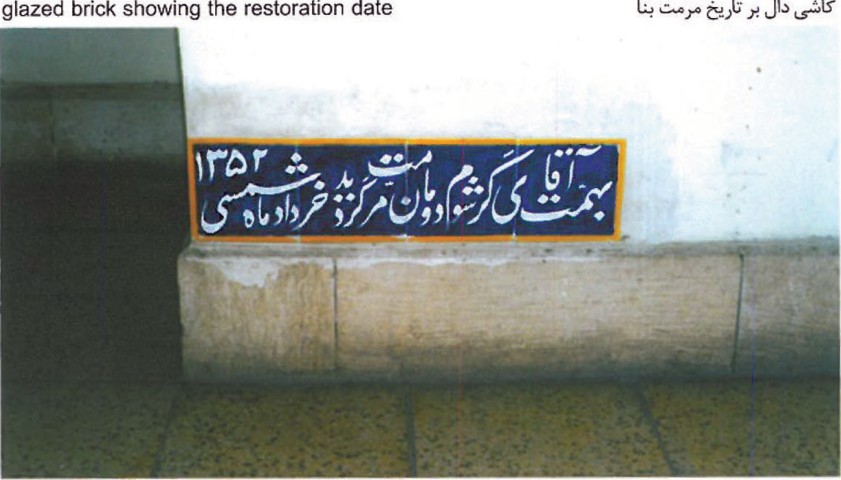
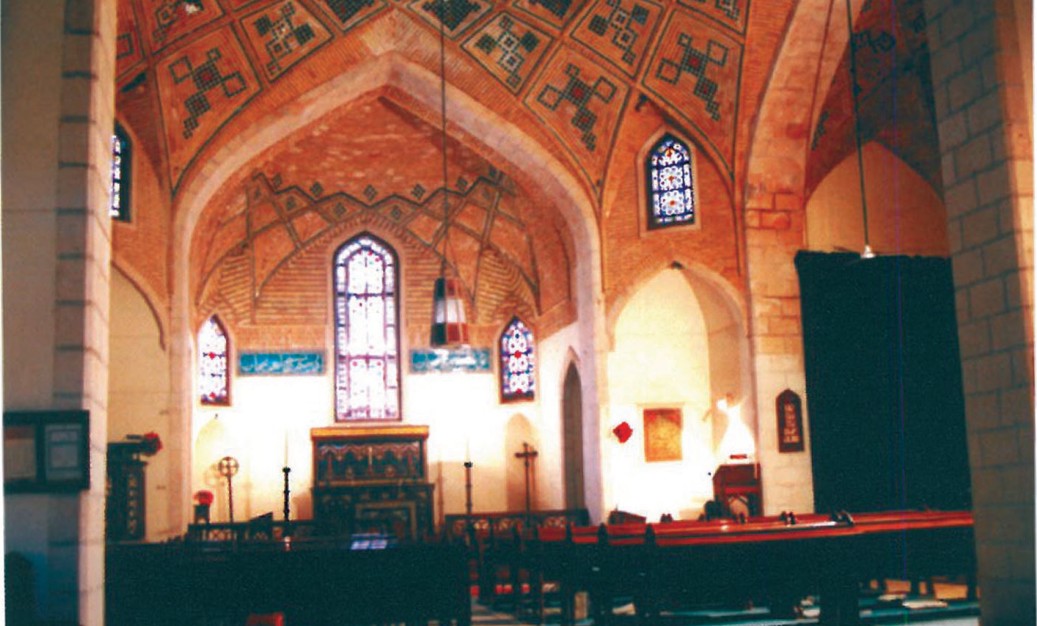
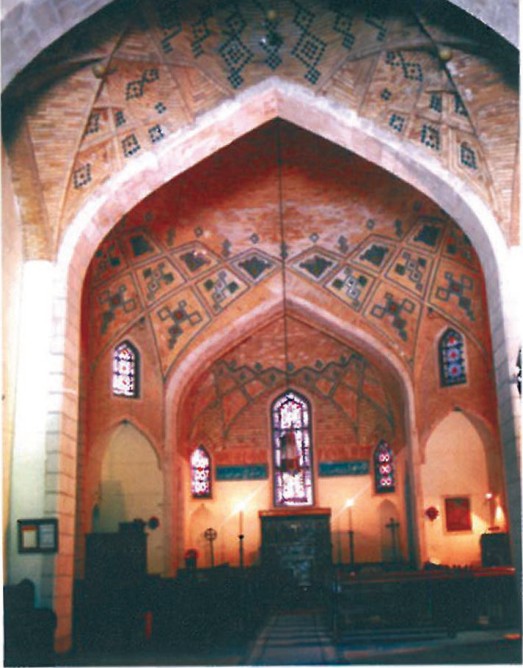
It is good to read first the architect's biography, as inscribed on the memorial plaque (image 12): "In memory of the late / Reverend Norman Sharp / b. 1896 — d. 1995 / a clergyman, an artist, and a lover of the literature and art of Iran / founder of this temple and the originator of its decoration and the patterns of its coloured windows / Cantab. lecturer in Old Persian, Pahlavi and Cuneiform scripts at Shiraz University / This panel was installed in 1996 thanks to his family and friends." As the word Cantab. in the English text indicates, Reverend Sharp was a graduate of Cambridge University. Another plaque at the foot of the wall records its restoration in Khordad 1352 SH (June 1973) by a wealthy person named Gershom Doman (image 12). According to a small information leaflet, the construction of this building took one year. Reverend Sharp also built another church in the city of Qalat near Shiraz, which is now ruined and abandoned. But this church — counted as an Anglican church — is still in use.
Of course, this building is not an example of Persian modernism, nor even a fully successful architectural work. But one can still learn an important point from it: as long as Persian aesthetics stands, content can be anything. Obviously this building is not a work of "Islamic architecture", but it presents itself perfectly as "Persian architecture". Just as Persian architecture builds caravansaries and mosques, bazaars and madrasas, and fire-temples — here it has also produced a church. The sash windows, made in Yazd, sit so naturally in its walls that one might think they had been there from the beginning!
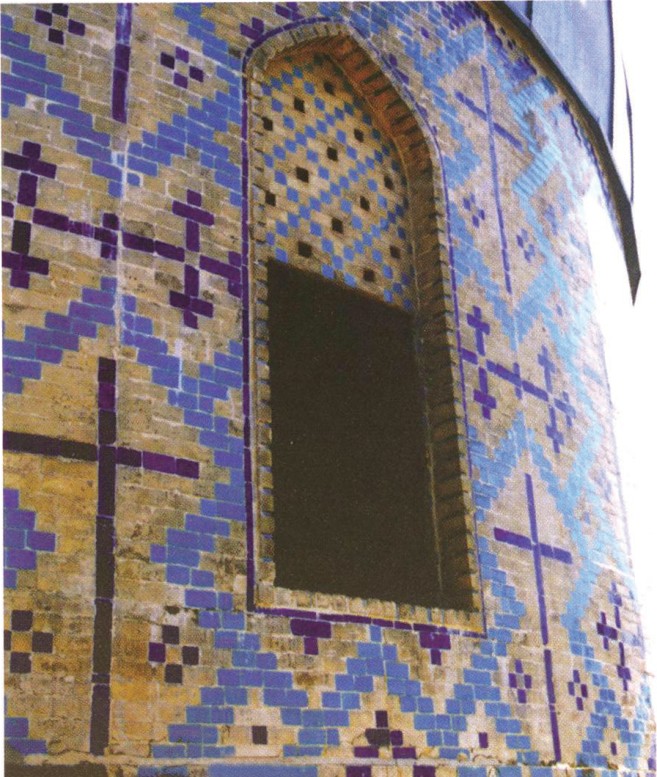
Although the whole building has been designed with a child-like delight, as if the architect wished to gather everything that is good in Persian architecture all in one place, the result has not turned out ridiculous or incongruous. The vaults carry no specific meaning; they just bear the load of the roof — and they are beautiful, absolutely beautiful. The sign of the cross goes so well with the arabesque patterns that the viewer at first glance does not recognise their utterly different origin. Persian architecture builds caravansaries and bazaars as well as mosques and madrasas (not forgetting fire temples and palaces); in this case it has created a church. The whole building is designed with a kind of childish delight, as if the architect intended to put together in one building whatever he found admirable in Persian architecture. The result, however, has in no way ended up in eccentricity or lack of harmony.
The building has not been designed by following a series of pre-arranged frameworks, neither by imitating construction processes, nor by mimicry of traditional values. It is just a new composition in the same aesthetic system. The subject of this building is a traditional one, but it could have easily been modern as well.
Edward Lucy-Smith, in a note for the Persian edition of his book, writes: "Previously, the prevailing view was that, although art is theoretically universal, only Westerners have the right — if they wish — to borrow from cultures other than their own; and that the use, by non-Westerners, of things drawn from the historical line of cultures, is a kind of fake use of things which only have value in their pure and original form. Picasso was not questioned for borrowing from the sculptures of African tribes; but when sculptors of those tribes took things from European culture, their works were condemned as weak and imitative. Now this fact is fully accepted that artistic forms…" — and on through the same line that Persian art too can stand in this trajectory.
Notes: 1- in the Q&A session after his lecture at the Faculty of Art and Architecture of Shiraz University; 2- I do not know how fair this is; 3- Edward Lucy-Smith, Concepts and Approaches in the Last Art Movements of the 20th Century, 1st ed., translated by Dr. Alireza Sami-Azar, Cultural Institute and Research-Press Nazar, Summer 1378 SH; 4- this state of affairs, which seems so natural to us, is in fact rather uncommon — only a handful of nations enjoy the gift of having an independent national culture beyond their indigenous one; 5- in our case, we have to decide what we claim for our own art; we differ entirely from the Europeans in what we know of our art; 6- the basis for this section is taken from research undertaken in cooperation with Roonak Ebrahimian and Khadijeh Mousavi, autumn 1378 SH; my thanks to them and to the priest of this church, Mr. Mahmoudian; 7- the Anglican Church (sometimes called the Church of England or the Episcopal Church); 8- evidence is the plaque the architect installed on the wall, a transcription of the inscription of Xerxes' palace at Persepolis: "Whatever has been done that is beautiful in the eye, with the help of God we have done." Reverend Sharp seems to have wished, by implication, to say that whatever appeared to him beautiful, in this building has been put to use.
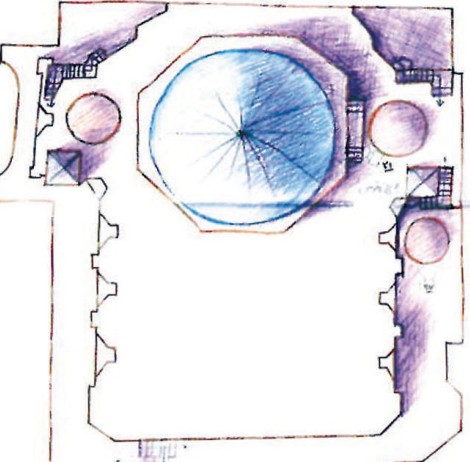
Captions: a view from the priest's house; baptismal font; rose window above the entrance door; site plan — Karim Khan Zand Boulevard, Khayyam Street, Nowbahar Alley, Anvari Street; front facade; entrance to the dome; baptismal font; glazed brick showing the restoration date; memorial stone slate; rose window; memorial plaque from the architect's family.



