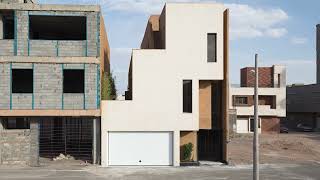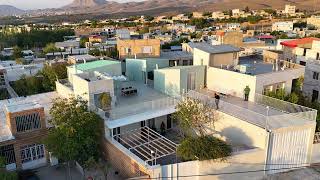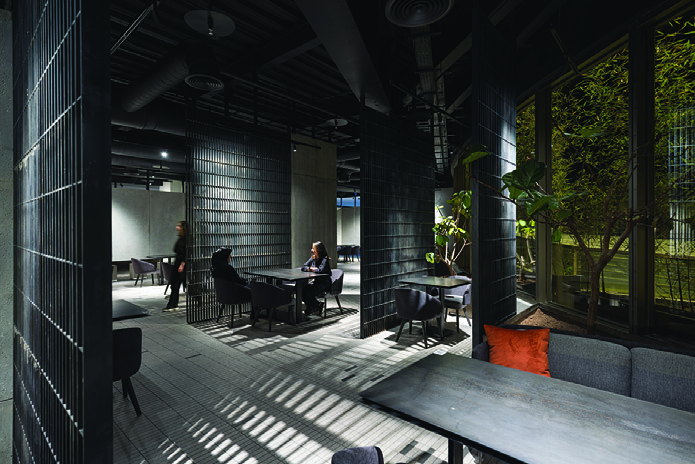
Our everyday Life-World is made up of concrete phenomena that we do not need to analyse to perceive: it consists of people, animals, flowers, trees and forests, stones, earth, wood and water, cities, streets and houses, doors, windows and furniture; it also consists of the sun, the moon and the stars, the drifting clouds, of night and day and of the changing seasons. And it takes in more intangible phenomena too, such as feelings. This is what is "given." This is the content of our existence. Or, to put it in Heidegger's words: "house, bridge, fountain, gate, jug, tree, fruit; at its best, column, tower." Everything else — atoms and molecules, numbers, data of every kind — are abstractions or instruments, devised to serve ends other than the ones they serve in everyday life. It is common today to confuse those instruments with reality.
The coherent things that found our given world are linked to each other in complex and sometimes conflicting ways. A given phenomenon, for instance, may contain other phenomena: the forest is made of trees, and the city is built of houses. Landscape is, in this way, a composite phenomenon. Broadly speaking, we can say that some phenomena constitute the environment of others. "Place" is a term for this state of affairs. It is, in fact, meaningless to imagine an event without reference to a location. Clearly, place is one of the integral components of existence.
Everyday experience tells us that a place is more than an abstract location. Every place is a total made of concrete things, carrying their substance, form, texture and colour. These things, together, define an environmental character — the gist of the place. Broadly, a place is as self-evident as a character or as an atmosphere. A place, therefore, is a total qualitative phenomenon; we cannot reduce it to any of its components — for instance to a spatial relation — without losing sight of its concrete nature.
In addition, everyday experience tells us that different activities require different environments if they are to happen in a convincing way. As a result, cities and houses are made up of a number of particular places. That reality is taken into account by the prevailing theories of planning and architecture, but the question has been handled in much too abstract a way. The occurrence of events has been perceived mainly in a functional, quantitative dimension, in measurements. But are uses shared, inter-human, everywhere? Clearly not. The same uses — even the most basic ones, such as sleeping and eating — happen in very different manners, and call for places with different characters and different environmental situations.
The character of placeEvery place has its own character. Place is a comprehensive giver of character to our lives. If one could say "we want to build a house here" — that is, in a city with a thousand years of history — one would understand that our life, under the weight of the place itself, would turn out entirely differently than it would have in a similar new town elsewhere in the world. Place, in this sense, is a "field of meaning" within whose frame every one of our acts and decisions occurs.
The idea of genius loci — the guardian spirit, the "gist of the place" — has come down to us from Roman antiquity. The Romans held that every independent thing had its own genius, its guardian god or protecting force, and that it is that force which gives it its independence. Places were no exception. On the basis of that belief, every place and every being reveals itself and makes life possible only through the recognition of its genius loci. In the whole, we can say that different places have different genii; that genius shows itself in the climate, in the landscape, in the form of the buildings, in the methods of construction, and in particular spaces.
To dwell in a place means to reconcile oneself with its character and genius. Every attempt at settlement and dwelling begins from there: from recognising and making recognisable that character, and from walking in its company. The human being learns to dwell in a founding act: by building a "set" of things that make the elements of that character apparent — that is, by building a building. Building, therefore, is a basic form of human presence. Building is both a technical skill and a kind of poetry: a poetry that translates geography, climate and culture into concrete form and so gives existence to a "place."
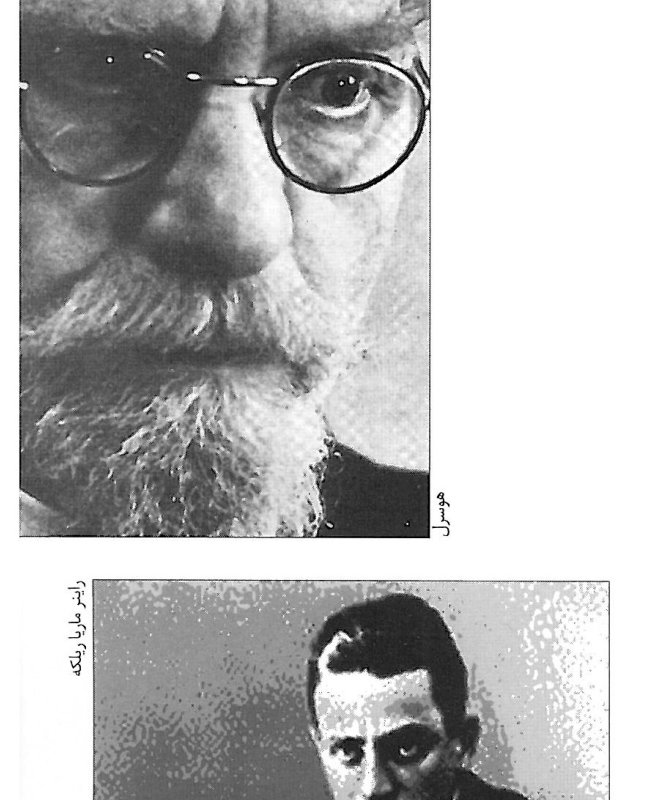
Building, Dwelling, ThinkingIn the broad argument Heidegger unfolds in "Building, Dwelling, Thinking" (Bauen, Wohnen, Denken), building and dwelling are inseparable. In order to dwell we must build; and in order to build we must first understand how we "belong to the earth." This "belonging" is the phenomenological dimension of dwelling itself. Heidegger speaks of the fourfold of earth, sky, mortals and divinities. Dwelling, for Heidegger, means keeping this fourfold in the unity that is shown forth in things and in places.
As a result, a place is a "concrete" phenomenon in the full sense of the word: particular, tangible, experiential, irreducible to more abstract notions. If we wish to speak about a place, we must speak of the particular things that make it up — of its substance, form, texture, colour and atmosphere. That does not mean that every place is unique and cannot be analysed; on the contrary, the classification of places and the recognition of their structure is both possible and necessary. But that classification must begin from a phenomenology of place, not from the abstract schemata of planning.
In the end, the aim of architecture is to give us a place — a place in which we can "dwell" in the Heideggerian sense of the word. This means that architecture has a task wider than the solving of functional problems and the meeting of needs of use: architecture must recognise the genius loci and remain faithful to it; it must disclose the character of a place and invite it to come into appearance. Without this recognition, architecture becomes an inventive but rootless instrument — a symptom of the very cultural fatigue we spoke of. With this recognition, however, architecture can return to being an art whose purpose is the keeping of "world."