The client had intended to sell the house and the land for this project, buy an apartment in Tehran, and move with his family to the capital. Alongside that intention to migrate, an idea took shape: to stay, and to build a lasting home — at a moment when the family's young son and adolescent daughter were both growing up. A home in which the family would live a different kind of life, where security and calm would be joined by a place for presence and the making of memory. The house had to become a reason to stay, and — set against the shortcomings of a small town on the periphery — had to carry qualities that would make living in it preferable to leaving.
What drew us deeper into the design process was the calm and the deep grasp of life the client carried, and the way his demands aligned with his way of living: simplicity at the height of dignity. The client's mental calm on one side, and the simplicity and slow rhythm of the urban setting of Pishva on the other, led us to a discovery in the making of space. In that mental-spatial discovery, both client and architects came into accord — the client tuning himself to the space of life, and we ourselves coming to know this building anew.
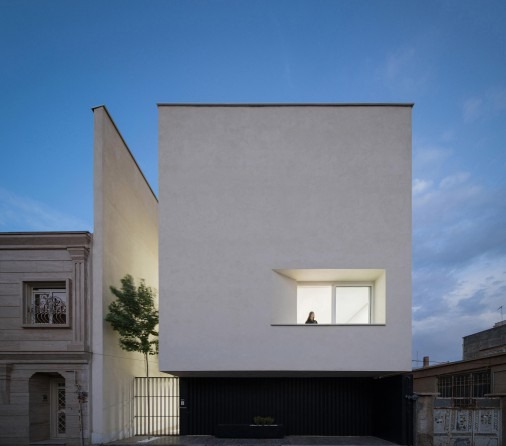
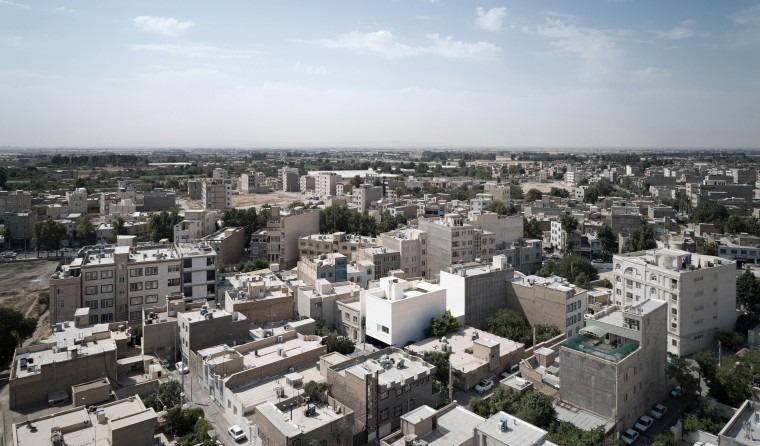
On a site and within a fabric where the absence of any ordering rule has produced disorder in the urban edge, we decided that while we would build a visually pleasing mass, we would not add to that disarray. The client's wish, too — respect for the neighbours and the preservation of the privacy of his own house — pushed the form toward a simple, inward-facing volume. Direct outward views were reduced to a single window, and by giving over a portion of the land and the view onto the entry courtyard to the alley, the highest respect for the neighbouring fabric was offered.
In this project, beyond the principal facades, we treated not only the temporary side facade but also the abandoned northern face of the southern neighbour with the same care. All facades were finished in white cement, and — because of budget constraints — the final colour coat was deferred to a later stage.
Pishva House has reached beyond a response to the client's demands; with its quiet dignity it has become a turning point for its setting, giving that setting a worth of its own.
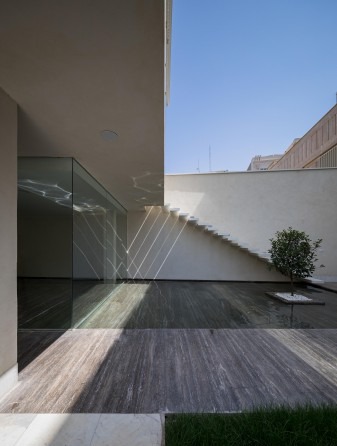
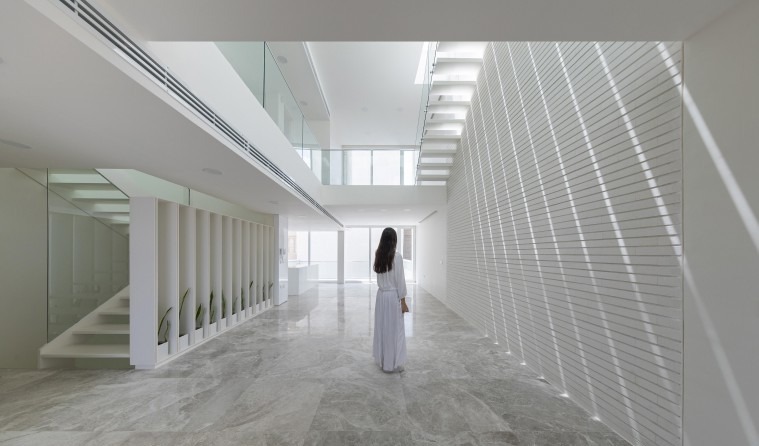
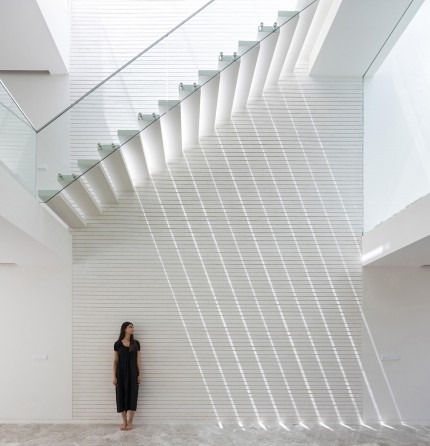
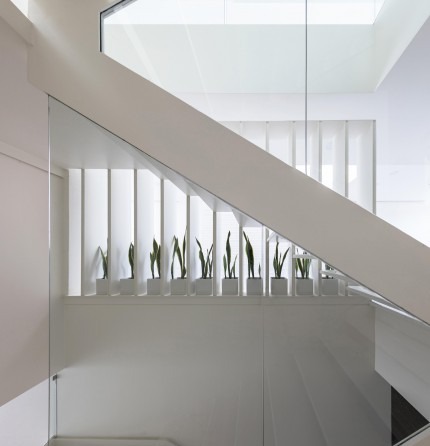
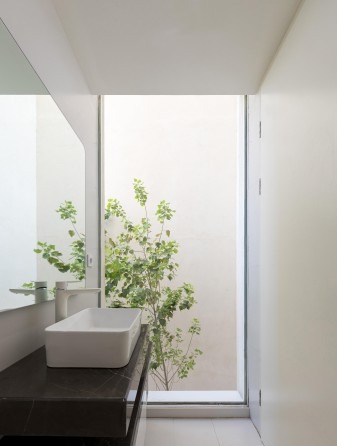
The gap between the new mass and the eastern wall — which we call this house's alley — beyond resolving the skew of the land in plan, made it possible for even spaces such as the bathroom and the WC, through their full-height windows, to draw in the greatest natural light and a view of the entry trees without being overlooked by the neighbours. The ground-floor courtyard, with its pool and lawn, became a quiet, calming vista; the roof, sheltered by the privacy of its tall parapets, became a functional courtyard for the house — and for that reason the elevator carries up to the roof, and the access stair to the roof takes on a special importance at the centre of the interior. The central skylight, beyond bringing light and fresh air to the younger child's room, joins the roof-stair skylight to add to the quality and quantity of natural light in the shared spaces; so that across the hours of the day, ever-changing light and shadows appear in the house.