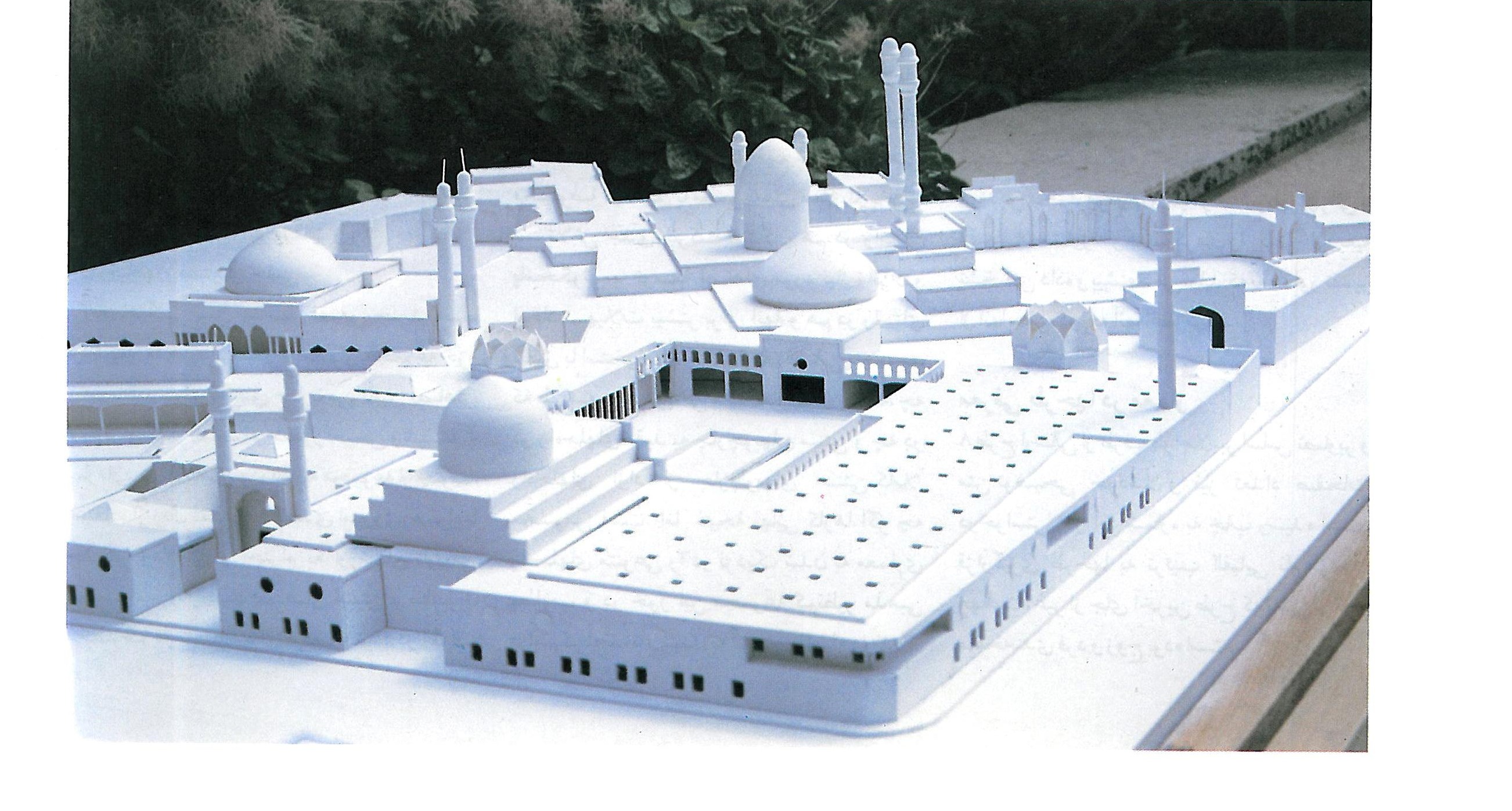
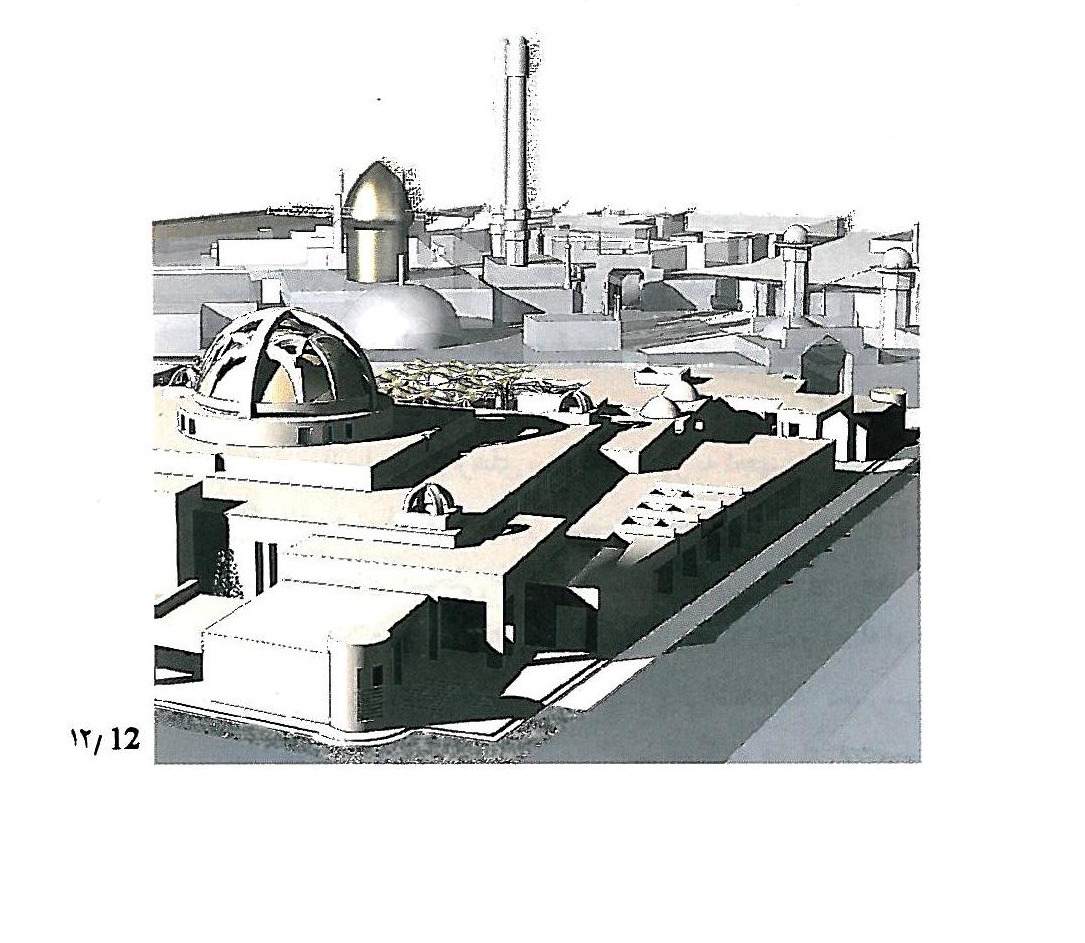
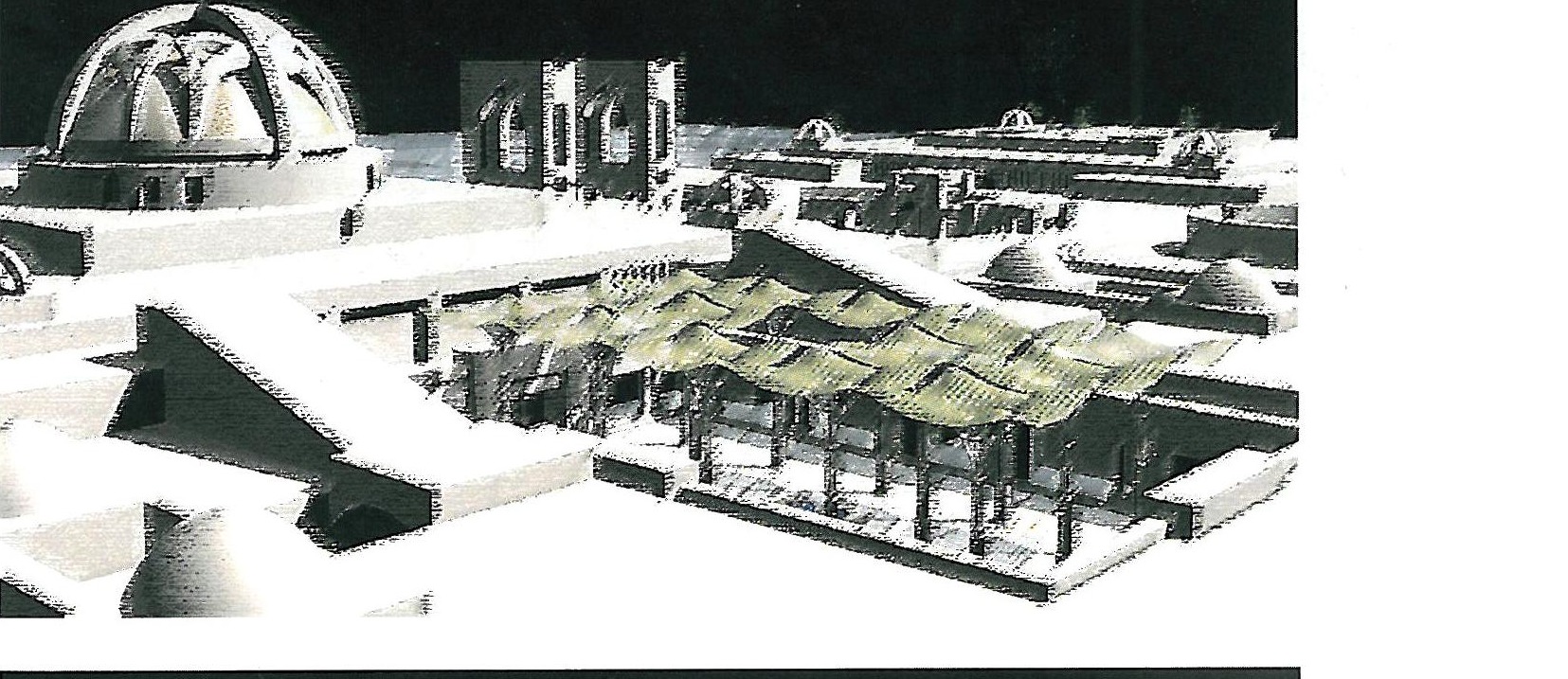
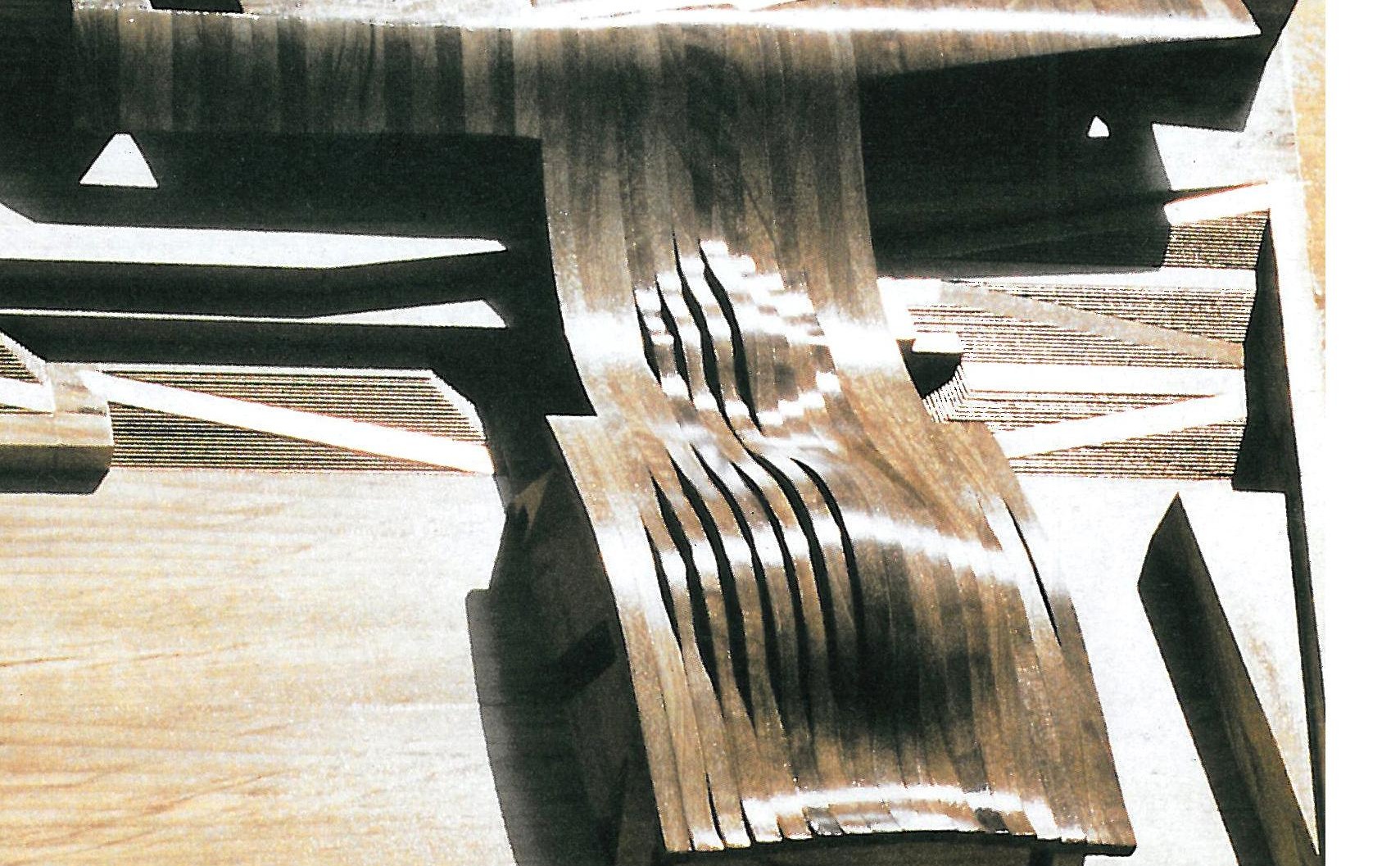
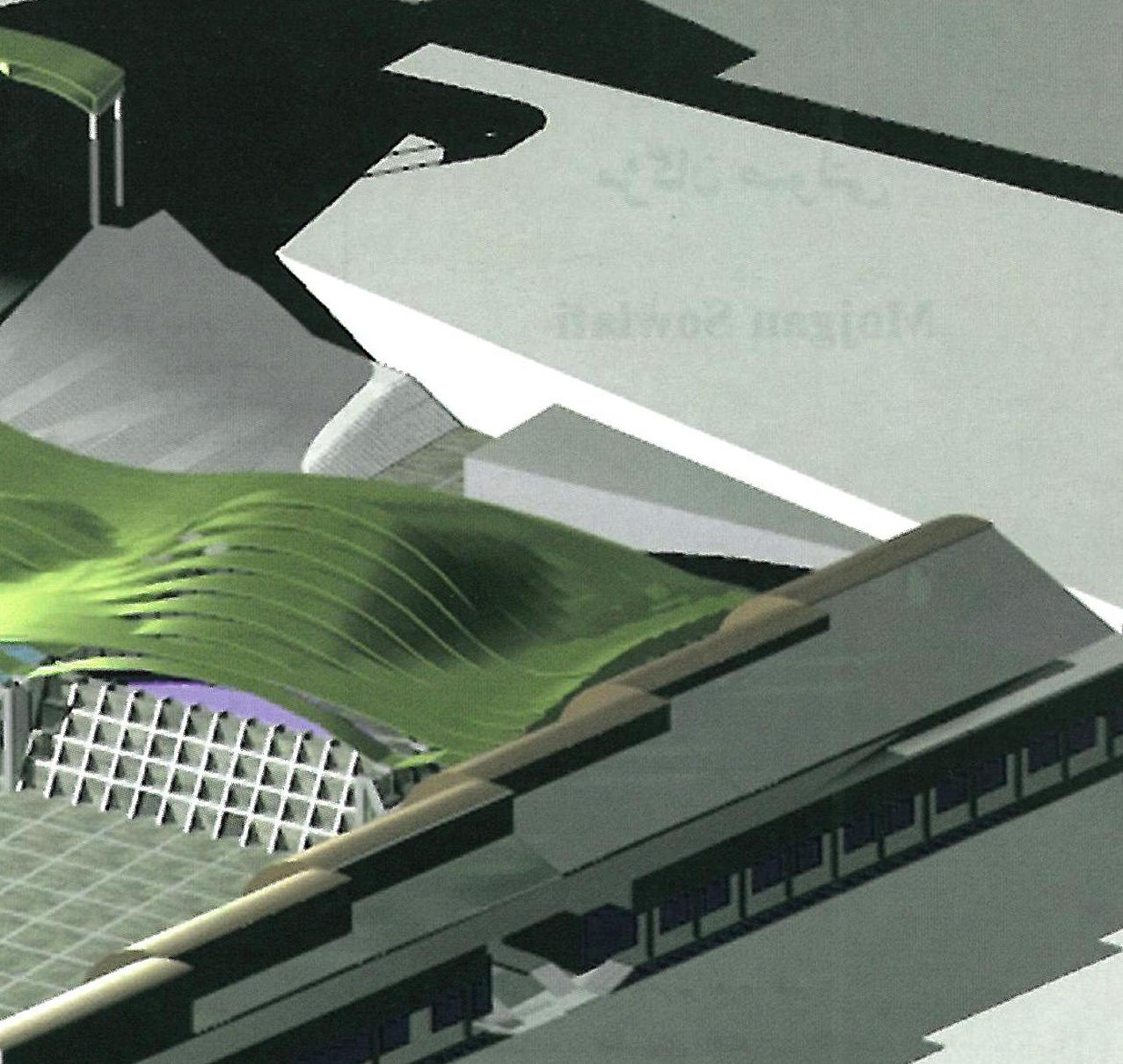
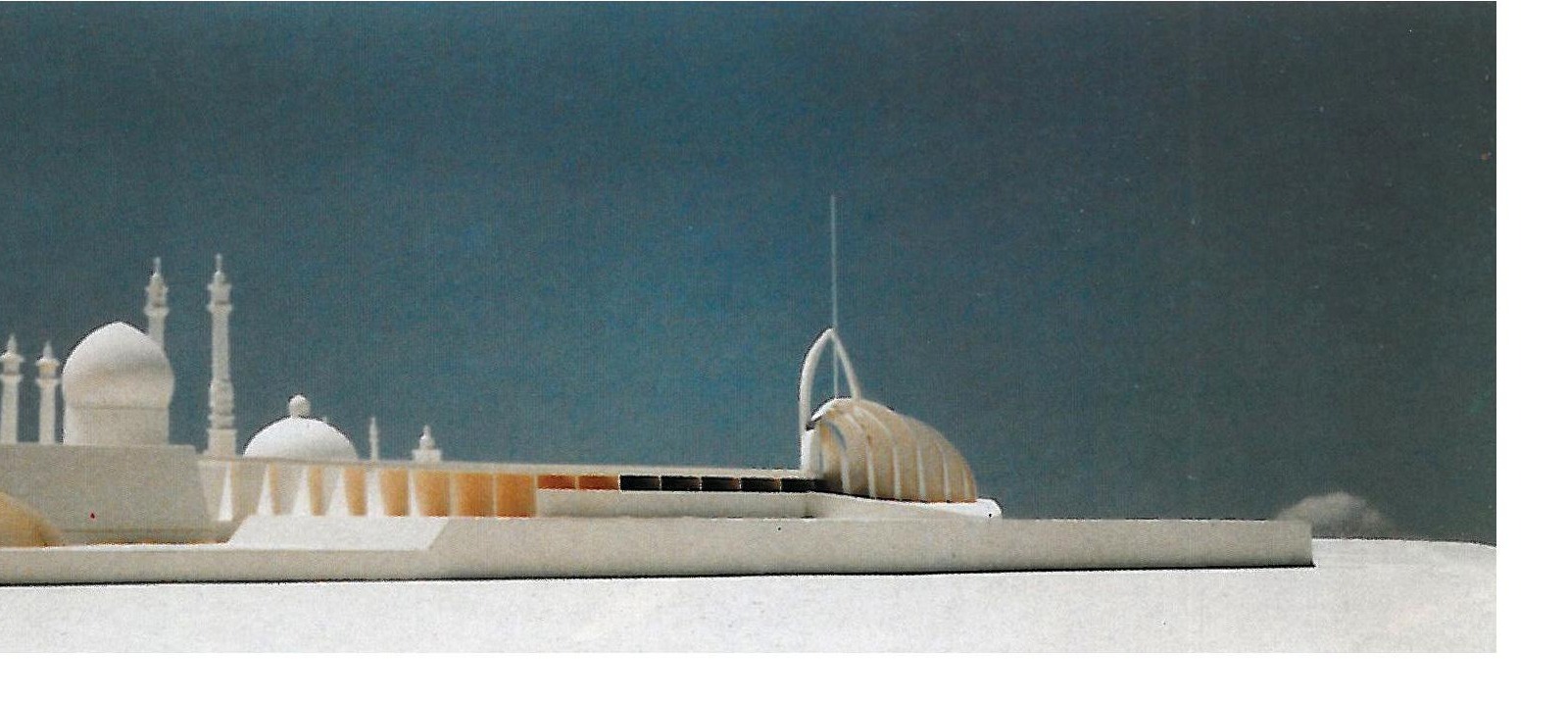
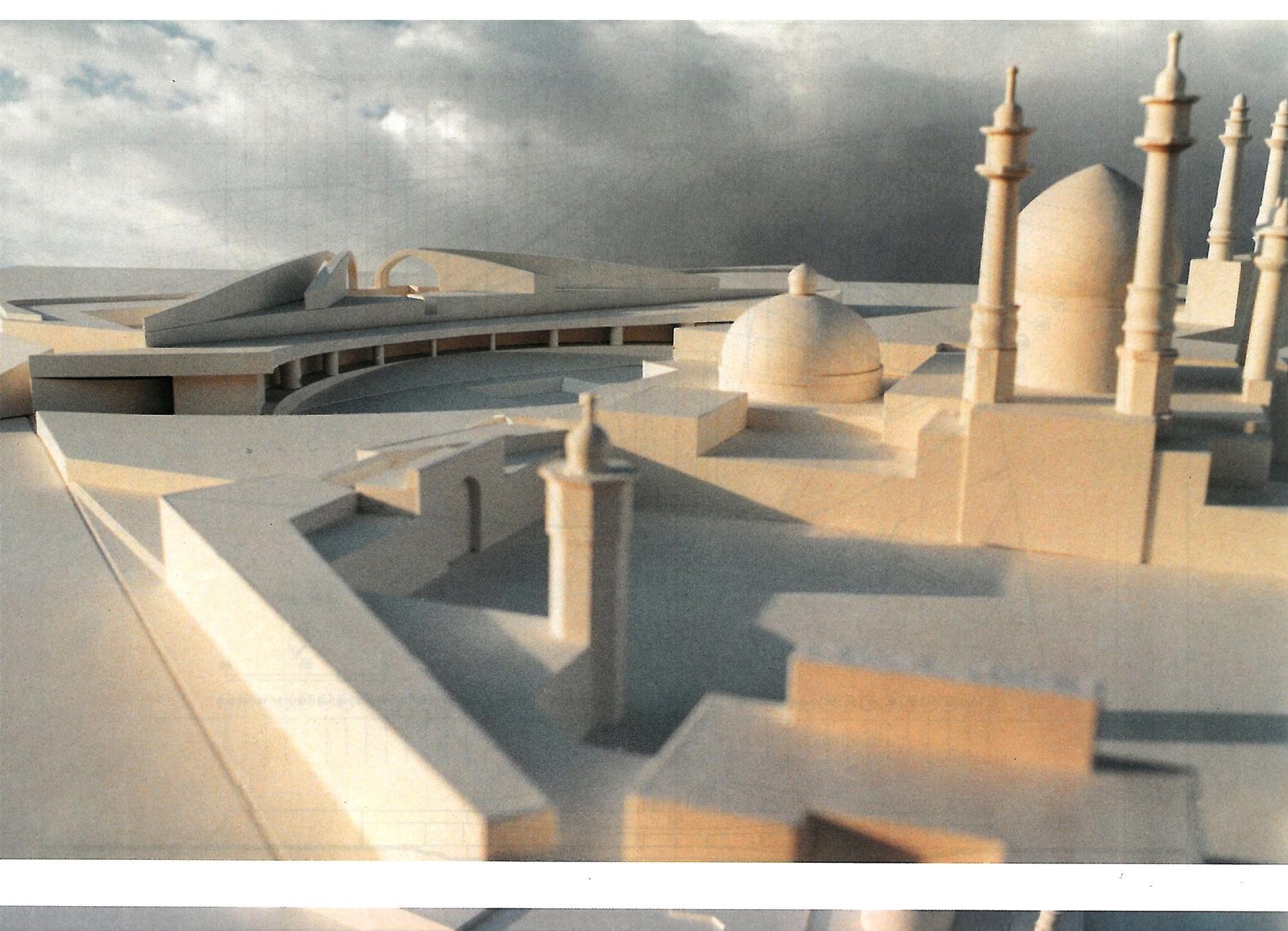
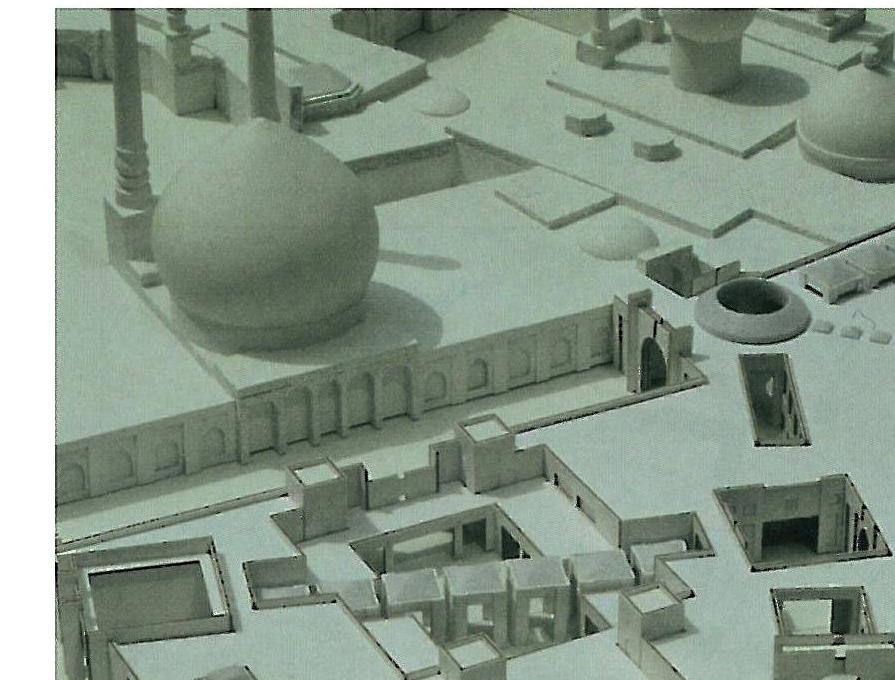
On 16 August 1999 the Execution Organisation of Government and Public Buildings and Facilities of the Ministry of Housing and Urban Development announced a limited competition for the southern extension of the Hazrat Masoumeh Shrine in Qom, within a plot of some 19,000 sq. m.
The programme, drawn up within the overall scheme for the rehabilitation and renovation of the areas surrounding the Shrine and the centre of Qom, called for:
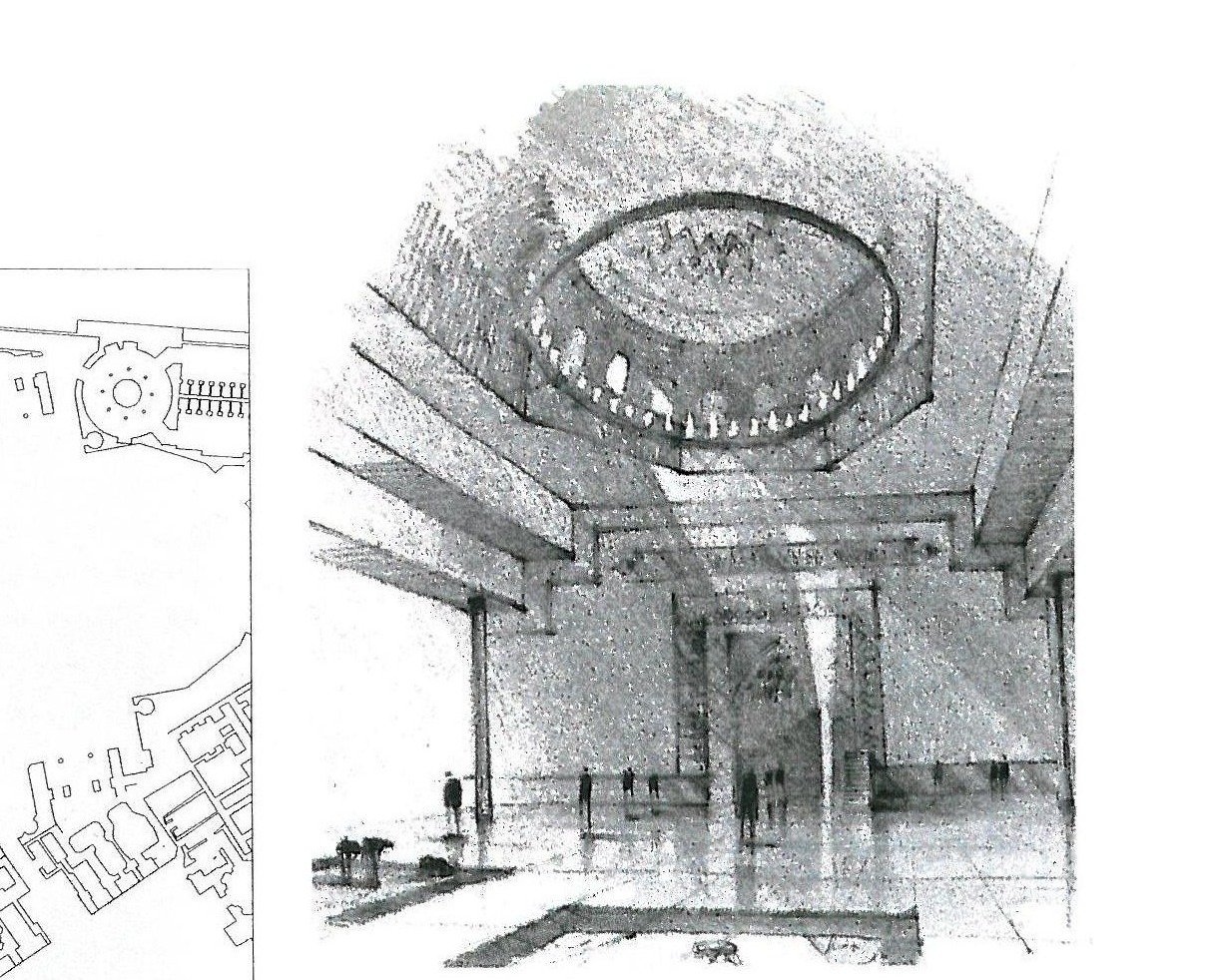
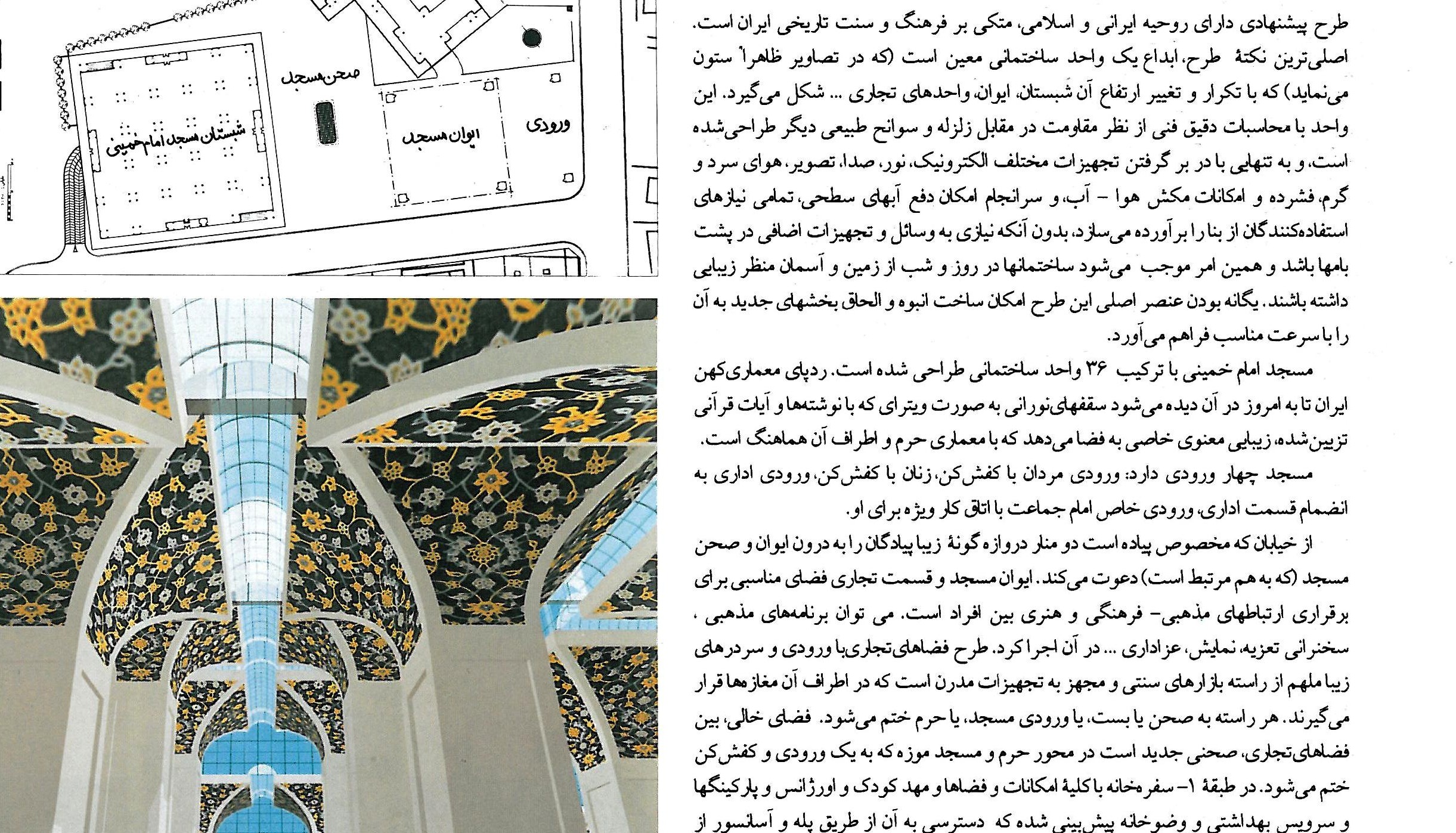
- a great mosque — the Imam Khomeini Mosque — including prayer halls, porticoes and a main courtyard (about 5,000 sq. m);
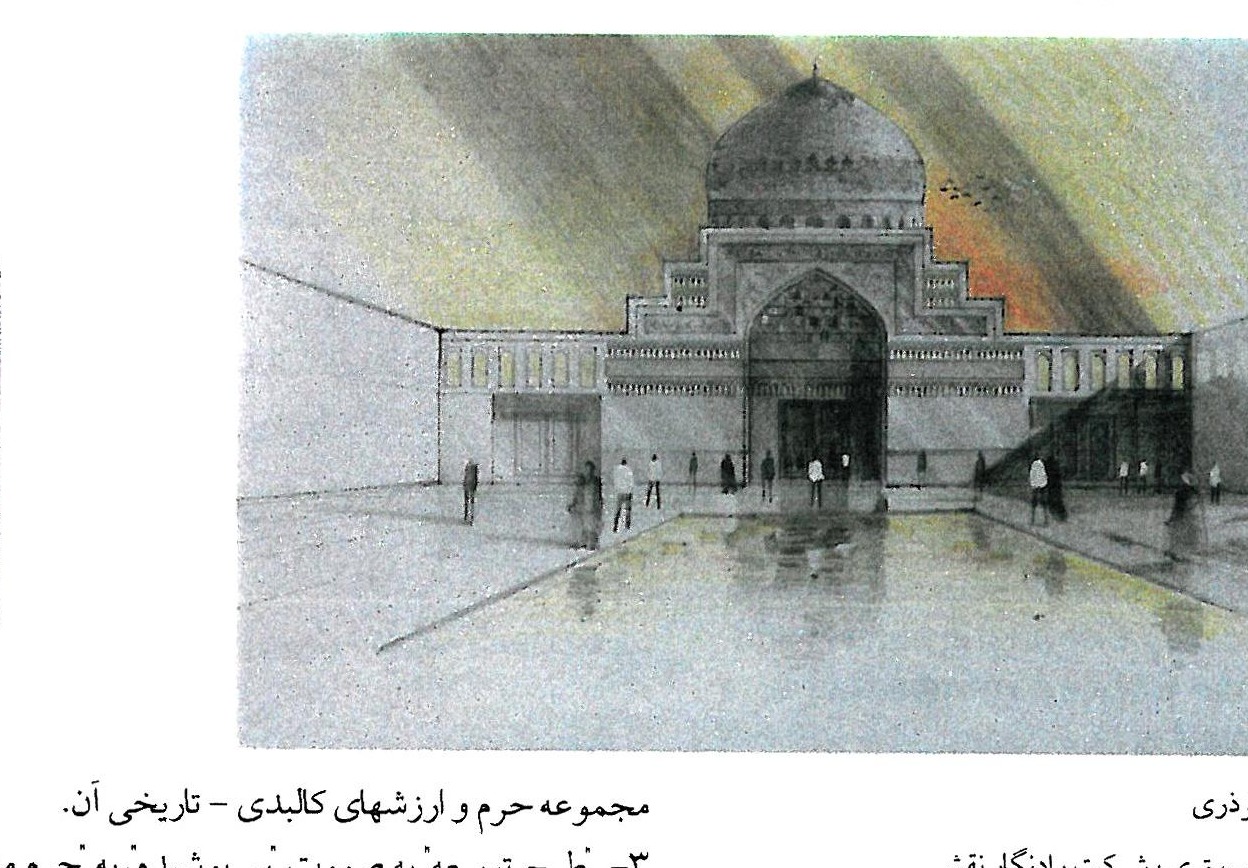
- the southern entrance to the Shrine and associated spaces connecting with the mosque;
- chambers, porticoes and special spaces for pilgrims, connected to the Shrine;
- the Hazrati refectory with its annexes and services (500 diners per sitting, kitchens and services for 200, about 2,000 sq. m in total);
- WCs and ablution halls in three positions relative to the three streets (about 600 sq. m, preferably in the first basement);
- an outpatient and emergency clinic (about 200 sq. m);
- a kindergarten and short-stay child-care space (300 sq. m);
- commercial units to replace the existing shops in the area (about 2,500 sq. m, preferably along Bahar Boulevard, Eram Street and the newly created street);
- parking (for about 400 vehicles, 10,100 sq. m in the basement levels);
- courtyards and associated spaces.
The spatial/physical objectives stated in the brief were: coherence between the new spatial elements and the religious, cultural, spiritual and historical values of the Shrine; the provision of thresholds (bast) and places of presence (courtyards and prayer halls); the organisation of the southern entrances to the complex; the use of a contemporary spatial and physical language with the greatest loyalty and respect towards the historical values of the ensemble; and the creation of safe, pleasant spaces — especially for summer — for rest and movement around the Shrine.
By the extended deadline of 6 October 1999, fourteen entries had been submitted.
The Jury
The jury — Hossein Sheikhzeinedin, Seyed Reza Hashemi, Dr Seyed Mehdi Mojabi, Dr Ali Ghaffari, Dr Pirouz Hanachi, and Hamidreza Sepehri, chaired by Seraj-e-din Kazerouni — met over two sessions on 7 and 11 November 1999 to review and judge the schemes.
In the jury's view the organisation of the competition — the clarity of the brief, the provision of adequate documents and the answering of the entrants' questions — was at such a level that, overall, the entrants did their best to understand the problem and to respond to the competition's needs. The jury commended both the running of the competition and the entrants' effort.
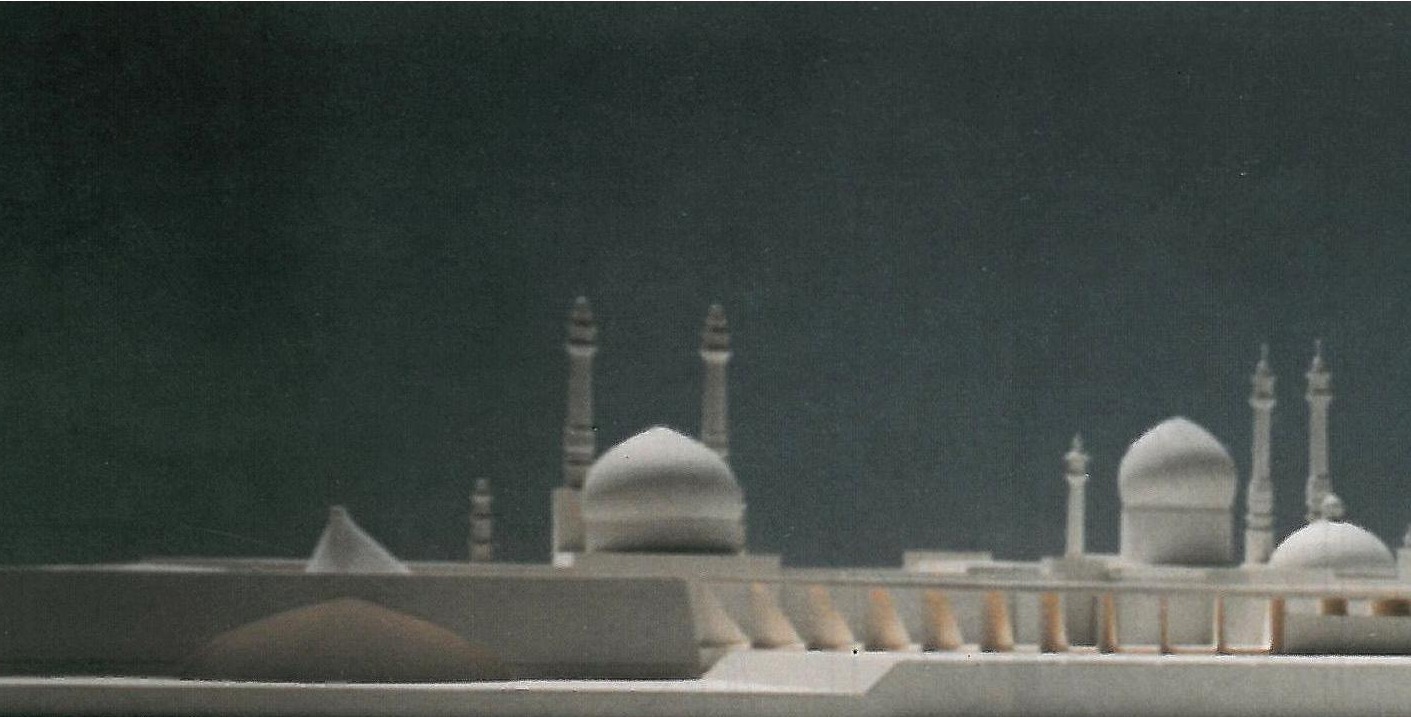
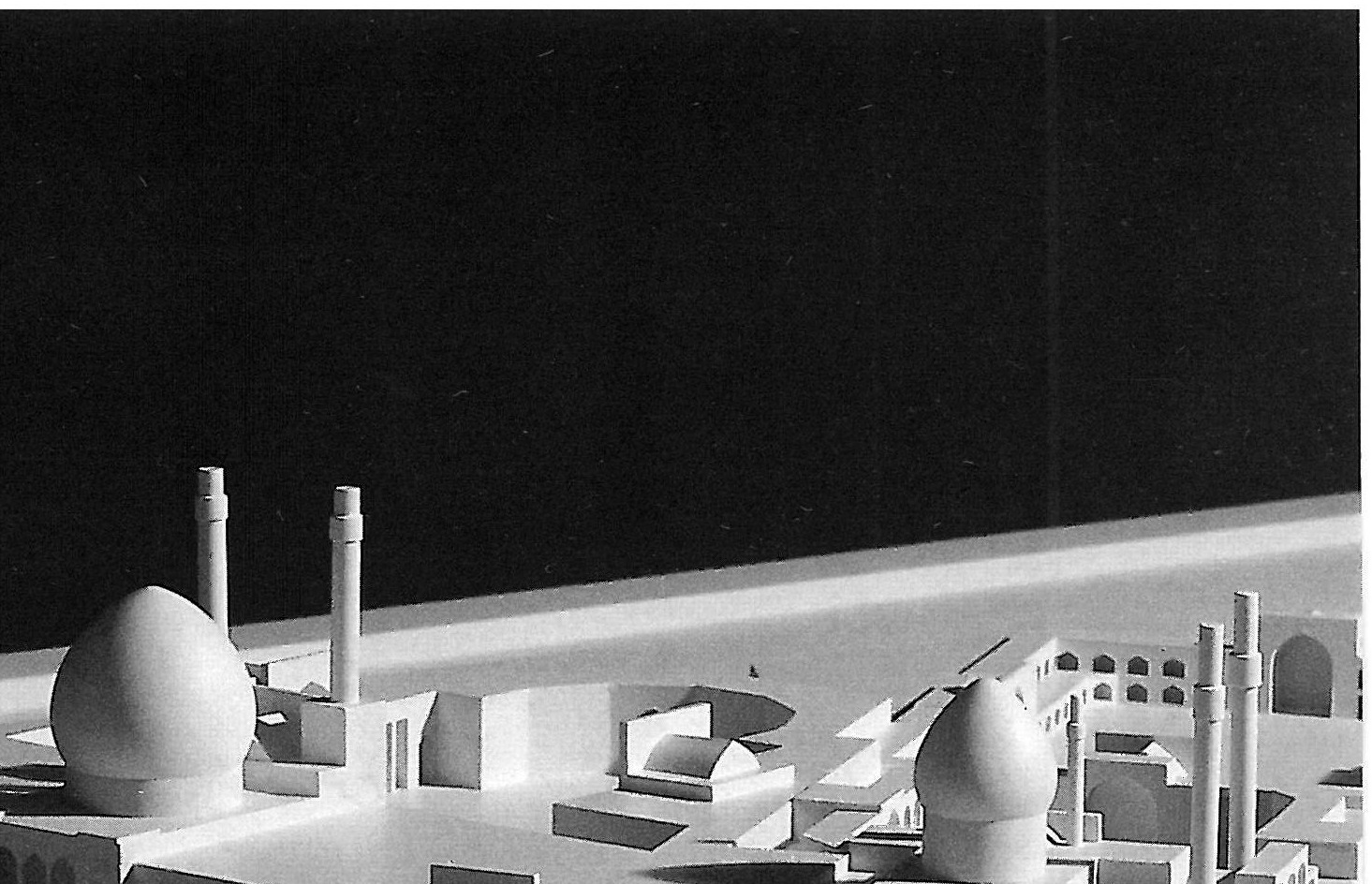
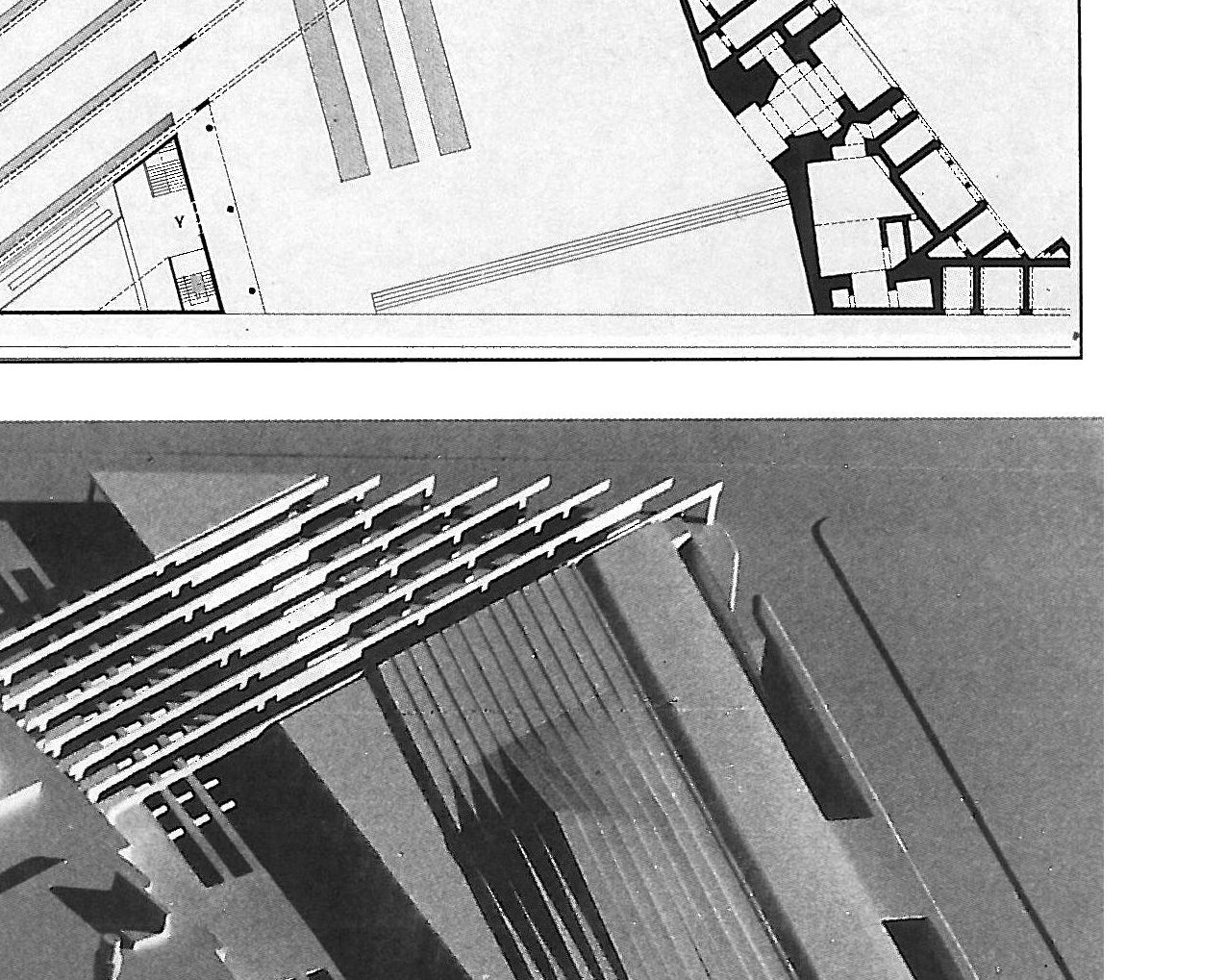
Of the fourteen schemes, the jury singled out two for a joint second prize (no first prize was given): one by Mohammad Abouzari and Seyed Reza Sharifi Tehrani, the other by Bam Citadel of Kerman Consulting Engineers. Although the entries offered a variety of approaches to an architecture worthy of this rare religious ensemble, the final results still stood some distance from the architecture being sought.
Eight schemes are presented here, in the Persian alphabetical order of the designers' names.