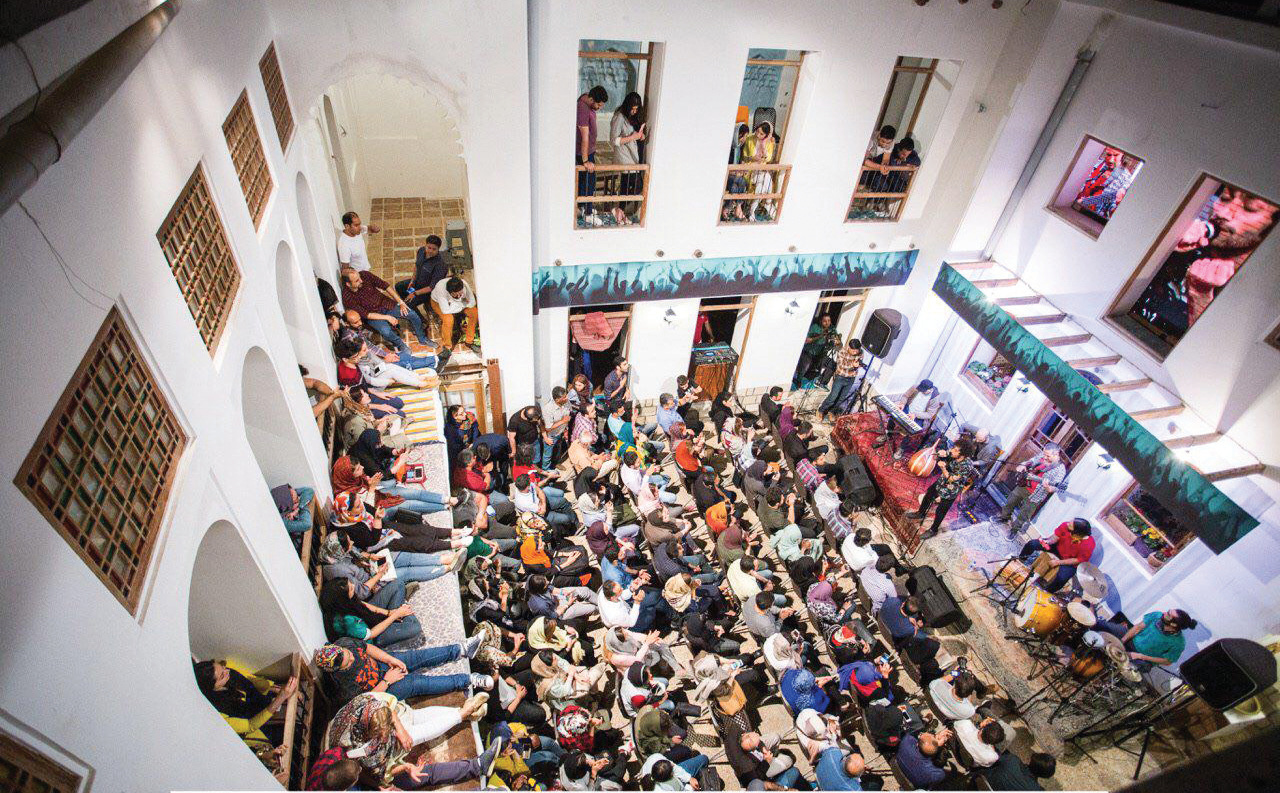
Khayyam-recitation — or "Khayyami" — is a rare cultural phenomenon in Iran, unique to Bushehr. While Shahnameh recitation has been common throughout the land of Iran, Bushehr, for its own reasons, has taken the path of Khayyam. In a land where the unit of cultural history is the millennium, in a city that is essentially three centuries old, Khayyam-recitation is a relatively new cultural phenomenon.
Acceptance, tolerance, taking life simply, skepticism toward phenomena, the slow rhythm of work and life, good cheer, heat and humidity, the sea, and a love of culture and art — all these have drawn the people of Bushehr to the quatrains of Khayyam. This affection has been such that, in an abstract gesture, the people of Bushehr have invited Khayyam to leave Neyshabur and come settle in their port. Thus, "Khayyam" has become the first honorary citizen of Bushehr's culture.
The Khayyami musical style is simple yet captivating. In fact, "Khayyami" has achieved a balanced synthesis through the simple form and the philosophy embedded in Khayyam's poems, and has come to carry part of the social discourse and way of life of the people of Bushehr. "Khayyami" has become a musical style unique to this region through several characteristics: the city lacked a public sphere for recreation, and the heat and humidity compounded the problem, driving people to seek refuge in their homes and private spaces. Musical instruments were also not widespread in homes of old, nor did people regard music with great reverence. Khayyami in fact took shape with just a double-reed pipe or a flute — a simple instrument — and the hand-clapping of those present, requiring little expense. Indeed, this music could be performed even without instruments.
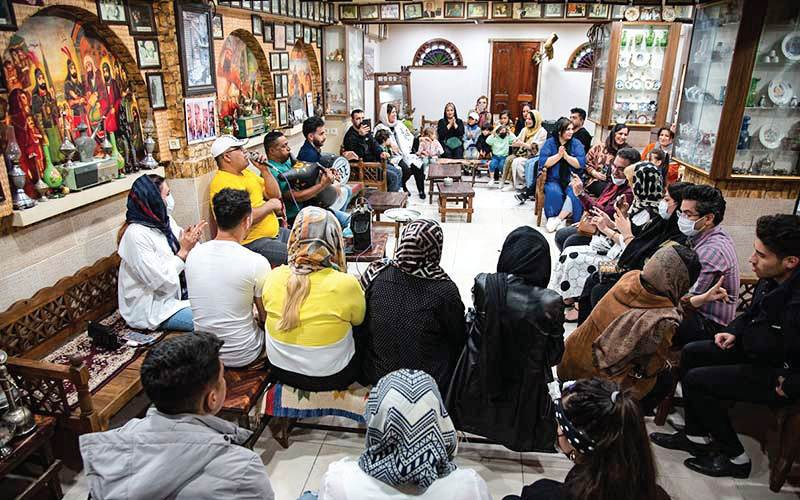
The brevity of Khayyam's quatrains suited the Bushehri mind and temperament better than Shahnameh recitation. For this reason, Khayyam-recitation quickly found its place in most Bushehri homes. For example, at weddings, concerts, published albums, and in cafes, you see numerous groups of Khayyam-reciters. But an interesting point is that from the old days until now, only a handful of quatrains have been sung and repeated down to the present. Rarely do you see anyone or any group performing quatrains other than these repetitive classics. In reality, Khayyami, precisely because of its simplicity in performance and memorization, has so easily become widespread.
Khayyami is like the Bushehri dish "qalieh mahi" — spicy fish stew. The most important aspect of qalieh mahi is its spiciness, and the mark of its quality is the sweat that beads on the face of the person eating it. For this reason, in the homes of both merchant and pauper, qalieh mahi is eaten with pleasure, and people discuss its spicy flavor. The difference lies only in the type of fish used: in the merchant's kitchen, "white pomfret" is cooked, while in the homes of ordinary people, "black pomfret." But the shared spicy flavor makes the pleasure of black pomfret (the affordable kind) equal to that of white pomfret (the expensive kind), so that what matters is the pleasure and elation born of the spicy taste.
The question that arises about Khayyami in Bushehr is whether it is the thought and philosophy of Khayyam's poems that has attracted the people of Bushehr, or its structure and narrative form. The reality is that both Khayyam's philosophy and thought have been instrumental, and so has the quatrain form, which was easy to memorize. Although, in my view, Khayyami or Khayyam-recitation was not a deliberate intellectual choice; rather, this phenomenon took shape and spread unconsciously, influenced by the culture of the people of this region. Khayyam's this-worldly philosophy, interpreted in Bushehr as being happy in this brief moment of life, has in fact been a mechanism for enduring hard life in this climate and harsh economic conditions.
Since the people of this port are tolerant and accommodating, in their encounter with tradition they modify it in their own style and do what they enjoy. Thus, Khayyam has held more appeal for Bushehris than Ferdowsi, Hafez, and Sa'di, and Khayyam's philosophy and thought have been closer to their way of life.

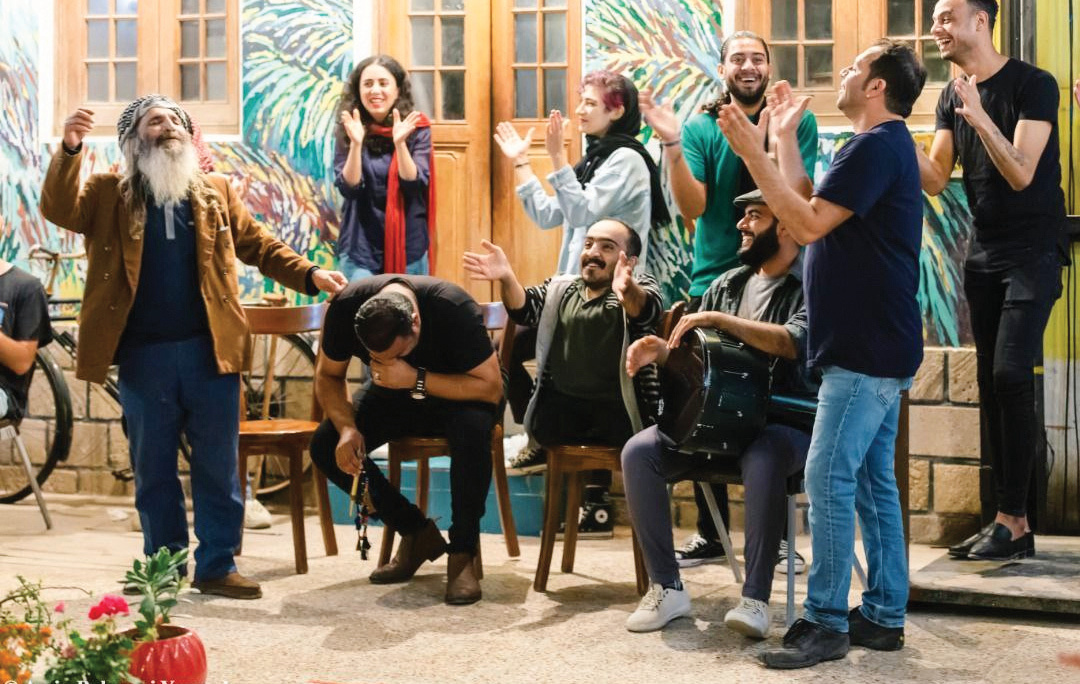
Improvisation is an integral part of Khayyami, directly involving others with the singers and musicians. An important feature of Khayyami is that in a Khayyami gathering, there is more than one singer. Thus, anyone who wishes can begin singing at the moment the music permits. And if someone does not participate in the singing, they can join those who clap in a particular rhythm. In fact, Khayyami is a form of communal singing. It does not want you to be merely a spectator; rather, it invites you to the gathering and music and demands your active presence. This quality of Khayyami resembles the tolerant and accommodating spirit of the Bushehris, who are accepting of others — not stern, rigid people who have no business with anyone else.



