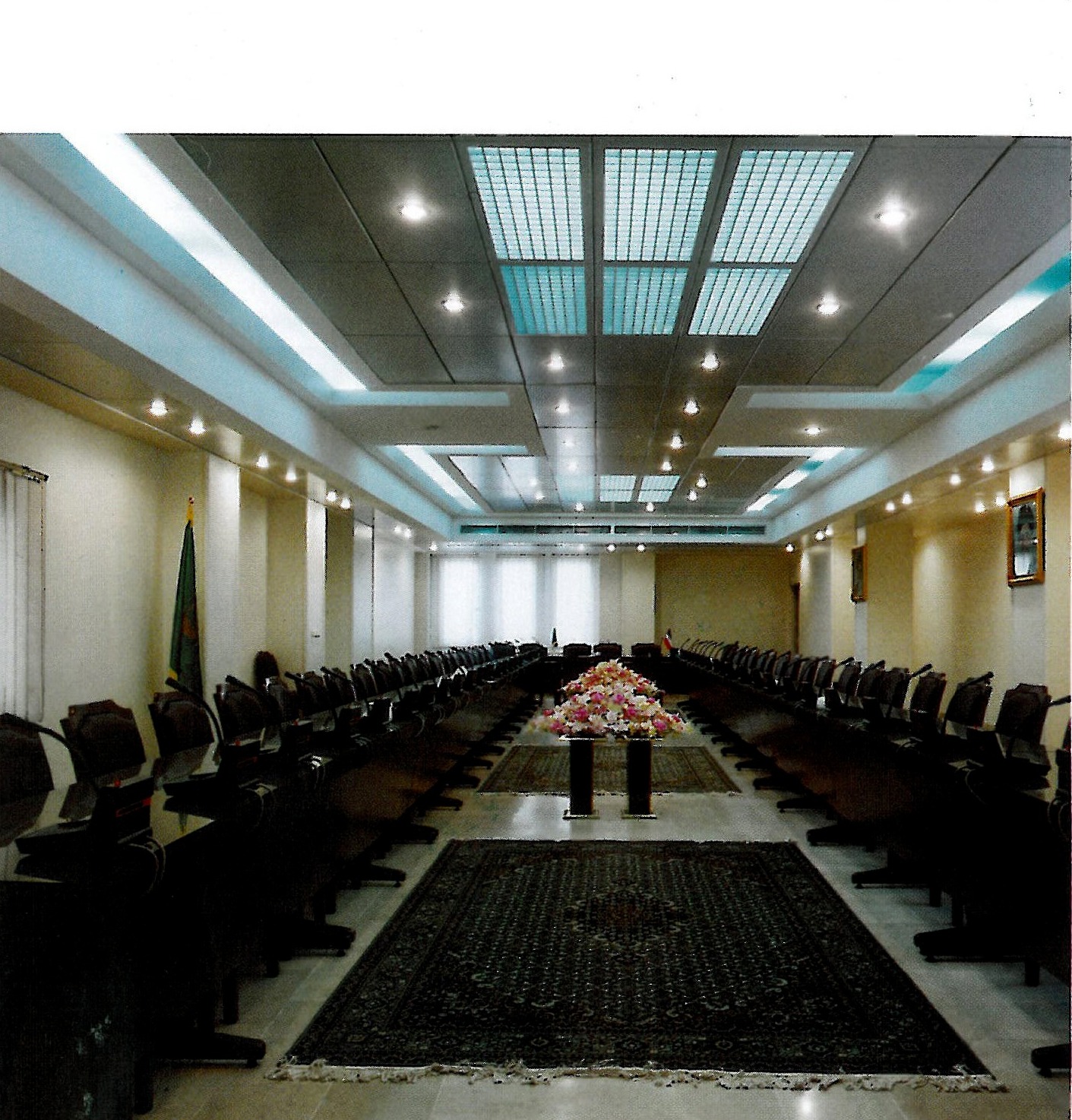
Project Data
Client: Social Security Investment Company (Iran Sazeh)
Consulting Engineer: Siaam Company
Contractor: ASP Company
Architectural Consultant: Gorouh Memari — Kamran Safamanesh, Kamran Samimi
Structural Design: Hamidreza Jafari
MEP Consultant: Hossein Bani-Eghbal
Project Supervisor: Houshang Samadzadeh Ahraei
Land Area: 2,400 sq m
Built Area: 9,100 sq m
Structure: Reinforced concrete
HVAC: Central air conditioning
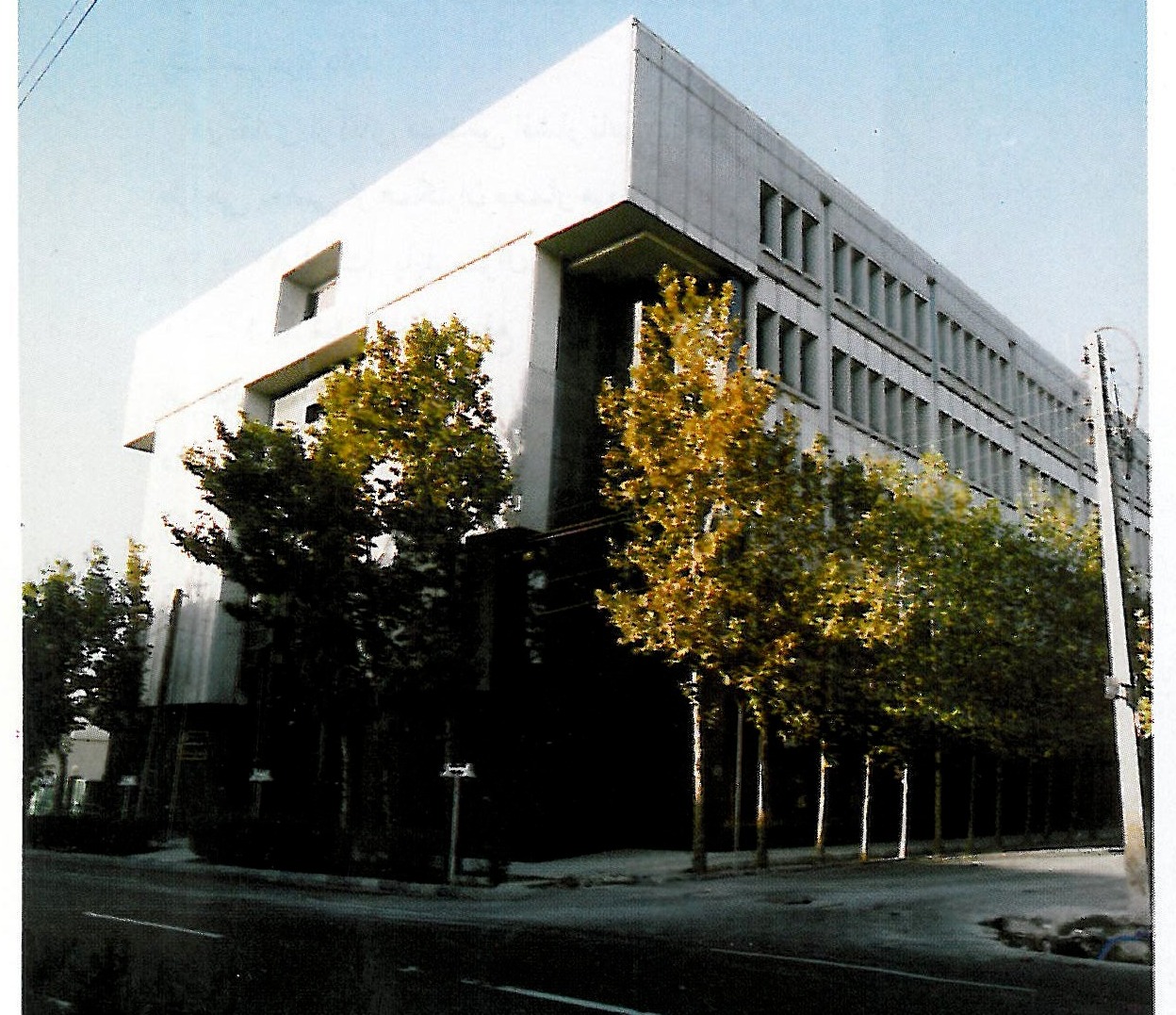
Facade Materials: Precast concrete panels and Hamedan granite
The production of building materials, equipment, and components occupies a vast domain within the new industry and economy. This dynamic and expanding industry has transformed into a tremendously powerful force in guiding building technology and the art of architecture. The most renowned architectural works of the modern era, in addition to bringing fame to their designers, have served as a source of prestige for construction industries and contractors alike. Without serious partnership with manufacturers of building materials, equipment, and components on one hand, and skilled contractors equipped with proper machinery on the other, the architect alone — relying solely on artistic imagination and creative ability — will not succeed.
Even in pre-industrial architecture, the prerequisite for creating efficient and beautiful architecture was the masterful and skilled use of materials and equipment. Manufacturing industries for materials and equipment, well-equipped construction companies, and architectural design and engineering firms each form one side of a triangle. The experience of each reflects its relationship with the other two. For any of these three activities to flourish, there must be a tangible product that reflects the synergy of all three.
We decided in this magazine, alongside these experiences, to dedicate an important and independent section to "Construction and Industry." In this section, beyond introducing notable construction experiences and promoting advanced execution methods, we shall allocate pages — starting from this issue — to the introduction and review of building projects that represent exemplary achievements in construction technology. In this issue, we introduce the Refah Workers Bank Office Building, designed and built through the experiences and interaction of these three fields of activity.
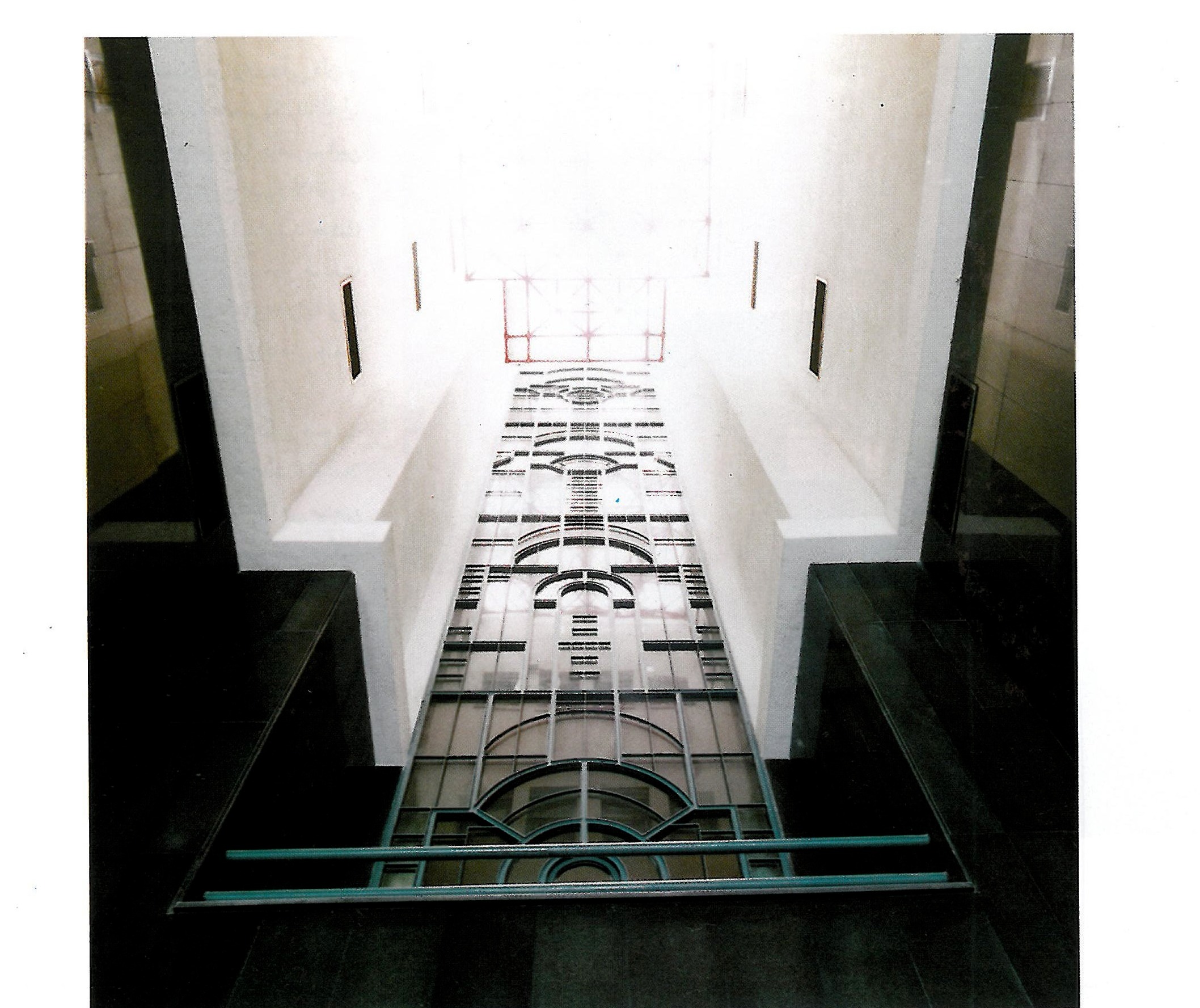
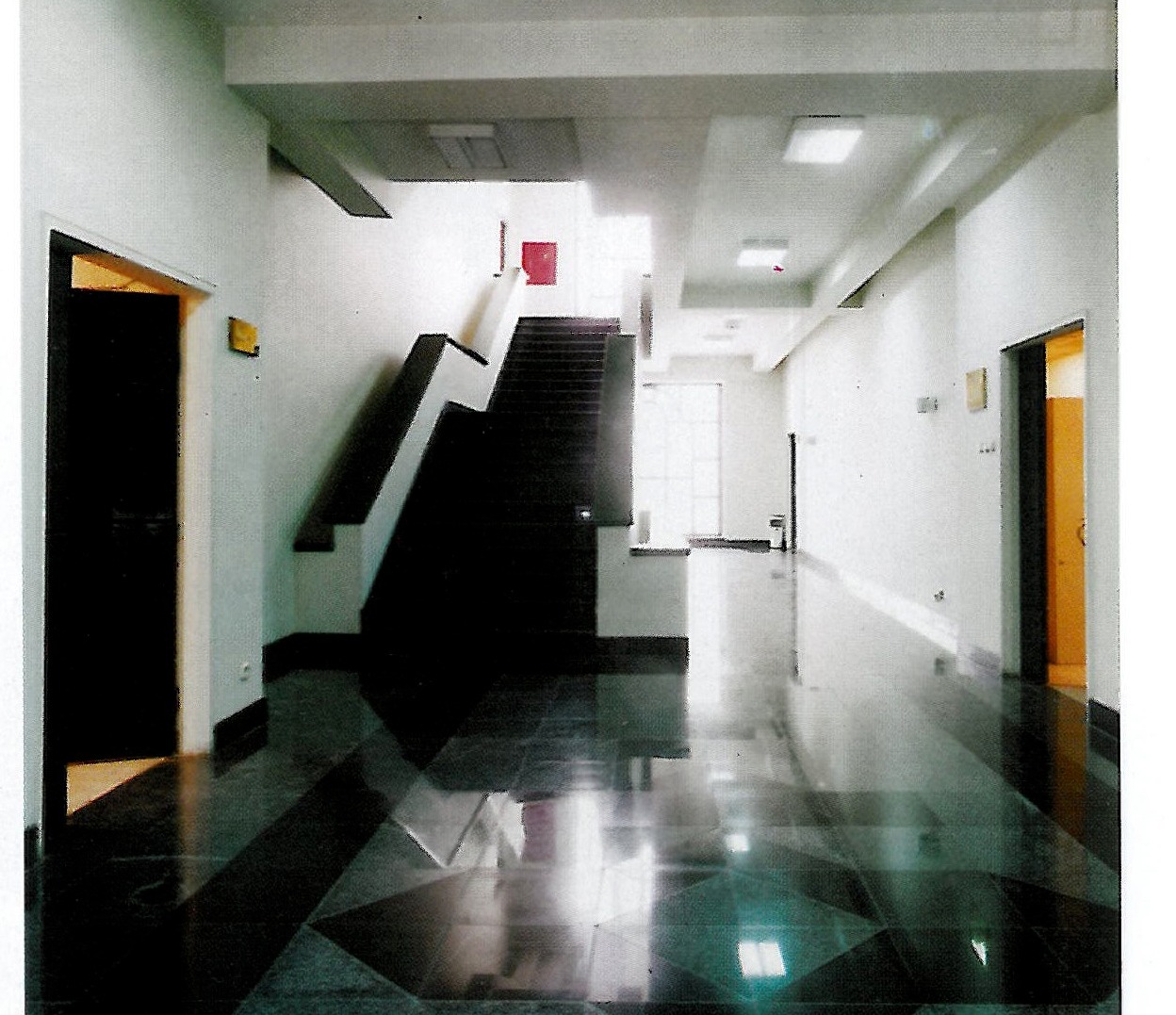
In 1368 SH (1989), in a limited competition, Siaam Company won the design for a residential complex in three stories. By decision of the client and due to economic necessities, the building was changed from a residential complex to an office complex, and from three stories to five stories with the possibility of adding one more floor in the future. Brick facades were converted to precast concrete panels, courtyards were eliminated, the basement area was expanded, and the entrance lobby and central hallway — which in the residential scheme had served as the hashti and central courtyard separating the bank branch from the administrative section — took on the role of dividing these functions, while air circulation pathways were blocked.
These changes caused the original design to be fundamentally transformed. Nevertheless, we strived to execute the modified design well and cleanly. The relative success in a broad arena led this building to be placed among the candidates for the Aga Khan Award in 1998. The key issues that received attention in this design can be enumerated as follows:
— The facade of the basement and ground floor, and the building corners, are of Hamedan granite — a solution to minimize the variety of precast facade formwork.
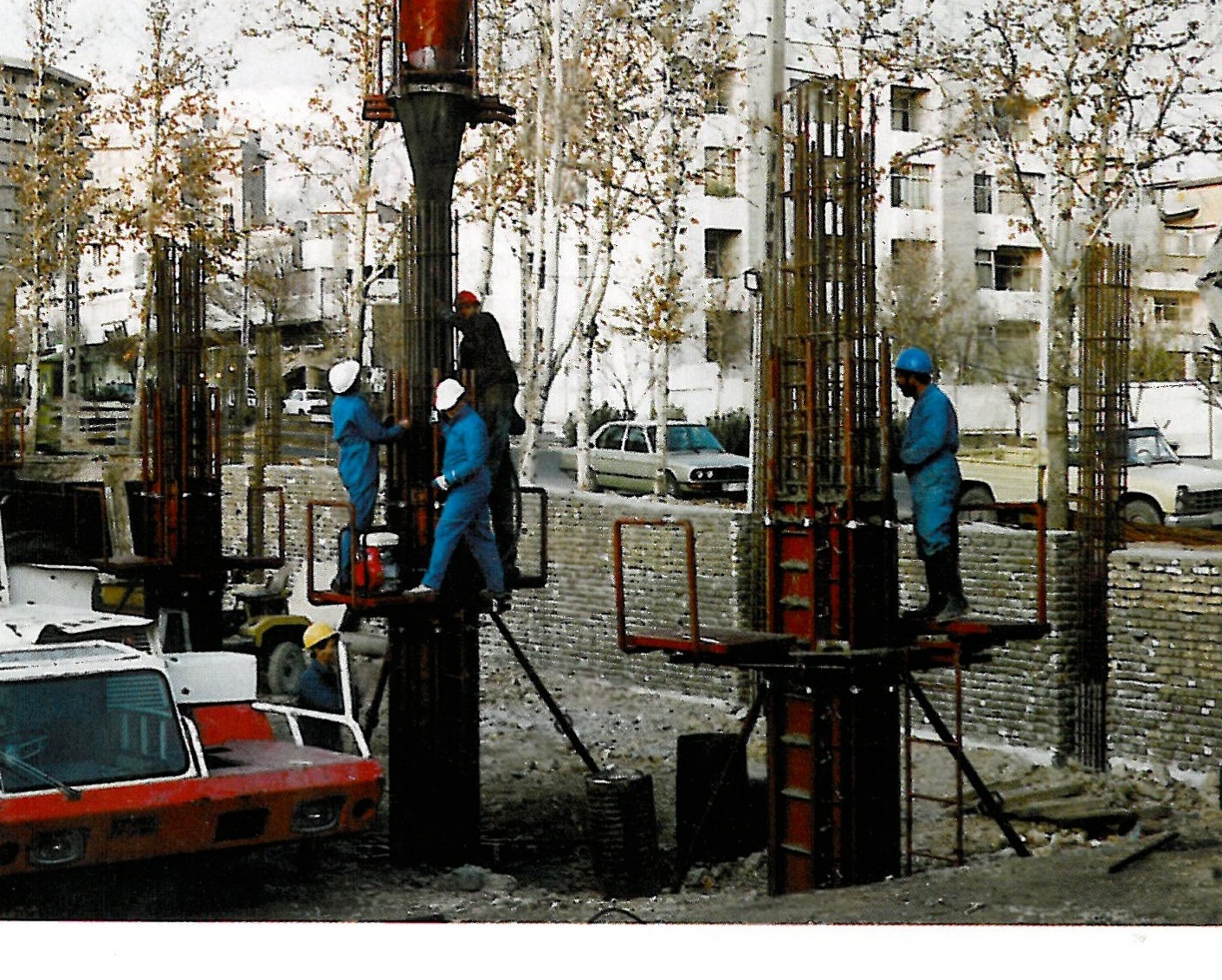
— For constructing the reinforced concrete frame, metal formwork with tubular fasteners and conical metal funnels were used for pouring concrete inside columns, with sliding platforms alongside the formwork provided for the technicians.
— The modular system of the building has helped create order in the dimensions of facade stones and interior floor stones.
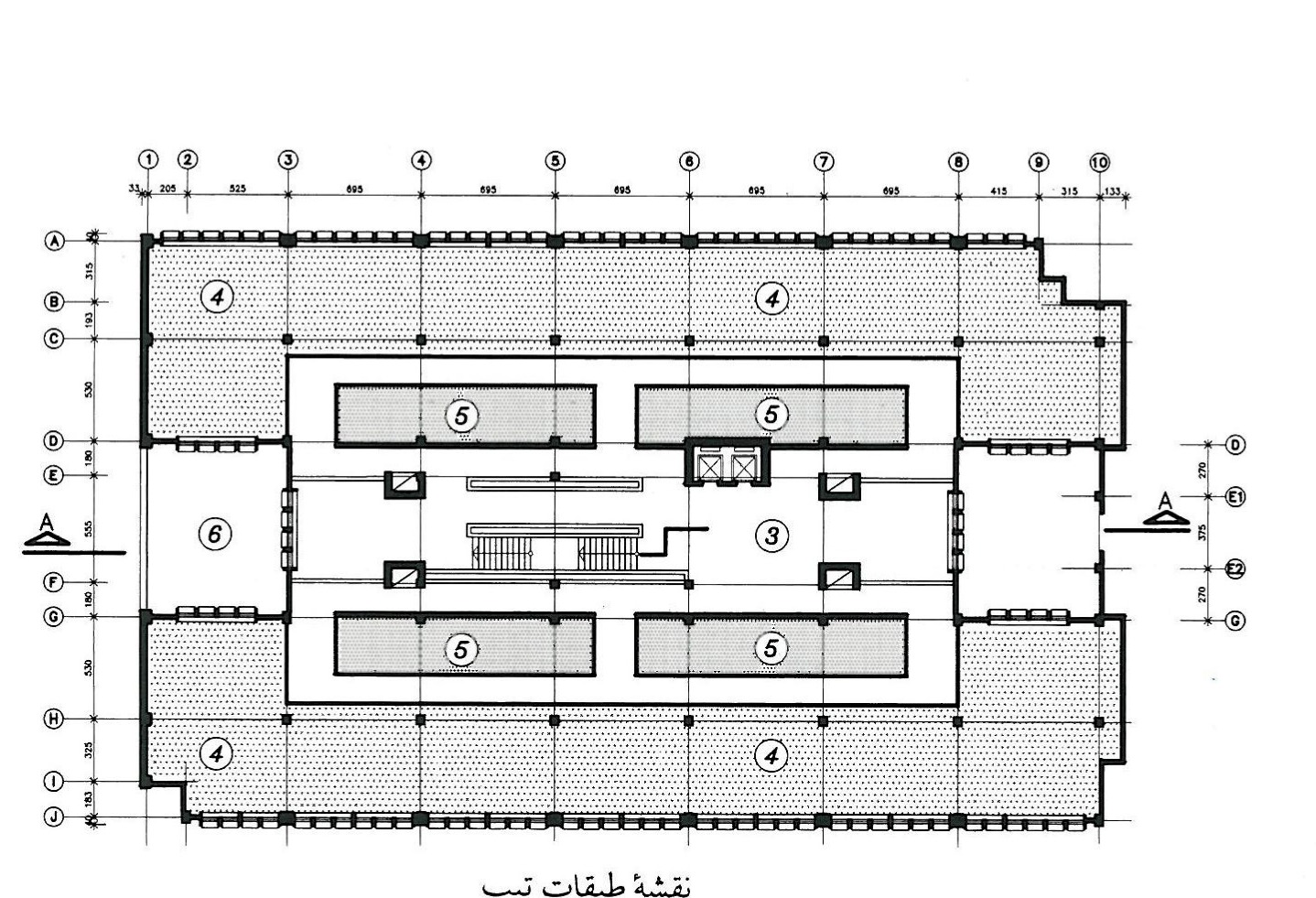
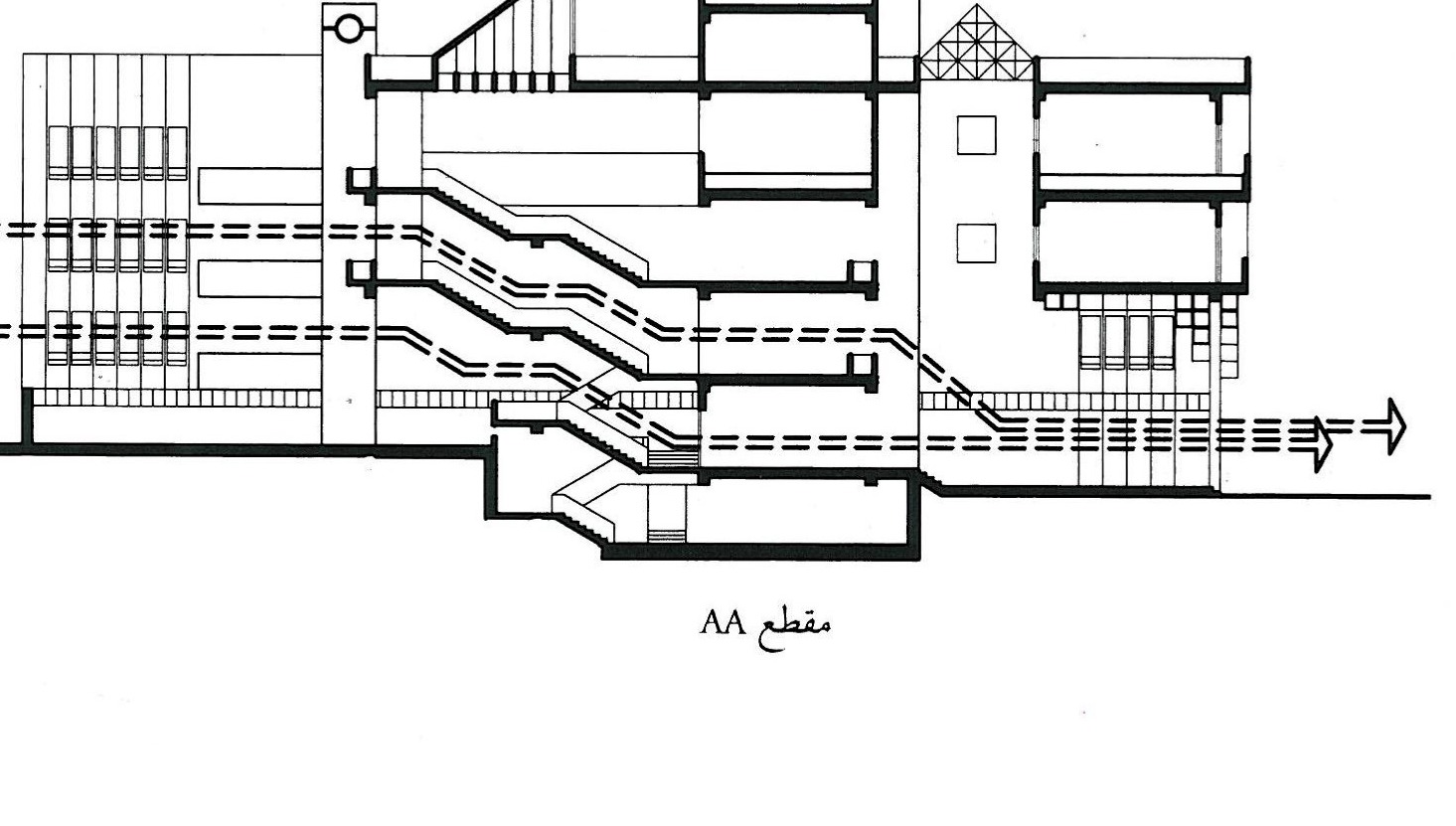
However, I wish to draw attention here, with reference to two examples, to the reasons for stagnation and in some cases regression in the use of advanced technology in the construction industry over the past two decades. Over twenty years ago, for a twelve-story residential building on the edge of Kurdistan Expressway, we designed a precast concrete facade. The surface of the panels, with vertical grooves and bush-hammered protrusions, was by far cleaner in execution than the precast facade of the Refah Workers Bank building, which due to porosity in some panels had to be painted. This was despite the fact that, before that, Banian Saman Company on the north side of Keshavarz Boulevard had been built as an acceptable example of precast concrete with a sandwich panel facade.
What is the reason for this regression? The manufacturer — with the necessary technical knowledge and the designer and producer of precast concrete panels — who had designed and constructed a residential complex entirely with precast panels, columns, and ceiling, is a clear example of the potential for executing advanced technology. So why have precast concrete factories not only failed to expand but their work has been reduced to making curbstones? I believe the answer lies in the proverb "no bargain is without reason, no expense without cause."
In article number 04 of the previous issue of Memar, there was a reference to Mr. Sadeghi, the project manager of Hafeziyeh, regarding the burning of stone with a torch and dry stone installation. In all stone connections executed throughout Tehran — as far as I am aware — not a single instance of this method has been implemented. The Telecommunications Building, Armita Tower by Engineer Ahmadi, and Hafeziyeh — all built with thousands of difficulties and through trial and error.
Why? The reason is not designers' lack of knowledge. We have a brochure from a company that has at least half a century of experience in designing and manufacturing these connections and various dry stone installation components. The reason is the additional cost of stone installation, which is unacceptable to any client. The reason is the absence of mandatory building codes regarding the connection of facade stone to the building structure, especially considering seismic forces. The reason is the failure to industrialize the components of stone construction, connections, and substrata.
The advancement of building technology in Iran comes at a cost, and those involved in this profession must decide whether they are willing to pay this price or not. Are we prepared to formulate procedural guidelines for construction methods, and at least mandate their implementation in government buildings, so that the movement toward advanced technologies — worthy of the building industry — may commence, and subsequently construction costs, considering accelerated commissioning and increased productivity, may decrease? Or not.
In a meeting at the Ministry of Housing and Urban Development, there was a discussion about employing advanced technologies in the construction industry. An eminent figure was generously advising us: "You designers should stop neglecting industrial design." I asked: "Assuming we design it, how do we proceed? For example, a colleague who manufactures gypsum tiles was present at the meeting. I asked him: if I order gypsum tiles today, when will they be delivered?" He said: "God willing, in six months." And this is in a limited scope.
Our building industries, since they do not have a reliable market ahead of them, are not prepared to step into the real world of industry. And this is purgatory for designers who are aware of the advantages of intelligent buildings, who think about transparency and lightness of structure, who know the principles of industrial design — and yet are forced to cover building facades with truckloads of brick, to empty trucks of brick, and then, to achieve uniformity of the bricks, set up workshops to chip and polish and glaze them, and then with mortar on the thirtieth floor of buildings install them with screws and cramps. And this profession continues to flounder.
In a critique by Mr. Engineer Afshar Naderi, it was stated that the design of some fellow architects belongs to the 1970s and 1980s. One must ask: what from the 1970s–1980s has been discarded, that we should expect this from architects? In any case, we exist and strive to exist, with the hope that building regulations and codes be formulated with reference to advanced technologies, that buildings be insured, and that the rights of designers be secured in such a way that clients are not permitted to impose their own tastes upon a project without the designer’s input.