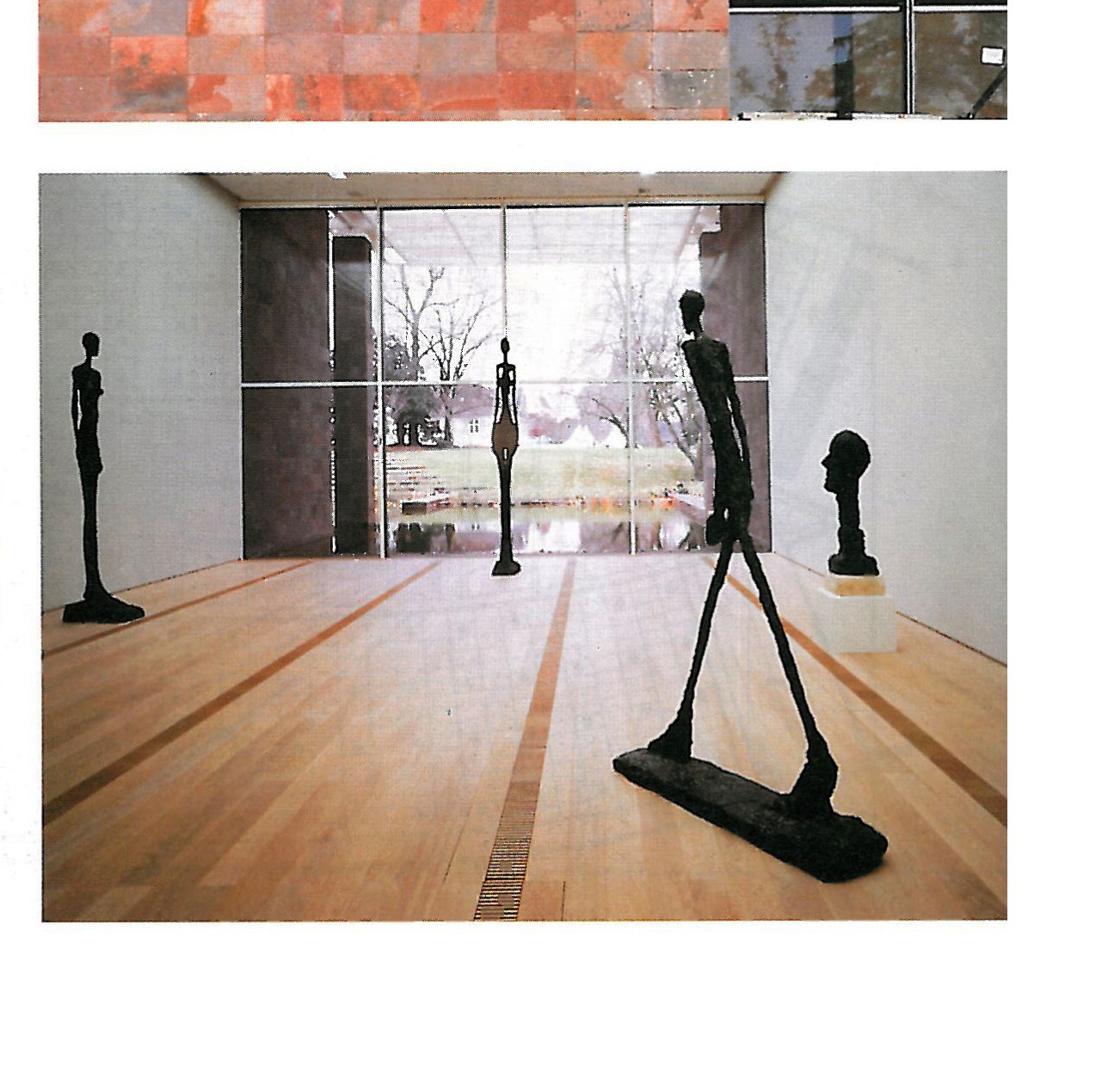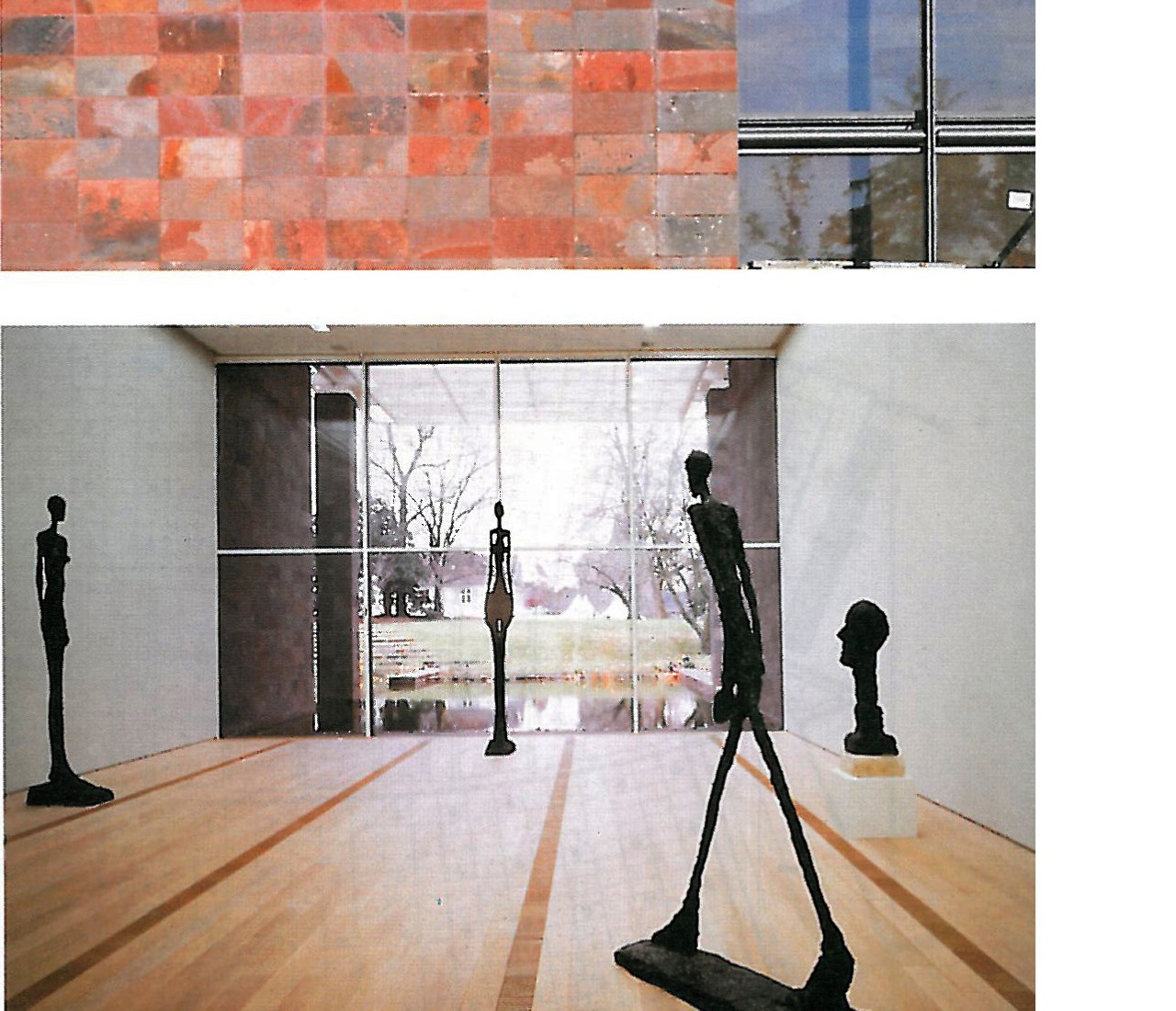
If the avant-garde of the early twentieth century rose up against the academy and in favour of humanity and the needs of society, today's avant-garde standard-bearers, fleeing from human and social discourse, have taken refuge in the academy and derive their legitimacy from specialised books and journals. The works of these architects, while containing impressive values at theoretical and specialised levels — such as the organisation of space and the creation of new forms — are not directly related to the end user; indeed, the end user and the primary addressee of their message is not considered as a parameter. Like the music of Stockhausen, with a specialised approach, they have placed culture-building before building-construction. This architecture, shaped under the conditions of the social and building crisis of the 1960s, takes an intellectual and specialised view of architecture. “Architecture for architecture's sake,” or in other words, using the built work to advance the discourse of architectural design (as Coop Himmelblau states), is a retreat to the world of abstract ideals — a sign of the fear of confronting reality. In the works of these architects, no trace of a realistic view of function and environment can be found. As is clearly observable in Eisenman's works as well, only form and the process of its formation are important, and form enters architecture directly from the abstract world of mathematics. Form becomes so important that materials, structure and details lose their own importance and independence, and the building becomes a large-scale model that most effectively represents the initial ideas of the project — a kind of figurative art at a grand scale, for the enjoyment of which we must first become thoroughly familiar with the theories and theoretical goals of the designer.
In any case, although retreating to the ideal world of dramatic forms — by eliminating the variables of the problem and reducing the conflicting issues of a project to one or a few homogeneous problems, and using this to maintain a specific intellectual line and preserve stylistic coherence — is not what is expected of the avant-garde. Architecture is part of a broader domain that encompasses life and all human activities, and it is compelled to derive its legitimacy from overarching systems. History, habits and beliefs, psychology, the structure of the human body and brain, as well as the natural environment, are constant factors that should not be subject to the whims and fancies of the drafting table. As Piano says: “Architecture is an imposed art” — people are compelled to use exhibitions; therefore, a portion of the extreme studies and experiments of architecture should not go beyond the boundaries of exhibitions and written work.
Just as separation from humanity, society, the natural environment and history is criticisable, generally the worst productions are made with such claims. The question is how one can consider the general audience and not work in a vulgar manner; consider human beings as a constant factor without becoming rigid; attend to the natural environment without reducing the discussion of architecture to a merely technical matter or turning the building into an object lost in nature; and ultimately, take history and local identity into consideration without imitating historical forms, distorting the authenticity of historical works, and negating the identity of the present time.
To respond to such an important mission, we need a grand strategy — a strategy for finding a path that does not pit the architect's seemingly contradictory ideals against one another and does not lead to a situation where, in order to avoid banality, populism and eclecticism, the architect abandons history and humanity, society and the natural environment. The issue is not reaching a quantitative balance of a little of this and a little of that; rather, it is about finding, each time anew, a path that leads to a work that provides the desired set of qualities without compromise. Such a strategy is invented anew each time and cannot be confined to a particular style or methodology.
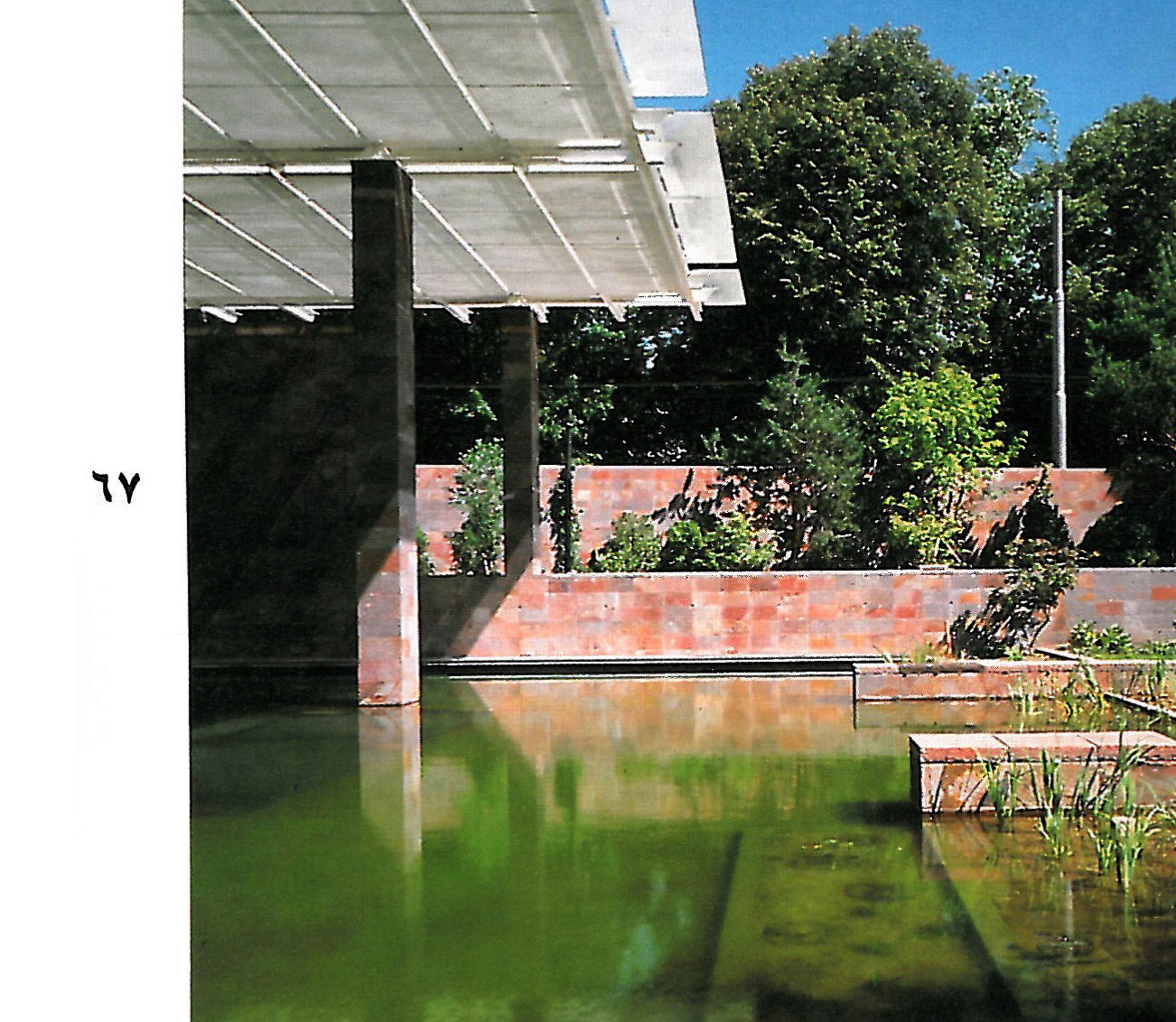
Piano is one of the handful of architects who has managed this feat, and it is for this reason that from being style-less he has created a new style. What connects his works is not style and the process of form generation. These are superstructural and variable aspects of architecture that today are mistakenly assumed to be constants in many cases. The constants of Piano's works are the eternal principles of architecture, such as: attention to nature (as the natural environment in which the project is situated, inspiration from natural forms, the use of natural elements such as plants, water and light, and the use of natural materials such as wood and stone); attention to the site and the discovery of an underlying principle of settlement embedded in the characteristics of the site; the morphology of the land; the relationship between human beings and architecture; and so forth — from within which the rules of each project are extracted.
For Piano, creativity without rules has no meaning, and the discovery of rules is a task that requires very strong intuitive perception. Only when rules reach sufficient density is the idea of the project born. Theorising conditions and trying to understand the deep meaning of site characteristics and the various needs of the project in order to arrive at rules is another dangerous turn in the path, which may lead to the magnification of insignificant characteristics or the production of a utopian image of reality. Piano's interpretation, while being logical, is often very poetic, “correctly guessed,” and tangible — and he has sometimes accomplished this under difficult conditions.
The Kansai Airport project in Osaka began when the artificial island on which the airport was to be situated had not yet been built. Although Piano's works always originate from a strong idea based on intuitive perception, they are never merely the architectural expression of the initial idea. In the design process, a hierarchy of architectural values — from structure, whose creation is as important as the formal idea, to construction details, texture and materials — creates the grounds for expanding the aesthetic dimensions of the work.
Piano rarely builds something he already knows. He is an adventurous explorer: he believes that in today's world, where every corner of the earth has been discovered, architecture is one of the few remaining possibilities for adventure and the discovery of unknown spaces. He searches for unknown ideas for his new projects. Stepping into the unknown requires experience and invention, and Piano, in his office — which he calls the “Architecture Workshop” — discovers the characteristics of each project by building hundreds of models at various scales, and even building components at full scale, along with various experiments involving light, sound, and wind tunnels. Many of his works, in terms of form and detail, possess such precision and perfection that they seem to have emerged from the gradual evolution of the building construction tradition.
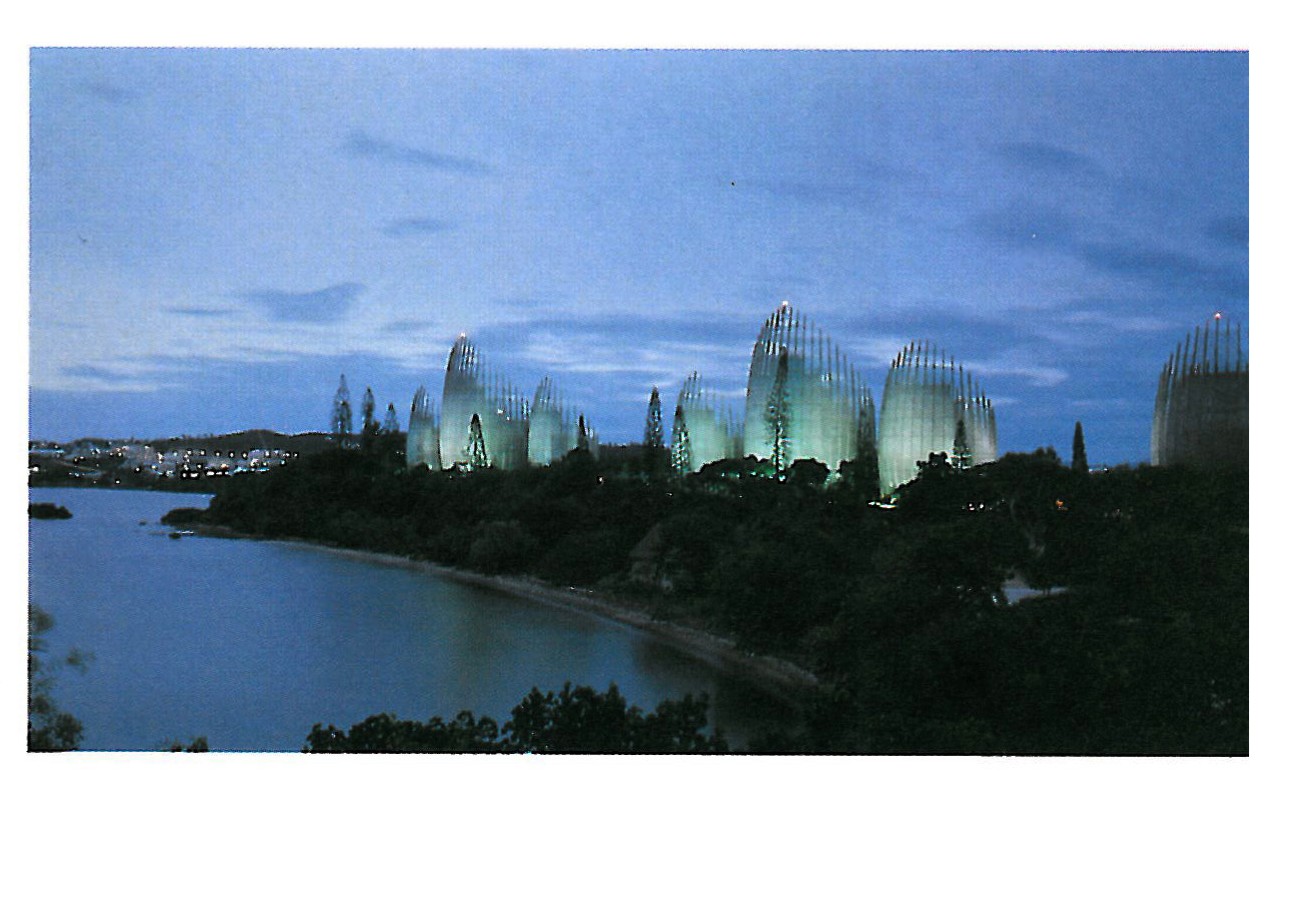
Vernacular Tradition: Tjibaou Cultural Center
Coming to terms with tradition and vernacular architecture is another challenge of contemporary architecture. These challenges are generally either so subtle and theoretical that they are not perceptible to the eye, or so obvious that they appear imitative. Working with traditional architecture is more difficult than working with historical architecture, because historical architecture is at least not incompatible with the concept of the monument. Traditional and vernacular architecture negates the single building as monument. A collection of buildings constructed over long periods creates a landscape with a symbolic totality, and the individual building dissolves into such a landscape.
In the Tjibaou Cultural Center project in Nouméa, which was to symbolise the independence of the Kanak people, naturally a reference to vernacular tradition was an important prerequisite. The problem was even more complex than described above. The architecture of this people is limited to wooden-thatched huts, which itself represents a major limitation in terms of choosing a model for interpretation. Another limitation is the impermanence of these huts, which, as Piano says, means that the vernacular architecture of the Kanak is preserved not through the presence of historical works, but through the continuity of a specific building method.
Piano's response to this problem is a type of architecture in which the individual building does not assert itself. The image of the complex from afar is a prominent environmental marker that complements and distinguishes the coastal landscape from a distance. This image is created by ten hut-like structures of various sizes, which, like the mysterious statues of Easter Island, appear as though unknown indigenous artists built them side by side. However, the main structure of the cultural centre does not consist of a single building; rather, the entire centre is composed of three sections, each functioning as an independent indigenous village. The plan organisation of these sections and their circular spaces also evokes Kanak villages. The method of constructing the hut-like structures and the materials used are also inspired by this culture.
Traditional buildings, beyond their symbolic meanings, also have specific ceremonial and climatic functions. One of the villages in the Tjibaou complex is dedicated to local performances and dance. The second village houses exhibition spaces, and the third contains administrative offices. In Piano's design, full attention has been paid to these functions and the relationships between them. The issue of climate, which was pursued in parallel through research on traditional buildings and the conducting of advanced experiments on models at various scales — especially wind tunnel testing — led to interesting solutions, in which wind was used to control the temperature of the double-walled exterior and also for the natural ventilation of interior spaces.
Ecological Design
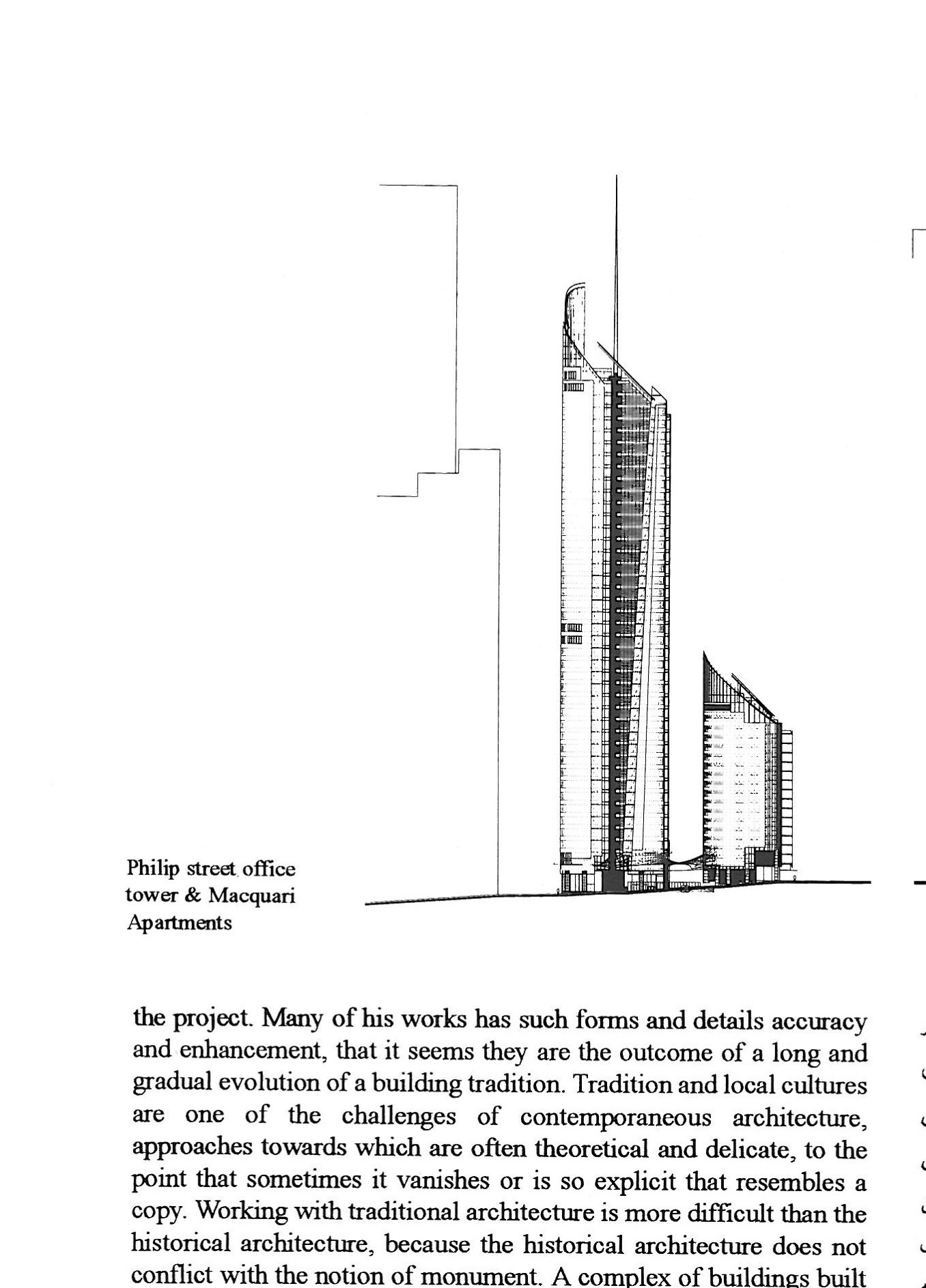
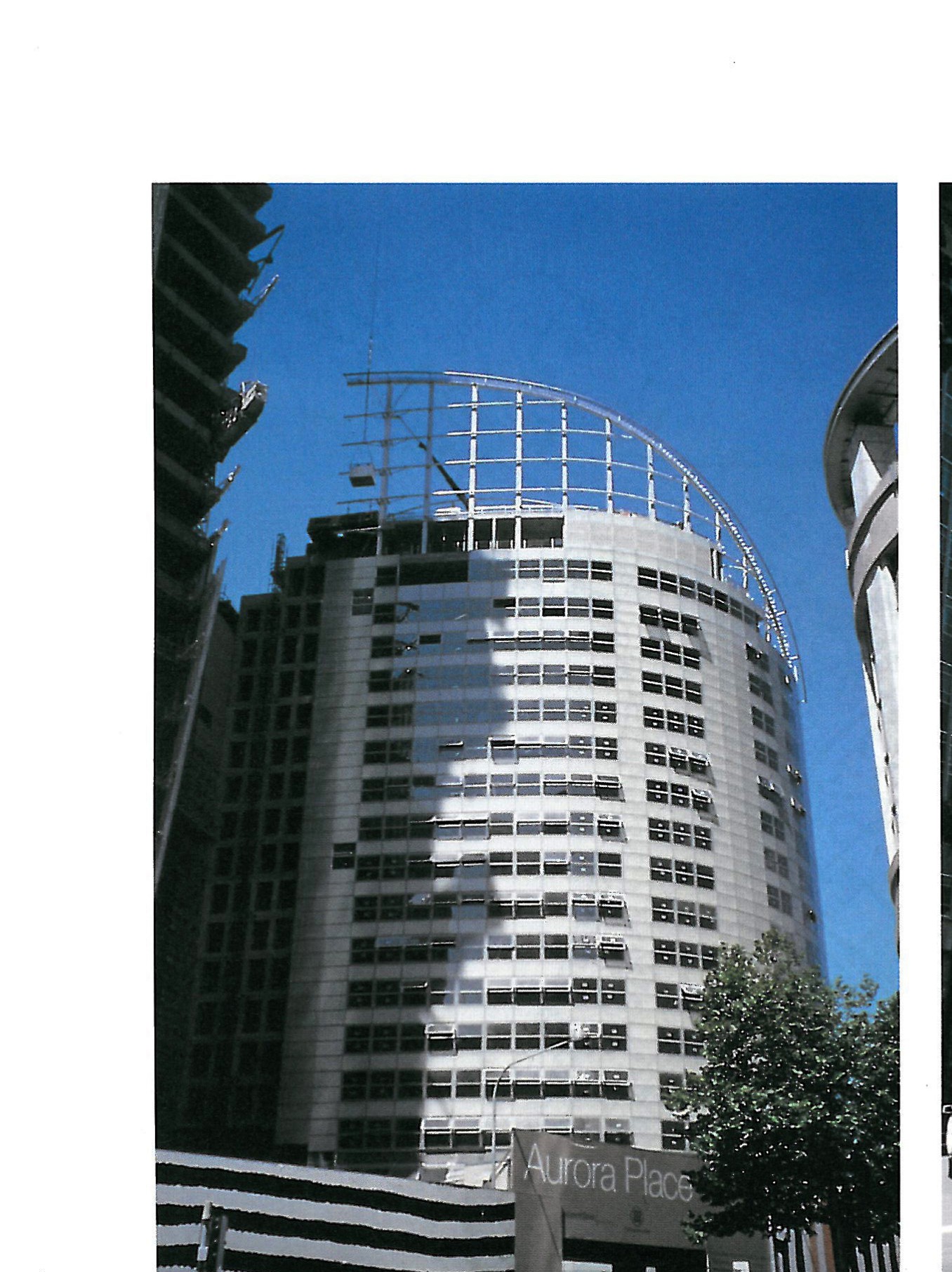
Environmentally sensitive or ecological architecture reminds us of ugly buildings made with recyclable materials and solar panels. Few designers have managed to simultaneously attend to architecture and sustainable development issues. Beyond the Tjibaou Cultural Centre, other recent works by Piano have also risen to this important challenge. The residential and office tower project in Sydney has been designed so that the tower's shadow (at a height of 200 metres) does not impede the growth of plants in the adjacent botanical garden. Wind is used for the building's natural ventilation. Beyond environmental issues, various urban planning and architectural concerns also existed: attention to the city skyline and making a skyscraper stand out when it is to be placed among thousands of Sydney towers — while being distinct, it must inevitably establish a relationship with them; a response to the conditioning presence of the outstanding Sydney Opera House; and the avoidance of the default solution of a tower as a multi-layered cake.
Sacred Architecture: Padre Pio Church
Designing a religious site, particularly a pilgrimage site — giving material form to values that lie beyond the material world on one hand, and the difficulty of finding a new identity for this important social institution on the other — is extremely challenging for an architect. An institution whose architecturally valuable examples, except for a few rare cases, are historical buildings. If faith means the acceptance of absolute and fixed principles beyond time, then architecture too, if it wishes to establish a structural and deep connection with its subject, must necessarily refer to absolute principles.
What is more truthful and absolute than the stone arch and dome? In the Padre Pio pilgrimage church in Foggia (Italy), a stone dome has been designed whose stone arches support it. The largest arch of this building, with a span of 48 metres and a height of 24 metres, is the largest true stone arch in the world.
Beyond High-Tech
The greatest mistake regarding Piano is to place him among high-technology architects. Technology for him is a means, not an end. What is certain is that structure is important to Piano, and its role is not merely to hold up the form; rather, it is an inseparable and irreplaceable component of the form. For Piano, there is no boundary between design and construction. As he himself says, in the manner of a composer or painter who begins the creation of a work by attempting its execution, bit by bit, with the help of computers and model-making at various scales, he defines his project.
Piano is not one for extensive theoretical discussions, and his theories are primarily expressed through his buildings. In his approach, which relies heavily on knowledge gained from practice rather than theoretical knowledge, he has realised many of the ideals of contemporary architecture. The Georges Pompidou Centre (1971–77), the first renowned work of Piano and Richard Rogers, simultaneously embodied the ideals of Archigram, the urban mega-machine, and the principles of New Brutalism. The ideas of the founders of this second movement — Peter and Alison Smithson — had been manifested in the style bearing this name mostly superficially, as a particular taste in the use of rough, unfinished materials and the composition of independent, simple geometric volumes. In the Pompidou Centre project, these principles — truthfulness; honesty in the use of materials and structure and their display in the project's form; objectivity, meaning attention to the primary motivations and capabilities of the project in prescribing solutions; and responsibility toward society and the city — have been observed in the best possible manner.
As can be seen in dozens of Piano's major works, he has always employed entirely original solutions and highly diverse technologies and materials to find appropriate responses to the project's premises. For Piano, methodology is not ideology that never changes; rather, it is a strategy for achieving goals that lie within the realm of human life and not in specialised architectural discussions. The goal is light, not a particular type of window; the goal is lightness, not a particular type of structure. For this reason, and also because of his avoidance of any style, despite his personal inclination, one cannot call him a craftsman. In craftsmanship, repetition, stylistic continuity and the refinement of one idea are more important than creativity and invention. He has united within himself all three personalities: inventor, artist, and craftsman. From the craftsman, he has the rigorous attention to detail and material quality, and by drawing on high technology — which makes the production of unique pieces through mass production possible — he has put an end to the old conflict between industry and craftsmanship.
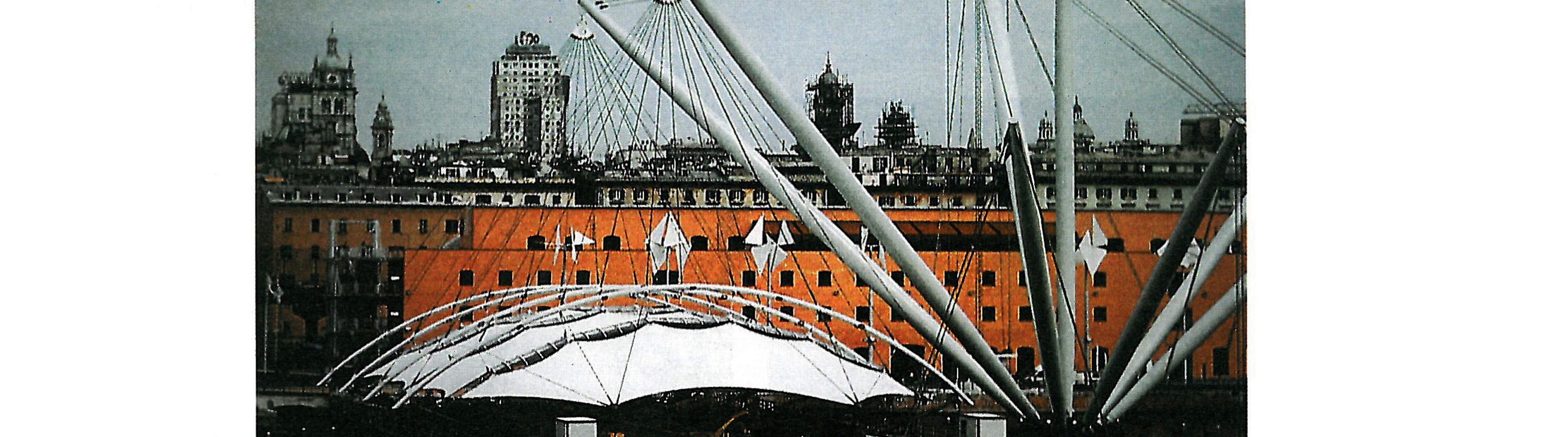
In the manner of the great masters, Piano always breaks his own moulds. In none of his works has he repeated the Georges Pompidou Centre again. Nevertheless, one important principle employed in the Pompidou Centre project has continued in many of his works: the transformation of the form of place, which is a hallmark of outstanding works of contemporary architecture. The Pompidou Centre project gave the cultural venue a new spatial characteristic — a continuous, uninterrupted technological enclosure (without walls) and an industrial face. The Festival Square in the Old Port of Genoa is also covered by a tent-like canopy held up by columns resembling the masts of a sailing ship. This structure is always in tension, and none of its structural elements is independently stable; stability is achieved solely through the equilibrium of forces — like the masts, beams and sails of a sailing ship.
Piano's office on the coast of Vesima in Italy represents the transformation of the form of the office place into a new space that resembles a greenhouse more than an office building. This structure consists of a sloping roof and glass walls set into the hillside, with terraces beneath them.