Reviewed: Alan Colquhoun, Modern Architecture. Oxford University Press, Oxford History of Art series.
Alan Colquhoun's new book, in the Oxford History of Art series, is among the most engaging works yet written with the aim of summarising the history of modern architecture. Colquhoun was born in England in 1921. After completing his studies at the London Architectural Association in 1949 he joined a group of incomparable critics — Reyner Banham and Colin Rowe — who emigrated to America and taught at major American universities. From the very beginning of his career Colquhoun has been remarkably sensitive to the fine grain of architectural history, and is therefore able to bring out the complexities and contradictions of the modern movement. Colquhoun reviewed Banham's Theory and Design in the First Machine Age in the British Journal of Aesthetics in 1962. He saw one of the book's merits in its insistence on the fundamental contradictions of the twentieth-century architectural avant-garde — which, while in polemical confrontation with academic tradition, was at the same time deeply drawn from it (Julien Guadet's formula-like writings, indeed, exhibit precisely this quality). Banham's stance was different: he held that the unresolvable, intrinsic contradiction of modern architecture arose from the fact that, instead of taking thought seriously, attempts were made in the field of form and symbolism (albeit in the guise of technique) and were thus treated as a sub-branch of technology. Despite Banham — a champion of technique who lamented its failures — Colquhoun in his review implicitly assigned the historian a different role. In this new volume he shows that, in order to discuss ambiguities and contradictions, one must analyse the facts. The aim of the book is not the pursuit of some absolute truth, nor the correction of errors. Rather, the reader — probably, but not necessarily, an architect — is to be shown what the nature of the fundamental, historical buildings is, and what contradictions exist within them. The goal is at least to make the reader aware of these things and to offer guidance through the journey of modernity. As Giorgio Ciucci wrote in the preface to the 1989 Italian translation of Colquhoun's essays, Architettura Moderna e Storia, the author intends "to fill architects with historical awareness and, at the same time, to keep them on their guard against the seductions of history."
In Modern Architecture, to do this in an effective and concise way — simple but not over-simplified — Colquhoun has restricted his examination to the "pioneers". He has divided the book into twelve chapters, so that it may be read either at one go or as separate essays. He digs into the depth of events to bring out their fundamental contradictions. He writes: "It seems that modernist theory, with its idealist and teleological conception of history — the very 'spirit of the age' it itself summoned — has fundamentally misunderstood that spirit, and has failed to take into account the complex and indeterminate nature of modern capitalism, with its plurality of power and movement."
Colquhoun's account covers the years between 1890 and 1965. In the author's view, this period begins at the moment when the rigid belief in universal, abstract principles independent of the technical aspects of architecture entered into collision and fusion with contemporary theories — especially those that regarded the architect's inventive technique and social awareness as the defining features of the new age. The book ends with the events of 1965, allowing the reader to form an idea of the multi-directional, fragmented and dispersed currents that branched out from this catastrophe — currents whose common origin was the illusion of modernism's unity. Although Colquhoun's book may be considered a "refined handbook", it could just as easily become a "handbook for the refined". In other words, the central question — both for Colquhoun and for everyone seriously concerned with the history of architecture — is how to make the book speak both to its many readers and to improve the quality of historical research that is not merely narrative.
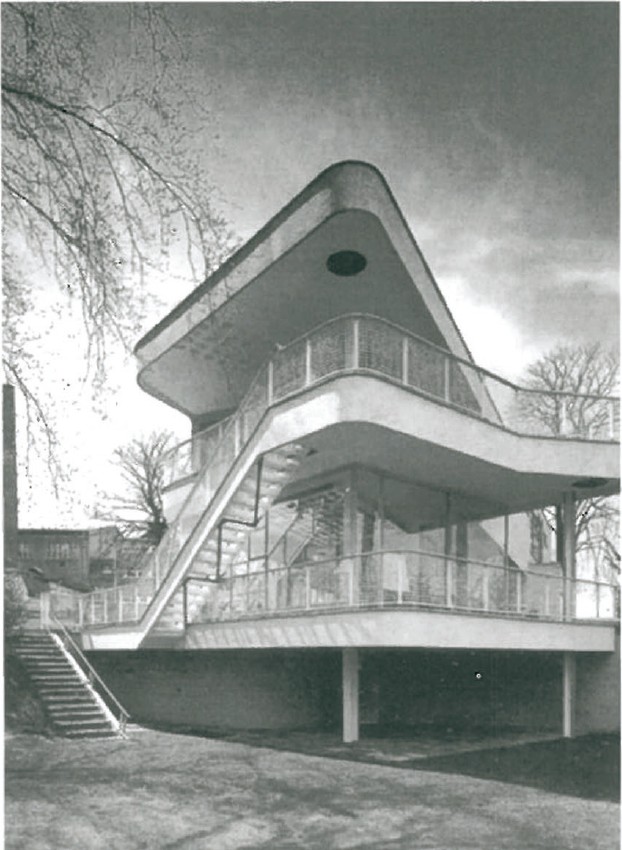
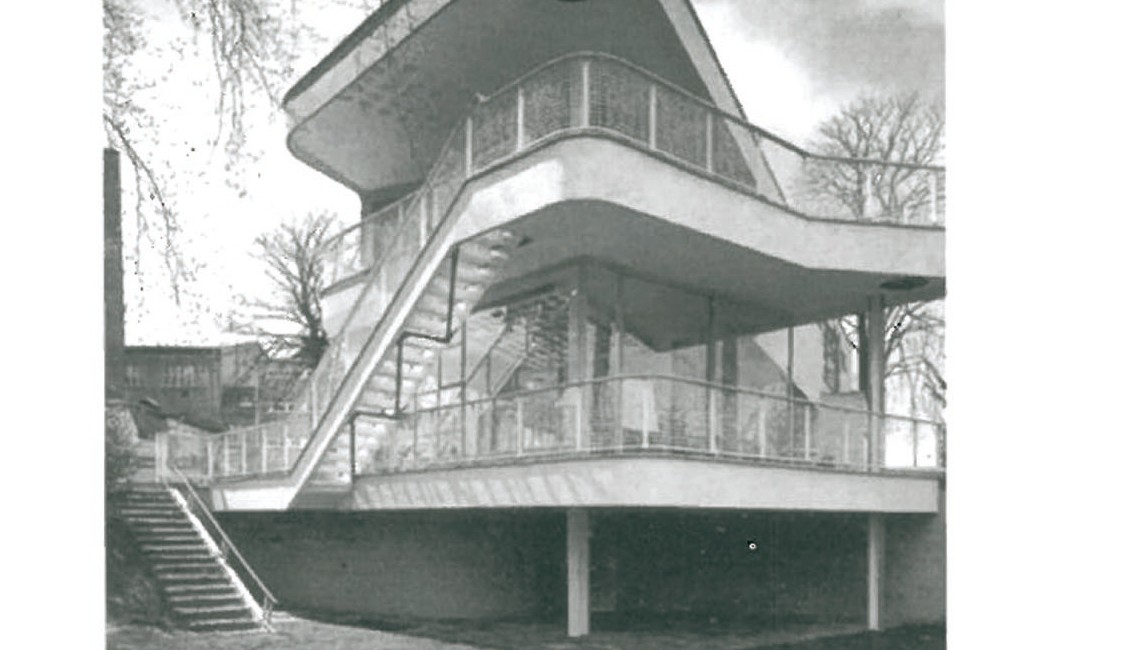
The first issue is, plainly, the manner pursued in Modern Architecture. For each "epoch" or "moment" of modernist architecture, particular cases are raised and discussed. The way ideas are developed in this book is, in an extraordinary and bold manner, far beyond the traditional methods. Even so, if readers are not familiar with the thought of figures such as Pevsner, Giedion, Zevi and Benevolo, one of the basic aspects of this work — and of other works on the same theme — slips through their fingers. The presence of footnotes makes it possible to verify the author's sources more carefully. The works cited in the footnotes and bibliography are almost all English and American. A few references to Manfredo Tafuri and to other Italian historians who studied with him or worked at the University of Venice are among the exceptions. In some places the absence of comprehensive or specialist research is striking — about Italy, and about the figure of Wright too, this is surprising. With all its brevity, the book is a remarkable work, full of fresh ideas; its images, though limited, are of high quality. It supplies clear pictures of famous buildings and offers new viewpoints and details.
Footnotes: 1. Alan Colquhoun. 2. London's Architectural Association. 3. Reyner Banham. 4. Colin Rowe. 5. Theory and Design. 6. British Journal of Aesthetics. 7. Julien Guadet. 8. Giorgio Ciucci. 9. Teleological. 10. Zeitgeist. 11. The author plays on the double meaning of "refined" — alternating between "refined handbook" and "handbook for the refined". 12. Pevsner. 13. Manfredo Tafuri. 14. Schminke. 15. Hans Scharoun.