



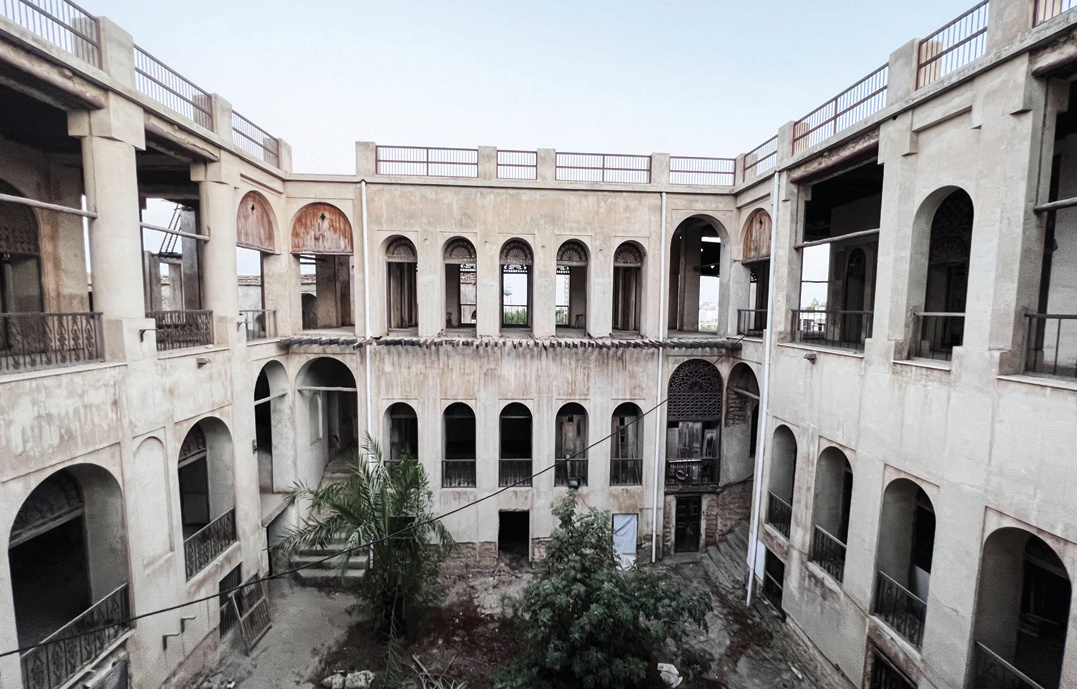
Writing about what needs no explanation is, paradoxically, both easy and difficult. The author has been confronted with the outward presence of this monumental building since childhood. Speaking as an architect about a work of architecture — outside the conventions of academic language — was the aspiration behind writing this text. The central aim is to describe the exterior and interior of a valuable building, a remnant of old Bushehr's architecture known as the Edifice of Haj Raeis, and to draw attention to the unparalleled yet neglected place this monument holds in the city's historical memory. The author has deliberately avoided the conventional means of architectural presentation — plans, sections, and elevations — and has chosen instead to let the building's photographs introduce this work.
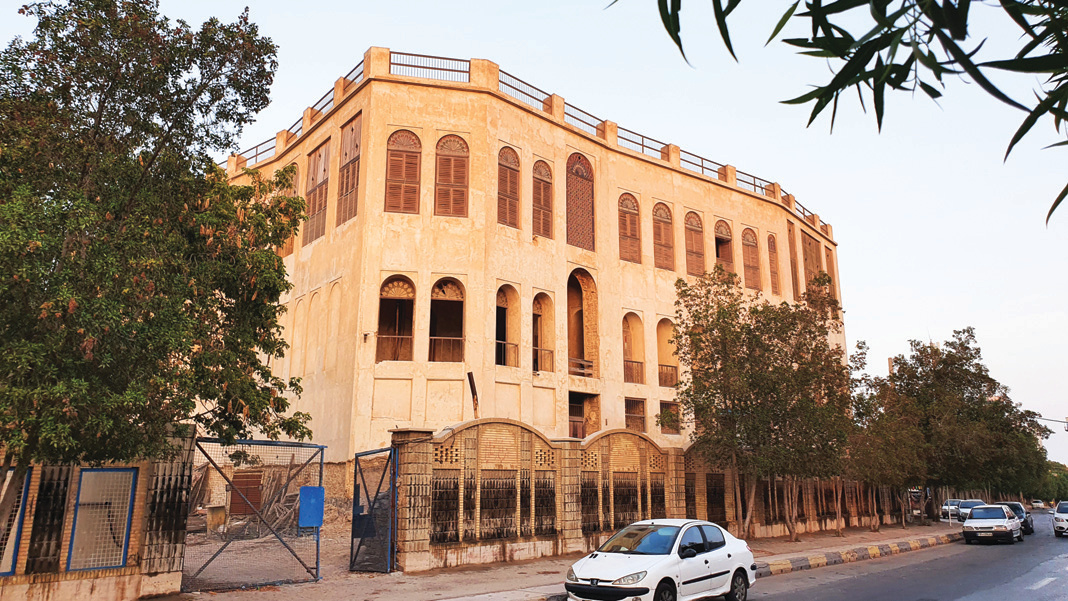
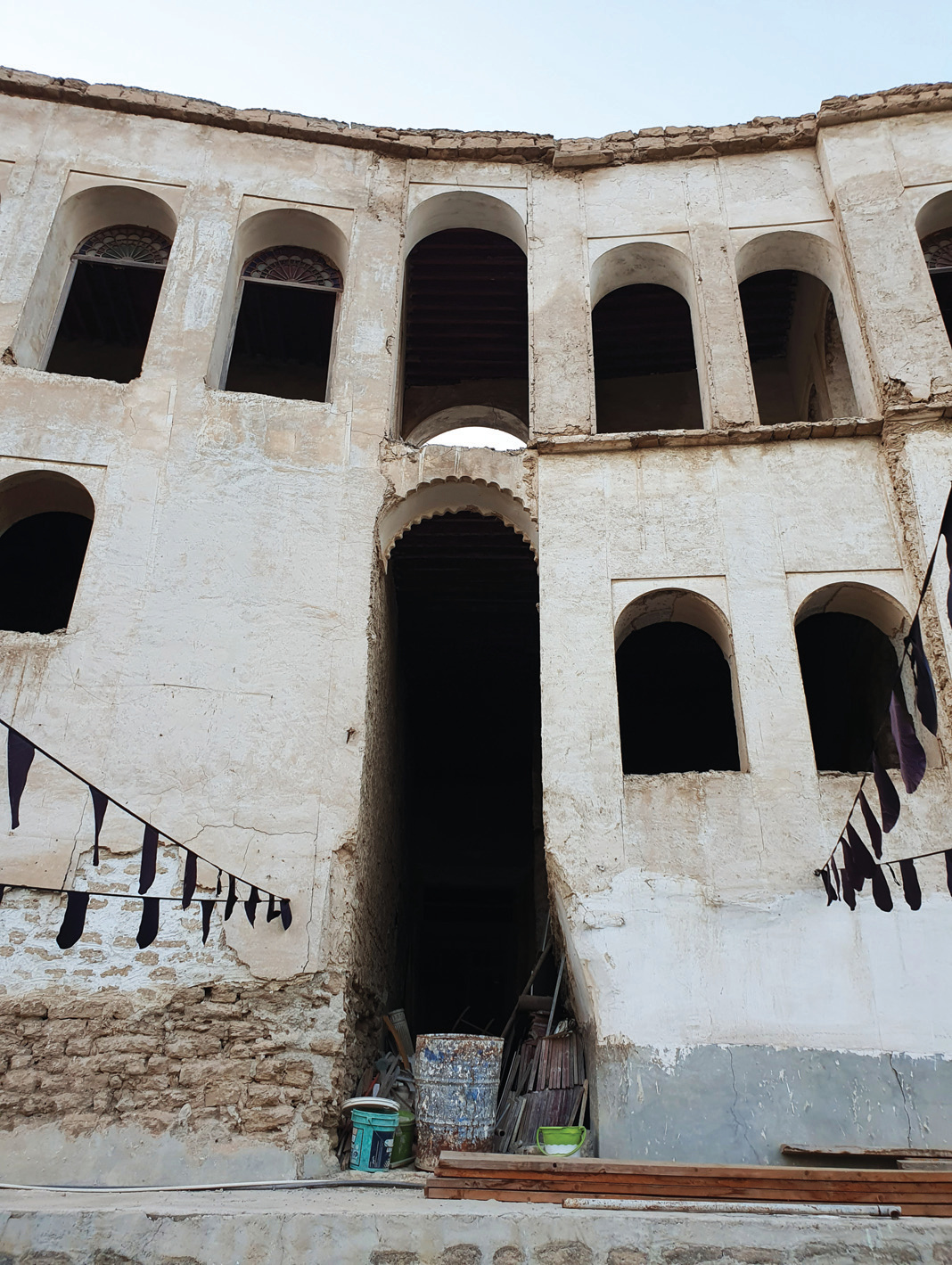
When walking along the street that separates the eastern edge of Bushehr's historic texture from the port authority, a rare architectural confrontation unfolds. Beneath the surface of this confrontation lies a bitter and irreparable history: the complete demolition of the most beautiful buildings on the eastern edge of old Bushehr between the 1940s and 1980s. The manifestation of this confrontation is the imposing presence of the largest and tallest surviving building in the historic texture of Bushehr's four quarters: the Edifice of Haj Raeis. In a segment of Nasser Taghvai's documentary Arba'in, filmed in Bushehr in 1970, the magnificent facade of Bushehr's eastern edge is on display.
An imposing, beautiful, lofty building — cut off from the rest of the historic texture and enclosed within the port authority's walls — that proudly dominates the skyline of the eastern facade. Although years of abandonment, erosion, and the negligence of us inheritors have caused parts of this building to deteriorate, it still preserves its grandeur and magnificence.
History
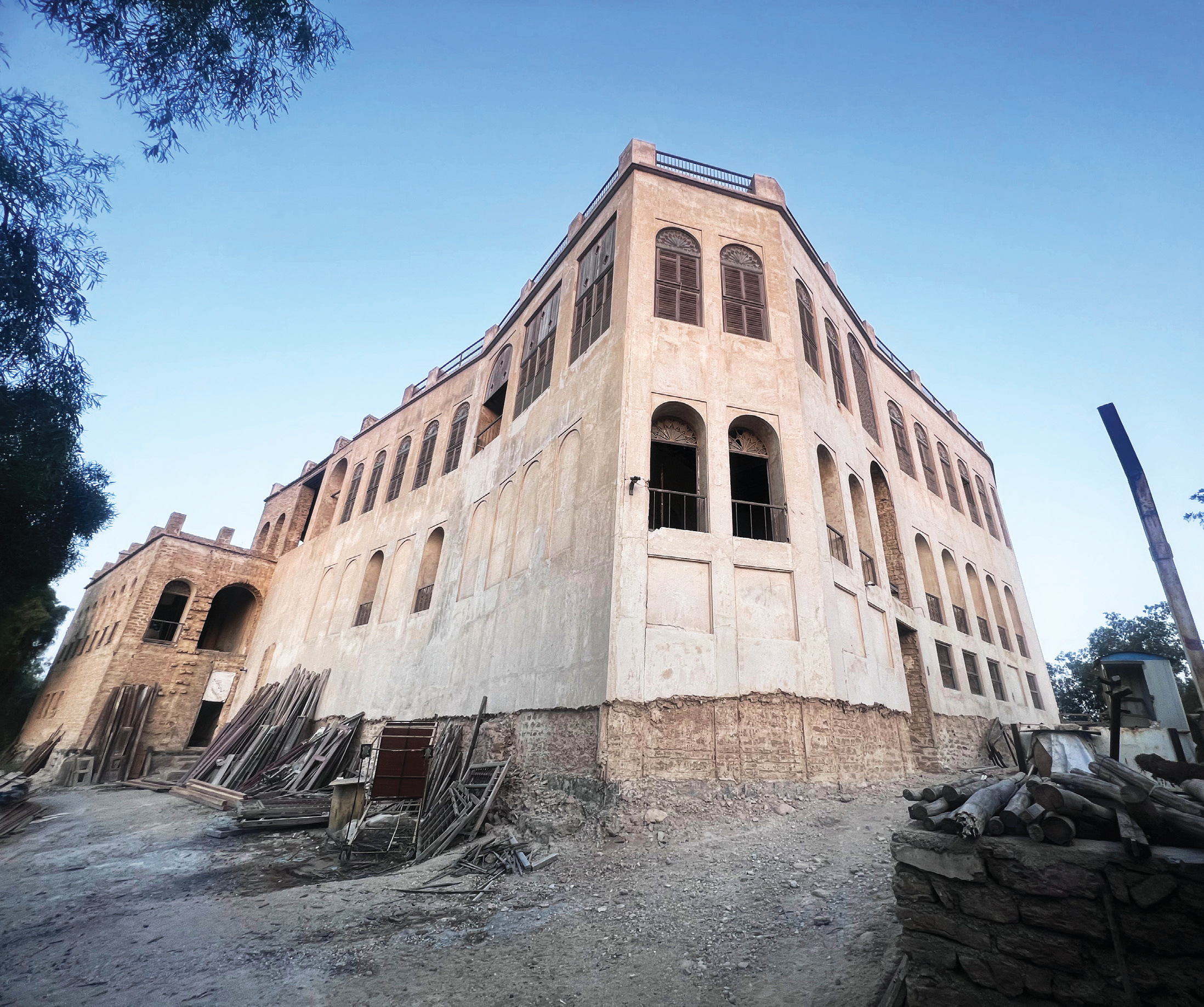
The Edifice of Haj Raeis, the largest building in the historic texture of Bushehr's four quarters, stands a few hundred meters from the Persian Gulf shore. Covering an area of 4,450 square meters, it is surrounded on three sides — north, east, and south — by the Bushehr port authority, and on its western side borders the historic texture via an adjacent street. The main entrance today is from the west side, though originally it was on the eastern side.
This edifice is an interwoven complex of several residential, service, and commercial buildings with central courtyards, gradually built and consolidated alongside one another. The building was founded by one of the most prominent merchants of late Qajar-era Bushehr, Abdolrasoul Talebi, known as Raeis al-Tojjar (Chief of Merchants) and commonly called Haj Raeis. He resided there until the end of his life in 1948. Two decades after his death and the family's departure, the building fell into disrepair and ruin — a condition that persists to this day and threatens the survival of this unique monument.
Components & Structure
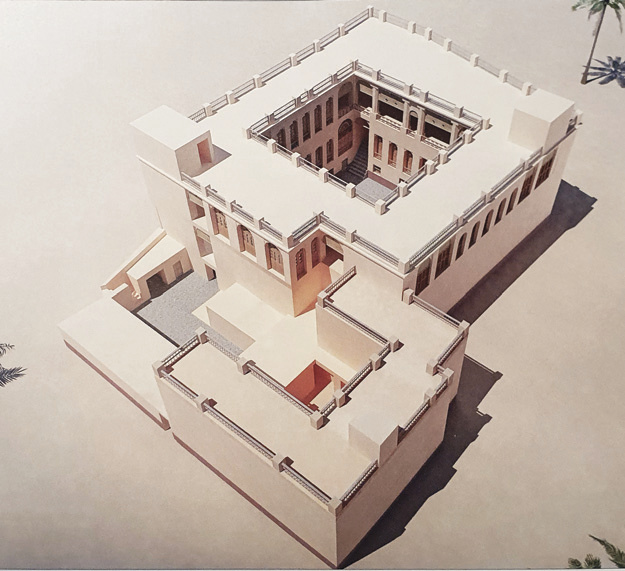
The edifice is a complex of nine buildings with central-courtyard architecture, of which four courtyards have been lost. The surviving sections are as follows:
The Andaruni (inner quarters — Haj Raeis's house): The largest component, located on the western side, rises three stories around a square central courtyard of 225 square meters. This was where Haj Raeis lived and received guests. The predominant external view of the building faces this section — the most spacious and opulent part of the edifice. In the center of the courtyard lies a large cistern that stored water for use during the hot months.
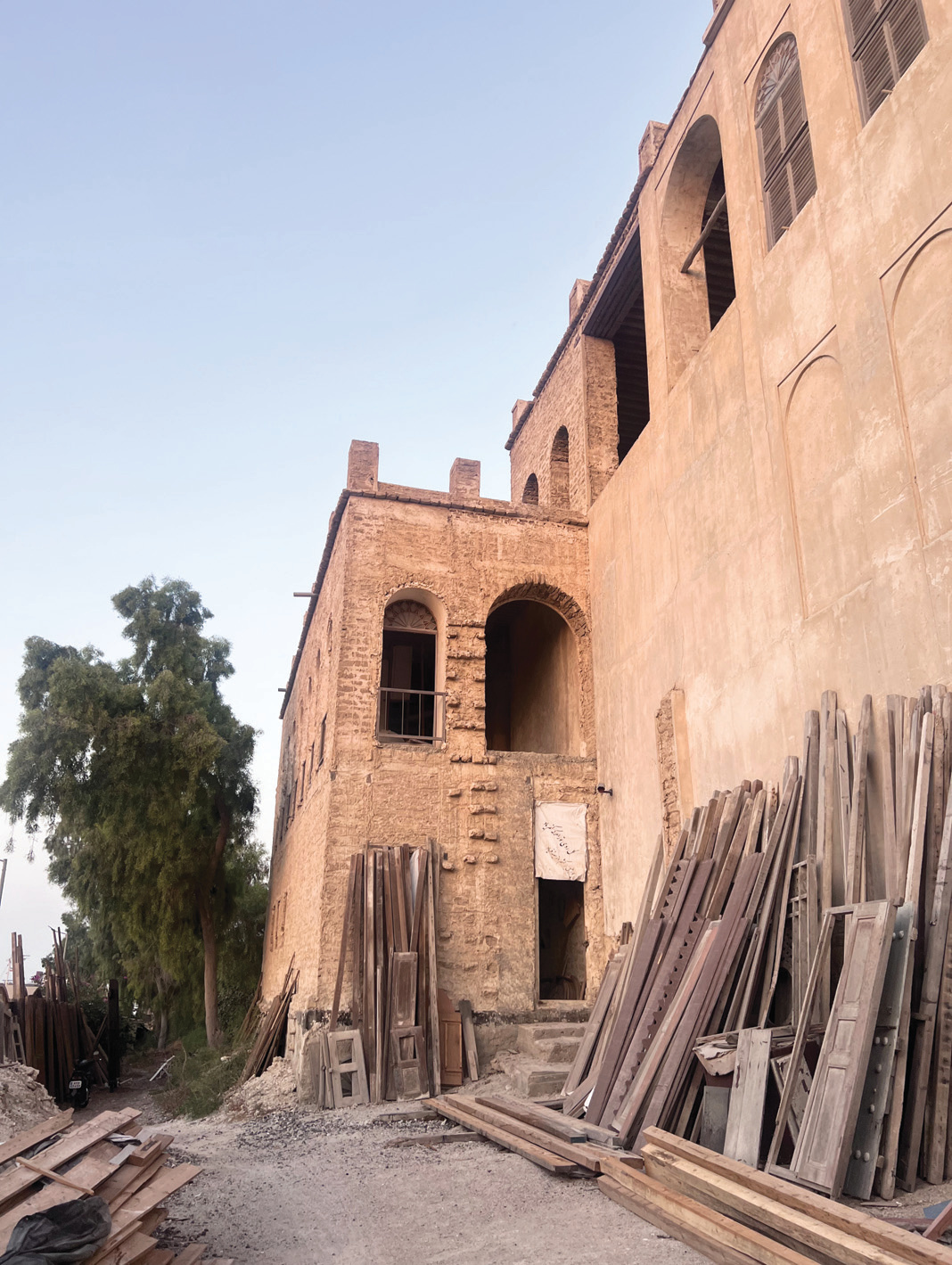
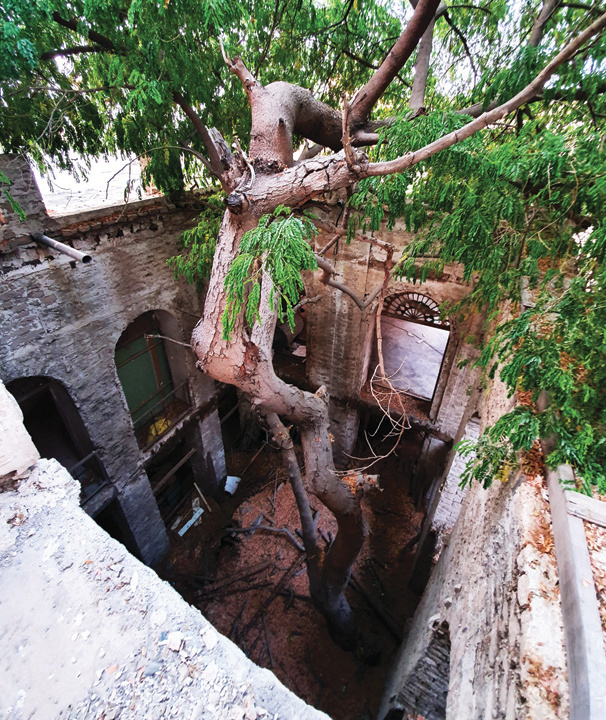
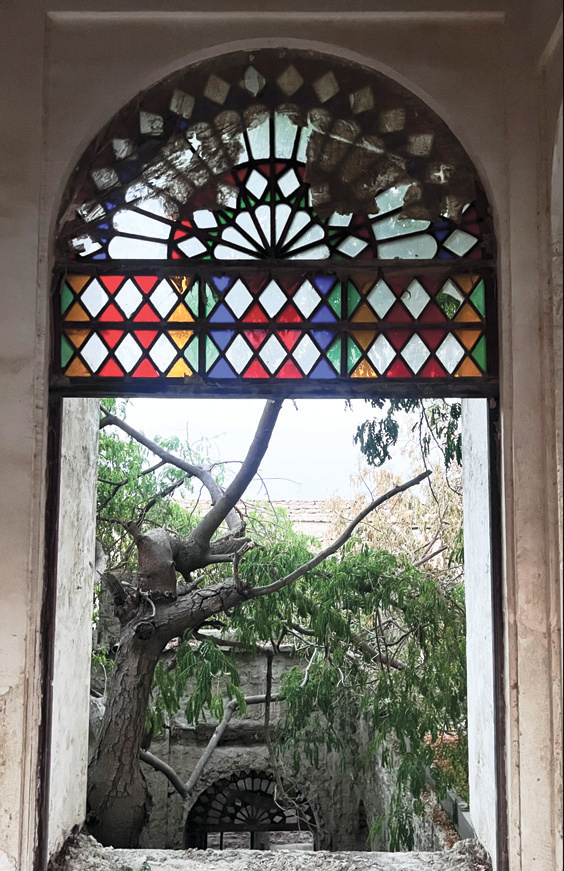
The Kitchen quarter: A building with a central courtyard, attached to the andaruni on its western side. In the center of this courtyard dwells a magnificent silk tree (gol-e abrisham), whose presence the visitor senses at various levels while exploring the central section of the building. The game of hide-and-seek between this tree and the visitor is strange and unforgettable.
Servants' quarters: A two-story building in the northern part of the kitchen quarter. House of Mohammad Hossein (Haj Raeis's son): A three-story building with a central courtyard — the second largest courtyard after Haj Raeis's own. Connected by a narrow passage, it forms the easternmost part of the complex. The Majlesi courtyard: A two-story building south of the kitchen building, connected to Haj Raeis's house, featuring distinctive and unique decorations, dedicated to receiving guests. Other sections: Include the stable and a courtyard for pack animals, in the southern part of the complex.
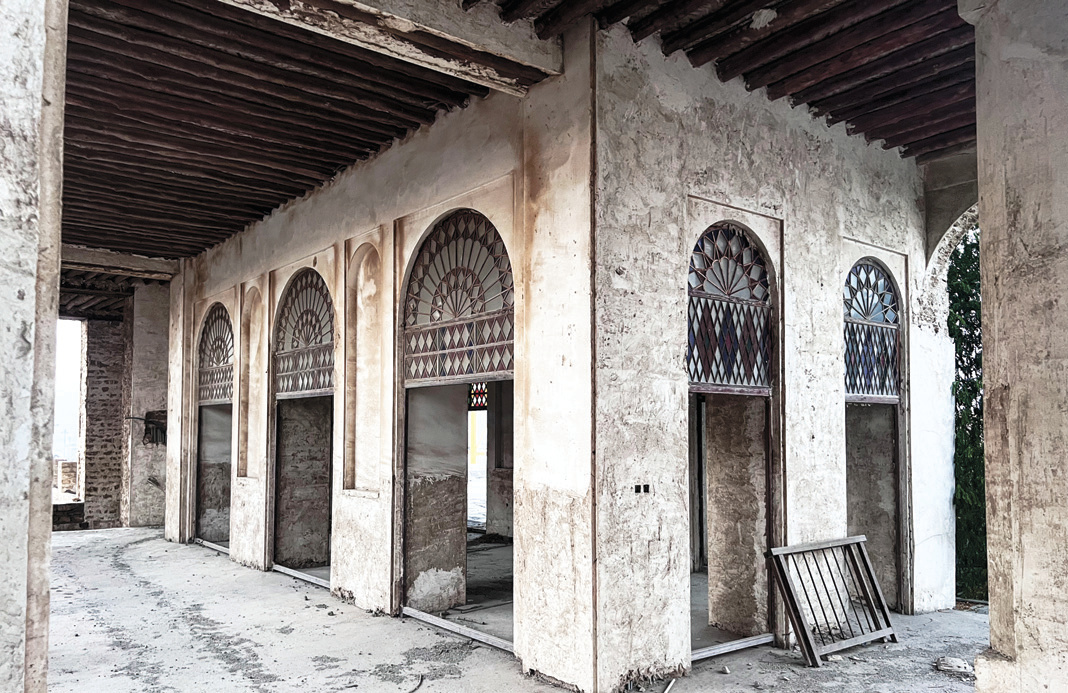
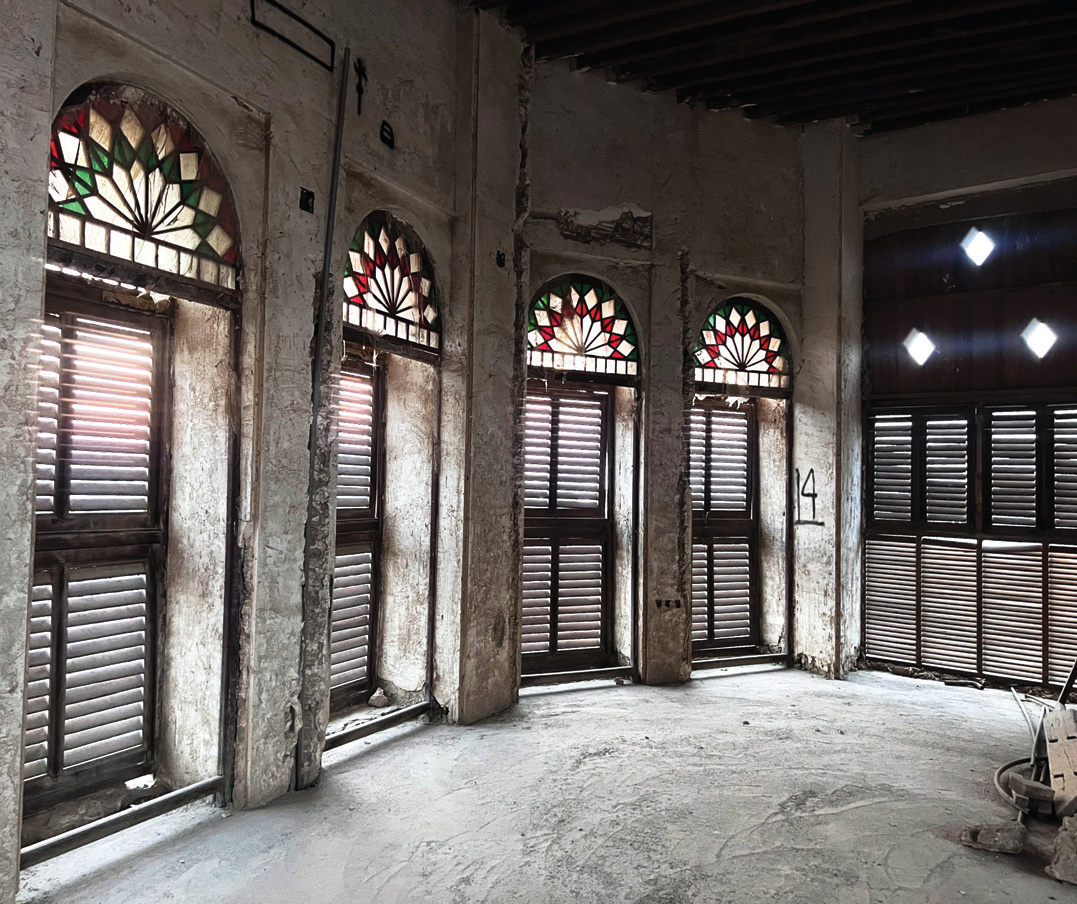
Ornamentation
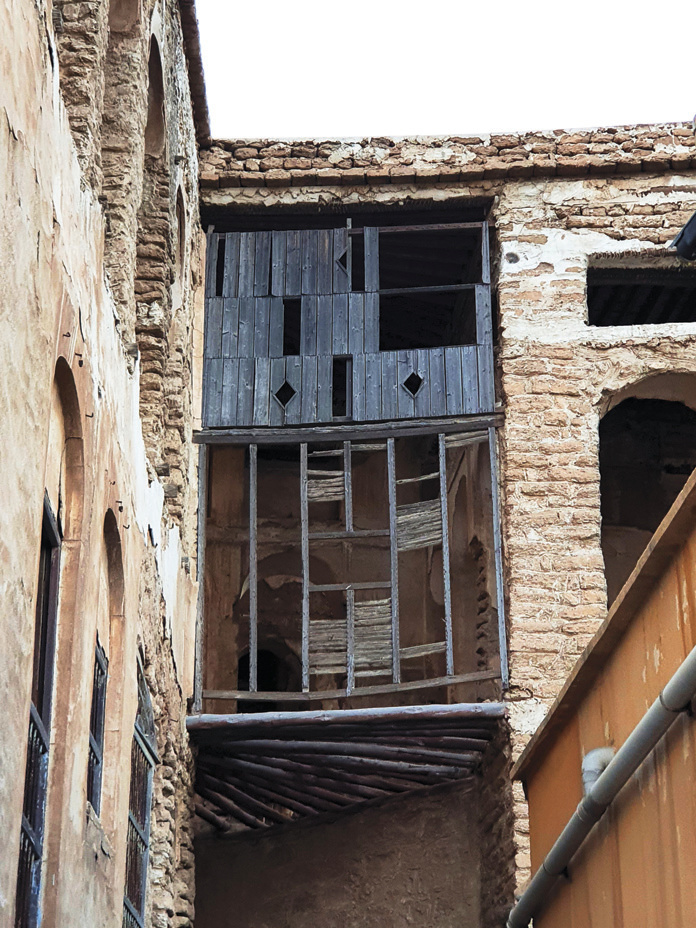
In the buildings of old Bushehr, commensurate with the owner's wealth, delicate ornamentations abound — especially in the details of wooden doors and windows. Throughout this edifice, doors, windows, and exquisite built-in cupboards could once be found, though sadly most of the precious doors and windows of this complex have been damaged or stolen over the years — a fate shared by many houses in Bushehr's historic texture.
Structure
The building's structure, like other old Bushehr buildings, consists of load-bearing walls and columns made of coral stone, quarried by hand from the vicinity of Bushehr. Ceilings are made of imported wood known as chandel. The building is massive and solid on the ground floor, becoming lighter and more windowed on the upper stories.
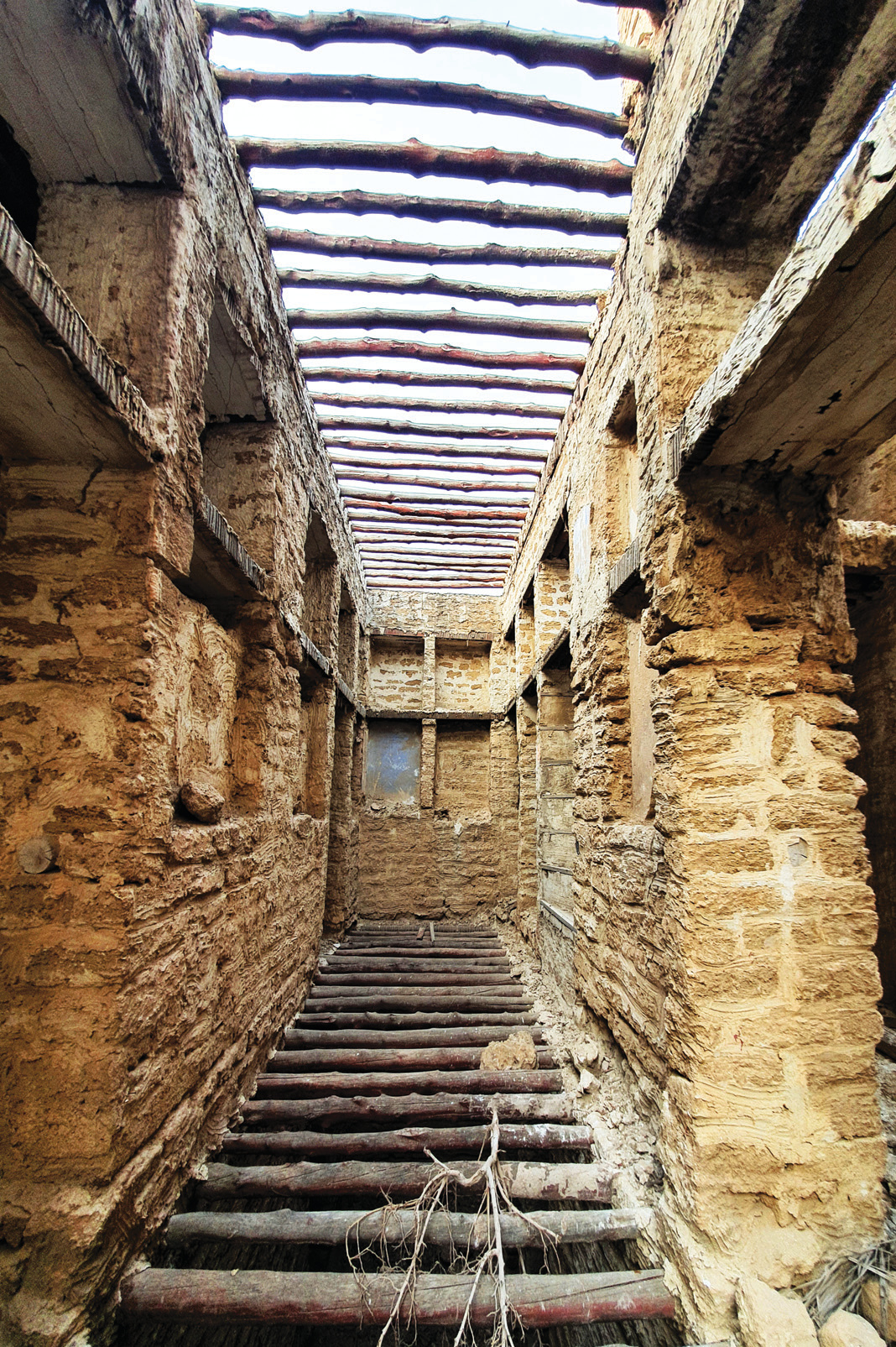
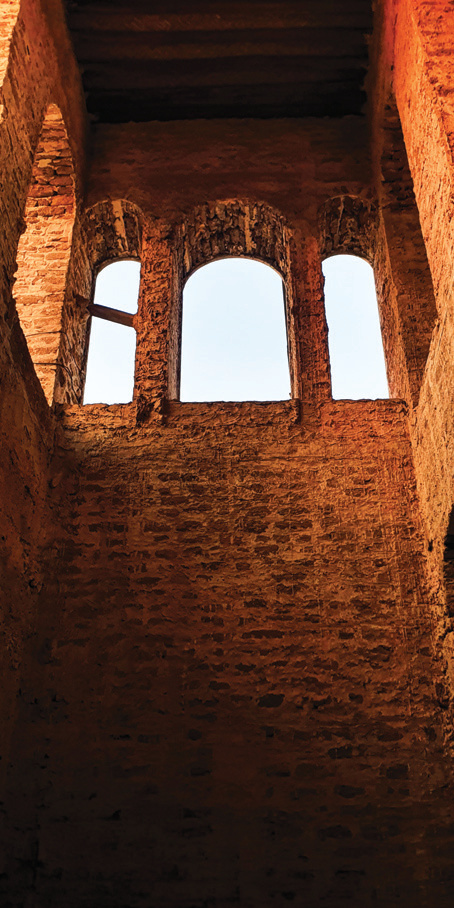
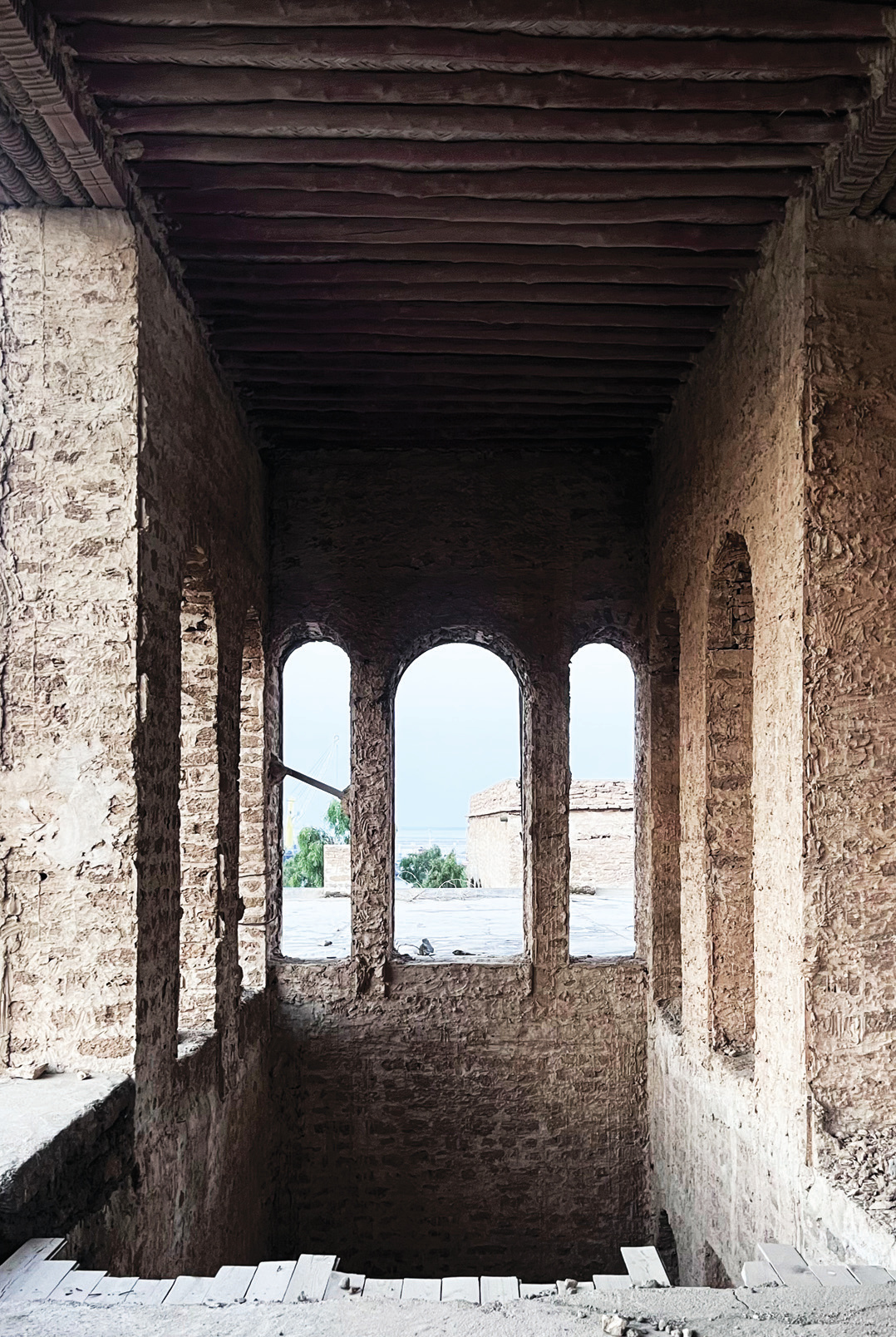
Exploring the second and third floors, one encounters stunning views of Bushehr's historic texture and the Persian Gulf shore. In every region of this ancient land, there exist works of architecture through which the people of that region define and explain their identity and sense of belonging. The author calls these works pahlevan-bana — "champion buildings." Their existence evokes a sense of belonging to a land, and their destruction amounts to the destruction of a people's identity.
The Edifice of Haj Raeis is one of the champion buildings of Bushehr's historic texture. It overturns many of the conventional and customary scales of Bushehr's old quarters. The complexity and interwoven nature of this edifice presents beautiful and unparalleled expressions of Bushehr's architectural art. The visitor gently flows through the building's components and spaces — at moments believing themselves lost within it, and at other moments discovering, with surprise, a new vista.
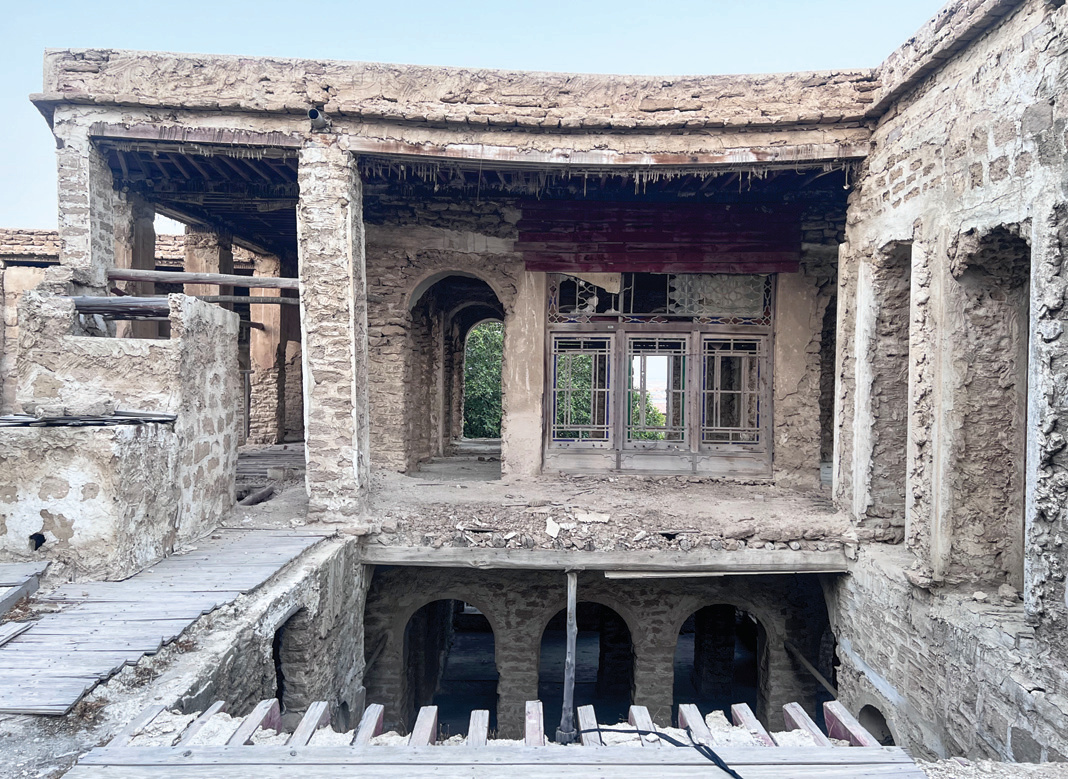
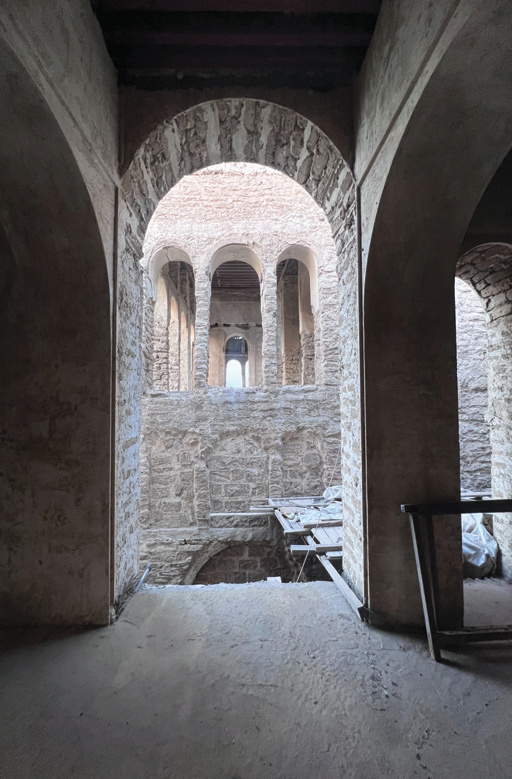
This edifice is "Bushehr architecture" at the height of its strength and its delicate wit. The boundaries and connotations of familiar spaces in Iranian architecture are suspended here. The visitor, confronted with different parts of the building, faces the question: what is the nature of the space surrounding them? Sometimes a room is so open that it suspends its very "room-ness." Sometimes a courtyard is so narrow that it takes on the guise of an alley. In the building's body there are no dead ends — there is always a new path for exploration. The visitor sometimes cannot tell whether they are moving through the building, or standing still while the building revolves around them, revealing different facets of itself. This building brims and overflows with every identity-forming element of "Bushehr architecture."
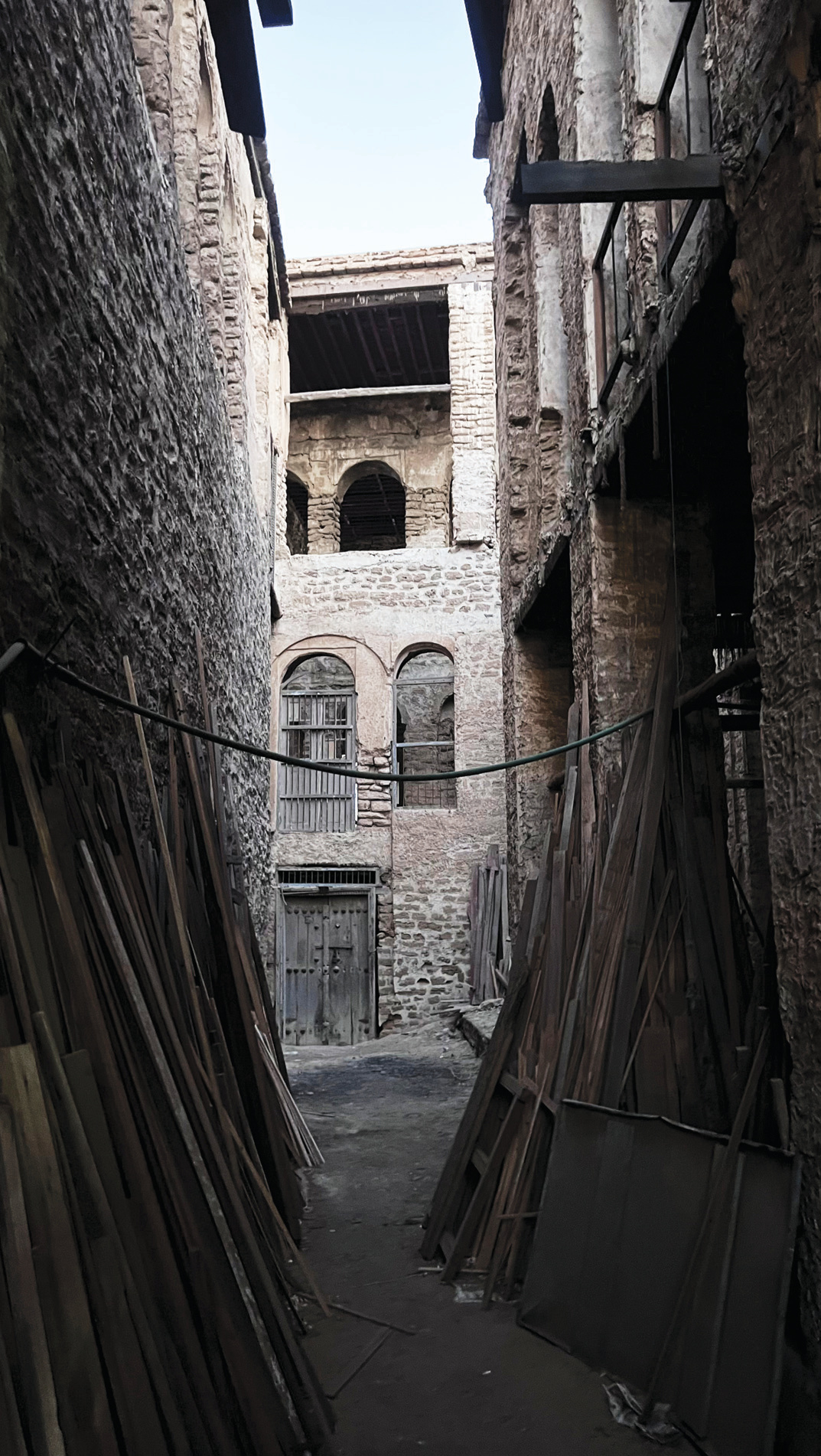
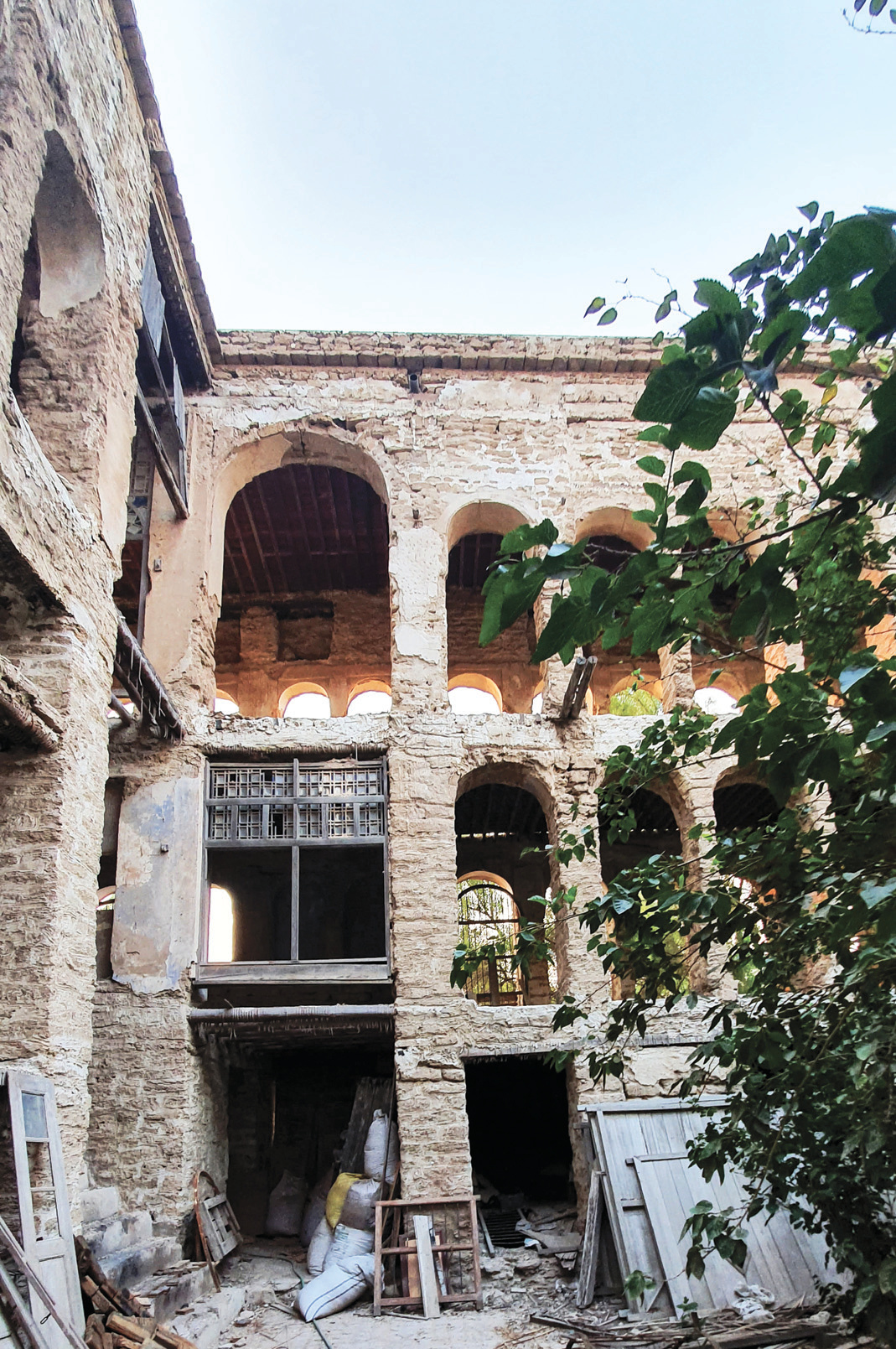
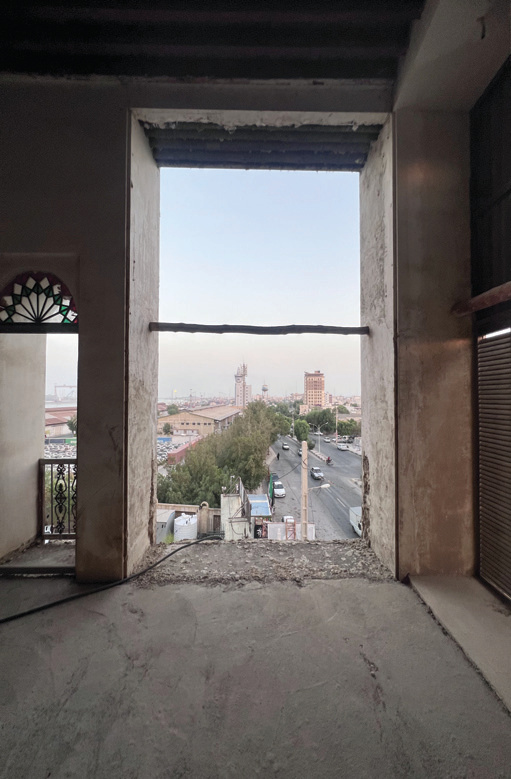
The fate of the Haj Raeis house and the historical neglect of this monument over the past sixty years is a story both contradictory and poignant. On the other hand, one should be grateful that this valuable building has thus far survived our ignorance and neglect as inheritors, and that we can still witness its presence in a corner of Bushehr's historic texture. One hopes that through principled and timely restoration, this peerless monument will be given new life and its citizens will benefit from its presence.
References
- Gholamzadeh Jofreh, F. (2013). Architecture of Bushehr in the Zand and Qajar Periods. Tehran: Abadboom Publications.
- Morbaghi, B. (2014). New Motifs in Bushehr Architecture. 1st ed. Tehran: Payam Publications.