Carlo Scarpa
After the death of Antonio Canova, the plaster and terracotta figures left in Canova's studio in Rome were moved, in the 1820s and 30s, to a new space built in Possagno to display these works by Canova's half-brother, the abbot Sartori Canova1. By 1955 this large hall in the nineteenth-century church near Canova's birthplace, designed in dark grey by Francesco Lazzari2, seemed far too small to house the countless plaster casts. The bicentenary of Canova's birth in 1957 offered an opportunity to extend the building, while the general catalogue of the works, written by Elena Bassi3, a Venetian scholar, in those same years, became the basis of an important reassessment of them. The fine arts authorities of Venice commissioned the work from Scarpa, who was at that time restoring and preparing the Accademia gallery in Venice with the gallery's director, Vittorio Moschini4.
Although the main aim of the commission was at first to move the figure of Theseus5 from the Accademia to the Possagno museum, careful and up-to-date study and analysis led to priority being given to an overall, ordered arrangement of the casts. Scarpa's new building extended along the west side of the existing building, on a narrow, elongated, gently sloping site bordered on the opposite side by the street. Scarpa also placed a smaller building along the prominent mass of the old gallery, with dimensions that fitted delicately into the dense urban fabric. Two volumes side by side were defined by a gradual slope: a tall square room, probably designed to house the Theseus, had a terraced gallery alongside it on the inner side. This made the shape of the site narrow, while towards the Lazzari hall a separating passage in the open air led to a small garden.
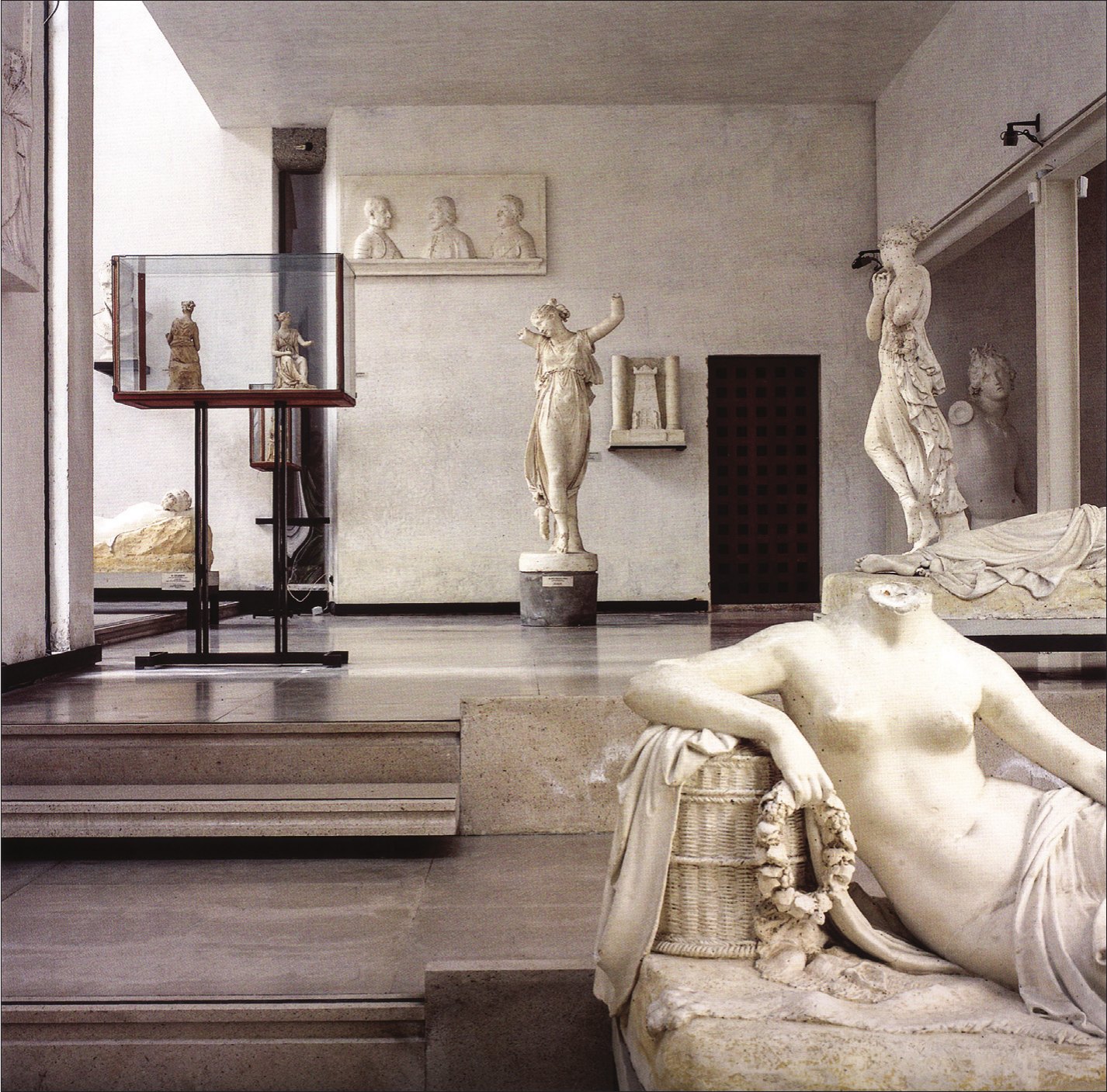
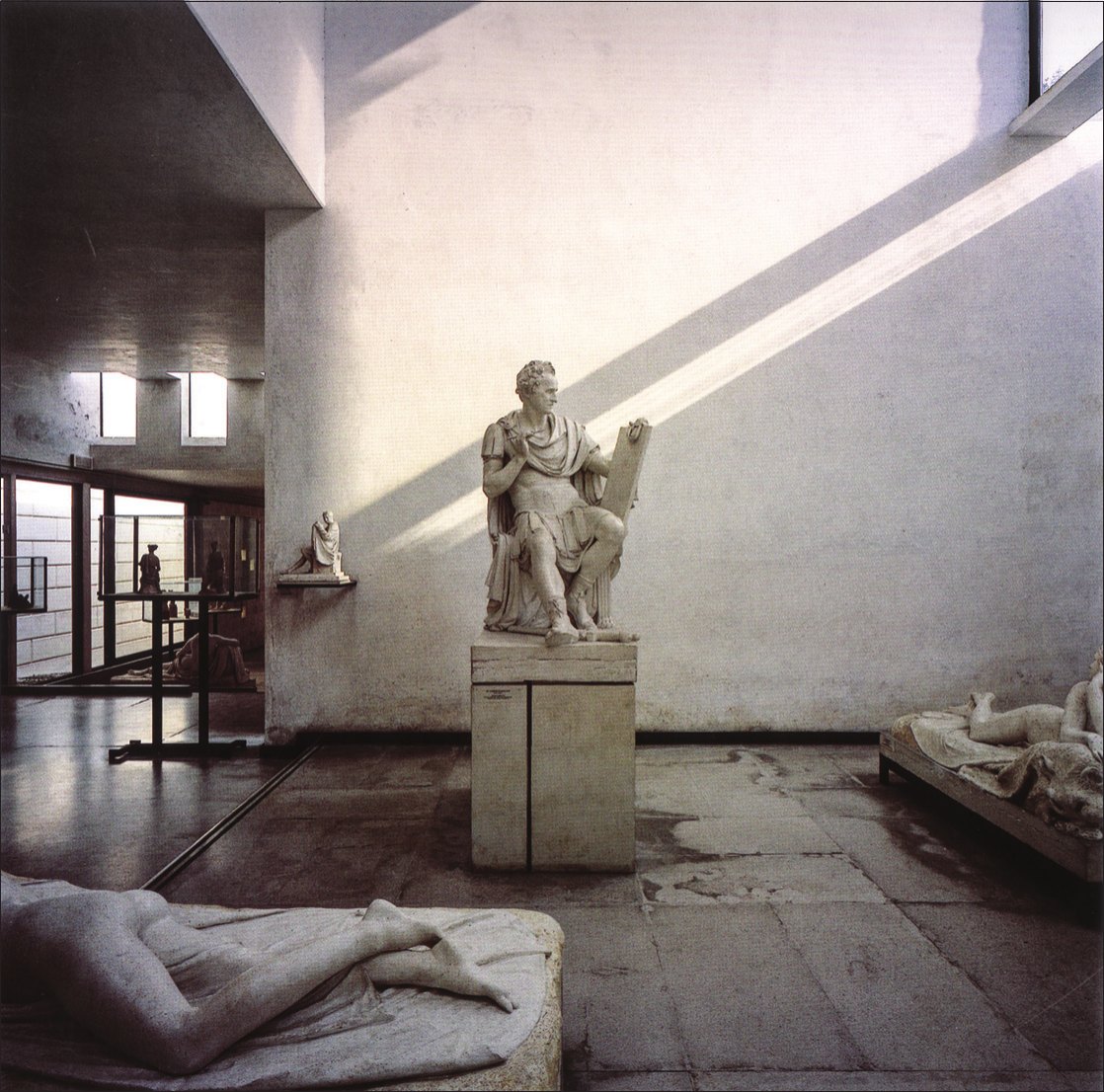
As Carlo Scarpa described in a lecture at the university institute of architecture in Venice (Scarpa 1981), the space obtained, with its varied heights, created plastic conditions that could be broken by the single large statue. The architect therefore proposed building a whole with a new arrangement of the casts. The particular typological aspects of the museum were addressed in the design carefully and sensitively, its starting point being the effort to understand precisely and admiringly the works on display. Canova's statues, in this sense, must have been a special and fascinating subject for Scarpa: Scarpa saw the unique nature of each statue in contrast with the fragility of the materials it was made of; moreover, dark points had broken the whiteness of the original plaster - these became the guiding marks for remaking the statues in stone.
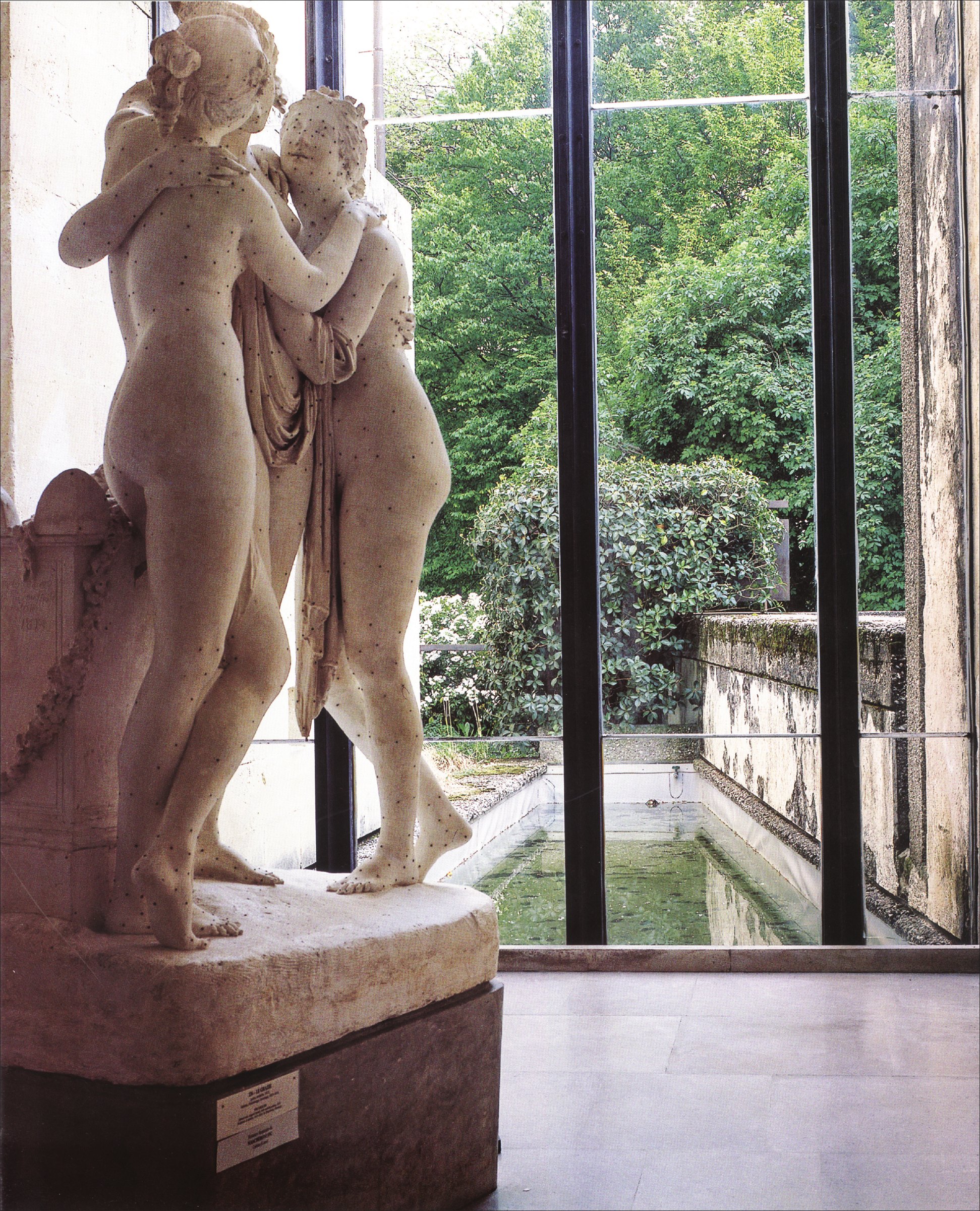
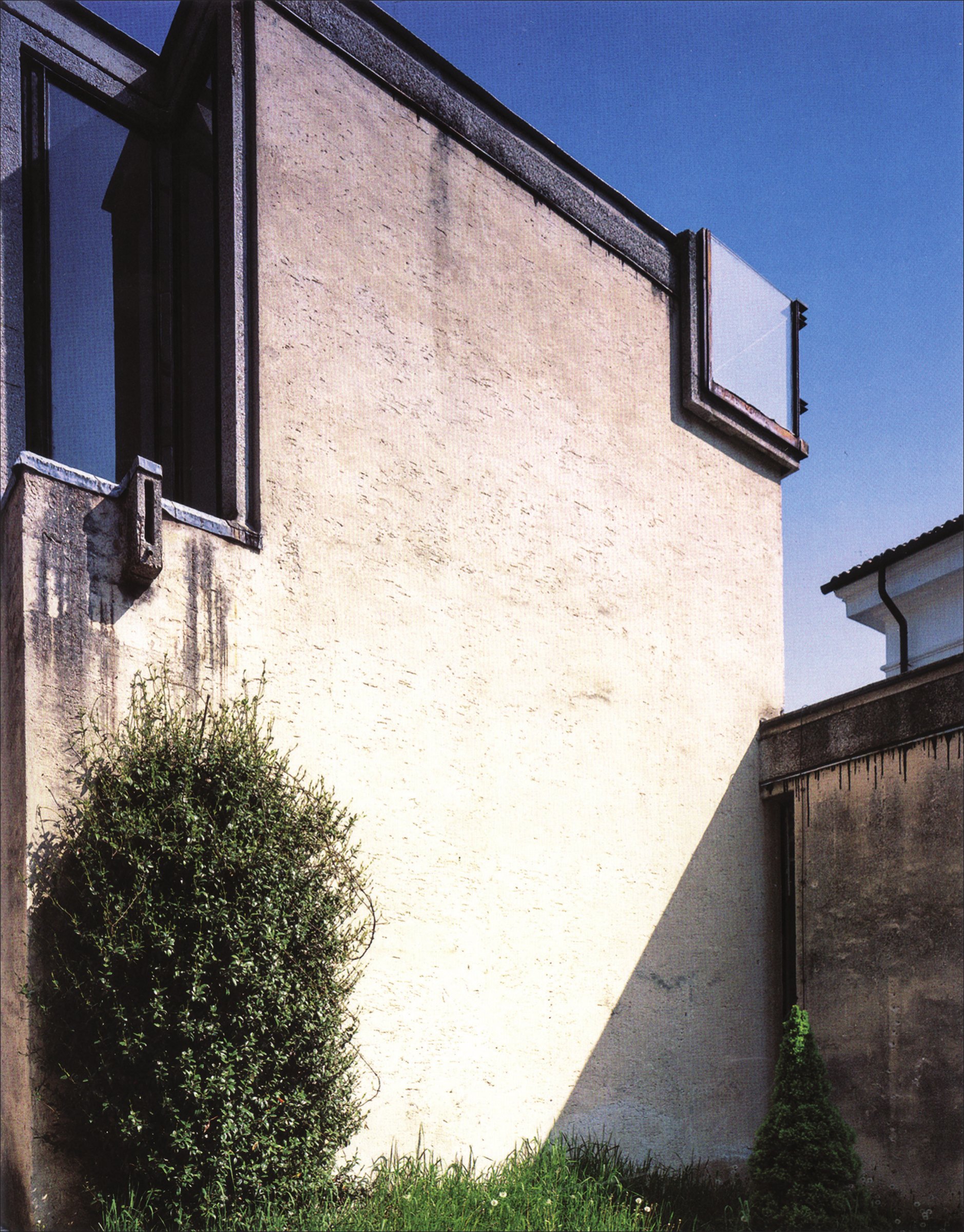
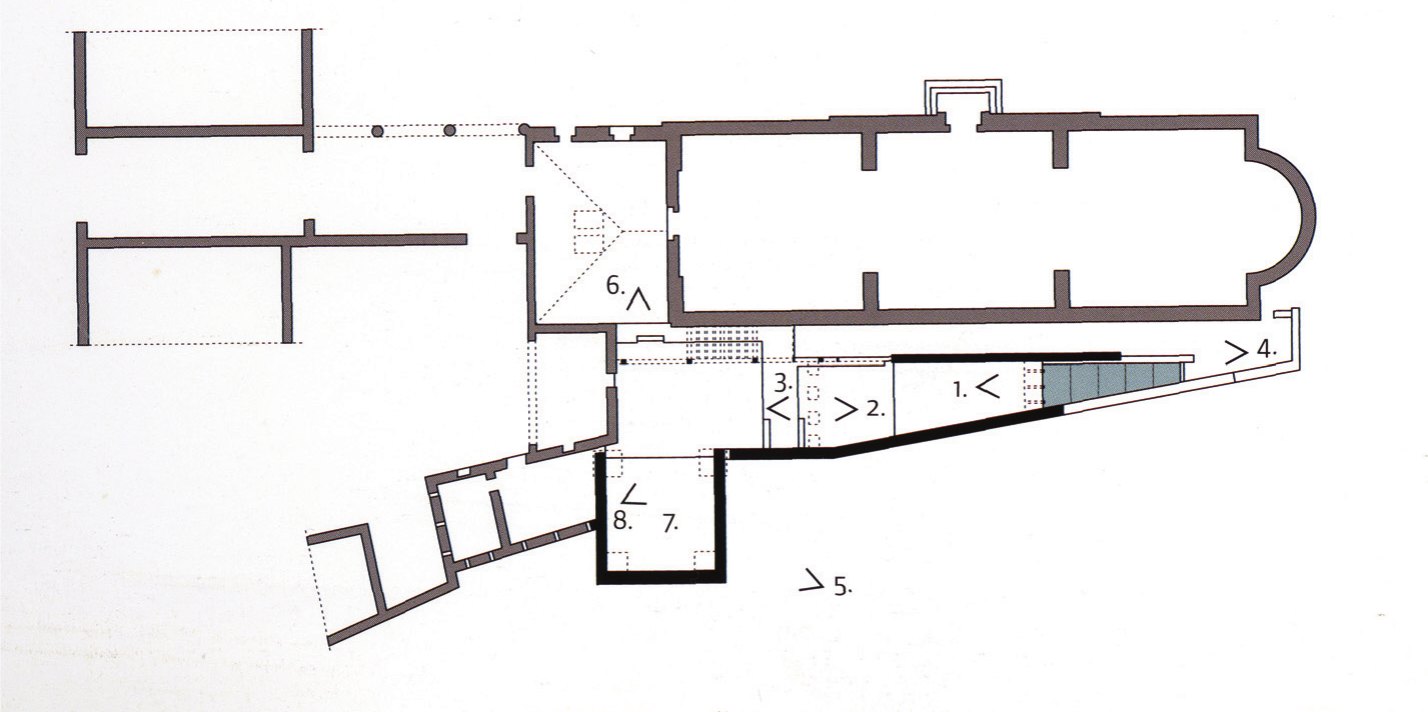
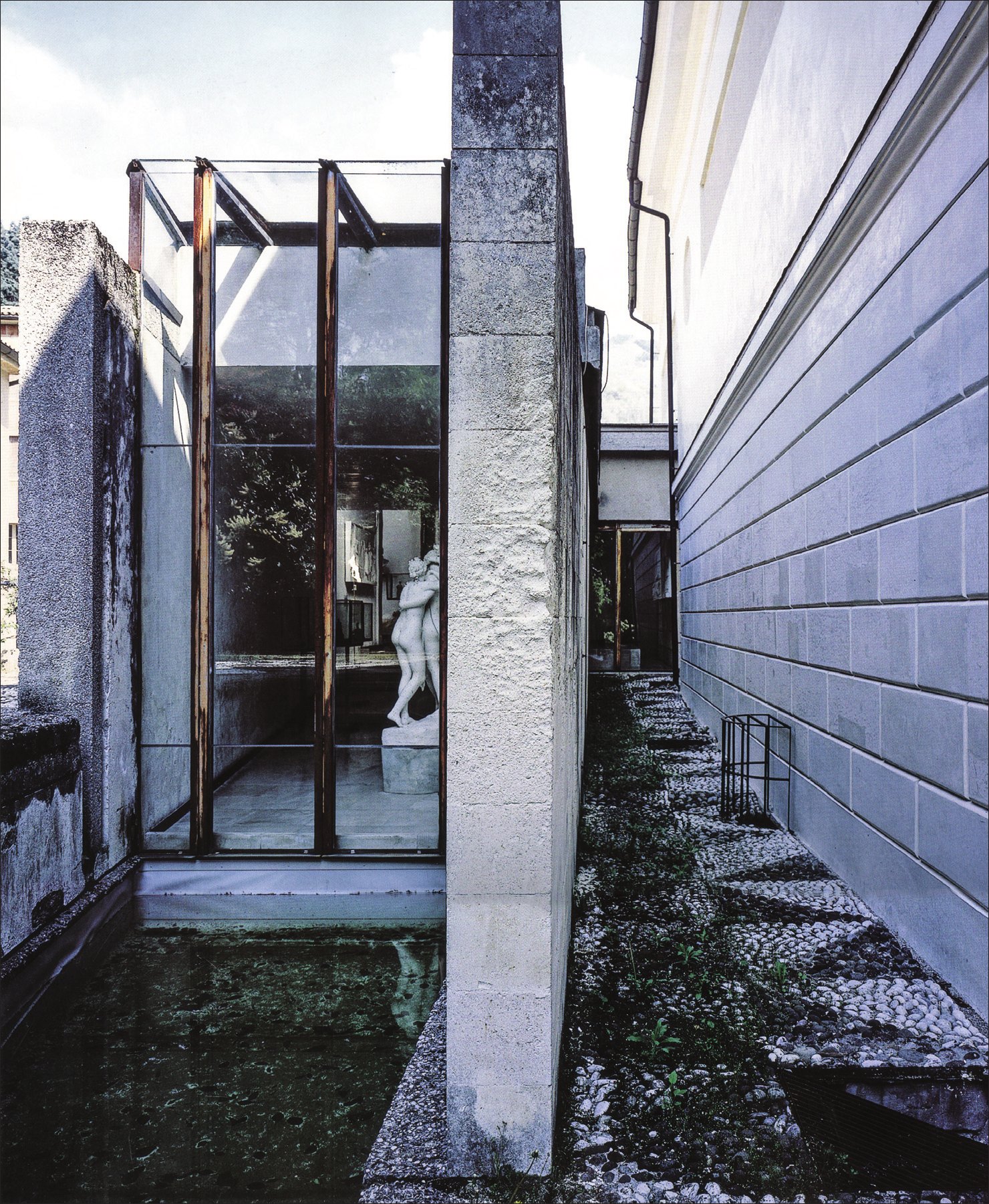
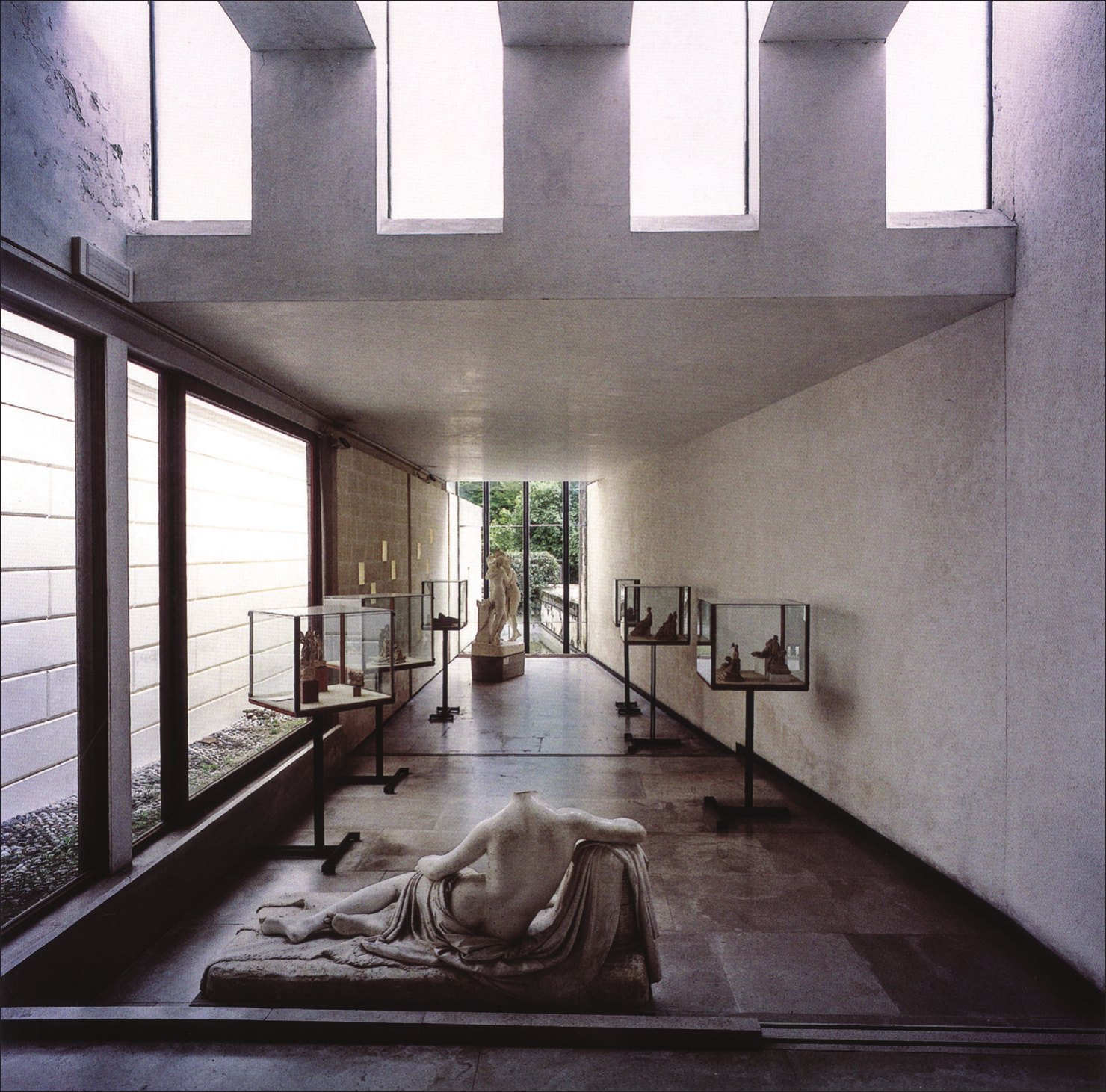
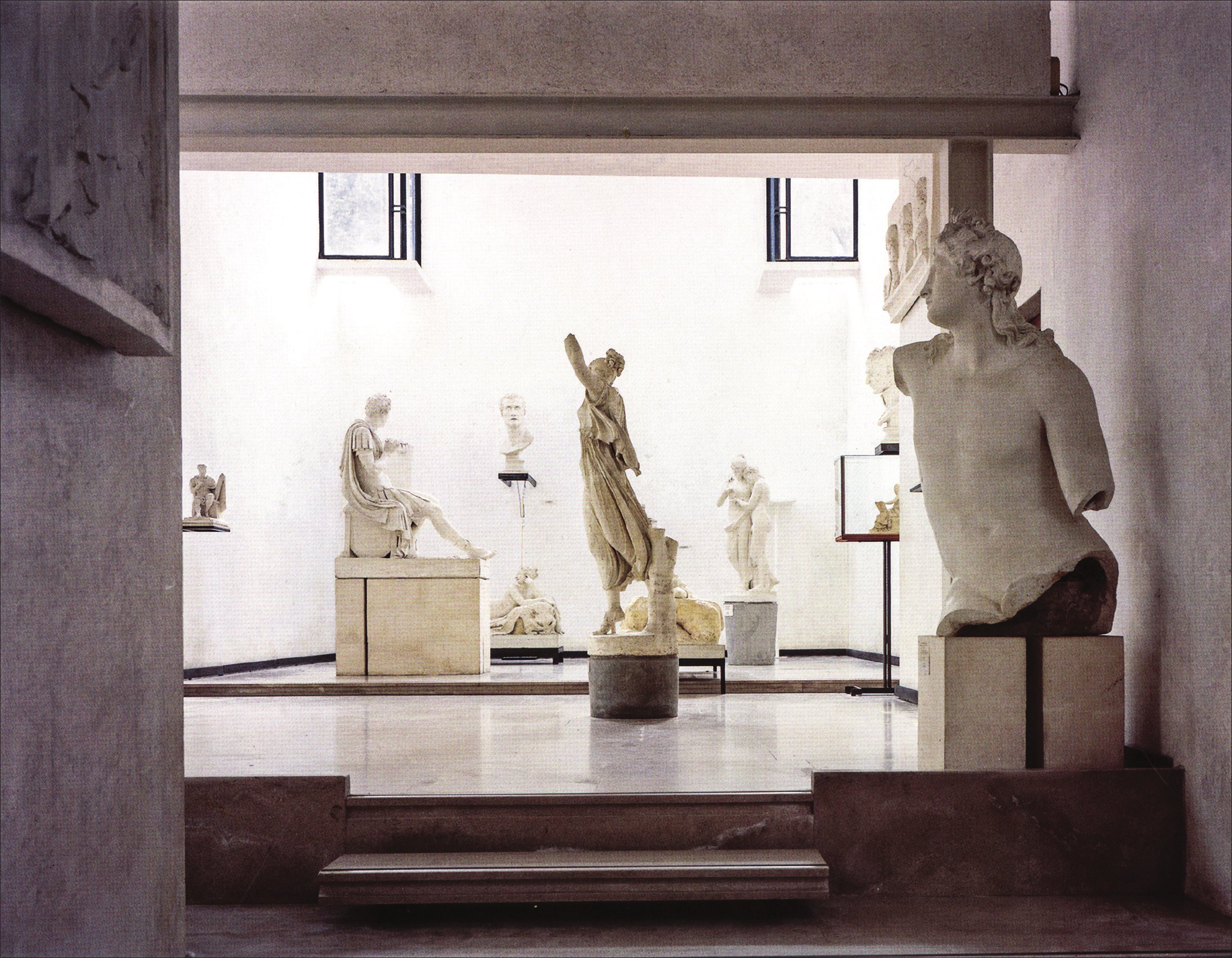
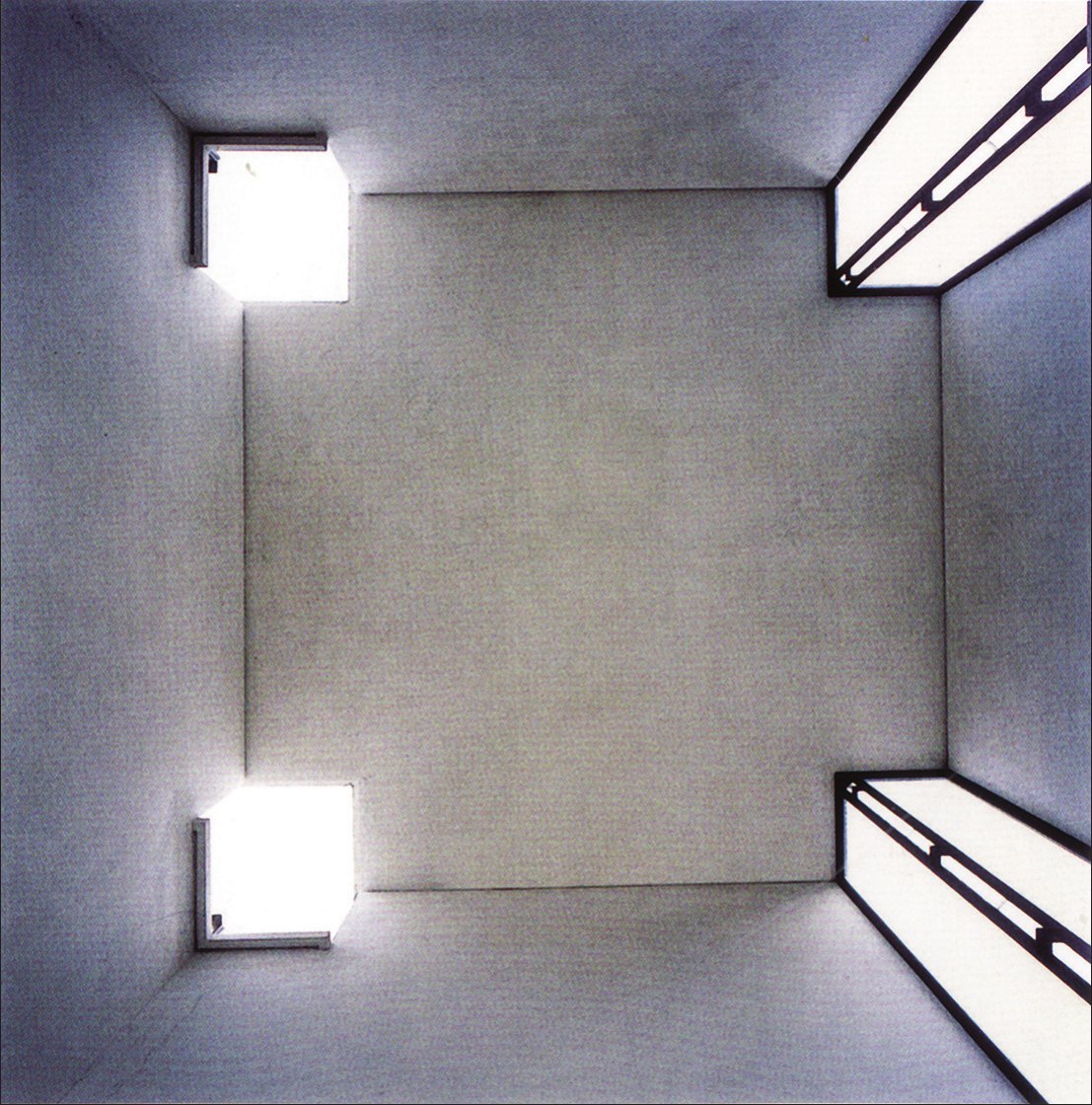
Scarpa tried to correct the "formlessness" of the plaster by bringing direct natural light into the gallery, and also extended the whiteness of the statues to all the wall surfaces. The shape and position of the openings came directly from the effort to have "a cut of the blue of the sky" (Scarpa 1981): in the large square room Scarpa designed glass corners, alternately projecting and recessed, like real blocks of light, to provide lighting from above. The gallery, on the other hand, took its light from three vertical windows, placed so as to emphasise the lowering of the ceiling, and from a wall whose shortest outer side was glazed. The effect of the enveloping light, which also entered through small square openings in one of the walls, was intensified by the complete whiteness of the surfaces. Scarpa's bold choice of white went against all ideas of colour contrast, and created a complete sense of spatial continuity. So the outward appearance of the new part was very different from the main core of the museum; Scarpa's gallery of plaster casts was a continuous space, where the close relationship between architecture and works of art was broken only by the changing light. The arrangement of the sculptural casts, displayed with the most minimalist of devices, was entrusted to "the intuition of composition" (Marini 2000), one of the most astonishing aspects of Scarpa's architecture.
Footnotes:
1- Sartori Canova
2- Francesco Lazzari
3- Elena Bassi
4- Vittorio Moschini
5- Theseus (fighting the centaur) (one of the Greek myths – translator's note)
Carlo Scarpa: Architecture and Design