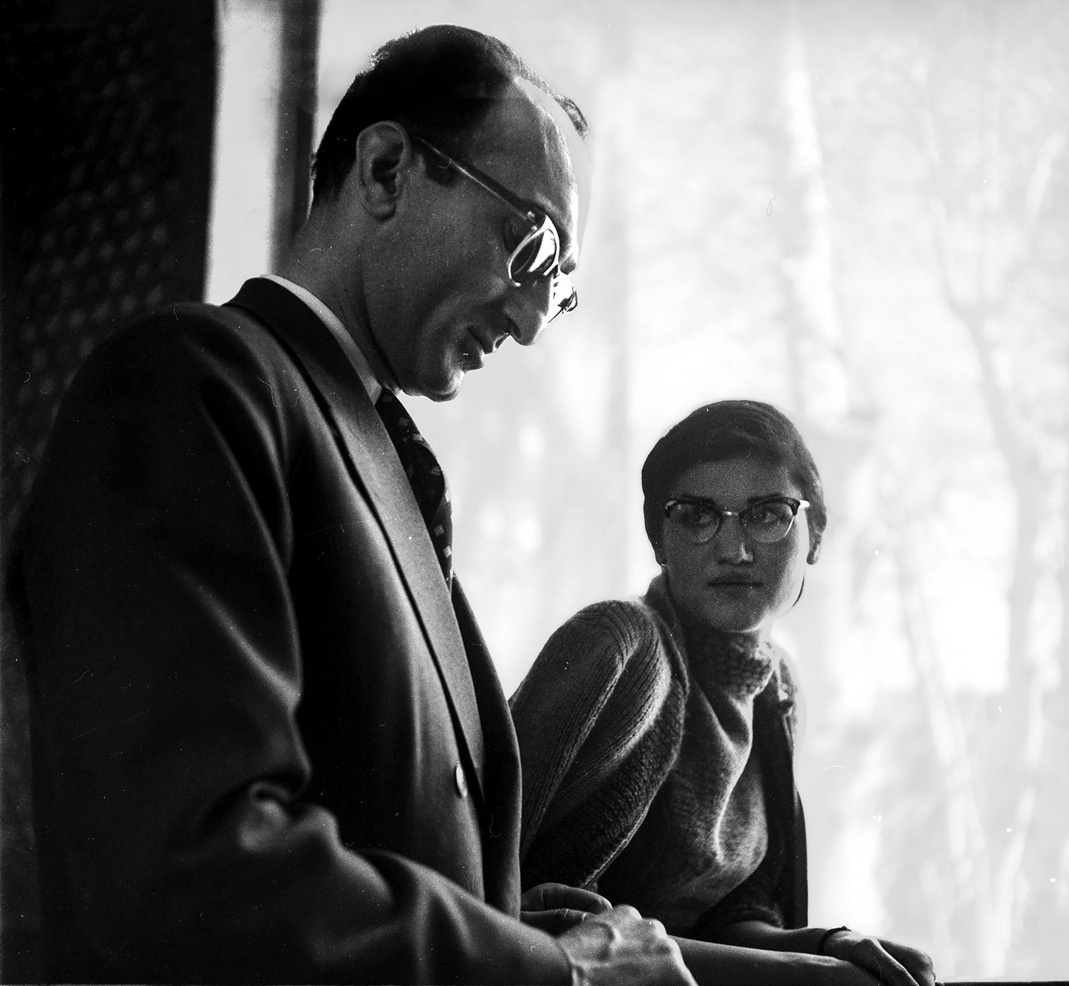
It was an autumn Friday afternoon, around the year 1372 (1993). In those years, compared to these times, more family and friendly gatherings were held. At one such gathering, while everyone was busy chatting, a white-haired man sat quietly at the edge of the salon, communicating with others only through his gaze and his perpetually sweet smile. He was the true hero of my father's life. An engineer whose stories I had always heard from my father. Engineer Yousef Shariatzadeh — or as the relatives called him, "Yousi." A man who spoke very sparingly, who was unassuming, and who — according to those who knew him — was a supremely skilled architect. I had heard that his reticence intensified outside the workplace, and it was as though he had an unwritten rule that in the domestic and non-professional setting, there would be no talk of architecture. I should add that my father, Mohammadreza Moghaddam — a fourth-cohort entrant to the architecture faculty at the National University — is, like his master, a man of few words and little pretension. Through family ties with Engineer Shariatzadeh, he began working at that office from his second year at the faculty, and by 1356 (1977), owing to his ability and diligence, he had become a shareholder in the Banyan firm.
Let us return to that autumn afternoon. I, who had just entered the field of architecture, took the plunge and approached Yousi, opening a conversation with a single question. With utter hopelessness I asked: "If you were to design an architectural work, where would you begin?" He smiled deeply, took a few puffs on his pipe, and contrary to expectation began to explain: "First we see what the subject is. For example, if we are working on a cinema or a philharmonic hall, one of the most important issues is maintaining a large ceiling without using columns beneath it. In other words, given the capacity of the hall, the design of a structure with a very large span is the concern for me; or attention to the acoustics of the complex and the condition of sound, or the sightlines — how the audience sees the main stage — which determines the arrangement of seats and the slope of the floor..."
His masterful answer was, at that time, enormously fascinating to me. During the years of study at the school of architecture, the current was such that we first addressed the external volume and the form of the project, and the functional aspects of architecture were among the secondary priorities. We designed as though a bird were looking at the project. But in reality, we — the users of architecture — are human, and we should have been looking at the project from a human perspective. The remarkable point is that Engineer Shariatzadeh approached problem-solving with a functionalist vision that emanated from his inherently tasteful and artistic nature.
If we accept that a person retains vague memories and images from childhood — from age three to six — I must confess that many of these images, spaces, and personal memories of mine are connected to the art of Engineer Shariatzadeh. For a child lacks the capacity to analyse an architectural work, yet that work leaves a lasting mood and impression upon his mind. The office of Banyan Consulting Engineers (today's Pir-Raz) on Zartosht Street is one of those examples that, in defining architecture for me, has been influential since childhood. Engineer Shariatzadeh had designed this building — combining an architecture office and a residence — in such a way that, at the age of four, I was always searching for an excuse to visit my father's workplace in that very building. There was always a curious, insatiable delight in me for being present in and seeing that space, and in the end, against my inner wishes, my mother would send me home. I cannot forget that the atmosphere of that office left in me a feeling far warmer than home or kindergarten.
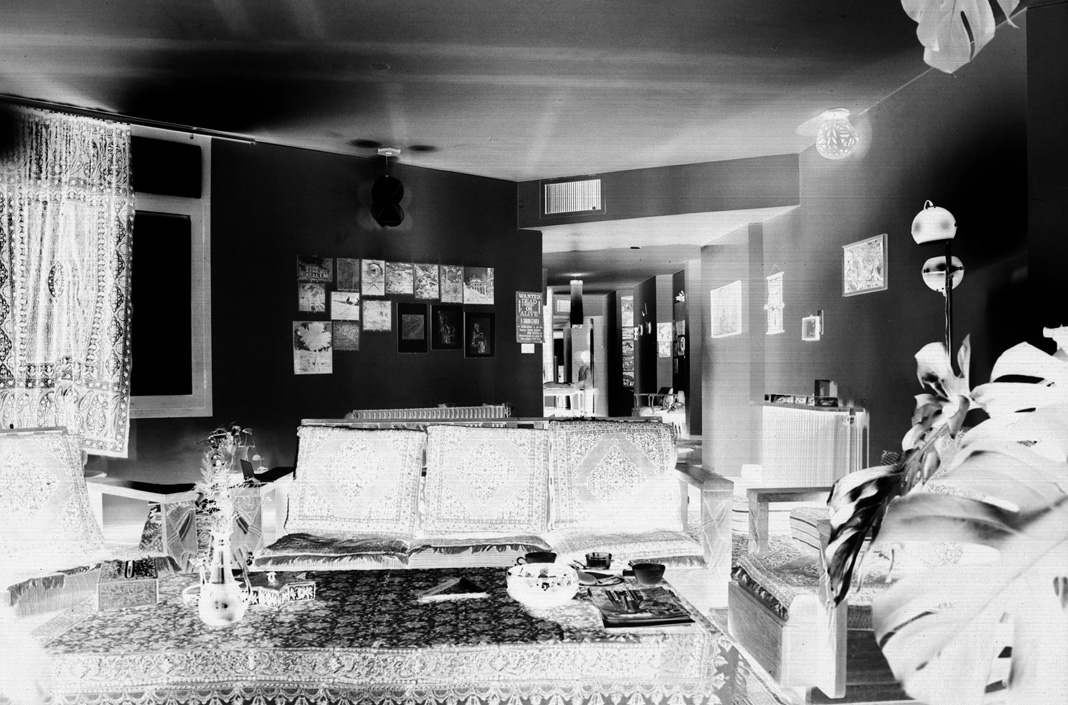
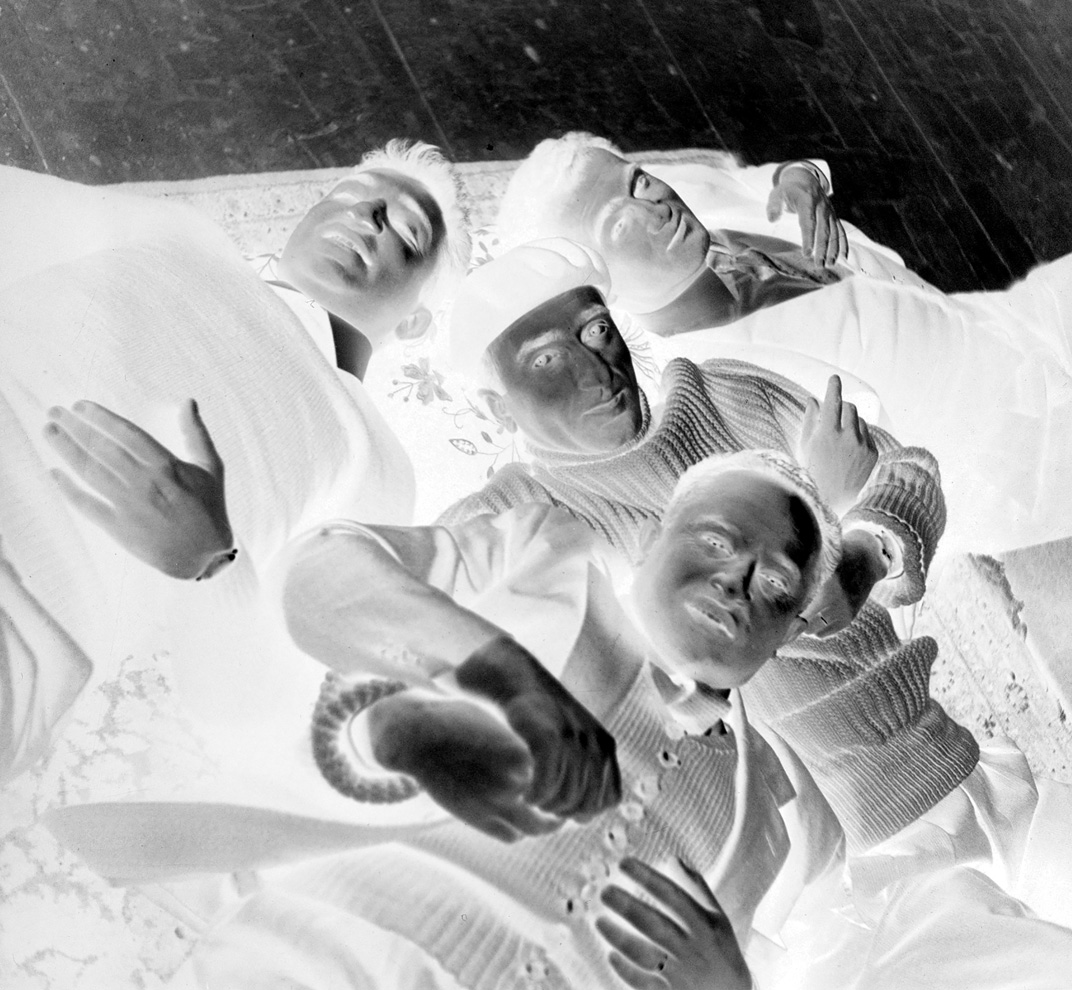
The next work was a house he had built — with love — for himself and several relatives on Nineteenth Street in Yousefabad. A building with highly complex and interwoven units, each of a different configuration. On the whole, a very modern and efficient complex that we were first invited to when I was seven years old. The only thing that remained in my memory was the magic of the space and the architecture of the building; and that night, in my childhood world, I too decided to become a magician. Sometimes architecture can cast a spell. Years later I would wonder what aspects of that environment had affected me. Today I have arrived at a long list of multiple elements and points. My attention to the Yousefabad house at different periods of my life was, of course, thought-provoking. By magic I mean its mysteriousness, the possibility of revelation, and its singular beauty for a seven-year-old child whose initial impression has still not left his mind.
Later, at the memorial for my aunt's husband Reza Shayan in that same house, I realised that this magical structure had been transformed — by connecting several rooms to one another — into a hall for ceremonies capable of receiving a large number of guests; whereas in its normal state, this space gave the feel of a compact, cozy home. After the passing of Reza Shayan, my aunt and cousin moved from the three-storey building on Andisheh 5 — which Shariatzadeh had also designed — to the first-floor eastern unit of this building. Shariatzadeh had designed the Andisheh 5 building, too, for friends and family. Behrouz Dolatabadi, the tar master; Reza Shayan, his maternal cousin; and Ahmad Aali, photographer and graphic artist, all lived there.
Both houses shared a single diagrammatic plan, and the units had openings on two sides — north and south. In both of them, the living room, the dining room, and the kitchen were on the north side of the house, and the bedrooms on the south. Even the circulation spaces and service areas had been designed within a diagrammatic framework. Although the Andisheh 5 house was also very comfortable and efficient, the maturity, taste, and dynamism of spaces in the Yousefabad house had reached their peak. For instance, the floor materials and the spatial quality of the Yousefabad kitchen were absent at Andisheh 5 (I mean the opening of one face of the kitchen and, in a sense, its opening toward the dining room). Although the two buildings were completed simultaneously, from my perspective the Yousefabad building was the advanced version of the Andisheh building. It is natural that the architect designed the Yousefabad house for himself and his aspirations, and the Andisheh building for friends and relatives with an economical and cost-effective approach. Perhaps Yousef's love for his wife was the cause of this leap and difference.
Shariatzadeh and his wife Shamsi Shayan greatly enjoyed socializing with young people. Consequently, young artists frequently gathered at that house, many of whom later became role models for me and my cousin. The allure of the Yousefabad house — or better said, this residential complex — was such that we would try by any means to visit this loving couple and spend time with them. With each visit, we would discover a new facet of Yousi's life — from acquaintance with classical music to the advanced sound systems that were enormously attractive to a sixteen- or seventeen-year-old, to discovering the art of photography, for he was also an accomplished photographer. Or the custom-designed wooden furniture of the house, or the greenery and plants — all of which spoke to the multidimensionality of the magician of my childhood.
Another fascinating dimension of Yousef Shariatzadeh's life was his love for his wife. For example, when returning home from work, walking his habitual route from Zartosht Street to Nineteenth Street in Yousefabad, he would pick up a single flower for his wife. He never abandoned this ritual for as long as he could walk, and when he passed away, Shamsi too chose a special form of mourning for Yousef: she lit every candle in her collection. Alas, after Yousi's death Shamsi no longer possessed her customary fortitude, and it was entirely evident that she had lost her other half.
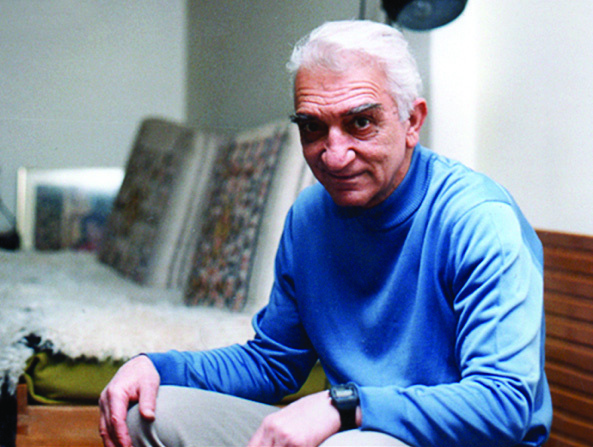
After Yousef Shariatzadeh's death, I obtained ozalid prints of the Yousefabad building's plans from the Pir-Raz office and posted them around my desk — in the hope of discovering the secret of Shariatzadeh's magic. This caused me, every day, involuntarily to think about him, his ideas, and his architecture. The fascinating point was that his works were not copy-able: they possessed a complexity and a particular logic that could be resolved only in his own mind. Perhaps when we looked at those architectural plans, we could not imagine the final result. The next point was his attention to detail at every scale — from the drip details of the staircase to the highly intricate detailing of the windows and doors. Or the mechanism of the windows, by which view, light, cross-ventilation, and movement were separated from one another: that is, from a single fixed, uninterrupted frame (without mullions or transoms) one had the view and light; from a small hatch or a small window with a screen, cross-ventilation was established; and through a door with wooden shutters, movement to the terrace was possible. In his design, these three elements were separated (whereas, normally, operable windows or doors create mullions and transoms in the glass, and the installation of screens behind these openings disrupts the continuity of the glass and naturally disturbs the view). Behind these elements, where there was no balcony, a protective rail had been placed to prevent falls — yet allowing the glass to be cleaned easily. These details were an important part of his attention to simple matters that gain significance during the building's use.
Or the intricacies of a complete roof garden with a number of trees, including cherry and palm, which never encountered any problems; and similarly the facade drip details that have ensured this building, from day one to today, has had little need for repainting — indicative of his attention to building maintenance. He designed in such a way that the maintenance of the building would be simple and it would not deteriorate in appearance over time. In plain terms, Shariatzadeh did not think only of the first day of his architecture — that a photograph would remain and then maintenance would be difficult, causing the quality to decline over time.
Another matter was the fluid circulation in his spaces and plans. In many of his buildings, one never reached a dead-end space; and more importantly, the spaces had the capacity to be combined and separated. Perhaps at first glance Shariatzadeh may appear a functionalist architect, but over time we witness the artistic quality of his architecture. Evidence of this truth lies in the fact that his two projects — on Tandis Street in Jordan and his house in Yousefabad — have, in recent years, attracted the attention of non-architects as well. In past decades, many believed that Shariatzadeh's architecture, despite its high technical quality, followed old-fashioned approaches in architecture and had an antiquated style; but upon review and re-examination of his completed projects, one arrives at the conclusion that Shariatzadeh's architecture is free of fashion-following and possesses aesthetic elements born of his masterful thinking and taste.
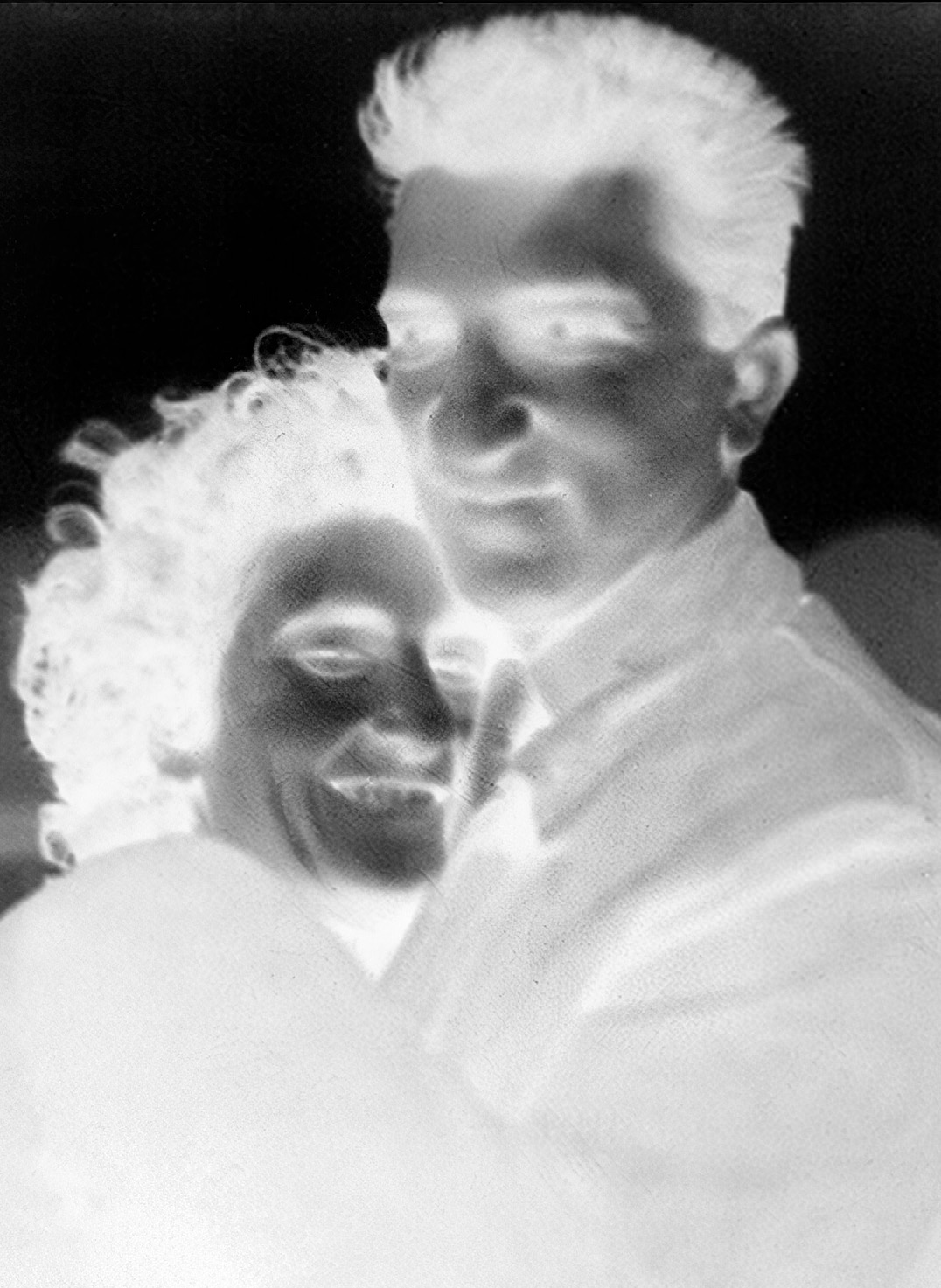
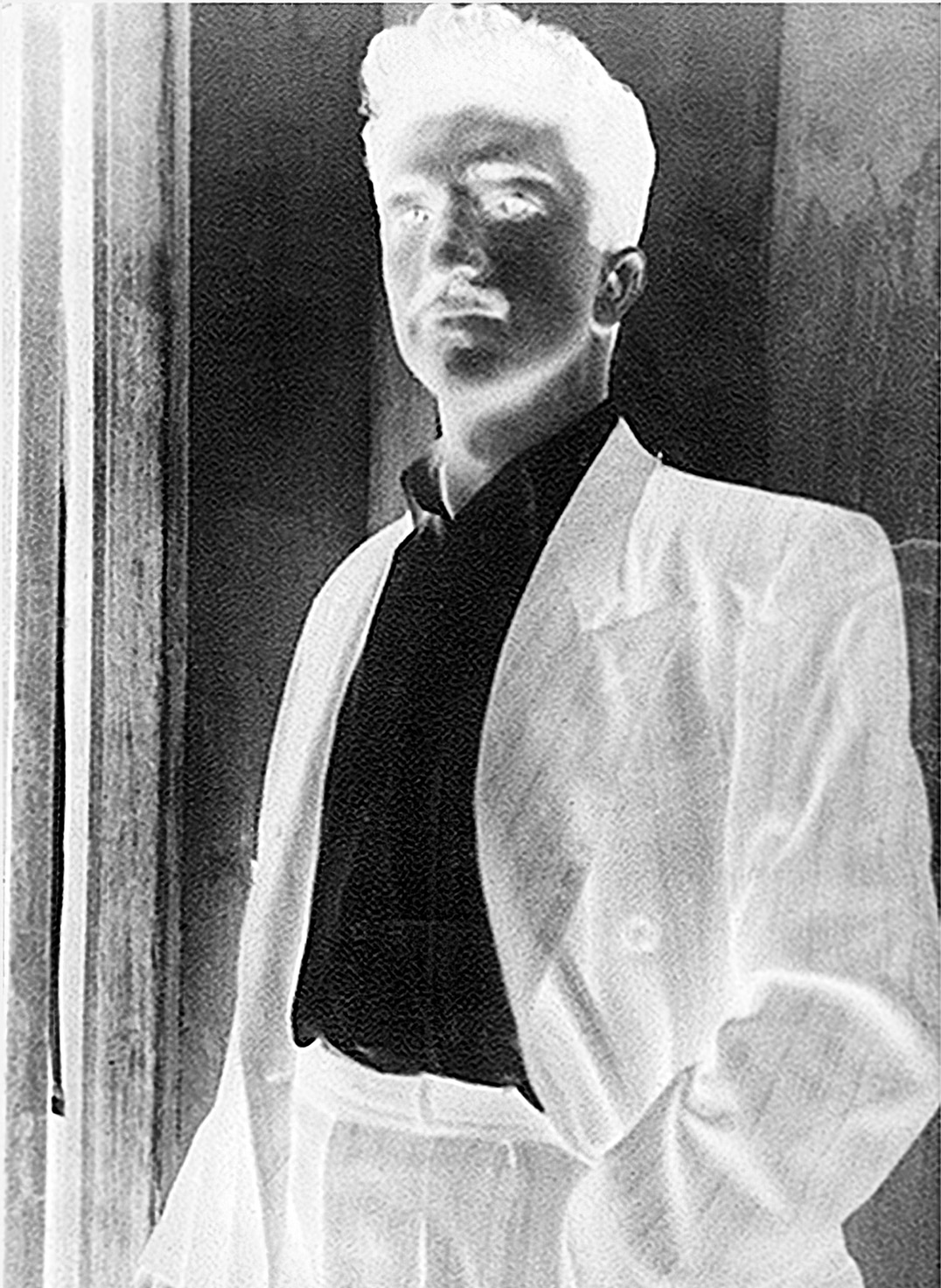
Although Yousef Shariatzadeh had a quiet and humble personality, through the results of his work he exerted a profound influence on the indirect education of diverse generations of architects and Iranian architecture. One may call him the silent master of contemporary Iranian architecture — who spoke with his gaze and redefined love with his smiles. After his death, he donated his body for dissection by medical students at the University of Tehran — the very university from which he had graduated. It is true that he has no designated resting place, but at the National Library of Iran a hall bears his name; in truth the National Library is his memorial, and what could be more distinguished than this...?
May his memory be honoured.
Azar 1404 (December 2025)



