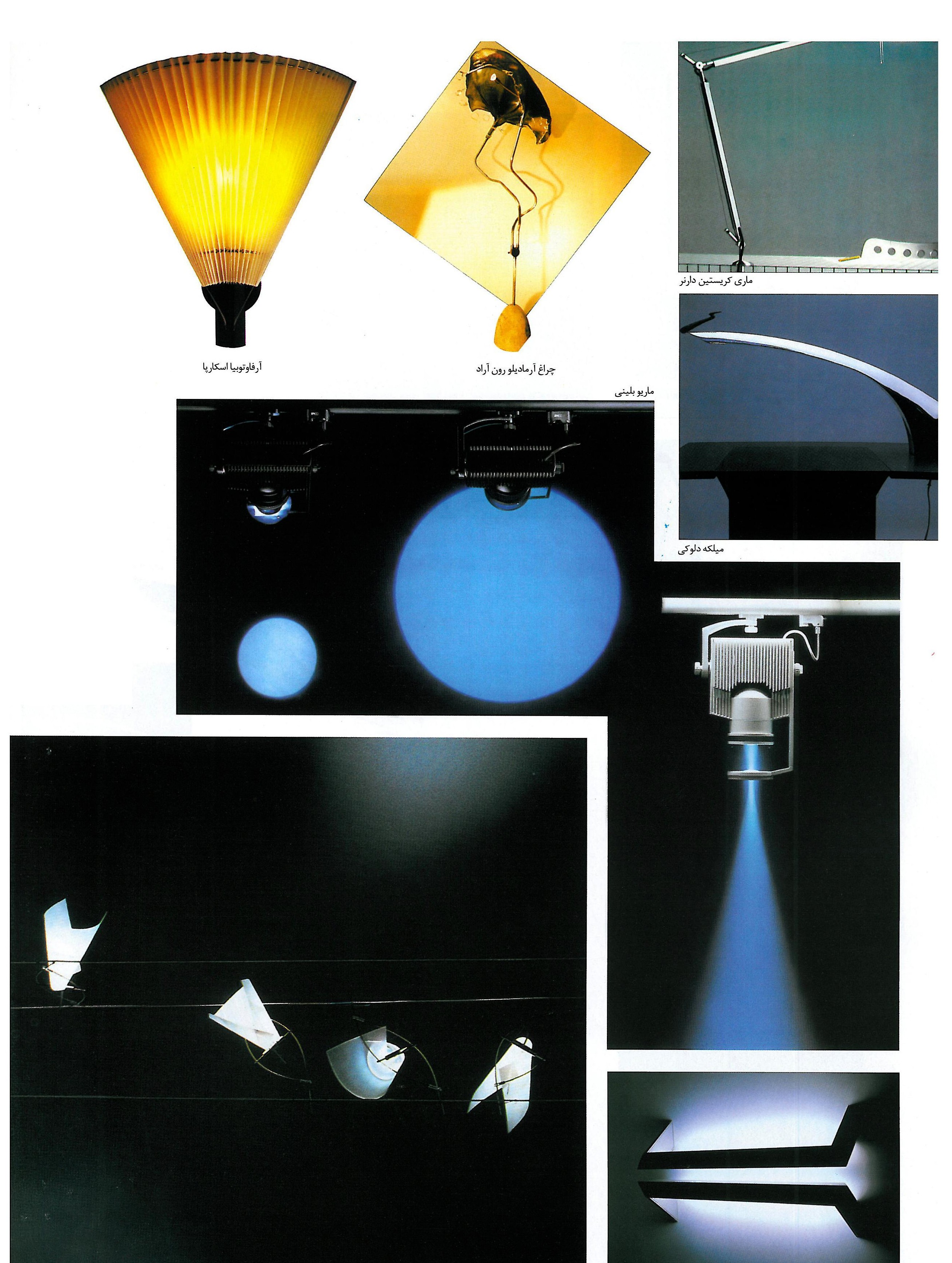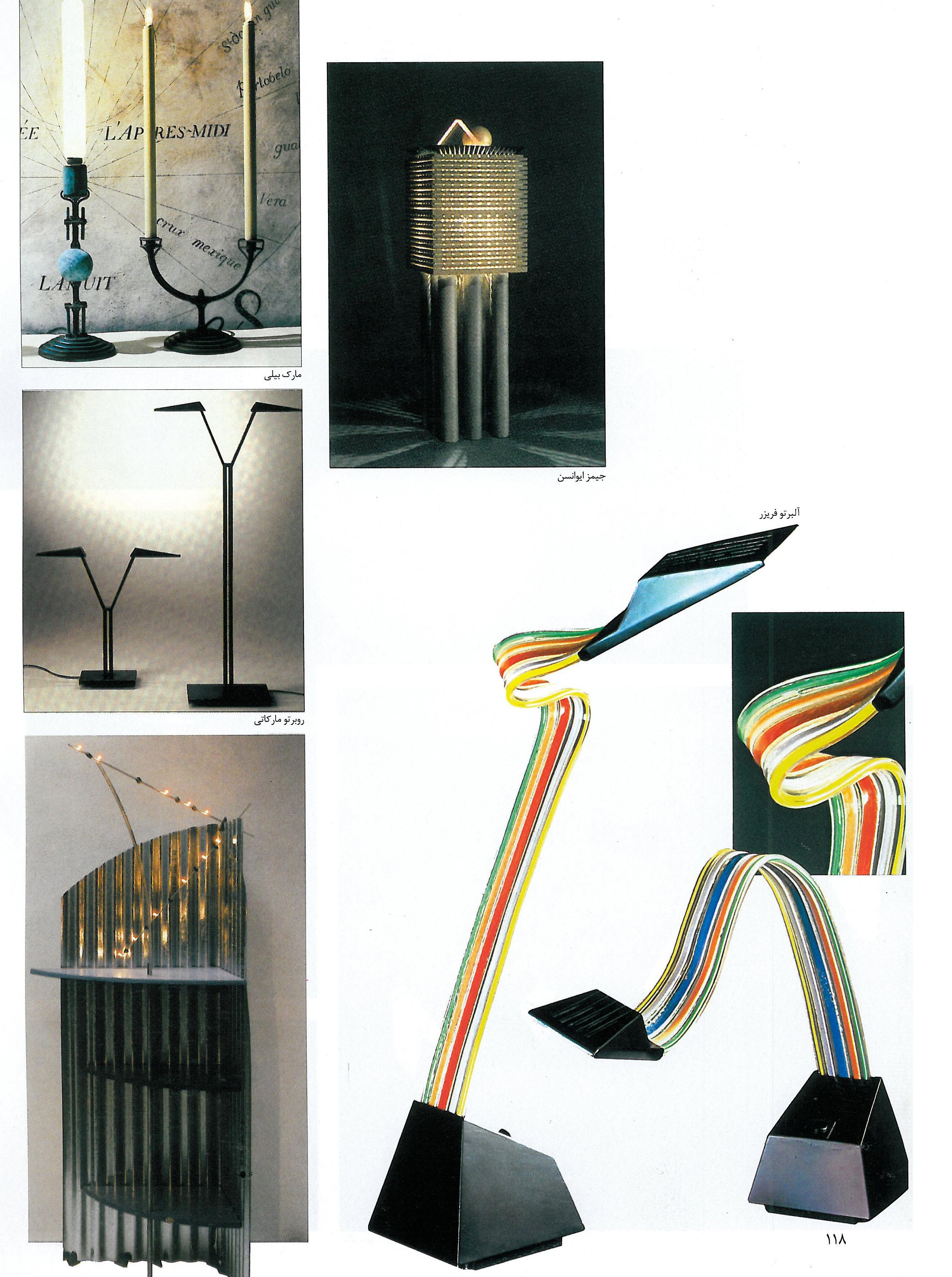
The 1980s were a thoroughly theatrical decade. Many theatre producers came in those years to grasp the importance of light in the success of stage productions. That, together with greater attention to the lighting of work environments as a determining factor in humanising the workplace, is the reason why light became, throughout this decade, the master design element. The aesthetic of the decade swung between an over-rich ornamentation and a simplicity of form (minimalism). The decade's design models carried opposing tendencies — traditionalism and high-tech; cultivated elegance and barbarous brutality; coolness and passion; logic and emotion; abstraction and representationalism; and so on.
The conviction that the lighting of the workplace mattered more than its other parts, and that sitting-rooms were greater than spaces designed merely for sitting, drew interior designers into a way of working that took account of the flow of light. Interiors of that period were composed with a care and watchfulness that turned them into a stage; through the display of beautiful patterns alluding to a particular way of life and culture, they opened a path toward living interiors — interiors that, by means of intelligent lighting design, responded to people's tastes and habits, and to their personal and social situations.
Although light is not in itself a material, its great capacity to bring forth and present an interior design and to heighten its sensory pull is one of the most important pieces of architectural design. Lighting, having always been one of the costlier parts of design, became in the 1980s — and in particular in unusual cases of that decade — much more expensive than ever. The chief mark of the lighting of this decade was not the consequence of the halogen revolution, whose origins go back to the 1970s, although the powerful display of halogen took place in the 1980s. The most important characteristic of the light of the 1980s was its emergence as an independent and influential element in design.
The flood of high-consumption halogen lamps and metal-vapour lamps into the inside of houses, with their dazzling white-light radiation, was such that people were forced to wear sunglasses even indoors — and that was the height of the dominance of light-regulators!
But a still greater transformation among the changes of the decade was the invention of small, low-consumption new lamps that, in earlier years, had seemed quite out of reach. This invention gave the leading designers of this period a real opening. Ingo Maurer, in 1985, by combining a pulley and tensioning steel cables (cable systems), built the YaYaHo system, which by recurring radiation laid the ground for a kind of moving, poetic lighting.
It is striking that, even now, in some lighting techniques the lamps grew smaller and smaller, while in other lighting styles the lamps grew larger. The opposition between the two main currents of lighting — unobtrusive, non-theatrical lighting on the one hand, and theatrical lighting on the other — sharpened in the 1980s: on the one side modest servants who tried to keep their presence hidden, on the other side examples that announced themselves loudly. The latter group were the showy, self-displaying luminaires that, by offering qualities of light that called forth great quantities of sensual effect, plainly displayed their superiority through this decade.
From the moment when certain designers laid down as a basic principle the splitting between the consumption-function of light fittings and their outward form, extraordinary designs came forth. In products such as chairs and cups and many other things, there is a logical likeness between the outward form and the function of the product. With lamps and lighting fittings, however — depending on whether their switch is in the on or off position — two distinct functions appear. Light is light only when its switch is in the on position; when off, the lighting tool turns into a lifeless decorative object. This characteristic explains why so many designers turned to the showy, ostentatious display of lighting.
In the 1980s this tendency grew very strong — not only in the exciting product groups with symbolic forms (such as the work of Mario Botta, Roberto Marcatti, and Masayuki Kurokawa) but also, less elegantly, in the products of countless ambitious manufacturers who spent very little on producing items for the taste of the day. In this decade, fixed light gave way to a flow of moving light: light that, by means of perforated surfaces, filters, diffusers, reflectors, masks and coloured glass, produced subtle visual effects and interactions. Now not only the physical body but the cast of light on the wall had to be designed separately, as in the work of Mario Botta and Masayuki Kurokawa.
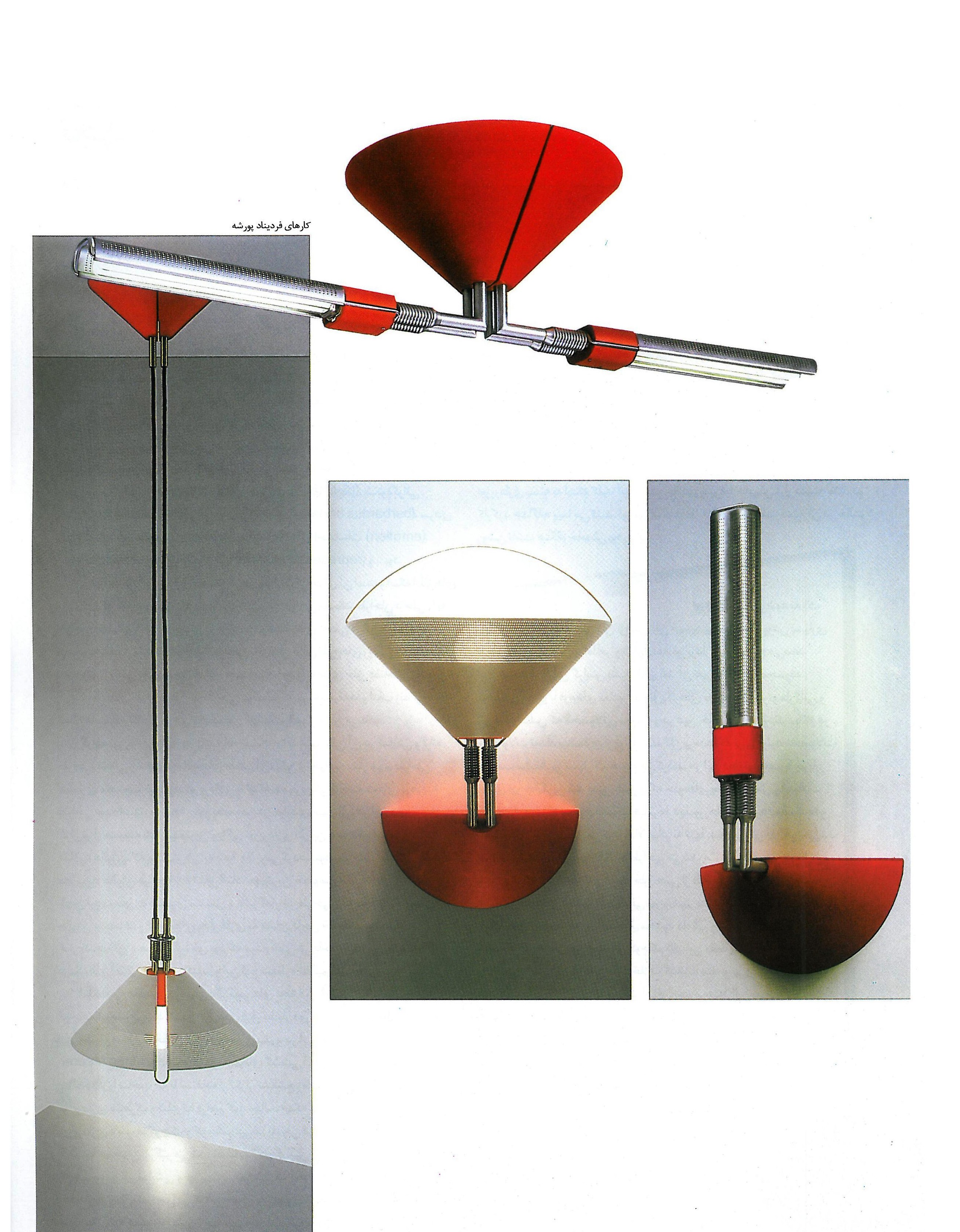
A number of designers went further than scenography and created fairy-tale interiors. The treatment of light and city as two synonymous concepts made for the creation of urban skylines within confined interior spaces and the bringing of skyscraper views into small rooms. This is only one example of the many ways in which, in the 1980s, light fittings — quite unlike the past — were no longer merely abstract sources of light. They were now parts of a stage scene rich in exciting feelings and with intensely personal meanings: curious hybrid objects, the result of a fresh fusion of technology and craft. Lamps such as Stefan Lindfors's Finnish designs, a fusion of forward-looking technology and design and a creation of harmony in disharmony; Bellini's reconstruction in spirit of the night sky in an interior; or a remote-controlled light-emitter — a papyrus lamp that opened and closed electronically — and the extraordinary marriage of matter and light in Porsche's designs.
Source: 80 Style — Designs of the Decade by Albrecht Bangert & Karl Michael Armer.