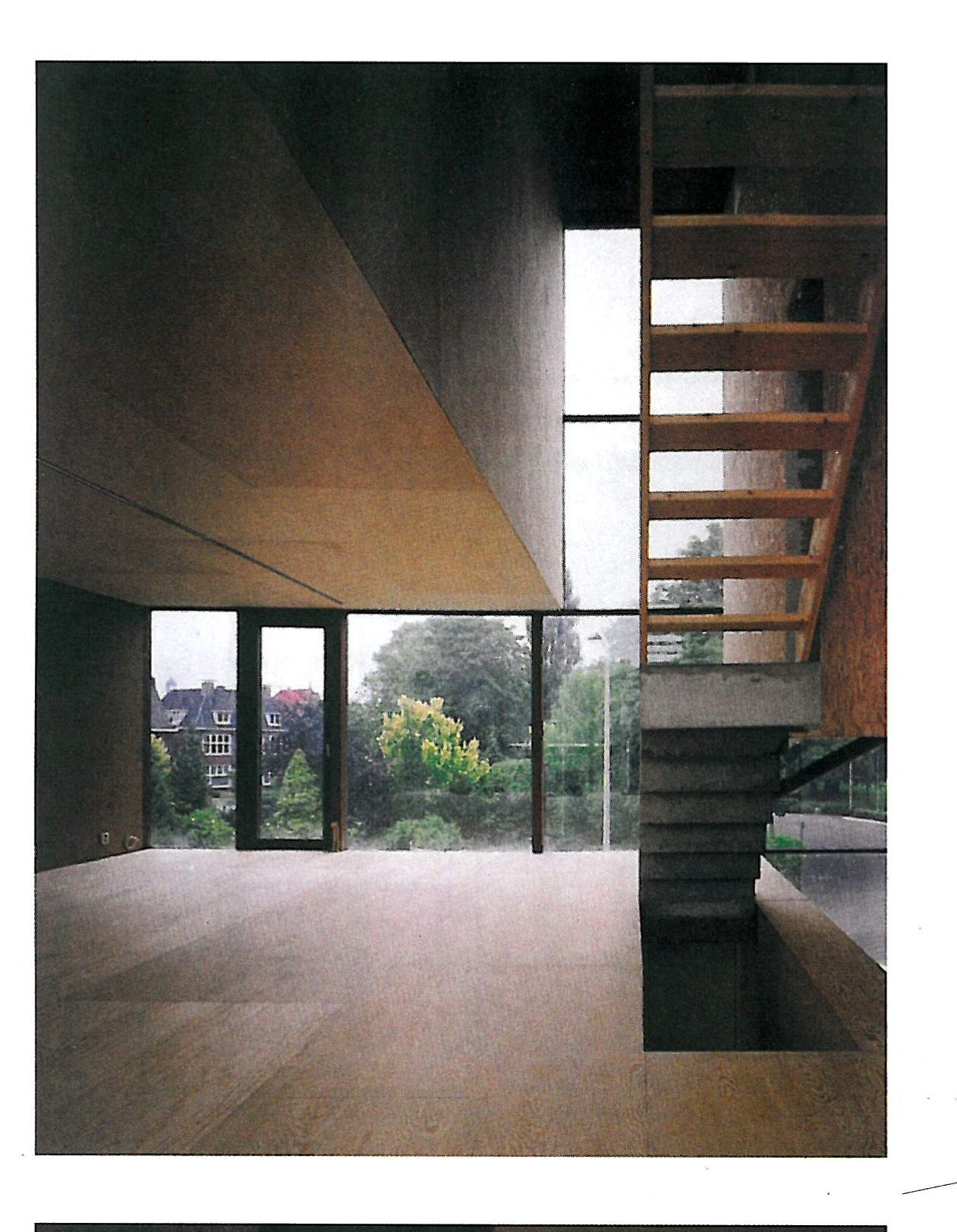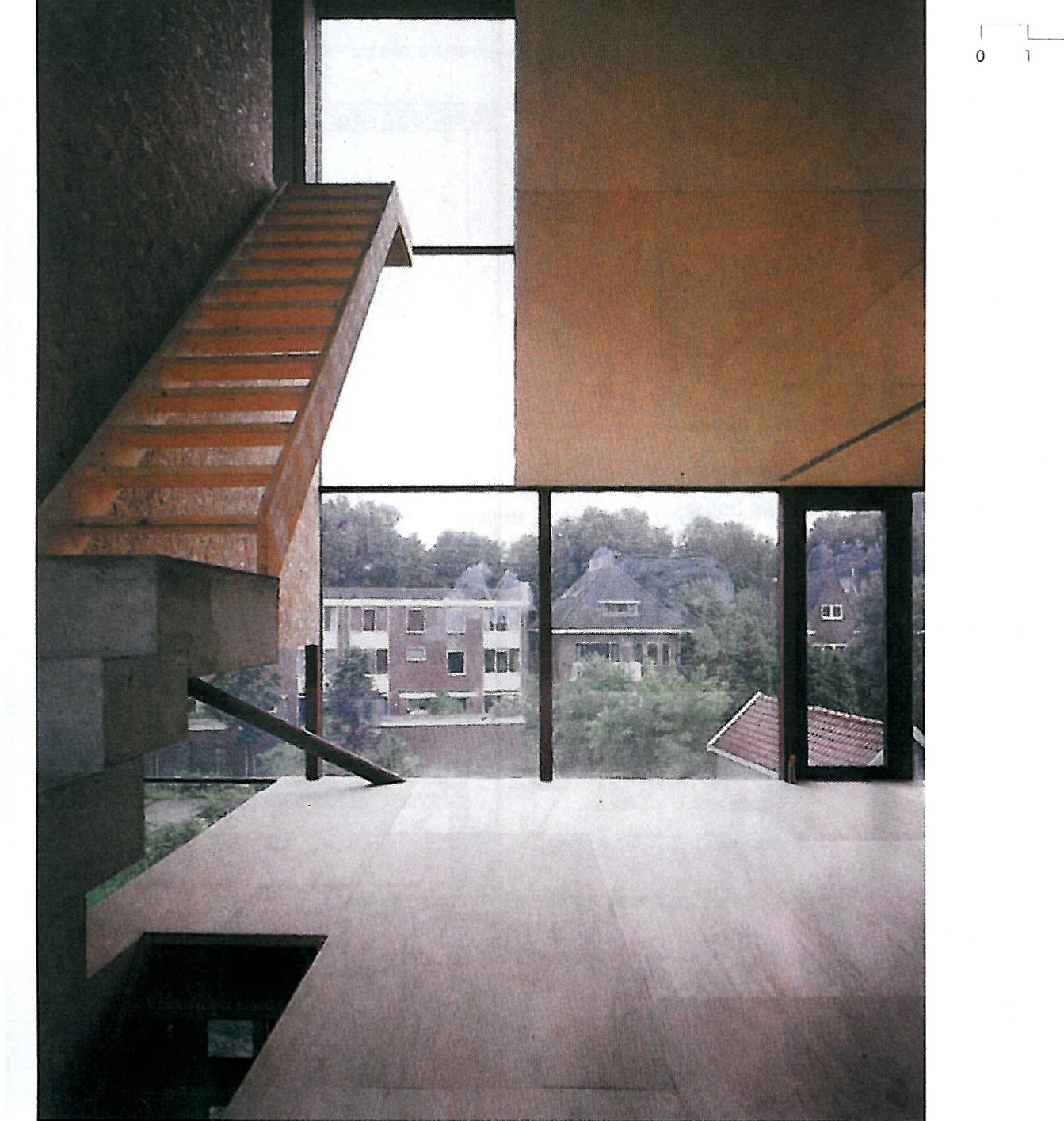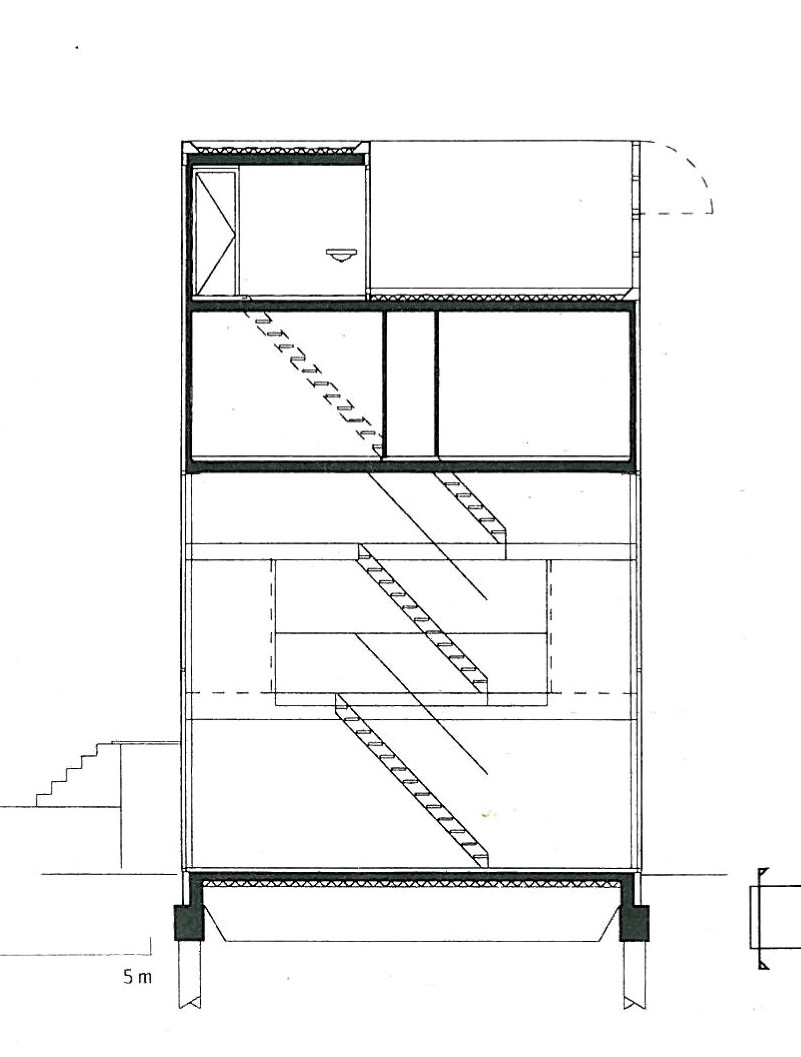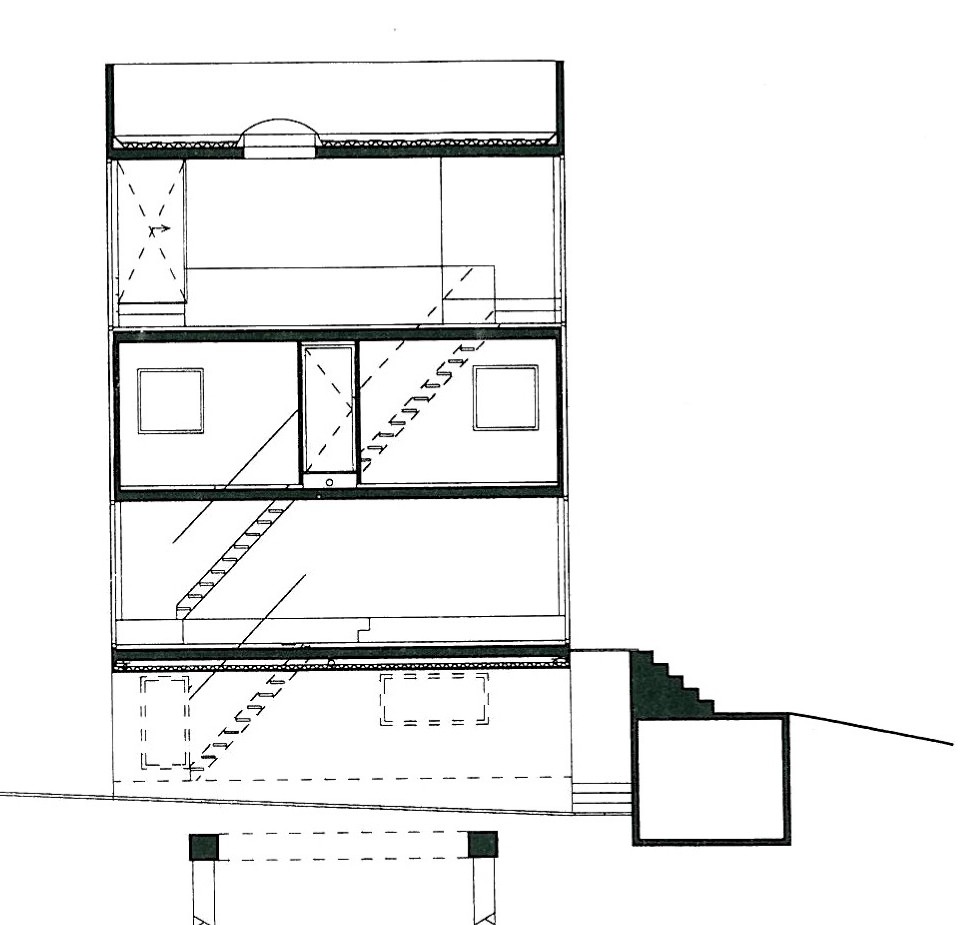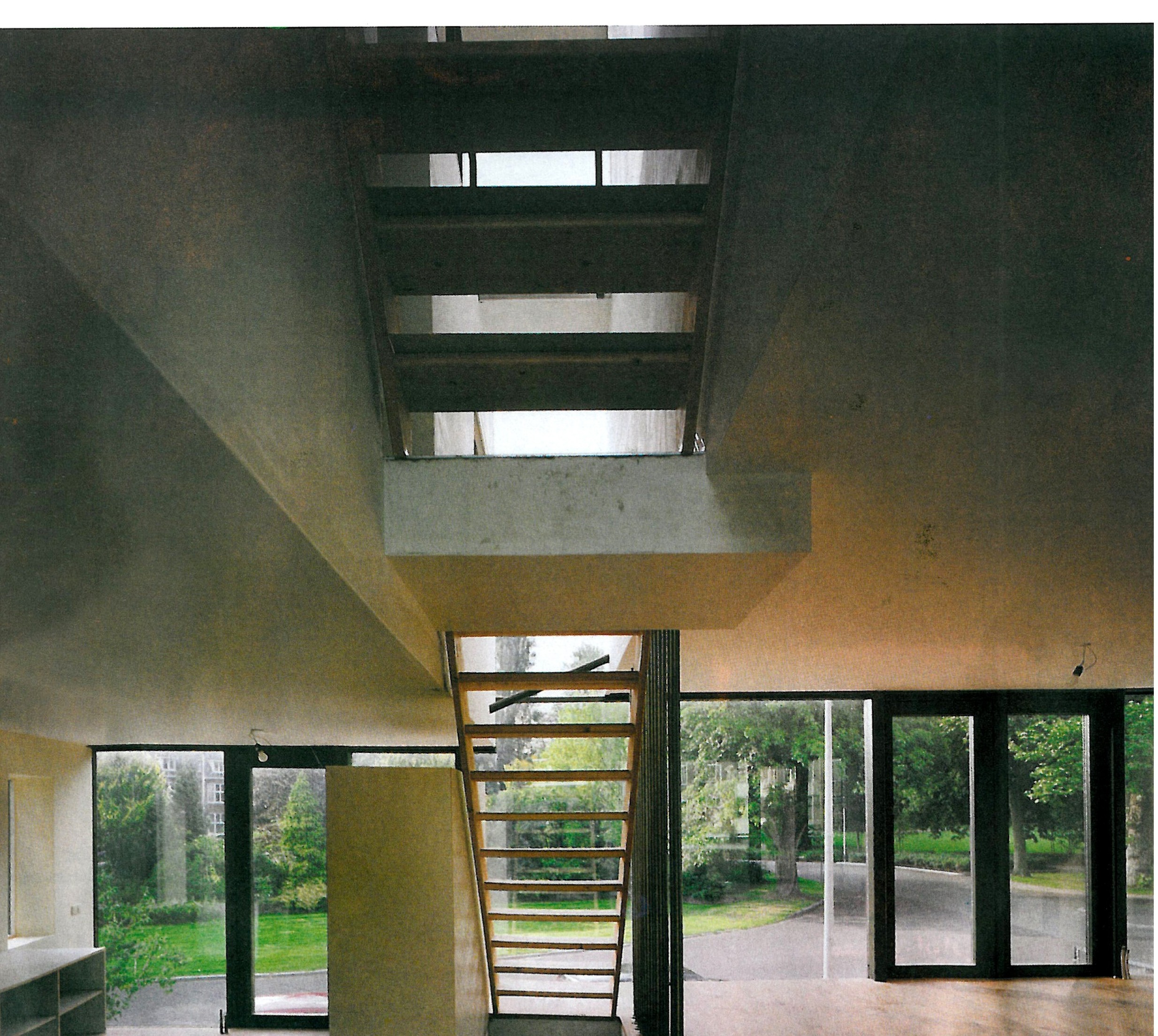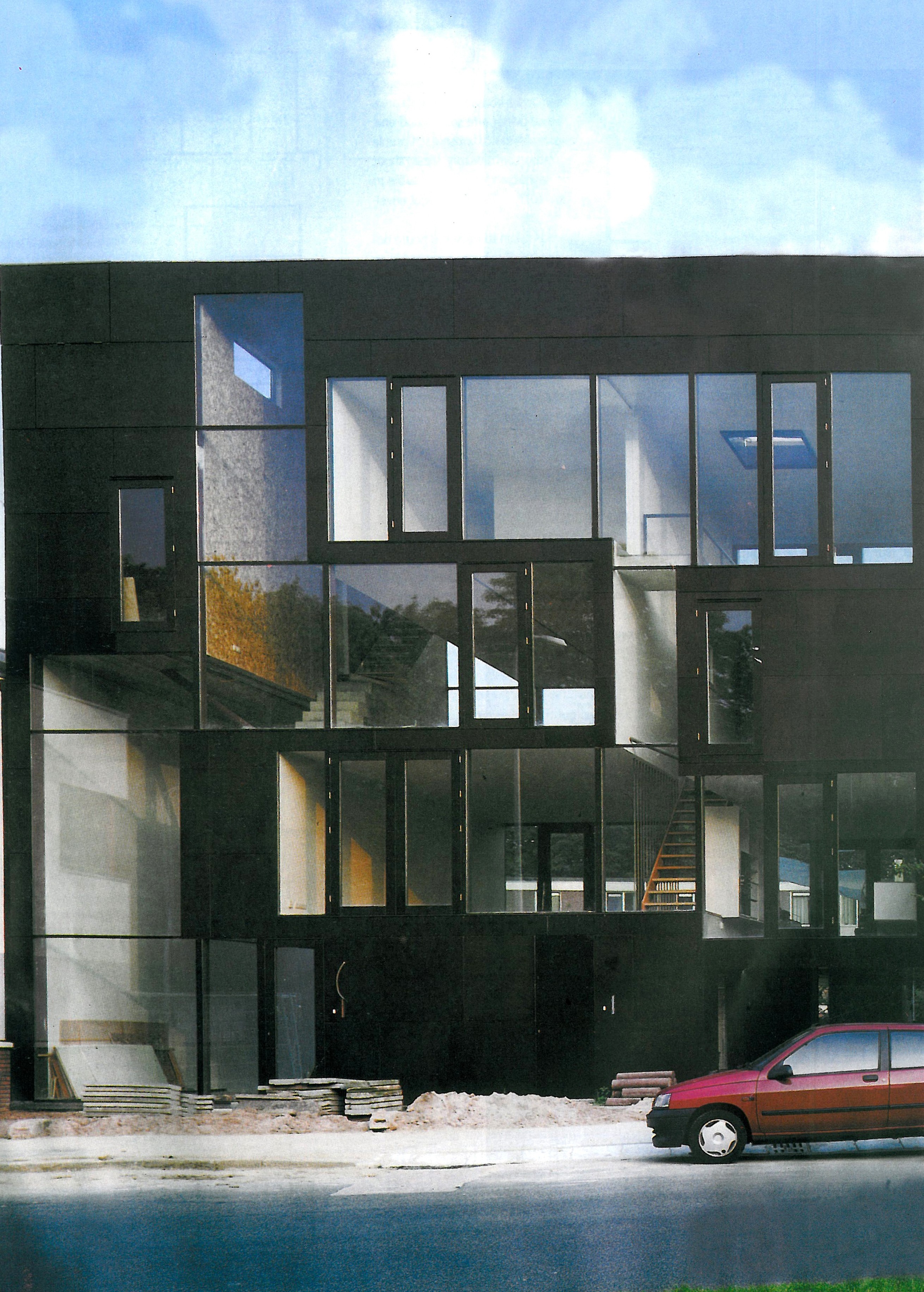
Two in One is a strange house. Facing Wilhelmina Park, the main public park of Utrecht, it opens up to the world. At first glance its strangeness is not apparent, as it is nestled among modern-style row houses. But its architectural differences from its elegant white neighbors, built in the modern style, attract attention before long. First, because it is taller than them — perhaps even a bit too tall. Second, because it is not as thick as them and is more transparent: one's eye can immediately see through it. There is also the front facade, clad in dark-stained wood, which contrasts with the white plaster walls around it. But most importantly, the accumulation of various glass surfaces, of heterogeneous shapes, lends it a singular identity. With a closer look, it becomes more clearly apparent that this volume in fact contains two houses facing one another. Yet contrary to the usual arrangement, these two houses are not separated by a shared vertical wall in the strict sense — one that would divide two plots of land. Rather, they are interlocked at their roofline, interpenetrating one another. Where has this complex arrangement within a single volume come from?
After purchasing the land, the owners realized they did not have sufficient funds to build a house for themselves that would cover the entire plot. They advertised for someone to share ownership, and before long a second couple was found. Then problem number two arose: each couple had conflicting ideas and opposing tastes regarding the layout of their home. And given the budgetary constraints the municipality had set for the neighborhood, it was nearly impossible to satisfy the wishes of both parties. It was decided that two architectural firms would take charge of the house design: one, De Architectengroep (Louvardis, Rijnboutt, Hendriks, Van Gameren, and Mastenbroek), and the other, MVRDV (Maas, Van Rijs, and De Vries, with Winy Maas as their representative). One can therefore easily understand that the final design was the product of lengthy negotiations between two couples, two architectural firms, and the municipal authorities — that is, the permitting office, the building department, and the fire department — each of whom had their own particular concerns.
The first couple had reserved two-thirds of the land area for themselves. They wanted a house set back from the street, essentially with its back turned to the street, so they could also park their car on their own property. Consequently, the garage, dining room, and kitchen were placed at the ground level. Their living room is on the second floor, and this room, too, extends to the full depth of the neighboring plot. But thanks to the open space that continues on two levels, it remains connected to the dining room. On the third level, two small closed rooms open up.
The second couple had to make do with one-third of the total volume. They wanted maximum contact with their private courtyard at the rear and a view of the public park on the street side. To meet this desire, the dining room and kitchen were placed at the ground floor, along with the entrance hall and guest room. Their living room is on the second level, and this room, too, has advanced to the full depth of the neighboring plot. But despite all this, thanks to the open space that continues on two levels, it remains connected to the dining room.
Once the functions were determined, the architects had to grapple with the intricate zoning regulations of the district. First, from a fire safety standpoint, the building code prohibited a unified open space spanning more than two stories. With the help of a consultant, Mastenbroek and Maas discovered that by interpreting the regulations literally, one could regard the interlocking volume as constituting one complete unit level — and not one story. Likewise, according to the regulations, the highest level was not permitted to rise more than seven meters above ground level, even though one of the houses was taller. But by artificially raising the ground level, this issue too was resolved.
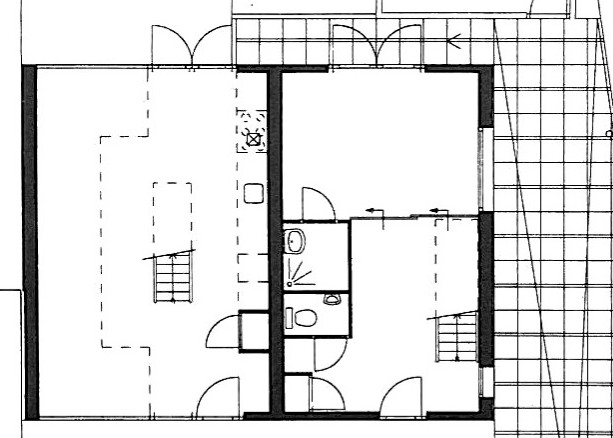
House 1: Dining room – kitchen
House 2: Garage, entrance hall, and guest room
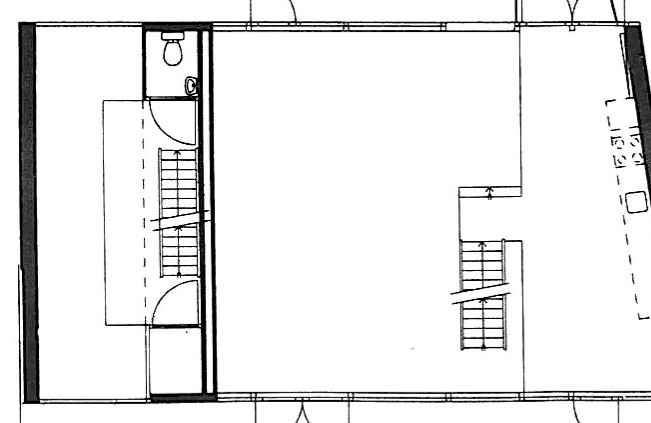
House 1: Mezzanine
House 2: Dining room – kitchen and living room
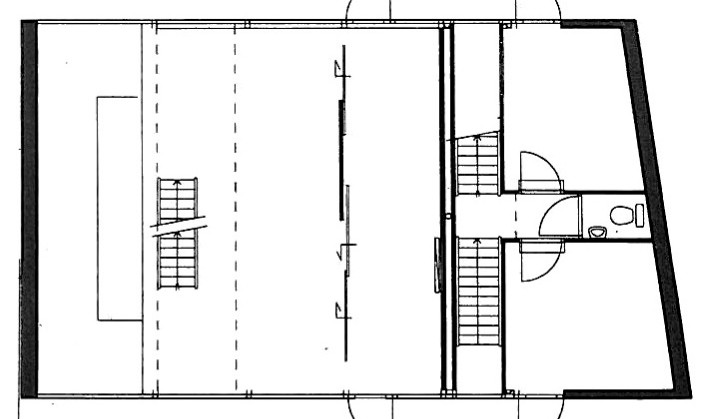
House 1: Double-height living room
House 2: Two bedrooms
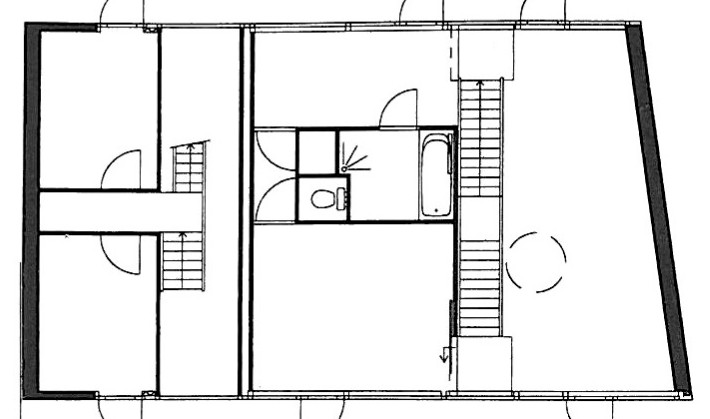
House 1: Two bedrooms
House 2: Two bedrooms and tall living room
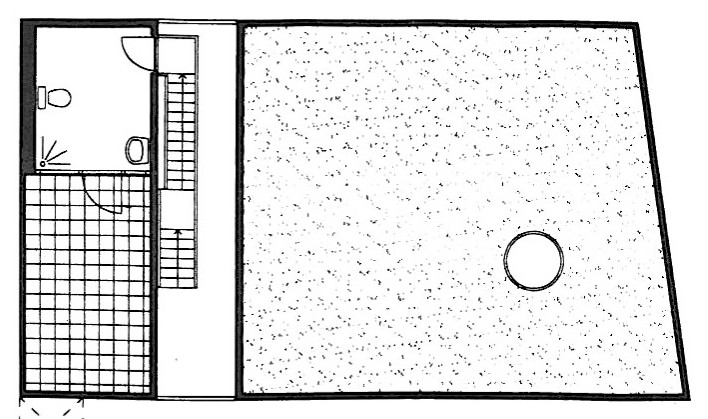
House 1: Bathroom and terrace
House 1, which is smaller and narrower, has a void that passes through three levels. The living room is on the third floor and the bedrooms are on the fourth floor.