Bank-Maskan Headquarters — Isfahan Province
Client: Maskan Investment Company. Client representative: Alireza Lahiji, engineer. Project: Polshir Architects Workshop. Project Manager: Mohammad-Reza Ghane'i. Architect-in-charge: Maziar Mo'meni. Design group: Ali Sheykholeslam, Faranak Tamaddon. Design collaborators: Hamid-Reza Abdar, Reza Akhavan-Farazandeh, Asal Adili. Computer modelling: Hamid-Reza Abdar, Mohammad Mousavizadegan. Structure: Fereydoon Bonakdar-pour, Amir Mahmoudzadeh. Mechanical: Mahmood Naser, Mehdi Kazemi. Model photographs: Jasem Ghazbanpour. Land area: 1031 m². Total built surface: 4700 m².
The functional outlook governing this scheme rewrites the very idea of a 'bank'. In the traditional sense, a bank was merely a place for the gathering and safekeeping of capital. In this new reading, a bank is the setting for the broadest possible formation of social relations, for proximity to the public, for setting capital quickly into circulation — in short, a place for the formation of public exchange. From this it follows that the transmission and connection between inside and outside spaces takes on particular importance.
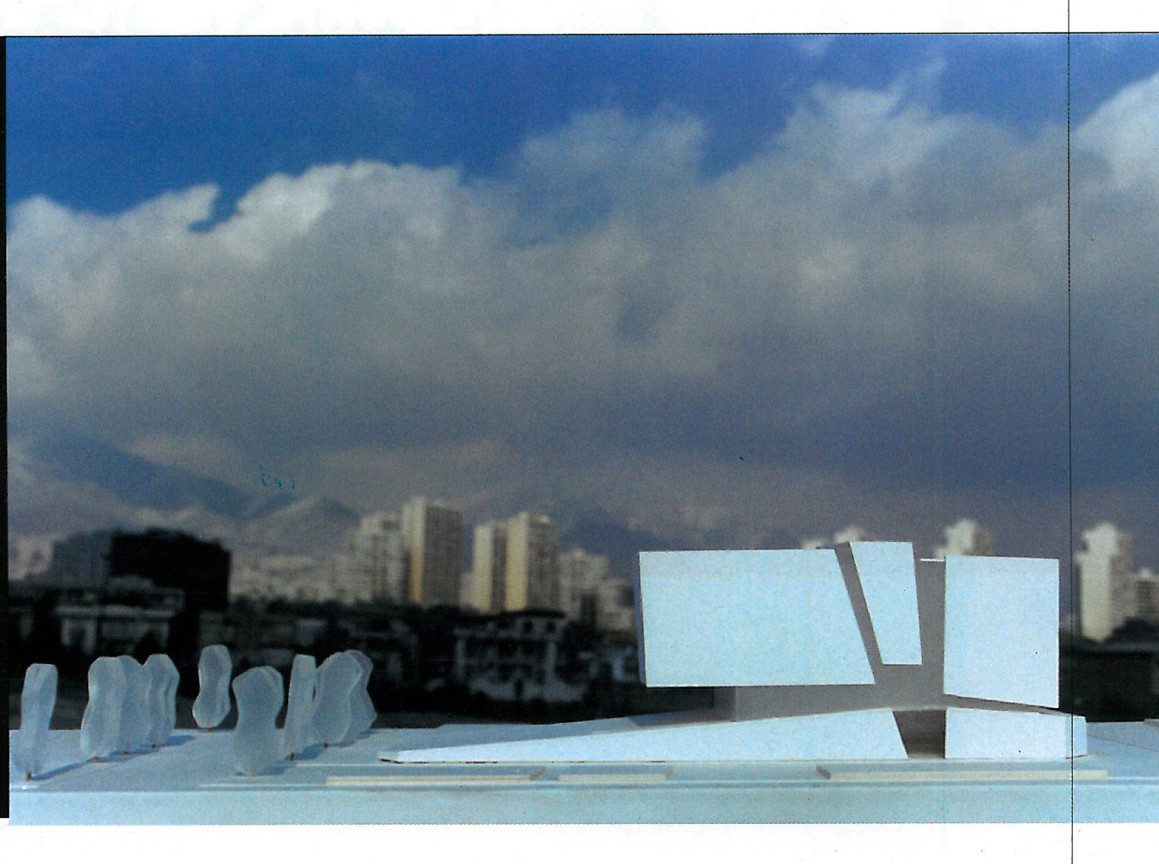
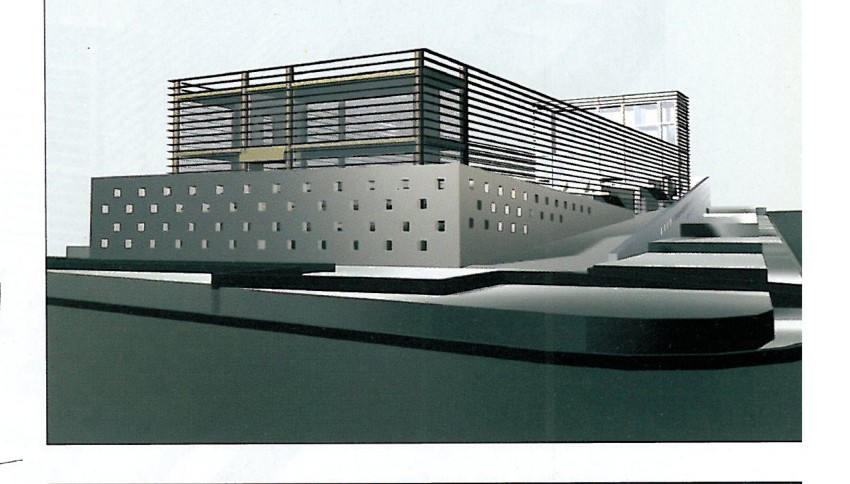
The general architectural scheme of the Bank-Maskan headquarters for Isfahan Province is composed of a rectangular cubic volume placed on a plinth, the plinth serving as base and support for the cubic volume.
A transparent joint at the meeting of the cubic volume and the supporting plinth defines the bank's space. The cubic volume is set on the plinth in such a way that the two parts of the building — volume and plinth — are read as a single whole.
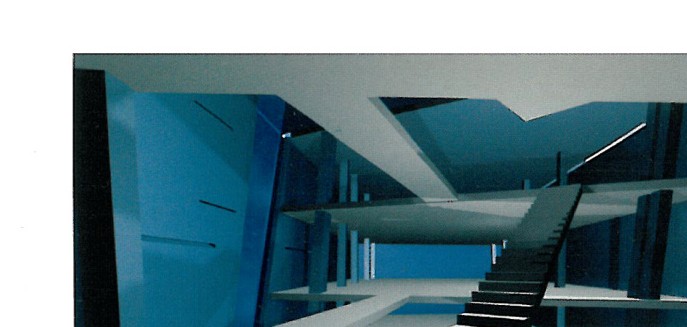
Light, in this scheme, is used as a transparent, fluid, mediating, and guiding element.
The starting point of movement and entry into the inside is that same transparent joint, where light received through the slot in the roof, together with the rotation of the glass stair, leads up to the office floors. The openings — having regard to the building's orientation from north to south, and toward the lovely banks of the Zayandeh-Roud — are graded from 'least' to 'most', while the overall form of the volume remains undisturbed and legible.
I. R. Iran Embassy / Jordan (Amman)
Sponsor / Client: Ministry of Foreign Affairs — General Office of Construction. Client agent: Hamid-Reza Nikkar Esfahani, engineer. Project Manager: Mohammad-Reza Ghane'i. Architect: Ali Sheykholeslam. Senior Project Adviser: Darab Diba. Design group: Faranak Tamaddon, Maziar Mo'meni, Farzad Khorvash, Robert Keshishian. Design collaborators: Tooraj Shahnavaz, Hamid-Reza Abdar. Computer modelling: Mohammad Mousavizadegan, Reza Akhavan-Farazandeh. Model: Vazrik Melkenian. Structure: Fereydoon Bonakdar-pour, Neda Beheshti. Mechanical: Mahmood Naser, Mehdi Kazemi. Model photographs: Jasem Ghazbanpour. Electrical: M. Kianzad. Land area: 4820 m². Total built surface: 3250 m².
The architectural scheme for the Iran Embassy in Jordan has been prepared with regard to the cultural ties between two Muslim societies; the situation of the site (the heights of jebel-Amman, adjoining the queen's palace); the architectural traditions of both countries together with the innovations of contemporary architecture; the functional identity of a diplomatic complex; the structural unity of the whole and the proper separation of inner spaces; the climate and the natural environment of the region; and the other factors bearing on its architecture.
The complex is laid out on a sloping site in such a way as to reflect and intensify the natural slope of the land. The taller volume (the chancery) sits on the high ground, the lower volume (the consulate) on the low, opening a wide outward view of the city and the surrounding hills to the building's occupants.
The building volumes hold a garden-like space — a central courtyard — between them. Two distinct paths set out from the two entrances at the upper and lower ends of the complex, and each, with a turn around the whole, arrives at one of the principal buildings (the chancery, with the more private function; the consulate, with the more public one).
The volumes slide over one another in two layers and, while keeping the intended hierarchy and embracing the central open courtyard, form a single, unified composition.
Command over a refreshing inner open space; an outward prospect; the dominance of the two main building volumes at the start and the end of the site; the unity and coherence of the whole as seen from outside; the proper separation of entrances, internal paths, and functional spaces; the joining of tradition with the architecture of today; openness combined with security; identity coupled with modesty; and the balance between open and enclosed spaces — these are the chief characteristics of the project.

I. R. Iran Embassy / Nigeria (Abuja)
Client: Ministry of Foreign Affairs — General Office of Construction. Client agent: Hamid-Reza Nikkar Esfahani, engineer. Project: Polshir Architects Workshop. Project Manager: Mohammad-Reza Ghane'i. Architect: Ali Sheykholeslam. Senior Project Adviser: Darab Diba. Design group: Faranak Tamaddon, Maziar Mo'meni, Farzad Khorvash, Robert Keshishian. Design collaborators: Tooraj Shahnavaz, Hamid-Reza Abdar. Computer modelling: Mohammad Mousavizadegan, Reza Akhavan-Farazandeh. Model: Vazrik Melkenian. Structure: Fereydoon Bonakdar-pour, Amir Mahmoudzadeh. Mechanical: Mahmood Naser, Mehdi Kazemi. Model photographs: Jasem Ghazbanpour. Land area: 7000 m². Total built surface: 2360 m².
The architectural scheme for the Iran Embassy in Abuja, the new capital of Nigeria, has been prepared with regard to the foundations of 'Iranian architecture' (the iwan and the kushk), the hot climate and the nature and architecture of the region, reliance on local building materials, the linking and at the same time the separation of functional spaces, the formal and functional identity of the building (chancery / consulate), openness within proper provisions for security, and, in particular, an architecture of today fitted to the function and to the ground of the project.
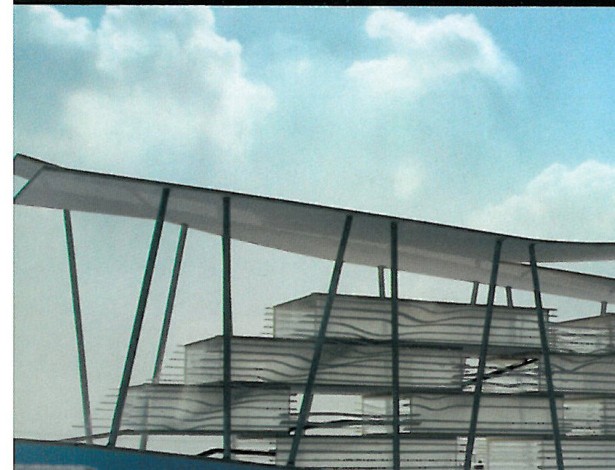
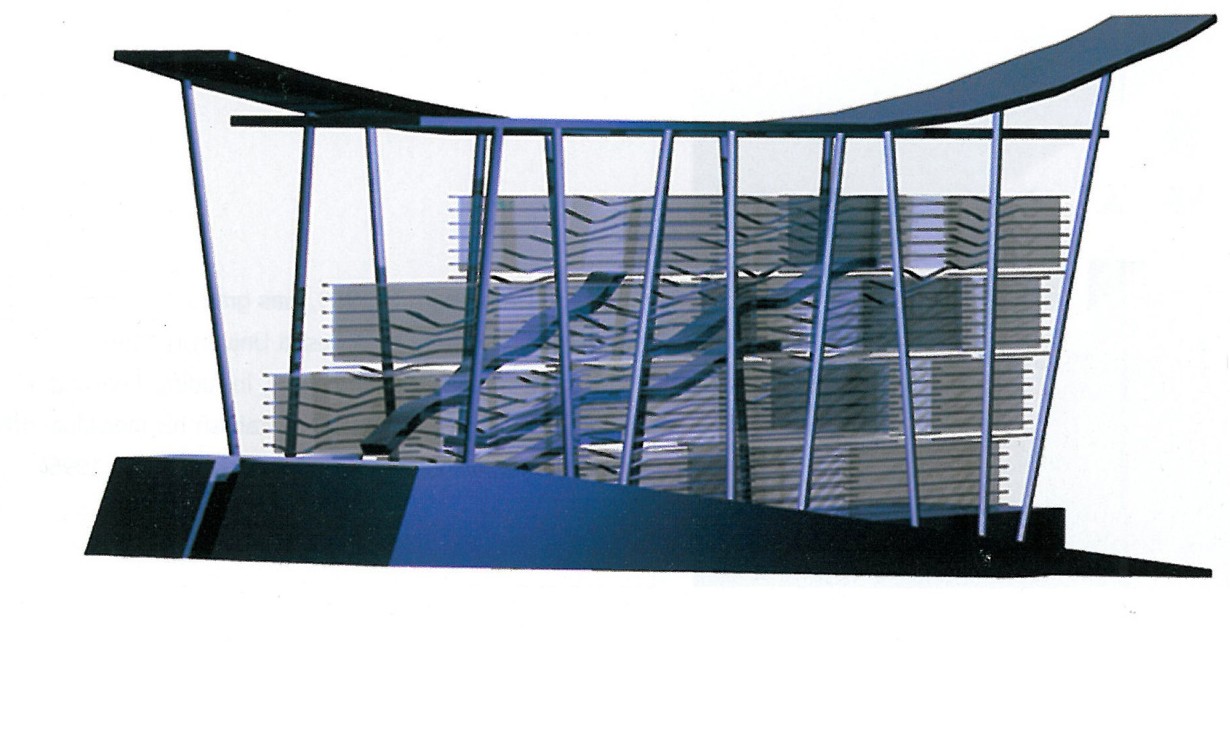
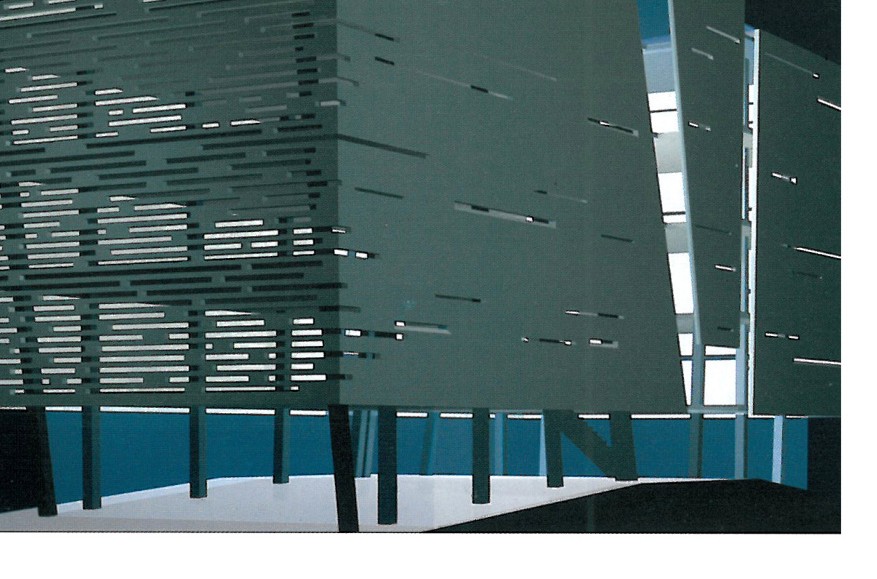
The general structure of the scheme has taken its shape from the elongated, rectangular site and from the role of wind and shade in providing comfort within the building. A light architecture beneath a single broad shading roof, perforated walls and porous spaces, the maximum use of the region's prevailing winds and natural ventilation — these are the conspicuous marks of the project.
An ordered grid of horizontal planes, sliding over one another, opens a relatively free, transparent, and open space, embracing the spaces of movement and circulation. The balance between solid and void, the flow of horizontal lines and surfaces (layer by layer) all around the volumes, and the network of separate and interlinked solids, joined by a single tall canopy resting on slender supports, are the visual characteristics of this scheme. That canopy, set as an independent shell of shading and shelter at a slight remove from the building's main body, allows the wind to flow inside the building and provides the necessary natural ventilation.
The lightness of the architecture and the openness of its face, beyond their diplomatic ends, are also entirely in keeping with the climate and architecture of the region.