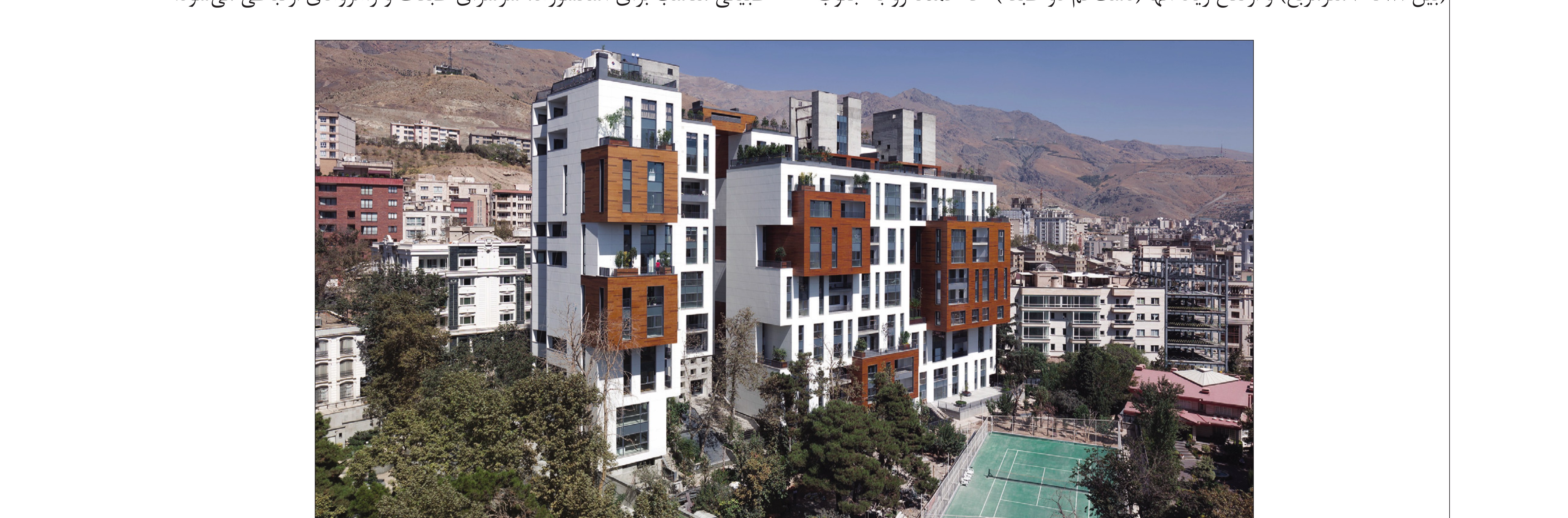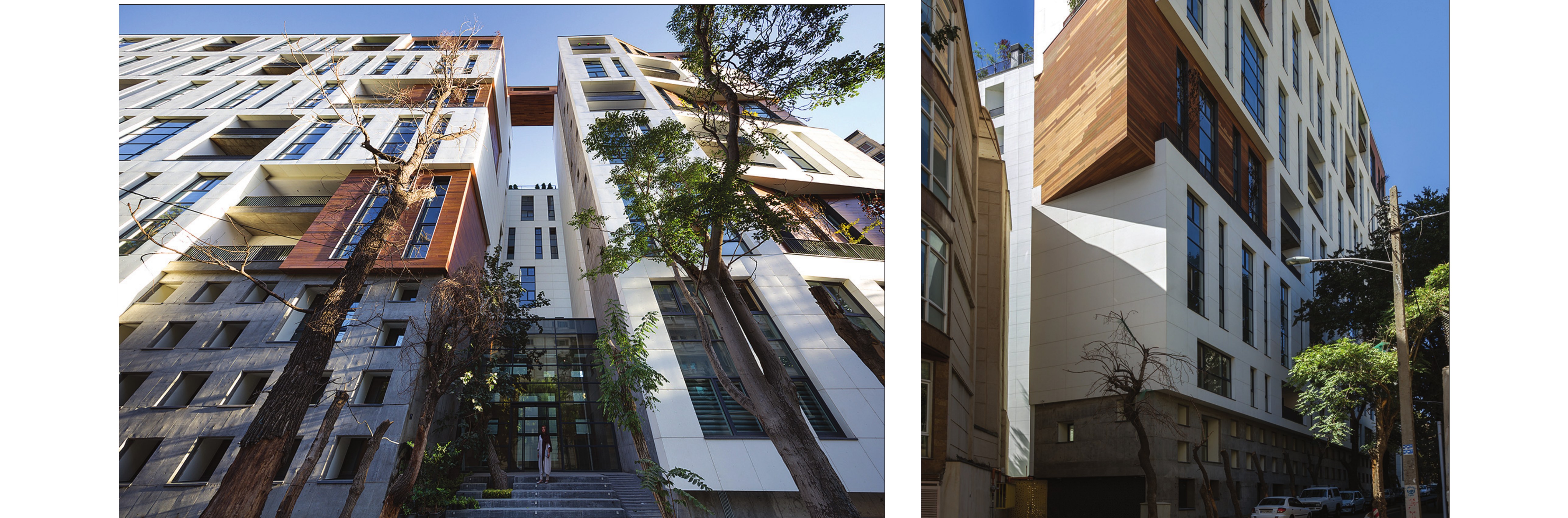
The 63-unit Zafaranieh Garden residential complex, with 12 above-ground floors and 3 basement levels, is situated on one of the northern slopes of Tehran.
Design Process and Concept: Avoiding the felling of trees within the building footprint (30 percent of the land area along 60 percent of its length) was the primary consideration in massing the building. Accordingly, the total floor area was organized into two separate building blocks on the ground, connected to each other in certain basement sections.
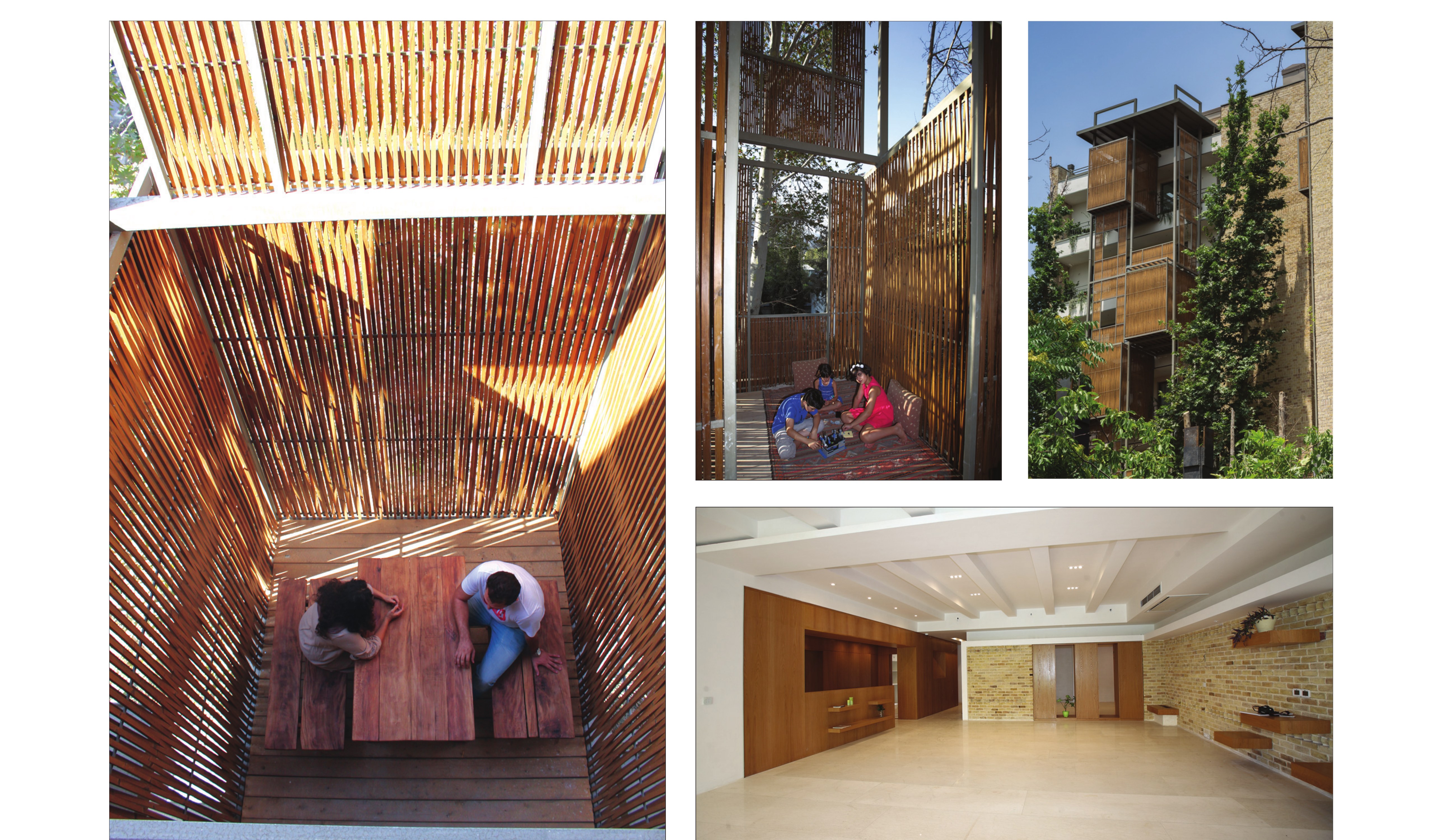
The concept of the "Plant Box" as a symbol of the urban dweller's interaction with nature was adopted to organize the building mass. On this basis, the initial building mass was classified and composed with wooden boxes ranging from 2 to 5 stories in height. The shifting of floor area and sliding of volumes in this process of vertical scale reduction generated new facades facing the surrounding landscape and fresh perspectives onto the project itself.
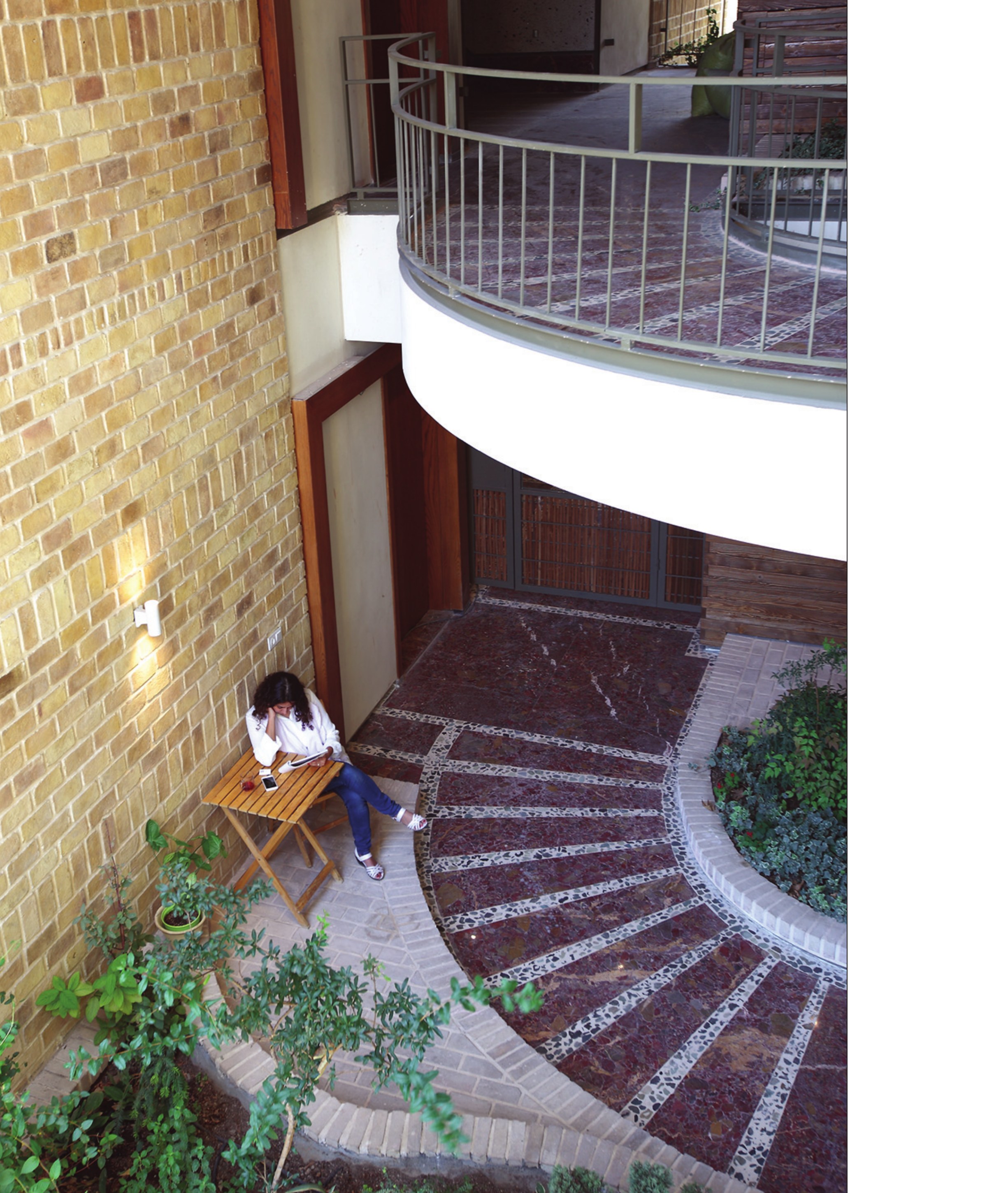
Additionally, expansive open and semi-open courtyards were created adjacent to residential units (between 18 and 90 square meters), and their considerable height (at least two stories), predominantly south-facing, combined with a rainwater recycling network, provided the conditions for extensive use of arboreal vegetation within the building. Following a preliminary study of plant species suited to Tehran's climate that had been container-grown from the outset, specific trees were identified and selected.
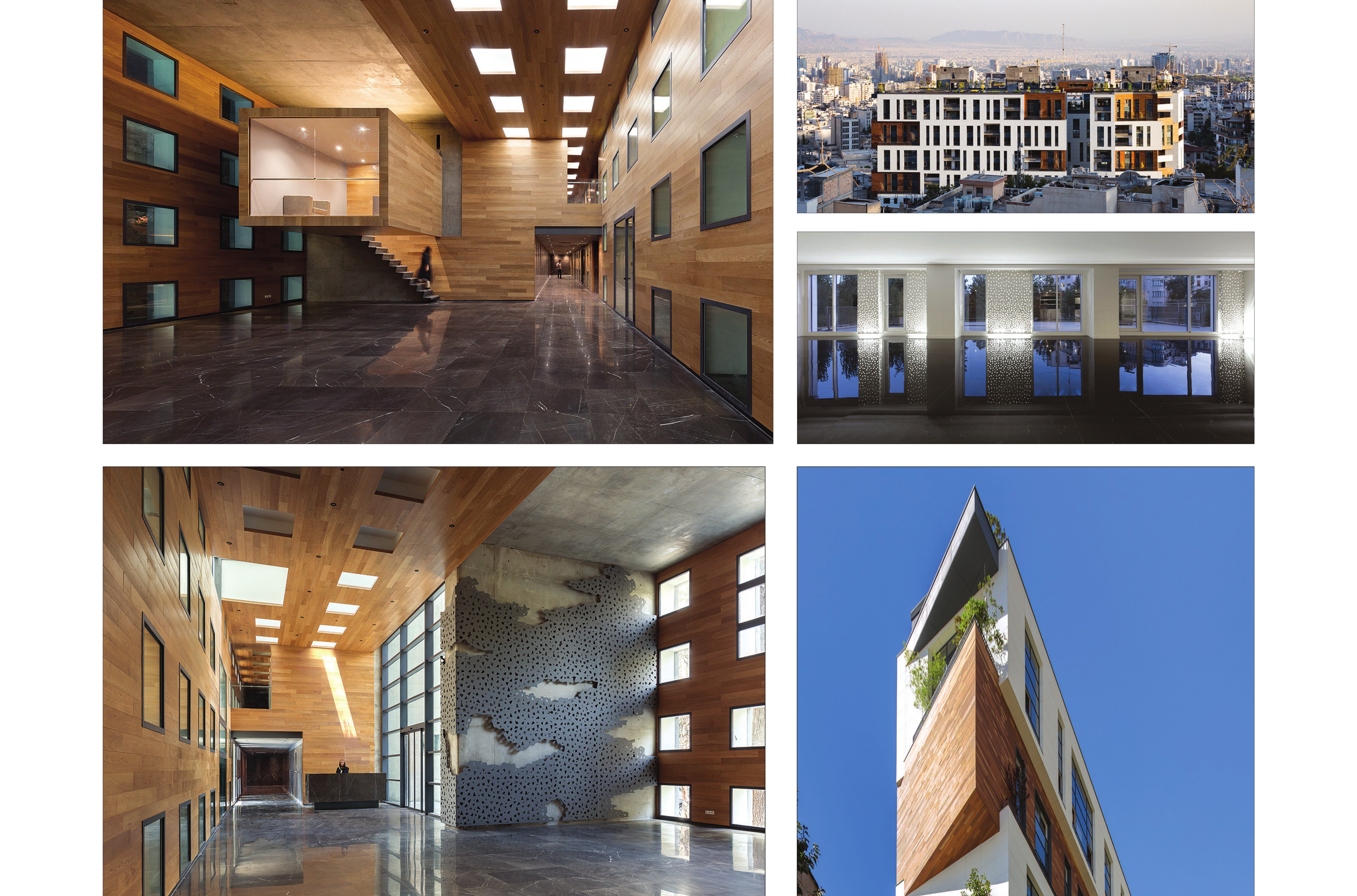
Materials: The primary materials of the facade and common areas are exposed concrete of the main structure, wood evoking the plant boxes, and painted fiber-cement panels as the volumetric background. Yet perhaps the most essential facade material is a green layer of trees that lend a dynamic, living countenance to the building across the seasons, growing alongside the project. Structural concrete surfaces have been preserved in portions of both public and private spaces, reducing facade and interior finishing costs.
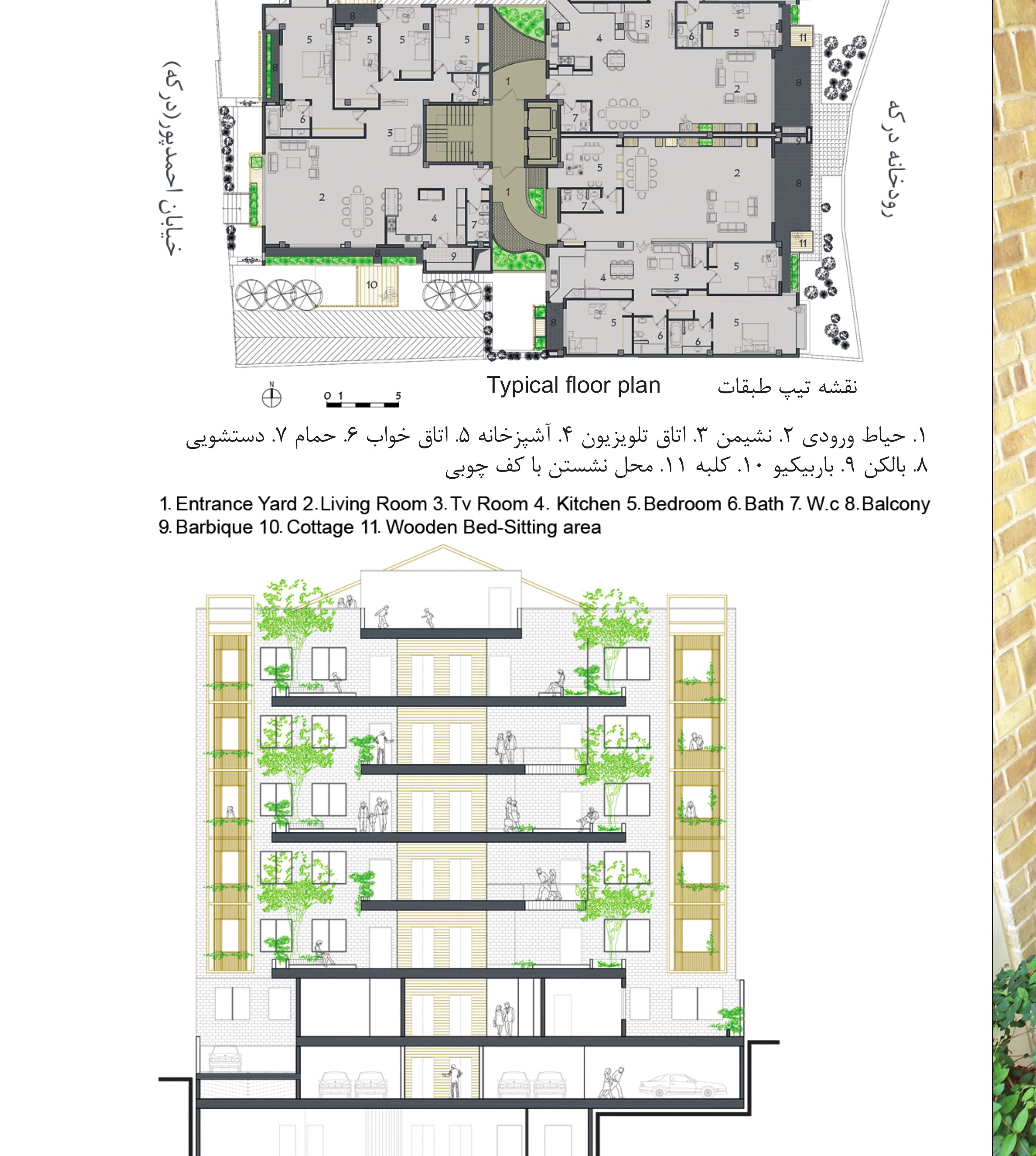
Floor Plans: More than 30 diverse apartment types ranging from 220 to 750 square meters have been designed, each differing in size and layout. The vertical circulation core, comprising stairs and elevators, is positioned in the gap between residential volumes, enabling the use of appropriate natural views and light for the elevators, floor lobbies, and connecting corridors.