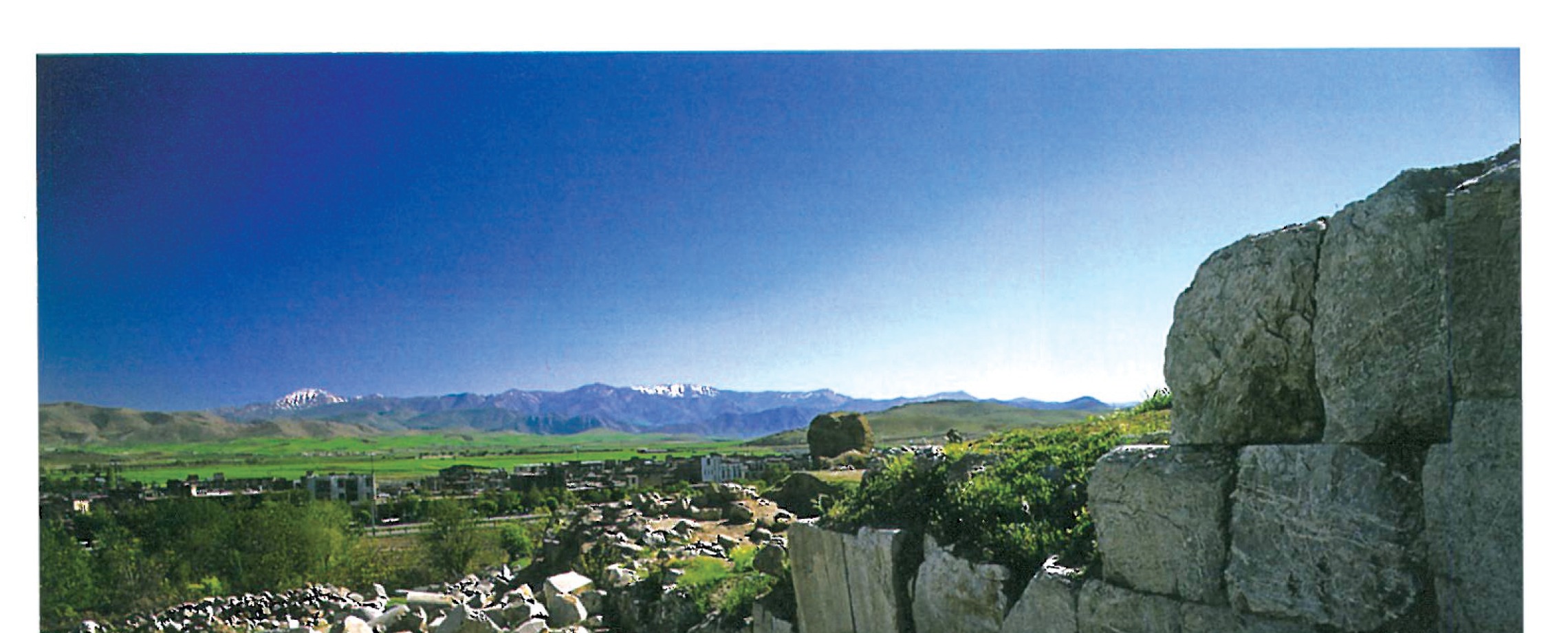
Dating back to pre-Islamic era, the Anahita Temple at Kangavar is Iran's largest ancient stone construction, covering approximately 46,000 square meters atop a scenic plateau in Kermanshah province. The temple comprises covered long porticoes on the four sides of a vast rectangular courtyard, with rows of characteristically thick and short columns along either side of each portico — a unique architectural feature that distinguishes it from the slender columns of Persepolis and Pasargadae. The earliest reference to the site comes from Isidore of Charax, a Greek geographer who passed through in the first century BCE and called it Concobar, noting a temple dedicated to the goddess Anahita. Archaeological excavations led by Seifollah Kambakhsh Fard between 1968 and 1975 uncovered evidence spanning multiple historical periods. The rectangular compound measures approximately 224 by 209 meters, with walls reaching 7.85 meters at their highest point. Despite its immense historical value, the monument suffered significant damage from local stone quarrying over the centuries, with residents using its finely cut blocks for lime kilns.
Galerie
Emplacement
City-levelLoading map…
Kangavar, Iran(34.504, 47.965)



