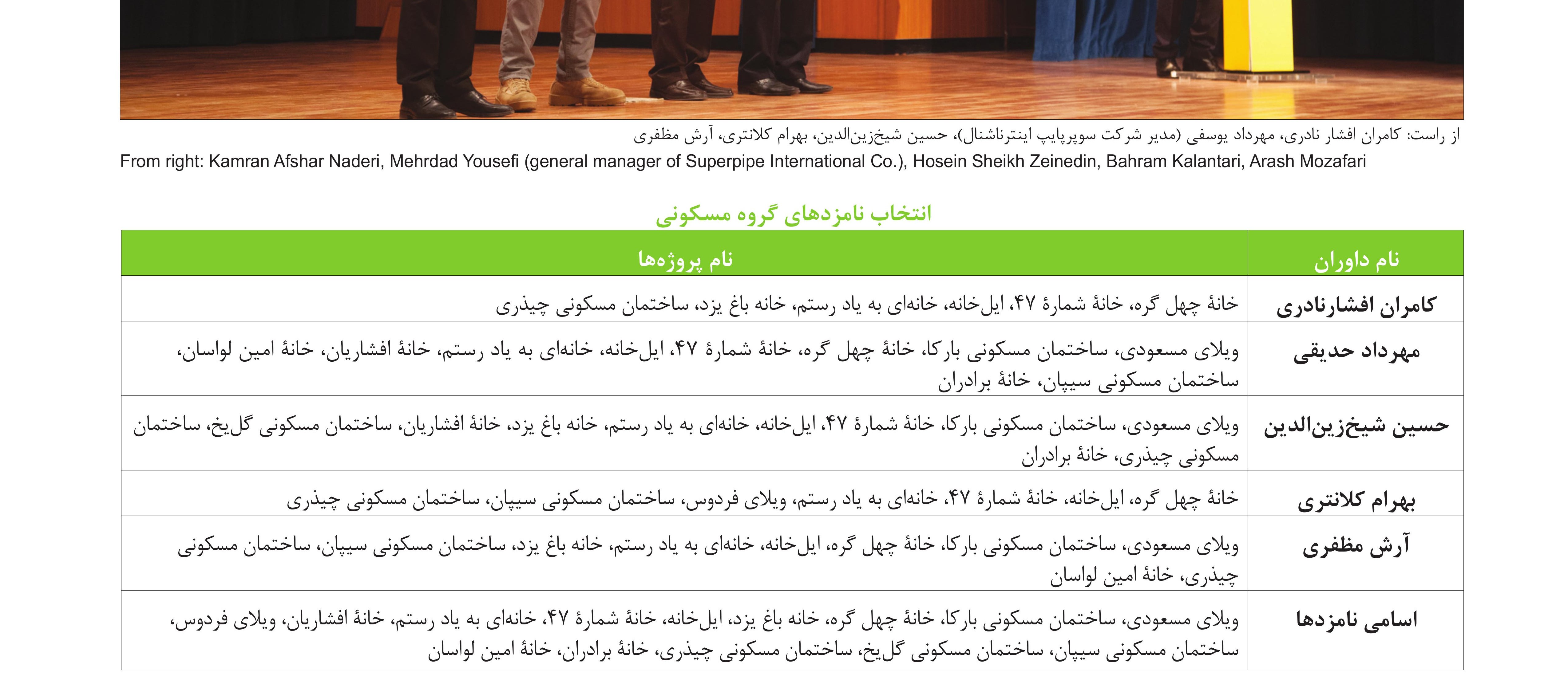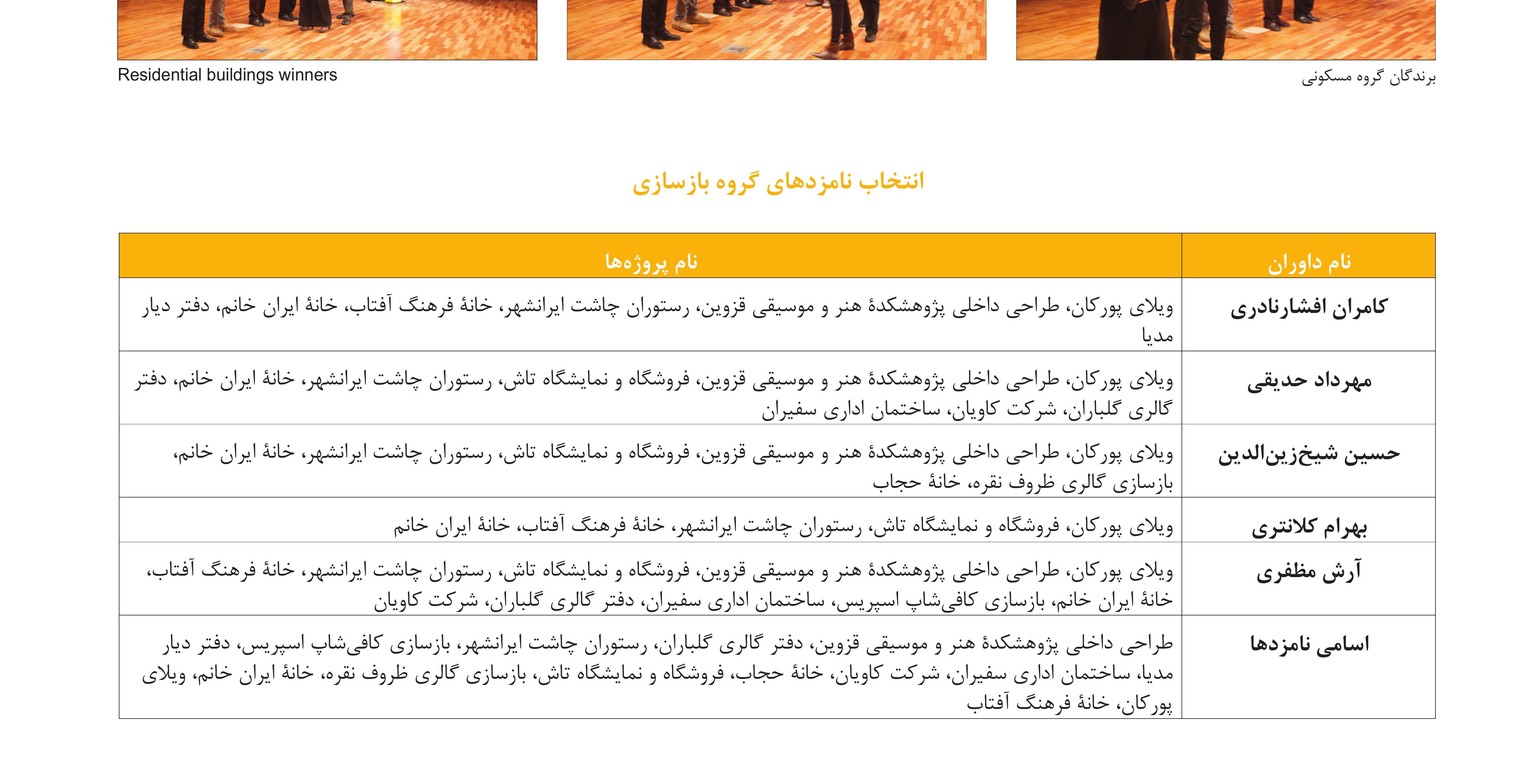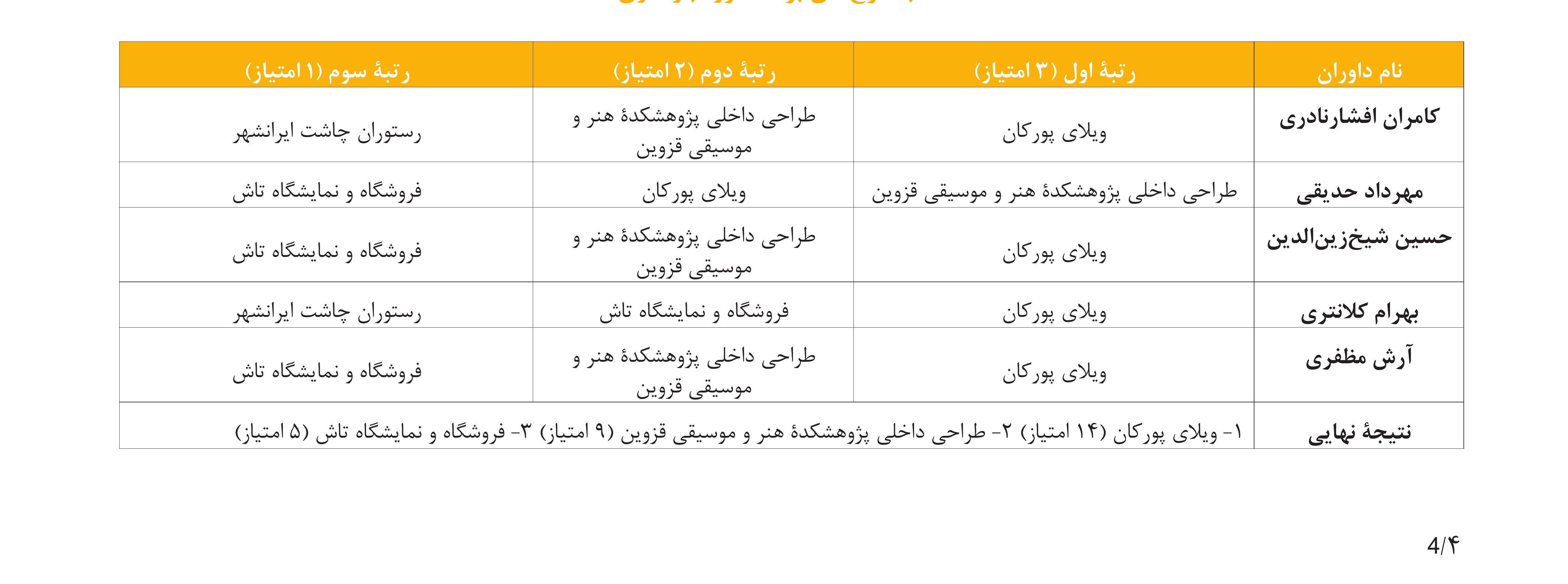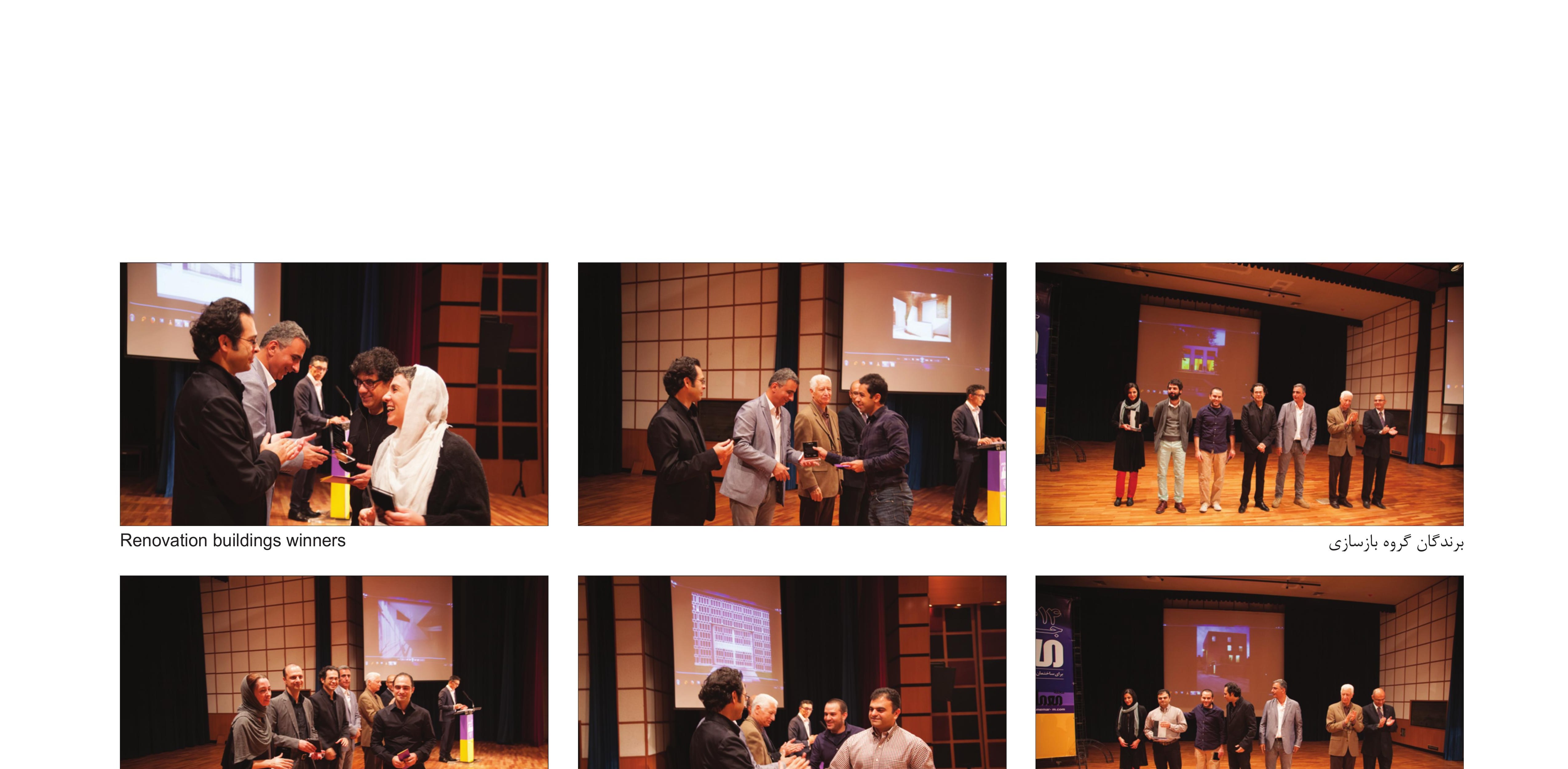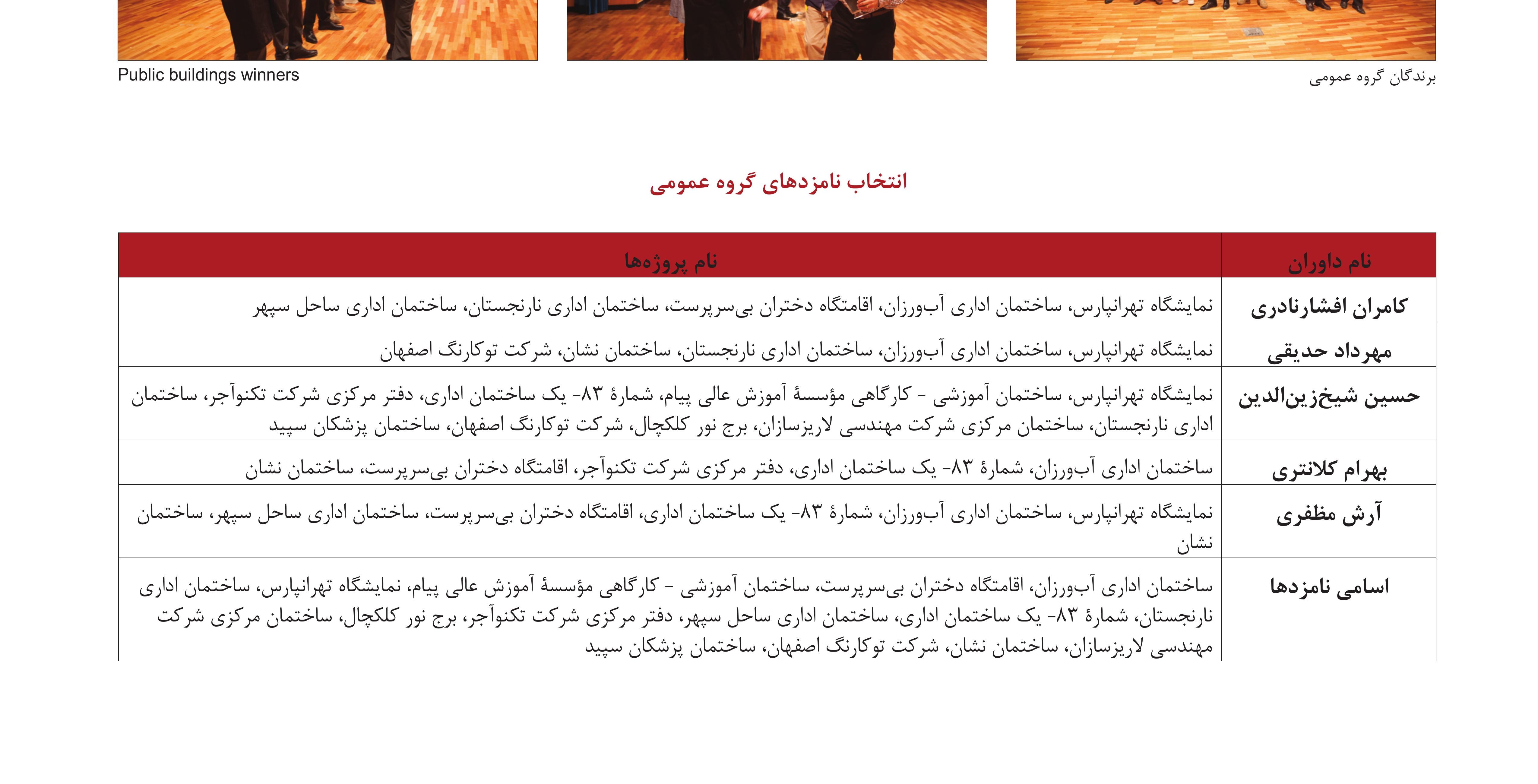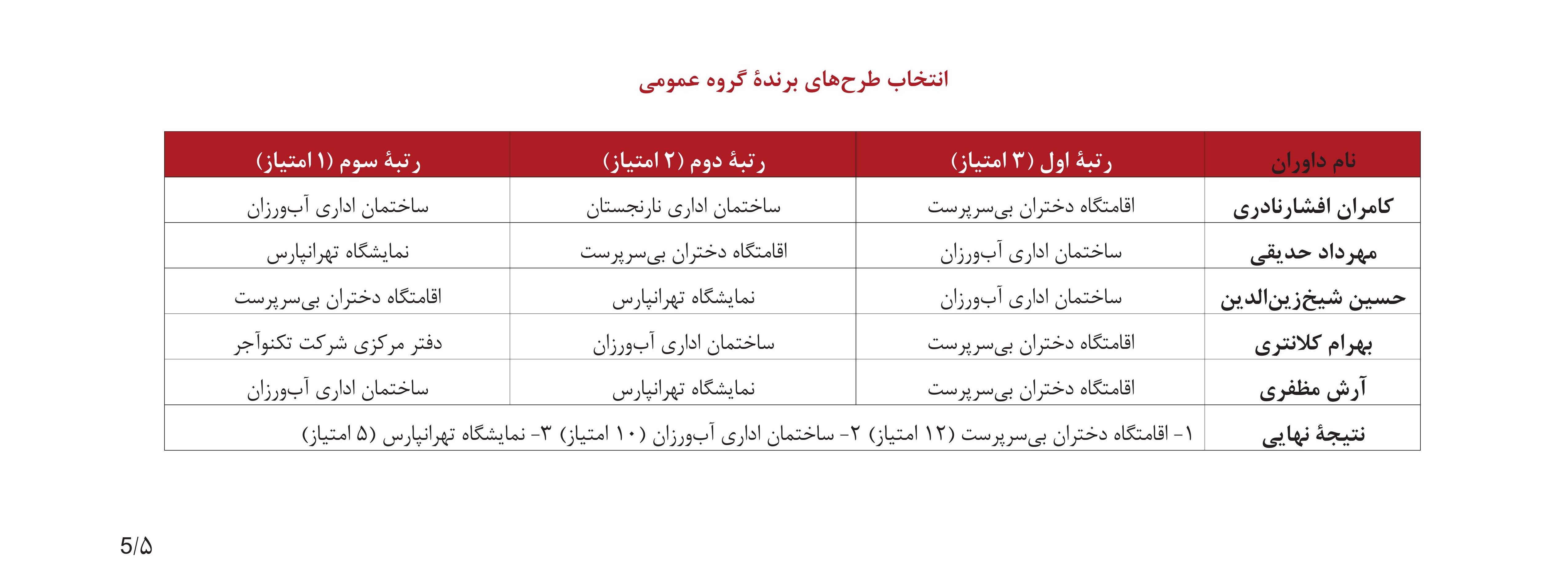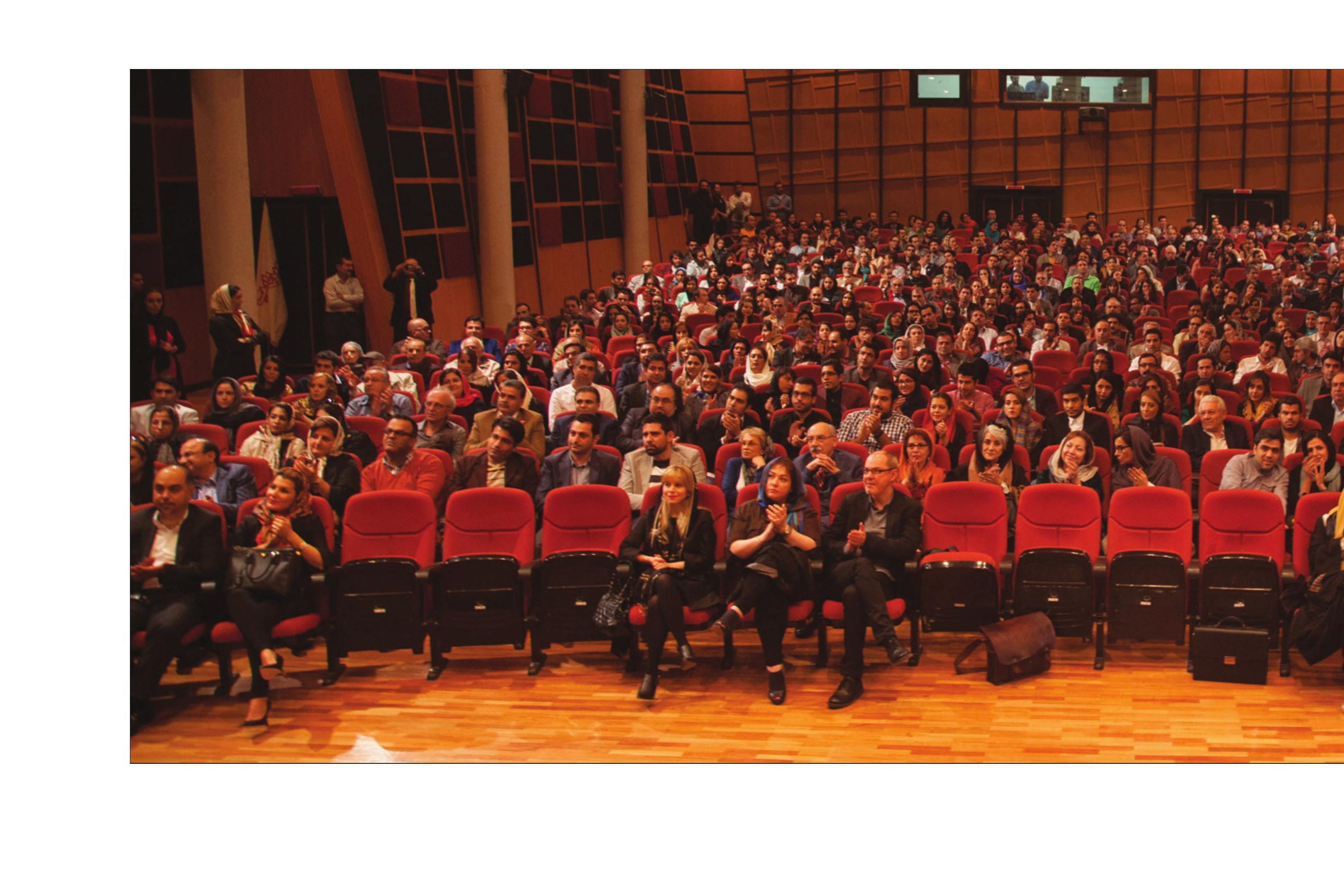
The 14th Memar Award competition was held in two stages with the participation of 241 entries. In the first stage, from among the 241 projects that had submitted their dossiers, the semifinalists were selected separately within the three categories and were asked to submit their material for the second-stage judging.
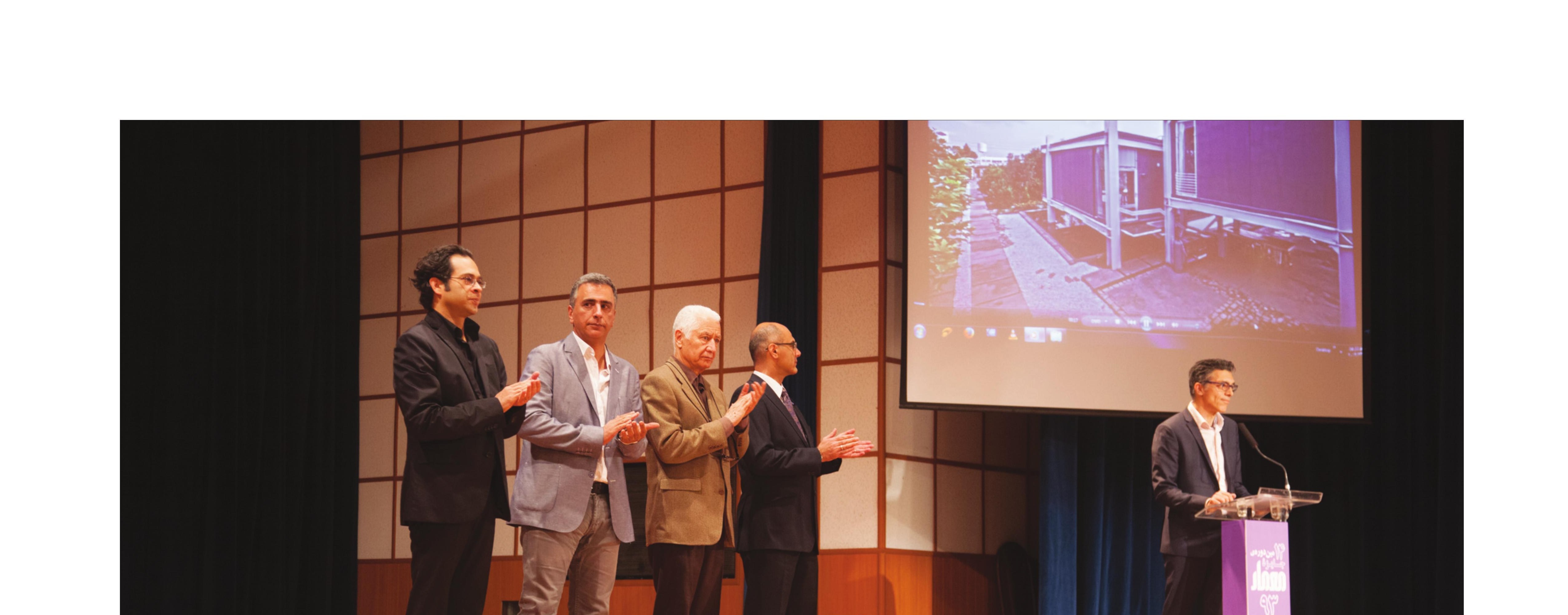
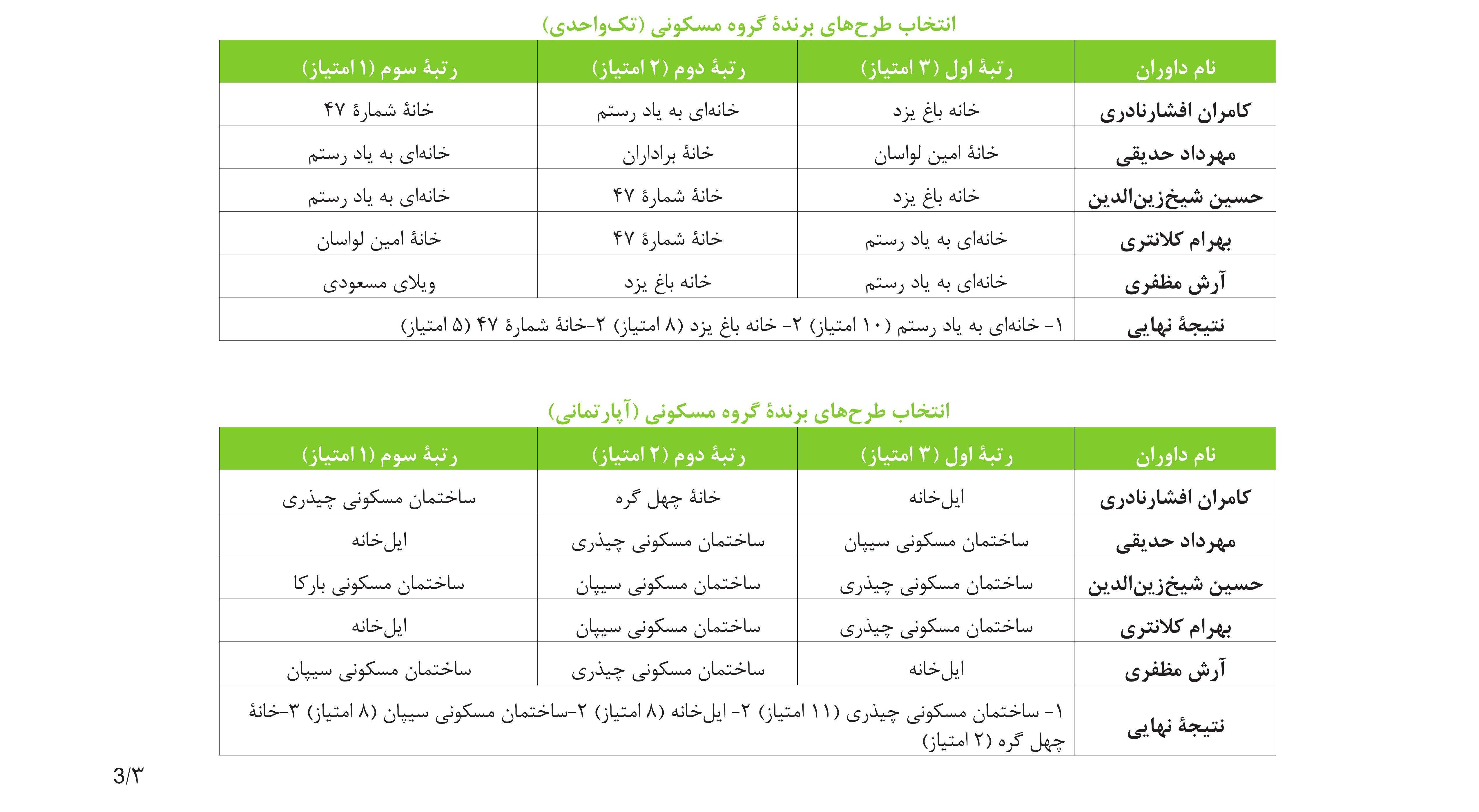
The second-stage judging took place on 18 October 2014 (26 Mehr 1393), with Mehrdad Hadighi joining the jury: Hossein Sheikh Zeineddin, Kamran Afshar Naderi, Bahram Kalantari and Arash Mozafari. At the second stage, by the jury's decision, the Residential category was split into two sub-groups, "Individual Dwellings" and "Apartment Buildings". The jury set four restoration projects apart from the competition on the grounds of their specialist nature; these projects will instead be presented in the magazine.
Judging criteria
- Creativity and innovation in design, and innovation in the use of materials and construction technology;
- Creative engagement with the project's specific difficulties — including economic constraints, special site conditions (dimensions and proportions), regulatory and legal constraints (particularly in cities), and technical difficulties;
- Precision and innovation in detail design;
- Attention to surroundings and climate, environmental values, and social commitments.
It goes without saying that the final judgement on each project will not be made by scoring it under each of the headings above and averaging — but rather by a judgement of the project's whole.
Programme and method of judging Memar Award entries
All projects are divided into three categories — residential, non-residential and renovation — and within each category the following stages are followed:
- All works in the same category are placed before the jury together, so that after looking at them all, any work that all five jurors reject is set aside. Even if a single juror argues for keeping a project, that project will not be set aside. The remaining projects are called the semifinalists.
- From among the semifinal projects, each juror selects their three preferred projects without ranking, marking them with their own label. Projects that no juror has selected among their three favourites are set aside. After the discussion has concluded and deliberations are deemed sufficient, the jurors mark their three chosen projects with labels once again. The selected projects are the finalists.
- To determine first to third place, each juror awards one point to their third pick, two to their second, and three to their first. The votes are then summed. If any projects tie, the scoring is repeated with points from 0 to 10.
- The jurors may, from among the finalists, declare some worthy of a special mention. With the others' agreement, this designation becomes final.