In this article, William Curtis compares designs from other countries with the winning entries of the American Institute of Architects (AIA) awards in order to paint a portrait of American architecture.
It is not easy to claim that the 1998 AIA award winners are representative of recent trends in North American architecture. But if they are, they reveal a strange state of affairs in which, apparently, modernist abstraction is reserved for exclusive penthouses, forest retreats, and environments of spiritual uplift (whether religious or artistic), while the more traditional designs and historical patterns can be found on the street, in urban institutions, universities, and the realm of affordable housing.
The question of consumerism and imagery is nothing new; but in the United States, commercialism and populism have long been freely traded in the marketplace. It is noteworthy that urban designers and sentimental academics, through an updated narrative of "the traditional main street," increasingly resort to recognizable architectural "signs" and images. At present, these have become the currency of transactions — a domain they were supposedly supposed to have liberated themselves from. Gradually, the main street of city centers has become a kind of suburban shopping mall, only without the roof. Or a theme park that puts historical cliches on display.
One cannot say with certainty what this situation reveals about contemporary American society, but there is no doubt it is a sign of a set of priorities quite different from those of, say, France, Finland, Spain, the Netherlands, Switzerland, and Japan, where diverse cultures of modernity enjoy a broader social base and varying degrees of government support. In fact, an examination of recent European awards — such as the Spanish Biennale in 1997, or the Building Exhibition in Finland held every five years — reveals how various forms of modernism and non-modernism in the public realm, across a wide range of building types from schools, stadiums, churches, and museums to subsidized housing, have operated. At the same time, we have witnessed subtle adaptations to place, history, and topography, without the forced impression of having eclectically incorporated the patterns of the past.
In the United States, there is today an evident caution in the civic realm and an absence of the spirit of experimentation, which may indicate both cultural conservatism and a lingering fear from the trauma of urban reconstruction thirty years ago or more. Whether this is coincidental or not, among the institutional works that won awards in 1998, many are restorations or renovations. Even in the case of new buildings, there is a pronounced tendency to make things look somehow old. Especially in cultural environments like universities, the dominance of contextual puritanism persists. The desire to fit into the existing fabric has sometimes led to distressing imitation of neighboring historical buildings.
In the area of urban housing too, one finds this implicit belief that following the idioms of older patterns is safer than innovation. The terms of the debate were long ago set in caricature form: anything that looks like a freestanding slab is bad; anything that looks like a traditional street with facades and front doors is good. The broad spectrum that results from research between these two poles — with interpretations of various building aggregations, enclosed courtyards, inner yards, cluster buildings, and types of assemblages — has been overlooked. Regarding the kind of avant-garde experiments that one can find in the housing sector in, say, the Netherlands, it must be said that there is apparently no counterpart in recent award-winning designs, or in American housing construction in general. In fact, the American avant-garde — such as it is — has retreated into the embrace of one of its traditional enemies: the academy. It expends the bulk of its energy within these academies, and by avoiding social realities, engages in apocalyptic theoretical polemics.
Technology Without Technology; We Are Americans
Watching how different societies deal with images of technology is truly fascinating. In recent American work, even in the commercial sector, one can observe a severe restraint in the expression of "high technology." The absence of skyscrapers from the current scene is also noteworthy. Fifteen years ago, the tall building stood at the height of prosperity and splendor in the center. The rhetoric of critics was mostly about the appearance of the skyscraper — though they had little to do with its materials or structure. In the 1990s, there has been an increasing shift toward renovating old buildings and producing office parks outside the city, with romantically overhanging roofs facing ornate rural villas.
And yet that nature and that isolation which are linked with American visions of ideal life in the suburbs and beyond have re-emerged — nature, well equipped with every amenity, as an excellent consumer commodity for established residents of the "city." Nature in the new age has become a totality mingling a vague spirituality with a sense of calm derived from natural landscapes, material comfort, and an escape that is fully equipped to the bosom of "wild" nature. Nature for the wealthy sometimes manifests as the invasion of light upon calm abstract surfaces in apartments suspended above the tangled mass of the city — a kind of interior landscape. At other times, it means lyrical scenarios in the depths of forests, accompanied by echoes of indigenous archetypes. The public space between the penthouse and the rural retreat can increasingly be found in the virtual space of electronic communications — from automobile to airport, to cell phone and computer. Tokyo is on the line. But rarely is a neglected park near the freeway to be seen.
These are examples of the signs and symptoms of a technological society in which electronic tools and networks redefine even the ideas of public and private, urban and rural, cosmopolitan and regional. In other post-industrial societies too, similar developments are underway. But their forms are different and they represent different styles of modernization. For example, in France, modernity is truly a matter of the state, which has sought to project a progressive image through grand technocratic statements — such as the Grands Projets. The realization of a building like Dominique Perrault's "three great libraries" in Paris would be unimaginable in the United States. In North America, the government has little involvement in modern architecture of whatever kind; glass skyscrapers — if they are even still being built — house private and commercial activities; and bold assertions of technocratic expression are currently viewed with suspicion.
The Gradual Absorption of Early Modernism
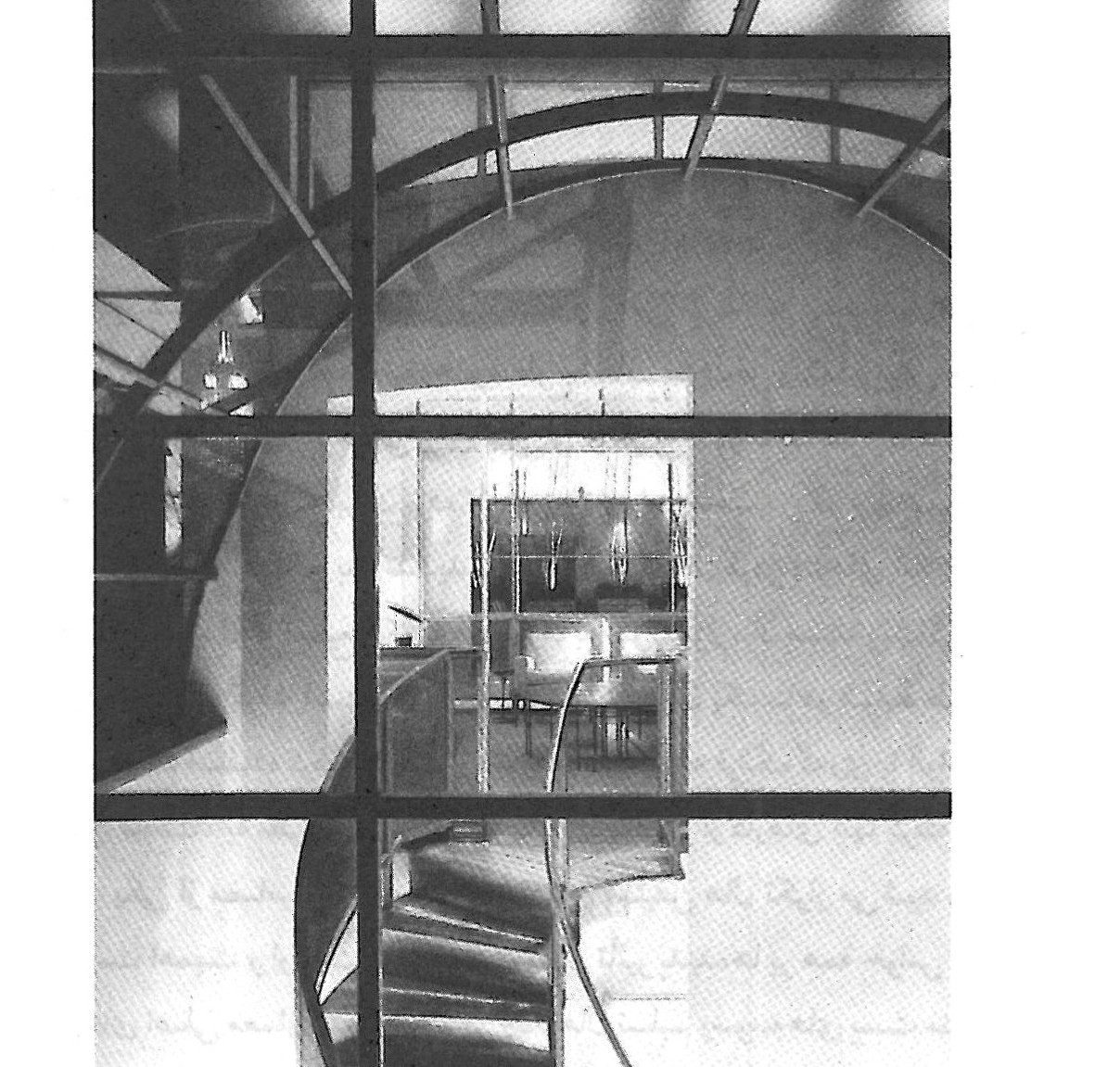
Consider those minimalist white-drenched penthouses. In one, echoes of Mies can be heard; in another, references to Le Corbusier; in yet another, resemblances to Tadao Ando. By coincidence, on the very day I saw Richard Serra's astonishing ellipses at the Dia Foundation in New York City, I attended a party at one of this year's award-winning apartments. The competition is truly a daunting one for any living architect, but comparing the two prompted me to reflect on the re-emergence of interest in abstraction in recent American architecture. In fact, that apartment — the Park Avenue apartment by Frank Lupo and Daniel Rowen — was described by the architects themselves as: "an environment for contemplation and meditation, completely separated from the surrounding city, where the inhabitants can discover their senses without disturbance from outside, a place where one can listen to light, see silence, and exercise the imagination." Even the client abandoned the idea of displaying a collection of artworks he had intended to show there, because he himself "realized that the play of light with the composition of wall surfaces, floors, and ceilings completes his intended aesthetic program by itself."
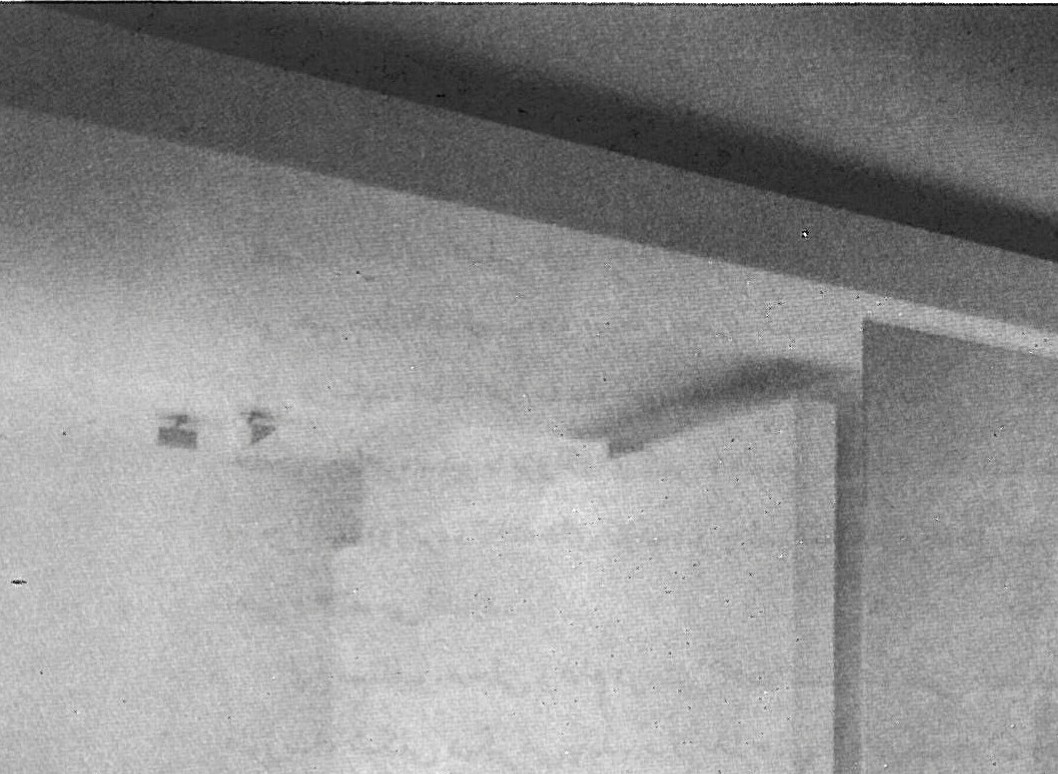
For an observer accustomed to acres of uninterrupted wall in American buildings and onion-skin facade cladding, seeing a few select designs that have devoted themselves to exploring and discovering the tectonic presence of materials and the expression of the construction process is delightful. One of the most refined of these is the renovation of the MIT School of Architecture and Planning by the firm Leers Weinzapfel; they accomplished this with layering transparent surfaces and relying on the reductive language of glass in steel frames. A different example is the Becton Dickinson multi-unit villa in the suburbs of New Jersey, for which Kallmann, McKinnell and Wood devised a coloring of "brickwork and copper carefully matched with the forest and topography of the building site." Near Boston's Logan Airport, there is a striking work that contradicts some of my earlier generalizations. It is technologically adventurous. Aesthetically persuasive. Magnificent. And it occupies a place in the public sector: Ventilation Building No. 7, designed by Stull and Lee; Wallace, Floyd, and Associates; and TAMS consultants. Here, engineering has served as a launching pad for powerful architectural expression, without any trace of the theatrical excesses we see in most recent high-tech designs.
Adaptation to Regional and International Sources
About five years ago, various forms of regionalism — whether critical or otherwise — were much discussed. Although some of the most appealing designs of this year have addressed the issues of adaptation to specific natural landscapes and climates, fitting them into any kind of "-ism" would be futile. Regardless of their locally sourced inspirations and their responses to their region, these works have drawn upon a wide range of universal and international sources, and have again used abstraction to achieve transformation.
The type and genre in Wisconsin, by Vincent James and Associates, is a fitting example. This project, rightly described as "a gathering of copper forms hidden in the forest," is built from wood-framed volumes clad in metal, each a variation on a central geometric theme. Abstraction has been used to intensify the sense of sequence and the atmosphere of place. Here, the minimalism and tactile quality of materials bring to mind the geometries of the rural-industrial vernacular of the upper Midwest. In plan and detail, and in the sense of empathy with nature, memories of Frank Lloyd Wright can be found.
The Riven Wood Brandenburg Studio in Minnesota, designed by David Salmela, also explores the question of appropriate form for the wilderness, but its references to vernacular form are more explicit — both the Scandinavian heritage of immigrant rural architecture and the original prototypes of the long Viking houses. Such an approach is of course somewhat risky, and could have resulted in offensive crudeness or a ski lodge cliche. But the architect exercised restraint and arrived at a solution that produced a memorable domestic space with ancient and natural echoes. The preoccupation with everyday details, timber boards, and forest vistas reminds one of recent Finnish architecture.
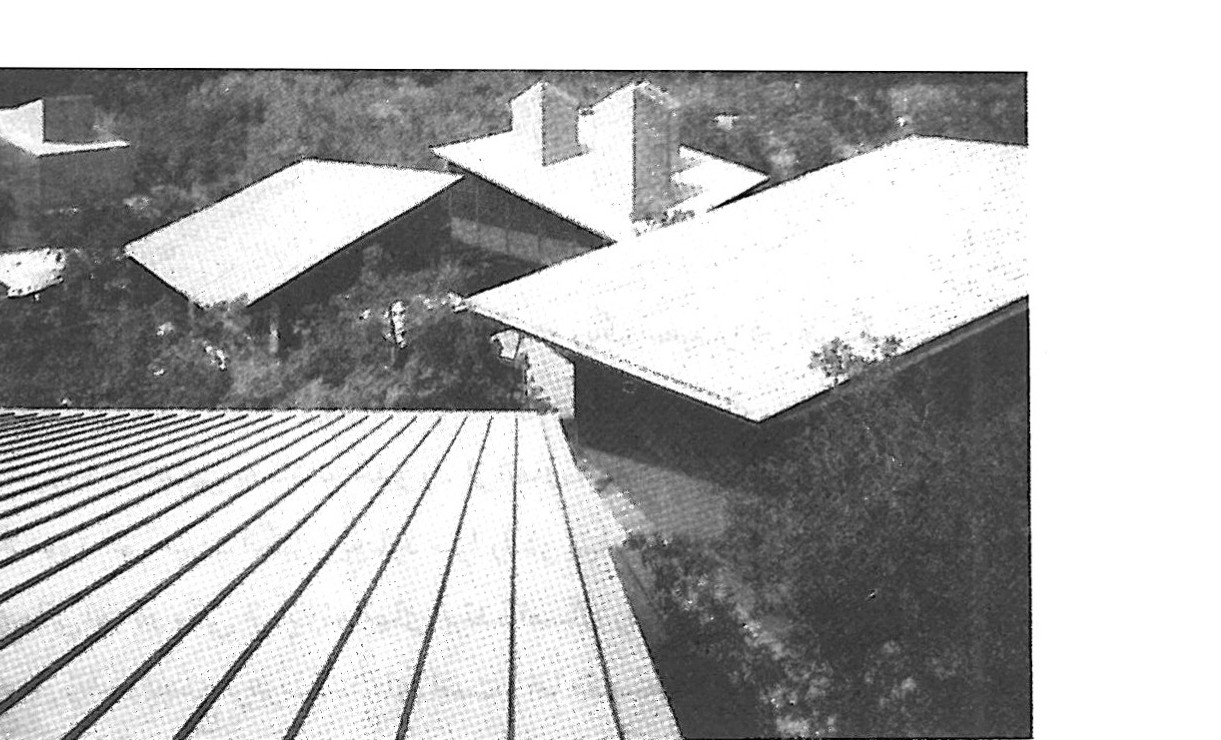
This same theme of blending the local and the universal finds a different form in an entirely contrasting context: the semi-tropical coastline of Florida. The Atlantic Center for the Arts at the New Smyrna Beach shore, by architects Thompson and Rose, is arranged as a scattered sequence of timber structures along a winding, broad pathway that serves as a social street emerging through the forest. Individual buildings are angled to frame vistas, to receive or block light, to respond to breeze or rain. The vocabulary of this design employs the same blades and porous transparent surfaces of tropical vernacular languages, and in it the idea of creating a filter for the passage of light and air is realized as curved elements. The architect has consistently strived, through perceptible variations in surface, volume, plane, space, and materials, to achieve an "intensification of experience." The Atlantic Center for the Arts is a reminder that fragmentation — which has been discussed again and again as a means of expressing the condition of uprootedness — can be used to embed a building in natural and topographic conditions. Although there are no direct references to Frank Gehry or Alvaro Siza, it seems that lessons have been drawn from some of their works.
One of the themes that recurs constantly in the works of Steven Holl, and that guides them, is the primacy of experience — the impact of phenomena on all the senses through the fundamental instruments of architecture. Thus, although Holl did not succumb to the temptations of postmodernism, nor was he deceived by the tricks of neo-modernism, he preferred to explore a path with a single purpose grounded in his direct perceptions of architecture, art, and the natural world. Despite these commitments to "the poetry of space" and "the thing itself," it sometimes seems that the results he has produced are excessively cerebral, though in recent years a distinct language and manner have crystallized in his works.
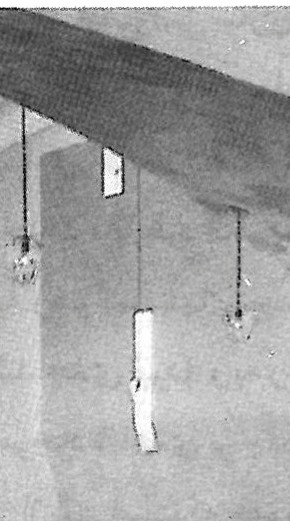
The Chapel of St. Ignatius at Seattle University has explored both the senses and the possible meanings of light in a spiritual center. The initial designs for this project speak of a spatial idea shaped around layers of natural illumination and colors that have been filtered or reflected and interpenetrate one another. Holl, by reinterpreting some of the traditional instruments of ritual, responds to the ceremonial function of the building: procession, gathering, and the creation of appropriate space by passing through "veils" of tangible sensation that interpenetrate one another. This building is a spiritual center for the Jesuit community, and the architect has also explored the idea of "unity of differences gathered in one place." But these metaphors are not applied externally; they are integral to the ideas of the work and are conveyed without being explicitly stated. The viewer senses that Holl has drawn lessons from Le Corbusier, Aalto, Kahn, and even Richard Serra, but the result is not a seductive formalism: in fact, it is a transformation that accommodates a new social interpretation expressed as space, light, weight, weightlessness, and materials.
Holl's building is a fitting point on which to conclude this article, for it also reminds us that the formulation of an authentic architectural language is a long tale of trial and contemplation, in which many sources from within and outside architecture are gradually absorbed into an expressive system. The intellectual milieu around us is subject to nothing but passage and change, and sometimes resorts to the rapid crystallization of instant history. But modern architecture in its most ambitious form constantly returns to the same old things, reflects upon them anew, and transforms them into unexpected new forms.
Now that the AIA has awarded its 1998 Twenty-Five Year Award to Louis Kahn's Kimbell Art Museum, perhaps the last word should be his: "If I were to define architecture in one word, I would say architecture is the thoughtful making of space."



