The author attempts to investigate the roots of deconstruction in the domain of modern Western philosophy. Somewhat contrary to the prevalent ideas of certain researchers — among them Broadbent, whose book Deconstruction, A Student Guide, has been translated into Persian by the author, and R. Norris, who seems have influenced Broadbent — that deconstruction has been impacted, or rather is a reaction towards structuralism of Sausure.
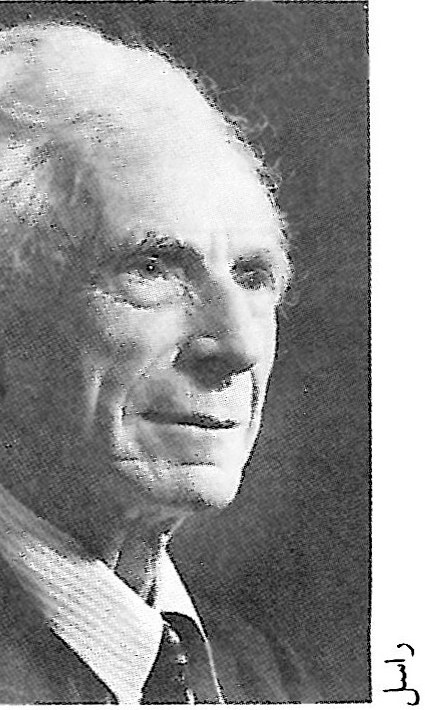
The author mentions two other sources which seem to have been disregarded by other researchers — if not completely, but to a considerable extent. These two sources, the author believes, are “Analytic philosophy” of Berterand Russel and Ludwig Wittgenstein as well as existentialism of Kierkegaard and Sartre, each one in its own way. “Analytic philosophy” for the negation of Hegelian metaphysics and for strong and emphatic support of clarity and exactness of language. These indeed are the points which Derrida, the father of deconstruction refutes entirely. And existentialism for opening of the way for de-evaluating every value of the by-gone periods, by casting doubts on many philosophical ideas of the past, and above all by believing in absurdity of life. When life is absurd (existentialism) many things could be thrown away, and rebuilt; foremost scentific exactness and “logical” conclusions as well as clarity of language which is essentially bourgeoiste betrayal to maintain its sovereignity (Derriday); or to colonize the readers’ mind (Bart).
The re-examination of the past, especially in the domain of philosophy, in fact did not begin by deconstructivists, but by analytic philosophers (and certainly, one way or the other, by some scholars of philosophy before them). “Most of the propositions and questions to be found in philosophical works [of the past] are not false but nonsensical,” says Wittgenstein (Tractatus, p. 4.003, quoted by Lavine, p. 403). However, in this re-examination each went its own opposite way. Analytic philosophers for a precise and logical language which separates sense from non-sense. Deconstructivists, paradoxically, towards more obscurity in language, while refuting the many philosophers of the past and present.
As for existentialism, although deconstructioints do not emphasize the absurdity of life, as the existentialists did — in fact, they claim to be much more positive than existentialists were, but their main argument only in a confused and absurd world could be sold.
As a concluding remark, the author asks whether in a mixed up world could one expect anything wiser than deconstruction in the domain of philosophy?
This article, with regard to deconstruction in architecture, will continue in the next issue of M’emar.