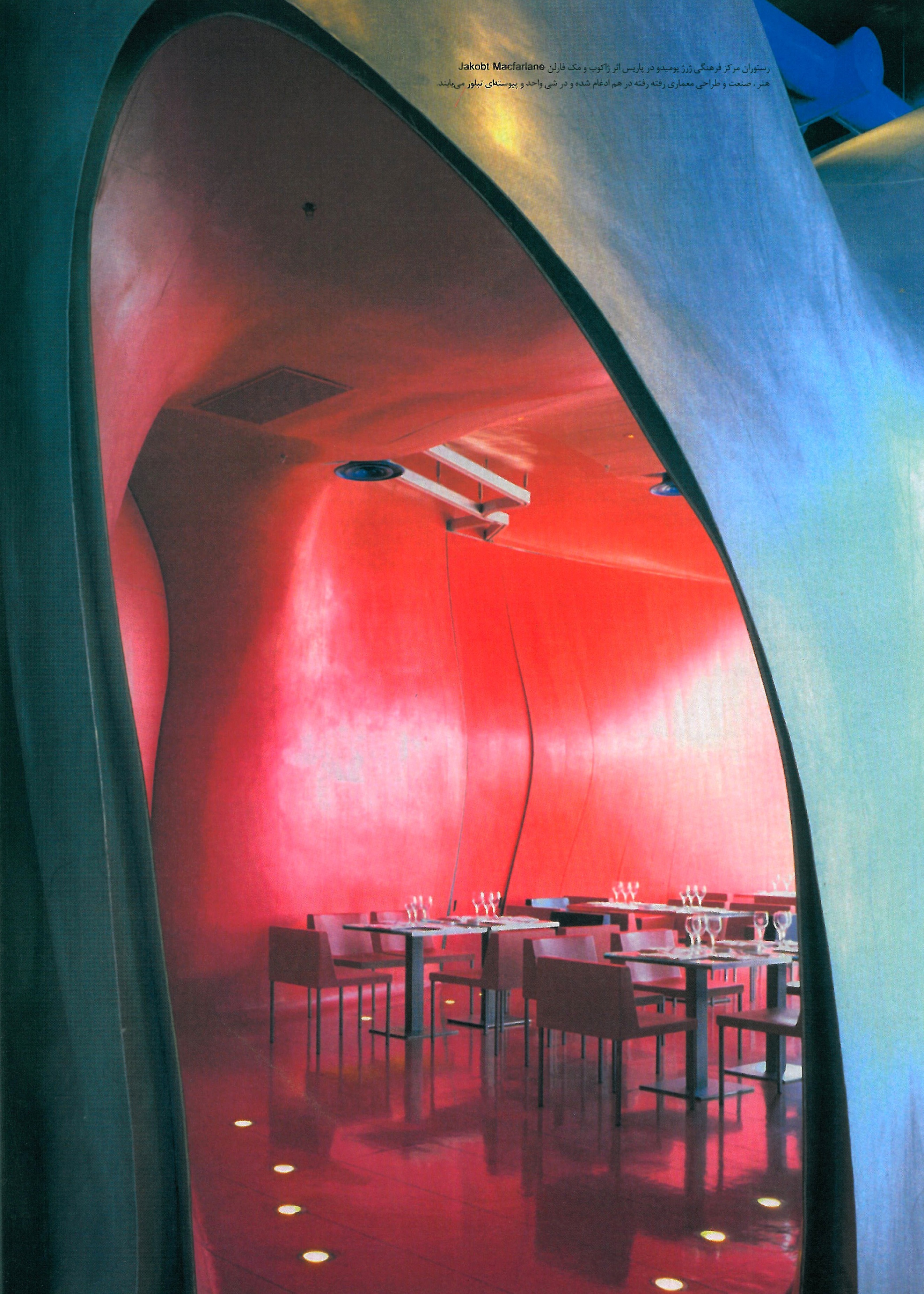
The wall is one of the primitive and most enduring elements of architecture. In the distant past, the wall was used as a guard, a barrier, a definer of property, an outer covering, a load-bearer of the roof, a separator of internal spaces, a thermal/cold/moisture insulator, and a place to recess household and work tools. Today these roles have been separated and a distinct element is used for each. They are sometimes designed in combination, sometimes independently.
Spatially, the wall plays an important role and most often defines the limits of space. Beyond its instrumental role in shaping space, the wall, as an independent element and as a 'presence', has its own special importance. Across the centuries, architecture has been a 'language' whose words were the architectural elements — door, window, stair, wall and so on. The 'grammar' of this language has been the rules for assembling these elements. These rules sprang from a kind of 'wisdom and judgement' and, in the architects' hands, took on aesthetic value. For example, the rule of placing windows one above the other so that the façade reads as limited rows draws on the fact that, in load-bearing walls, the window is a point of weakness, and no significant vertical load can be transmitted across an opening; the loads are necessarily carried to the piers around the window. So stacking windows — which also affects a building's aesthetics — arises from a structural necessity.
Today, the necessities that gave the wall its familiar, historical form have changed by virtue of advances in technology. The question that remains is whether the wall, in its known form, should be kept, or be replaced by a new element. If wall, door, window, and other recognised elements of architecture were one by one to leave the architectural scene, the language we spoke of would also disappear, since a language without words has no meaning. What remains is sound. We also know that an important part of modern art, by turning to abstraction and setting aside the figurative, and modern architecture, by turning architecture into a discussion of mass, surface and light, gradually set aside the values of meaning. Modern architectural perception, although it claimed a Cubist and abstract aesthetic at the start, was, by virtue of its dependence on the technology of the time, unable to attain the purity of painting; it kept door, window, column, and wall. Today, technology has given architects the same command over form and materials as the graphic designer or painter has. Walls can have, at the designer's will, any density, transparency, colour, and texture. Even the existence of a window is no longer obligatory: the wall lets in light and view to the desired degree. For this reason, the term 'skin' (shell) is now used in place of 'outer wall'. A skin that can define the form of the architectural vessel. New technology has made it possible for the hardness, transparency, or texture of the skin to change gradually — and so wall, roof, structure, and window all come into being at once.
The process of unification — the distinguishing feature of industrial design and avant-garde architecture of the 1990s and the start of the third millennium — is striving to consign the wall, after at least 10 000 years of constant presence in architecture, to history. Just as industrial products are made of fewer but more complex parts, architectural products too are setting aside roof, floor, wall, stair, ramp, window — and, in Eisenman's phrase, 'all the recognised elements of architecture' — to bring into being a new, untried phenomenon that cannot be broken into independent parts. Industrial assembly, the analogue of collage in painting and composition in architecture, is taking a new path that fuses art, industry, and architectural design into a single continuous object.
A new aesthetic is therefore needed for organising such phenomena, in form and in space. The family of soft, continuous forms — drawn from the world of natural and mind-forms — has the property that, in them, distinction and separation, which any complex spatial organisation requires, arise not from the mode of joining and the variety of elements, but from the internal motions of continuous and dynamic forms.
Pioneering architects, in pursuit of this aesthetic, have re-thought the wall. They have not yet removed it from the scene; they have, however, changed many of its properties. In one place the wall has become invisible; in another it has been turned into an advanced device that talks with man, reacts to ambient conditions, changes colour over the day, becomes transparent or opaque under low electrical current and heat conduction, and, on command, displays images received from computer, satellite, television, CCTV, video-phone, slide and video.
Some, by means of special effects, laser, artificial mist and the like, have created astonishing virtual walls. Others have set out to find new wall materials: glass walls with glass support structures; walls of thin, very light PVC panels weighing in some cases as little as around 1 kg/m²; walls made of mineral or natural fibres or composites — synthetic fibre, resin, concrete, and so on. On another front stand the environmentalists, who in various ways invent energy-absorbing walls or 'green' walls of natural materials and living plants.
In the 1960s and 70s, some architects, following the social-political movements of their time, used a touch of irony and protest to build walls of the iconic objects of consumer life — drink cans, empty bottles, tin and so on. Today the use of recycled materials is treated, no longer for political-social reasons but as an experiment in alternative methods aligned with sustainable development, in some experimental works.
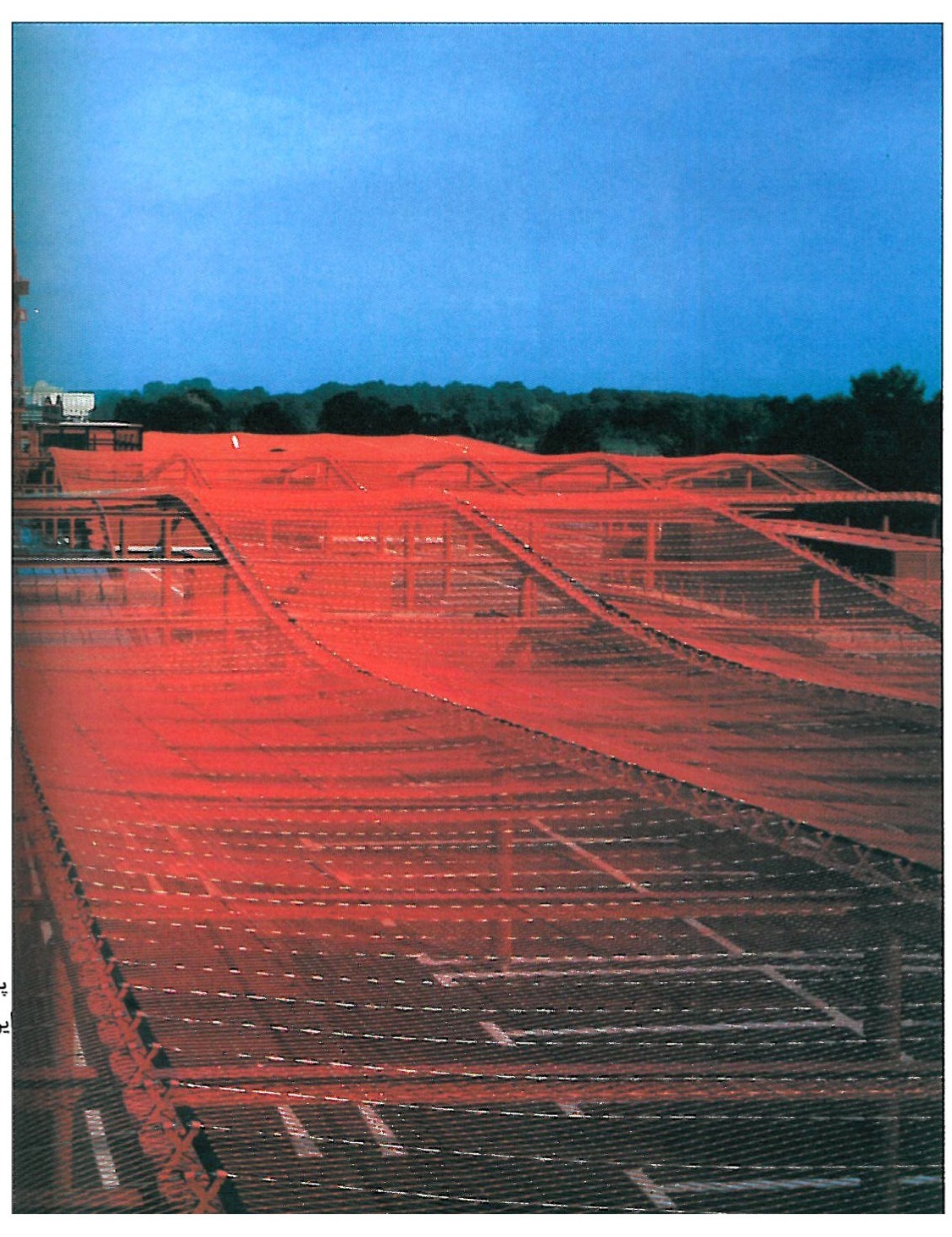
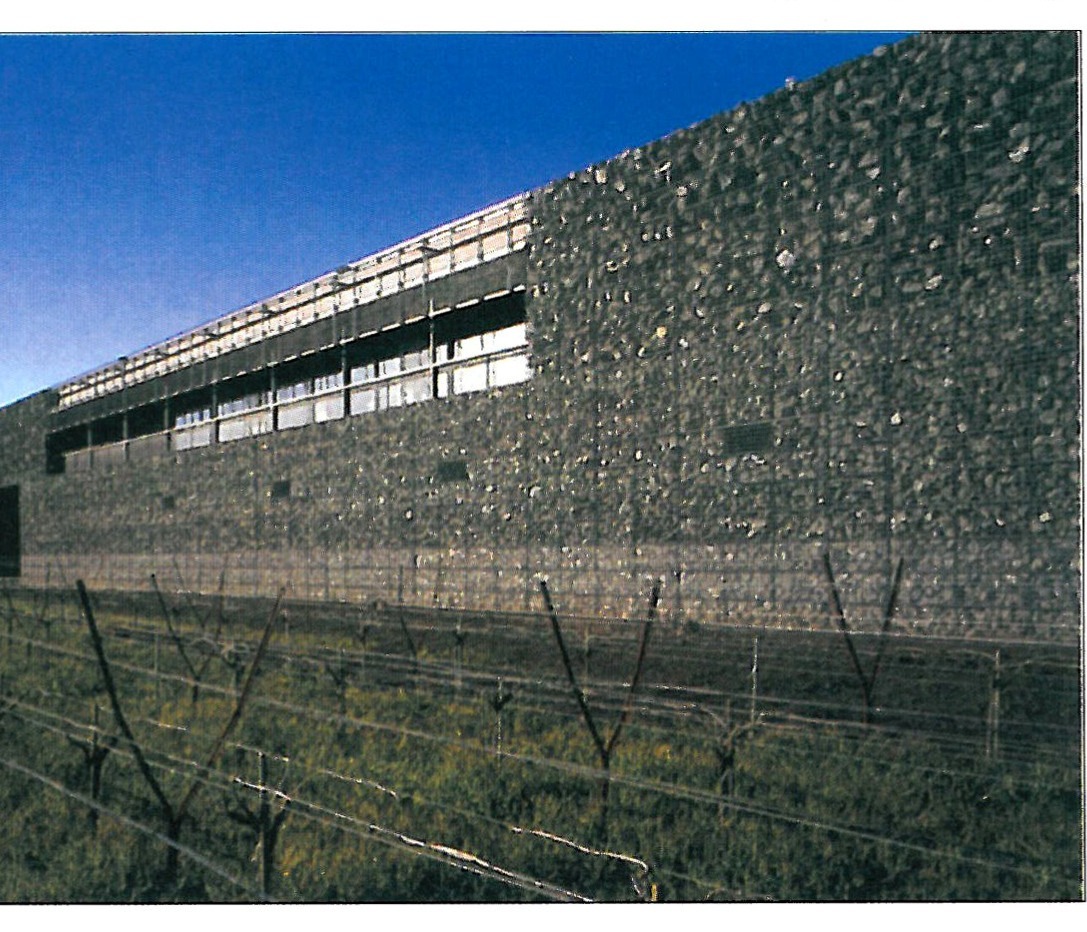
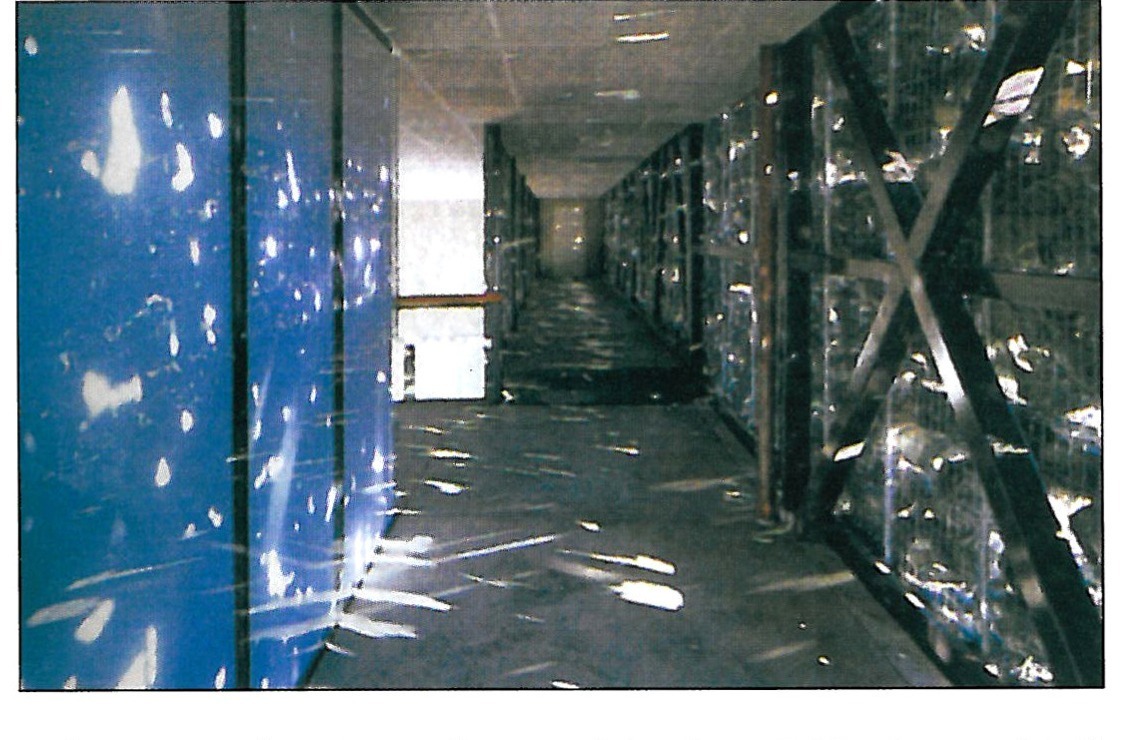
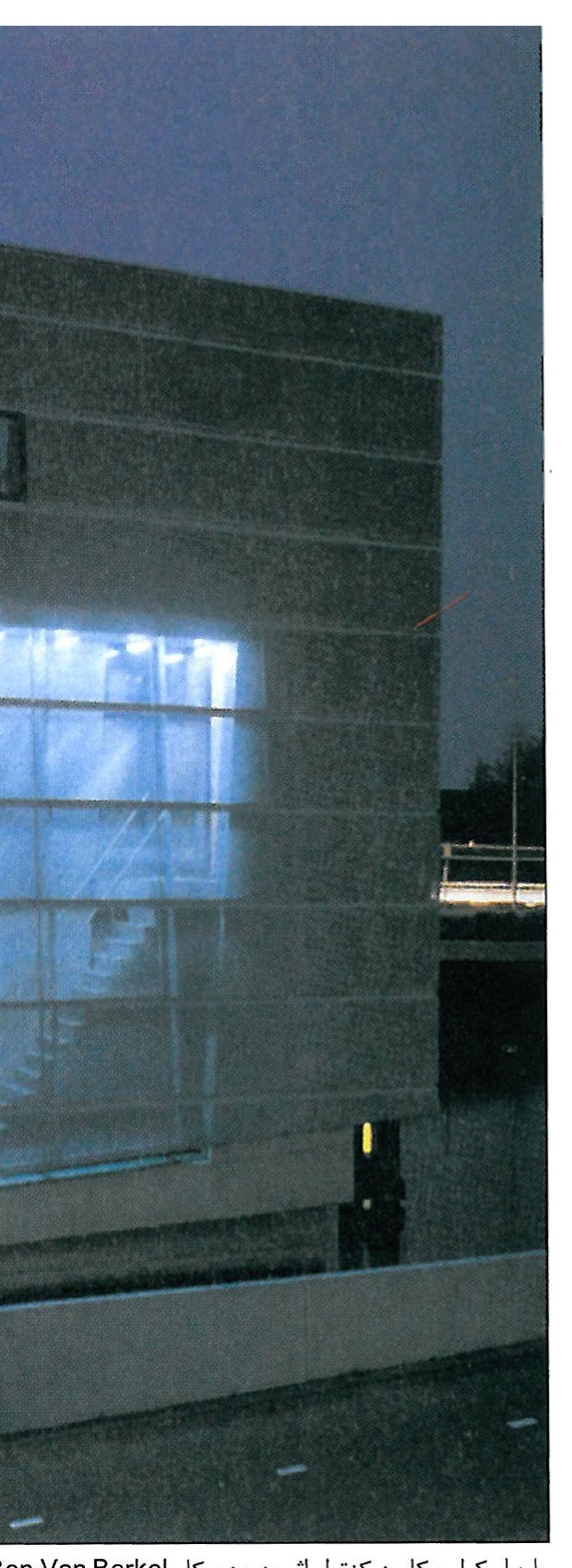
Among them, a group of artist-architects has set out, in entirely new ways, to value the wall as a striking and important architectural element. Herzog & de Meuron are among those who have carried out very important experiments on the role, texture and transparency of walls — sometimes using the most advanced technologies, such as silk-screen printing on glass, sometimes the most primitive techniques, such as the perforated, graduated dry-stone laying of stone.
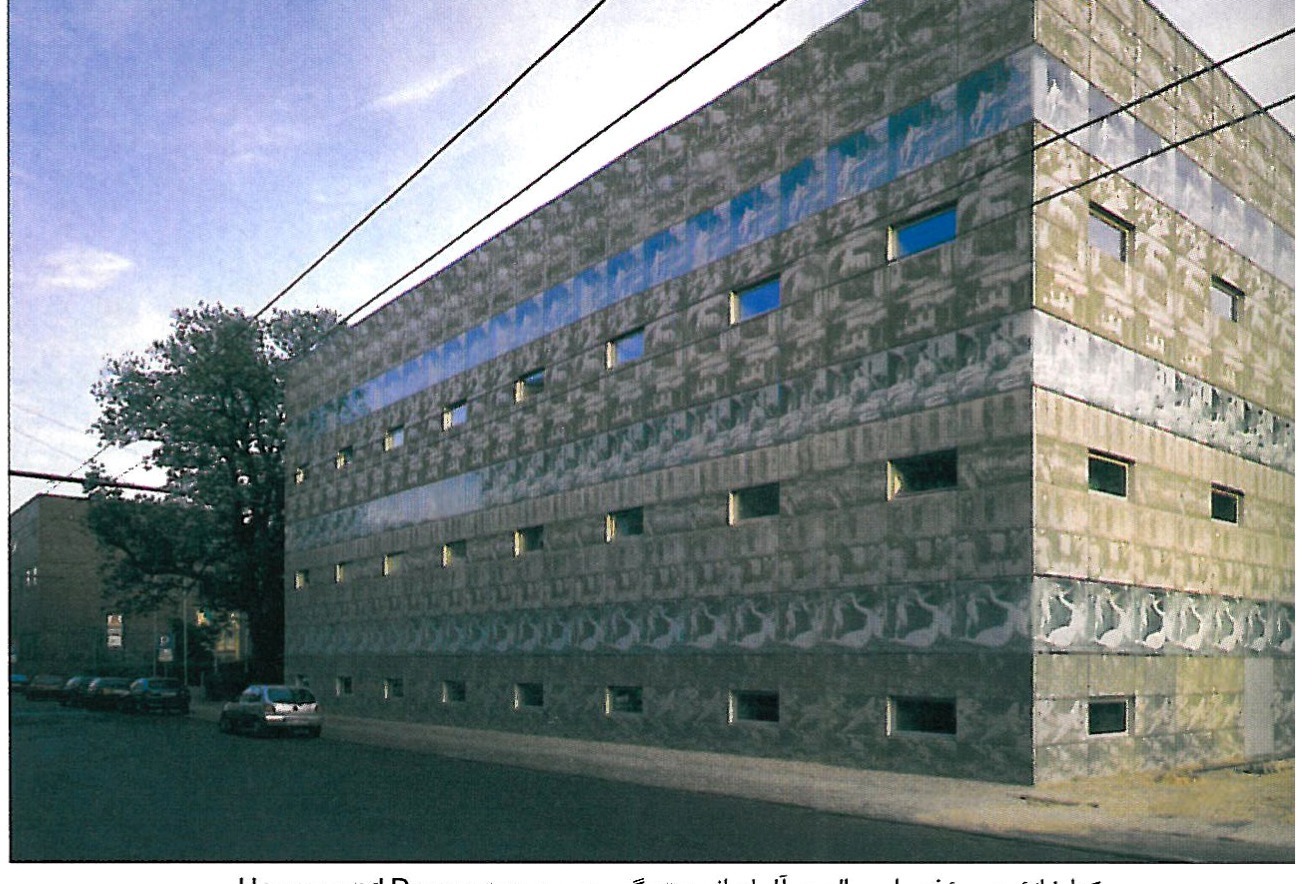
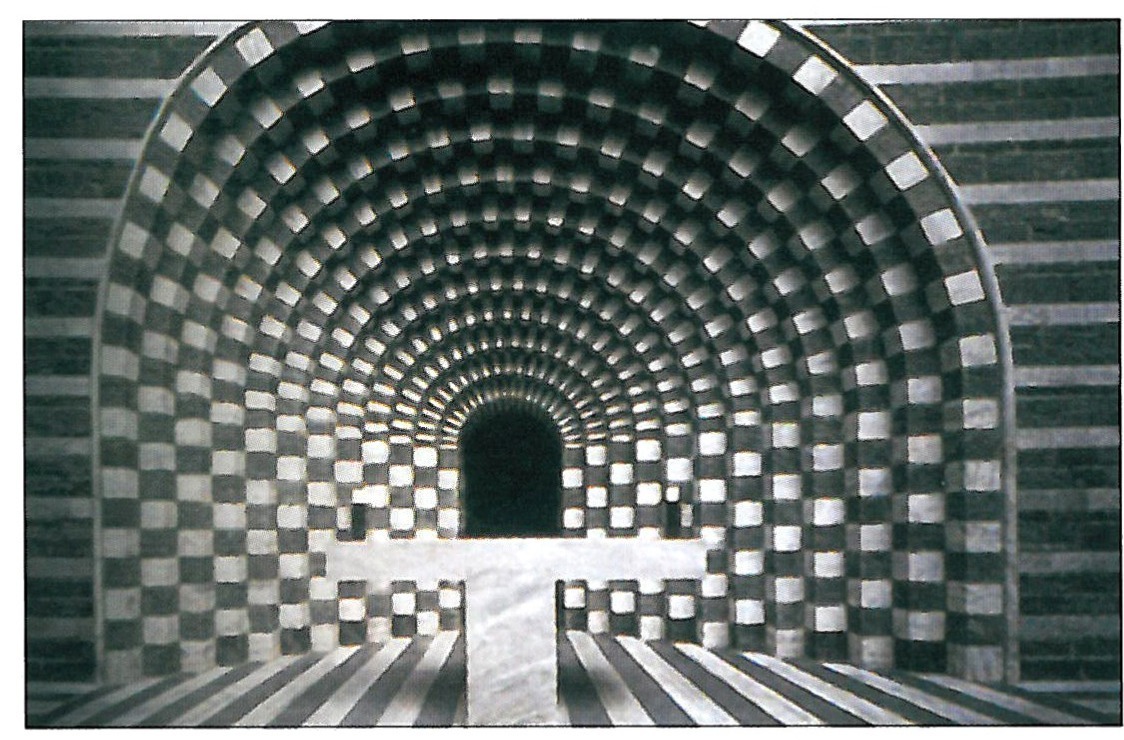
Mario Botta has turned the wall into an architectural monument. The bodily presence of the wall, brick and stone laid side by side with scientific precision and craftsmanly skill, the defined form and geometric figures — sometimes drawn from southern-Swiss Romanesque architecture — emphasise the wall as a striking element of architecture.
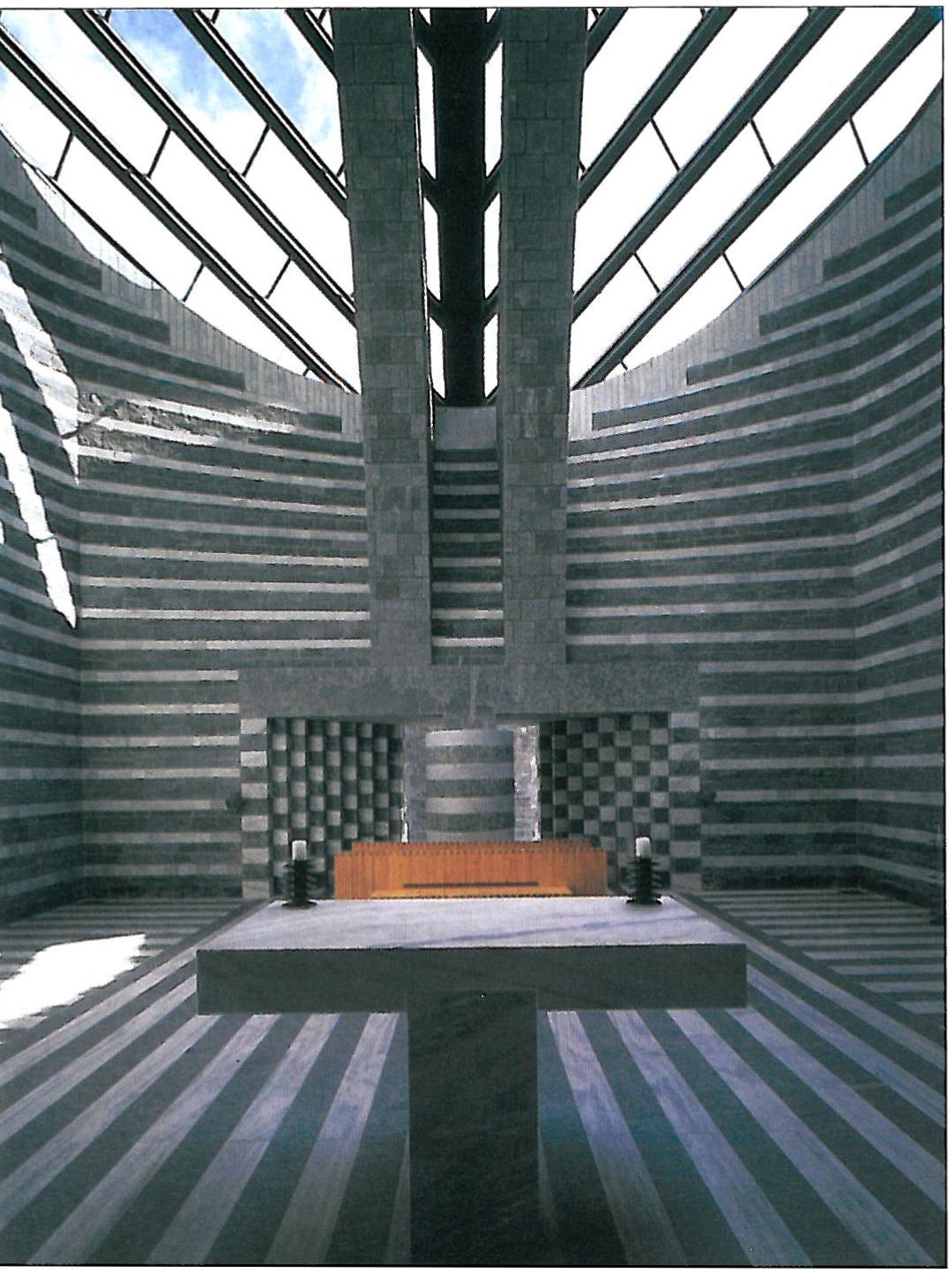
The architects of the so-called high-tech school, with greater refinement than past decades but still on their original principles, build transparent, light, 'intelligent' walls by assembling standard, very sensitive components. Their experiments are sometimes tedious, sometimes magnificent.
Some hold that building 'decorative brick walls' is like weaving a carpet: brick pieces sit alongside each other like the knots of a rug, to form a particular pattern. Today, in Iran, a group of new-generation architects, drawing on traditional methods and patterns, are pursuing this experiment. Among the leading modern architects of the older generation, Alvar Aalto alone has done this work in a fresh and very beautiful way.
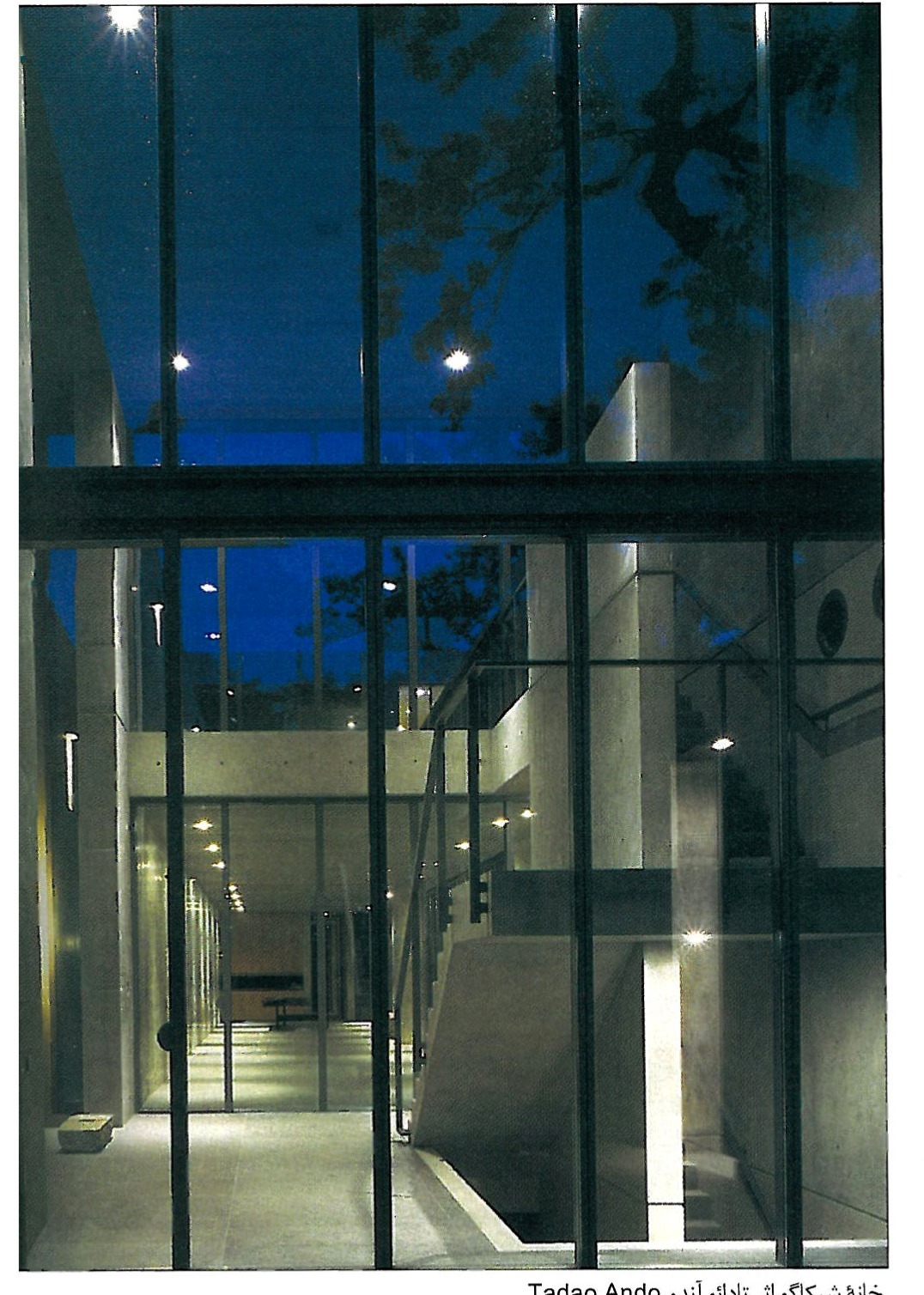
The modern thought of 'architecture and truth' that the New Brutalists and architects like Stirling and Smithson applied in building walls of rough brick and béton brut still has many followers. Tadao Ando, in general, makes walls of bare concrete and glass; the concrete wall has become part of his ideology.
Traditional materials and technologies — or those drawn from tradition — are also still in use. Paper walls, walls of fired earth (Nader Khalili's invention), kahgel walls, walls of reed, wood, cobblestone, and untrimmed stone are still seen in the works of educated architects.
The wall, in its full sense, plays several distinct roles:
a — Defence
Cities and early settlements, like many contemporary buildings, used the wall for defence. In Iran, city walls were mostly of clay and raw mud-brick — cheap, very enduring materials which, if not destroyed by human hand, would still stand like the magnificent walls of Arg-e Bam. In Europe, many Neolithic villages had walls of tree-trunks, vertically driven into the ground. In the ancient world, many defensive walls were built of large stone blocks. With the invention of the cannon in the fifteenth century, builders found that stone walls, although very strong, did not hold against the impacts and explosions of cannon balls and were broken apart, while brick walls, although in principle weaker, absorbed the shock of explosion. So in building the fortifications of castles and cities, brick and earth-bank reinforcement (behind the stone wall) were employed.
In Europe, prehistoric houses, and in Iran from the distant past until the start of the modern era, houses were built with high walls and small openings to the outside. The introversion of Iranian architecture and the dedication of the decorated, fenestrated façade to the inner courtyard, beyond its climatic, cultural, and social roots, also has a defensive aim.
Iranians, when they built their garden walls of brick, sometimes built the top few courses of brick with very little mortar so that an intruder climbing the wall would bring a shower of bricks down on his own head.
b — Property
The wall is a boundary of property, and property boundaries are one of the most enduring features of historical cities. The ancient fabric of historical cities such as Yazd, Damascus and Turin (in Italy), after the rebuilding of all their elements many times over, has remained legible and intact in the form of a network of streets, by virtue of the survival of private and public property limits. In ancient Europe, by virtue of the abundance of timber, wood was used to build dwellings; after several great fires in ancient cities like Rome, local authorities found that with the destruction of the timber building, its property limits also vanished, and so they decreed that houses should be built, at least up to a certain height, in non-combustible materials.
c — Structure
The wall is the oldest vertical structure, and its principal role in the past was to bear the load of the roof and the upper storeys. The load-bearing-wall system and the limit of spanning it with horizontal beams, arches or domes shaped architectural typology. The structure of the Mesopotamian palaces of the first millennium BC, lacking columns, consisted of thick, closely set walls — hence many halls of relatively narrow width and considerable length. In ancient Rome, load-bearing walls were built with a facing of dressed stone and a concrete core; for this primitive concrete, volcanic ash was used in place of cement. The Romans were familiar with the strength of materials and a building's internal forces by experiment. In the Pantheon, seven kinds of stone of varying hardness and weight were used: granite at the wall base, light, porous volcanic stone at the top of the dome. In the Western world, the Romans were the first to use the so-called ashlar-clad wall: buildings that, in appearance, were Greek in style, in fact, contrary to Greek architecture, used concrete and brick walls clad with stone slabs in place of solid-stone-block walls.
The Achaemenids too, in many cases, used mud-brick walls clad in stone. In Sasanian and Islamic architecture, reinforcing piers (engaged buttresses), with the task of lightening the load-bearing wall, were used both physically and aesthetically. Today, in special buildings, load-bearing walls are mainly of reinforced concrete, although in many cases brick or stone load-bearing walls are also used.
d — Space and aesthetics
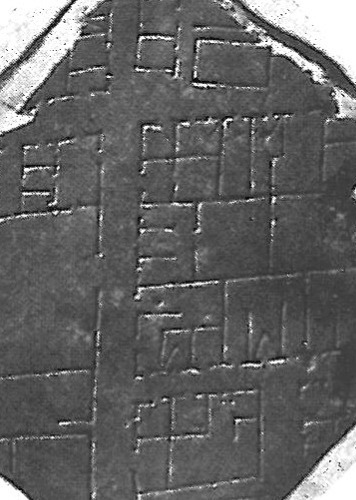
For thousands of years the wall has been the principal shaper of architectural space. The growing complexity of architectural space, following the growing complexity of functional relations, has been realised by dividing inner space with walls. The primitive Neolithic villages were composed of single-cell rooms, each cell devoted to a single function: the woman's sleeping place, the man's sleeping place, the grain store, the cattle or sheep pen of the male householder, the cattle or sheep pen of the eldest son, and so on. Two-cell, four-cell, and more complex buildings then gradually appeared, and walls gave shape to the functional space. In particular kinds of architecture, space was organised in a special way by walls for aesthetic, symbolic, and religious reasons. The ancient Mesopotamians, like the Romans, in designing architectural space, first drew the lines of the walls — and so invented the plan.
At the start of the nineteenth century, Boulton and Watt built a spinning mill in Manchester in which, for the first time, the load-bearing wall was replaced by cast-iron columns. The new spinning machines needed wide, continuous spaces, and the existence of thick load-bearing walls and piers blocked this. Cast-iron columns opened up the interior, and the appearance of an independent metal and concrete frame paved the way for Le Corbusier's plan libre: at Villa Savoye, Le Corbusier set the entire weight of the building on pilotis, and the walls play only the role of shaping space. In the chapel at Ronchamp, Le Corbusier moved a long way from this idea. The wall of this chapel is, as he himself joked, foolishly thick — so that its deep openings, decorated with painted, coloured glass, evoke the spatial quality of Romanesque churches. In this project the wall has become one of the most fundamental parts of the building.
e — Thermal and acoustic insulation
The thick walls of the past were also very good insulators against heat, cold, and noise. Today, by virtue of space limits and the value of land, these same properties are obtained by the use of particular chemical materials. In the 1950s, double-skin walls were widely used, but today it is preferred to use mineral-wool, polyurethane, or other synthetic-material sheets as a complement to thin walls.
In any case, if we attend to the past of architecture and to the social role of the wall, we find it is one of the most important and basic elements of architecture, which over history has become one of the institutional manifestations of human life. The notion of chahar-divari (four walls) — the symbol of the home, shelter, the realm of family and private life — exists in some form in all cultures. Historic walls — Hadrian's Wall, the Great Wall of China (which have passed into legend), and the Berlin Wall (whose erection and destruction marks the start of two important periods of contemporary history) — are part of human culture.
Today we know that the wall, in its known sense, is fading. Nevertheless, a number of leading architects and the building industries have focused their creativity in this area. The integration of architecture, and the dissolution of its parts into a unified whole, is a category much more important than individual taste, and so cannot easily be resisted.
The question is: can the many experiments carried out on the new architectural skins or partitions one day be summed up and offered to users in the form of fundamental solutions, or will they remain merely 'experiments' for ever? In fact, by setting aside one element, the experience and knowledge of thousands of years is set aside. The creativity, or work, of a few months — or even a few years — cannot give sufficient assurance that the work is correct in all the technical, social, psychological, sanitary, and other respects.
For example, the modern architectural experiments of the 1920s are, in maintenance and durability, often far weaker than traditional buildings. It seems that adding to architectural culture by creating new things and concepts in architecture has been given priority, while answering man's need has been placed second. When the architect attains the standing of scientist, artist, and philosopher, the process of invention and creativity is unavoidable; but it seems that, in today's consumer world, the variety of production and invention has gone far beyond need, and far beyond man's capacity to control the means of production and to absorb it culturally and psychologically.
Visual and textual sources
1. Architettura Contemporanea, Manfredo Tafuri / Francesco Dal Co. 2. Architecture Now! / Arquitectura hoy / Architettura oggi / Arquitectura dos nossos dias, Philip Jodidio. 3. Corso di Disegno 2: L'arte e la città antica, Leonardo Benevolo. 4. Building a New Millennium, Philip Jodidio.



