



A certain part of the discourse around Adolf Loos as one of the founders of architectural modernism is devoted to their theoretical position, by way of their active opposition to ornament. And for many this has made Loos’s negative polemic so much the sole object of attention that they never encounter their actual works. Is any other modern painter or sculptor in such a bad position with their audience? Perhaps John Cage1 in music; following their reputation alone, without any artistic encounter with any of their works or performances, leads to the same misplaced notion – which in the end ignores what we are after, namely art – and takes Loos to be merely the Marcel Duchamp of architecture. But on the other hand, some people do listen to Cage’s music, and many do actually look at Duchamp’s readymades2.
If we give Loos more of a chance as an architect-artist, we will have good reason to reread two of their very important and challenging texts, namely “Ornament and Crime” and “Architecture”. As it happens, these two texts, more than is usual, need and deserve textual attention. The irony is that part of the problem has been a very cursory approach to the visual aspects, especially form, in Loos’s work; at the same time, their main texts have also suffered from not being taken seriously enough as challenging texts: Loos has been treated too literarily, but as regards their actual written texts, not literally enough. Seen this way, it becomes clear why those who only read their words and take them to be hermeneutically3 self-evident never reach, at any level, a proper understanding of this great architect’s project, and are not competent to judge whether their works were or are art. So let us look further at what, in “Ornament and Crime” (1909) and “Viennese Architectural Matters” (1910), was challenging for European modern art in its formative4 phase in ways more different and more varied than today; ways that, one after the other and with implicit connections to the architect’s other, less well-known texts, take on importance.
The very title of the lecture and pamphlet “Ornament and Crime” draws attention. Loos’s use of the Latin and neuter word “das Ornament” instead of the masculine German word “der Schmuck” calls for a more general and more categorized construal5 – even relating to the Romanized Greek classical orders which, as linguistic grammatical sets, were transmitted through the Renaissance and then the classical academic system – and takes it beyond a matter merely of an excess of adornment. Loos understood and respected the classical modes far more than the reactionaries who still blindly idolize them. In their view, the realization that these modes can no longer symbolize the essence of architecture, which is no longer merely putting stone on stone, was no reason to reject them. Also, in 1909, the title “Ornament and Crime” could convey a sense of the boldness and sharpness of the words of Karl Kraus6, who in 1902 had published a critique of sexual inequality titled Sittlichkeit und Kriminalität (Morality and Criminality). The notion of crime carried over from Kraus’s title into this text could reinforce the well-known historical connection of Loos’s problem with the views of the early criminologist Lombroso7, to whom we will return later. Following Kraus, another two-sided title with a moral ring was put forward in the Vienna of that time: Otto Weininger’s8 controversial book Geschlecht und Charakter, Sex and Character, in 1903.
The young Weininger killed themselves shortly after the publication of their book, just when Loos’s career was beginning; this may seem irrelevant, but Allan Janik has pointed out: according to Sex and Character, criminality, in the literal sense antisocial, is nevertheless in essence an aesthetic matter. In other words, although aesthetic belief was not a strength at that time, a kind of doubt about aesthetic superficiality, especially the excess of ornament in architecture, probably had its place. In any case, even in the early period of modern aesthetics the notion of crime had been played with: in 1890 the dandyish American painter Whistler, in their book The Gentle Art of Making Enemies9, published a list of revisionist aesthetic propositions that began with the sentence: “That in art, it is criminal to go beyond the means used”. In Weininger’s view, criminal behaviour is the result of an individual’s obsessive surrender to a pleasure obtained by any means possible, for the exclusive consumption of the objects of their desire (Janik, “The Role of Paul Engelmann” 49). But if this meant a negative aesthetic point and a possible motive for a bad life, we should not miss the Loosian point that these circumstances were a welcome opportunity to declare decisively an anti-aesthetic position with very eloquent expression. This position took shape especially against the artistic sensualism of the whole decorative-arts project of the Vienna Secession10; and if Loos, in saying these things, like “Beau Brummell”11, seemed to be arguing against the threat of fashion, this could have had a more effective scandalizing impact.
Taking these writings as merely nihilistic or sarcastic works in the Viennese manner may be a way of dismissing them, which in the case of a satirist and wit like Loos is very problematic. In “Ornament and Crime” – at a time when almost all literate adults still believed that ornament is precisely what distinguishes architecture as a fine art from mere building – Loos regards the lust for ornament as a sign of a lack of edifying cultivation. Chronic complaints about the supposed unfairness of images that show tribal peoples as more backward than Westerners, often ignore or entirely misunderstand the main aim and intent of Loos’s literary metaphor; by analogy, Loos addresses exclusively modern city dwellers, whether uncultured, simple or truly degenerate.
“Ornament and Crime” has become notorious for alleged racism in its view of tribal peoples, in supposing tattooing to be the extreme of cultural backwardness, an issue that literally calls for more critical attention than the superficial moralism that usually considers it an easy target for attack. Yet the issue is not merely that the prevailing view, by taking Loos’s words out of their historical context – that is, a multi-imperial era in which such insults were unfortunately common in the dominant culture of Europe and America – distorts their interpretation, although that is true as well. No, we are not looking for a loophole to save Loos’s reputation, so to speak, by “exculpation through association”, especially when the whole logic of Loos’s argument rests on the premise that “now we should know better”. Unfortunately, today’s objections to the phrases in question, often raised from a literary point of view, are so caught up in Loos’s imagery that they do not trouble to understand what Loos, by using these metaphors, was actually saying in favour of architecture; as if only literary people were allowed to use metaphors. So perhaps it is not reactionary for someone who cares about art and architecture to want, after a hundred years, to get past a challenging imagery in order to come to terms with this “historic” and at the same time notorious text; a text that is the only well-known work of our polemical architect with that deep sense of satire.
This essay belongs to a particular tradition of sharp German criticism that includes Nietzsche and also Karl Kraus, Loos’s friend. For example, Nietzsche in “On the Use and Abuse of History for Life” (1873), in the second volume of Untimely Meditations, (or, Thoughts Out of Season) in an entirely Loosian tone, condemns the pretence of culture as a mere covering that is supposed to be the “ornament” of life but is in fact its “disfigurement”: “for all ornament hides what is ornamented”. Then, in “Schopenhauer as Educator” (1874), with Loosian sarcasm, they speak about the expectation of how German culture, after the victory over France in the Franco-Prussian War, is to become Frenchified: “we have no reason to be upset by the hatred of the French for the sake of our love, refinement and manners, and then to recall that Indian who longs for a ring in their nose and then tattoos themselves”.
That Loos’s readers do not follow through their references to cultural backwardness and atavism12 (which in pre-industrial cultures, European or not, are normal conditions) as critical figures against the “barbarism” (a metaphor, but a very blameworthy one) common in modern and supposedly civilized societies, is bad enough. But criticizing Loos’s evolutionary assumptions in this regard is either naive or unfair – it has nothing to do with the fears of “social Darwinism”, and it is rabble-rousing to pretend so – without considering the only theoretical alternatives available at the time: the progressive view of cultural evolution that Loos invoked, according to which the distinctions of cultural development are differences, contemporaneous in prevailing historical time, in the performance of the same cultural scenario, which rests on the uniformitarianism13 in the geology of Darwin’s friend Charles Lyell, according to which the forces that shape the earth today are the same forces that shaped it in the distant past. I like to think that Loos, given their interest in playing with mirrors in interiors, must have become interested in the younger Hungarian anthropologist who turned to Freudian analysis, namely Géza Róheim14: who was an advocate of cultural evolution and also studied “mirror magic”15 in folk culture. Yet the only alternatives to “cultural evolution” or “simultaneous development” were these: (a) diffusionism16, according to which every cultural advance must derive from another culture, or, (b) functionalism17, in which the historical dimension is ignored and the hardware and myths of each culture belong to a game so closed and self-absorbed that they are not even comparable with another culture. So, unless one prefers one of options (a) or (b) instead, one must in principle come to terms with Loos’s considered judgement about cultural evolution.
Thus, when Loos’s German forerunner in the social critique of architecture, Hermann Muthesius18, only a few years before “Ornament and Crime”, wrote in their book “Style-Architecture” (second edition, 1903) that “a kind of barbarism, such as our culture has never seen before, is penetrating with the least warning into the lower strata of the trades” (Muthesius 59), without inadvertently insulting contemporary tribal people, they were deliberately insulting their own people, namely the Germans, who had once been tribal. Loos even seems to insist on and repeat this point; a point that does not mean less developed peoples are less human, but insists that some people among us should know better than to do things like those done by people with fewer civilizational constraints; and hence they are distinctly blameworthy, whereas tribal peoples certainly are not.
But the subject of tattooing in particular, especially the tattoo art of the Maori people of New Zealand, whom Loos somehow named “Papuan”, is of special importance; although for present purposes there is no need to observe the ethnological distinctions between references to the tattooing or other ornament of the Maori (Polynesians of New Zealand) and the Papuans (Melanesians of New Guinea). It is enough to note that serious ethnographic reports and artworks collected from the Maori have been shown to have held great artistic appeal for the great Viennese art historian and critic Alois Riegl19 (Mashek, “Vital Skin”). So it may seem that Loos’s talk of Papuans had a caricatural aspect in passing, and to some extent mocked Western fascination in this matter under the name of another group, although Maori ornament is generally more curvilinear. Also, as will become clear, the Maori were better known to Western culture, so perhaps Loos went to a group that had received less theoretical attention. On the other hand, the hitherto more incoherent and more regrettable use of the term “Red Indian” found today in some translations of Loos’s works – especially in a quotation at the beginning of E. H. Gombrich’s21 The Sense of Order: A Study in the Psychology of Decorative Art20 (1979) – cannot be blamed on Loos. However objectionable this term may be, it is a usual British term for distinguishing Native Americans or American Indians from what the British usually mean by the word “Indians” without any qualification, namely the people of India. Loos themselves, wherever this word is used, used der Indianer, the specific German word for American Indians, as opposed to der Indier for the Indians of India (the lower-case `i` is not insulting, since Loos preferred not to use the German rule of capitalizing the first letter of nouns).
There is a consensus that Loos’s subtle metaphor about tattooing is to some extent indebted to the positivist and determinist criminology of Cesare Lombroso, who was widely read in the late nineteenth century: in America, an article by Lombroso titled “The Savage Origin of Tattooing” was published in Popular Science Monthly in April 1896. Lombroso’s classic book, Criminal Man22 (1876), which was expanded four times (fifth edition, 1896–97), by then included a long chapter on that “criminal stigma” (meaning marks that deviate from a common ideal of beauty), namely tattooing, which Lombroso considered confined to the lower classes and especially to criminals. Lombroso supposed that the word tattoo derives from “an Oceanic language” (with hesitation one might say that it means the Maori ta moko, similar to the Italian tatuaggio), and in Lombroso’s view the only people who have tattoos on their back or pubic region have either been in prison or have gone “to Oceania” (Lombroso 58), which from the point of view of Loos’s text is very telling: “among Europeans, the most important reason” for getting tattooed is “atavism” and the other form of atavism, namely traditionalism, “both of which are characteristics of primitive humans and of humans who live in a state of nature”. This atavism is not merely another name for primitivism23, even if primitivism resorts to it. “It is natural that a custom common among savages and prehistoric peoples should reappear among certain groups of the lower classes”. Among them sailors and prostitutes, the former of whom “display the same temperament as savages, with intense passions and excitements, low sensitivity, childish vanity and excessive laziness. Sailors even adopt the habits, superstitions and songs of primitive peoples” (61–62). Lombroso saw tattooing as opposed to insanity and closely related to criminality; and Allan Janik holds that “Ornament and Crime” “is entirely dependent on Lombroso’s assumptions” (Janik, “Weininger” 29). In fact this can be a correct starting point, without denying that Loos’s independent and outspoken intelligence and wit was ground for playing with a phrase of Lombroso’s such as “that... form of atavism that is called traditionalism”.
A point in the second edition of Lombroso’s book (1878) is very telling for what it conveys about Lombroso’s understanding of art. A murderer named Cavaglia24 had decorated the water jug of their prison cell by scratching its glaze and making simple drawings of the acts of murder and of their planned suicide; these were considered clumsy enough to justify this judgement: “they told the story through a combination of words and pictures in a way that recalled the customs of savage peoples, whose language is too poor to express complex ideas clearly”. In the fourth edition (1889), for such situations Lombroso takes up a new technique called “pictography25”, based on the idea that “criminals tend to express their thoughts through drawing, even when they can express them in words”. But this is because of something inherently atavistic26 about “image” as opposed to “writing”, so that, again, “apart from atavism, it is impossible to find any other explanation for the custom of tattooing”.
At the same time, the Norwegian writer Knut Hamsun27 (who later became a fascist), in a report that today is at times disturbingly racist, writes of their first-hand and fairly negative experiences of The Cultural Life of Modern America (1889) – an account that aroused Loos’s curiosity, if only for its critique of Americans’ pretence to British petty-bourgeois manners – and refers in connection with cultural atavism to the natives of New Guinea. Human cultivation, in the sense of cultural cultivation, is likened to the evolutionary stages of animals: “When the fish became a bird, it learned better manners”. Then, from observing the strange ways the tribes of New Guinea and the Malays greet one another, the Americans’ adoption of the suburban English phrase “How do you do?” is attacked and assigned to the “dog stage” of culture: this is “their greeting – an expression of their temperament and level of development” (Hamsun 136–37). Whether or not Loos read Hamsun, the provocative report on America by this novelist, which eventually made them famous, had a place in the history of the literary archetype of the backward New Guinean or Maori.
To overcome this persistent nineteenth-century naturalist notion that “merely” ornamental forms do not deserve to be art, let us note that in 1870, in the book The Origin of Civilisation and the Primitive Condition of Man, the tattoos of the “Polynesians” reminded Sir John Lubbock, the same person who introduced the distinction between Palaeolithic and Neolithic, of the Greek spirals of the Bronze Age (Lubbock 26). In 1885, long before Riegl’s discussion of the spiral ornament of the Maori as a wholly formal matter in the absence of metal tools that could easily have shaped it, the anthropologist Otto Finsch, regarding the tattooing of the Papuans as a covering for the body, drew attention to a particular kind of tattooed belt of the men. Since executing such work without iron tools was very difficult, “it must be described without reservation as a work of art” (Finsch 14). By the hasty and “urban” standards of “Ornament and Crime”, it may seem absurd to suppose that great difficulty in executing ornament should make it worthy of being art; but in fact it was in exactly this way that Maori ornament served Riegl’s “more idealist” argument in Stilfragen (Questions of Style; 1893) against the “materialist” view of Gottfried Semper: it shows that the spirals of the Maori carvers were something they really wanted to make, not something that, given materials, tools and “techniques”, had more or less to come out in that shape.
Questions of Style, subtitled Foundations for a History of Ornament, takes a theoretical approach based on diffusionism – diffusionism, again, is the theory that similar art forms do not arise independently but spread through lines of transmission. Yet Riegl’s speculations about Maori ornament were ultimately in favour of modern artists and modern art. The same cannot be said of a classic diffusionist effort, published shortly after Loos’s death, that sought to place Maori ornament on a world level by finding its origin in the intricate Chinese ornament of the Zhou dynasty, calling it “a barbarized28 art... that could only have been born in a high civilization”. The same scholar – though forced to admit that thinking of an intermediate population is far-fetched – comparing Maori ornament with Scandinavian interlace ornament, refers to Josef Strzygowski’s idea of “real links between the ancient art of Northern Europe and the art of New Zealand”, while they themselves believe that the native Neolithic spiral ornament of Bohemia and Moravia reached the Far East. It can be amusing to imagine what Adolf Loos could have added to “Ornament and Crime” about Bukovina as the ultimate formal origin of the ornament of the great bronzes of the Shang or Zhou dynasty!
Loos was an Anglophile and proud of it, and in a way sought the visual equivalent of keeping one’s composure as the epitome of the refinement of development, which implied an unaffected, self-confident civilization, social though private, with the “noble simplicity” of public reserve. This quality, which also permeated their concern with tailoring, once more recalls the often indifferent and classically plain façades of British Neo-Palladian country houses. The spread of the British Neo-Palladian style had reached Central Europe too in the late eighteenth century (examples include Schloss Wilhelmshöhe near Kassel, and Schloss Belweder in Warsaw). Although the forced spatial symmetry in the interior layouts of Neo-Palladian buildings, even in private houses of medium size, is something that one cannot imagine Loos having the patience to impose (is it worse than the exact surface symmetry of the tattoo on the face of a Papuan or Maori?). What can be regarded in the Neo-Palladian style as pre-Loosian, and in turn rooted in Neoclassicism, was its essentially rationalist critique of Baroque rhetoric. Thus, traces of Loos’s spirit are found in the chapter “On Building without Any Order” in An Essay on Architecture29 (1753) by Marc-Antoine Laugier30, where this great proto-functionalist practically preaches and tells architects how not everything need be magnificently important, and how interesting it can be to make a building without any classical “order” of columns.
And as I mentioned, Immanuel Kant in Prolegomena to Any Future Metaphysics That Will Be Able to Come Forward as Science31 (1783) speaks of an “ornament... through greater clarity32”. In fact, Loos finds in Kant an ally who produced a kind of thoroughly purifying “critical” philosophy. In the observations that Kant appended to their 1783 Prolegomena, which is a kind of exercise for the Critique of Pure Reason, they acknowledge that their conditional idealism was provoked by none other than George Berkeley, although they criticize Berkeley’s “dogmatism”, and in continuing the argument against ornaments, use two phrases that must surely have appealed to Loos, one that they are abstract and “sentimental”, and the second that they are more homespun yet “anti-naive”. The first concerns creating “ornament through greater clarity (den Auputz durch... vergrösserte Deutlichkeit)”, while the second restates the same basic notion in a homely form fit for a country house: “although the old false feathers have been plucked, it must by no means be shabby and reduced to something paltry, but may in other respects be richly and respectably adorned”33.
Some of Loos’s smaller but by no means unimportant built projects early in their career show that they absorbed suitable formal influences, even where a century earlier there had been no sufficient reasons to describe them as ornament. Similarly, overlooking an element of eclecticism, something like the absence of the English Regency34 style, also has an Anglophile connection with Loos’s works. For example, on the fronts of two small Viennese shops early in their career – Sigmund Steiner’s plume shop (1907; demolished) and the Knize clothing store on the Graben (1909; 1913) – by quarter-rounding the shop windows at the entrance, or in the Knize store, the pilaster and the left and right shop windows, Loos pays formal homage to the façade of Samuel Weir’s boutique in the refined Burlington Arcade of 1819 – which may even have been under discussion at that time because the Piccadilly35 entrance was soon to be rebuilt in 1911 (by Beresford Pite).
Loos’s Anglophilia was not unusual in the contemporary German art culture. Muthesius’s major and beautifully illustrated study, The English House36 (1904–05), which its author had researched while German cultural attaché in London, conveys a sense of the influence of the English “free style” and the new “open” planning. One of the less noticed candidates for influence, or at least confirmation, on what became Loos’s way of thinking may be the Welsh decadent poet Arthur Symons, who was so popular in Loos’s world that several of their works of fiction were translated into German and even Czech early in the new century. Symons took up the entirely Loosian subject that achieving simplicity is much harder than seductive ornament. In a 1903 article titled “The Decay of Craftsmanship in England”, after criticizing the cult of the “detachable picture” together with stuck-on ornaments, Symons says:
We have specialized; the craftsman is no longer an artist, and the artist can no longer be a craftsman. What we see in the arts and crafts, in these ambitious efforts, is only another sign of what we see in all the shops of London. The hardest thing to get in London is a piece of plain carpet, without any pattern, and when you have found it you usually have to have it dyed the colour you want. A piece of plain wallpaper to go with it will be the second hardest thing to get; and for both of these you must pay much more than you pay for a carpet or wallpaper covered with ugly patterns. Surely merely printing these patterns must cost something; let alone designing them, so why is something cheaper and less objectionable, without them, not offered to you? According to the shopkeepers, because only one person in a thousand buys it. Nobody seems to care that the pattern is bad; there must be something scribbled, for people to pay.” (Symons, 183–4)
I record this passage here because, as will become clear, it closely resembles the critical expression of discontent lodged in Loos’s most famous text, namely “Ornament and Crime”.
That text made a great reformist contribution to early modernism as a high and valuable art. It is better to go straight to the problem of its cultural-evolutionary aspect, which has now become problematic; if, that is, we can for once in this situation focus our attention on the gist of what Loos, free of any of today’s reproachful tone, actually wanted to say. But if the view on which Loos relies to understand the cultural-evolutionary aspect of “Ornament and Crime” was biological, which is a cause for concern today, it is at least a view that, as an intellectual notion, has retained a cultural respect for itself: the notion formulated by Ernst Haeckel37 that the embryological “ontogeny”38 of a single human, developmentally, “recapitulates” the anatomical form of “phylogeny”39, that is, the overall pattern of the development of species across the whole animal realm. In its time this theory countered the fatalistic and more pessimistic view of social Darwinism. More important for the present text, this theory was the basis of a cultural analogy that, on Loos’s part, was clearly no more tainted with racism than that of most middle-class and liberal-minded Europeans in 1909, or anyone who welcomed the revolutionary spirit of 1919 in Central Europe and paid serious attention to social housing and so on. For the more primitive and cruder stages of human culture consisted, by definition, of the best things that existed at that time – just as Marx can speak well of feudalism as opposed to slavery; and in fact, Loos at the beginning of their text points to something most Americans are unaware of, when on their scale of cultural development they place, between the innocent Papuan (though not exactly a noble savage) (= two years old) and Socrates (= six years old), the pre-feudal European “tribesmen” (= four years old), who in the sanitized understanding of modern Euro-Americans of their own roots has been conveniently forgotten. In any case, the main aim of Loos’s notion was not criticism of the lack of sophistication of others, but only criticism of the contemporary “stragglers”, as they repeatedly call them, of their own modern culture who, as they always insisted, really should know better.
Given their critical view, a different kind of embryological speculation, with an ancient Indo-European root, could have appealed to them regarding architectural finish as the building’s final embryological covering: the original Sanskrit notion of ornament as the final, outer layer of something properly made and brought to its completion. The great Orientalist Coomaraswamy (1877–1947) explains that through linguistic change, the Sanskrit word meaning “made sufficient” came more simply to mean merely “adorned”; the debased usage “I adorn them” once had a deeper meaning that appealed to Loos: “I equip them” – like an outfitter40. For our modernist architect who loved well-made fittings, a discussion of words relating to the harness of a horse, as in a passage of the Rig Veda where aptness and efficiency41 matter rather than superficial “beauty”, could be very interesting. Loos agreed with Coomaraswamy, though not about the importance of the idea that mere aesthetics is childish: unless we go beyond it, we cannot until then understand the fundamental meaning of bodily ornaments such as “tattooing” (380).
Yet “Ornament and Crime” proposes a kind of progression – like Haeckel’s formulation of the recapitulation of phylogeny through ontogeny, namely that the human embryo recapitulates “all the evolutionary stages of the animal realm”. Loos says: “When a human being is born..., their sense impressions are like those of a puppy. In childhood they pass through all the stages of the development of humanity”. The child of today develops like this:
At two they see with the eyes of a Papuan, at four with the eyes of a Germanic tribesman, at six with the eyes of Socrates, at eight with the eyes of Voltaire. At eight they become aware of the colour violet, a colour discovered by the eighteenth century; before that, violets were blue and the purple snail was red. Even today physicists can point to colours in the solar spectrum that have been given a name, but recognizing them will be left to future generations (ibid.).
This last point is important because it implies that, like the Papuans, we moderns of today are unfinished humans, only because cultural development will probably continue, since culture is a process of refinement that never ends. Loos cannot have argued that Voltaire was better and/or superior to Socrates, from which it would follow by analogy that the Teutonic tribesman might be better than the Papuan; then, there was an idealizing respect for the Papuan too, and perhaps the dandy Voltaire ought to have had it for Socrates.
But in the second paragraph, the current notorious hundred-year-old account of tattooing begins; and today’s critical reader would do well to remember that the Maori as well as the Papuans were cannibals, despite their undoubtedly beautiful ornaments, including tattoos.
Part of the confusion about “Ornament and Crime” arises from the fact that Loos is, culturally, more relativist than expected: Papuan cannibalism cannot be entirely blameworthy because the Papuan literally knows no better: “But if a modern person kills someone and eats them, they are a criminal or a degenerate” (ibid.). So similarly: “The Papuan covers their skin, their boat, their oars, in short everything they can get hold of, with tattoos.” But: “They are not a criminal.” (One might have expected Loos to complete this analogy with “nor a degenerate”, but perhaps Loos wants to leave room for a little degeneracy.) “The modern person who tattoos themselves is either a criminal or a degenerate” – a thought that turns into a satirical and exaggerated Loosian musical cadenza: “There are prisons in which eighty per cent of the prisoners have tattoos. Those who are tattooed and are not in prison are either latent criminals or degenerate aristocrats”. “If a tattooed person dies at liberty, it is only because they died a few years before committing a murder”.
Loos clearly knows that they are speaking outrageously; and in assessing what they have in mind intellectually, we must not ignore their high Viennese irony. As Peter Vergo points out with unusual boldness, “critics have not noticed” that in the original text Loos “is by no means entirely serious”, and statements such as that a person happens to die before committing a certain murder are “surely satirical”. An amusing example from one of their early exhibition reviews, on “Glass and China” (1898), shows our subject talking about a popular engraver of drinking glasses at this exhibition who engraves people’s names “while you wait”: “Particularly delightful is a goblet decorated with good-luck charms, which I am sure has a future... What I have in mind is the pleasing arrangement of the charms, which recalls the principle of ornament in the time of Emperor Franz I”. While the irony in “Ornament and Crime” is subtler than that, it is strange that our literary friends, of all people, often imagine that when this friend of Kraus, criticizing contemporary European culture, declares that a tattooed person who dies at liberty might soon have become a murderer, they may have been speaking with a straight face. Yet beyond the scandalous exaggeration, there was an important thought here – now and, astonishingly, a hundred years ago:
The urge to ornament one’s face, and everything within reach, is the origin of the fine arts. It is the babbling of painting. All art is erotic. The first ornament that came into being, the cross, had an erotic origin. The first work of art, the first artistic act of the first artist who painted on a wall, was to release their natural excesses. A horizontal line: the woman lying down. A vertical line: the man penetrating her. The man who created it felt the same urge that Beethoven had, experienced the same pleasure that Beethoven felt when creating the Ninth Symphony.
Loos’s concern is not an absolute primitive state of nature, but a relative primitivism in apparently advanced developmental conditions. Their observations here on the savage behaviour of their less cultured contemporaries raise not only anthropological questions but also questions of historical and political philosophy, including Giambattista Vico’s pre-Nietzschean understanding of cultural progress as something repeatedly driven back by regression to a more primitive state, and reaching a more or less higher level through recovery; and how, in the final “age of men”, a barbarism comparable to the “second barbarism” of the early Middle Ages returns with social collapse and the “barbarism of reflection” (Vico, conclusion of The New Science, 1725). Closer to our time, the industrial revolution had brought a social barbarism related to the alienation and cultural deprivation of a kind of lumpenproletariat, which Loos clearly has in mind without exactly referring to it. Even an ugly remark about those who draw and write on the walls of public toilets is, in tone, closer than we expect to Engels’s remark in The Condition of the Working Class in England in 1844 (1845) on the slums of Manchester as a place habitable only for “a physically degenerate race, robbed of all humanity, degraded, reduced morally and physically to bestiality” (Engels 63).
Loos ultimately makes a decisive and sweeping point by insisting that “we have art, which has taken the place of ornament”. “Art that has taken the place of ornament”, the same notion of substitution and even sublimation, will also extend to abstract painting (when such a thing exists), as has to some extent been anticipated through decorative stylization in the crafts; and this is also a fitting summary of the whole of “Ornament and Crime”, a subject that was never about the tribal craftsman not knowing better, nor even about today’s humble shoemaker not knowing better either, who is disappointed when you offer to pay more to have your shoes made without the absurd dotted “wing-tip” pattern – a sharply pointed critique on Loos’s part, which has an Eastern precedent in the fourth century: John Chrysostom preaches in Constantinople: “Even... the [art] of the shoemaker needs restraint, for they have lent their art to luxury, corrupted its necessity and skilfully debased art” (Homily 49 on Matthew, quoted in Coomaraswamy 381). No; this is really about how we neglect: “What is natural in the Papuan or the child is a sign of degeneracy in a modern adult. I discovered this and passed it on to the world: the evolution of culture is synonymous with the removal of ornament from objects of everyday use”. Although as a premise “they know no better” is open to question, the so-called main challenging point of Adolf Loos’s message was, and undoubtedly remains, that “we should know better”.
Yes, Loos has to report that their attempt to announce the good news that ornament in itself has come to an end and the production of ornament may at last cease has not pleased people but disheartened them: “What? We alone, the people of the nineteenth century, were incapable of doing what any... tribesman could do, what every age and nation before us had done!?”. I have omitted from this sentence a casual and unnecessary reference to race because, given the greater sensitivity of the use of such words at present (which Loos regarded as an improvement), the word in question is now, 100 years later, a distraction from the real subject of Loos’s analogical concern with the simple-minded provincials of the Austrian empire of the time, who were worse for lacking the excuse of the surviving non-European tribal cultures. On Emperor Franz Joseph’s jubilee parade in 1898, with endless lines of the empire’s subjects in national costumes from every corner of the empire, they say with their usual audacity: “We shuddered to learn that here in Austria we still have tribes from the fourth century. Happy the land that has not many stragglers and cultural laggards. Happy America!” (170). Loos’s main concern, with all their imagery of primitiveness in “Ornament and Crime”, was these very “stragglers”, namely the peasants on the outer edges of the Austrian empire. Otherwise, being “other” in itself was not so unpleasant a condition for this rebellious cultural figure, who named a short-lived magazine whose contents they wrote themselves “Das Andere” – “The Other”. As regards the assumption that a modern European necessarily despises pre-modern culture as backward compared with modern urbanism, Loos was speaking at a moment at the height of belief in German Expressionism, which had inherited the German Romantic appreciation of the primitive. As early as 1799, Wilhelm Wackenroder’s book “Outpourings of an Art-Loving Friar” had held tribal music, in the eye or ear of God, to be as good as church hymns. This point was closer to modernism than the essay of the Baltic German historical writer Carl Gustav Jochmann, “The Regression of Poetry” (1828), who probably regarded the scarification of primitives, more than tattooing, as openly demonic (no doubt with Leviticus in mind), which Walter Benjamin, aware of Adolf Loos, seems to have rediscovered.
Let us be clear: in cultivated circles there was no stigma in being primitive in itself – this condition had even been romanticized – the stigma lay only in the inexcusable behaviour of a primitive in the middle of Vienna.
Moments after the turn of the century, Alois Riegl, who had earlier written a short book on folk art and then Questions of Style, which in fact deals with Maori tattooing, produced the first volume of an important book that aesthetically rehabilitated the metalwork of the barbarians of precisely the same “Migration” period to which Loos had referred. This book was published in 1901 by the Imperial Royal printing house, as if in celebration of the Dual Monarchy itself, titled The Late Roman Art Industry, According to the Finds in Austria-Hungary, 190142. If the concern of such “art industry” in general was more like the Secessionists’ sense of “decorative art”, from which Loos distanced themselves, other studies of the turn of the century were also important. Consider an image of Maori tattooing from an influential German book whose enthusiasm for tribal art was nationalistically related to the new German empire abroad; but according to Goldwater, it also had a more interesting nationalist motive, namely that for its author, Leo Frobenius, lively tribal peoples were astonishingly German, or at least attractively anti-French. The title of the book, with all its implications, though not the book itself, was surely known to Loos: The Childhood of Man (1901; English translation, 1909), although the original title is more apologetic: “From the Awkward Age of Humanity”43.
One can even draw a parallel between a certain kind of Papuan or Maori tattoo from the timeless “outside” of the European sphere and Riegl’s tendril motif, which has astonishingly persisted genealogically in Western art through the ages. Thus, a kind of carved wooden stamp illustrated by Frobenius, which one might suppose was for printing cloth but is in fact a tattoo pattern from Borneo, can be compared with a mechanically printed wallpaper pattern that continues the tendril motif in Loos’s Vienna, in Freud’s apartment at Berggasse 19, in Vienna’s District IX (between 1891/92 and 1938). Also, the Dayaks of Borneo, the Melanesian Papuans of New Guinea and the Polynesian Maori of New Zealand, who were culturally distinct, all shared the practice of tattooing; and such stamps for tattooing also exist in later cultures – further from Southeast Asia, which a diffusionist connects with Borneo so as ultimately, across all of Asia, to establish a link with Western descent. Freud’s wallpaper would merely be a token of all the ubiquitous leafy scrolls based on the tendril motif whose official genealogy Riegl, in Freud’s generation, a little before Loos, had compiled. This is also a good general example of what the slightly older Otto Wagner essentially imagined as the claim of ornamenting a wall, like a clinging vine, as a surfaced façade, as can be seen beautifully on the façade of their large Viennese apartment block, the Majolikahaus, in 1898. In 1897, Loos themselves used broad, rich plant friezes, related to tendril ornament (with tailor’s scissors among them), in the Ebenstein tailoring salon, Vienna I.
Janet Stewart has dealt with Loos’s “Papuan” theme and has, reasonably, connected it with the live exhibition of an “African village” with Ashanti men and women at the Vienna zoo in 1897, as a stimulus for the display of exotic tribal “otherness” in the background of Loos’s 1898 Jubilee Exhibition articles – after cleverly suggesting that the more remote “otherness” of the tribal villagers of Oceania may have symbolically moderated Loos’s personal situation: for although culturally “German” (by language) and Catholic, Loos was a Moravian-born cosmopolitan with countless Jewish friends, at a time when Czechs and Jews were the largest groups of “others” in Vienna.
But one should note how the essentially ornamental-abstract art of the Maori became familiar enough, especially in Vienna at the turn of the century, to be available to Loos and for Loos to use it analogically in their famous or notorious text. Two factors played a part here: serious Western artistic interest in native Maori art had existed for a long time; and the more unpleasant reality was that Maori culture, through being reduced to a reservation inside a practically “Western” country, namely New Zealand, was already well “on the map”. In 1907, before “Ornament and Crime” was drafted, a kind of encounter between Maori culture and the British upper class took place that would have amused Loos: in honour of New Zealand’s change from British colony to dominion status, Royal Doulton produced a china design based on the highly curvilinear patterns of Maori house ornament. By 1910 the Maori were to some extent part of the “world” of Western imperialist culture, albeit subordinate, which John Philip Sousa’s band visited on its world tour that year. (I have from my grandfather a souvenir photograph printed as a postcard, used by members of the band for sending home, in which they stand beside some Maori people in front of a newly built Maori dwelling with traditional ornament).
The historiography of Maori art is a happier subject than imperialist conquests. Maori ornament, tattooing and other curvilinear ornament, has a long history of aesthetic citation in the West after the collections and reports of Captain Cook and Joseph Banks, which includes not only the first instance in Kant’s Critique of Judgement (1790) but also, as I have pointed out, a second instance in the lecture on “Style” by the British Neoclassical sculptor John Flaxman (although in my earlier study of this matter I was too sceptical about Loos’s sweeping negativity, set against the prevailing excess). Probably the first publication of visual evidence of Maori ornament in France was two articles in the then-new magazine Magazin pittoresque in 1833 and prints by the great Romantic engraver Charles Meryon.
The American sculptor Horatio Greenough, aware of Flaxman, wrote in “American Architecture” (1843):
When the savage of the South Sea islands shapes their war club, their first thought is its use. Their first efforts pare the long handle and shape the right grip; then the heavier end gradually takes on the edge that cuts, while keeping the weight that stuns. In their idle hours they divide its surface with lines and curves, or embellish it with figures pleasing to their eye or linked with their superstitions. We admire its effective shape, its Etruscan-like strangeness, its graceful form and fine lines, but we ignore the lesson it could teach us.
This sculptor, even before the New York novelist Herman Melville returned from the Pacific and, with Typee44: A Peep at Polynesian Life (1846) and Omoo: A Narrative of Adventures in the South Seas (1847), aroused public interest in the culture of Oceania, shows a lively response to such “primitive” ornamental art. Greenough continues with a proto-functionalist, Loosian-Corbusian statement of that doctrine:
If we compare the form of a newly invented machine with the perfected type of the same instrument, tracing it through the stages of improvement, we observe how weight is reduced where less strength is needed, how functions are brought together without hindrance, how the straight line becomes curved, and the curve straightened, until the scattered and cumbersome machine becomes a compact, effective and beautiful engine.
Maori tattooing and ornament then drew the attention of Owen Jones, and then John Lubbock and especially Riegl in Vienna, of whom Loos was aware. The first book to distinguish the Old and New Stone Ages – Lubbock’s Prehistoric Times, as Illustrated by Ancient Remains and the Manners and Customs of Modern Savages (1865) – two images of facial tattooing from The Origin of Civilisation and the Primitive Condition of Man were republished by Riegl, together with their 1890 images of Maori weaving and carving, in their great anti-Semperian work of 1893, Questions of Style. Following it on the same path were not only the Expressionist theorist and admirer of Riegl, Wilhelm Worringer, but also, in Vienna, Adolf Loos.
Only a few years before Loos began to write criticism, another classic work on prehistoric art appeared that dealt with both Maori and Papuan ornament and facilitated the effective substitution of Loos’s Papuans for the long-standing Maori topos: The Beginnings of Art (1894) by Ernst Grosse. The ornament of Papuan boat prows is mentioned together with Maori decorative and figurative art, and interestingly Grosse defers aesthetic judgement on Maori figurative works, because they cannot say whether respect for convention has unfavourably affected figures that in their view are not naturalistic enough. Grosse is interested in tattooing in general, not specifically in Maori or Papuan practices. What is interesting for Loos is Grosse’s understanding that tools often remain unornamented even among peoples who tattoo their bodies, except that one may often “recognize adornment not only in decorative ornament but in the smooth and even finish of a tool” (115). This is from Grosse’s chapter on “Ornament”, in which one can recognize echoes of Riegl’s opposition to Semper, and in which Loos would have noticed the sense of “higher” developmental progress:
Ornament at [this] lowest stage of development has only a secondary artistic character; pleasing forms cling to the practical and meaningful features, as the tendrils of a young climbing plant to the branches of a tree. But later the vine grows faster and richer than the tree, and in the end the form of the tree almost disappears under the dense green foliage and bright blossoms of the vine... There is a great difference between primitive ornament and the ornament of higher peoples in nature, and consequently in effect. ... The social effects of the higher forms of ornament ... are certainly not insignificant, whenever, at least, the shameful prostitution of decorative art to the interests of our modern manufacturing firms has not robbed it of its charm and destroyed its force.
Grosse still assumes, like a good Victorian bourgeois, unlike Loos, that ornament flourishes with cultural development, although they leave room for the insight that we can respond aesthetically not only to the “adornment” in ornament but, in an opposite sense, to the smooth and even feel of a probably plain tool. Loos had raised this subject before “Ornament and Crime”, only four years after Grosse’s The Beginnings of Art:
The tremendous development of culture in this century has left ornament behind. Here I must repeat myself: the lower the cultural level, the greater the degree of ornament. Ornament is something that must be overcome. The Papuans and criminals ornament their skin. The Indian covers their boat over and over with ornament. But the bicycle and the steam engine are free of ornament. Along with progress, culture frees objects one by one from ornament.
This is quoted from “Ladies’ Fashion”, 1898, revised in 1902. The bicycle motif appears even more tellingly in Loos’s other 1898 reviews. In “Glass and China”, even the linguistic admission that Greek vases are “just as beautiful” as a machine or a bicycle is accompanied by praise of modern engineering that includes admiration of engineers (and the English) as “our ancient Greeks”. In “Review of the Applied Arts – 1”, after referring to Thonet’s modern bentwood chair as “the fruit of the same spirit” that a beautiful Greek chair had, Loos again praises the bicycle, this time as something worthy of comparison with the bronze tripods of ancient Greece: “I do not mean the votive ones, but those that were used for practical purposes – are they not exactly like our iron structures?”.
In 1907 and 1908, leading up to this lecture, the same equivalence of 1898 still holds. In the brochure for Loos’s promotional tour “Guided Tours of Apartments” (1907): “The inability of our culture to create new ornament is a sign of greatness. The evolution of humanity goes hand in hand with the disappearance of ornament from objects of everyday use. Whatever our applied artists, driven by the instinct of self-preservation, may want to say, to cultured people a face without tattoos is more beautiful than a face with tattoos, even if designed by Kolo Moser45 in person. And cultured people also want not only their skin, but also their book bindings and bedside tables, to be protected from the Indian ornamental mania of these self-styled cultural barbarians”. Again, in “Superfluous” (German Werkbund, 1908):
It is a fact that the cultural products of our time have nothing to do with art... The Papuans cover their household utensils with ornament... Albrecht Dürer was allowed to produce shoe patterns. But for modern man, who is happy to live today and not in the sixteenth century, such misuse of artistic talent is barbarism.
This separation was good for our intellectual and cultural life. The “Critique of Pure Reason” could not have been written by a man with five ostrich feathers in his hat, the “Ninth Symphony” did not come from a man with a wheel the size of a plate around his neck, and the room in which Goethe died is more magnificent than Hans Sachs’s shoemaker’s workshop, even if every object in the latter had been designed by Dürer.
Obviously Loos does not mean that Dürer is inferior even relatively to any modern artist, so one cannot conclude that a Papuan’s ornamental design is inferior to Dürer’s shoe design: no, but even Dürer’s shoes are on the wrong path for what is intended in modern culture.
While the notoriety of “Ornament and Crime”, together with scandal among the bourgeois of Loos’s home, no doubt helped confirm this pioneer’s controversial standing, Loos was forced in 1911 to explain that people misunderstood their position if they thought they were categorically opposed to all ornament. Loos wrote that “thirteen years ago”, that is, in 1898, in an essay on “Otto Wagner” (whose students Loos regarded as worse ornamentalists than their master):
I gave a warning and expressed the opinion that we are no longer able to invent new ornament. (My enemies take this to mean that I am opposed to all ornament, whereas I am only opposed to every kind of imitation in materials.) Anyone who wants to ornament something must therefore use old ornament. I do not regard the invention of new ornament as a sign of strength, but – in cultivated people – as a sign of degeneracy. The Papuans can go on inventing new ornament until they at last reach a stage beyond ornament.
In the 1920s, Loos repeats the same points in a piece titled “Ornament and Education” for a Czech magazine, and in 1924 actually refers to the original lecture “Ornament and Crime” – and, as if in a slip of the tongue, raises the age of the figurative Papuan: “Every child is a genius. Not only their parents and aunts know this, we all know it. But the genius of a Papuan, that is, the genius of a six-year-old child, is of no use to humanity”.
Form and ornament are the product of the unconscious collaboration of all the members of a particular culture. Art is the exact opposite. Art is the product of a genius who goes their own way. Their mission is from God.
Wasting art on objects with a practical use shows a lack of culture. Ornament means extra work. The sadism of the eighteenth century, which loaded extra work onto one’s fellow humans, is alien to modern man.
Even more alien is the ornament of primitive peoples [another unlikely polemical equation, between the apparently most civilized and the apparently least civilized], which is entirely religious or – symbolically – erotic, and thanks to its primitive nature, comes close to art... (185–86)
26 years ago I believed that the use of ornament on objects with a practical use would disappear with human development... What I meant by this was not what some purists have carried to absurdity, namely that ornament should be systematically and continually eliminated. What I meant was that where it has disappeared as a necessary consequence of human development, it cannot be brought back, just as people will never go back to tattooing their faces (187).
At the end of the decade, this theme recurs in Loos’s tribute in the obituary of Josef Veillich (1929), the steadfast craftsman who made most of the copies of eighteenth-century English chairs that Loos needed for the interiors of their apartments and houses: “In Frankfurt am Main, the head of the local branch of the German Werkbund said I am not nationalist enough. True, in the sense in which they understand it. In those circles, my remark ‘Why do the Papuans have a culture and the Germans not?’ is taken as anti-German, as a malicious joke. That my remark comes from a bleeding German heart is something the Germans will never understand”.
When, if ever, does anyone accuse Le Corbusier of racism when, fifteen years later, they borrow effectively from Loos – at a time that, if anything, should in Loosian terms mean knowing better? Their book Towards a New Architecture (1923), the most influential architecture book of the twentieth century, is entirely close to Loos’s spirit:
Civilizations advance. They pass through the age of the peasant, the soldier and the priest and attain what is rightly called culture. Culture is the flowering of the effort to select. Selecting means rejecting, pruning, cleansing; the clear and naked emergence of the essential of art (128), in a highly cultivated country, finds its means of expression in pure art, something concentrated and free of any utilitarian motive – painting, literature, music (132)...
Decoration belongs to a sensory and elementary order, like colour, and is suited to simple races, peasants and savages. Harmony and proportion stimulate the intellectual faculties and attract the attention of cultured man. The peasant loves ornament and decorates their walls. Civilized man wears a well-cut suit and owns paintings and books. Decoration, the necessary surplus, is the peasant’s share; and proportion, the necessary surplus, is the cultivated man’s share (133).
This seems more or less a hasty summary of “Ornament and Crime”, together with something equivalent to Loos’s “Beethoven” motif. Yet the appeal to “harmony and proportion” sounds too French: Loos never spoke so easily of proportion (something cultural conservatives often do). Yet more important here is what Le Corbusier does not in fact insist upon: this not very Loosian sense that a house should be a kind of “machine for living in”, entirely in place of a work of architectural art in the conventional sense. It should quickly be added that for Corbusier, resembling a beautiful and stylish machine is a new way of resembling the art of architecture: this famous slogan is ultimately a figure of speech arising from a new aesthetic point, but aesthetic all the same. This was not exactly Loos’s way of putting the special non-artistic case for architecture, but it is in fact something that they in a way first expressed.
That “Ornament and Crime” is always more challenging than expected is as hard as breaking the conventional assumption that ornament is a kind of refinement, to which even the Papuan-Maori analogy for the cultural “stragglers” of the modern age is subordinate. Loos finds dealing even with some custom items, such as men’s shoes with perforated “wing-tips” with curlicues – probably the most stylish English “Papuan” fetish – tiresome for creating something plain and without ornament. Yet the shoemaker themselves is emotionally attached to ornaments which, however absurd, they have always been forced to impose on the shoes they make, and at the theoretical level, this should to some extent undermine a ready-made analogy with carpentry in construction by which Loos wants to claim that the craftsman knows better than the architect – certainly better than any architect who considers themselves an artist and tries to impose their “creativity” – how to make a simple thing good and more or less necessarily beautiful.
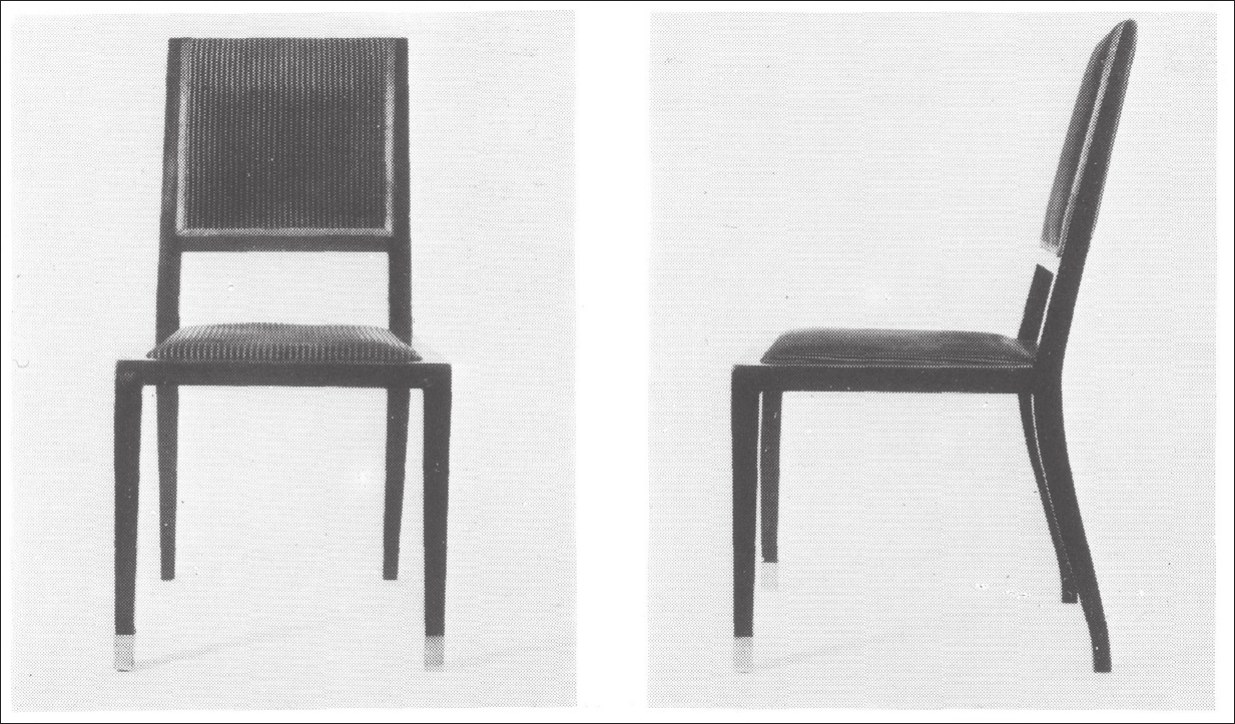
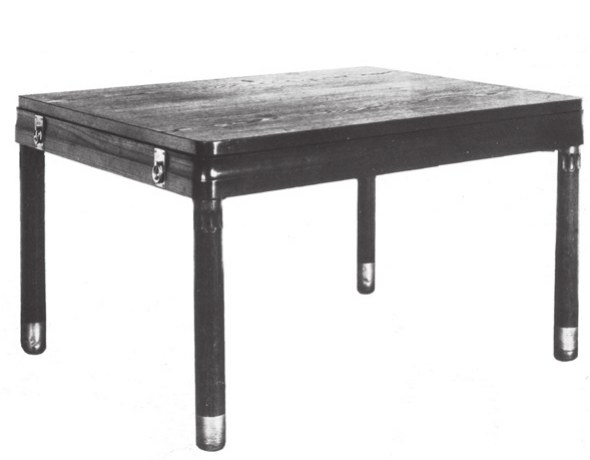
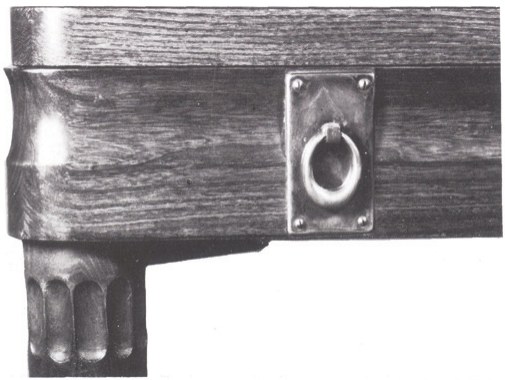
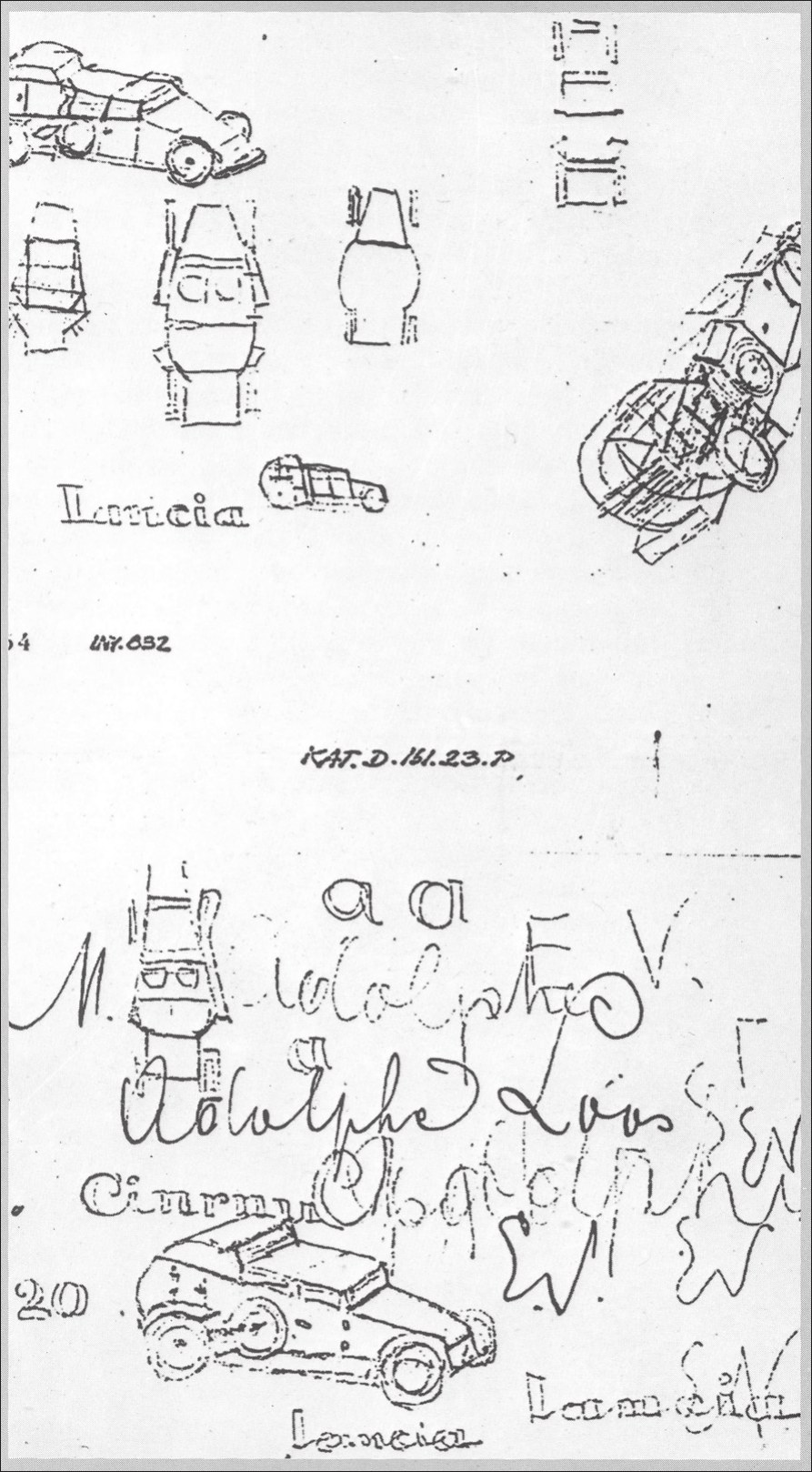
There seems to be a confusion about the essentially good idea of well-made, simpler shoes that do not quickly go out of fashion, together with higher wages and shorter working hours for shoemakers, as something good for everyone. The confusion is not so much in economics, but about satisfaction as opposed to the at least short-term alienation of the frustrated craftsman, who always thought they enjoyed punching the regular wing-tip pattern as much as the peasant woman whom Loos in any case allows to enjoy her embroidery without shame, since Beethoven is beyond her cultural reach. Well, Loos could still hope that public education would bring Beethoven to the craftsman class in conditions where the peasants were disappearing; and it is not Loos’s fault or modernism’s that their essay now becomes much more challenging at a time when almost no European or American, apart from cooks and some artists, makes anything any more, and at a time when educational “pragmatism” (in the American sense) discourages many young people from troubling themselves to reach Beethoven, let alone their Viennese modernist successors.
Footnotes:
1- John cage
2- readymades
3- hermeneutically
4- formative
5- construal
6- Karl Kraus
7- Lombroso
8- Otto Weininger
9- Gentle Art of Making enemies
10- Secession
11- Beau Brummell
12- atavism
13- uniformitarianism
14- Geza Róheim
15- Spiegelzauber, 1919; Robinson 84-85
16- diffusionism
17- functionalism
18- Hermann Muthesius
19- Alois Riegel
20- The sense of Order: a Study in the Psychology of Decorative Art
21- E.H. Gombrich
22- Criminal Man
23- primitivism
24- Cavaglia
25- pictography
26- atavistic
27- Knut Hamsun
28- barbariesé
29- Essai sur l'architecture
30- Marc - Antoine Laugier
31- Prolegomena to Any Future Metaphysics
32- den Ausputz durch... vergrösserte Deutlichkeit
33- AK.382; Kant Prolegomena 122; Werke 4:B8
34- English Regency
35- Piccadilly
36- The English House
37- Ernst Haeckel
38- ontogeny
39- phylogeny
40- Coomaraswamy 378
41- aptness
42- Die spätrömische Kunst-Industrie; nach den Funden in Osterreich-Ungarn
43- "Aus den Flegeljahren der Menschenheit"
44- Typee
45- Kolo Moser