Computer, Internet, and distant connections have changed the space and arrangement of the working environments. In the first step, an attention towards this change and then, a belief in the specialty of its design should be developed. As an example a traditional office in Tehran and the design of the new office of Vitra Company in Paris, by Bouroullec Brothers is introduced in this issue.
A long corridor with rooms on either side: this is the picture our state offices have offered of the workplace for more than fifty years. Private firms, with only a small difference of scale, have, on the whole, hardly departed from this model. For a long time, these images have generally evoked a tedious space for the workplace. Today, with computers, the Internet and broadly extended communications, this kind of working environment can no longer continue to exist.
To arrive at organised spaces that answer the needs of the present, two stages must be passed through: first, that society accept that there is a need to attend to working spaces and to design them; and in the second — and more important — stage, how this change is to be made and by whom, and who is qualified to think the ideas through.
Our principal problem lies in this second stage: that is, accepting the necessity for the work to be done by a specialist, an idea today very faded. We are all specialists in everything and in nothing. In the design of the office and the workplace, even with today's models — and on account of the rise of commercial competition, the desire to assert oneself, to attract the customer's eye and to outpace one's rivals — the interior design of work-places has, even in the form of a kind of keeping-up-with-the-neighbours, become a stage for self-assertion. But more often than not, such schemes are meant to flaunt the wealth of the company's owner. Lavishness with the best executive desk, the choicest materials and fittings, or an ill-judged number of halogen lights on the ceiling, without regard for use or for the way this furniture is to be used, are signs of this view.
A traditional office in Tehran
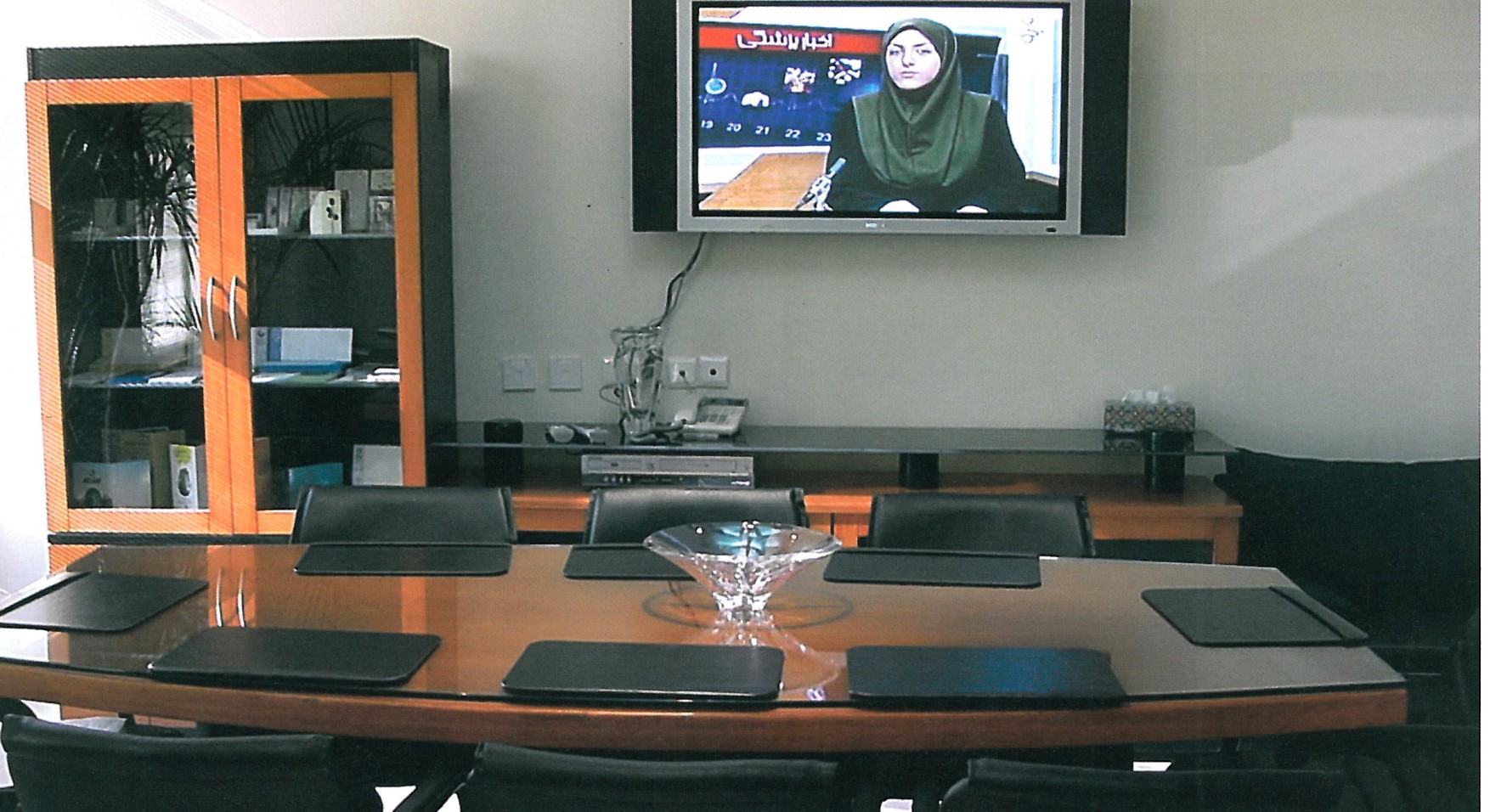
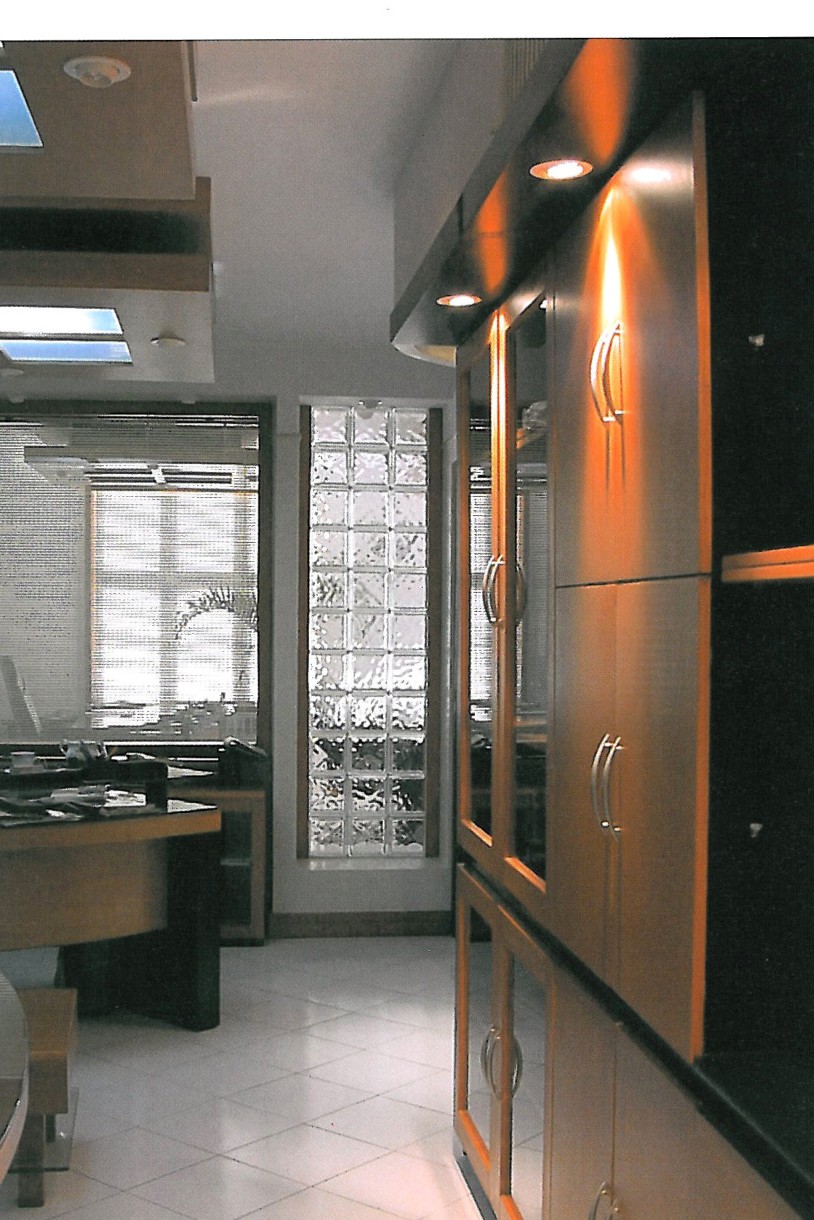
Another important point is the way in which certain very important objects are used in interior design. For example, when a particular type of cabinet handle is launched on the market by a factory, the same handle suddenly spreads everywhere — on every kind of cabinet and every drawer of the desks. Or, when colour-stained natural wood comes into fashion, all the home, office and kitchen furniture is made of colour-stained wood. Another problem is that, in many cases, a heap of furniture — desks, chairs, cabinets, shelves and so on, predefined as the equipment of an office — together with a few signs of fashion such as partitions and halogen lamps, is forcibly squeezed into a place that was rarely designed for work, namely a multi-bedroom residential apartment.
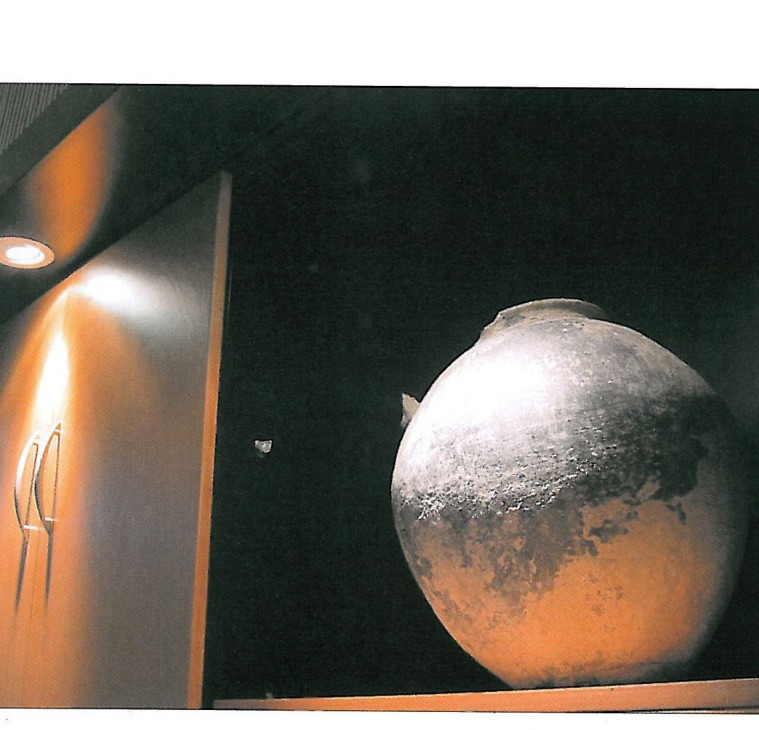
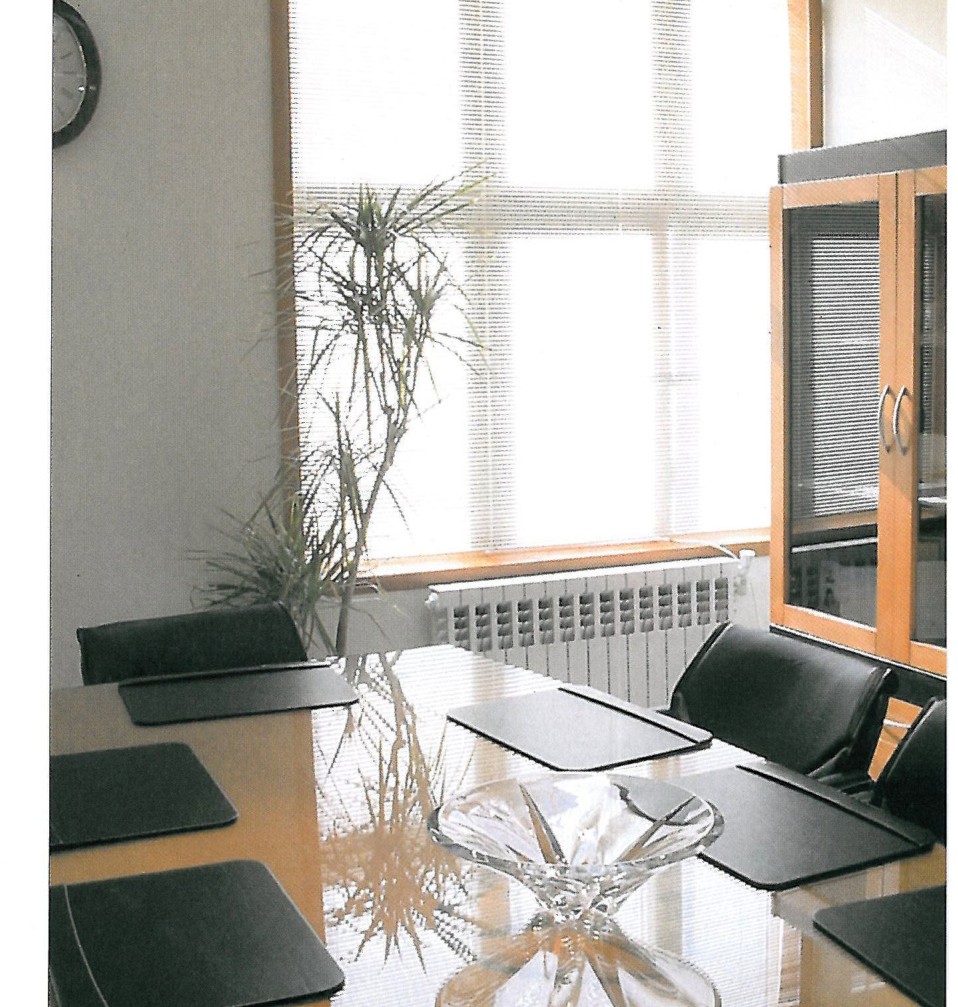
This way of working brings disorder and turns the workplace into a crowded space; and it also clearly proves that making an apartment look like an office does not answer the needs of the workplace. Even where design has actually been carried out, the problem is that the schemes are mostly without an idea drawn from the particular working relations: the psychological relations of the workplace (the effect of the use of colour, texture and varied forms) are not taken into account by the designer, so that, in the end, a scheme particular to that very space might be created and answer the staff's needs and the management's expectations of the company's productivity.
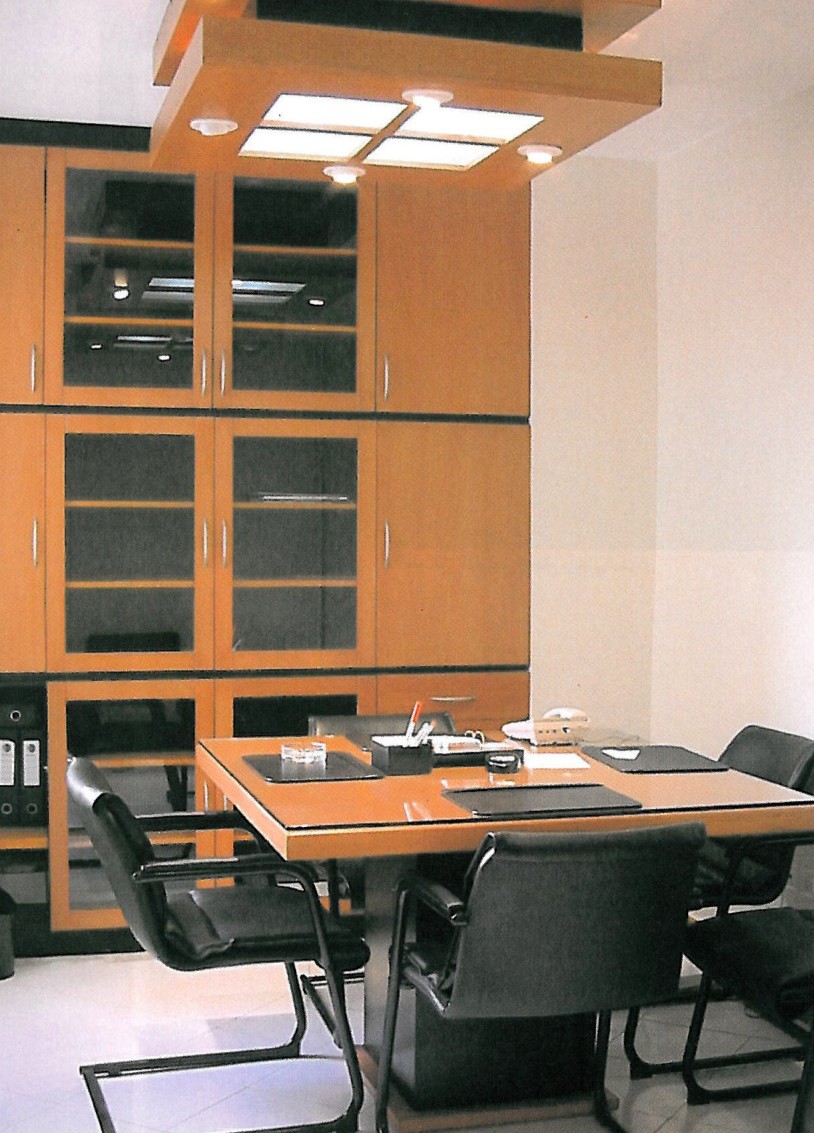
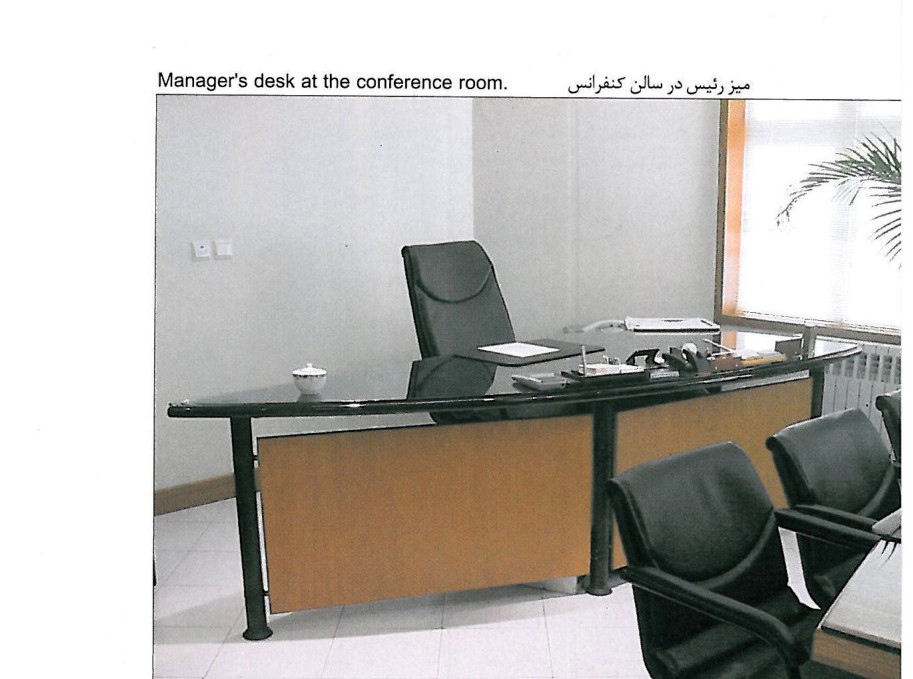
In this issue, after a look at the example of an office in Tehran — created by converting a small two-bedroom apartment with the resources of the market — we turn to the work of the Bouroullec brothers: their particular response and free design for the Vitra office in Paris.
Vitra's new office in Paris
Vitra's new office in Paris — Domus 853, November 2002.
Ronan Bouroullec and Erwan, his twenty-five-year-old brother, are at present among the most prominent designers in Paris. The two brothers' collaboration began in 1999, when the younger brother had graduated from the school of art and joined Ronan Bouroullec's newly founded studio. In an interview given in October 2001 they explained their work as follows:
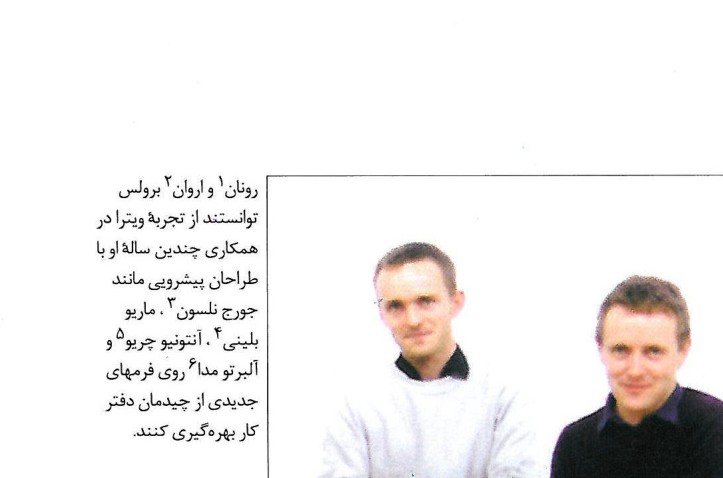
'We are not the kind of artists who draw a design and tell the client to go and build it. We talk and form relationships with all the tools, resources and people involved in producing the final product, and through the manufacturing stages we learn new things about the project that bring many changes to the original idea and have an effect upon it. The buyers of our designs, depending on their use, can decide how to use the object. We like to work in Paris because, large as the city is, we can build good personal relationships and so build our own small city within Paris.'
The new experience of these two brothers in the Vitra office blurs and dissolves the traditional ideas of what a workplace is. An experience which, taking culture, anthropology and the effects of today's technology into account, gives everyone the possibility — in a way wholly different from what is traditionally taken to be an office — of working with one another and beside one another.
To arrive at this transformation in the design of work environments, two young and committed designers were commissioned by Rolf Felbaum1 at Vitra — designers who have grown up in the age of the internet, and who are uninterested in and unconcerned with the imposed industry of office furniture.
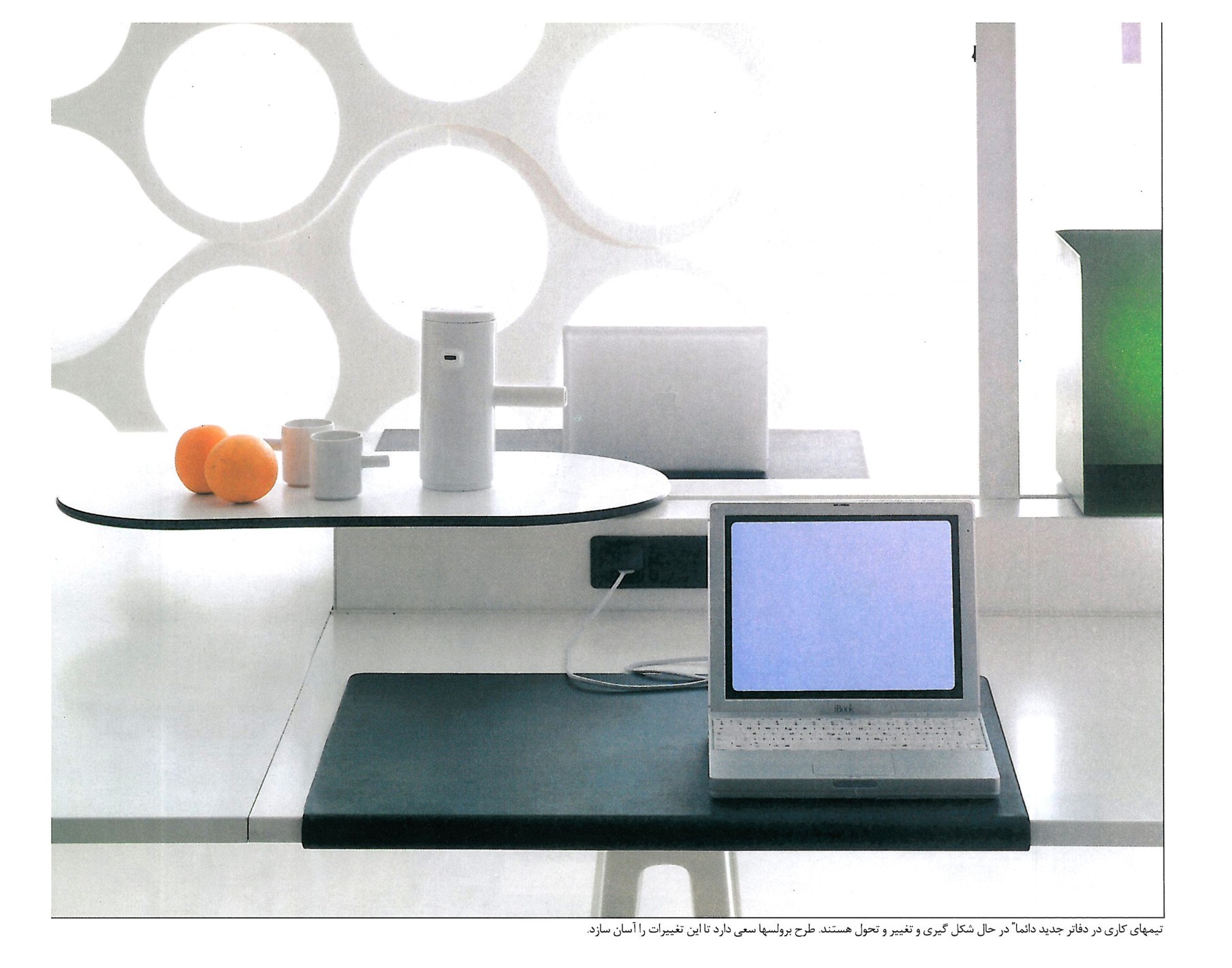
Vitra brought them, over a long period, deep into the questions and problems of a workplace. To produce something fresh in a field that — both as a subject and in practice — shies away from innovation, this was the only possible method.
A limited time was allotted to the project so as to avoid drawing the design out; Vitra did not insist on any one idea, and the result of this effort was a step forward.
Vitra is based on the border between Switzerland, Germany and France. This particular geographical position has made different points of view bear visibly upon the development of the project and given it its own particular character. New ideas, at first, meet resistance; this process, in producing a scheme, brings about friction between viewpoints, and in the end refines the various options. New ideas are inevitably forced to comply with and come to terms with the laws of production, price-control, ergonomics, marketing and standards.
Vitra had set the redefinition of work spaces as its objective from the late 1950s. When it secured the right to operate in Europe for the studio of George Nelson3, it took the first step in creating a new space — a space in which abstraction was reshaped into reality. Later, with the help of Mario Bellini4, the matter of making the work space familiar and home-like was kept in mind. Antonio Citterio5, Alberto Meda6 and Jasper Morrison7 all worked together on transforming the unified structure of offices and on their flexible space. The result of this effort, in the early 1990s, was the design of the Citizen Office8, where Ettore Sottsass9, Michele de Lucchi10 and Andrea Branzi11 proposed fundamental reforms to office design and freed the staff from the tyranny of the office environment.
Vitra was convinced that the time had come to change offices from heaps of office furniture into a self-organised space; a way in which unforeseen movements, the dynamism of ordinary encounters and informal relations would be organised. The new working environment was to take the shape of a network of communications: a place in which whatever stood in the way (a wall, for example) is counted as an obstacle, and a place in which, at the same time, the personal characteristics and the private domain of individuals matter especially.
By using the logic of the network and the working relations among individuals, hierarchy is dispensed with. In this way, important posts no longer stand at the centre of the organisation of the space, and communication between staff is not regarded as a particular activity that can be realised only in a specific space or in the conference hall.
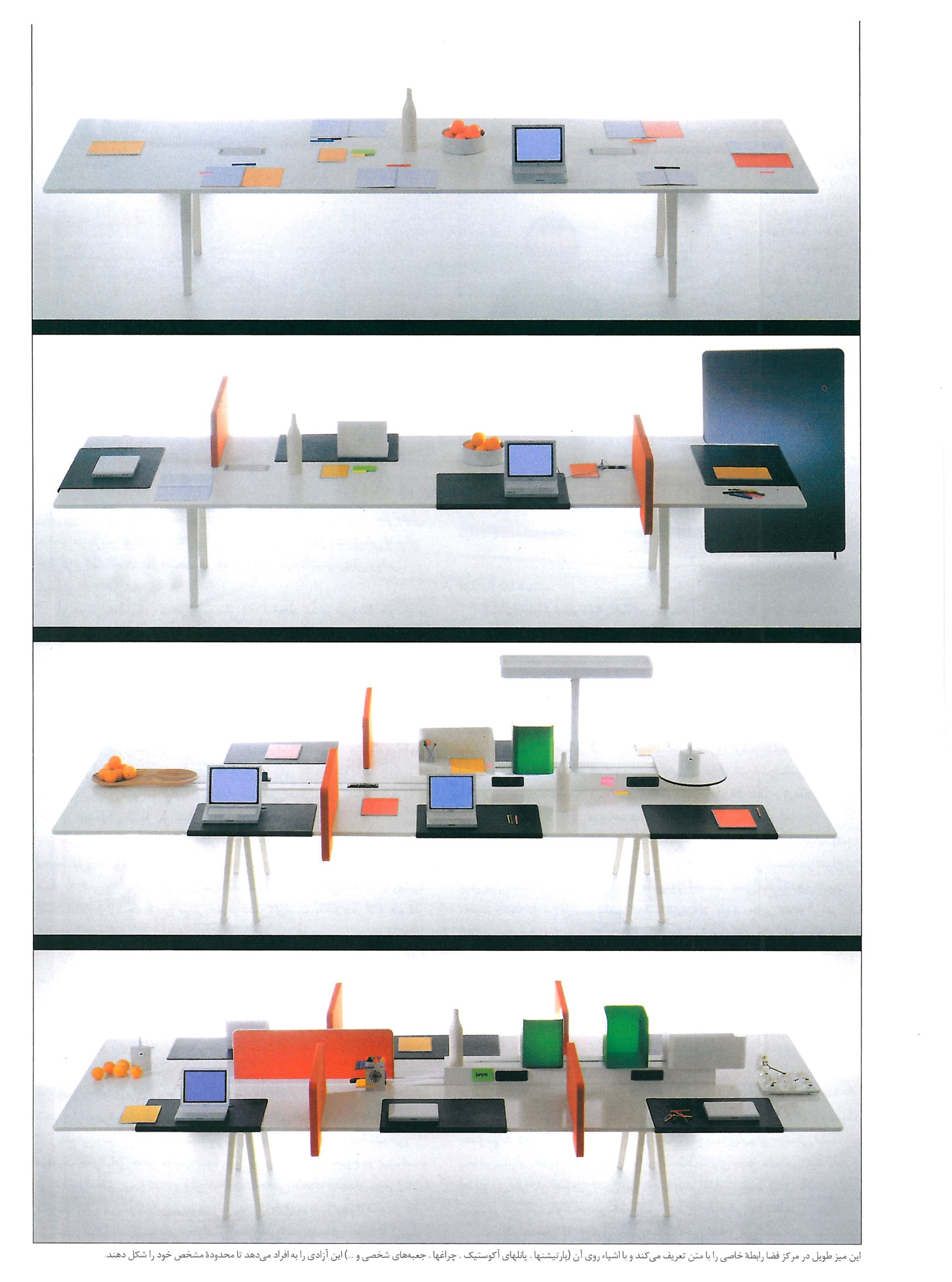
The Bouroullec brothers' idea turns the entire work space into one large meeting hall and at the same time creates the possibility for individuals to work independently and to set themselves apart. The capacity of the work environment for rapid adaptation is one of the important properties of this space (and one of the few properties that traditional offices lack, since in the traditional office the space belonging to each individual is fixed in advance and the work system is wholly closed). So, in this new conception, the constant need for flexibility is answered. In these designers' belief, space should have the capacity to change form without recourse to a specialist; that is, every individual should be able easily to organise his own work zone.
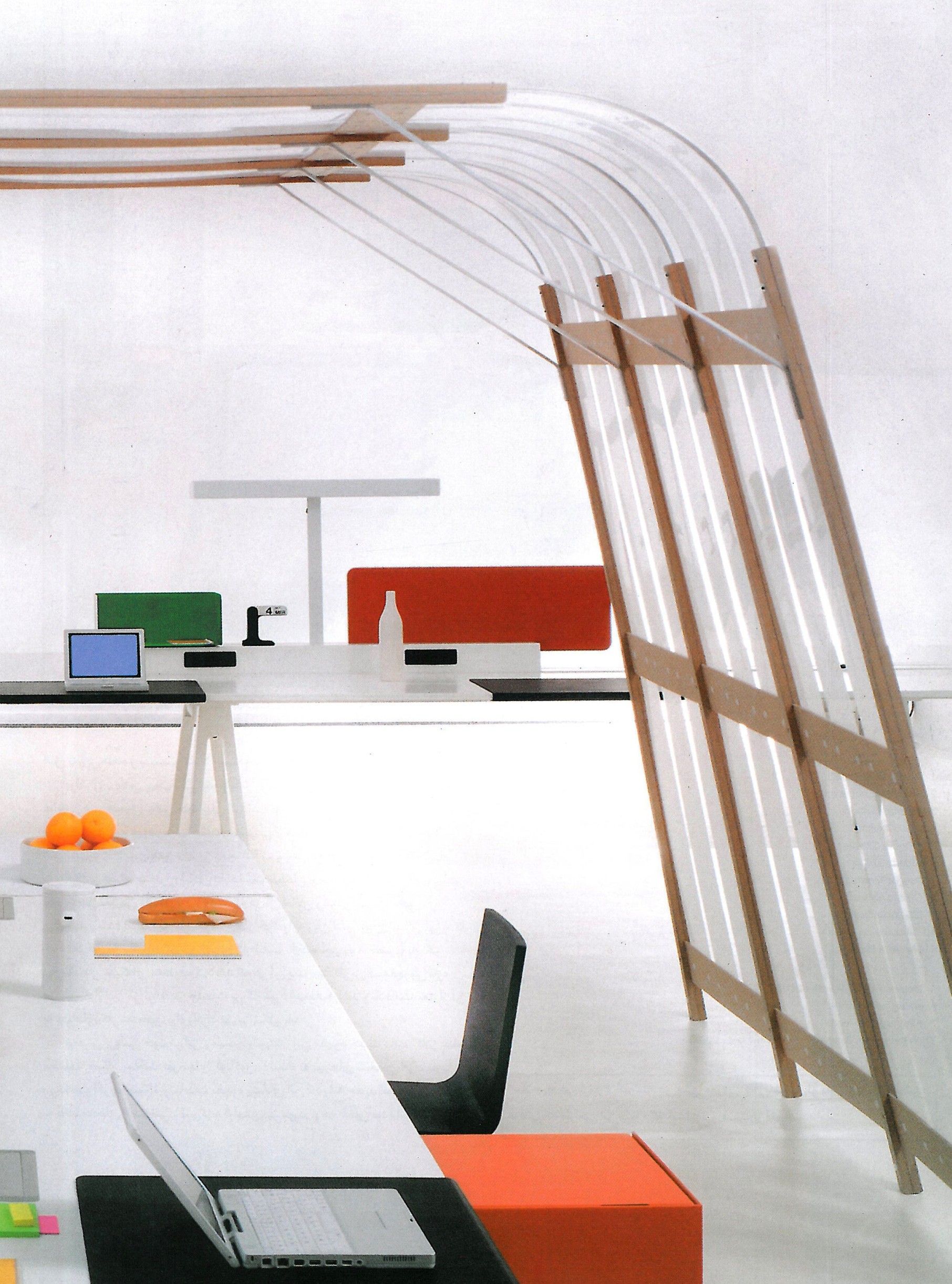
In the usual offices that are organised in the traditional way, hiring more people than there are desks is unimaginable, because the space belonging to each individual is fixed in advance and the work system is closed.
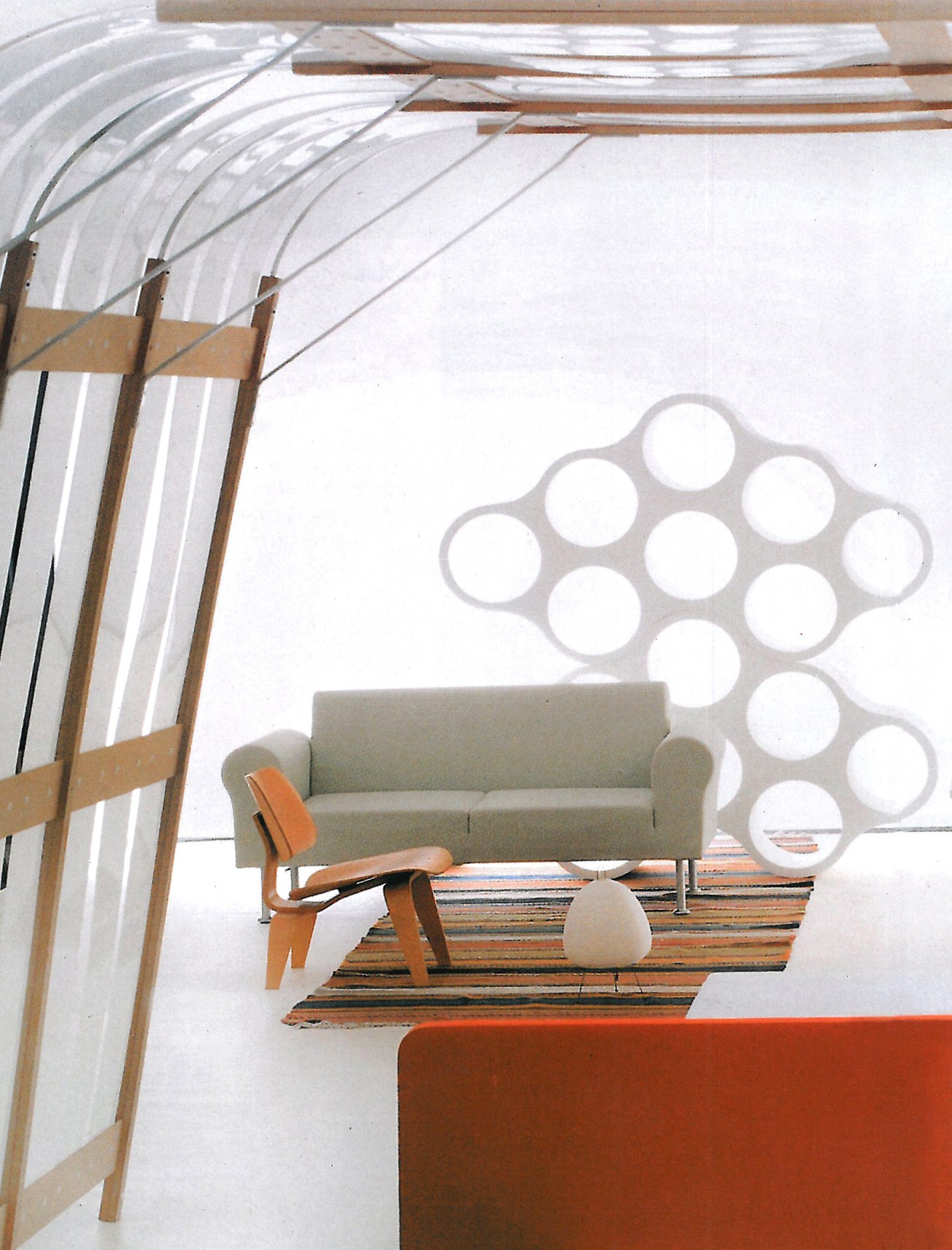
The Bouroullec brothers expressed the complexity of their ideas through the change of accepted old concepts in their final product. They freed themselves from work, conference and computer-desk furniture and so on, and turned to a kind of furniture and space — like a bar counter, a sitting area, a telephone cabin, a garden. This intermingling of spatial categories has allowed the designer to put his furniture and his architecture to work in pursuit of a spatial organisation and a programme in which the possibility of growth, change and transformation has been foreseen, and to express his view in the language of objects. With their work, they have turned the focus from the traditional reality of the working space (fixed, dedicated and personal) to a network organisation, in which a large work-table finds a fresh meaning. This table can be used for large meetings and, immediately after, can be reconfigured into definite work spaces for individuals.
The Bouroullec brothers themselves say of this: 'This new conception, like a collage of different elements, gives us the possibility of building various designs, depending on the personal needs of individuals. Although the network of communications is the basic conception of this new thought, the respect for private domains, for concentration and for tranquillity has also been the object of particular attention.'
Notes
1 Rolf Felbaum 2 Erwan Bouroullec 3 George Nelson 4 Mario Bellini 5 Antonio Citterio 6 Alberto Meda 7 Jasper Morrison 8 Citizen Office 9 Ettore Sottsass 10 Michele de Lucchi 11 Andrea Branzi
Sources
1. Domus 853, November 2002 (Working at the bar). 2. The Bouroullec Brothers, interview, October 2001 — findarticles.com.
Correction
In the previous issue, in the introductory text on the Blue Bottle coffee shop, the name of Ms Raefin Forghani — a co-designer of the project — was inadvertently omitted.



