From early on in his career, Khosravani espoused the concept of beauty in indigenous Iranian architecture and its harmony with the various natural surroundings, whether in styles recalling the desert architecture of Iran or combining modern materials with an indigenous style.
His style of architecture was a first step in defining identity in contemporary Iranian architecture, a historical approach to architecture that resulted in what has become known as post-modernism. His capacity as an artist, with a potential for all kinds of design, distinguishes Khosravani as a figure in contemporary Iranian architecture.
Keyvan Khosravani was born in 1323 (1944) in Tehran. He studied architecture and received his degree in 1348 (1969). His professional career began in 1350 (1971), and since then he has been continuously active in architecture and urban design. Through his deep understanding of Iranian vernacular architecture and his artistic sensibility, Khosravani has created works that bridge traditional and modern architectural language.
Nain Inn
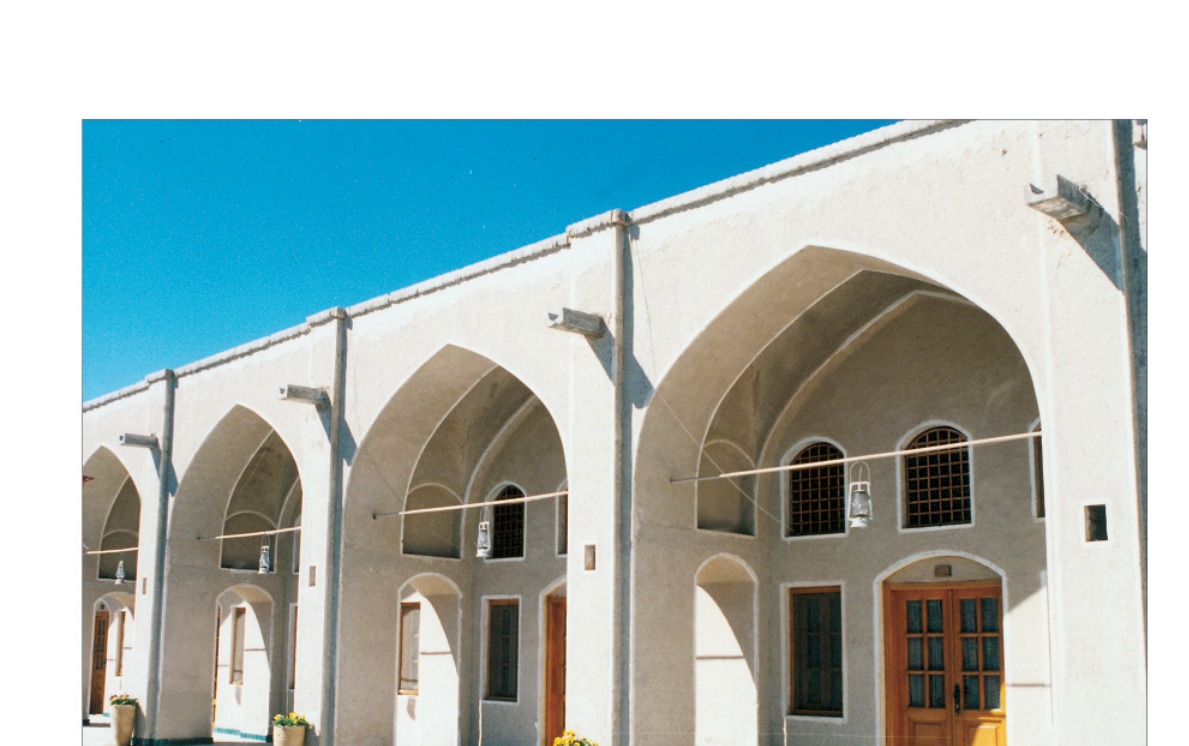
The Nain Inn is among Khosravani's most celebrated works. Located in the desert city of Nain in Isfahan Province, the project was designed in 1373 (1994) and completed over a period of approximately two years. The inn was conceived as a desert lodging that harmonizes with the surrounding arid landscape and draws on the architectural traditions of the region.
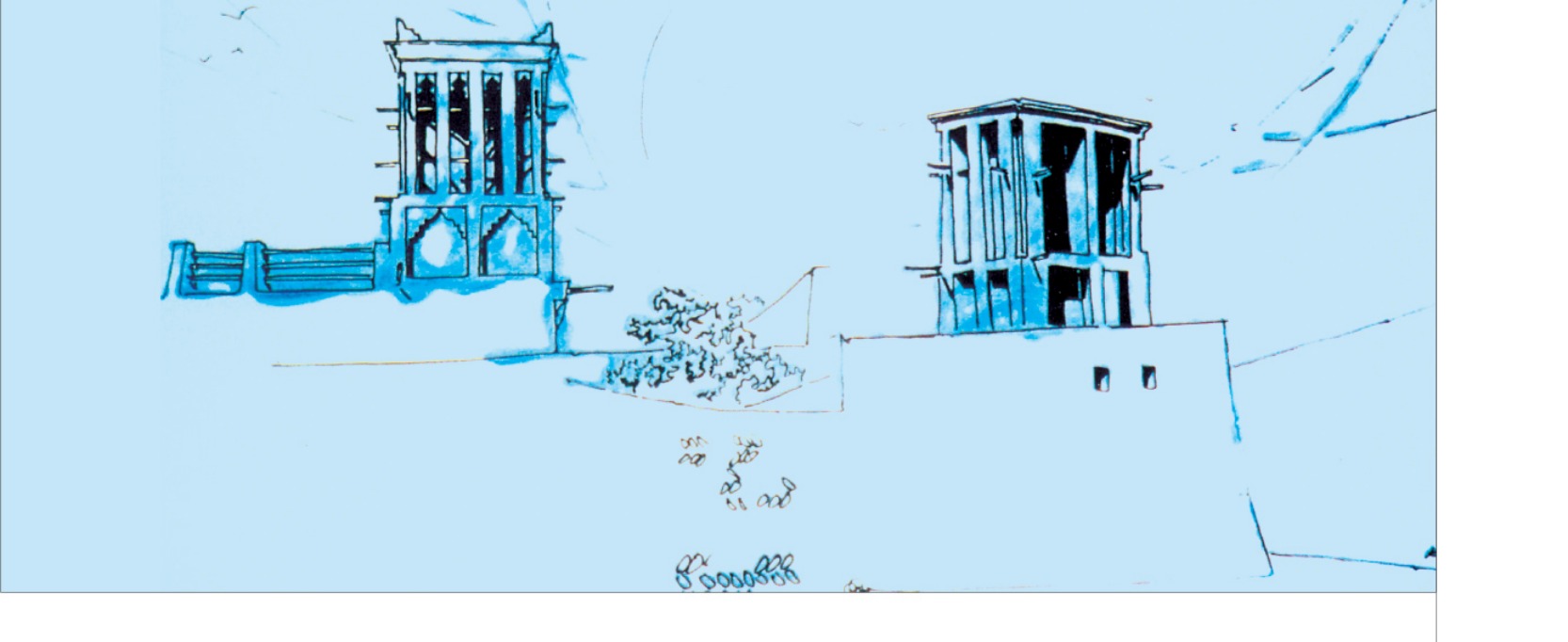
The design employs pointed arches, thick adobe walls, and interior courtyards — all hallmarks of traditional desert architecture in central Iran. Khosravani's mastery of proportion and his sensitivity to light and shadow create spaces that are both functionally appropriate for the harsh desert climate and aesthetically evocative of the region's architectural heritage. Natural ventilation systems inspired by traditional wind-catchers help cool the interiors without mechanical intervention.
Khosravani himself wrote: "After completing this project, I traveled twice to Egypt and visited the village that Hassan Fathy had built in 1974." His admiration for Fathy's work in earth architecture reflects a shared commitment to indigenous building traditions.
Khosravani Family House
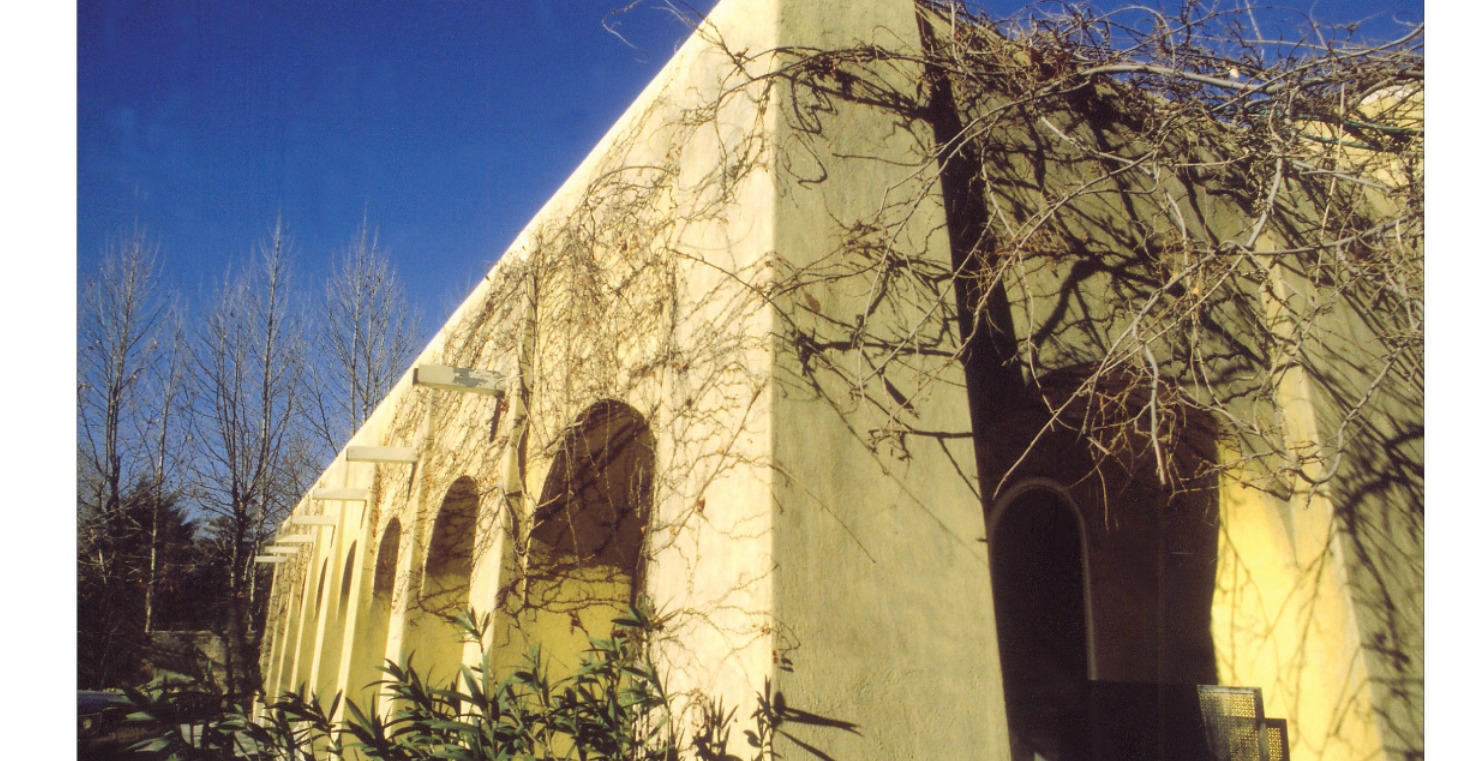
The second project discussed is Khosravani's own family house in Jolfa, Isfahan. This residence showcased the architect's personal design philosophy, combining indigenous architectural elements with modern living requirements. The house featured distinctive curved forms, warm earth tones, and a playful engagement with traditional Iranian residential typologies. Sadly, the house was torn down a couple of years before this article was published, making the photographic documentation presented here all the more valuable.
Library of the Institute for the Intellectual Development of Children and Young Adults
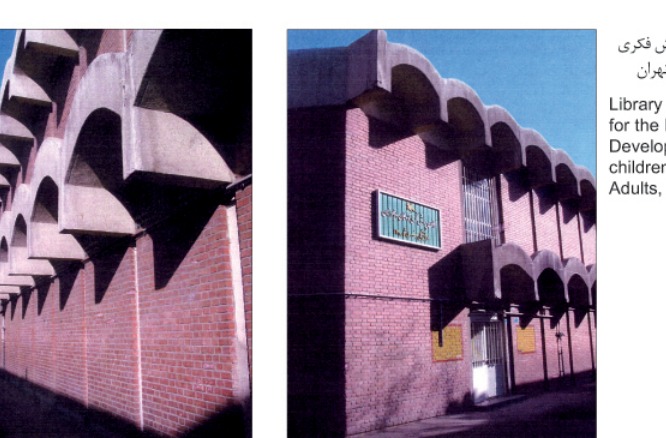
The third project is the Library of the Institute for the Intellectual Development of Children and Young Adults (Kanoon-e Parvaresh-e Fekri) in Tehran. This building demonstrates Khosravani's ability to create architecture that speaks to its users — in this case, children and young people. The building's distinctive pink facade and playful geometric forms create an inviting, imaginative environment that encourages exploration and learning.
In Khosravani's architectural style, one can discern a transition from indigenous architecture to a modern interpretation, an approach that recalls historical forms while remaining rooted in contemporary practice. This distinguishes Khosravani's contribution to contemporary Iranian architecture.



