Houses of Carlo Scarpa
Carlo Scarpa: Architecture and Design
•Edited by: Guido Beltramini, Italo Zannier •Photographs by: Gianantonio Battistella, Vaclav Sedy •Texts by: Kurt W. Forster, Ilaria Abbondandolo, Laura Orsini •Rizzoli Publications, New York
The house designed for Luigi Pelizzari is one of the few surviving works among those Scarpa built during the Second World War. The house was preserved unchanged, with its original furnishings, until its last change of ownership in 2000, when the house and the furnishings were sold separately. Scarpa met the client through his brother Guido Pelizzari1, an architect, with whom Scarpa and the engineer Benedetto Piamonte2 had taken part in the 1934 competition for the design of the passenger building at Nicelli3 airport on the Lido4.
The renovation followed the principles of dispersal in the rationalist suburban residence that had been set out in the architectural writings of the time from the late 1920s, with the removal of all useless frills; in particular replacing the “useless drawing room”5 for entertaining, and substituting a living room for the family’s use. The furniture designed by Scarpa, which the Capovilla6 joinery workshop made, reflected the “functionalist aesthetic recommended to young brides” that targeted the “modern” woman (Salviati7 1993): “A few pieces of furniture, solid and with simple lines, in very clean rooms... . Not without a bathroom, or a wardrobe, however small” (The Happy Home, for Young Wives, Rome, 1932, pages 140 to 145).
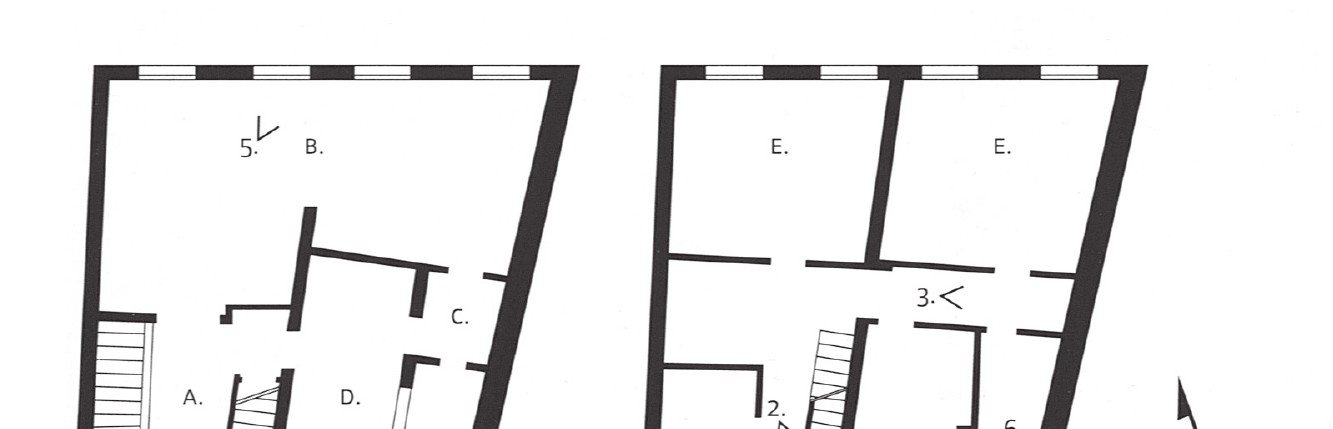
The house is near the church of Santa Maria Maddalena8 and has four floors: a straight staircase of Istrian stone9 connects the ground floor, comprising the entrance and the laundry (no longer in use), to an open space that leads to the large living/dining room, a service area (originally kitchen, office and bathroom) and a wooden staircase that gives access to the bedrooms on the second floor and from there to the attic.
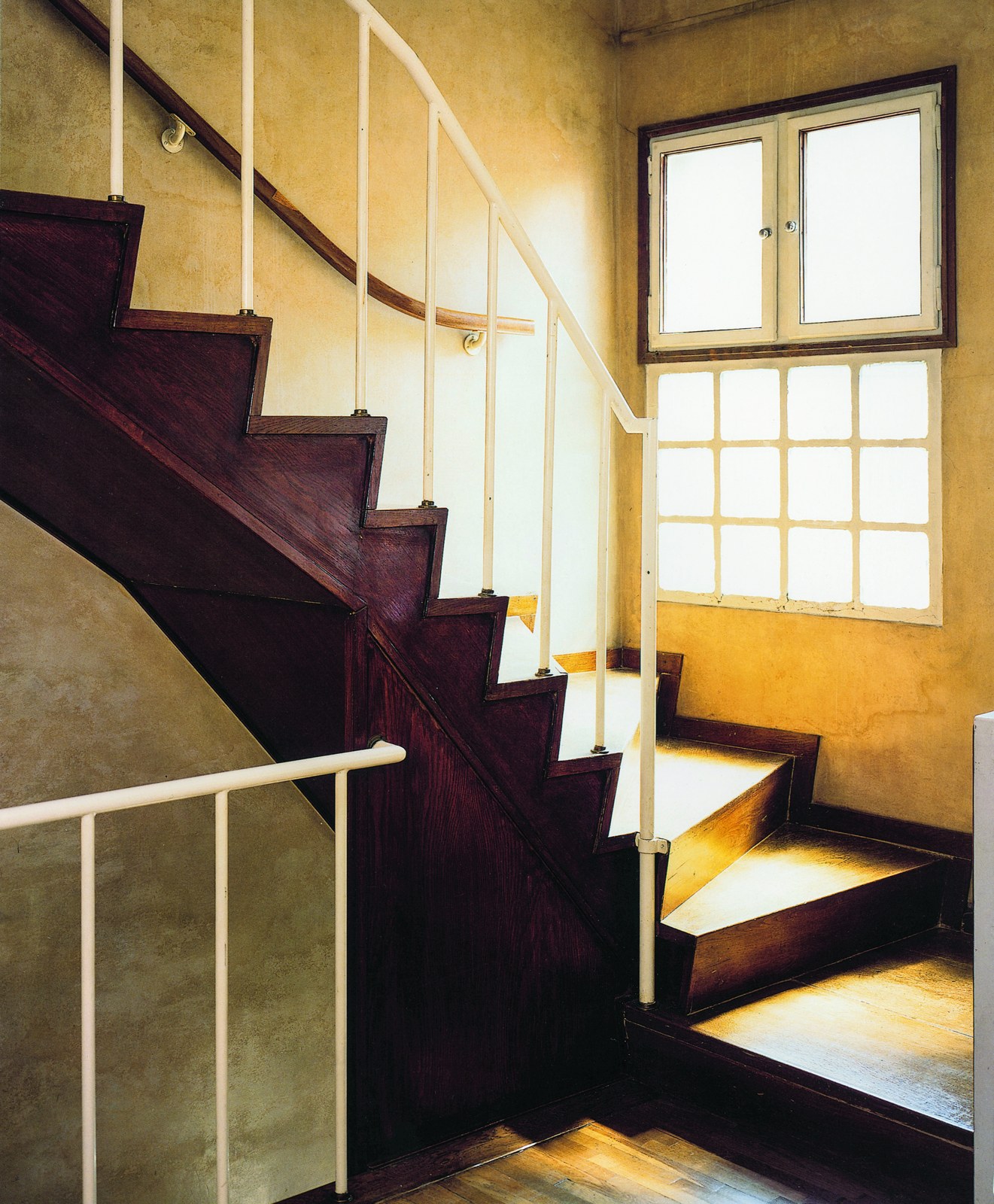
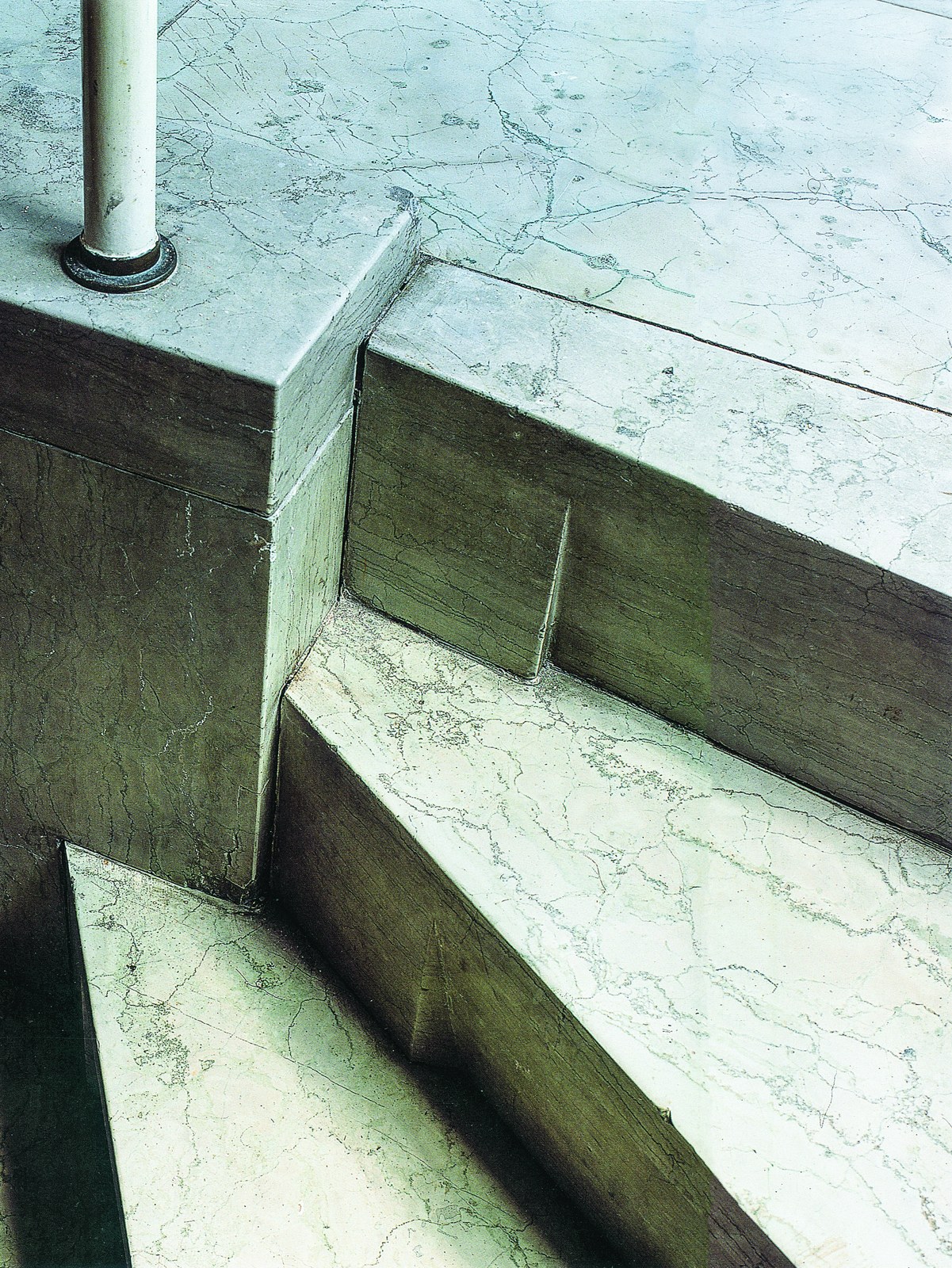
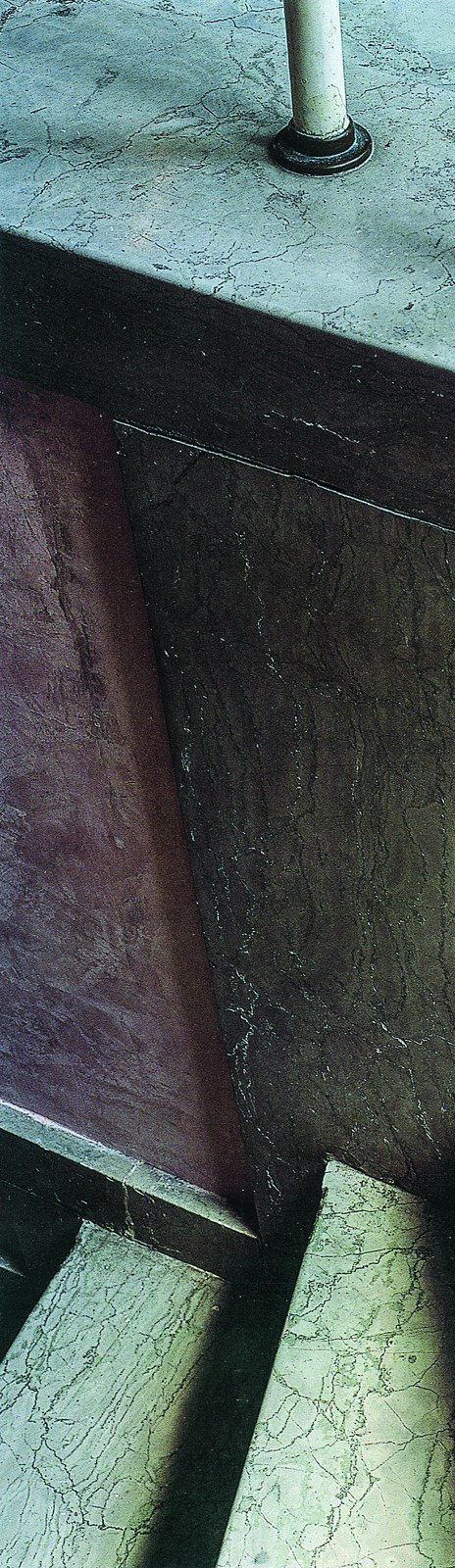
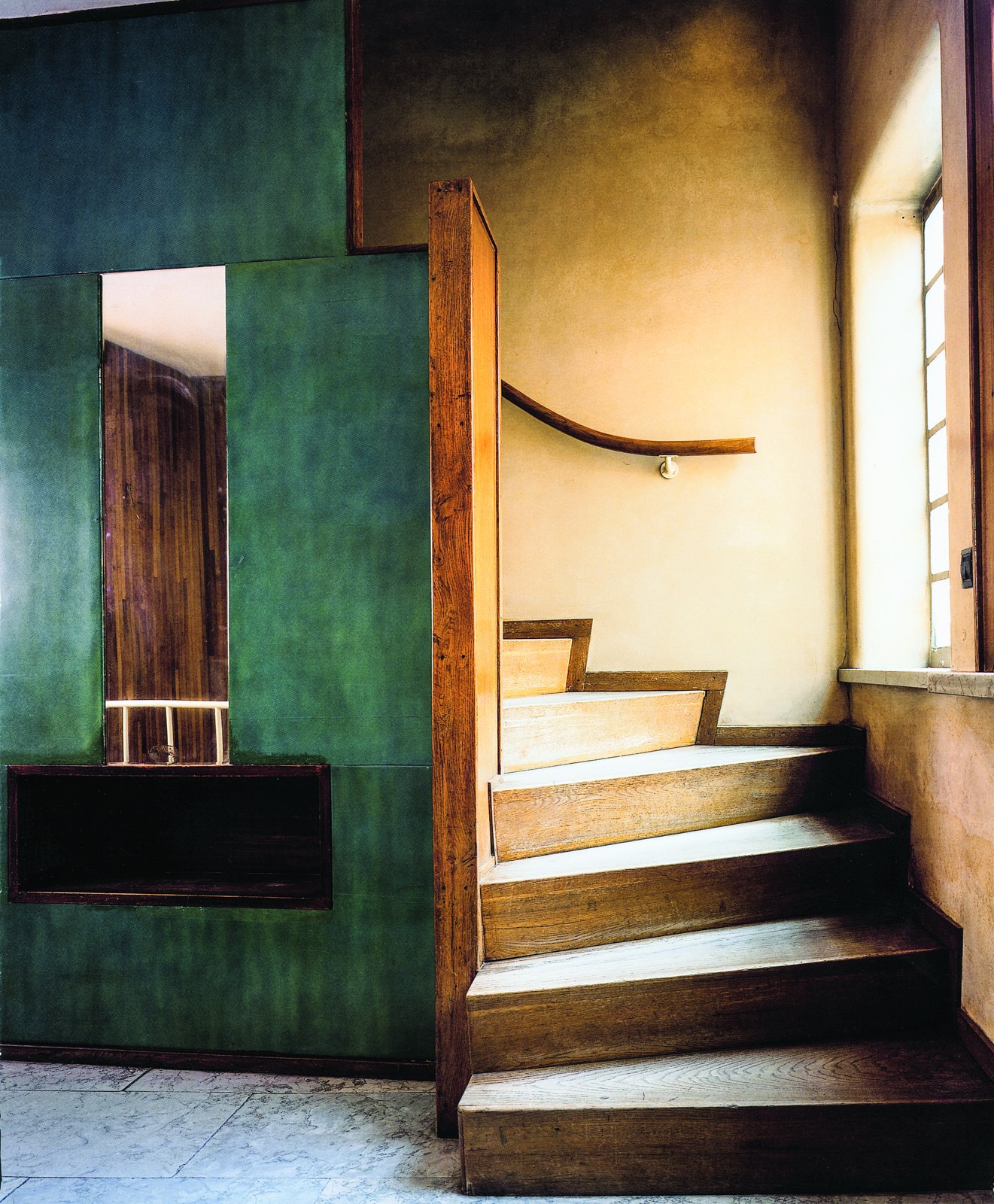
The entrance to the first staircase, with its distinctive wood-clad steps, is overshadowed by a wall of glossy green plaster that harmonises with the main walls and serves as an entrance cloakroom, with a mirror, shelf and coat hooks in walnut, a double door to the kitchen and the back of the rear staircase in pine.
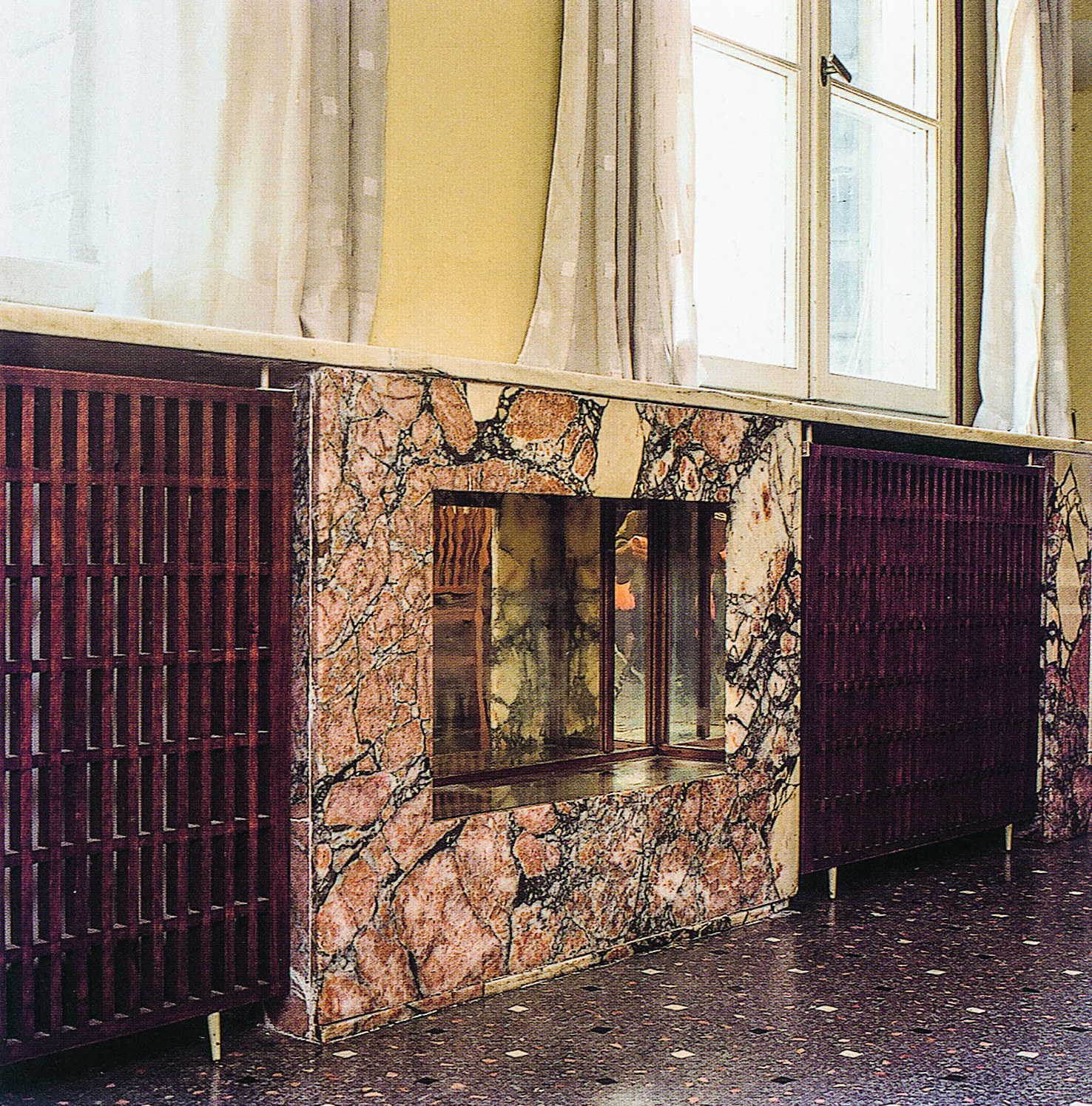
The living/dining room, at right angles to this first space, occupies the whole width of the building and includes a continuous row of niches along the side facing the canal, with alternating open and closed sections. This, together with the Venetian mosaic floor with regular pieces of glass set into it, helps to unify the spaces. The heating radiators under the two middle windows are covered with wooden grilles, and between them a band of light veined marble, in the Loos manner, frames a mirrored niche.
Upstairs, a delicate and beautiful wardrobe, inspired by Scarpa’s window for the fourth Monza10 Triennale in 1930 – which fortunately is documented by the photographs of Paolo Utimpergeher11 (Pollifrone 1985, page 317) – and the adjoining room, originally designed for the housemaid, have remained unused and empty. The decorative motifs of large green peas on the corridor walls survive, together with a small wardrobe, a marble-clad bathroom enclosed by a wall of glass block, and an oak floor.
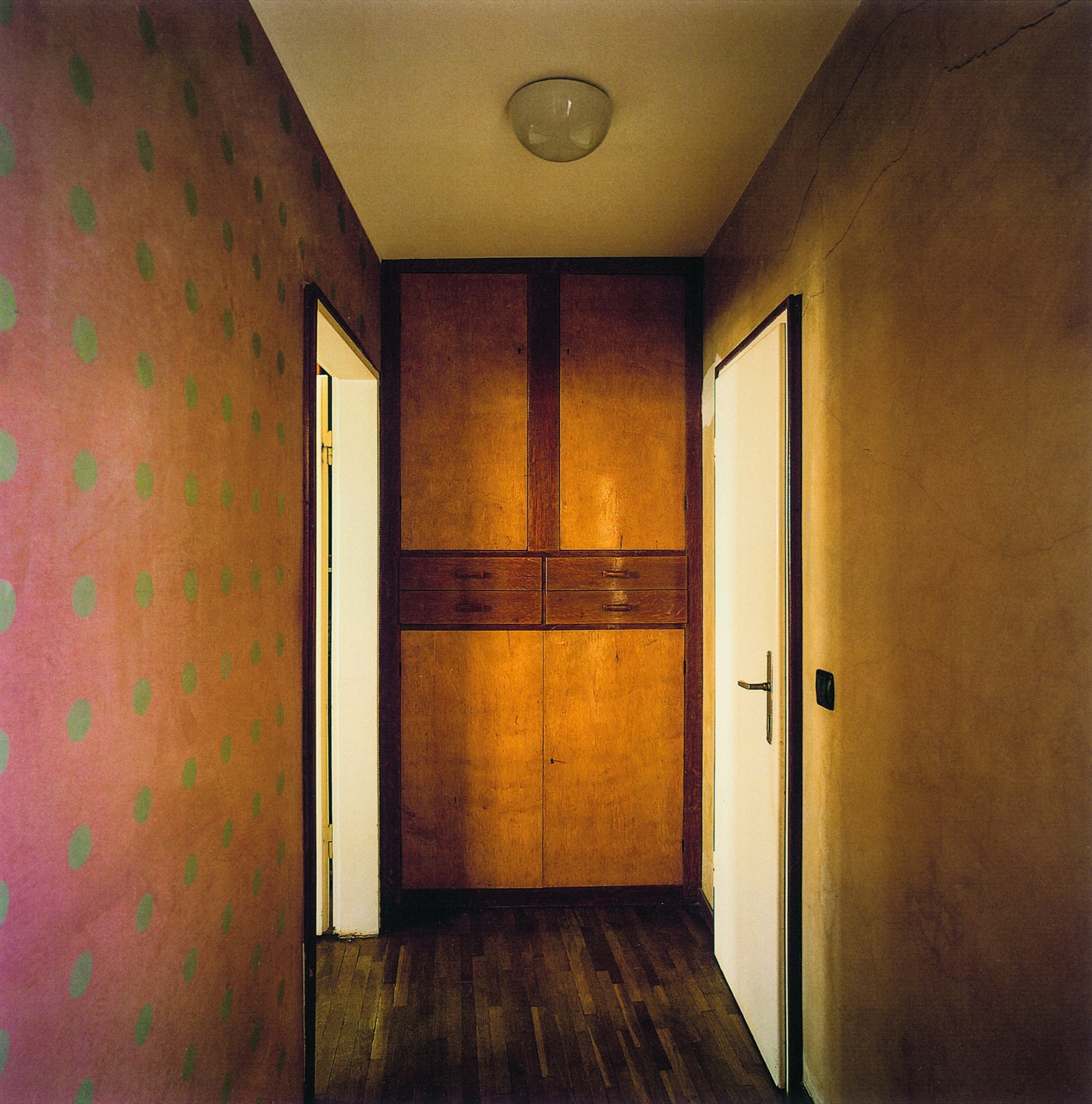
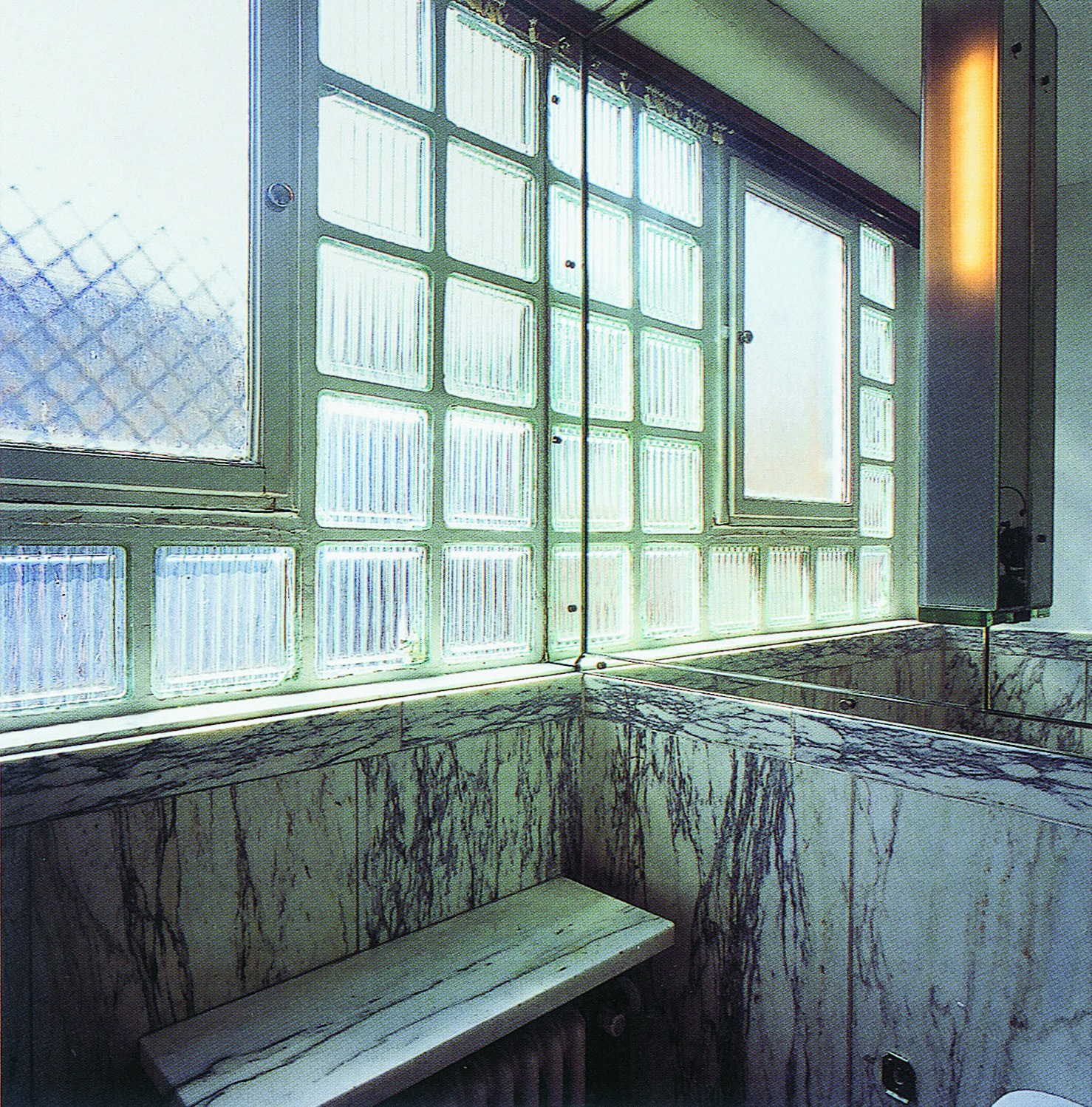
Knowing Scarpa’s attention to the placing of rooms and the visual connection between them, still clearly seen in the almost contemporary Bollotto12 house, the elements that have not been changed or dispersed, such as the staircases, doors and windows, the floors of the doorways, some of the wall and ceiling decoration, some pieces of custom furniture and a few lamps (in the entrance hall of the first floor and in the bathroom of the second floor), today remain more as isolated, single elements than as parts of a unified design.
Notes
- Guido Pelizzari
- Benedetto Piamonte
- Nicelli
- Lido
- Cesare Albertini, "L’ 'inutile' salotto" in La casa, June 1939; Mariuccia Salvati, L’inutile salotto. L’abitazione piccolo- borghese nell’Italia fascista, Turin 1993.
- Capovilla
- Salviati
- Santa Maria Maddalena
- Istrian stone
- Monza
- Paolo Utimpergeher
- Bollotto