



Updating society's taste and encouraging it towards shopping and consumption is one of the fascinating and evil magic spells of advertisement. The variety of products and services and the fluctuating nature of production together with the occupations of the everyday life that restrains people of today from concentrating on different messages can no more attract the viewers' attention except by presenting high attractive sensational motives, motives [that] could be easily perceived by viewers in a very short period of time. Professional magazines are among the best means of advertising products, since they address a special social group. Advertisement plays a great role in these kinds of magazines that guide professionals. Professional magazines, because of their great facilities for photography, graphic design, printing, etc., have turned into the home of propagative graphic arts. Frankness, simplicity, briefness and novel visual metaphors and symbols add to the effect and attractiveness of the propagative graphic, as the misuse of these elements can bore the viewer.
When the classical theories of the nineteenth century were giving way to the neo-classical theories of the early twentieth century, the neo-classical economists who were elated by the formulation of new theories — and who took the algebraic harmony of supply and demand to be the equilibrating factor of the economy — never even imagined that these logical equations would one day be caught in the trap of advertising-agency tricks, and that advertising, by drawing on the desires and aspirations of consumers and creating new and on-the-spot needs, would derive made-to-order answers from these equations. The subjection of market regularities and the sales cycle to advertising is a manna by which marketing science guarantees the continuation of production and capital accumulation in today's world, and makes advertising count as one of the strategic factors in economic development.
The propagation and teaching of a culture of consumption and the updating of society's taste, the inducement to purchase and consume, is the alluring and devilish charm of advertising. The variety of goods and services and the ever-changing nature of products, alongside the many occupations of daily life — which strip the modern human of any leisure to reflect upon the various messages he or she encounters — can move the audience to thought and reflection only by the offering of more attractive sensory stimuli; stimuli the audience can quickly feel and grasp.
Advertising has done such work that today's life without it would be monotonous and dreary. Streets and thoroughfares without advertising boards and neon lights look lifeless and dead. Advertising is the stage on which the movement and speed, the change and the variety of the new consumer society are displayed; it is the agent that propagates and accelerates the dissemination of information, and seeks to impose itself as the sole link between the human being and the manifold, complex civility of our time.
All of us, when we open a magazine for the first time, do not go straight to one of its articles, nor begin to read from the front. Rather, we first scan its pages, then perhaps glance at the table of contents, and if our attention is drawn we look for information about the publisher and the identity of those producing it. The look and feel of the magazine, its paper, the quality of printing and graphics, the kind of layout, the fonts, the images and the advertising pages — these are the puzzle pieces of the magazine's visual identity, and they form the criteria of an immediate judgement about its content. For this reason the presentation of articles and messages must be made in such a way that, in a quick glance, the maximum possible messages are transmitted to the viewer. Magazines are a fitting place for setting out and conveying short news, educational, and advertising messages. This kind of publication, especially the specialised magazines, is the most appropriate advertising vehicle for goods whose principal audience is a particular social group. Today, for almost every group of people and for every profession and institution, one or more specialised magazines are printed. The lifespan of the articles and advertisements in a magazine, proportional to its longer interval of publication compared to newspapers, is correspondingly extended. If we count this as one of the advantages of the magazine, perhaps the choice quality of printing and the variety of magazines in respect of content also distinguishes this kind of publication from newspapers.
Magazines can be classified by frequency of publication into weeklies, monthlies, and so on; or by style and method and audience group into general magazines and specialised magazines. Specialised magazines are produced for various professions and for individuals concerned with a particular profession or subject. Since these magazines usually guide the holders of the profession in their work, specialised advertising in them can be very effective. In magazines one can use varied colours, fine paper and attractive designs. The art of graphics is more indebted and turned to magazines than to any other medium. The extraordinary capacities of magazines in printing, in the use of colour, in photography and in image-making have turned magazines into a valuable place for the showcase of graphic art. Magazines, which have become arenas for acquiring identity and the formation of social groups, with the alluring and tempting presentation of mental images in the audience by means of the advertising notice, give direction to their character and to their mental and personal structure.
The verbal and conceptual closeness of the two words 'image' (taṣvīr) and 'imagining' (taṣavvor), and the analogy of knowledge to light and ignorance to darkness, are an explicit and concise reference to the relation between seeing and understanding, recalling and imagining. Graphics is a language with visual signs and opens a way into the human being through the aperture of the eyes. For this reason, as a linguistic structure, it has its own particular, precise and well-defined rules.
Frankness of expression, brevity, fresh and original metaphor and simile in the language of the image and visual symbols are deeply effective in its appeal and efficacy; and on the other hand, verbosity, the inappropriate use of metaphor and brevity, with the use of inapt and far-fetched similes, leaves the audience bored and uninterested in the principal message.
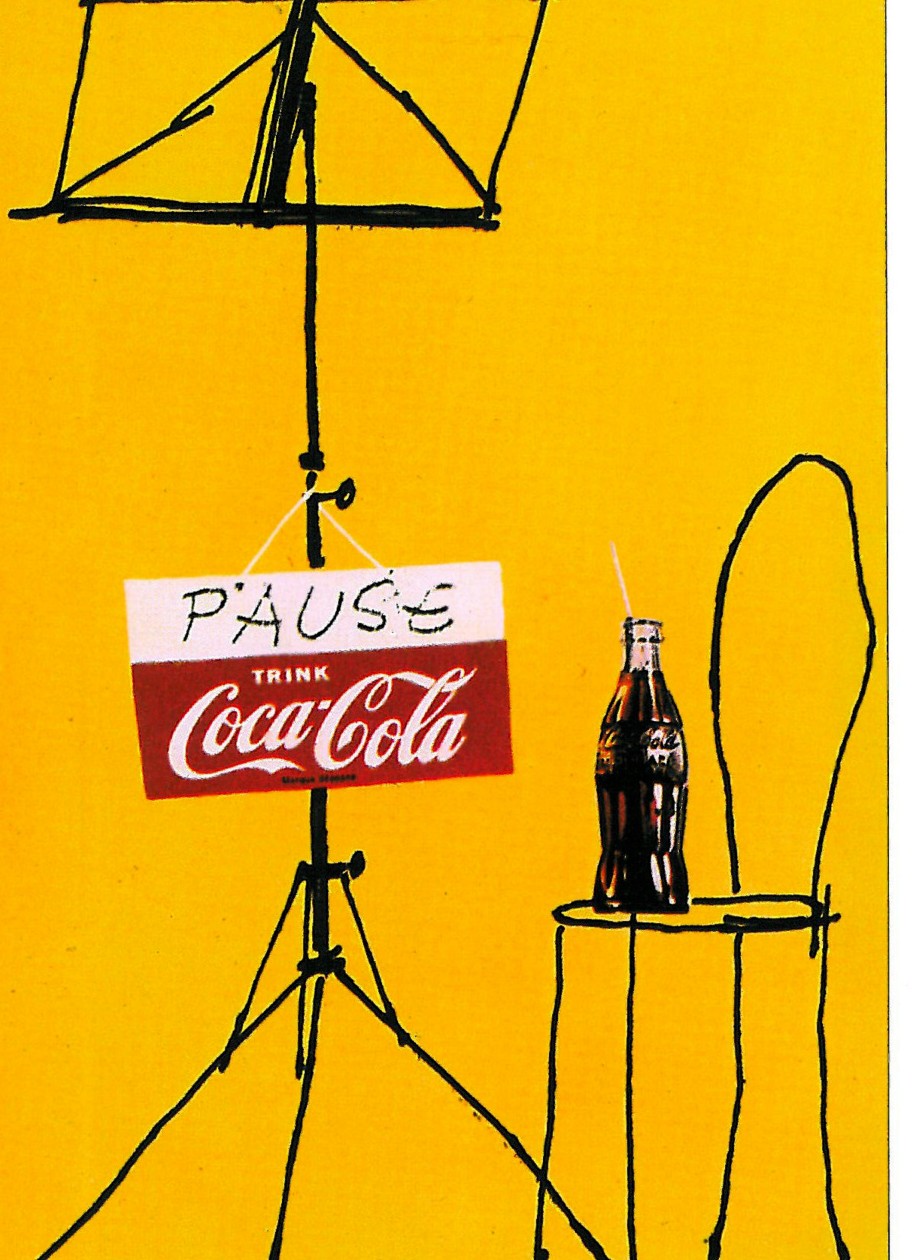
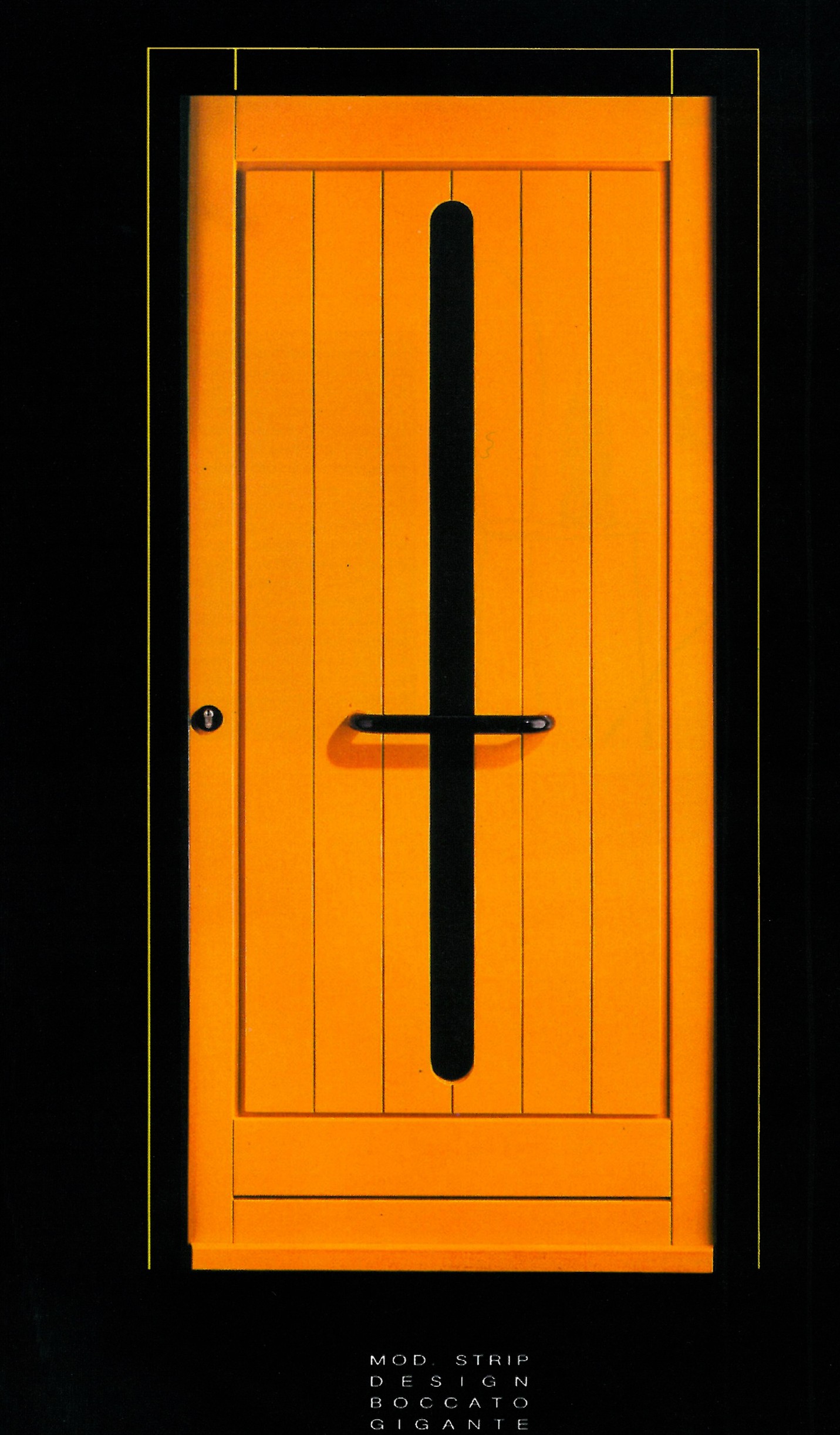
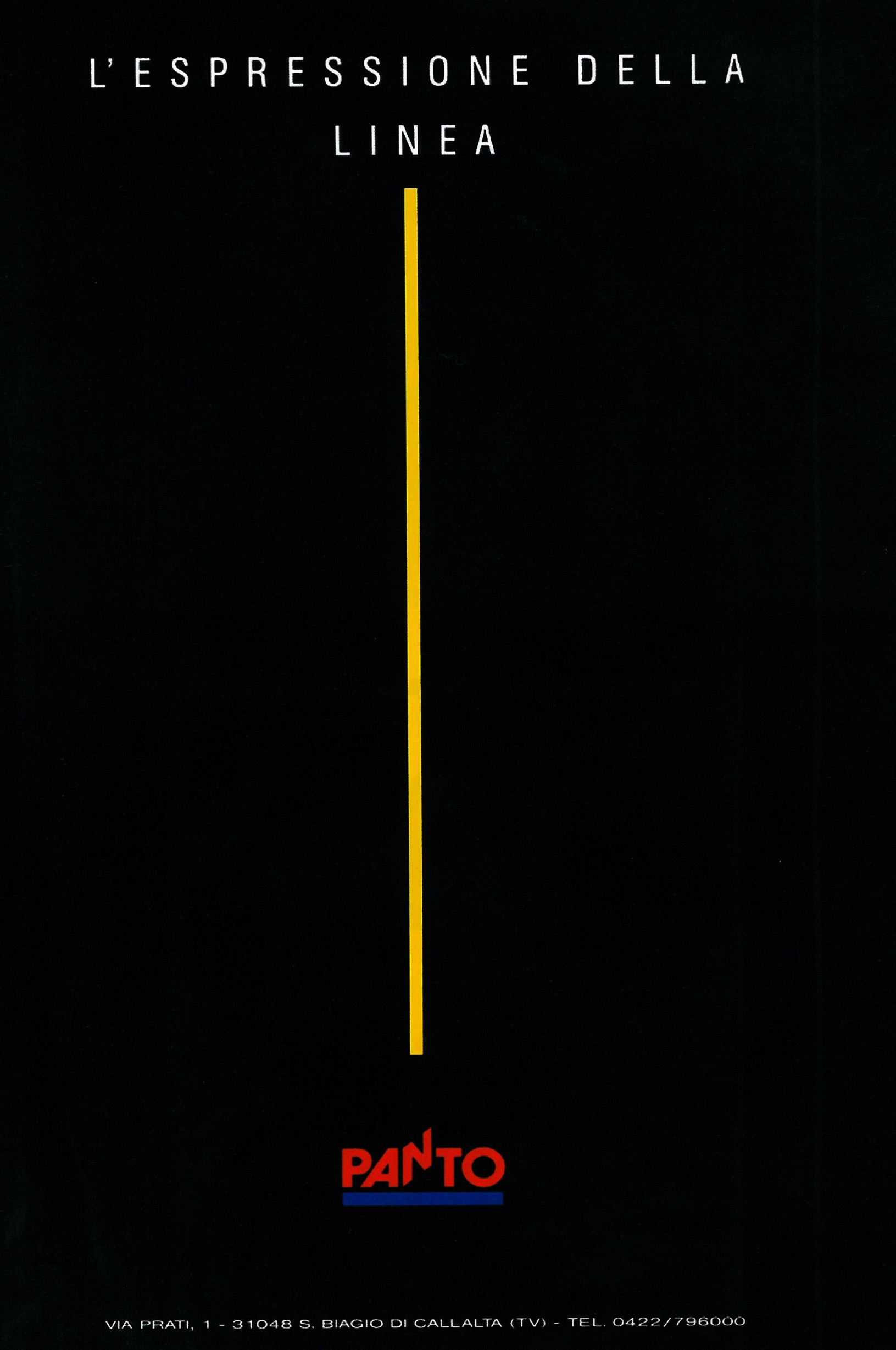
Advertising, in respect of the kind of communication and message-transmission, can be divided into two groups: direct communication, by displaying the product itself, the brand name of the product or both together; or indirect reference to the product with emphasis on a particular characteristic of it. Direct advertising is usually used in the continuation of advertising for a product — a product that has previously been introduced through different media in advertising programmes and does not need to be introduced again. But for introducing a new product, the indirect advertising method is usually used. In our country, however, mostly — both for new products and for products that are well known — the direct advertising method is used, not because of any reasoned and logical preference of the designer and the commissioner of the advertisement, or in exceptional cases the advertising consultant, but rather because of a simplistic reading of the nature of advertising communication.
Usually, when the advertising of a product is being considered that more or less has a sales record in the market, the first factor that is considered is the past sales of the product and the form of advertising on its basis. Here the basis of study is the causes and the principal points of the success or failure of the product in the past, and the topic headings of the matters under examination in this case may include the following:
1. The history of the product's offering
2. The market's reception of the product
3. The quality of the product in respect of function, after-sales services, the distribution system and the form and beauty of the product
4. Past advertising activities and the results obtained from them
Careful examination of these points can open the way for advertising planning for the future. In advertising for products without a history, the principal aim is to make a name or a previously unknown trade mark famous in the market and to attract the desired consumers. Here, without playing tricks on people, one must first prepare a mental ground for them and, using market-research information and the social psychology of the audience, gradually announce the means and advantages of the new product. Here emphasis on a particular advantage of the product that similar products do not have can be effective and positive. This emphasis can bring about subject unity of the advertising and continuity of the manner of graphic expression. One of the causes of the dispersion and confusion of subject in many advertising notices is the disregard of this very point, and it makes an advertising page turn into the chance sum of the bulk arrangement of its parts.



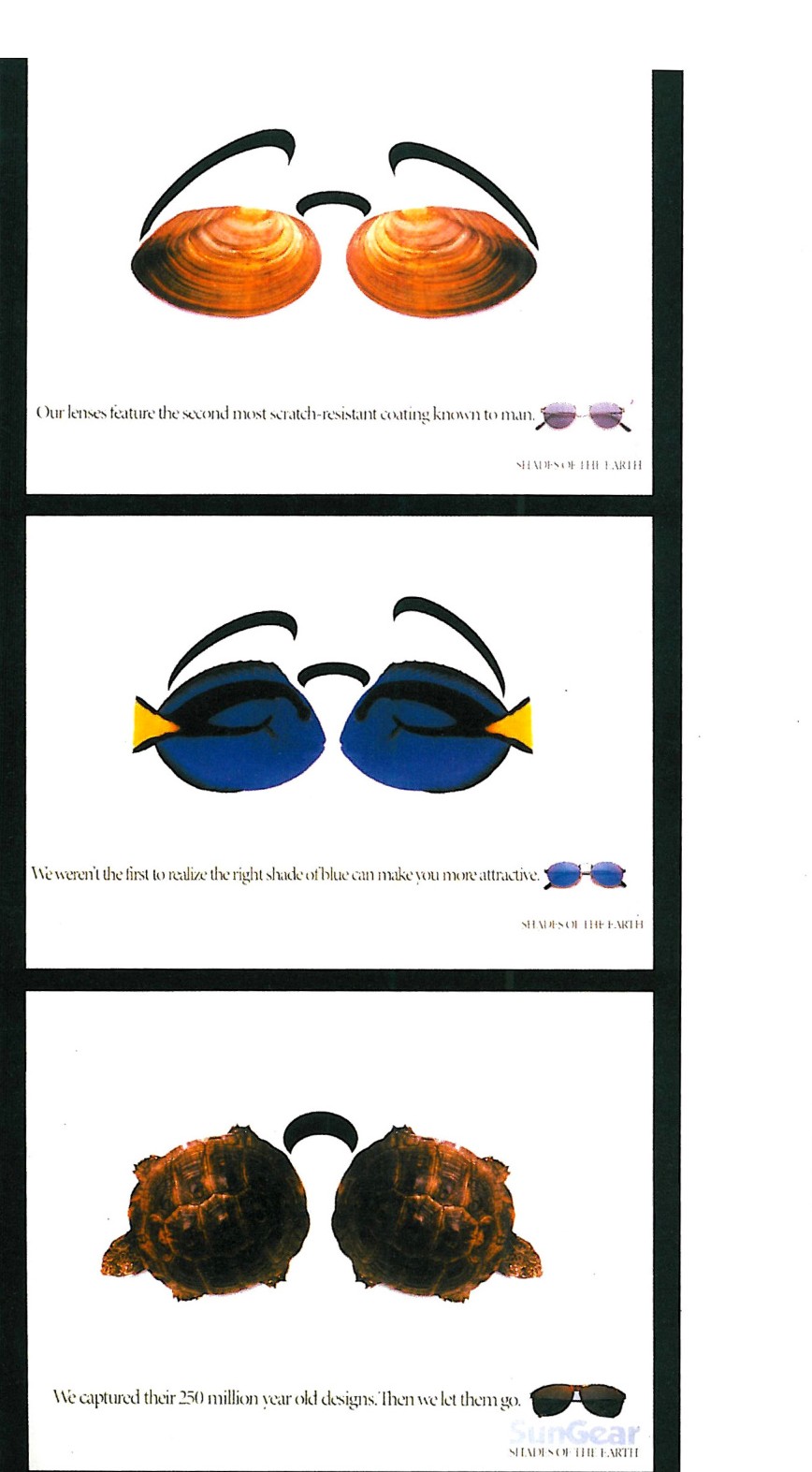
The weakness of magazines' advertising graphics can be seen as stemming from a weakness in two areas: planning and strategy, and the techniques of idea-finding and execution. Weakness in advertising plan and strategy relates to the knowledge of advertising and to the methods of using a suitable advertising plan to reach the desired sales and to obtain a market share commensurate with the means of investment and production. Weakness in the techniques of idea-finding and execution stems from the absence of an artist in graphic design.
Careful thinking about the characteristics of the product and its qualities that can create the desire to buy, on the one hand, and correct information about the standing of the medium through which the advertisement is published and the appropriate tone for the audience on the other, are essential for maximum effectiveness.
The best advertising notices of Memar in the past year
Parallel to the expansion of the publication of Memar magazine and its winning of a leading position in professional information and the construction industry, the demand of the producers and suppliers of construction materials and engineering services for printing advertisements in the magazine has been increasing. The aim of advertisers is to introduce their products and services so as to attract consumers' attention and compete with the producers and suppliers of similar products and services, by enumerating the qualities and advantages of the products and services they produce and offer.
The task of an advertising notice for construction products and engineering services is not to provide all the technical and specialist information needed by the holders of the engineering profession. The advertising notice should be able, by the correct and intelligent use of visual means and the affective potential of the particular communicative space of the medium it is using and within the limited opportunity that this communicative space affords, to draw the attention of the professional to the important point it wants to tell him. The manner of telling this important point should have such power in drawing the professional's attention that he cannot ignore it and cannot refrain from contacting the producer or supplier in order to obtain technical and specialist information about it.
So the task of an advertising notice is to draw the consumer's attention and induce him to a follow-up contact in order to obtain more information. Giving information beyond this amount is effective only if it does not crowd the principal message and does not take the place of the more complete information that the consumer can obtain through subsequent contacts and inquiries.
Another important matter we mentioned is the communicative space of the medium. Architectural magazines, because they introduce the leading works of architecture and design and the visual arts — besides their scientific, educational and informational dimension — are themselves counted among artistic objects. For this reason, artistic quality is one of the principal values expected by Memar's readers. So producers and suppliers who choose Memar to introduce their products and services should place the artistic quality of their advertisements at the same level as the magazine's.
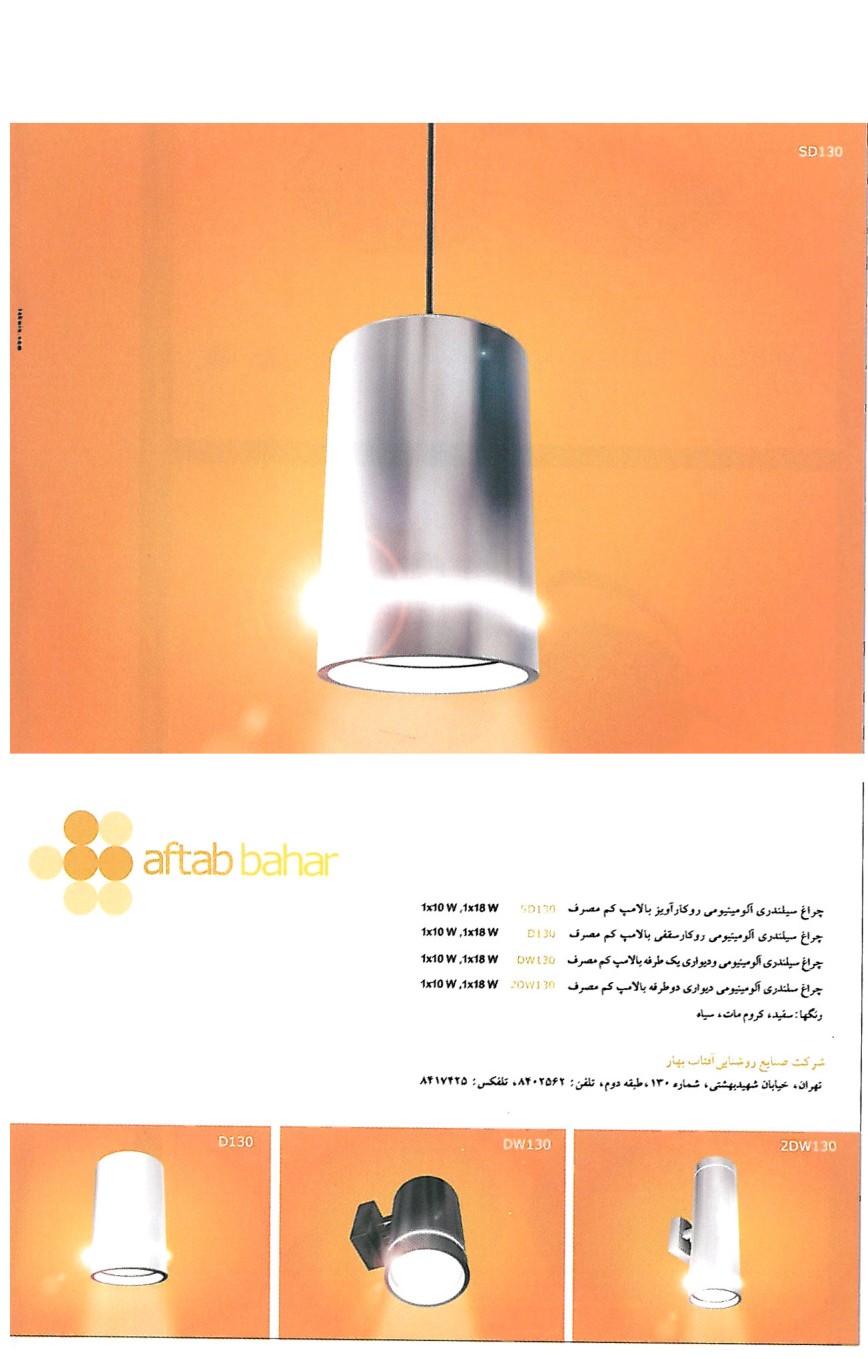
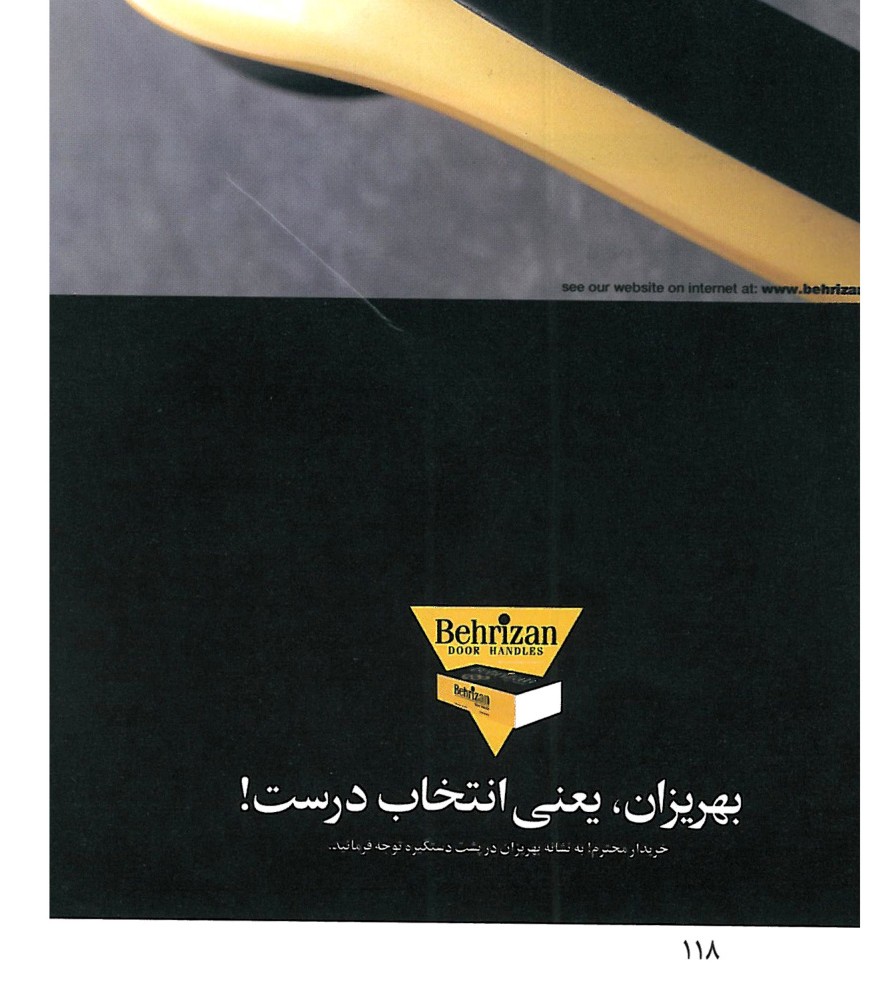
Last year, in order to convey the magazine's view to the advertisers — on the basis of the principles and standards mentioned and on the basis of the successful experiences of advertising graphics in the world's reputable architectural magazines, and also with particular attention to preserving the Iranian identity of visual communication and especially the use of the Persian language and script and its pictorial possibilities — out of all the advertisements, two advertisements — that of 'Aftab Bahar' printed in issue 18 and that of 'Behrizan' printed in issue 17 — were chosen as the best advertisements of the past year. The Behrizan advertisement was placed first because of its emphasis on the use of Persian script, and the Aftab Bahar advertisement was placed second.