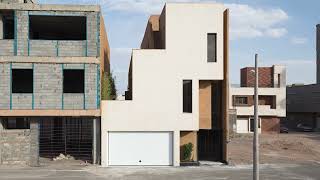
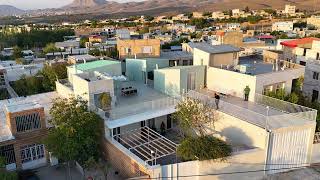
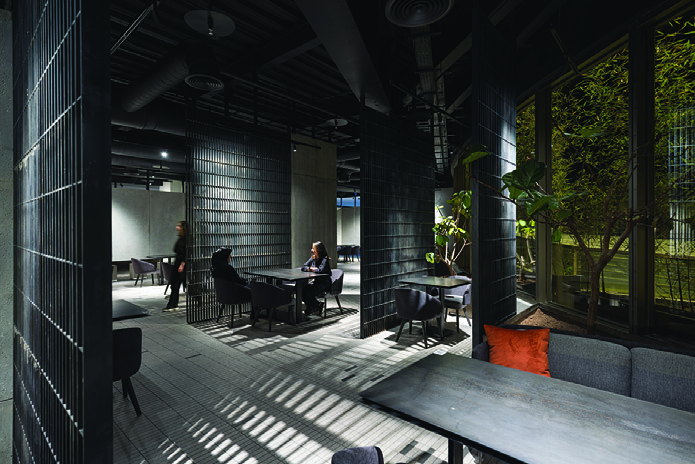
Evaluating Iran’s architecture today is difficult precisely because we do not yet possess an image of what ought to be called Iran’s contemporary architecture. Today’s architecture in Iran, as much as it has matured, and in the course of emerging from the rises and falls of its scattered experiments, from a thin stream with very limited impact, is worth no more than a fragmentary picture. Until this fragmentary and disjointed picture is transformed into a coherent and continuous one — until the picture that can serve as the basis for evaluation is ready — it would be better if the endeavors that have begun in this direction reach fruition sooner, for only through synthesizing and evaluating the totality of experiences will it become clear which architects, which works, which professional institutions, and which scientific and educational currents are the true representatives of the country’s sustained and determining architectural movement. Then, this sustained and determining movement will be able, with the acquisition of broad public support, to add to the force of progress and the power of influence.
Like all intellectual, political, and industrial transformations arising from modernity, our architecture today is also adoptive-reactive. This kind of adoption — naturally a scholarly and deliberate adoption — in modernizing the entire enterprise of building and urban planning, has left behind decades of listless creation and production of architecture in Iran. This condition was not the result of a single incidental cause. The increase of wealth and prosperity and the concentration of society’s energies on creation and production are necessary. In the present circumstances, such conditions do not exist. Architecture cannot endure harsh economic conditions and is not among those arts that can be sustained solely by the nourishment of intellectual and ethical forces. Architecture, for building and promoting methods, itself requires public prosperity and wealth. When foundations are established and methods gain currency, even if public prosperity once again recedes, the established foundations and methods continue on their own momentum. But when the life of old foundations and methods comes to an end, replacing them with the foundations and methods of a new era demands a fresh period of prosperity and wealth.
Ali Akbar Saremi belongs to the second generation of architects of the new era and the third decade of architecture graduates in Iran. His successive winning of top positions in major architectural competitions over the past decade attests to this claim. Before the arrival of the Qajar era, when architecture still drew upon solid foundations and influential methods, a new age should have begun — with its own particular foundations and methods. But that enduring era of prosperity and wealth necessary for the realization of this new age of architecture has not yet arrived. All architects of the new era in Iran have worked under such conditions.
The first generation had the fortune of working during the period of expansion. In the initial stages, when the spread of modern architecture was gaining pace, expectations of modernization were rising, and the cities were growing rapidly, the inherited culture and taste of urban life, whatever remained of it, had been consumed; the infrastructure of traditional building skills had been dismantled as well. When the turn came to the second generation, the rapid pace of change arrived at a point where much had been destroyed. The expansion of cities accelerated; demands for modernization rose; and under these crisis conditions, no one thought of establishing foundations and teaching methods of industrial construction.

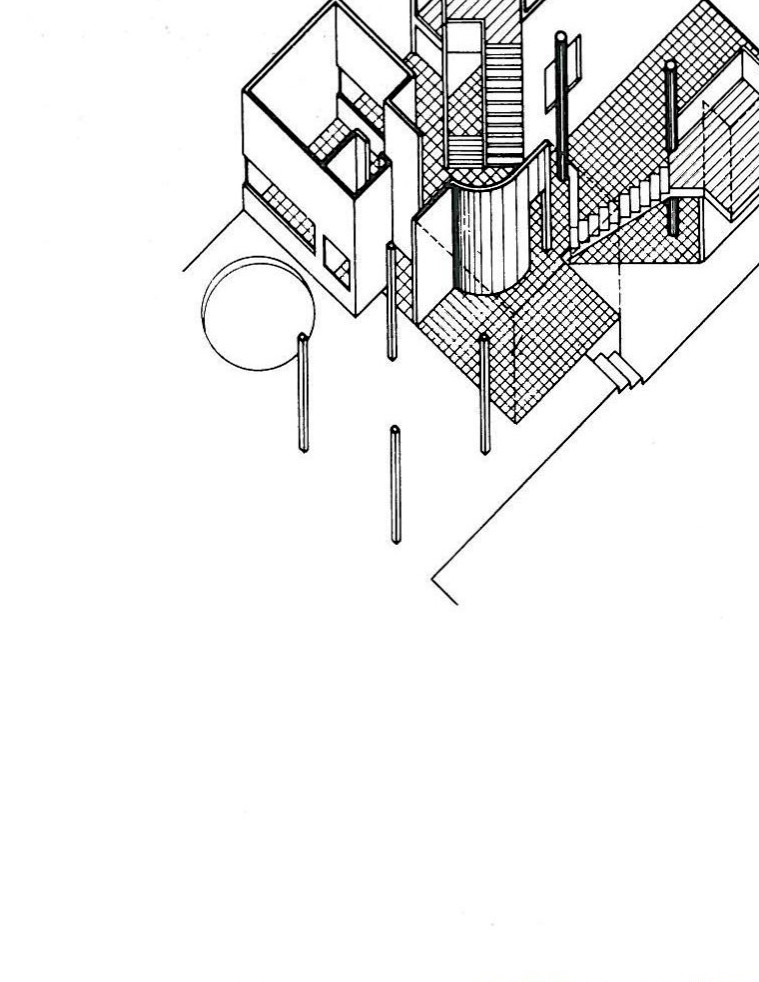
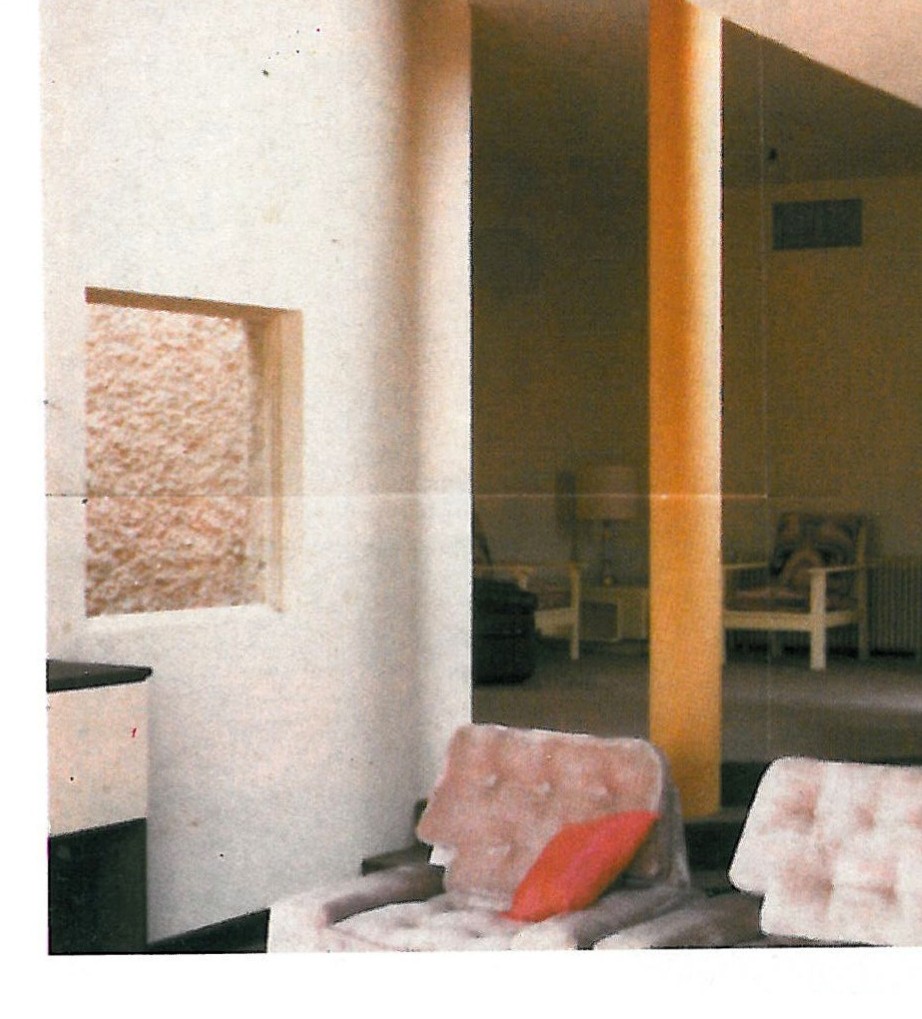
Ali Akbar Saremi, who graduated in 1347 (1968) from the Faculty of Fine Arts at the University of Tehran in the field of architecture, went to America in 1349 (1970) to continue his studies. About seven years of his education in America coincided with the height of the revisionist movement in the principles of modern architecture, and it is no wonder that Saremi belongs to the revisionist current within Iran itself. The famous group of Five Architects of New York, who brought architecture loudly and flamboyantly into public discourse; Robert Venturi, who also had an evident influence on second-generation Iranian architects — and even before them, the opening of the door of revisionism with new ideas and works — but Saremi, by his own account, had the good fortune to study for a time at the University of Pennsylvania under the tutelage and influence of the comprehensive and influential personality of Louis Kahn, for whom architecture was above all an experience of space.
Saremi himself, in an essay (Abadi 21, Summer 1375/1996), in which he undertakes a particular review and evaluation of the student projects of his period of study, holds the belief that despite the modernist teachings of the faculty — which, on the basis of paradigms derived from the works of the founders of modern architecture, taught simplicity, abstraction, and the elimination of ornamentation — each student carried within himself sediments of visual experiences and cultural attachments from the old environment of his life, and the formation of differences and distinctive features of their working methods in their student projects stemmed from these. The absence of specific theoretical instruction alongside practical work allowed the formation of these characteristics emanating from the sediments of past visual experiences and cultural attachments.
By his own account, he too — who, like the rest of the students, had come to America carrying within himself the sediments of particular visual experiences and cultural attachments from his old living environment — under the Platonic teachings and views of Kahn regarding the essence of architectural ideas, tried to organize his mentality. There, architecture came to mean for him, within the context of an infinite karbandi — an Iranian karbandi extending to infinity, an ever-expanding karbandi where each person builds one piece of it — and the point is that the joints of these pieces do not form a perfect geometric shape, yet they are part of that same complete totality that has expanded into the pattern of karbandi. This mentality, which Kahn’s teachings also confirmed, distanced itself from the rigid and severe functionalism of early modernism.
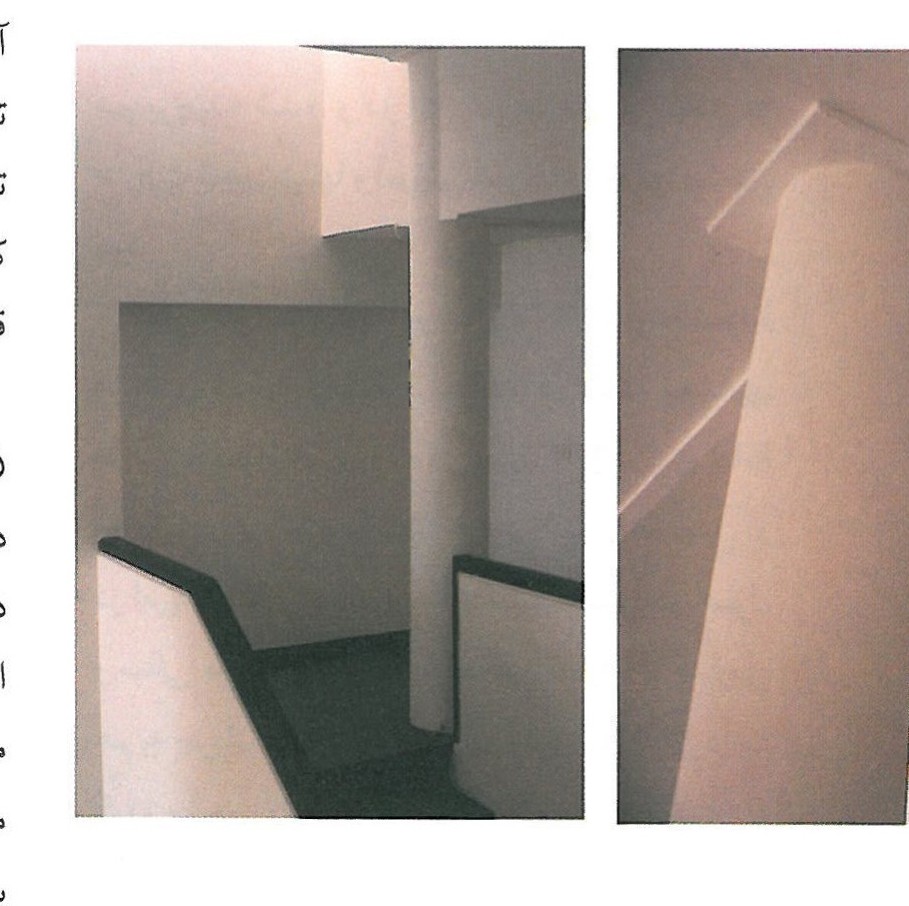
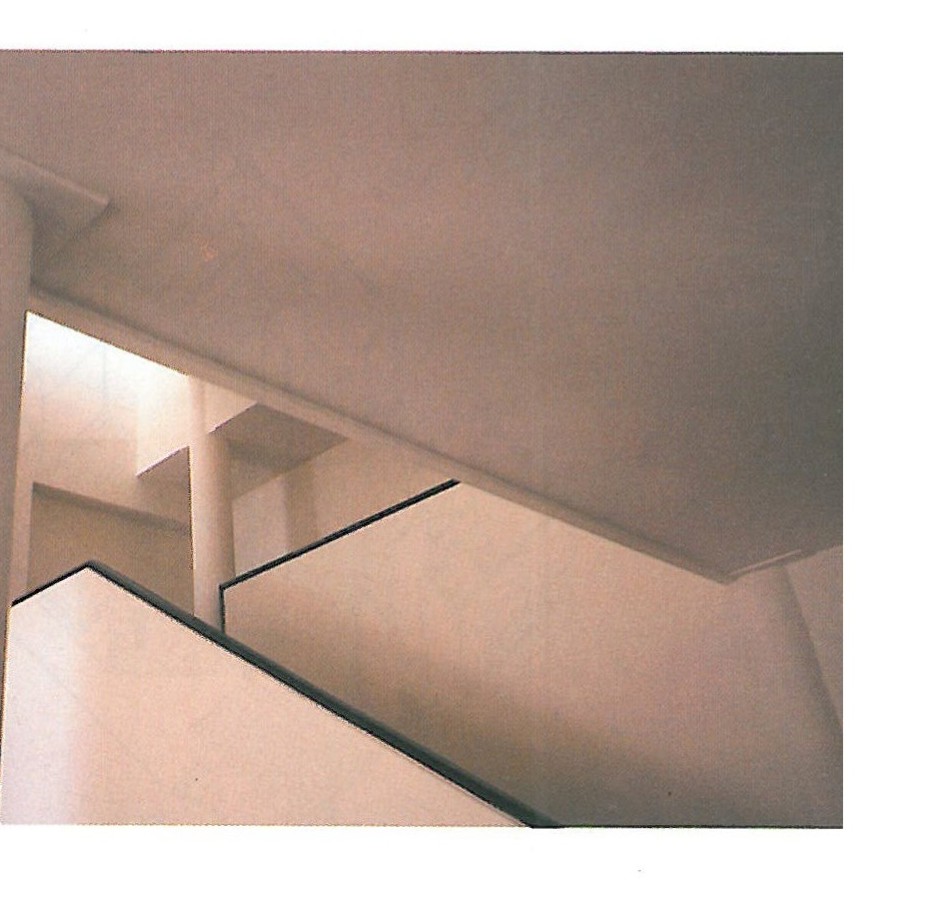
What we observe in Saremi’s works is the same thing that in the eyes of some of his critics constitutes one of his weak points and causes them to charge him with formalism. He does not attach much importance to the attention to details and dimensions that for some critics is an important criterion in judging and evaluating designs. For him, architecture is something simpler and less pretentious than what would warrant such strictness — but of course not that simplicity and modesty that just anyone can easily achieve. This is perhaps the same leniency that Venturi prescribed, which became a recurring model for imitators.
One can criticize Saremi that even a simple and modest design requires precise execution and the working out of details. He does not deny this, but his practice shows that engaging with the totality of the spatial experience is so sweet and satisfying for him that he has no qualms about neglecting details.
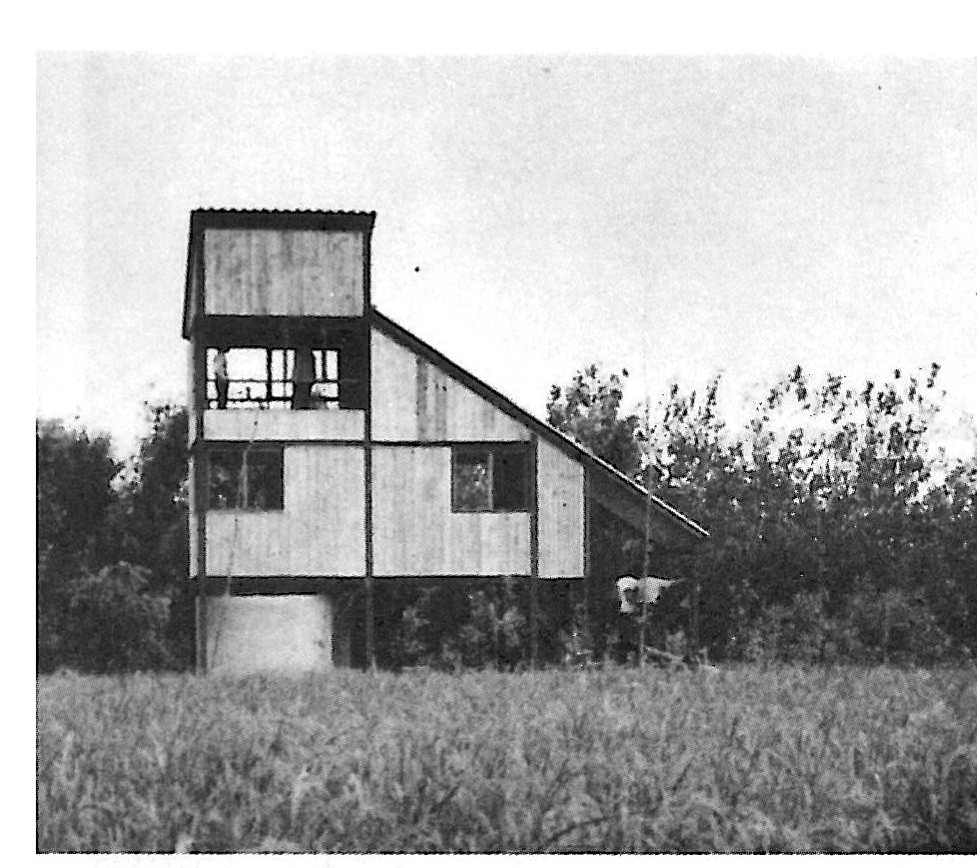
After an experimental venture building a holiday house for himself in Nowshahr (1351/1972) using discarded wood and salvaged materials, Saremi began his professional career alongside his academic work — which he has never abandoned — in 1351 (1972) with the design of private houses. Simultaneously, he collaborated with the office of Sardar Afkhami in designing buildings for Isfahan University of Technology.
About 25 years of Saremi’s architectural experience, based on a selection of works shown on these pages, can be divided into three clearly distinct phases: initial experiments in residential design, historical exploration in the experience of public buildings, and participation in major competitions. The first phase was mostly accompanied by collaboration with Taghi Radmard, while the second and third phases began in 1359 (1980) with Tajir Consulting Engineers in collaboration with Javad Bonakdar and Samad Baluch, and are still continuing.
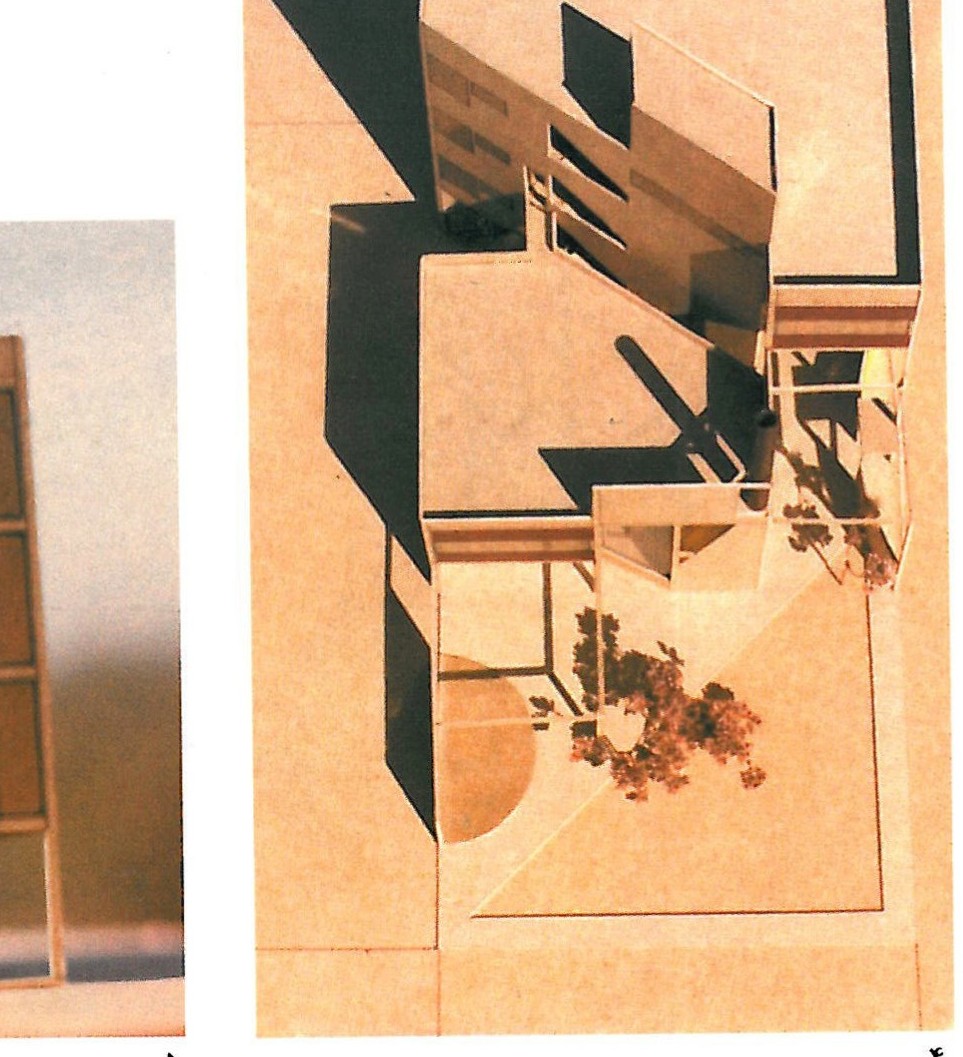
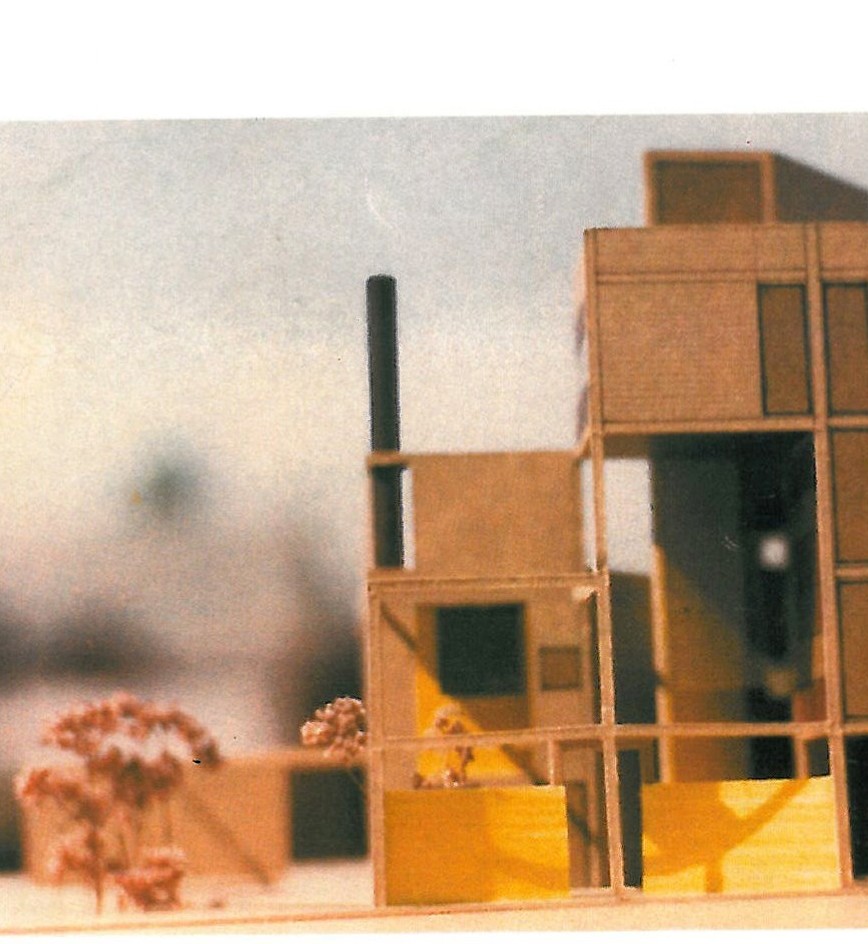
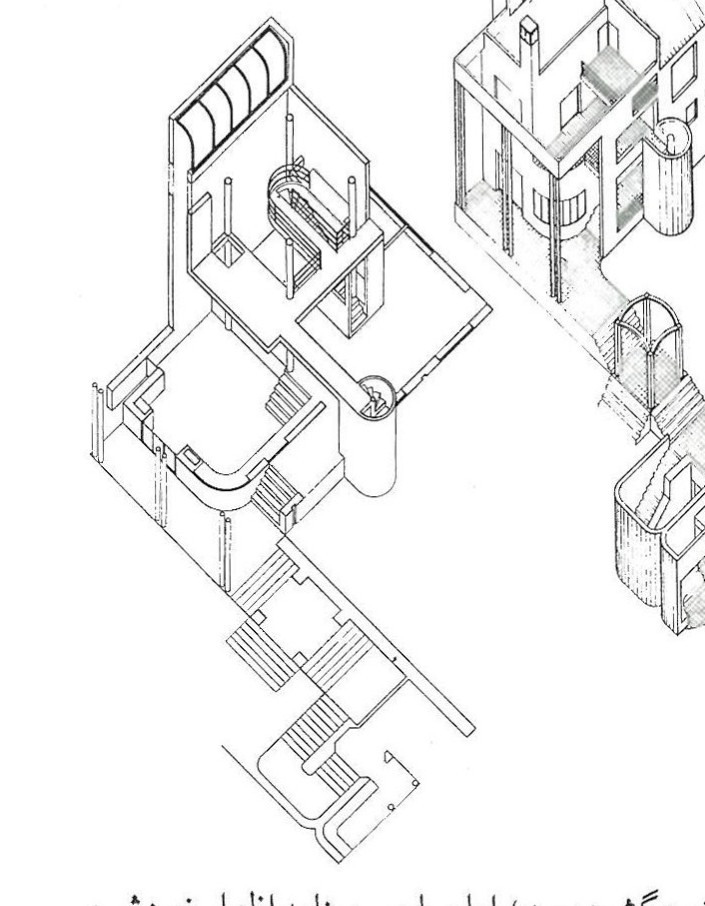
Expanding karbandi. An expandable volumetric system whose arms are open in space and invite space to combine with it and build new volumes. At the center of this system lie solid and closed volumes, and as the system extends outward toward open and infinite space, the density and thickness of volumes diminishes. As the dimensions of space decrease, stage by stage the density lessens, until it reaches a single plane or frame, and then a lone arm, a freestanding column in space. In this system there is no definitive boundary between architecture and the surrounding environment; architecture and space interpenetrate and overlap. In fact, architecture itself is part of infinite space that occasionally reveals itself from behind the invisible network of karbandi. Although expanding karbandi continues to be present in Saremi’s works, in the works following the residential design period, other tendencies have emerged that cultivate and adorn his karbandi system.
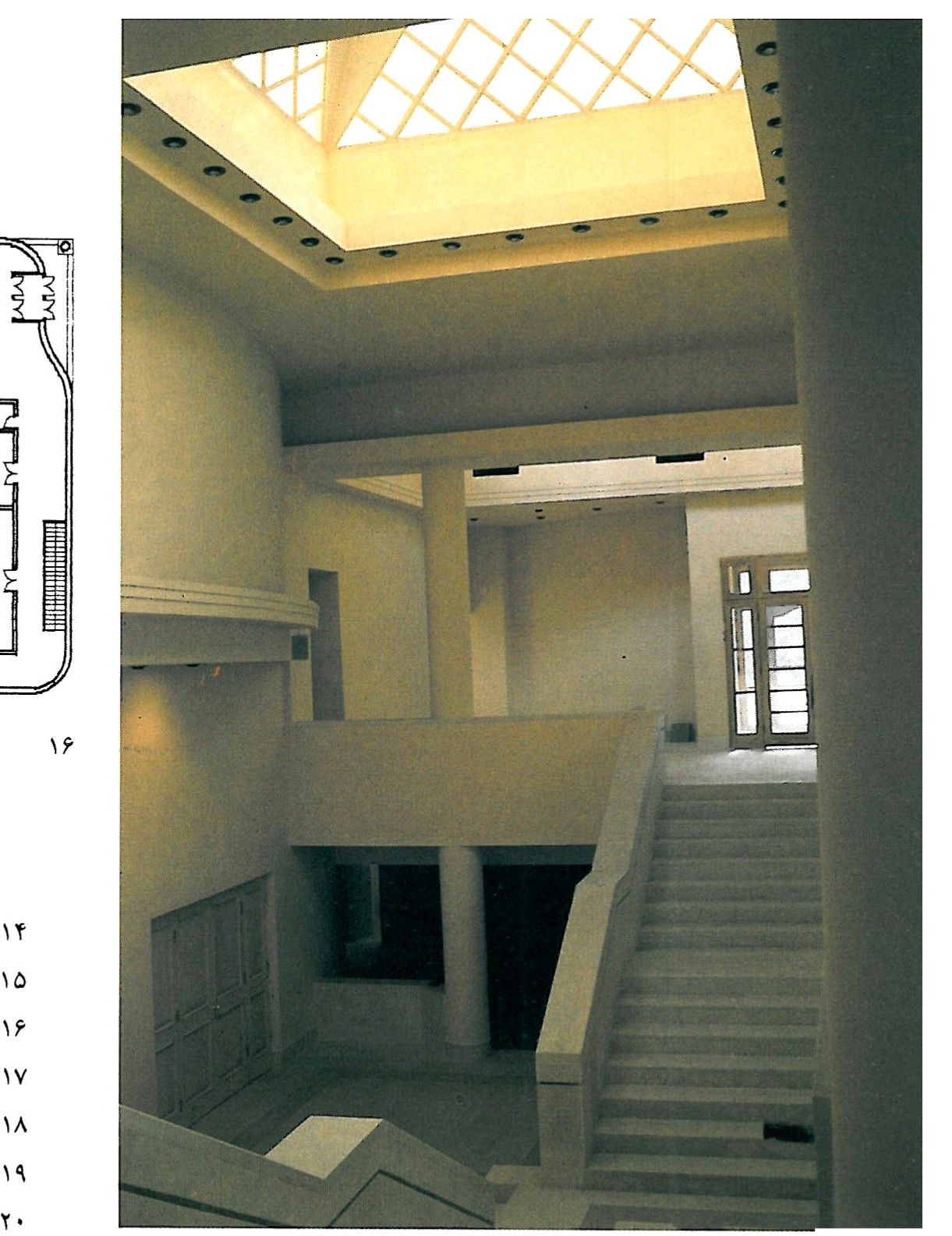
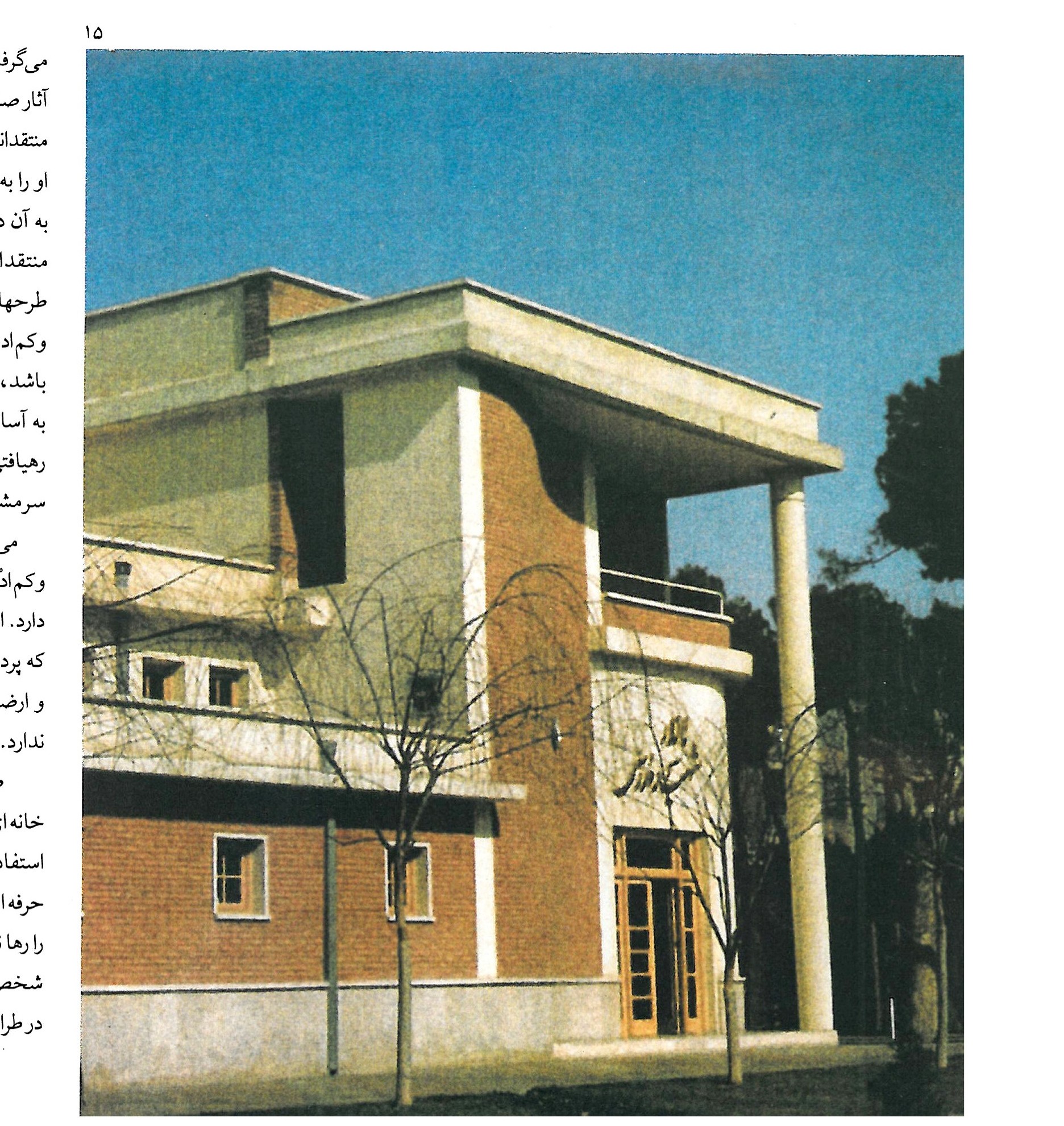
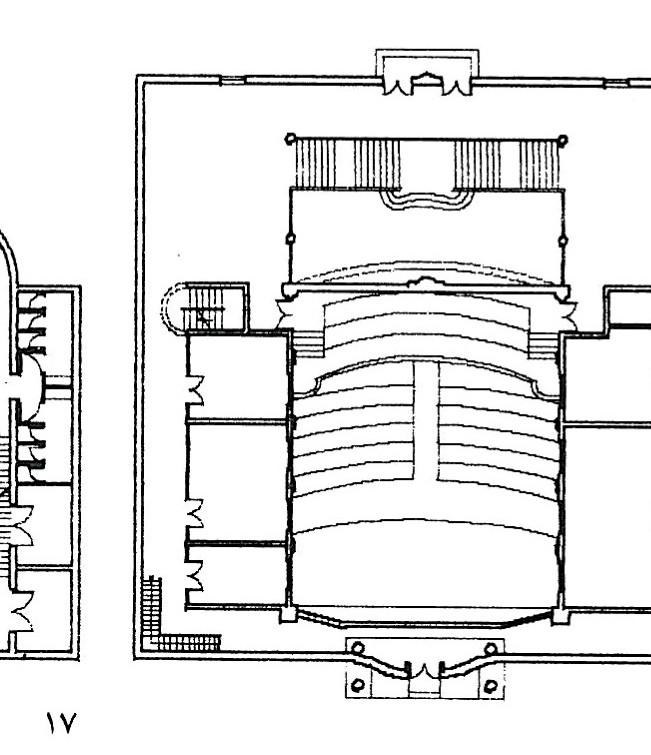
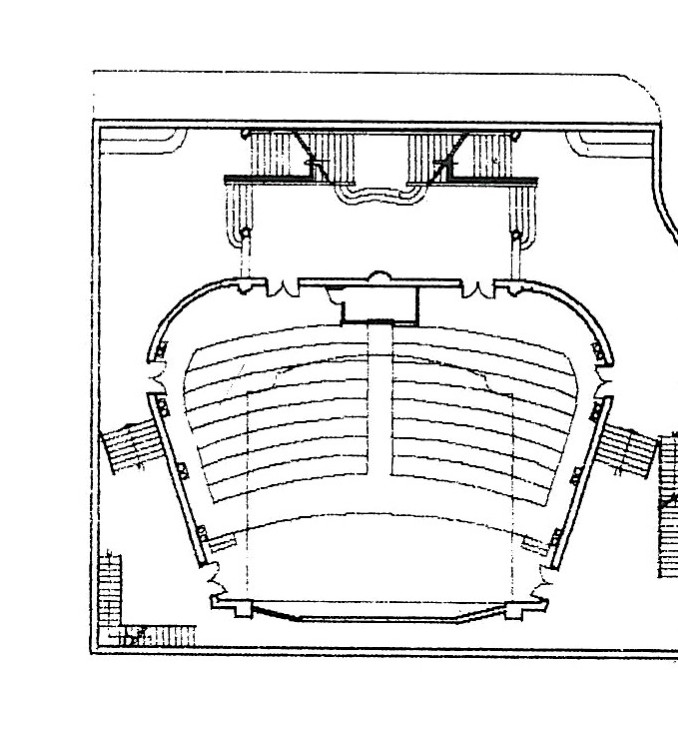
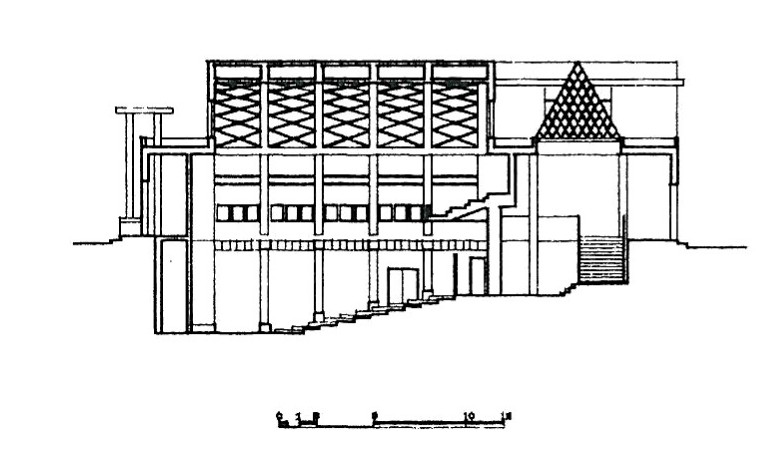
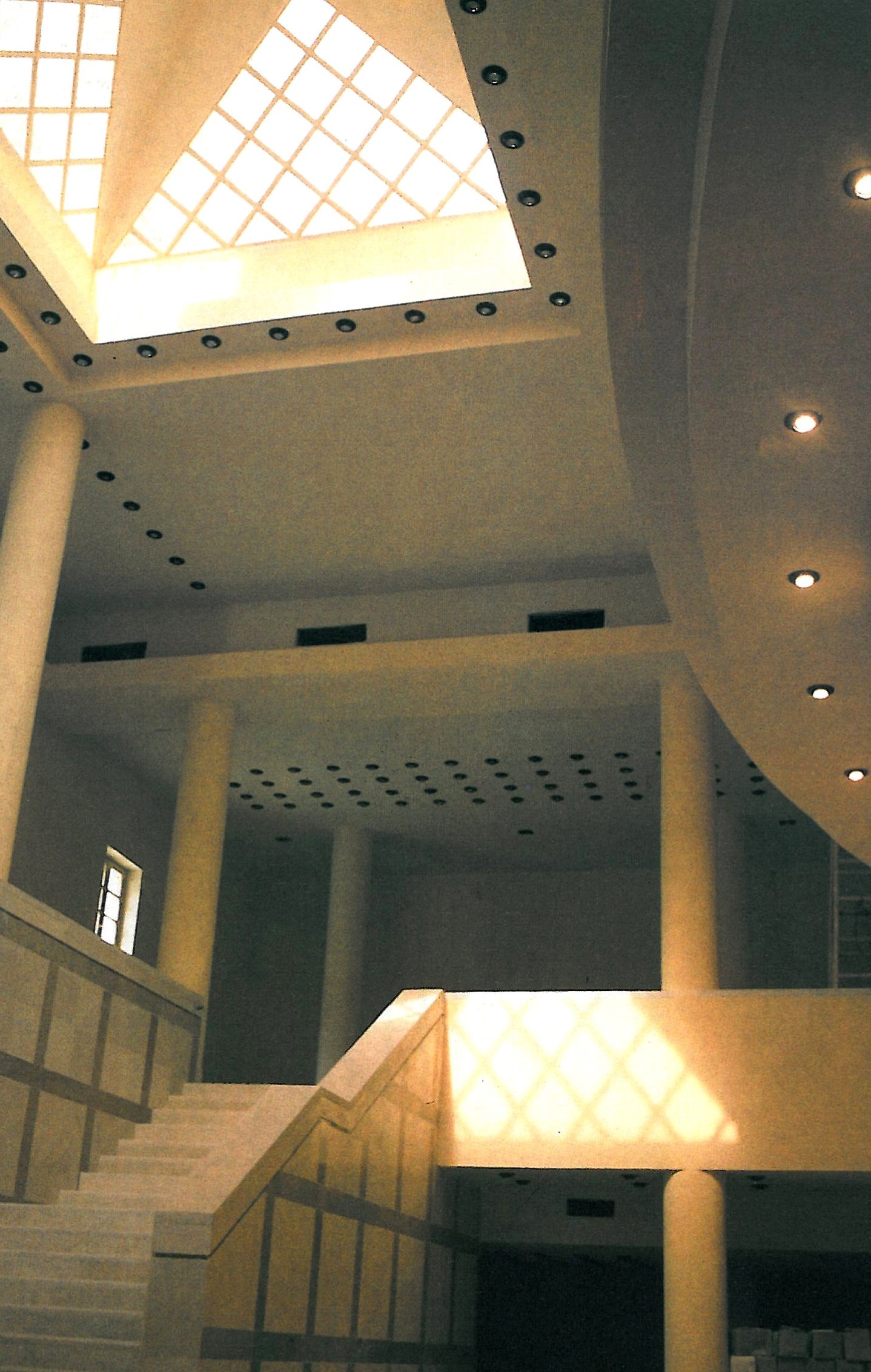
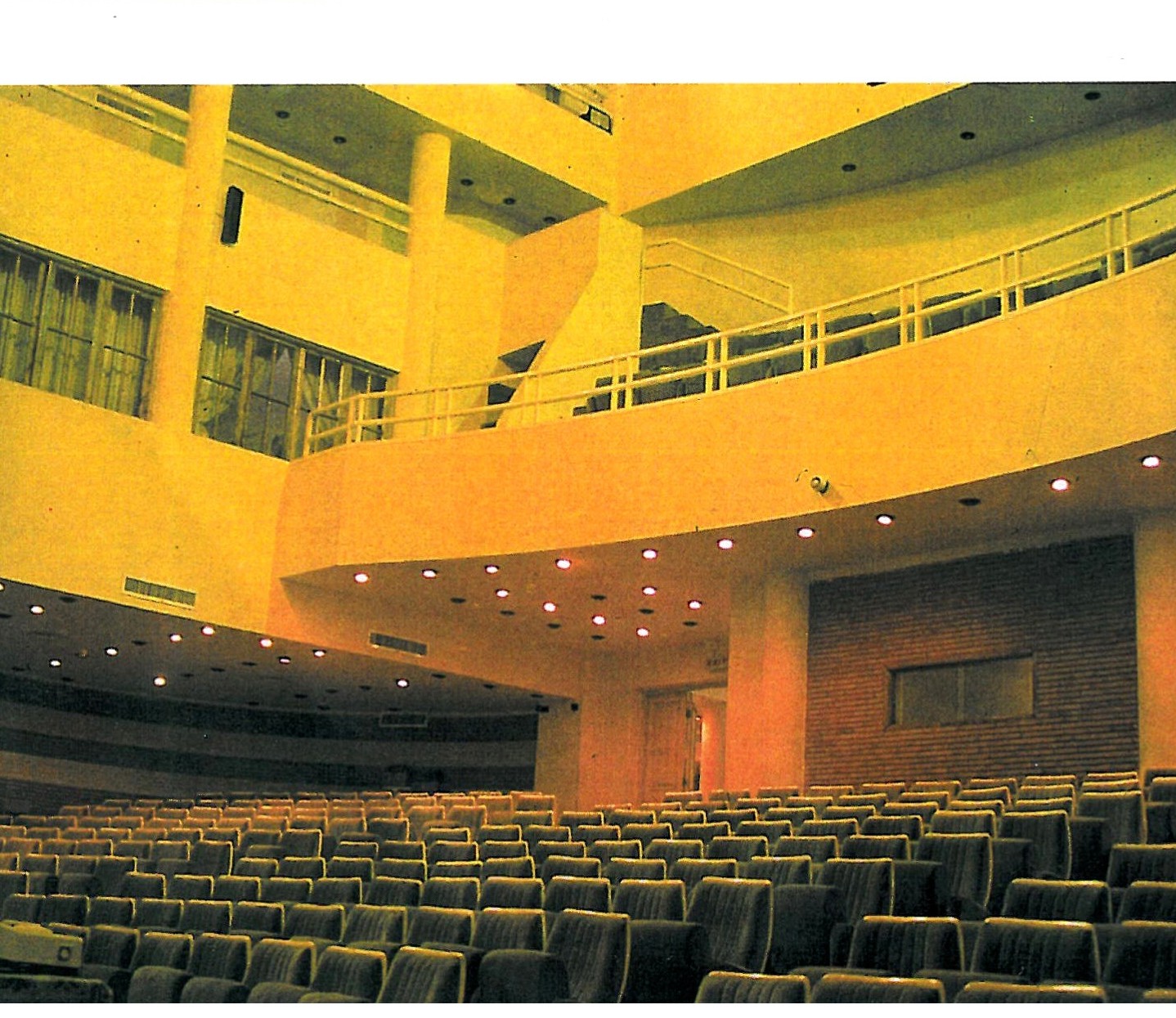
Project: Institut Pasteur Assembly Hall
Date: 1367 (1988)
Recognition: Selected for the Engineering Festival, 1375 (1996)
Firm: Tajir Consulting Engineers
Designers: Ali Akbar Saremi, Javad Bonakdar, Samad Baluch
Client: Institut Pasteur of Iran
Contractor: Asas Company
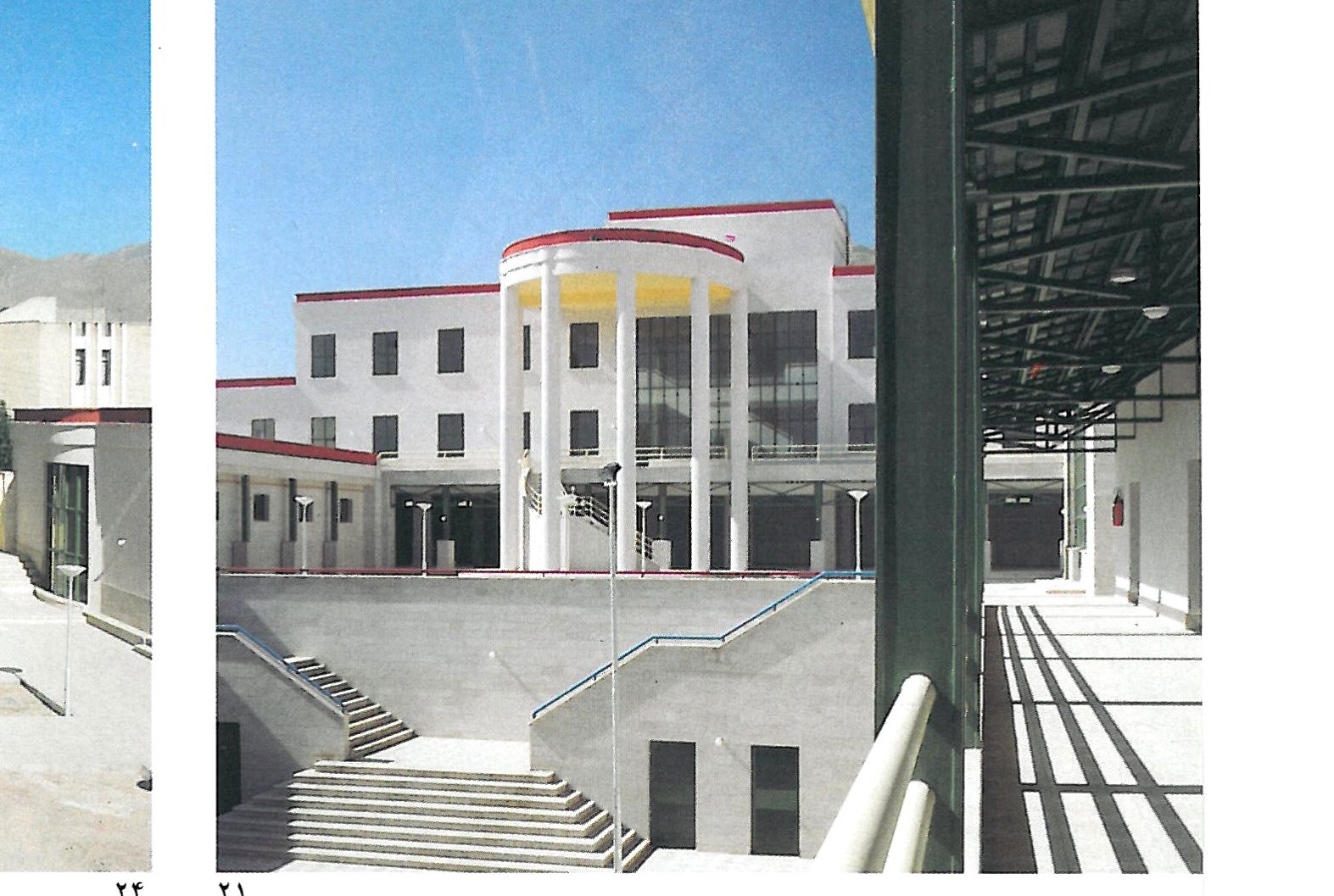
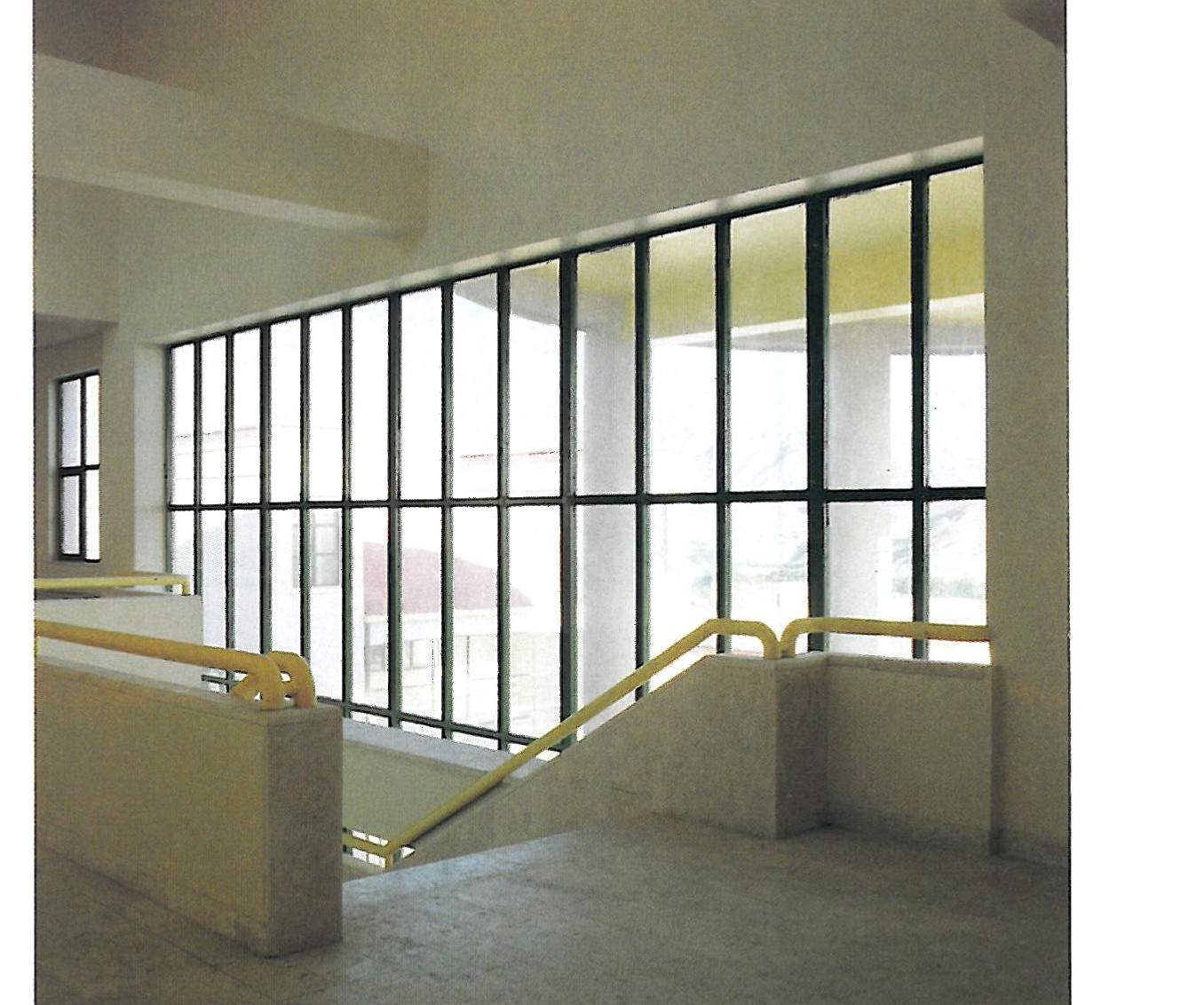
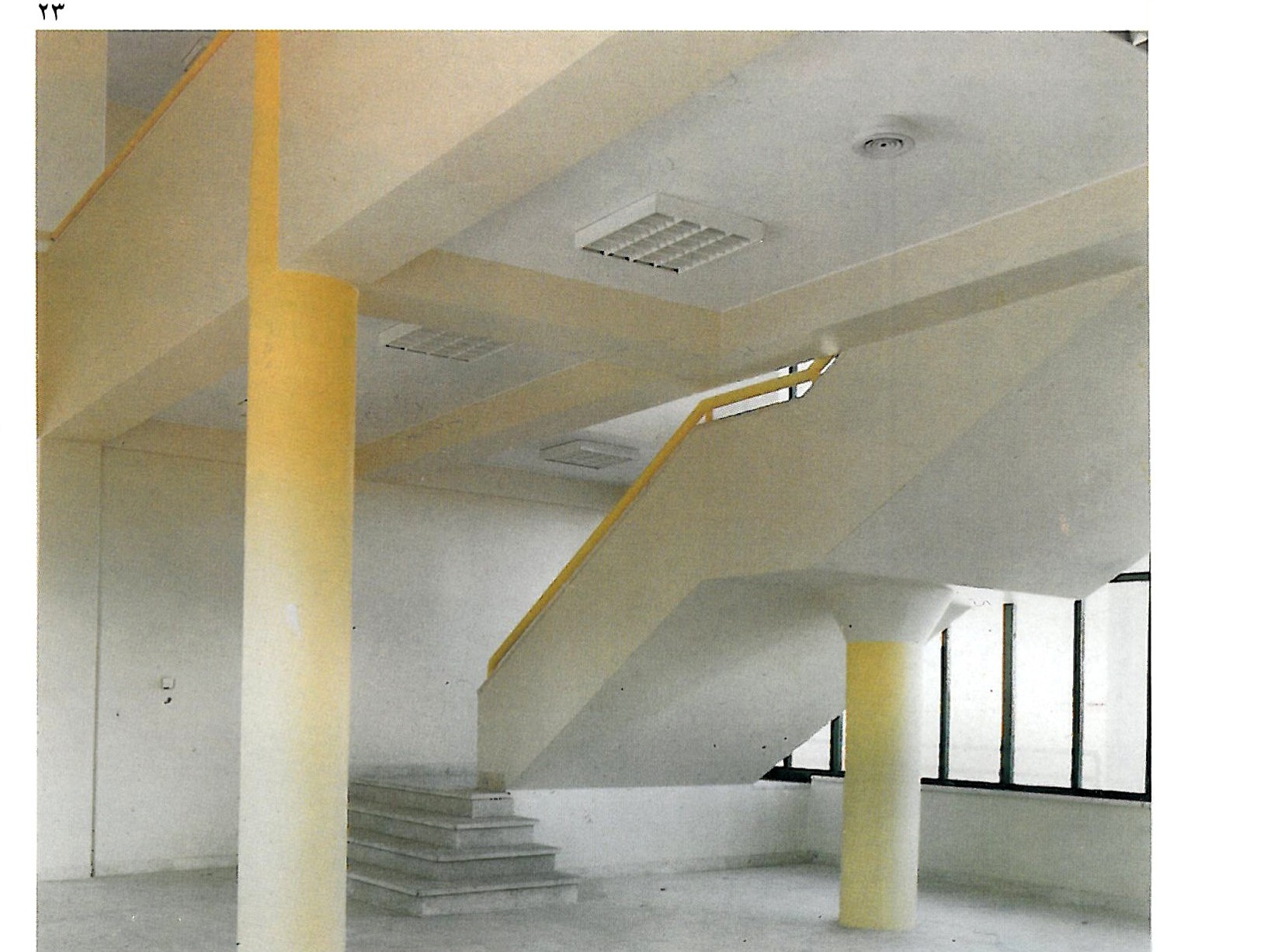
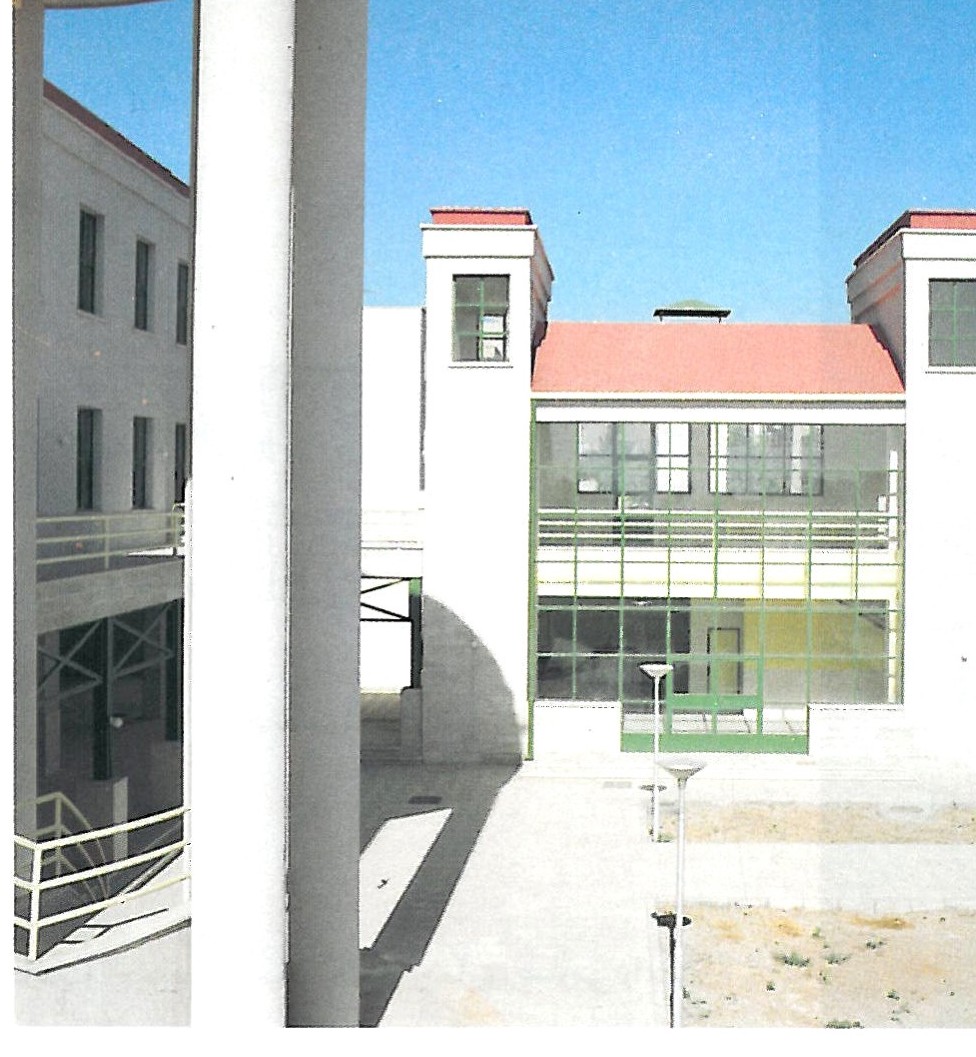
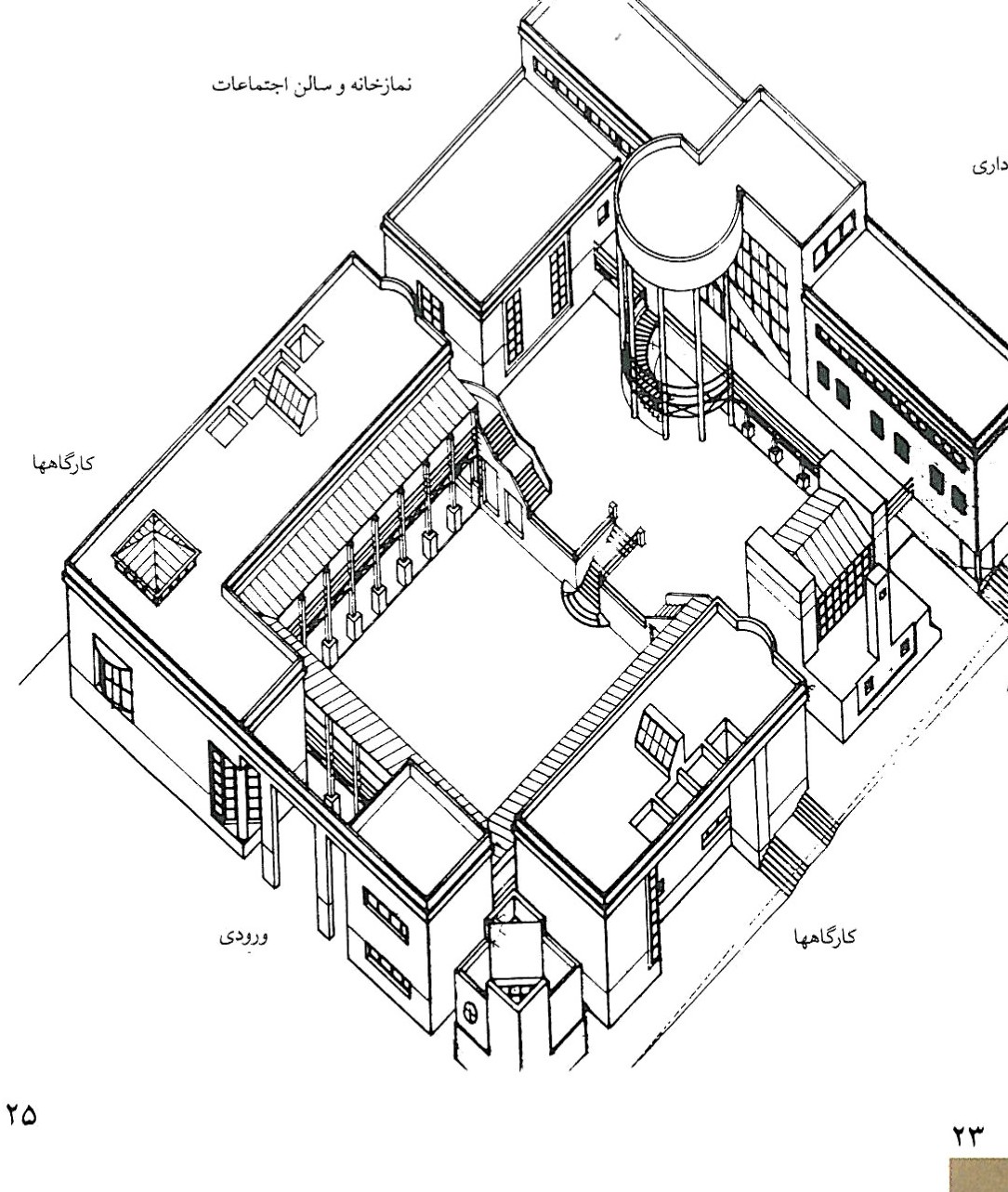
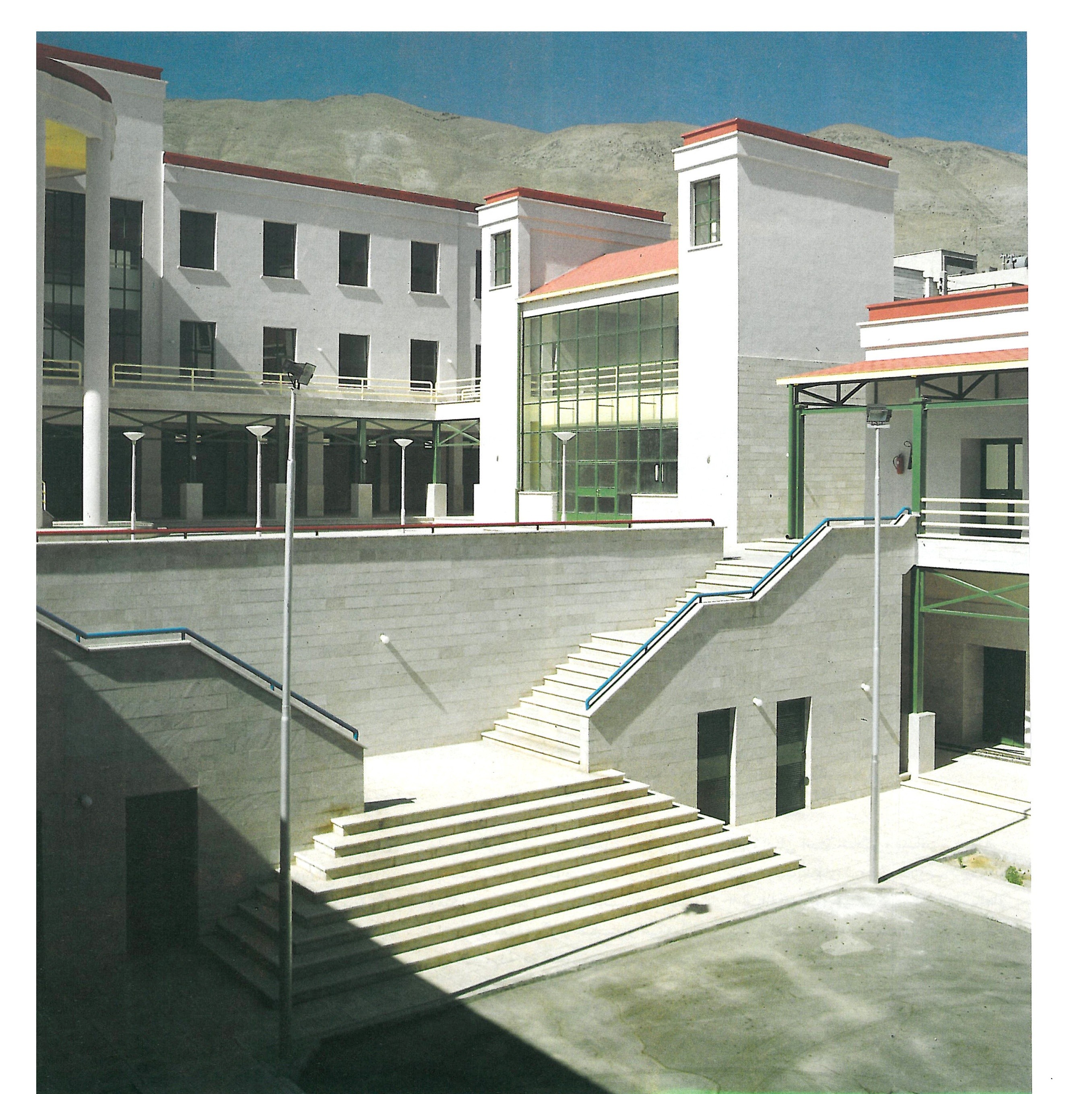
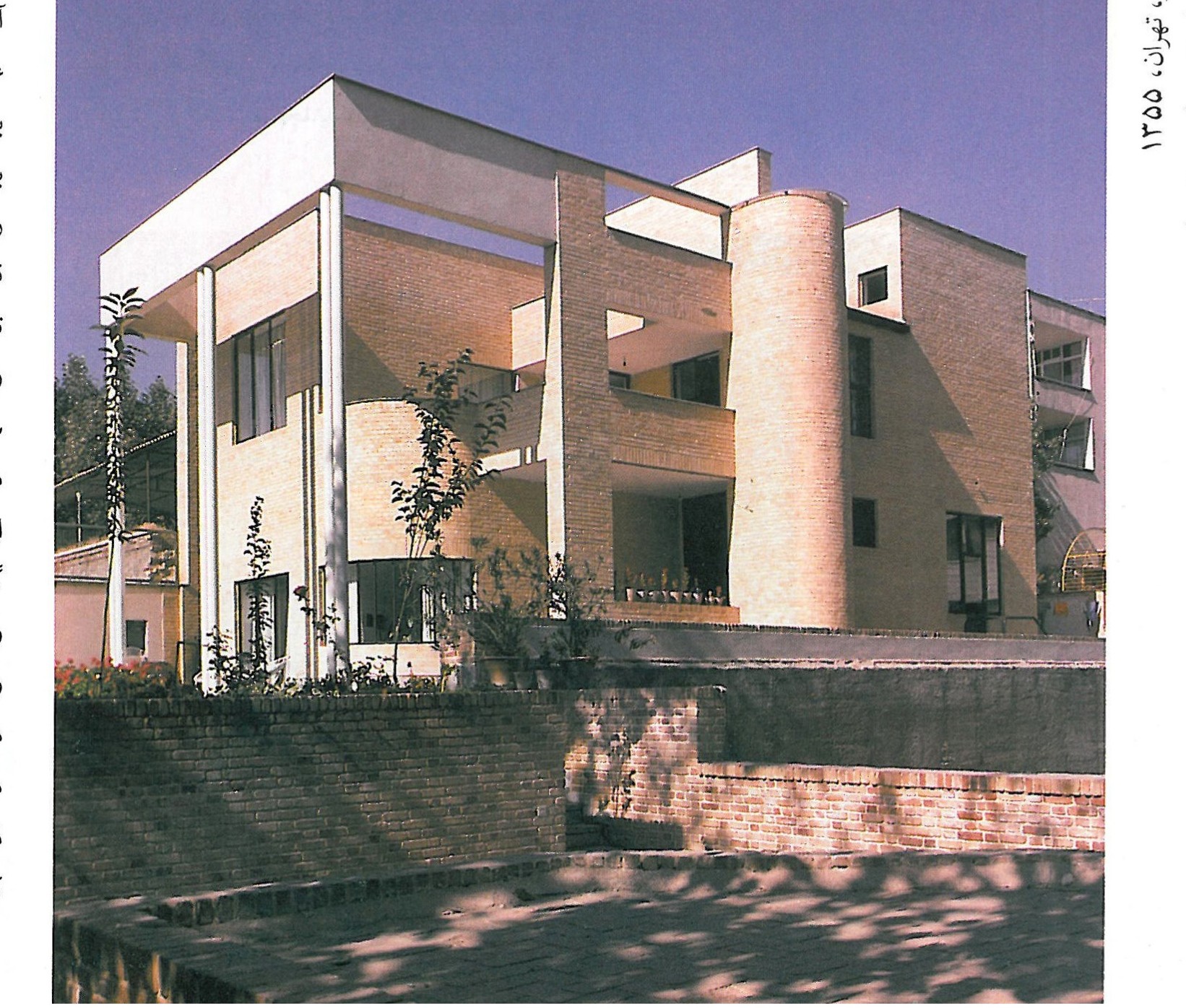
Project: Karaj School of Visual Arts
Date: 1369–1375 (1990–1996)
Firm: Tajir Consulting Engineers
Designers: Ali Akbar Saremi, Javad Bonakdar
Client: Ministry of Culture and Islamic Guidance
Contractor: Gueh-Sakht Company
Photographer: Babak Bashir
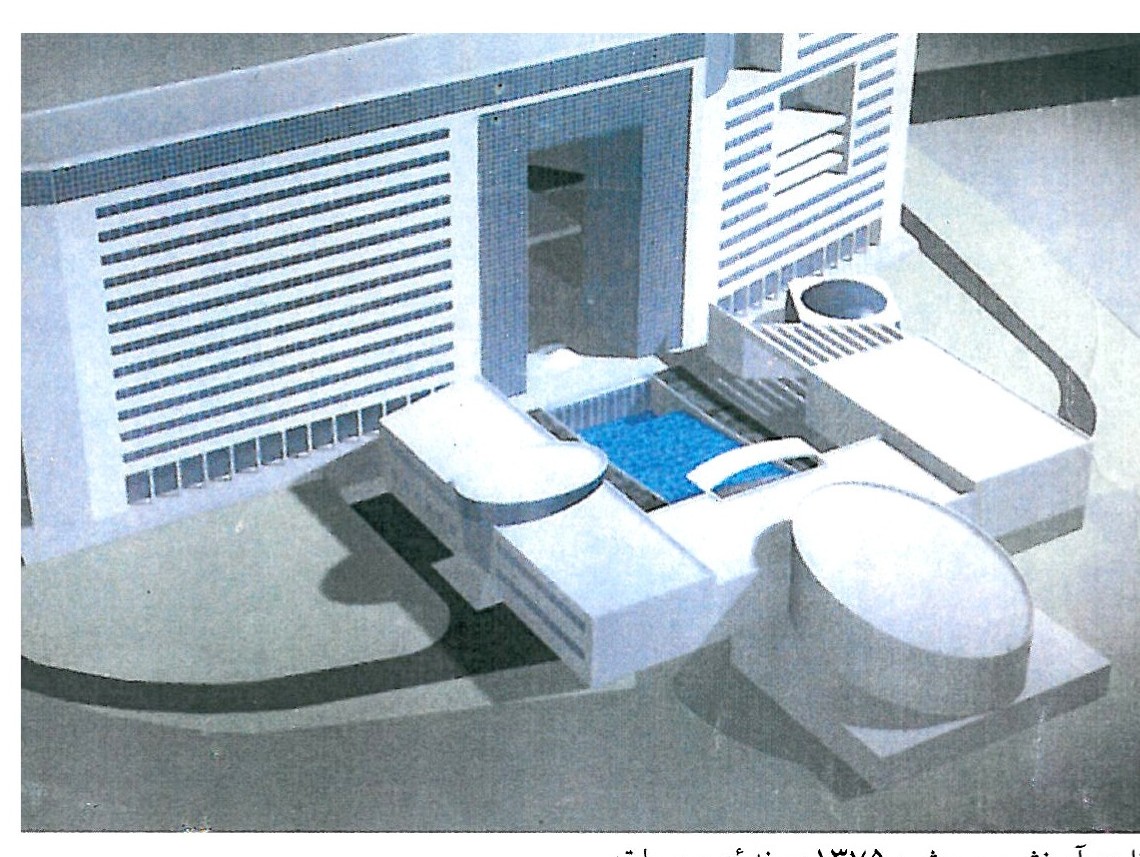
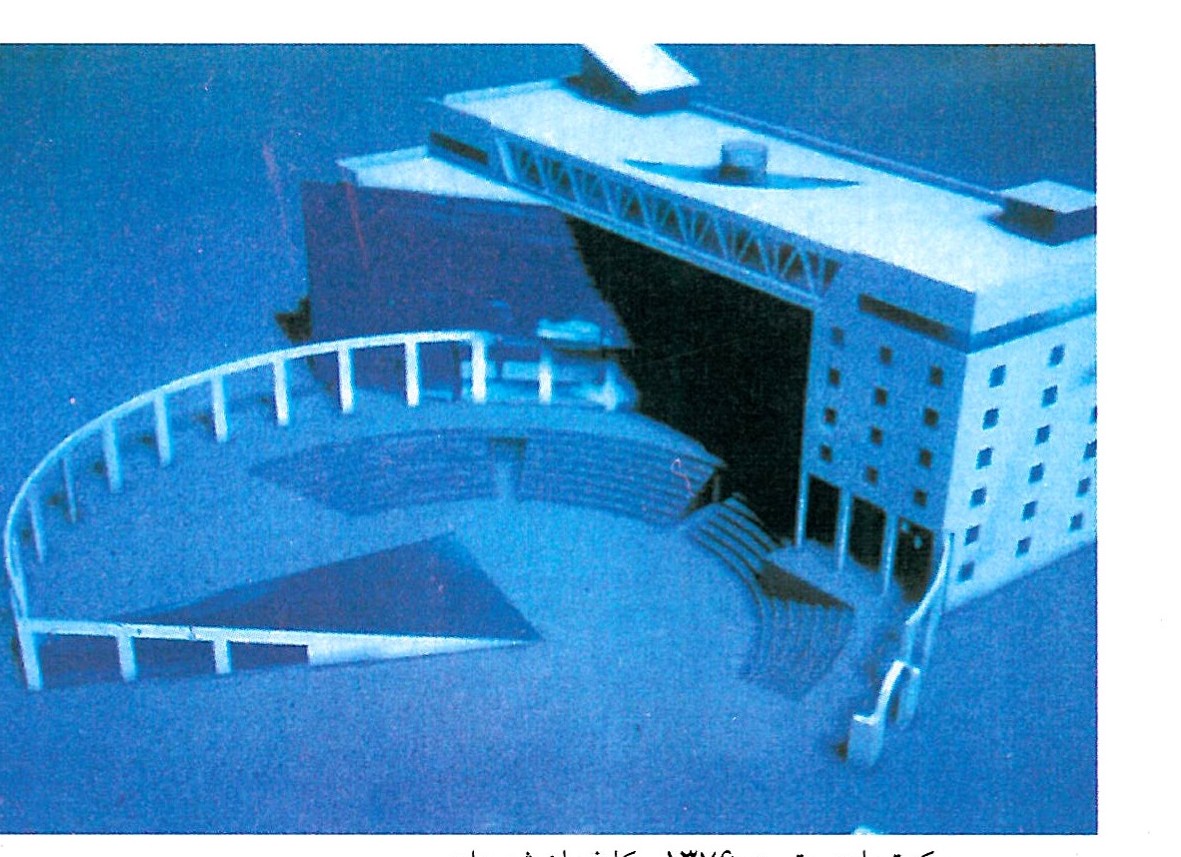
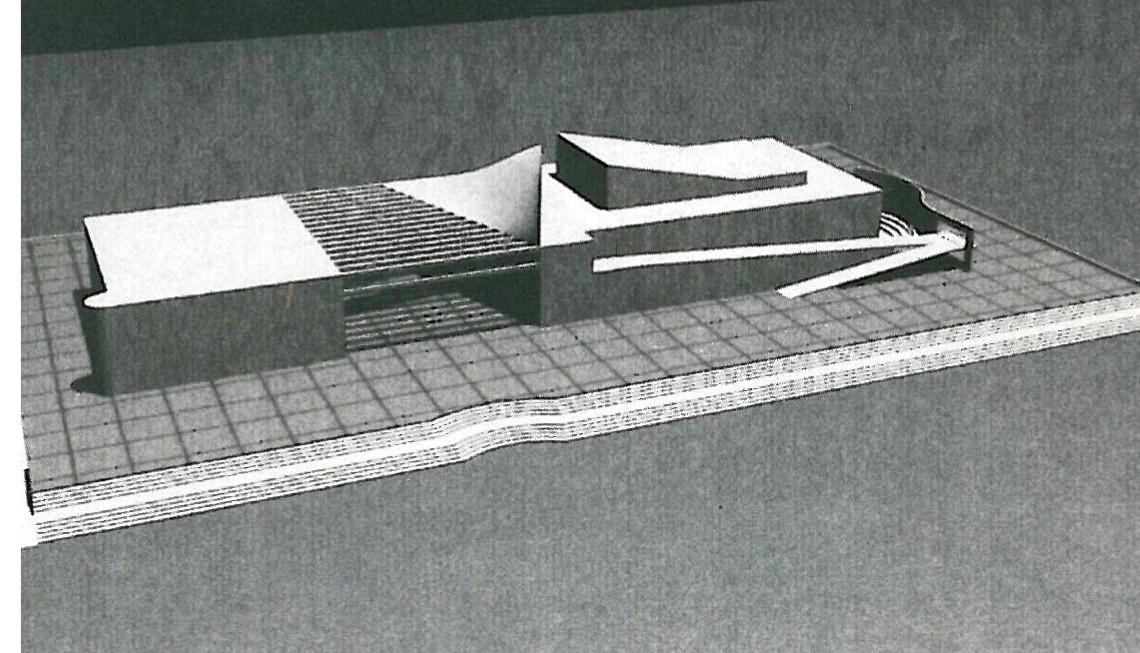
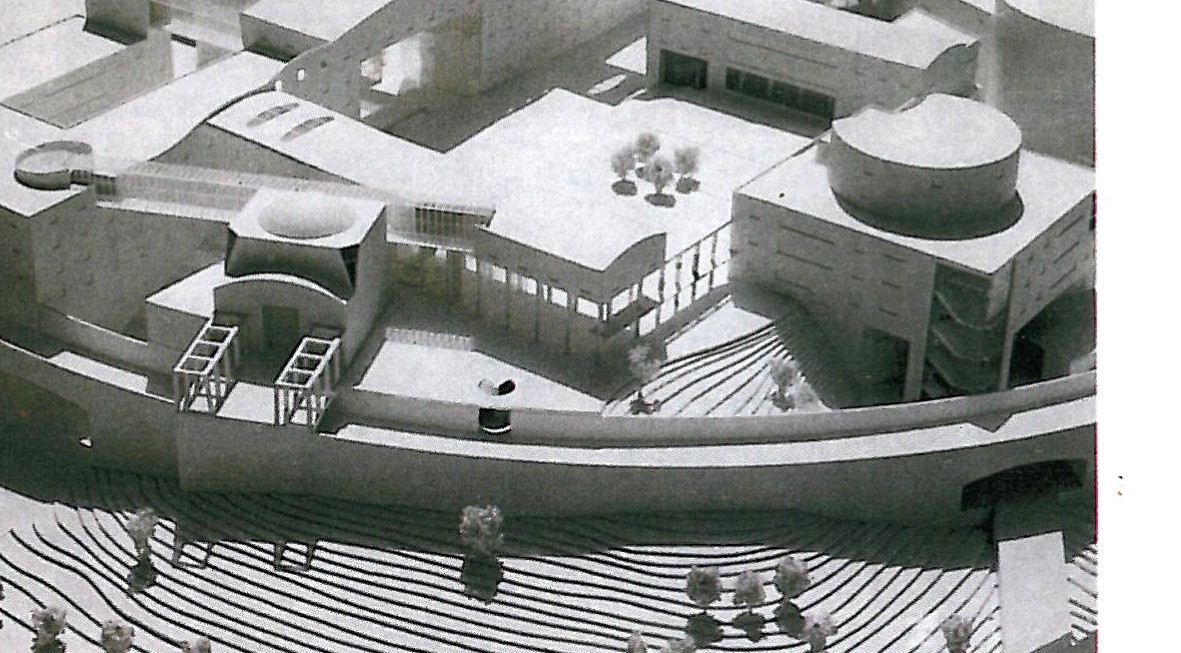
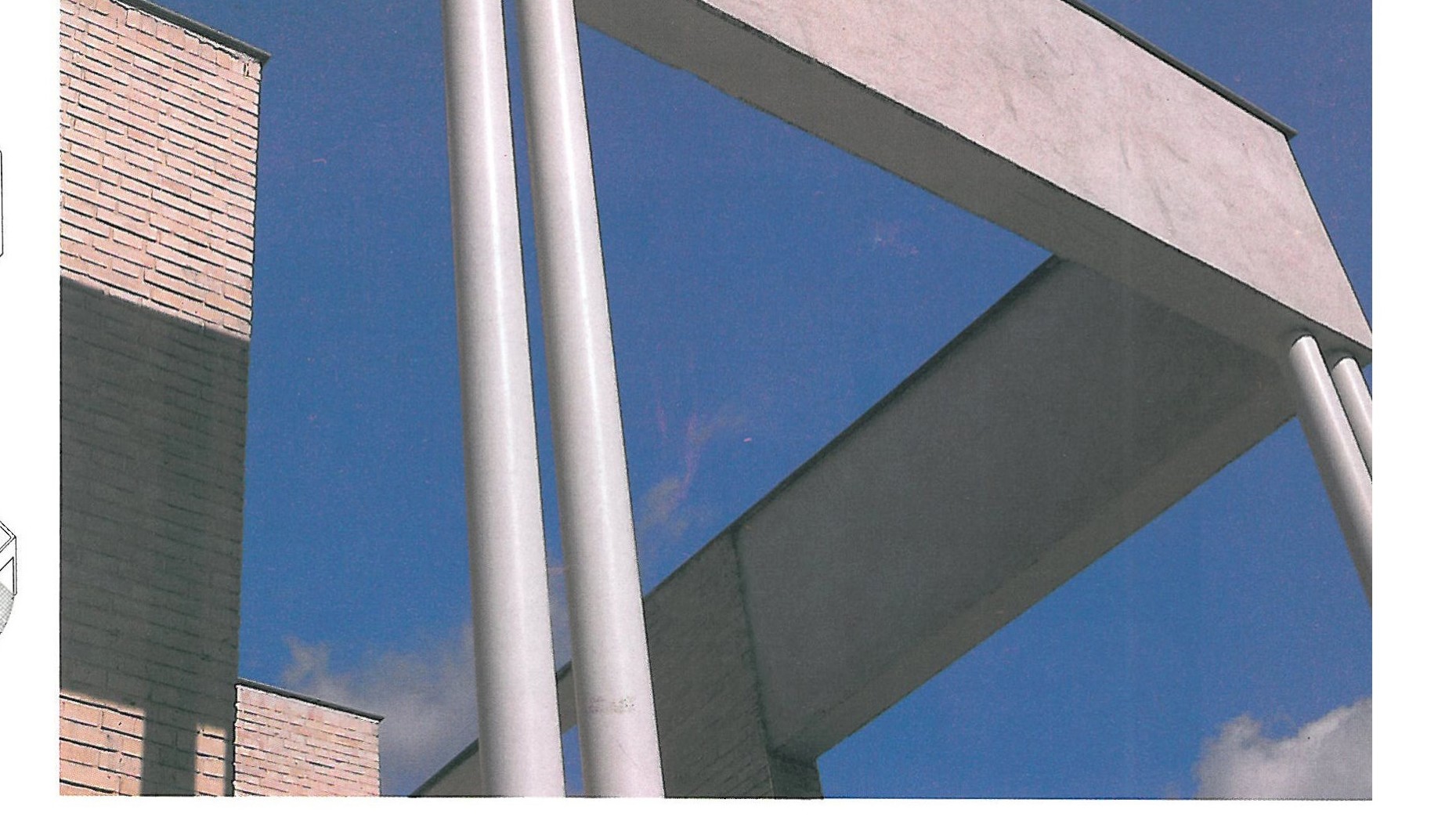
Contrasting geometry. This tendency begins first with an emphasis on the contrast between rectilinear and curvilinear geometry, and in later stages leads to the deliberate disruption of the order of perpendicular lines and the juxtaposition of contrasting and unexpected volumes. This is not merely a particular aesthetic; rather, in addition, it is a stance against conventional principles and accepted expectations, which, though not novel in modern architecture, its application in his works with Tajir Consulting Engineers is so prominent that it distinguishes his work from that of his contemporaries as well. In all the designs of the past five years — from the design for the Iran Cultural Centers (1372, Tajir), second-prize winner of the competition, and the design for the Ministry of Education building (1375, Tajir), second-prize winner of another competition, through to the Kermanshah International Assembly Hall (1376, Tajir) and the design for the Export Development Bank of Iran (1376, Tajir), and especially the Tabriz Commercial Center and Museum (1376, Tajir) — this characteristic can be clearly observed. Saremi has been able to transform this contrasting geometry into a fundamental feature of his own architecture.
Historical allusion. Saremi, who does not deny his own susceptibility to the global revisionist movement against the principles of early modernism, after the brief period of the international style in the late 1940s — following the archaism of the first Pahlavi era, which sought to fuse modern architecture with elements and sentiments related to pre-Islamic history — joined the renewed current of fusing modern architecture with elements and sentiments related to post-Islamic history. Perhaps models of that same protest against the myth-making of early modernism — which, especially with the elimination of content and function, resorted merely to the formalism of the initial examples of experiments between the two world wars — were for Saremi and a number of his contemporaries also worthy of reconsideration and contemplation in the architecture of the interwar period in Tehran. In fact, the rediscovered values of this rethinking are to be sought in the cheerful and carefree architecture of the late Qajar era, which did not shy away from blending with European sensibilities and tastes.
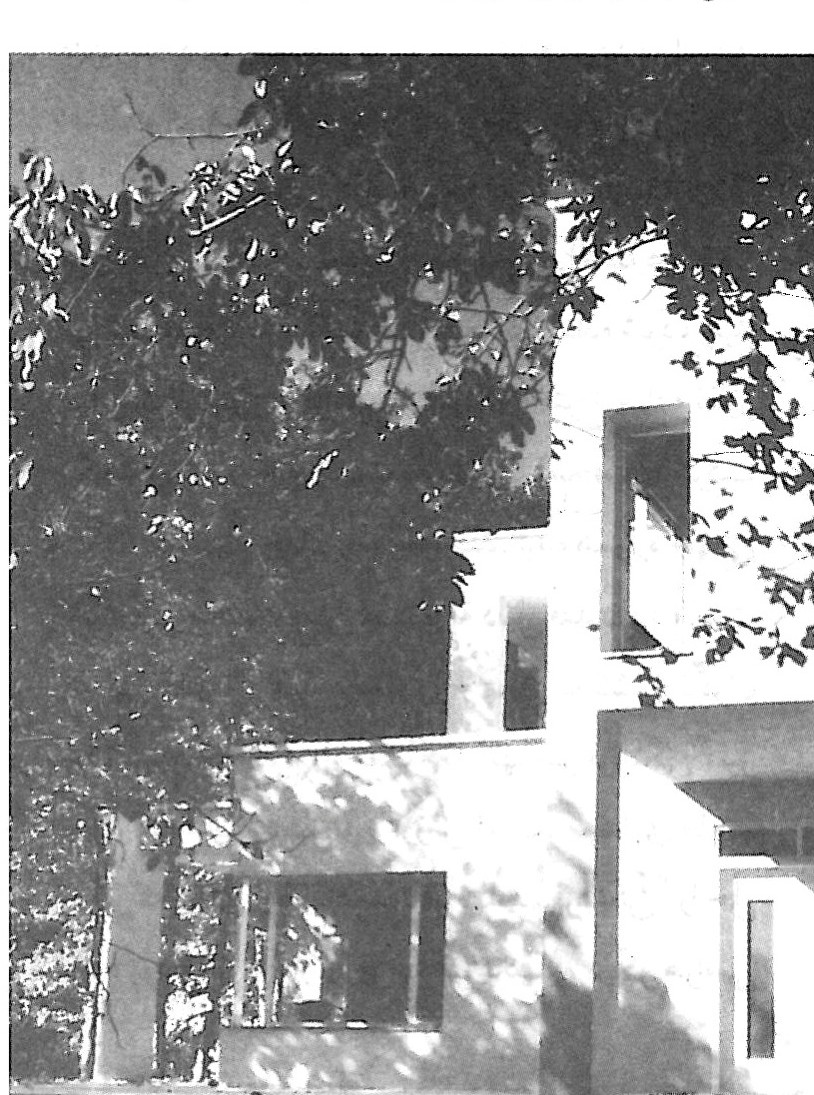
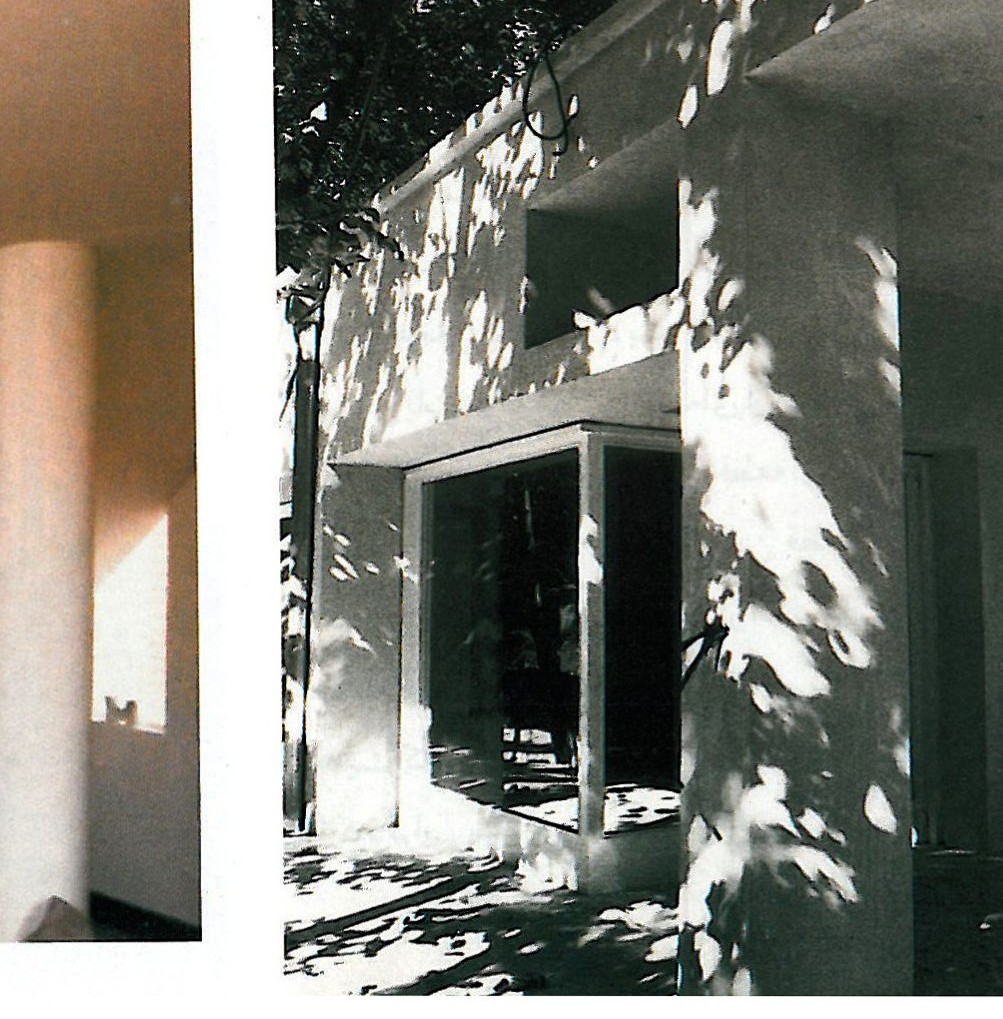
The Institut Pasteur Assembly Hall (1367, Tajir) and the Karaj School of Visual Arts are the clearest witnesses to this historical allusion in the work of Saremi and his colleagues. The Institut Pasteur Assembly Hall, while maintaining the limited and controlled preservation of other characteristics of Saremi’s method — the expanding karbandi and contrasting geometry — is above all attentive to the allusion to forms of Iran’s modern public architecture. At the Karaj School of Visual Arts, too, the symmetrical compositions and minimal, unadorned facade treatment bear Saremi’s characteristic introduction of contrasting and decorative elements — but the truth is that, more than anything, it is the historical allusion and the re-creation of the atmosphere of Tehran’s architecture between the two wars that define this work.
Saremi and his colleagues, as was noted earlier, are the first and second-place winners of many competitions over the past decade — a sign of the acceptability of the path they have chosen for developing a contemporary architecture within the Iranian milieu. In the architectural movement since the 1350s (1970s), Saremi is one of the few principal figures. Simplicity, honesty, informality, unexpected compositions, and having a distinctive style are among Saremi’s merits — alongside which incompleteness, undervaluing details, and occasionally allowing eclecticism cannot be overlooked.
His design for the Iran Cultural Centers building, in contrast to the magnificent and heavy and authoritarian prize-winning design of Mirmiran, clearly displays the informal character of his work, in small works as well as large ones. Instead of architecture that is grandiose, passionate, authoritarian, and rigorous, he inclines toward architecture that is informal, unpretentious, and if need be, middling. His neglect of function, details, and execution also stems from this same spirit.
Other colleagues who have participated in the above projects: Seyed Kalal, Fowzieh Ahmadi, Nadereh Nazari, Alireza Sangrokhbandari, Amir Abbas Shirazi, and Ali Golsurat Pahlaviani.
1. The book Designs from Iranian Architecture: Sketches of Dr. Ali Akbar Saremi (1325–1377 / 1946–1998), Yasavoli Publications, Tehran, is witness and proof that architecture students of those years, despite their modernist training, had not neglected their traditional background.
2. On this subject, one may also refer to Enduring Values in Architecture, published by the Cultural Heritage Organization, 1376 (1997), in which the first volume, titled “The Quest for Perfection in Iranian Architecture,” discusses karbandi in detail — both the complete karbandi and the karbandi contingent upon site conditions.