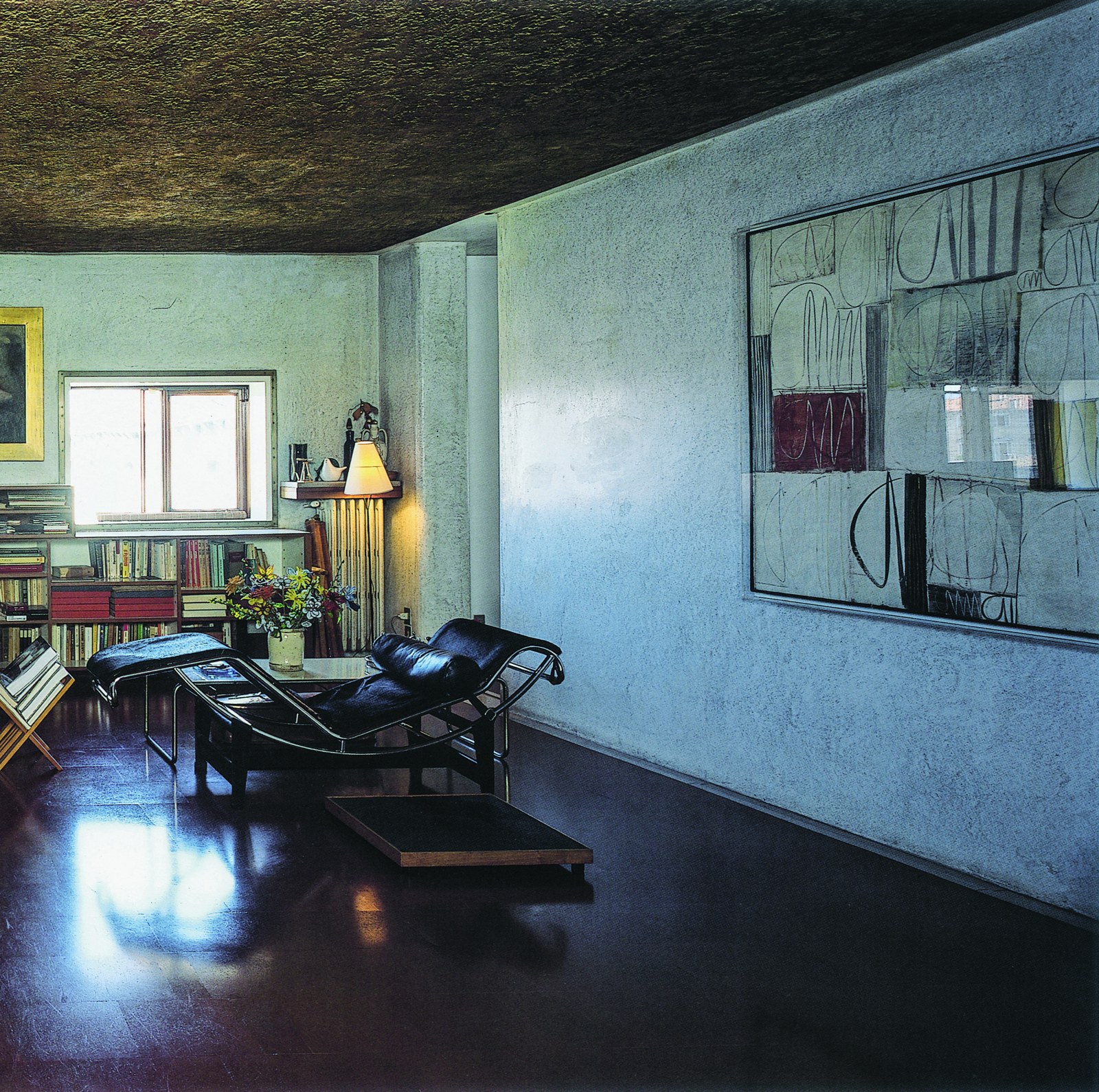
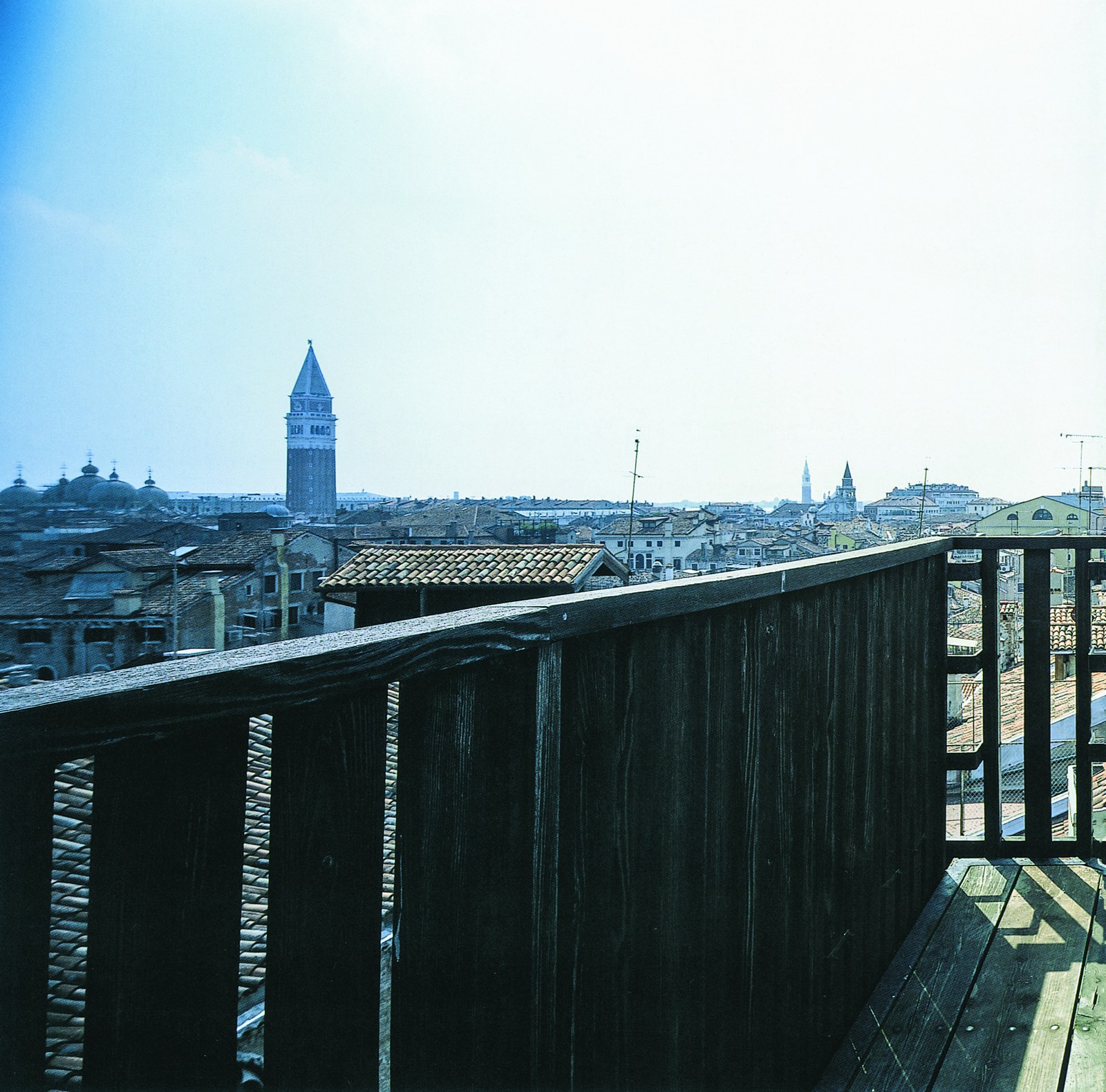
Scarpa’s university qualifications did not allow him to become a registered member of the association of architects, and from the mid-1950s he was repeatedly sued for professional misrepresentation. Apart from the distressing and bizarre nature of the charges, it was thanks to these very court appearances that the lawyer Luigi Scatturin commissioned this house-studio from him. The client had bought a large property (about 250 square metres) on the top floor of an eighteenth-century building in the heart of Venice, and at the beginning of the 1960s asked Scarpa to design in it a linked but independent house and studio for his living and his work. The deep rectangular space, originally the service floor of the palazzo, has three open, unobstructed sides and is characterised by low ceilings, differences in height and rather small windows, but with extraordinary views over the city. Load-bearing walls in a cross arrangement divide the space into three areas one behind the other. The architect removed their partition walls and designed them respectively as the studio, the living area and the bedrooms. The strong fragmentation of the two end areas is offset by the unified character of the middle space, which is distinguished by the terracotta-coloured flooring and above all by the multicoloured material of the ceiling. Its one or more different tints, red ochre, brick and grey, become more striking as the light falls at different times of day.
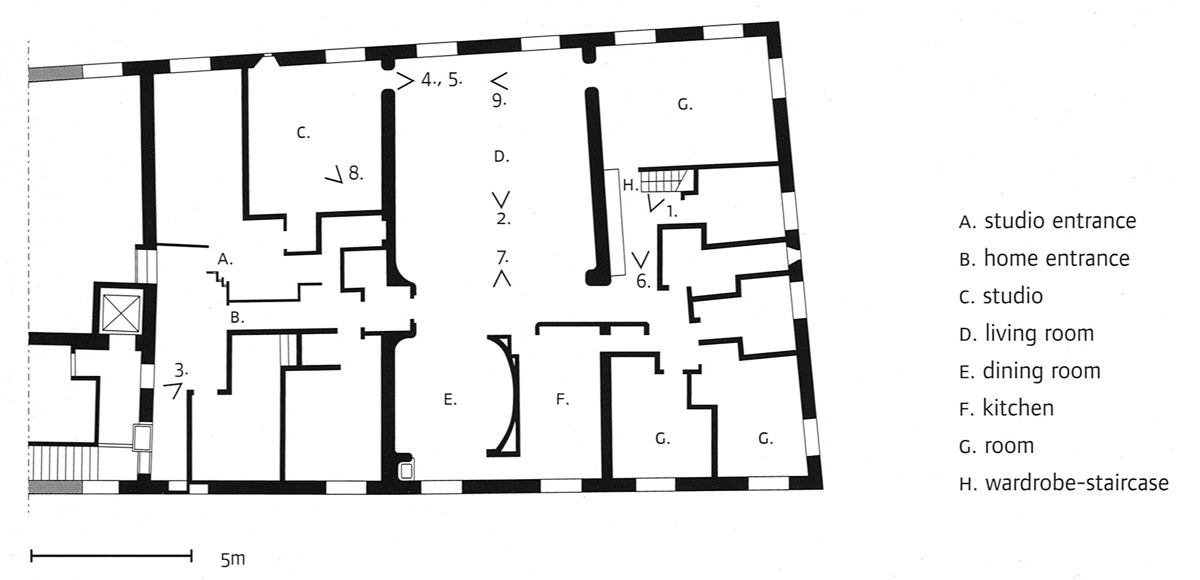
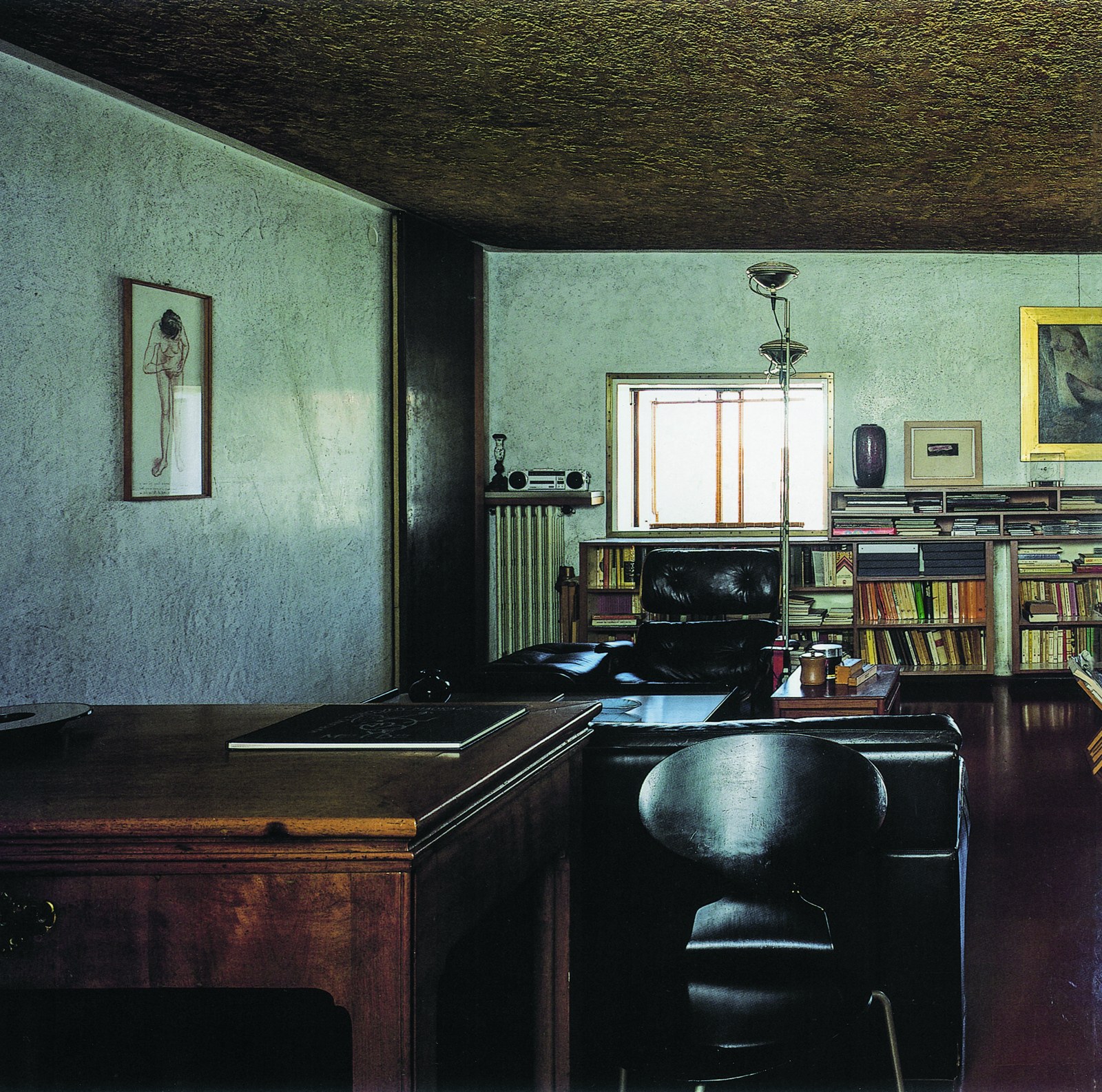
Scarpa also created a line of sight from one end of the designed space to the other, as he had done since his first residential designs. These longitudinal paths extend from a landing, through the entrance corridor to the apartment, the living room, and beyond the door into the bedrooms; and from the studio, through the living room to the main bedroom, and likewise to the outside, through a window designed specially for it.
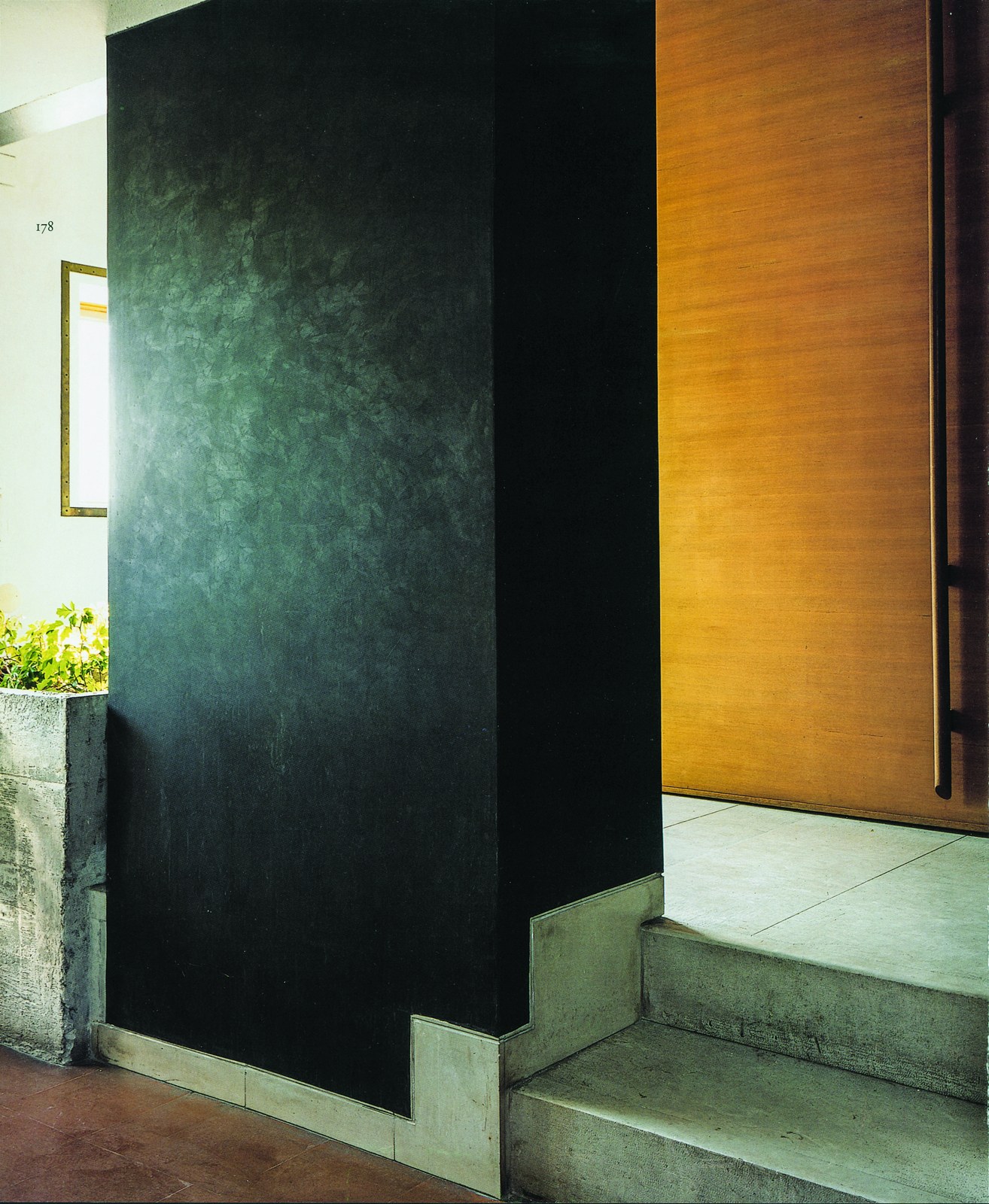
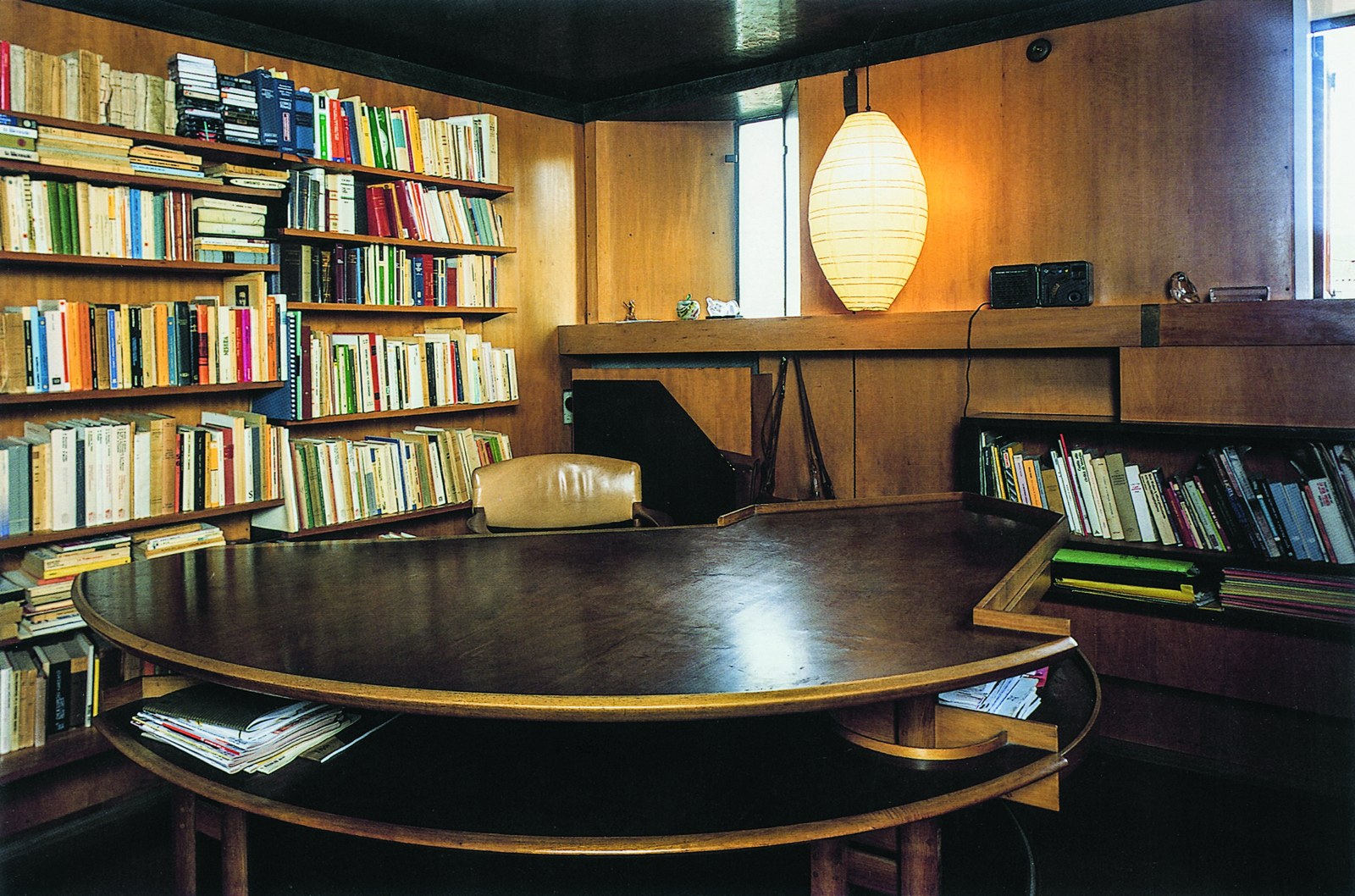
The space is divided by a multi-part wall of wood and glass with red plaster rendering that extends from the shared landing so as to serve the studio and the apartment separately. Access to the house through the studio, through a series of double-layered doors, is independent of the working area, which has its own door, and is visually a more permeable entrance. The lawyer’s office, also reached through a double-layered door, is fitted with panelling and wall frames in Brazilian walnut1 that Scarpa had made for his previous office (1955). Light enters through small windows, one of them chamfered, and creates changing reflections on the glossy brown plaster ceiling, which would later be repeated in the Ottolenghi house2.
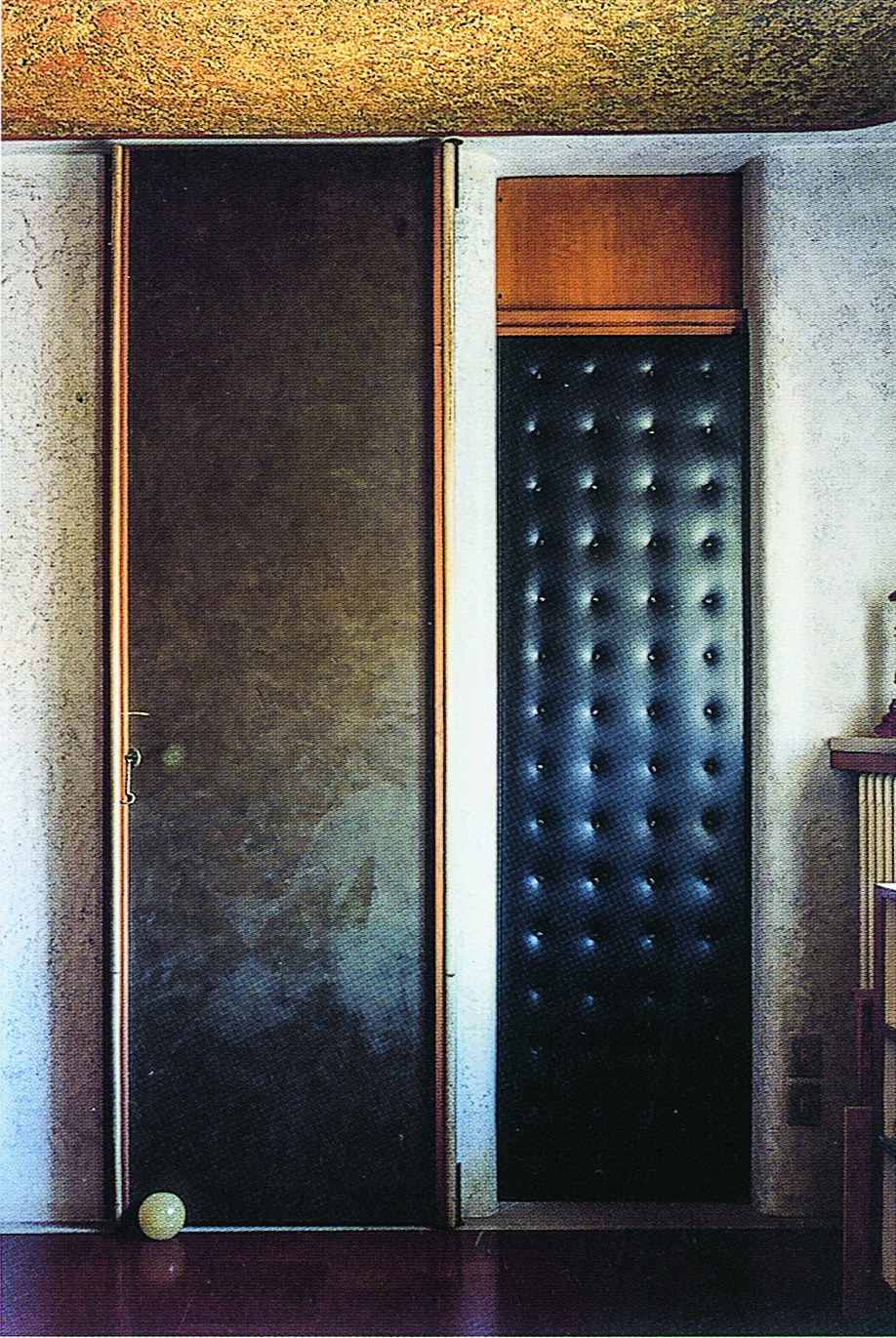
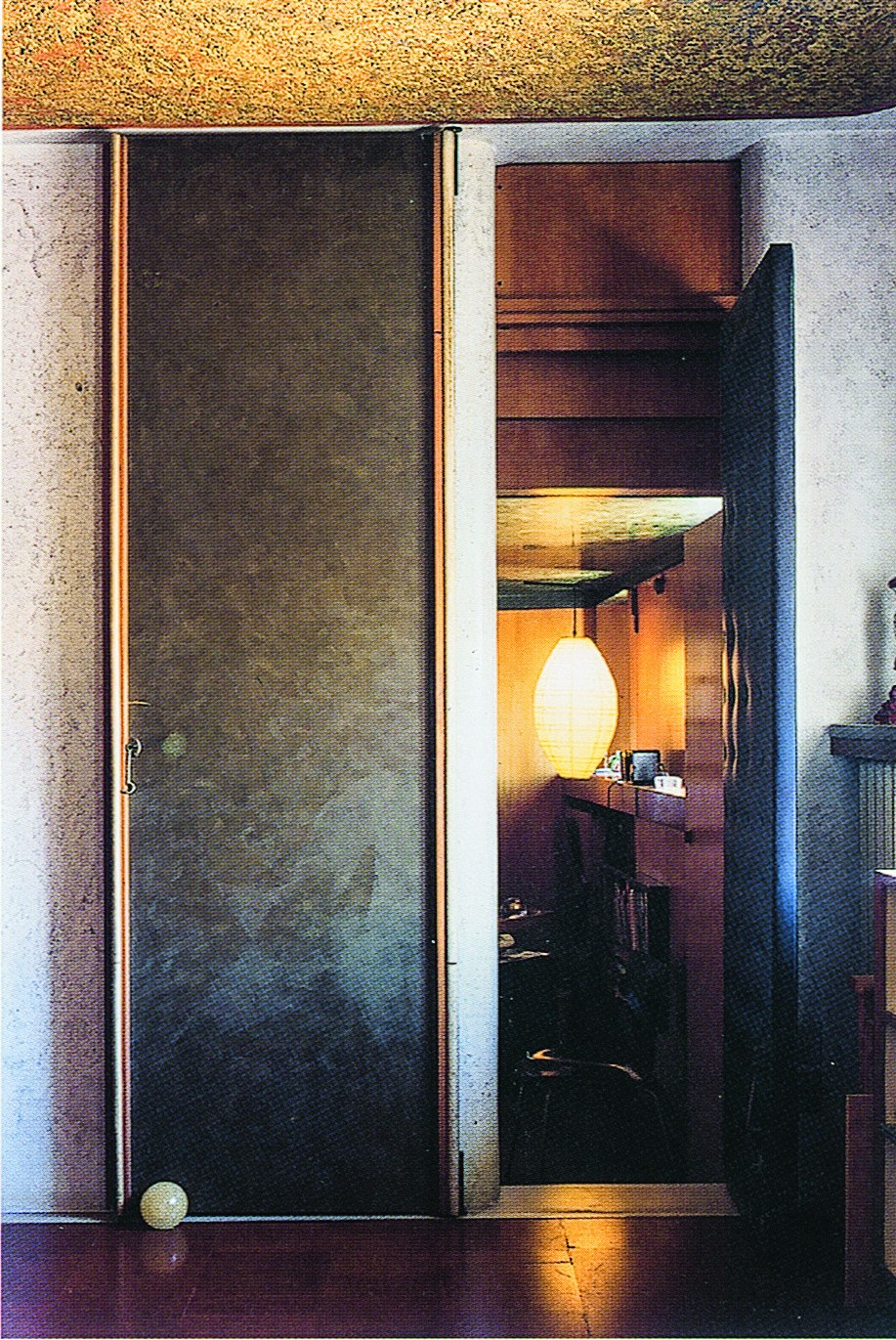
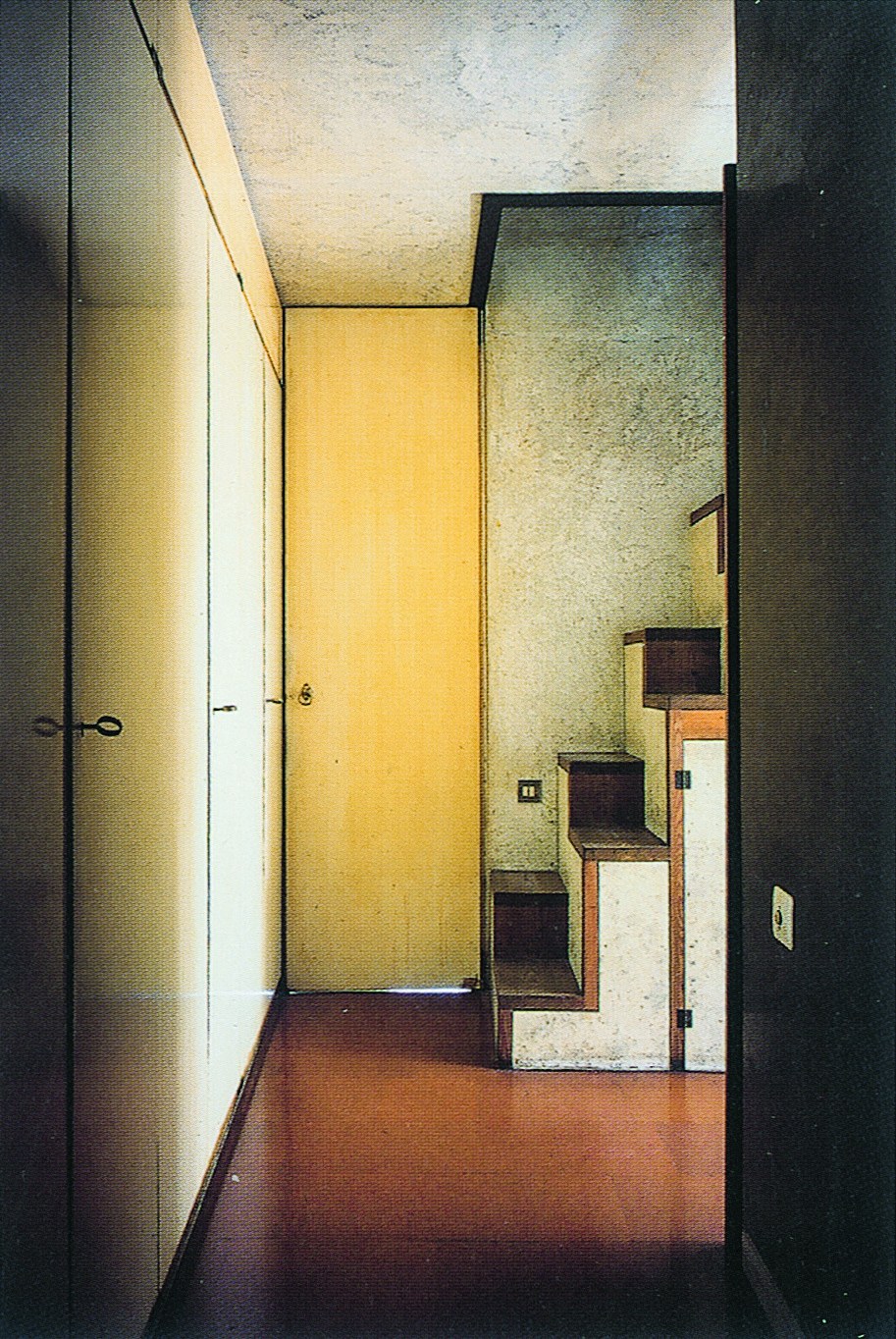
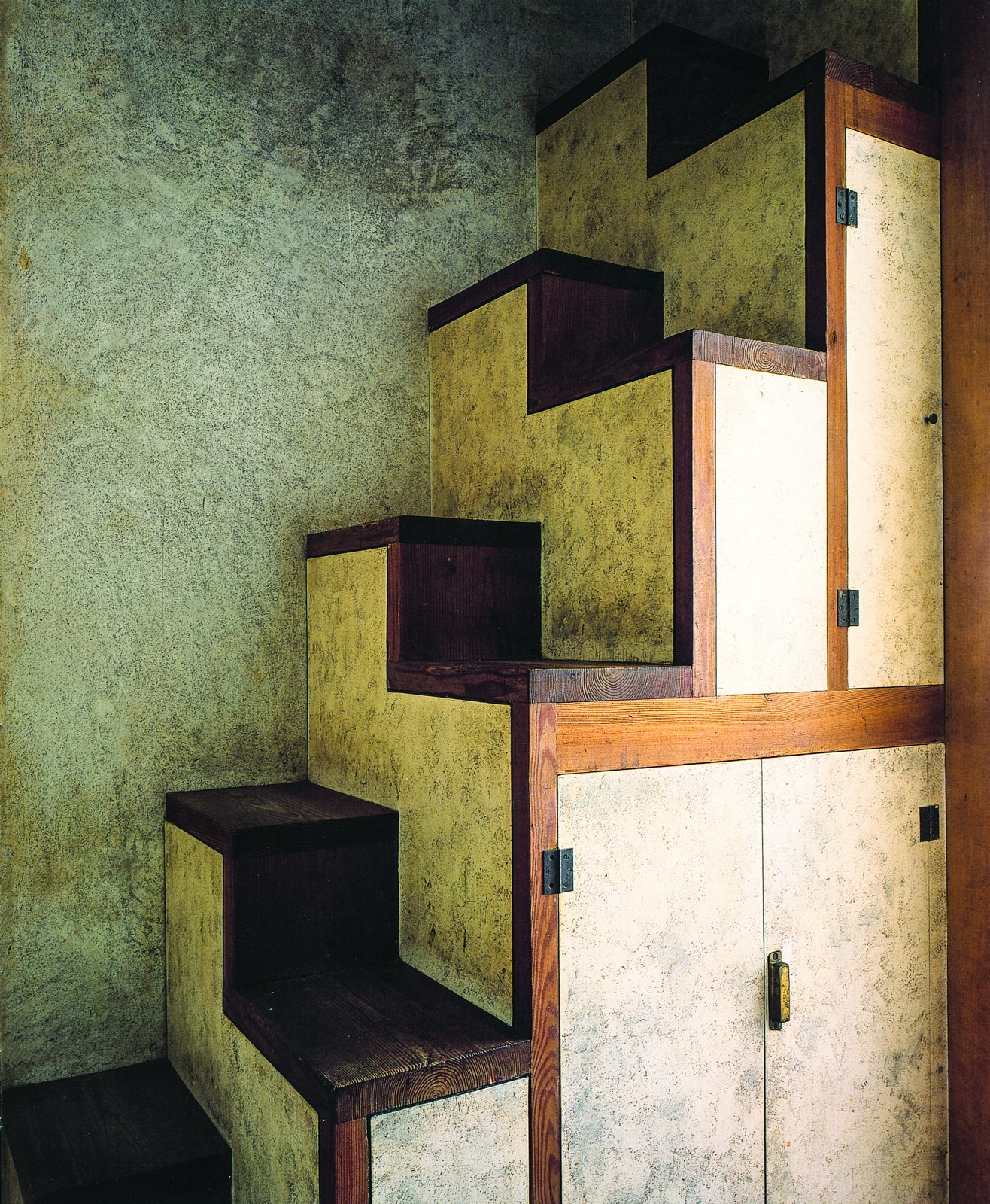
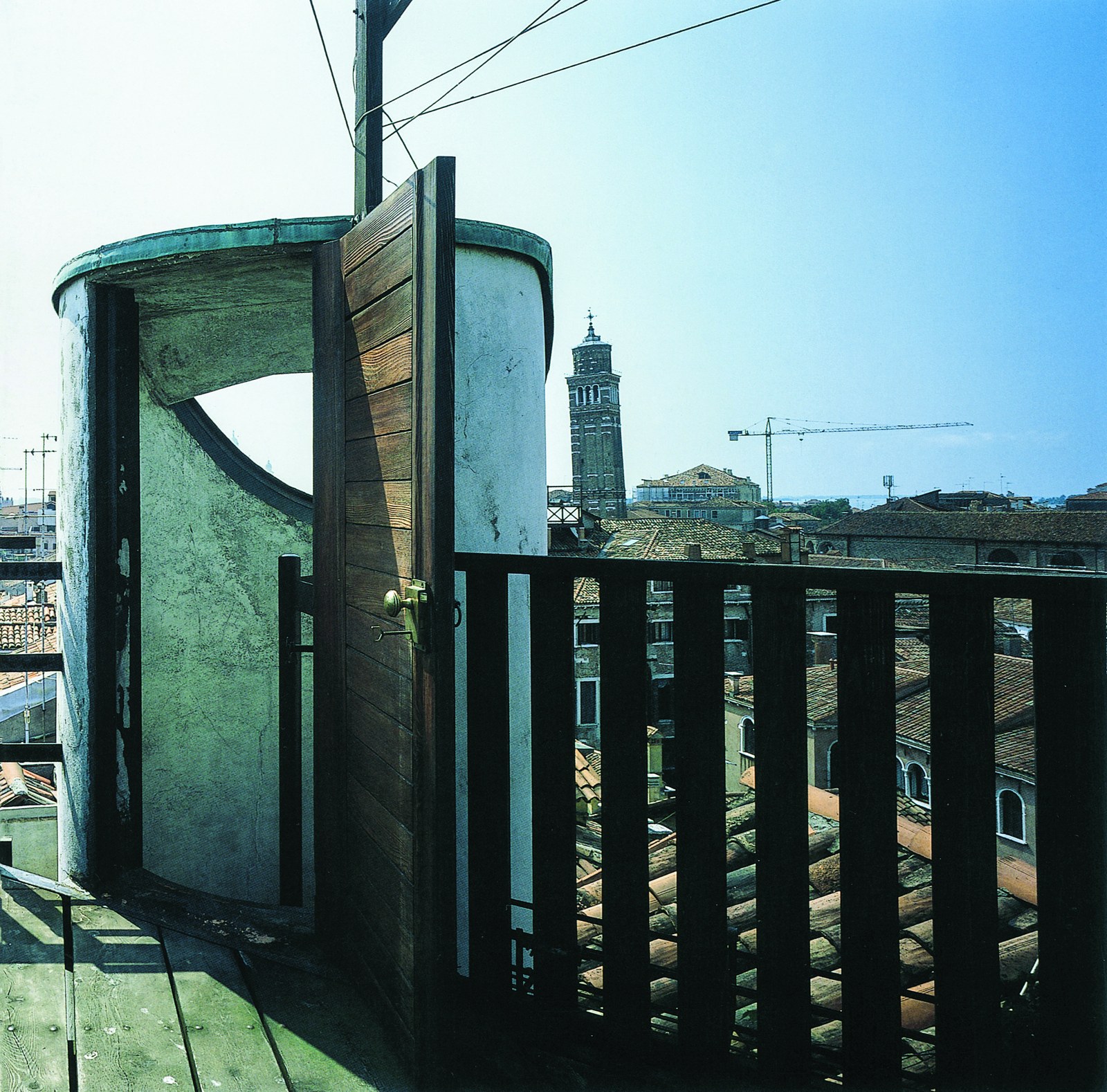
The client’s request to display some family objects, including a tiled stove and a set of copper kitchen utensils, became the occasion for some architectural solutions, such as a wall/shelf at the edge of the living room and doors with strips of glazing. The playful element has not been forgotten in this apartment either: a wardrobe-staircase, with two platforms the size of a stair tread, reaches the spiral staircase to the roof terrace and is used as storage for the bedrooms. Scarpa also put up a wide range of doors, more or less recognisable but always answering a particular function, all relatively narrow and running up to the ceiling.
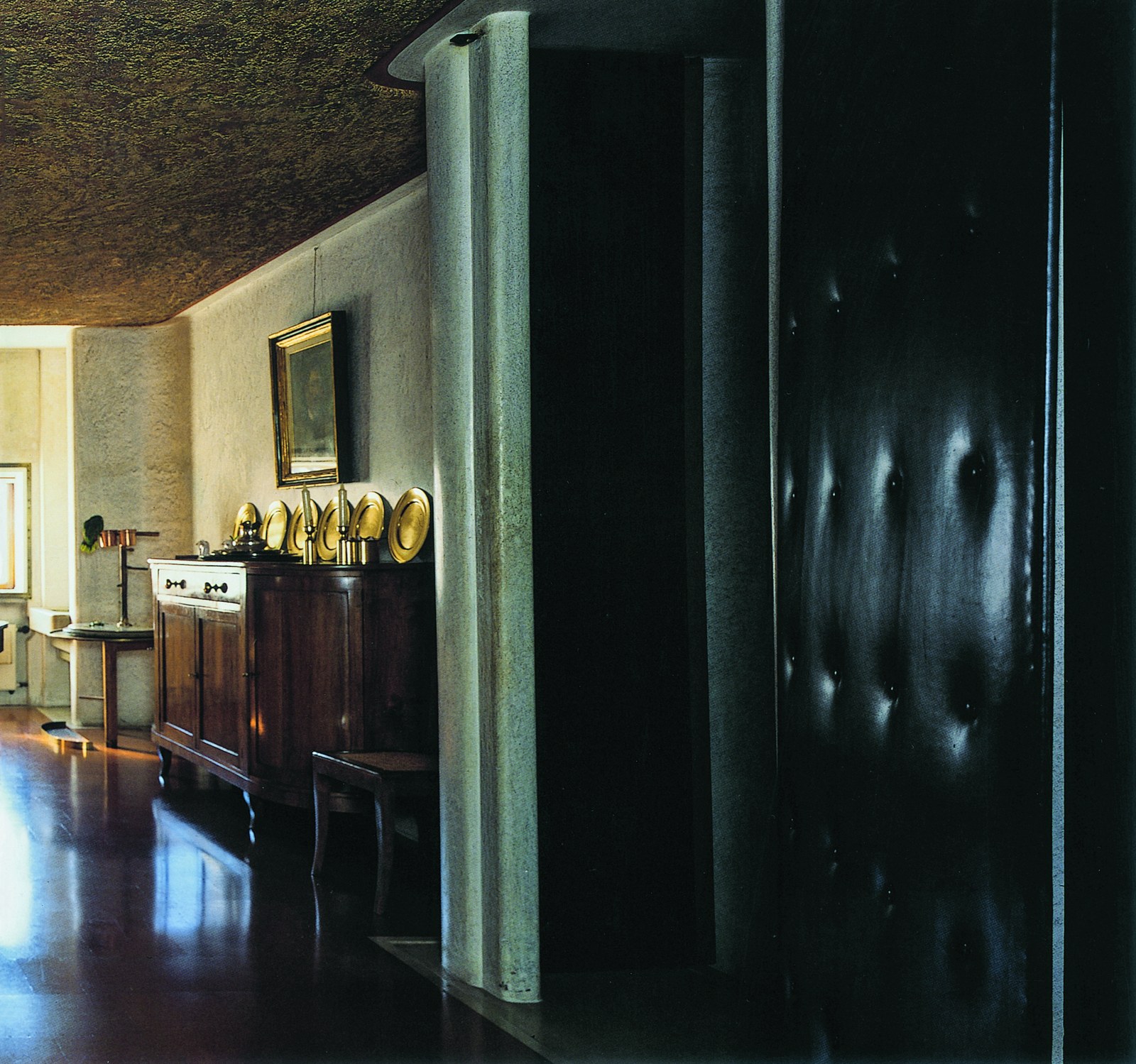
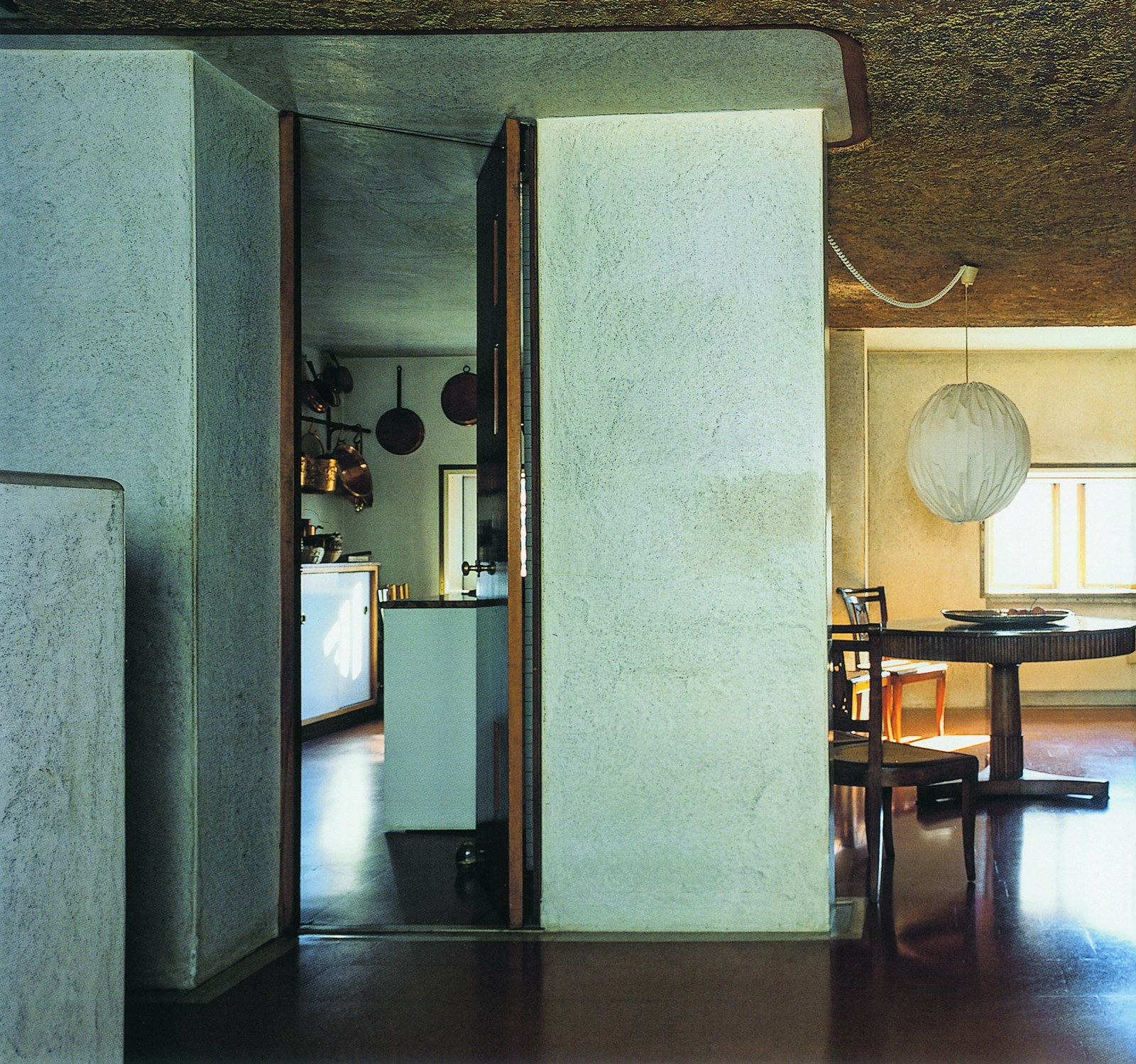
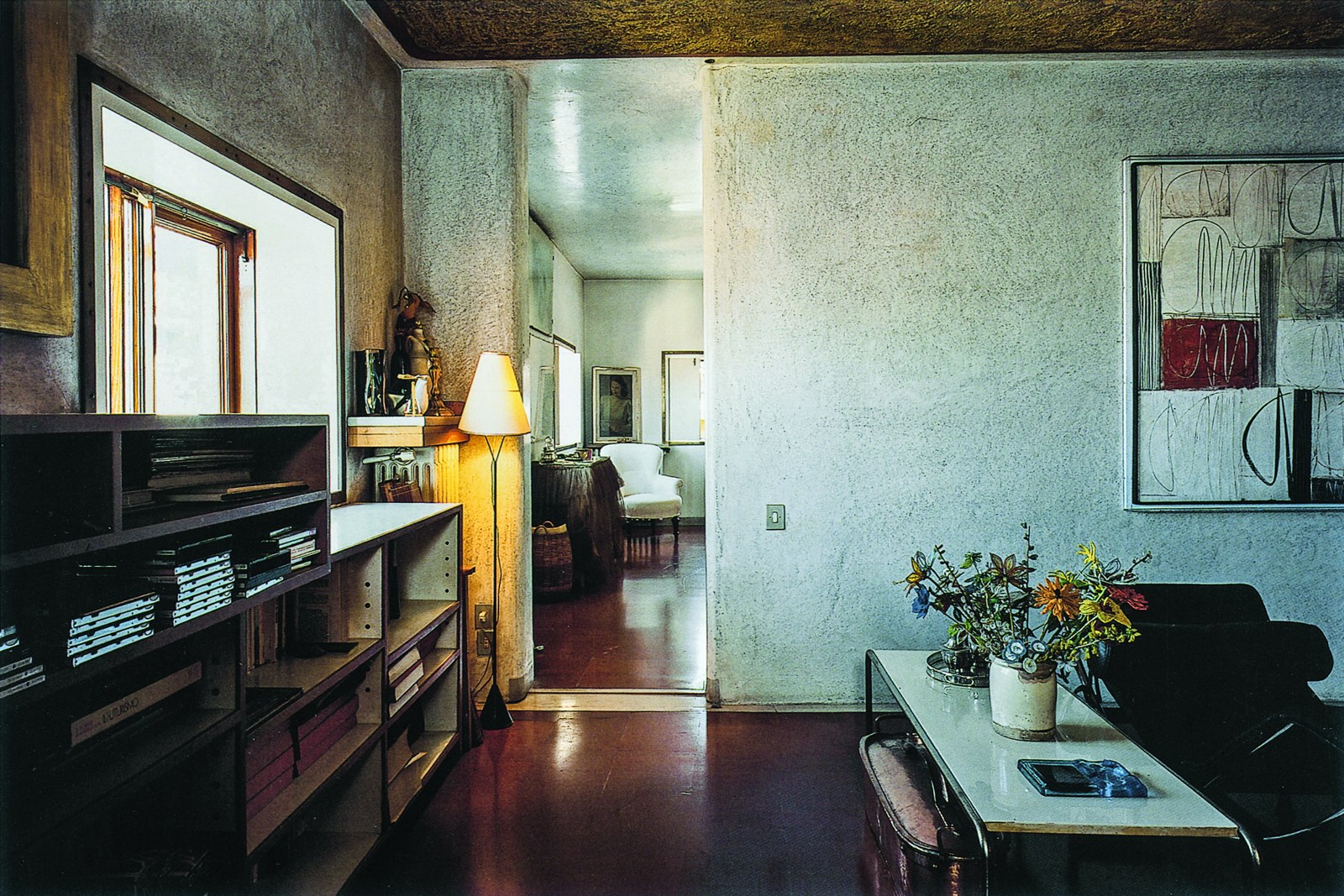
The views of the city are framed like paintings, with three-part frames flush with the outside, and together they mark out a visual path that reaches a memorable end in the skylight at the top of the cylindrical space leading to the roof terrace.
Despite its spatially different and dispersed layout, the Scatturin house shares many construction details with the more or less contemporary house of his colleague Ettore Gallo3.
In Vicenza, in a historic building too: rounding the edges of walls, their junction with floor and ceiling, the lime or plaster finish of the walls, the multi-layered frames of the windows and the small windows above doors, particular kinds of handle or lamp, are used in many designs of the same year, even non-residential ones.
Notes
- Ladies and gentlemen, please be seated
- Ottolenghi house
- Ettore Gallo