



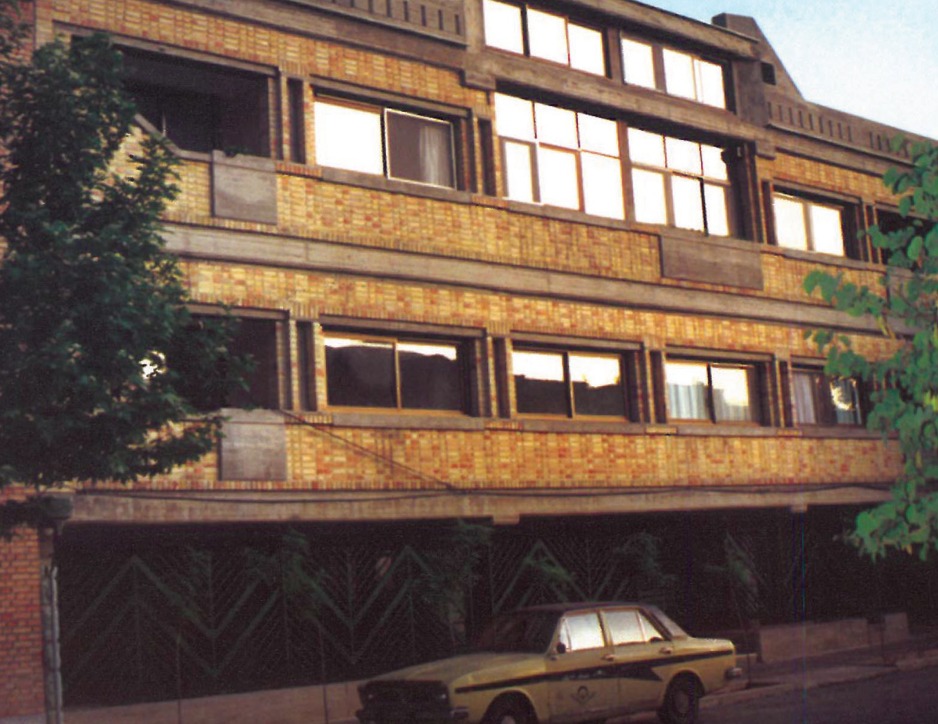
George Darash graduated in the field of architecture from Tehran University in 1976. He has designed, executed and supervised several residential complexes in Iran since 1984. The most essential characteristic of his works is a careful attention towards details, craftsmanship and the technical aspect of the work. This attention is orientated towards creating beautiful functional spaces and allowing the users to benefit from the building to the highest possible degree. George Darash's architectural works show the development of the experience of a keen architect seeking a proper model for a modern Persian apartment.
George Darash is a graduate of Tehran University, Faculty of Architecture, in 1355 SH (1976). He began professional work during his studies, in the technical office of Tehran University, where he continued until 1351 SH (1972). After graduation, in 1355 SH (1976), as a board member of Hiryas Consulting Engineers, in cooperation with engineer Kazem Kahvazadeh, he engaged in independent professional work which continued until 1370 SH (1991). During his years at Hiryas, in addition to residential buildings, he also designed building complexes and administrative and public buildings — among them three 7-storey buildings (a total of 172 units) near Qeytarieh Park, a 50-unit complex of about 4,000 m² in Jafarabad with residential and public sections including shops and a restaurant, residential and administrative buildings in Saravan, Khash and Shahin Shahr, and the central building of the Zahedan Water Authority. In the year 1364 SH this consulting engineering firm was converted into a construction company; during its activity Darash, in addition to designing several buildings, also undertook construction and engineering works — including part of Tabriz's wastewater system. Since 1363 SH (1984) Darash has been working independently as designer, builder and supervisor, and chiefly designs residential complexes. He is a member of the board.
To introduce George Darash, we have selected one residential complex that he designed, built and supervised in the 1370s SH (1990s). The structural engineer of this complex was engineer Gorjestani and its mechanical engineer was engineer Razavi. In fact the point that George Darash is a developer — that is, he himself invests, designs, executes and supervises, and then sells the result of the work — is indicative of his particular situation. In a setting where, in Iran's construction market, a heavy dividing line separates speculative builders ("besaz-o-befrosh") from architects, and where the result of speculative building is mostly considered a calamity of construction free of all architectural value, an example like George Darash is not very expected. He himself says of this:
"After many years of experience within the existing patterns of housing production, I sought a solution in which all three parts of the work — design, construction, and supervision of execution — would be with me. The works I have offered since then have the very qualities I want. In fact in my work I have removed the traditional architect; I do his work myself. Because in this work I experimented and saw that the architect lets the master craftsman work, then asks the architect whether it is good or not, and most of the time we have to ruin and redo their work. Now I work directly with the master craftsman, and they have to do the works I tell them. They acquire new experiences too. I also train the simple workers myself and give them the chance to advance. I pay the cost of this training myself, since my workers are paid daily. In return, I and my workers and master craftsmen can work out the details together. I consult and cooperate a lot with the industrial designer, because in the present construction process the architect cannot personally control all the details."
In fact the most apparent characteristic of George Darash's work — visible from the outside, from the facade, from the paved sidewalk, from the designed dustbin, from the door and the wall — is the attention to detail and the joy of craft. This attention is wholly oriented to better use of the building, to creating comfort for the residents, and to creating beautiful, efficient spaces. George Darash's work is a good model of a residential house. It is the result of the maturation of the experience of a searching architect for arriving at a contemporary Iranian apartment house.
House No. 57 — Saadat Abad (Soheila Beski)
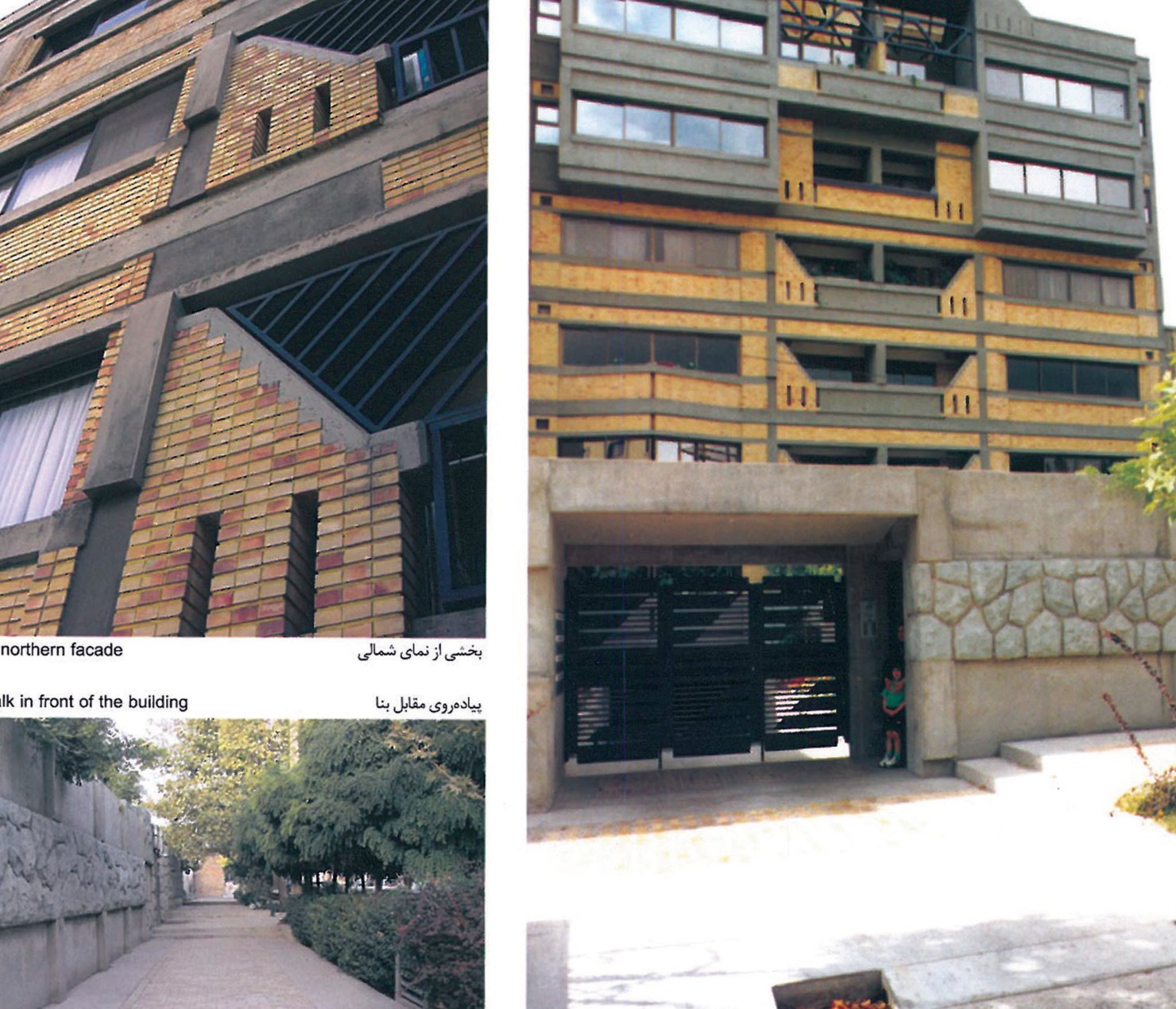
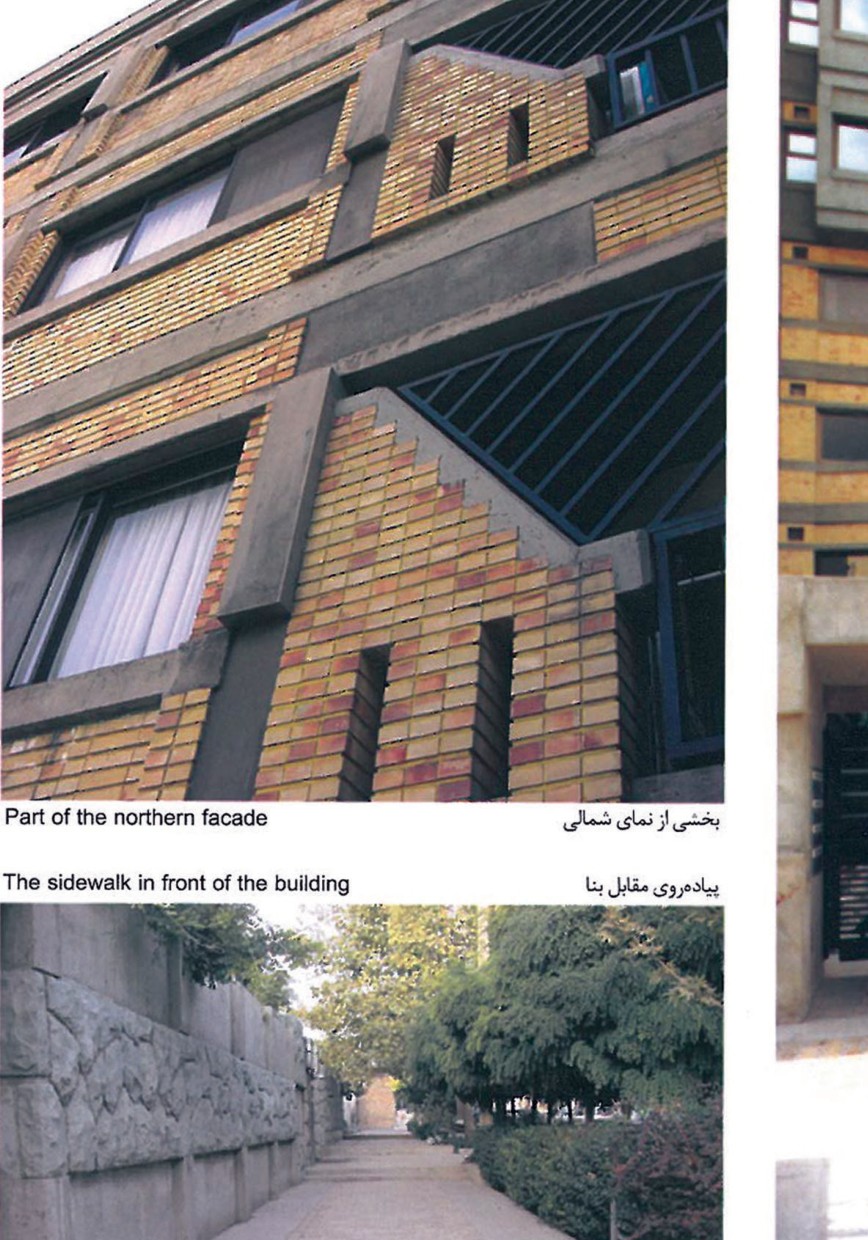
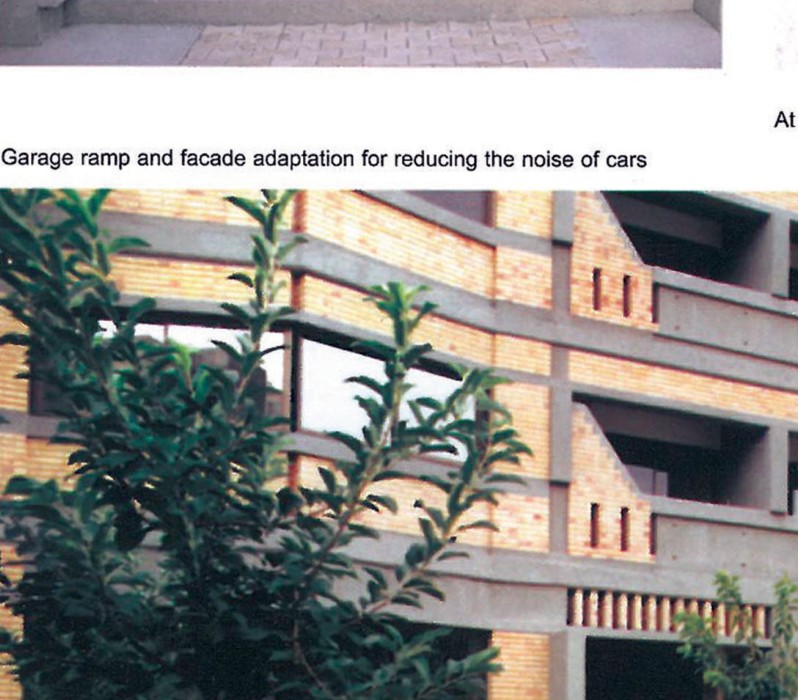
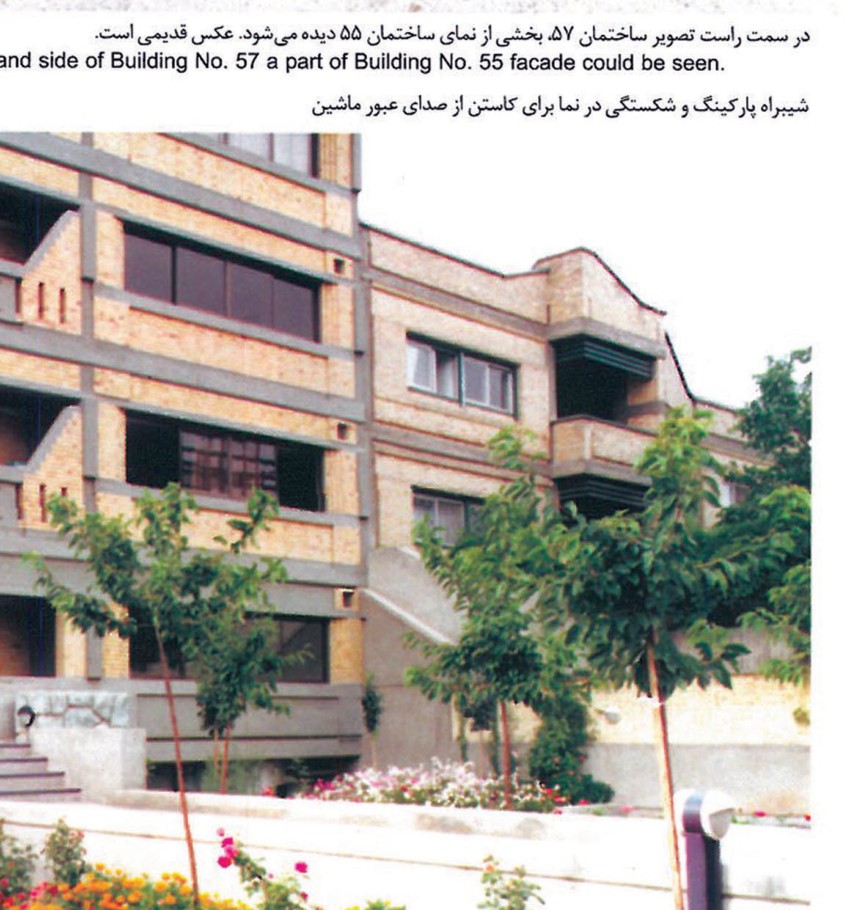
Building No. 57, completed in 1377 SH (1998), is a 12-unit, 6-storey north-facing complex with two units per floor. The site is 1,000 m² and the gross floor area is 4,000 m². Each apartment is about 197 m².
Before entering the building, the state of the sidewalk in front of the complex — rare in Tehran — catches the eye. In addition to designing the building, the architect has also designed the sidewalk: paving, design of the dustbin, the planting box, even the choice of trees. Darash says: "For the sidewalk we chose materials that, because of repeated digging of sidewalks, would be easy to displace. In the middle there are concrete blocks; on the sides the blocks are framed by concrete surfaces. With this design we have made the path of movement clearer. For the rubbish, we designed the most compact dustbin with a sloped bottom so that it could also be washed. We placed the dustbin right next to the planting box and at the same width as it, so that it would take little space and not cause any problems for passers-by."
In designing the entrance the architect has not neglected the car ramp, the pedestrian entrance, the wall, the postbox. The yard and the placement of the doors are chosen so that, when both doors are open, one cannot see the whole yard. Both doors are roofed so that the person standing behind the door, or the person opening the door to enter with a car, is also protected from rain.
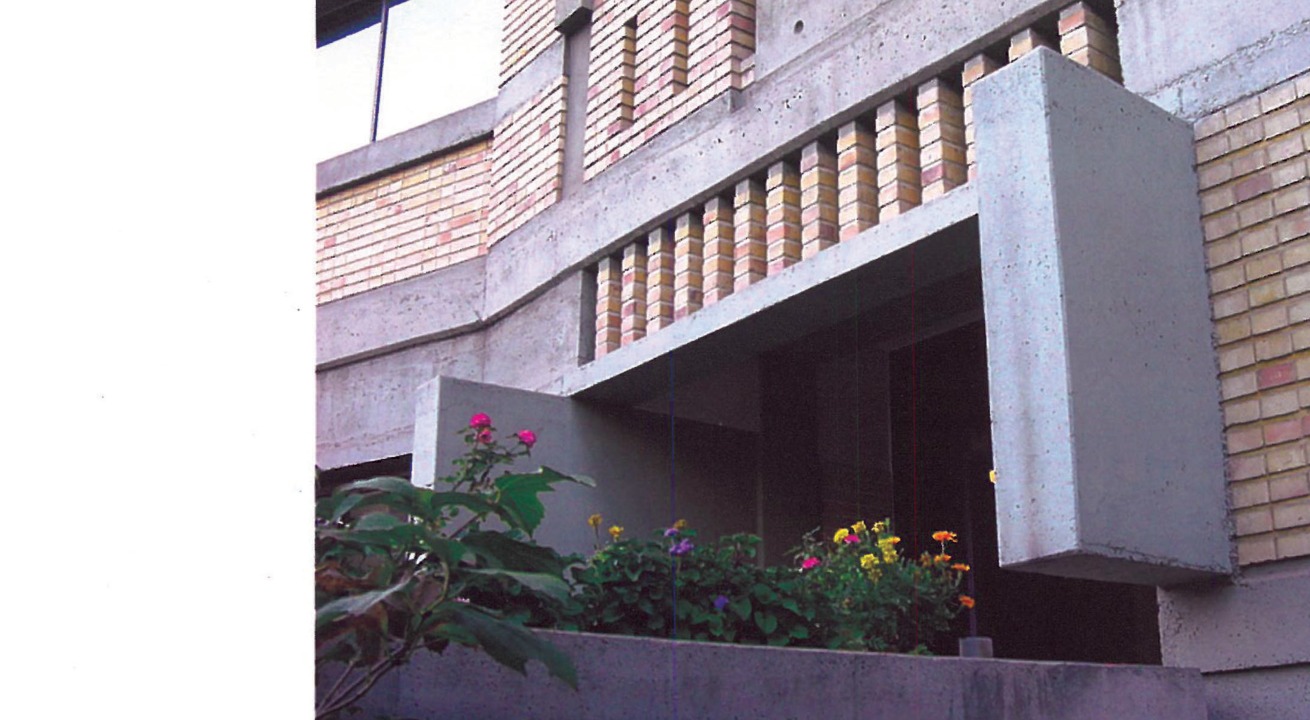
The same care has been applied to the design of the building's facade, which is very clean. The facade of Building No. 55 next to Building No. 57 — also a work of Darash, but earlier — confirms that the cleanness of the new facade is greater. The drips have been built with great care, and the distance between them and the facade is set so as to keep the facade safe from rainwater. The same has been done for the walls. The drip is provided about 50–80 cm below the highest point of the parapet. So in rain this 50–80 cm section, made of concrete, becomes wet — and so a colour layer is added to the wet sections, taking from the colour of the building. To produce uniformity of colour in the concrete facade, a very thin colour mix that is absorbed by the concrete has been used. The facade is a combination of brick, concrete, metal and glass; below, stone has also been used. In a part of the facade, on the two lower floors, reflective glass is used to reflect the green space of the yard, and on the two upper floors, to reflect the sky.
The garage scarcely resembles ordinary garages. It is fully lit because at the end it receives plenty of light from a beautiful upper northern courtyard, and its doors, walls and floor have all been designed in detail. The southern wall of the ground-floor and first-floor western units, opposite the ramp, has been designed in a triangular shape to reduce the noise of cars entering the parking. The floor of the garage is made of concrete with brick frames, very carefully and cleanly. The northern wall of the garage and the area beside the staircase and lift are covered in lemon-and-pink tile so that the space is brighter and the reflection of car movement on the tile removes the usual deserted feeling of garages. The storage rooms are all in the garage, and the colouring of the doors and frames has given more grace and life to the space.
Coming out of the garage, another section can be seen: right by the wall between the garage and the yard, a place for gardening and changing flower-pots is provided. The pedestrian entrance path into the building is designed to overlook the entire yard and the ramp. The path is paved with two materials — brick and a little granite — so that it does not appear long. Right at the entrance to the building two flower boxes are made that operate without drainage. In these boxes, first a row of clay bricks is placed in the male position so that their holes connect horizontally; on this row of bricks, a layer of pebble, a layer of sand, and then plant earth has been placed, totalling 50 cm in height. The whole is insulated with white sheet and 2 layers of asphalt. Two perforated polyethylene pipes are placed vertically in the box that reach the clay bricks at the bottom. Through these pipes water evaporates and at the same time the water level can be seen in them; during travel they can be filled with water so the flowers do not dry up.
Interior — bedroom-corridor and kitchen
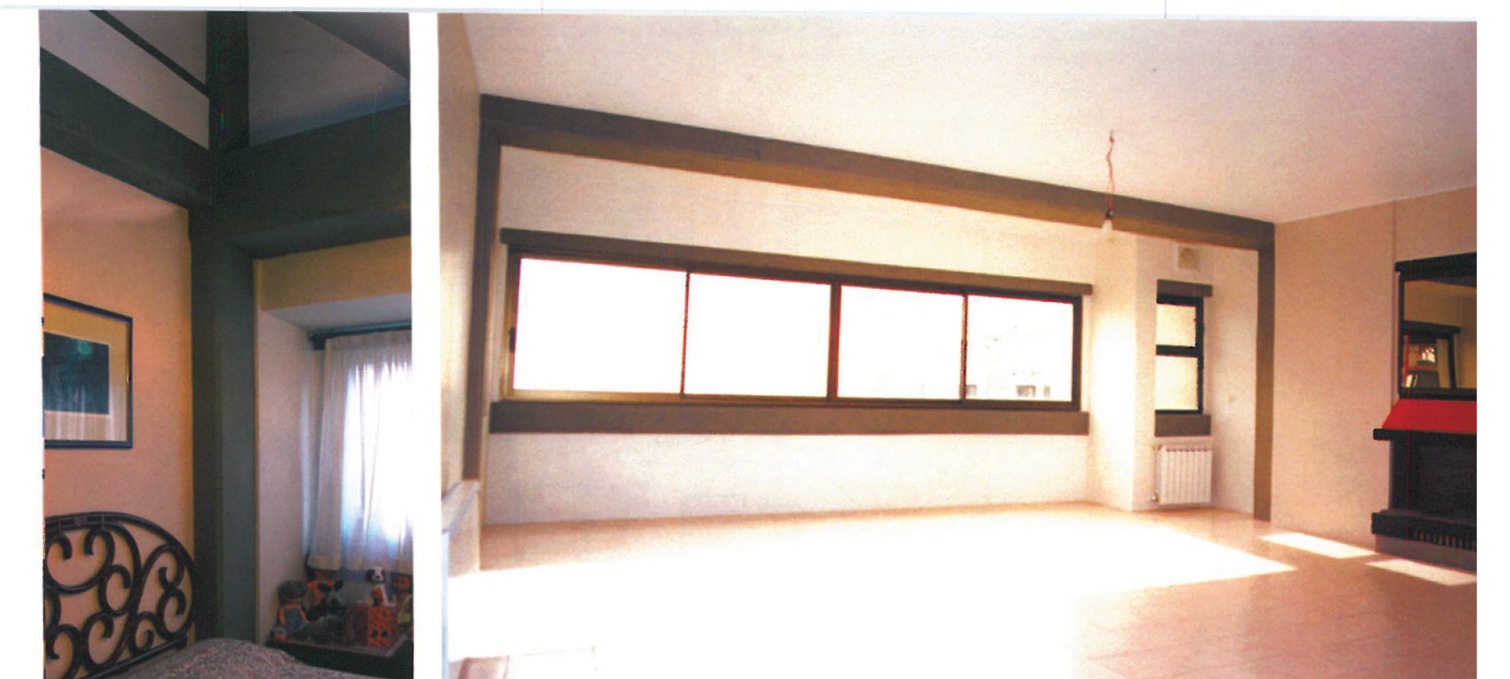
The kitchen counter is made of wood with a metal frame, on top of which red ceramic has been laid. An emergency lamp is also installed above the counter that comes on immediately if power is cut. On one side of the wall, a gap has been left between the counter and the side walls to turn it into a beautiful volume; this gap is also used in the facades for beauty. The cabinets are installed in recessed sections to remove the danger of head impact on their sharp edges. The height has been chosen on the basis of the average Iranian woman's height, so that there is no need to use a chair to take down items. This dimension has also been observed in all the wardrobes of the rooms. In the kitchen, a place is provided for tasks like chopping vegetables and potatoes, where the lady of the house can sit and work and be safe from the risk of varicose veins. Above the counter a place has been built for placing accessories, and on the opposite side, in a wall recess, there are short shelves for various bottles. Interestingly, this recess opens out — on the corridor side of the bedroom wing — as a niche for placing a flowerpot.
This 12-unit complex may be one of the rare apartment complexes in which one feels at home — and the feeling is one of being in an Iranian home. Darash describes his view of residential architecture: "I have a particular feeling about housing, because its architecture differs from other buildings. We must build a building in which people can comfortably live and where furniture sits easily. Interior architectural design is like designing a stage where the actors are people and household items. So it must be designed and built in such a way that the actors take their place well. The role of these actors should not be given to the script itself. It is a great mistake to let these two compete. For example, if we design too many patterns in the floor, it conflicts with the furniture. Some people choose tiles with fruit patterns in the kitchen, while in fact the fruit itself should sit there. Our architecture comes alive when life enters it. This is a principle for me. In this architecture, the principal subject is the person living in the building, and even those details are connected with that principle in some way. For example, we even choose the colours such that they do not give an unpleasant reflection on faces."
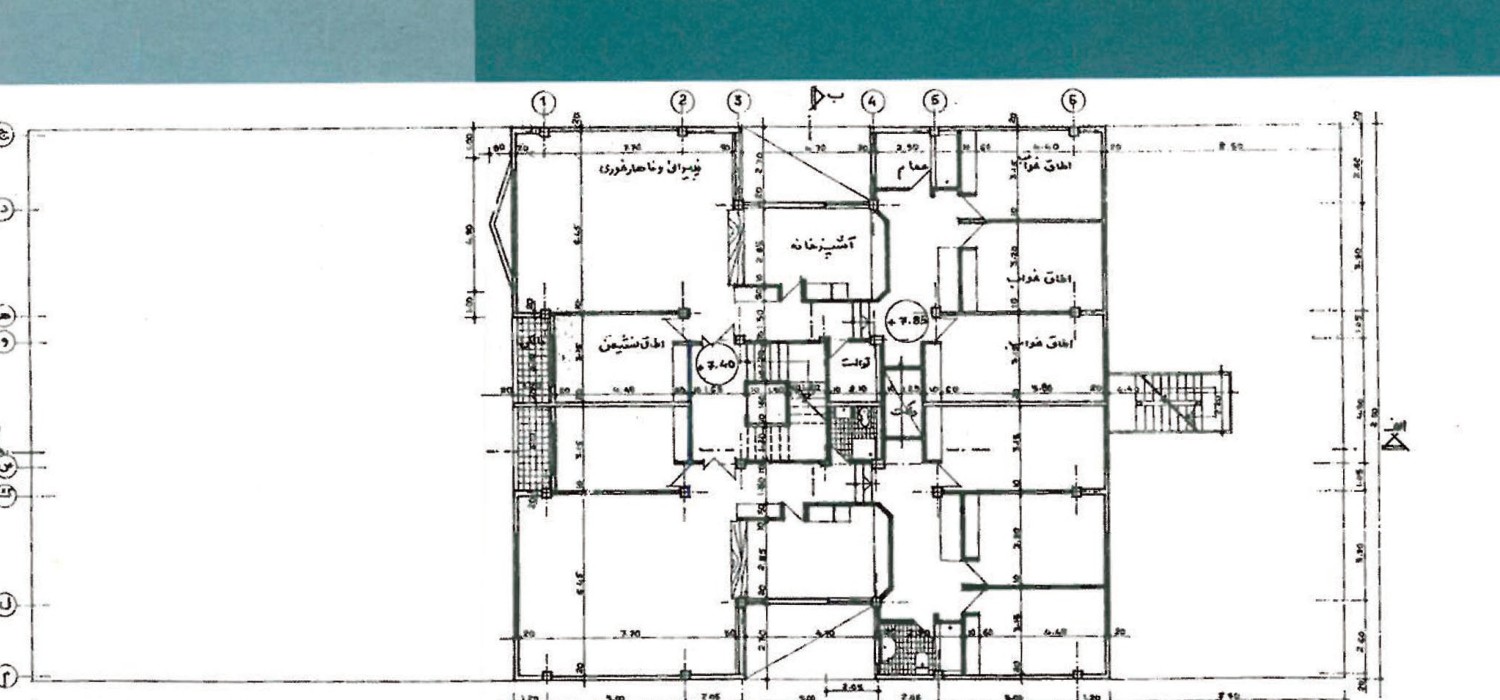
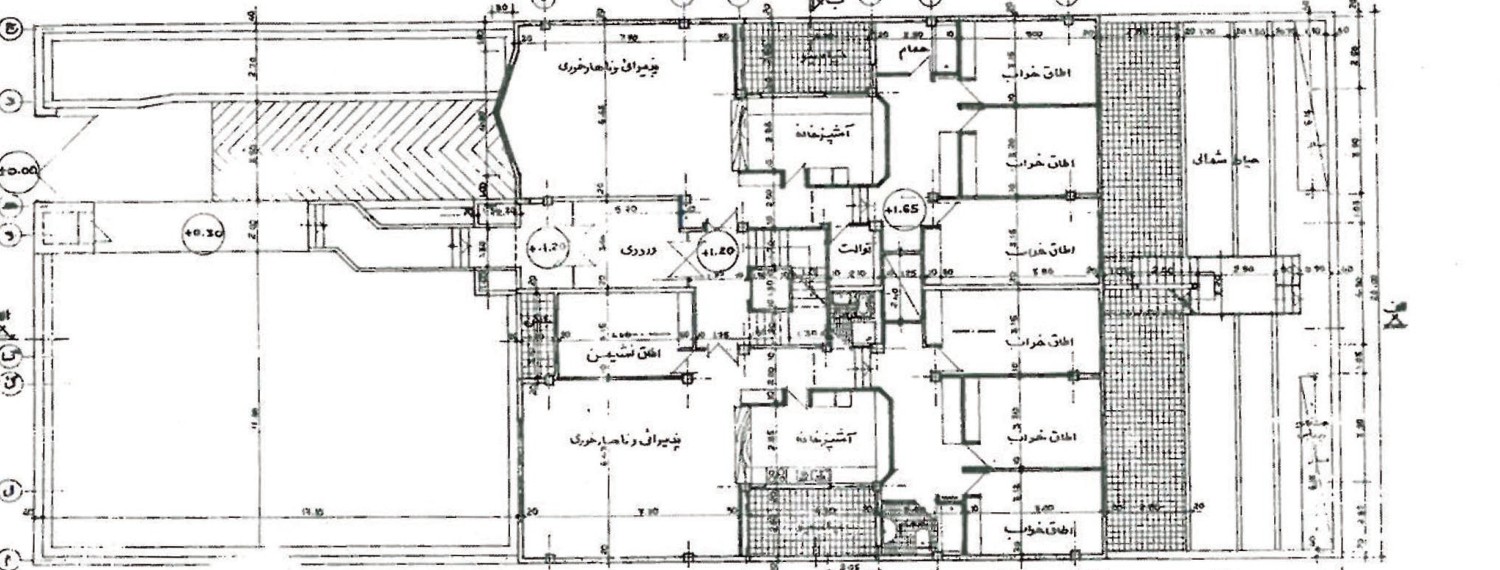
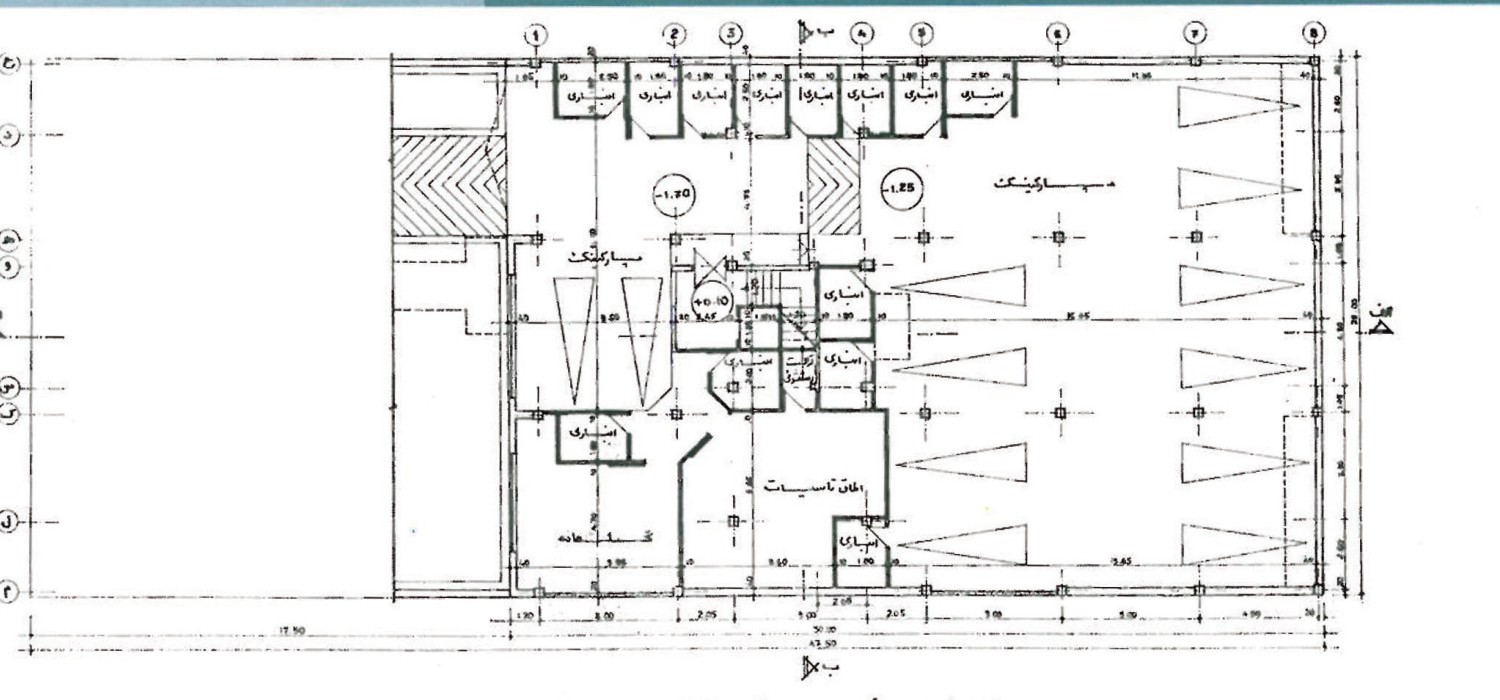
Report on a structure — Hadi Ghaziani (from Org Magazine, 1379 SH = 2000)
The building under discussion is the architect's third work in Saadat Abad. The architect's first work in this district is on 13th Avenue, next to the property in question, built in two storeys. The second is on 15th Avenue, a three-storey building on the southern frontage of the street. The general spirit of all the works — owing to the architect's clarity and honesty in expressing his views and theories — has many points in common in various respects. His attachment to using brick, concrete, metal and glass as the principal facade-shaping elements, together with his great expertise and experience, has produced a kind of moderation and proportion of the parts. This use, which has in places specifically penetrated the interior, while reinforcing the harmony of interior elements and spaces, with precise and artistic execution of concrete surfaces and brick walls, has also added to their refinement and beauty.
In this building, in order to provide better light to the units, the building has been so placed on the site that a small light-well exists. Equally, contrary to the prevailing thinking that designates south-light for bedrooms, here gentle north-light has been chosen for the bedrooms, and the south light has been allocated to the living room and the dining-sitting space — as the active and living core of the residential unit during the day and well into the evening. In addition, the north face of the building also enjoys both calm and the beauty of the mountains. The kitchen has direct visual contact with the living and dining hall, and is separated from the hall only by a beautiful counter. From the ceramic top and the wooden frame, to the brick body with vertical channels on either side, the kitchen is fully visible.
The architect's aim in designing the building was to use a kind of riddle-like architecture, so that the curiosity to see the various angles of the building is preserved in the visitor. The small window of the corridor opening to the kitchen, and the narrow channels under the kitchen counter, attest to this. The fire escape of the building, in the northern part, while observing security considerations, is connected to the main bedroom of each of the two units, so that, in addition to its connecting function in an emergency, it is also a stairway for use of the northern courtyard (which has enough space to sit, with appropriate flower-planting). In the small northern courtyard, access to the underground floor and skylights is provided to reinforce the lively spirit ruling the building.
Other Darash works — Buildings 22, 33, 35, 55 and the Sefidrood Restaurant
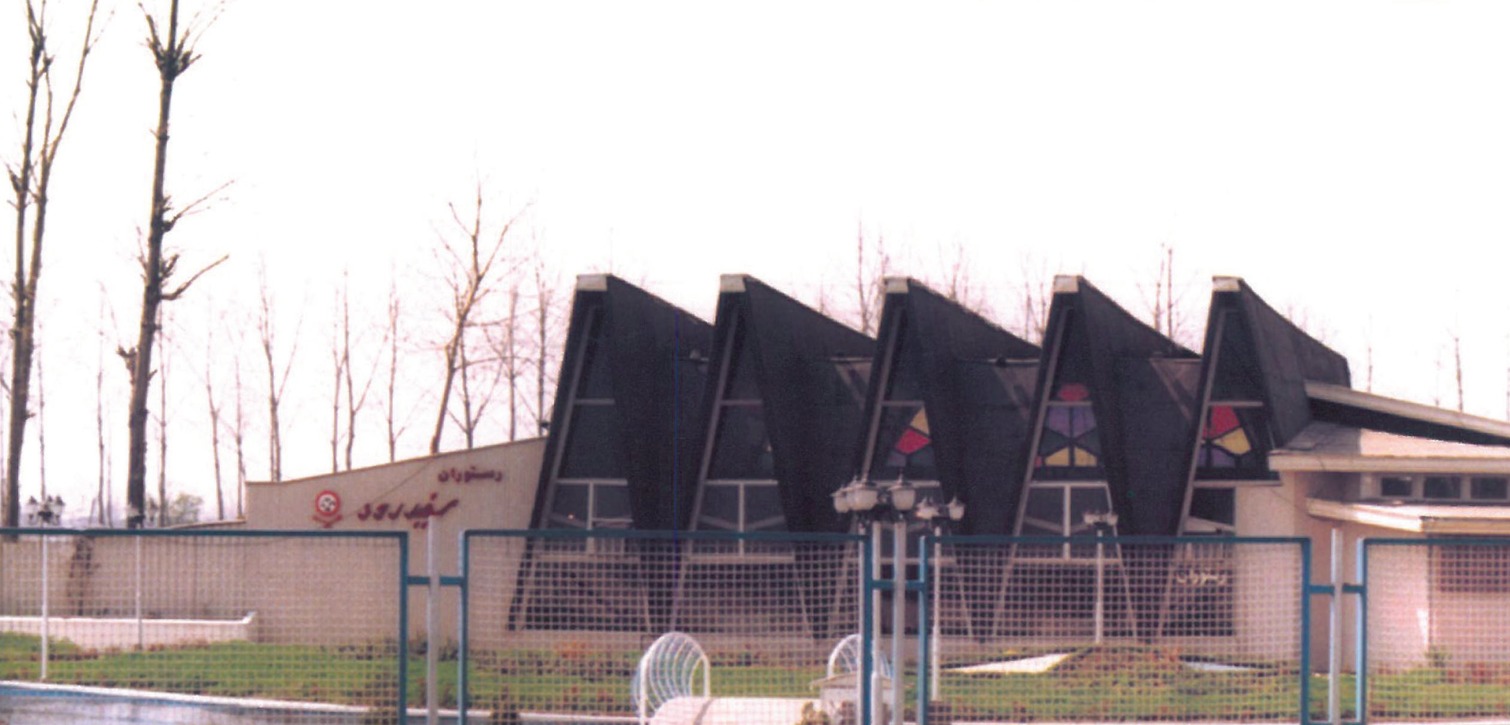
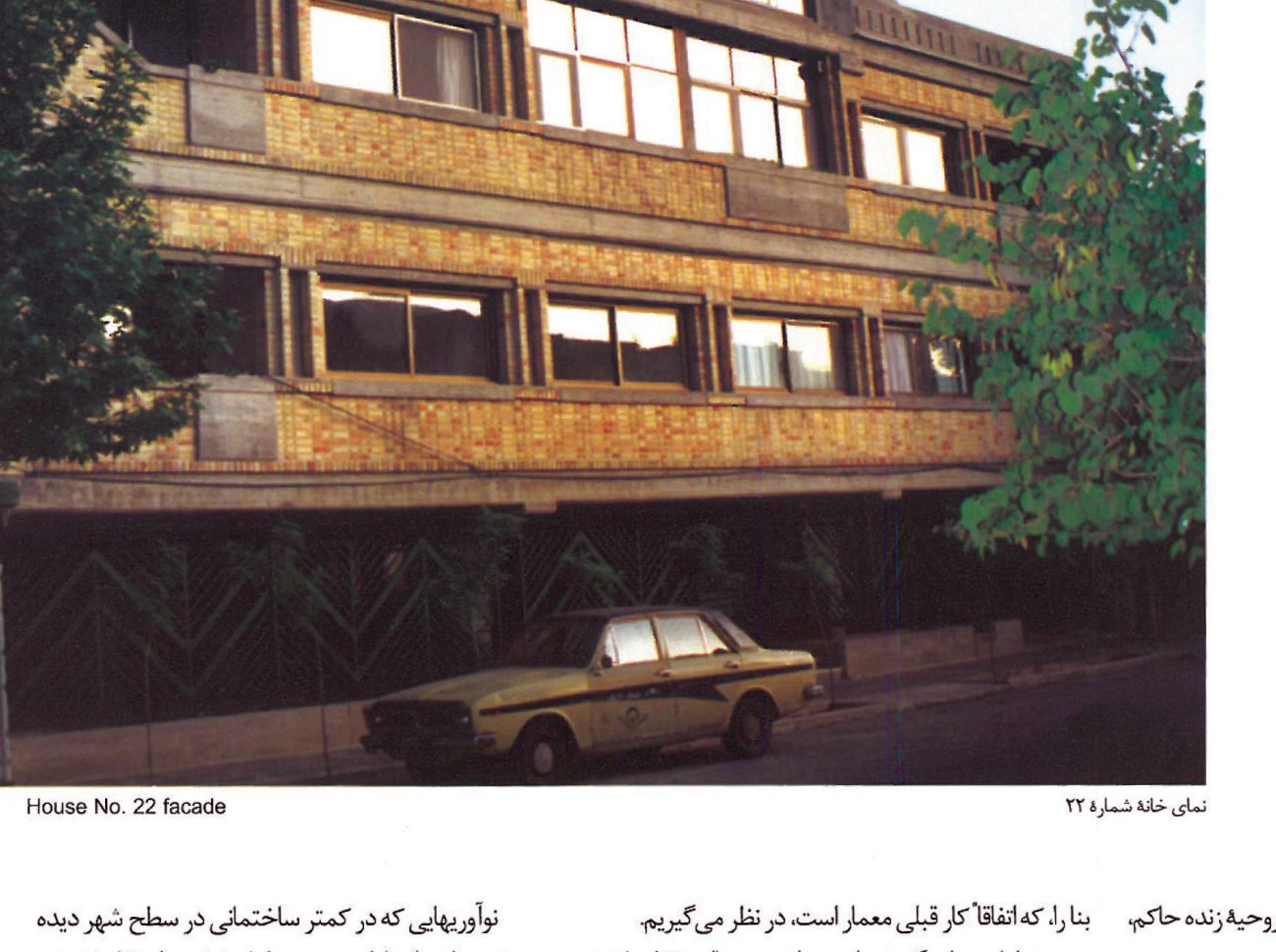
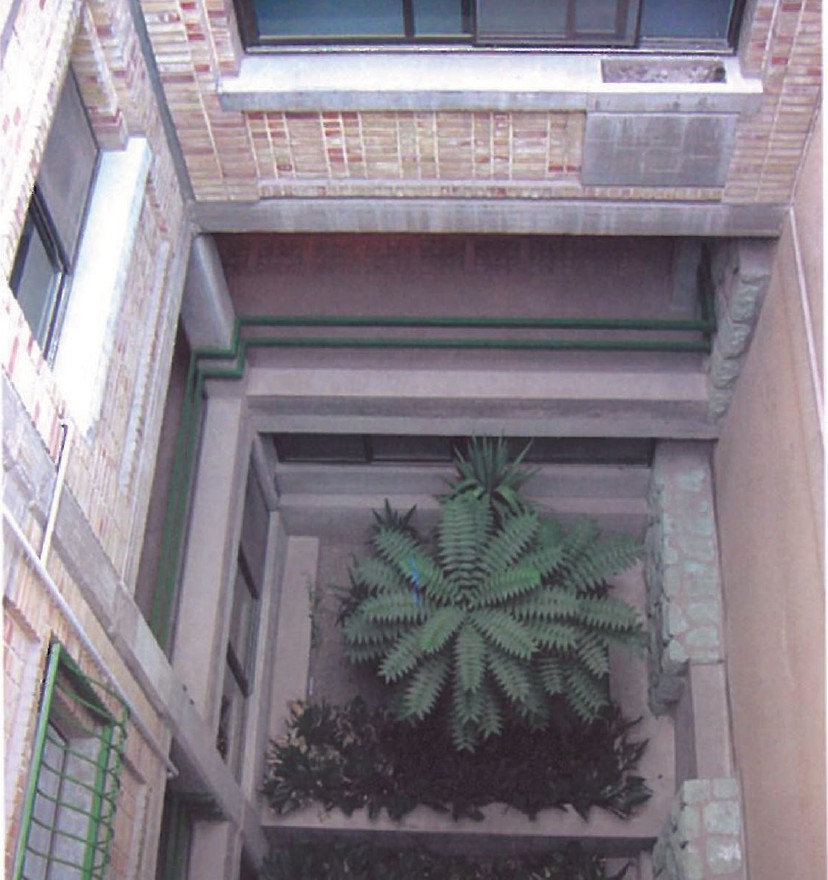
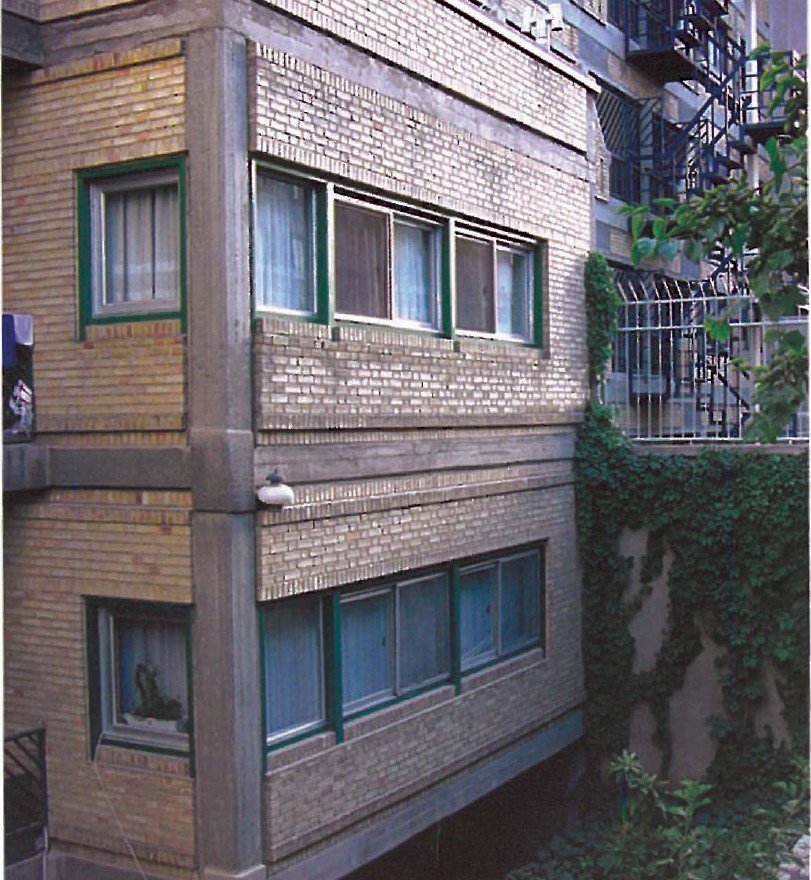
The article also includes the patio, fireplace, garage and postbox of House No. 22; the facades of Houses No. 22 and No. 55; the courtyard of House No. 55; the small fireplace of House No. 22; and the southern facade of the Sefidrood Restaurant near Rasht — a non-residential project that shares the same craft sensibility as the Saadat Abad housing. Innovations seldom seen elsewhere in the city — like the two-way sensory relation of the user with the materials used in the wall, the small light-well treated as a living, usable space, the part-by-part design of the complex, the holes provided in the courtyard floor for water disposal, the fitting trees and beautiful flowers in the courtyard's planting box, the care and obsession in choosing the right colours for each space, even the design and manufacture of the short pole-lamp on the pedestrian path entering the courtyard — together with thinking and round-the-clock supervision of correct construction, double the values of the work.
The structural engineer is engineer Gorjestani; the mechanical engineer is engineer Razavi.