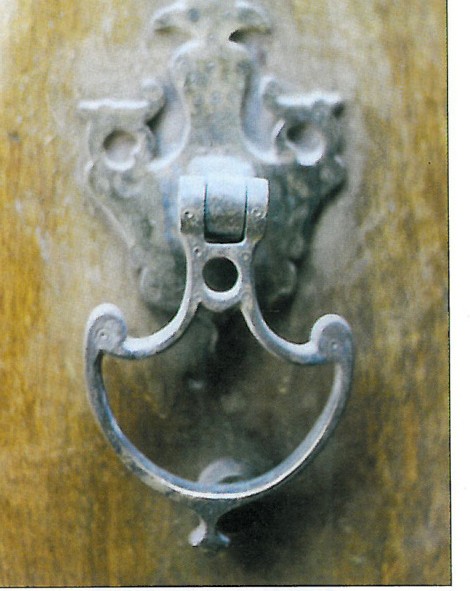
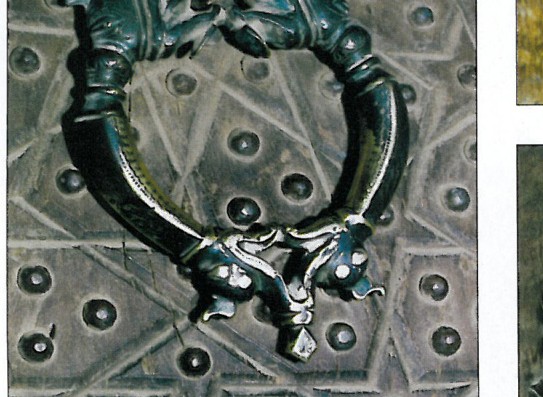
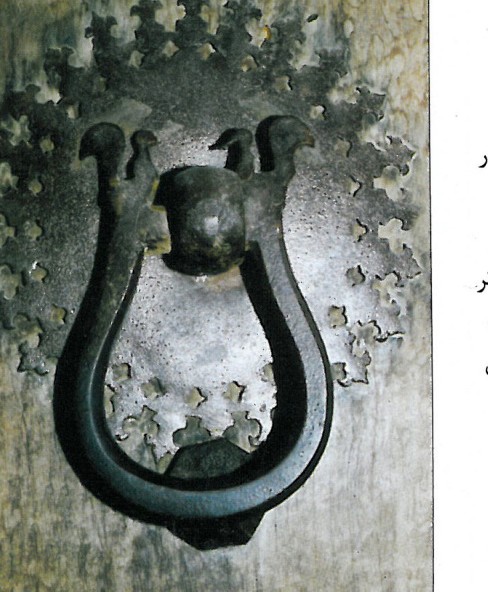
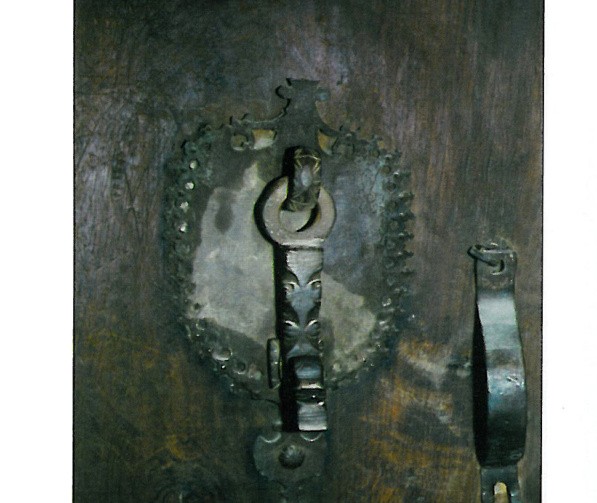
The Art of Studwork
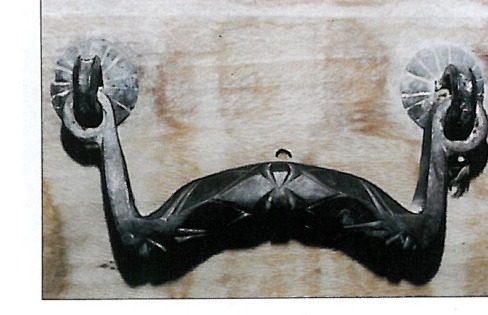
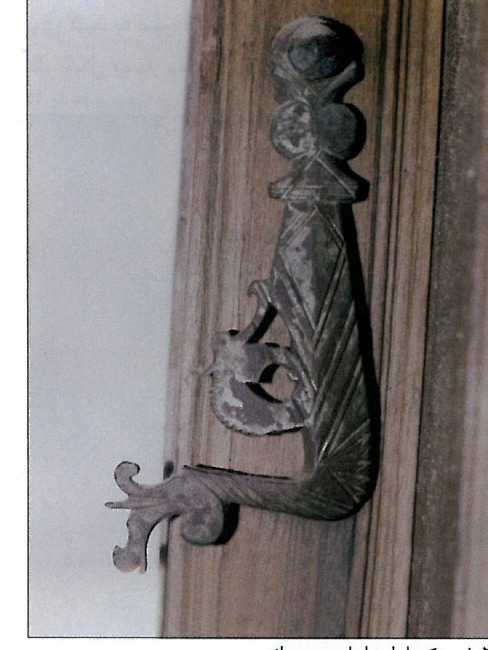
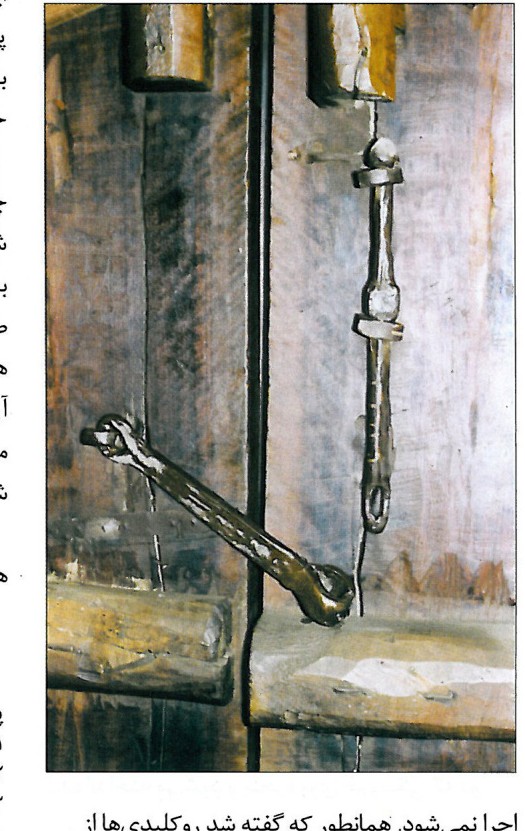
Zomud is the name given to that part of the blacksmith's output which makes up the metal hardware of doors and windows; zomudgari is the trade in which all the metal fittings used on traditional and old doors and windows are made. The studworkers must in all probability have had a high skill in drawing and painting, since the word zomud means, in the lexicon, both 'to draw, to ornament' and 'the applied and decorative parts of a building'.1
The most usual material for studwork is iron. At the discovery of iron, it was used for personal ornament. When it was found that iron was a hard and resistant material, it was put — beyond agricultural tools, weapons and cooking gear — to use as a covering to strengthen vulnerable materials, and beyond covering the body in battle this also took in the covering of wooden gates. In the finds from the Likh-Shiran cemetery excavations near Ardabil, dating to the first millennium BC, wooden pieces had been covered with iron sheet and metal studs. Iron-clad covering of the great wooden gates of fortresses was practised from the Median period, and gates went on being covered in this way through later periods.
From the Achaemenid and Sasanian periods no doors or windows survive, but at the Persepolis gate the place of metal pivot-heels and pivot-sockets, sunk into the stone, shows that on those gates two-leaf wooden doors with iron-, gold- or silver-clad coverings were hung. The Susa foundation inscription describes Darius's palace: '… the curtains of precious cloth, the floor of the hall of black and white stone, the beams of the ceiling of cedar and Indian fir or yew and ebony covered with gold-leaf, inset with ivory and jewels such as ruby and emerald. Beautiful animal forms in gold leaf were fitted to the bronze and iron doors, and even some of the walls were covered with gold sheet.'2
The earliest door surviving from the early Islamic period (c. 432 AH) was on the gate of Mehriz (Mehrijerd) in Yazd. This door, with three others, was made by a skilled blacksmith of Isfahan at the order of Abu-Ja'far Kakuyeh for the four gates of Yazd (Mehrijerd, Kushk-no, Sahileh, and Qatreyan); on the iron-clad sheets there were figures of mounted archers, animals, and abstract motifs.3
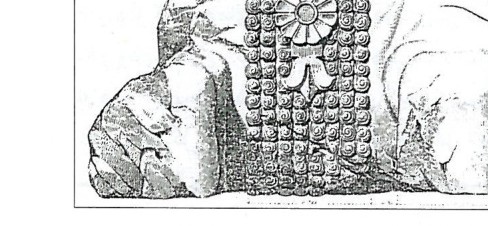
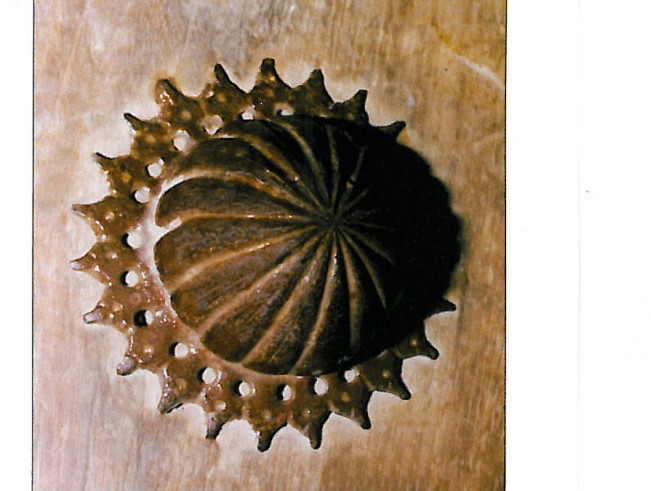
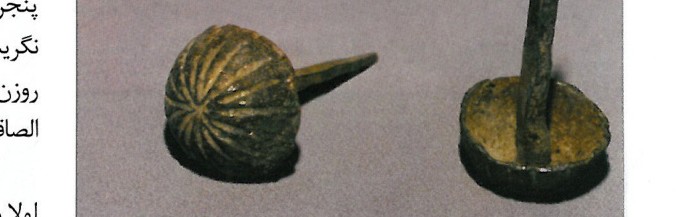
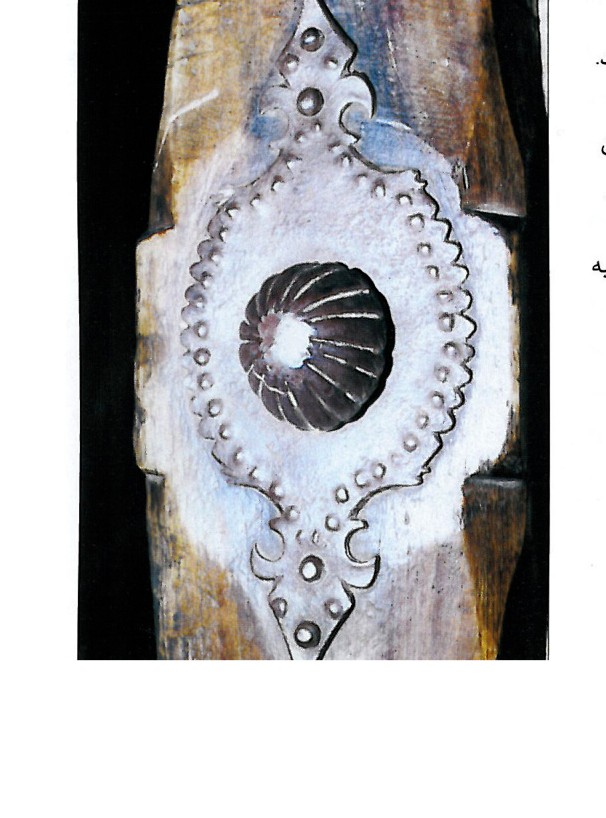
The decoration of wooden doors went beyond metal cladding to figural appliqués in the form of gol-mikh on the door surface. The gol-mikh — a multi-petalled rosette — was set in regular rows on gates, both for beauty and for strength. The rosette, taken as a symbol of the sun, is a motif used on certain ornaments of human dress, on horse harness and bit-plates, and on gates.
By door we mean here a piece made of plates of iron and other materials, of square or rectangular shape, of about a man's height, that turns within a frame on hinges or pivot-heels and is fitted at the entry or exit of a house, corridor and the like. Doors are usually made in two leaves; one-, three- and four-leaf doors also exist, in the four-leaf type the two outer leaves usually being fixed. The connection of the wooden parts of the leaves to one another and the fitting of those leaves to the frame is done by metal appliqués.
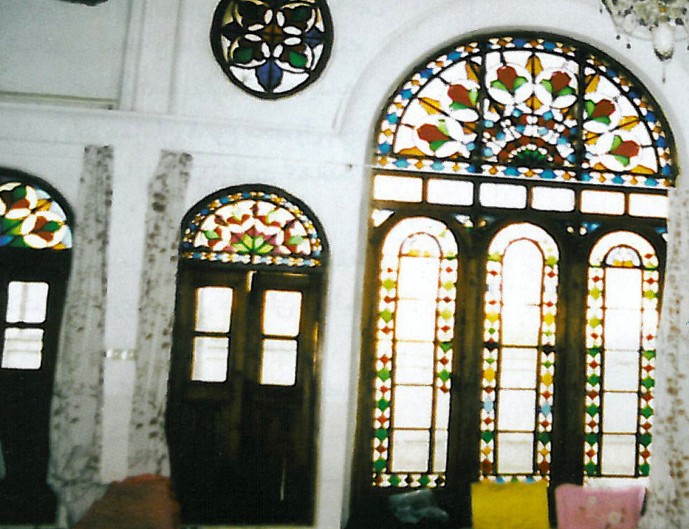
By window we mean an opening in the wall through which one can look outside. In the past windows were made as orosi, palkaneh, rowzan, and shabak; the last three usually have no metal fittings. The orosi is a latticed window which, instead of turning on hinge and pivot-heel, slides up to open and is held within a casement set above the window. The Pahlavi etymology of the word — from arus, meaning light, with the prefix ar meaning 'to rise up' — names exactly that vertical sliding motion.