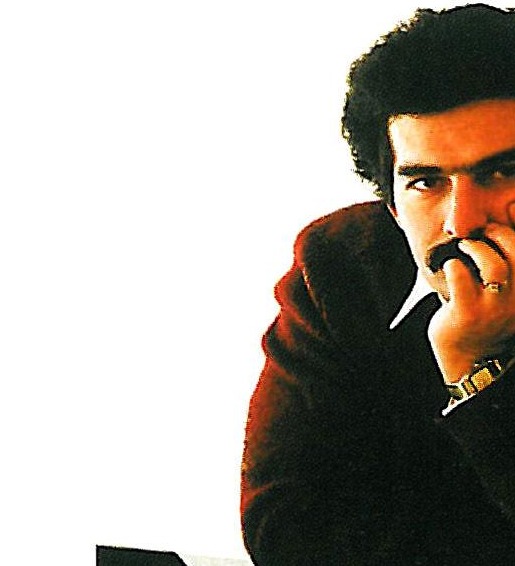
Bijan Shafei
Bijan Shafei, born in Mahabad in 1960 and graduated in architecture from the Faculty of Fine Arts, University of Tehran, has twenty years of continuous professional experience — remarkable for someone still belonging to the younger generation of Iranian architects. He has contributed actively to the design of more than 60 projects, of which about half have been built, and has steadily raised the quality of his work.
Shafei's built output spans tourism, industry and urban work at scales from small residential units to large city complexes. He is currently one of the members of Gozineh Consulting Engineers and a co-founder of the “Architecture of the Era of Transformation” research group, which has fifteen years of research activity behind it.
The characteristics of his architecture — rooted in his notion of spatial organisation and the principles of mass composition, in his readings of past architecture, and in his studies of the dominant tendencies in contemporary architecture — have acquired consistency and continuity across his professional work. They are to be sought in the whole process of programming, design and construction: in his attention to the needs of users and the life that takes place in the space, in the manner of spatial organisation and its formal qualities, and in constructional character.
We present Bijan Shafei through three of his works.
Projects
1. Office-Welfare Complex, Ahwaz
Associate designer: S. Nahid. Structural engineer: Mirpeyman Zandi. Electrical services: S. Nasirian. Contractor: Bar va Anbar Co. Client: Bazargani Service Development Co.
The complex is part of the annexes to the Kosar industrial cold store and warehouses in Ahwaz. Designed and built between 1989 and 1991, commissioned by the Bazargani Service Development Co. with Bar va Anbar Co. assisting through design and construction, it houses guest-house, residential, office, multi-purpose and restaurant functions in a varied composition of closed and covered spaces, semi-open spaces and free elements — stairs and openwork walls — arranged around a central courtyard. One of the main circulation axes runs through the courtyard and terminates in the guest-house.
Two principal linear routes, punctuated by a rhythm of covered connecting spaces, an interior courtyard and alley-like passages between perforated walls, organise the main circulation away from the through-traffic of the complex. Gateways of varying shapes on all sides give access to the complex from every face. The main pedestrian entrance gate contains a covered vestibule; a second gate — incorporating a stair as one of the defining elements of the enclosed courtyard — animates the whole courtyard ensemble.
Covered porticoes provide for circulation, access and rest. Controlled daylight is admitted through recessed windows, which also allow each room to have its own AC unit; the perforated grilles that ventilate those units soften the façade, and the rainwater downpipes are used as decorative elements. The use of cement within brick frames recalls the character of traditional environments.
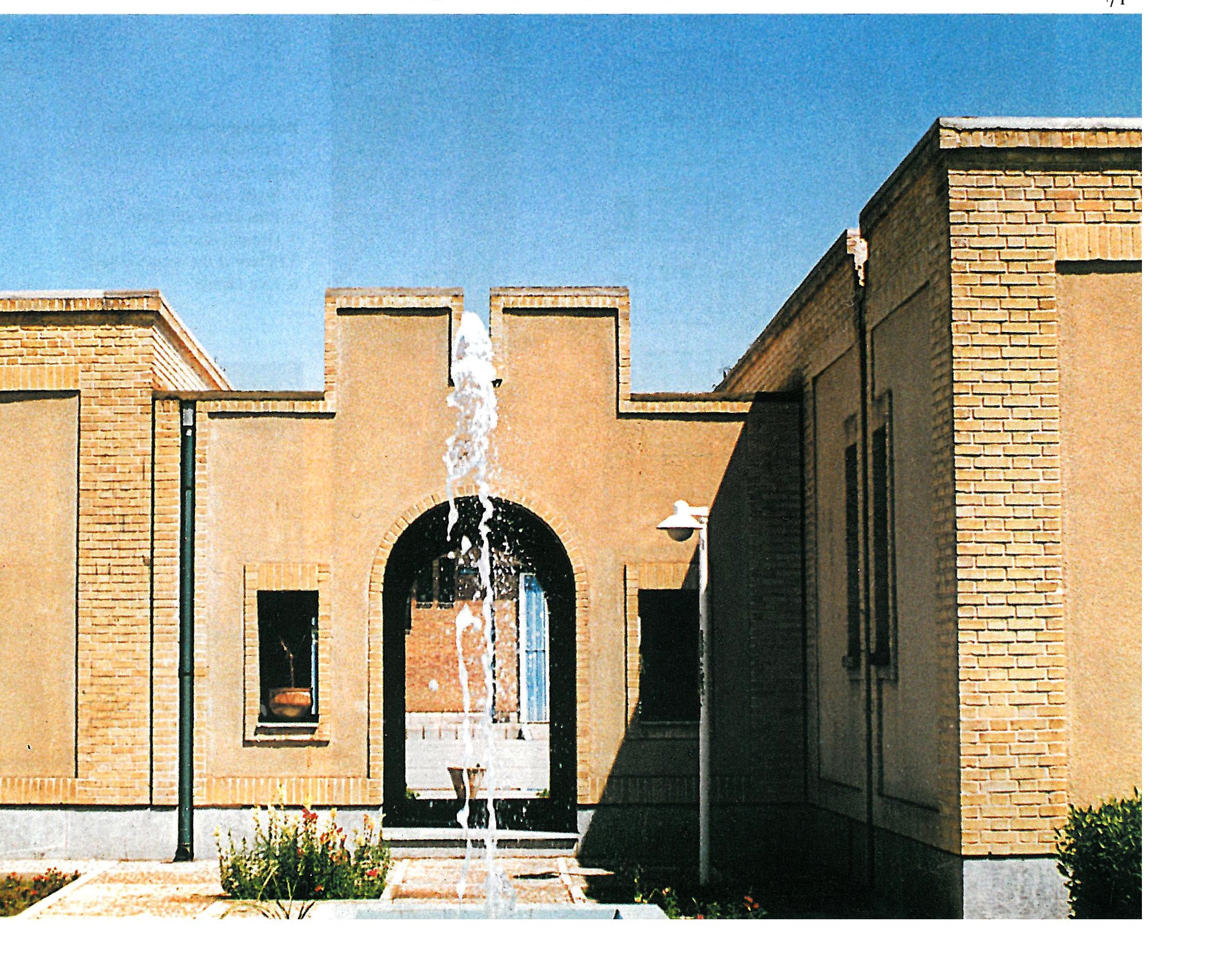
Office-Welfare Complex, Ahwaz — central court
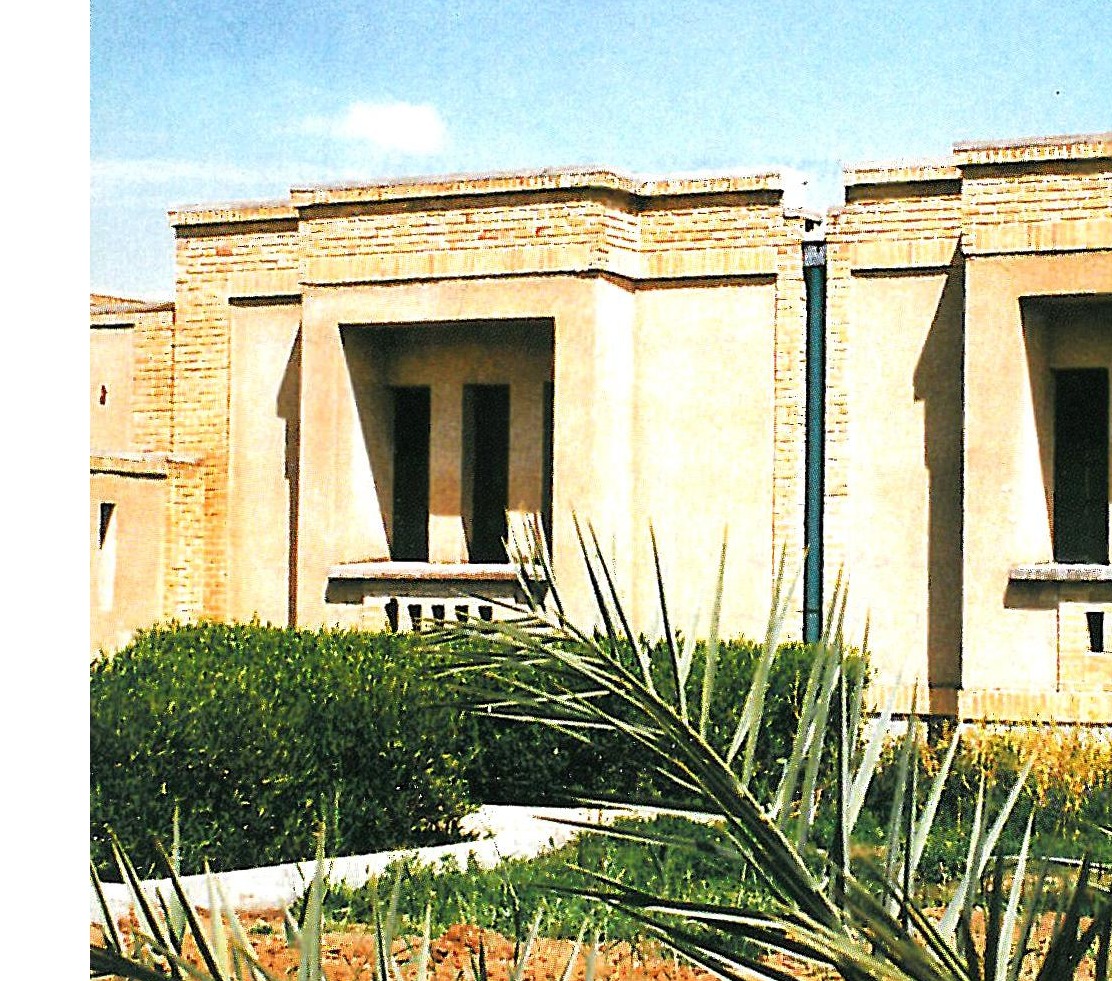
Office-Welfare Complex, Ahwaz — facade of the office building
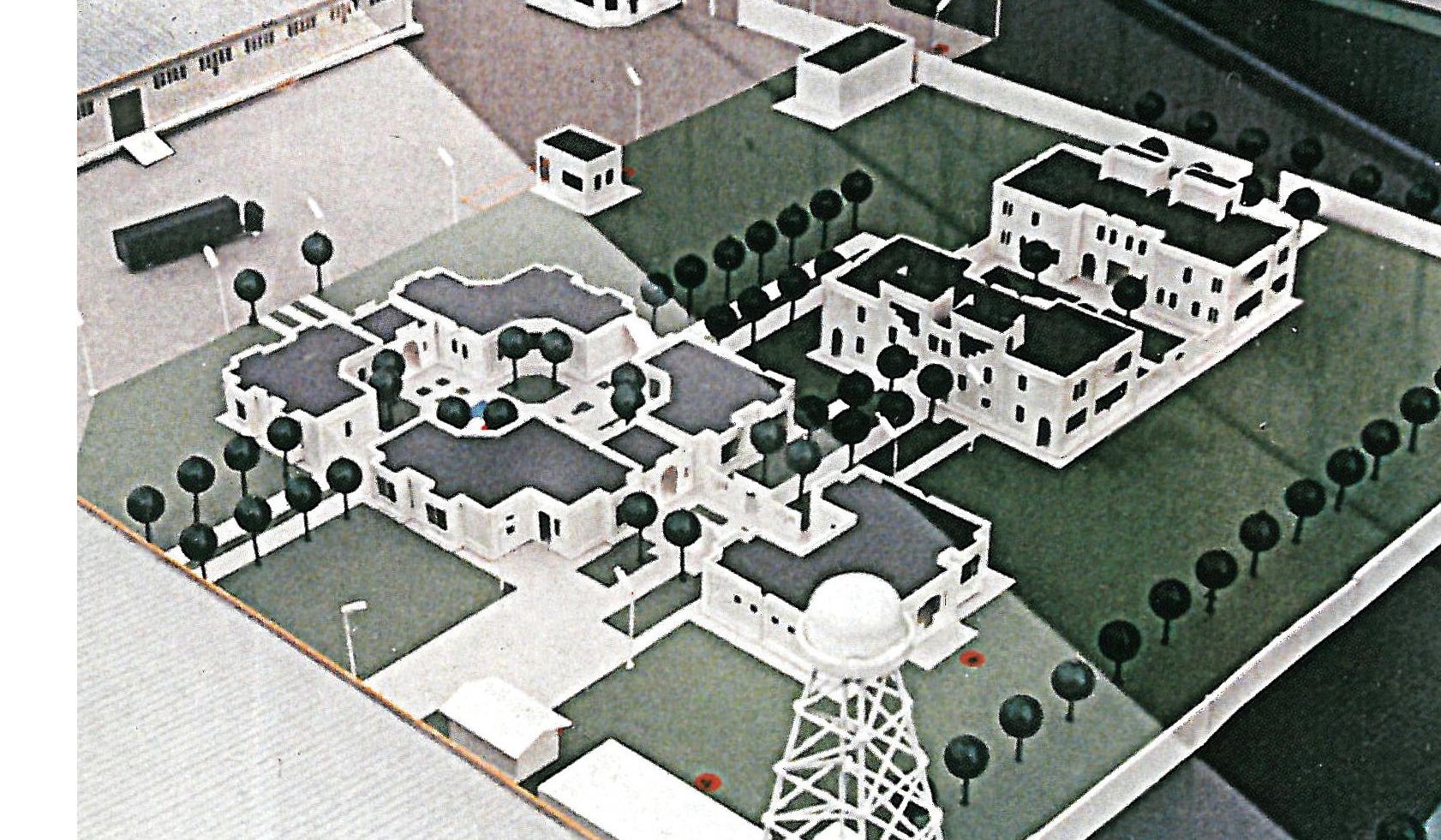
Office-Welfare Complex, Ahwaz — model of the complex
2. Fardis Garden Villa, Karaj, 1997-98
Associate designer: Nahid Beryani. Structural engineer: Kourosh Safaei. Contractor: Project Management.
Built in a densely planted 2,000 sq. m garden, the villa keeps the old axes of access and irrigation. The caretaker's house, the main building and the pool are laid out in sequence along the long axis, while the pergola and the traditional oven take up the cross axis.
The main building follows the linear form and the proportions of the garden, spreading its wings into the garden through triple triangular entrances. Reception and guest rooms, kitchen and the necessary services occupy the ground floor; bedrooms and their ancillary services the first floor. The basement, with its leisure area and a portico overlooking the dense part of the garden on three sides, a small pool at the centre of the portico, a winter sitting corner by the wall-mounted fireplace in the reception room, and straight and curved stairs to the upper floors, offers a warm, varied and beautifully composed space where the green of the garden below and the blue of the sky above are drawn together.
The diagonal lines of the design, for all their simplicity, lend a particular visual dynamism to plan, section and elevation alike. The calming white of the walls, the green of the rustic moalon stone in the dados, the dense green of the garden and the blue of the sky beyond, the orange of the openings set against the white of the façade, and the orange of the tile roof, together form a balanced composition of building and natural colour.
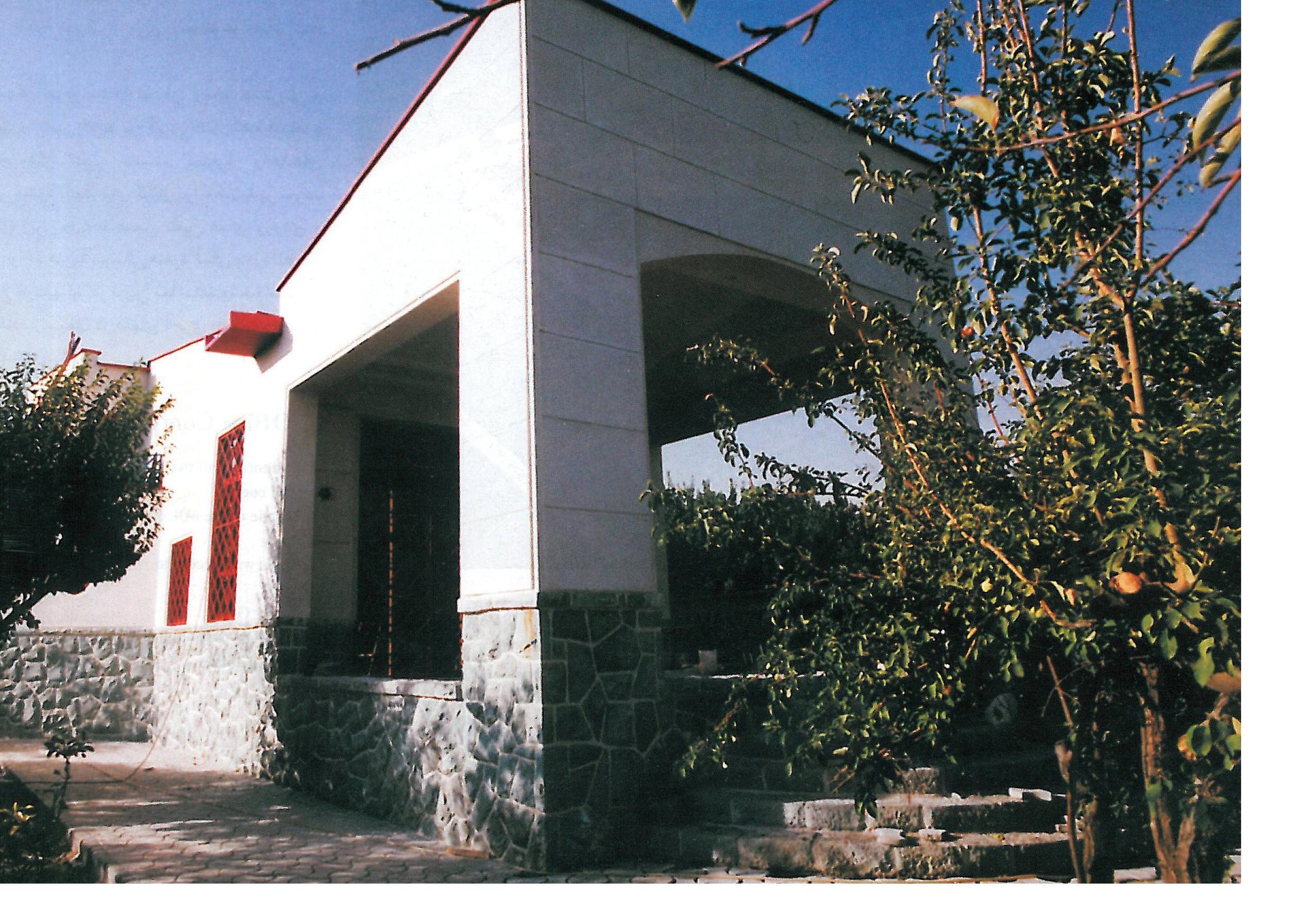
Fardis Garden Villa, Karaj, 1997-98 — view of the building
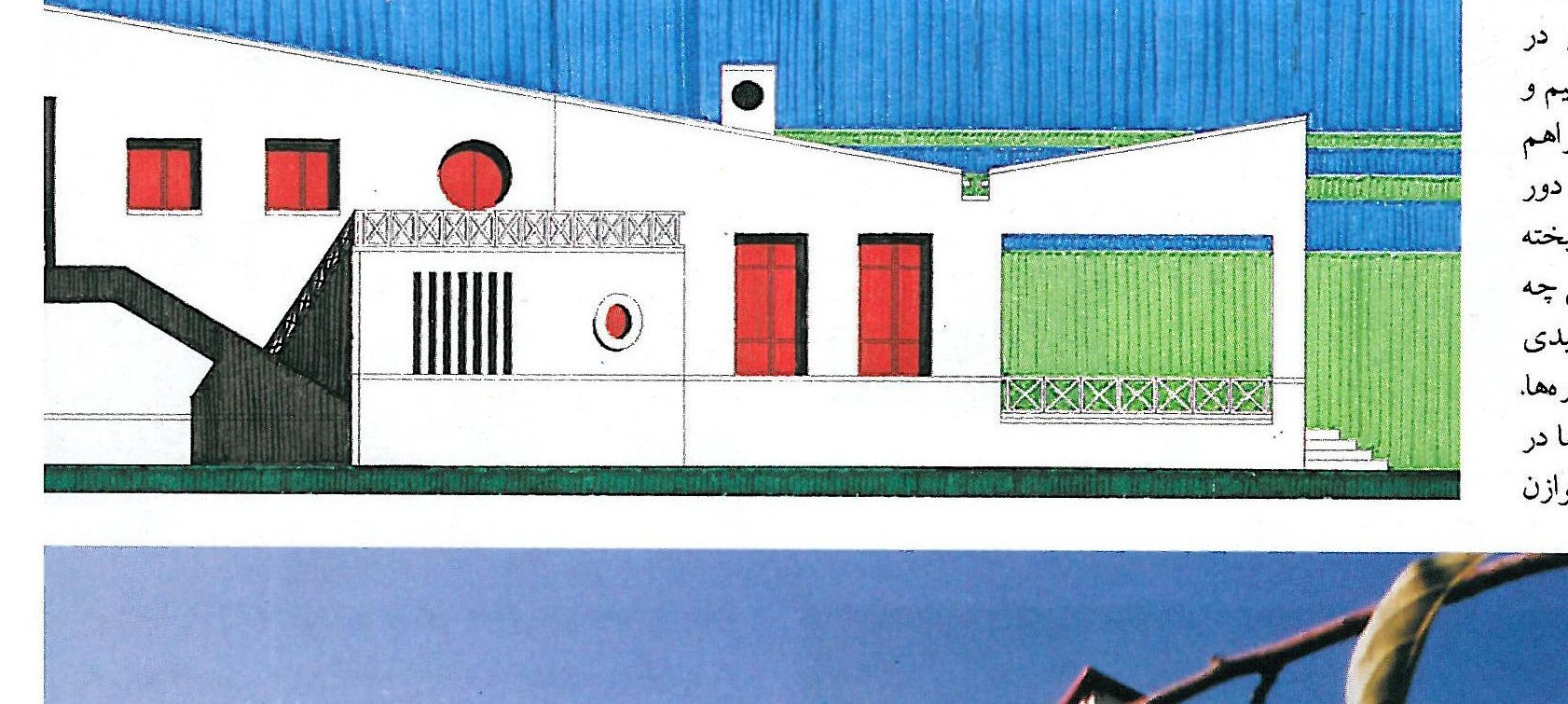
Fardis Garden Villa, Karaj, 1997-98 — south facade
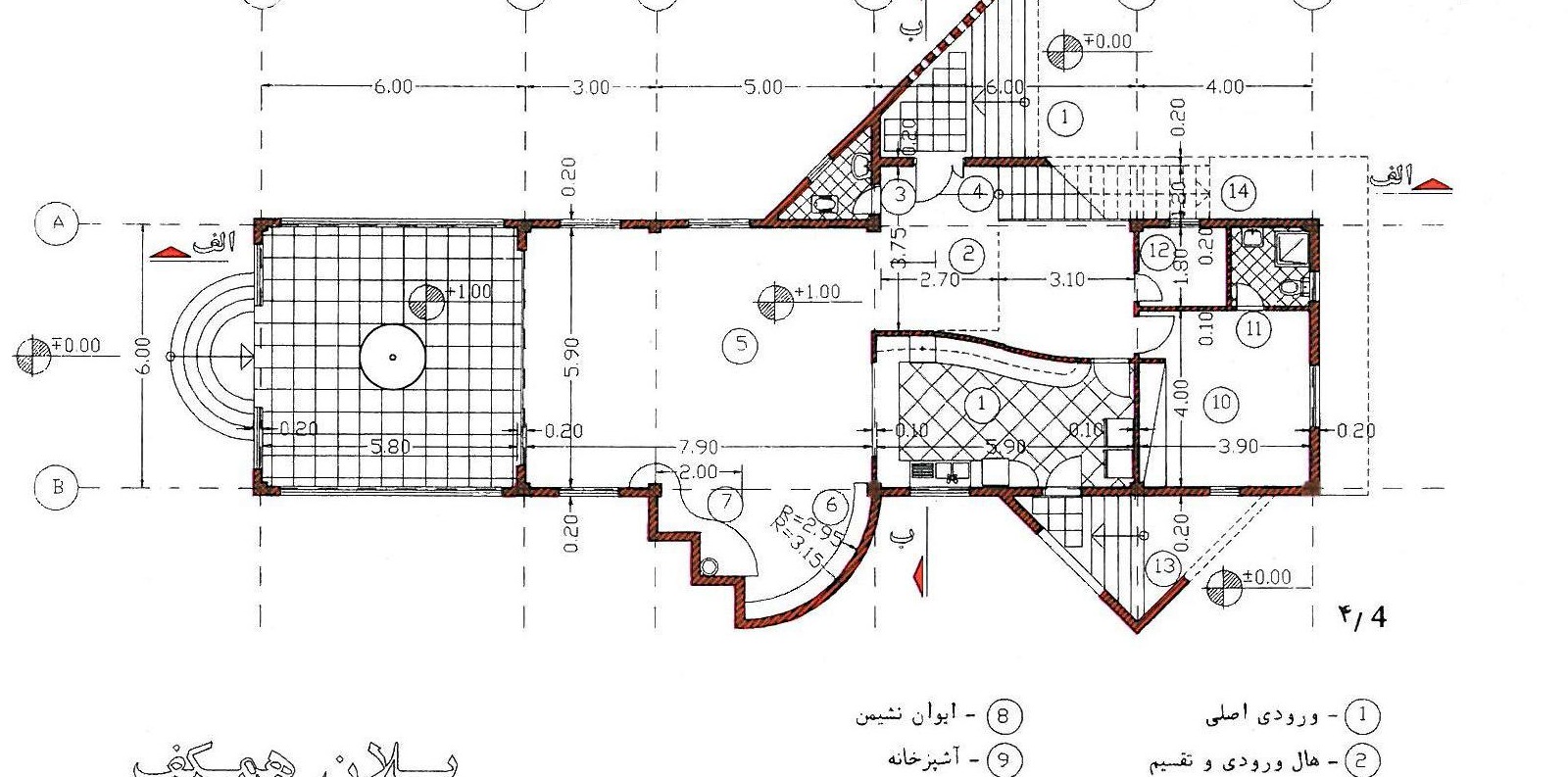
Fardis Garden Villa, Karaj, 1997-98 — ground floor plan
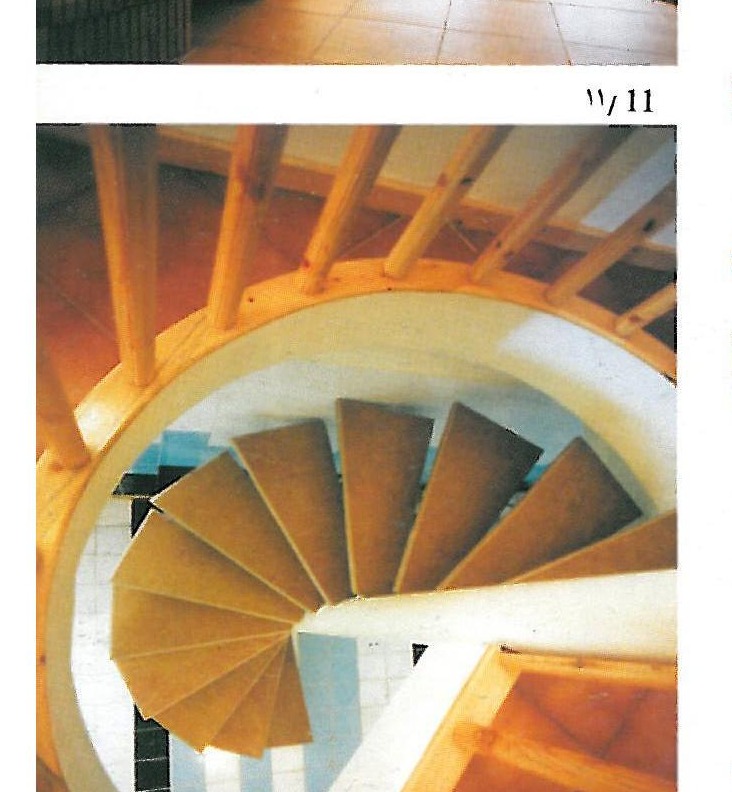
Fardis Garden Villa, Karaj, 1997-98 — stairs to the lower area
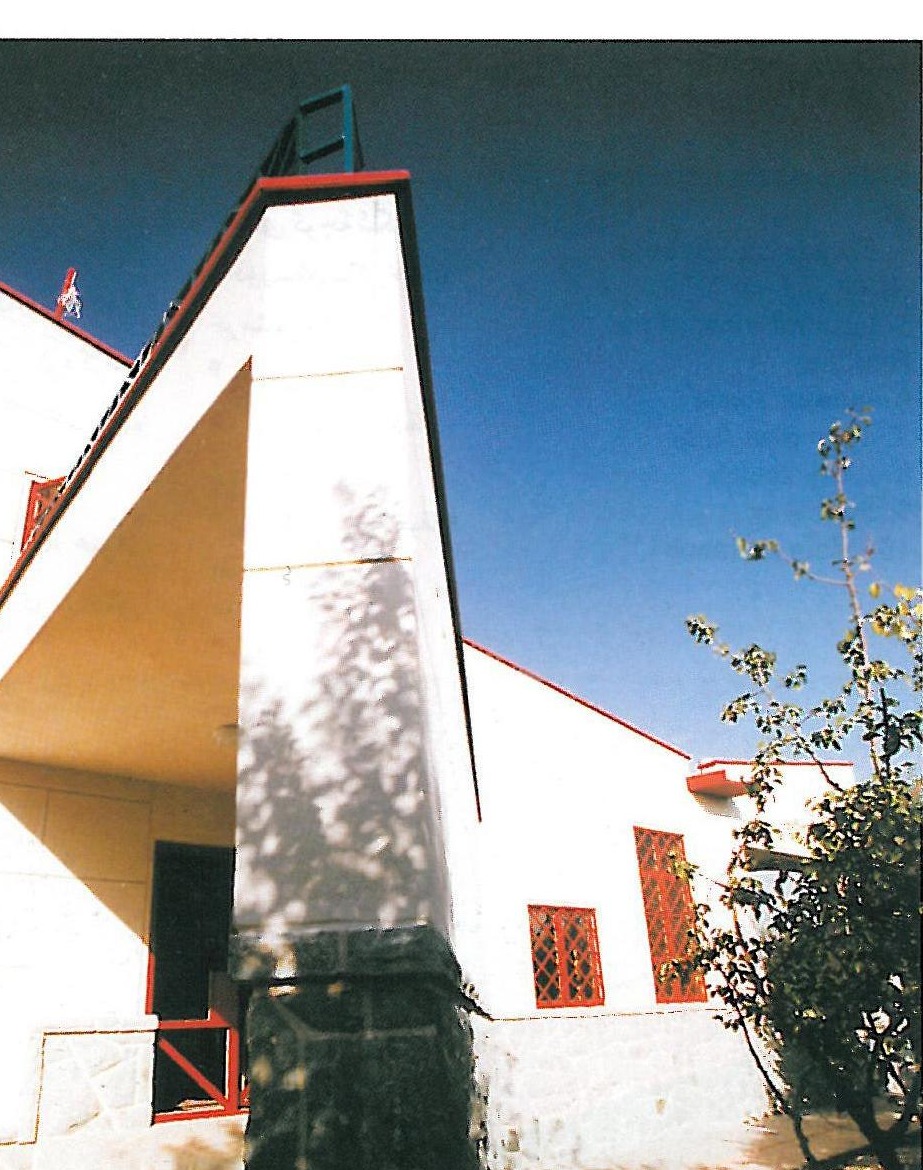
Fardis Garden Villa, Karaj, 1997-98 — south corner of the building
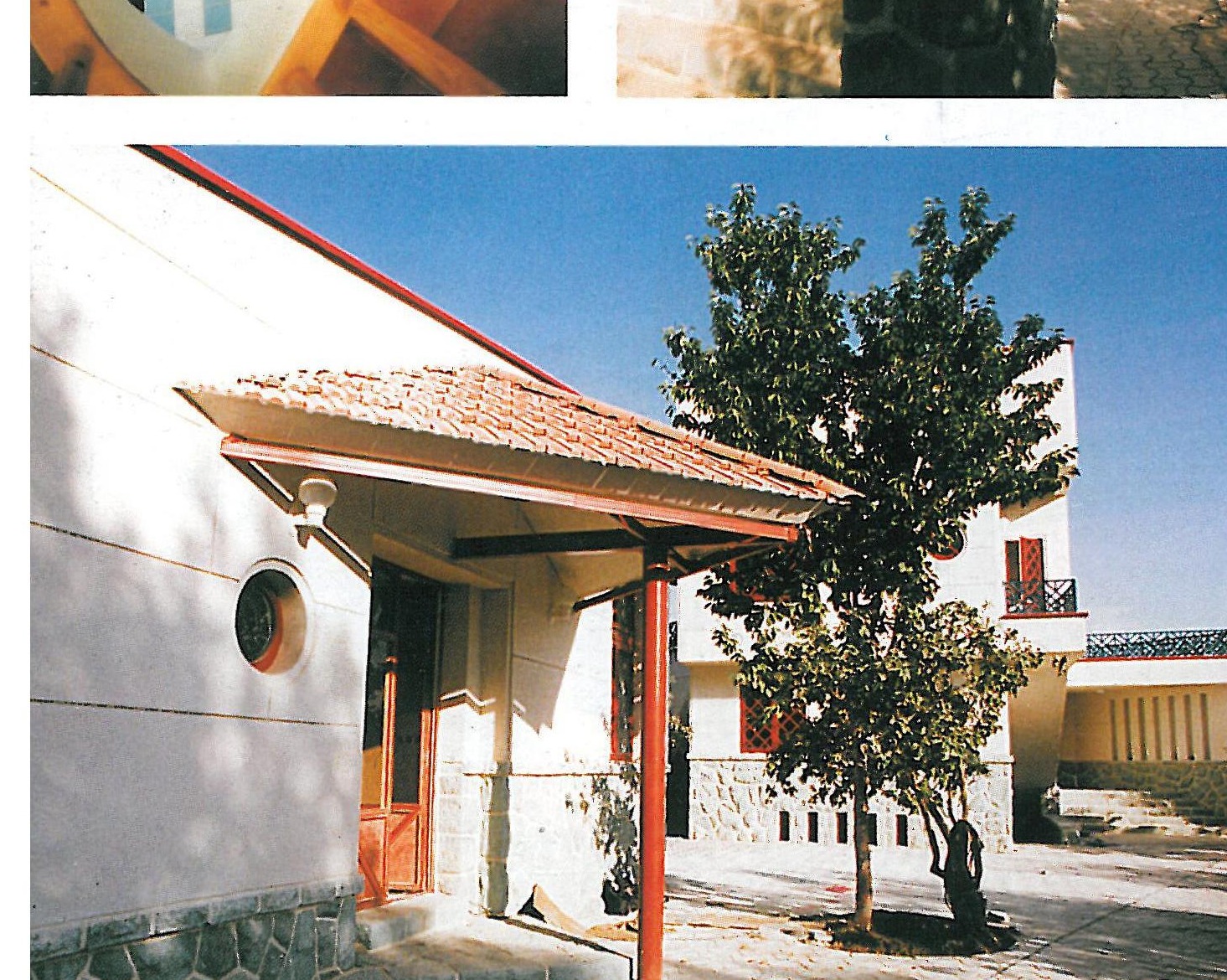
Fardis Garden Villa, Karaj, 1997-98 — main entrance
3. OCE Company's Branch Office in Tehran
Associate designers: Parinaz Mirzani, Kambiz Farhang-Farahi. Structural engineer: Kourosh Safaei. Electrical services: Vahid Kashani. Design and construction management: Gozineh Consulting Engineers. Client: Varian Iran.
Built in 1998 for Varian Iran, together with Gozineh Consulting Engineers during design and construction, as the representative office of a foreign company, the building stands on Apadana (formerly Khorramshahr) Street, in Tehran's office district. The plot sits at the corner of a main street and an alley, and the constraints imposed by fire stairs, firefighting access and similar requirements have all added to the delicacy of the design.
The stair is both the generating element and the main gesture of the façade: the dynamism of the building comes from the interplay of horizontal and vertical lines on the elevation and their crossings, reinforced by the diagonals above and below the line of the stair. A curved corner softens the volume and also resolves its meeting with the surrounding façades.
The interior is likewise organised around the stair, placed at the south-western side of the building as the central core. Offices are arranged in free plan, with good natural light from south, west and north. The warm texture of red brick, set against vertical strips of travertine, gives the façade its play of colour and relief between darker and lighter tones.
The entrances — one on the main street, one in the side alley — are recessed into carved-out spaces in the mass. A generous portal, a semi-enclosed masonry threshold and light metal railings with ornamental motifs welcome visitors in.
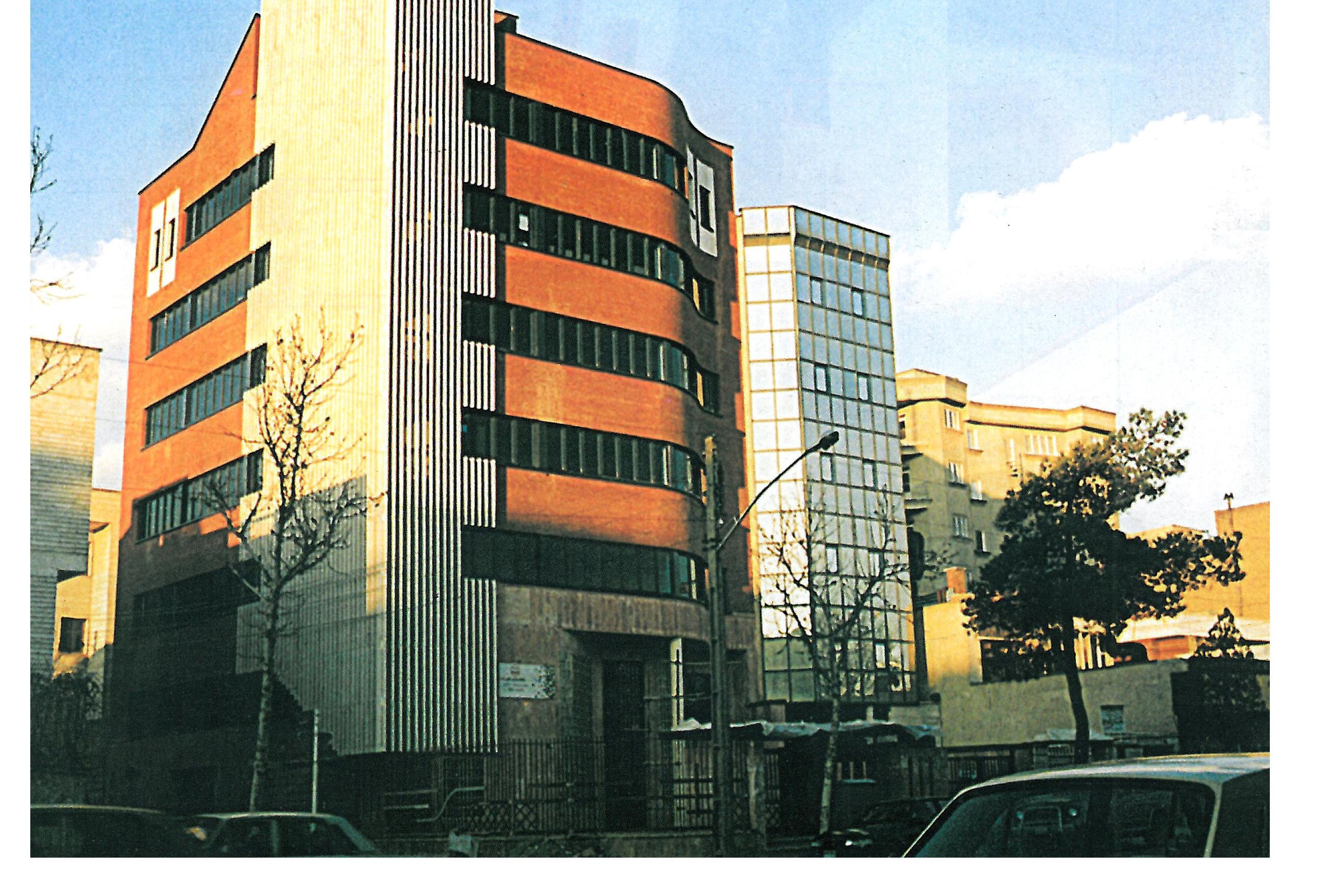
OCE Co. Branch Office, Tehran, 1998 — general view of the building
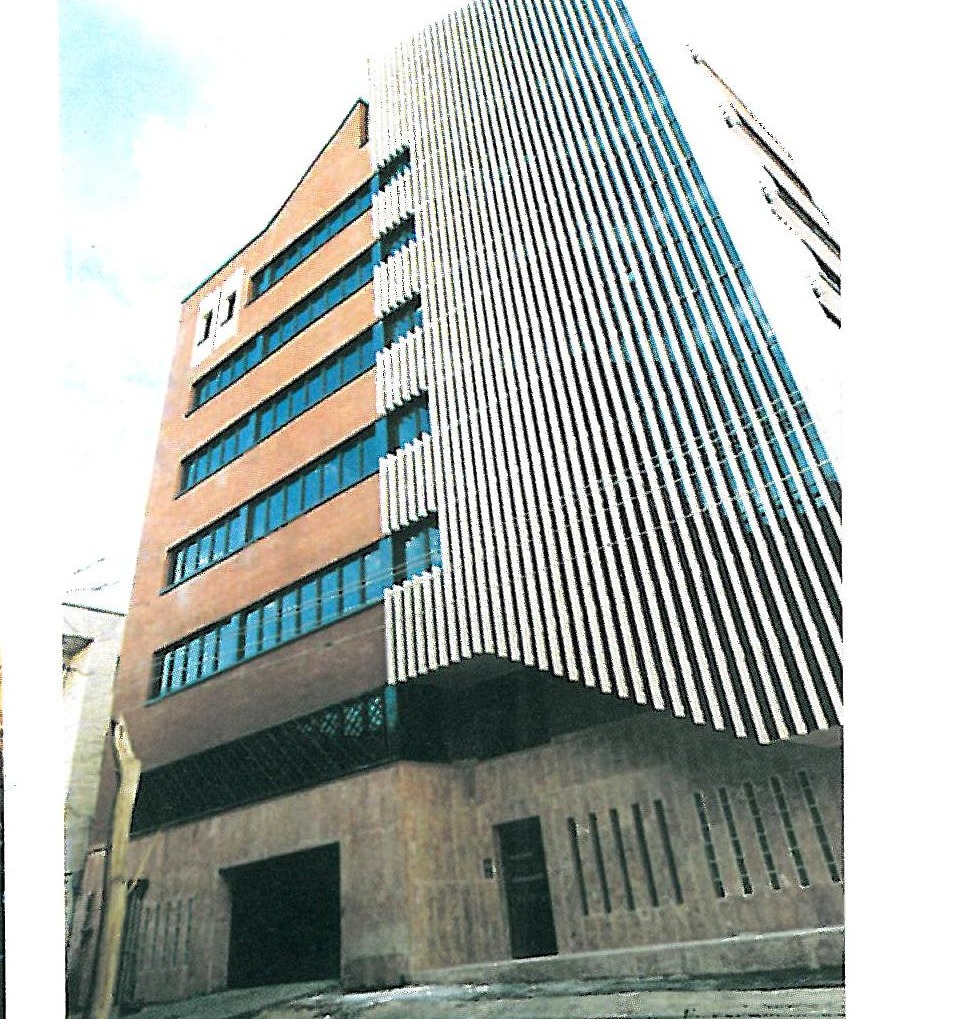
OCE Co. Branch Office, Tehran, 1998 — facade on Shokouh Alley
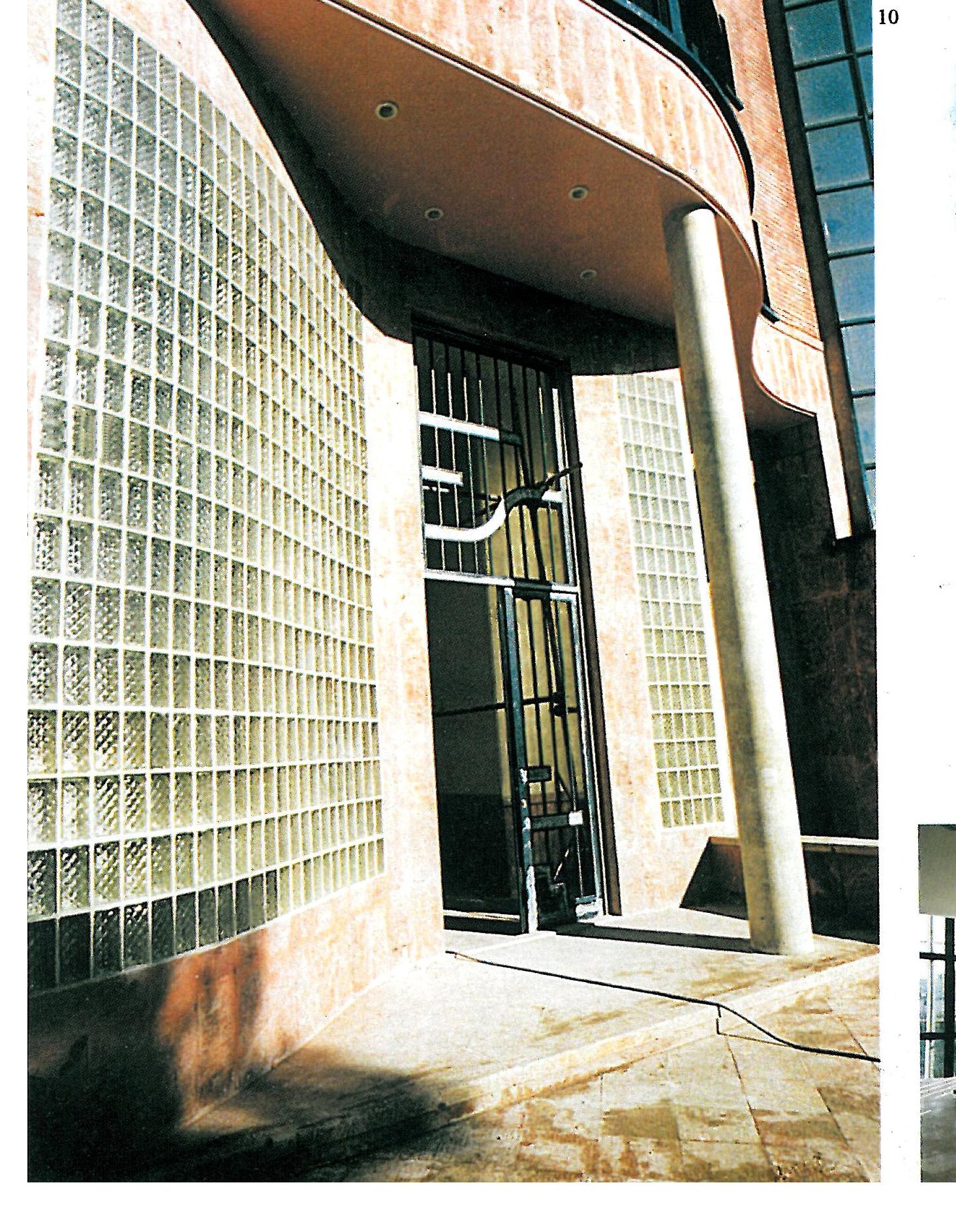
OCE Co. Branch Office, Tehran, 1998 — main entrance
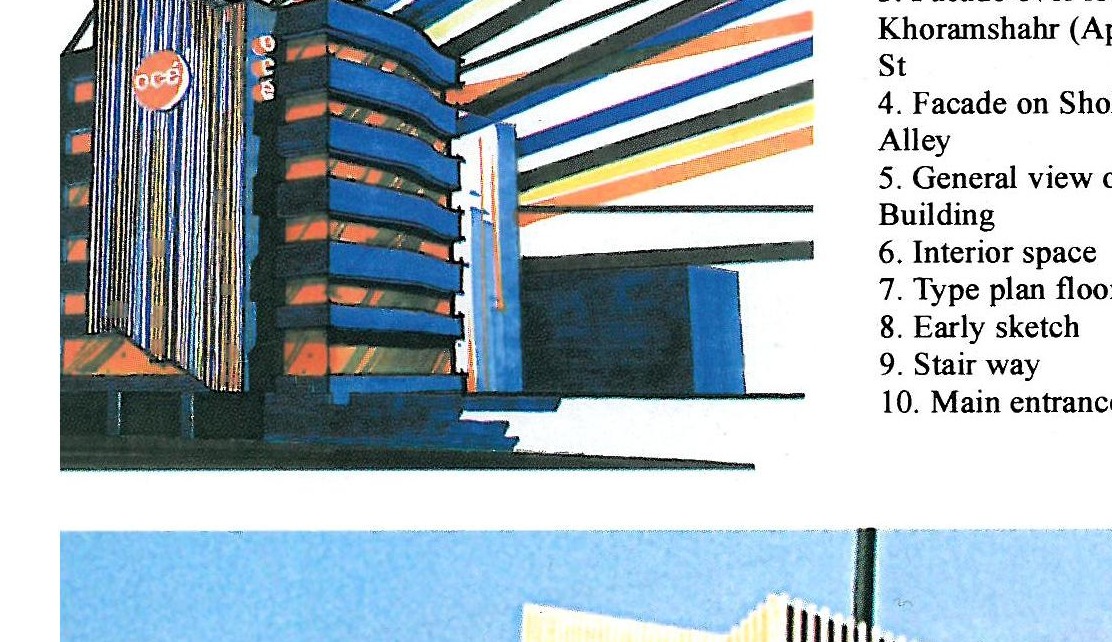
OCE Co. Branch Office, Tehran, 1998 — early sketch
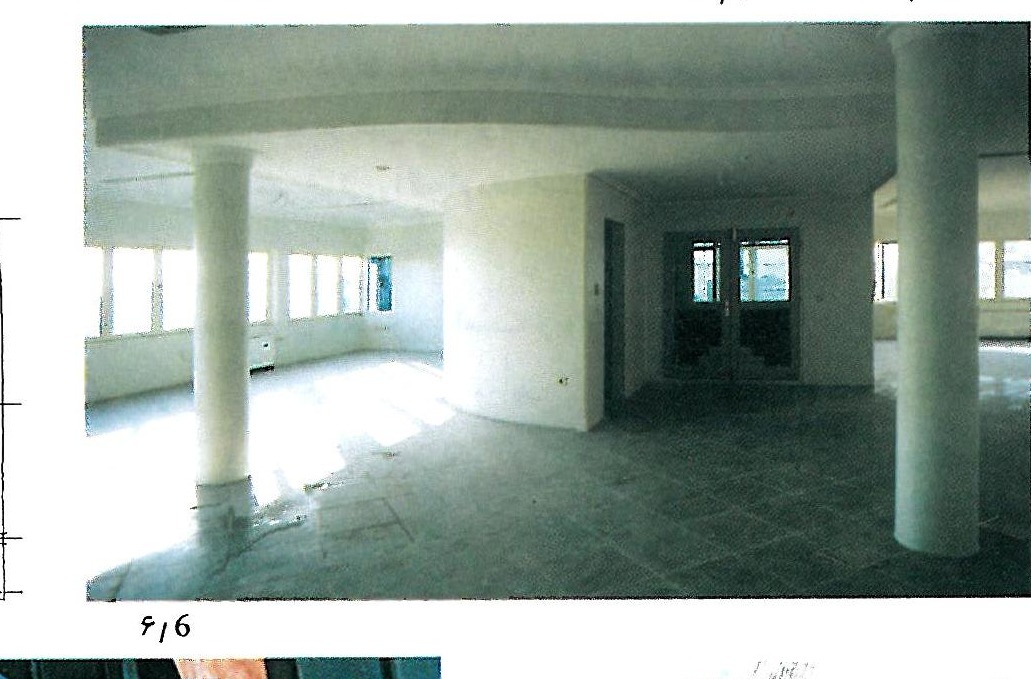
OCE Co. Branch Office, Tehran, 1998 — interior space