In a room rented by an advertising agency in the city of Rome, an ordinary citizen sits answering questions that are to be asked of 7 other people as well. The room is divided by a panel, one side of which is made of mirror glass. On the other side, in complete silence, twenty of the most creative minds from various specializations sit listening carefully to the interviewee's responses and taking notes in notebooks they hold. A camera records everything. The subject of the interview is a toothpaste that has been given to the interviewees to brush their teeth with before the Q&A session. "How did it feel?" (from the first person). They are not after discovering the interviewee's taste.
They seek metaphors for the effective expression of those meanings. A metaphor for expressing the feeling of freshness and cleanliness. One of them notes: "A toothpaste that even cleans the conscience." In response to the question of which famous personality the toothpaste in question reminds you of, the second person says "Benelis" (one of the Italian TV presenters). This last answer is useless because it is limited to the Italian audience; if he had said Robert Redford it would have been better.
The goal of this group of advertising specialists — psychologist, sociologist, designer, graphic artist, etc. — is clear: finding a slogan for advertising a toothpaste that is to be sold in America, Europe, Asia and Africa with a single advertising design and slogan. The product has been manufactured for a long time but still has no identity or face. This twenty-person group, which began its work a year ago, is to spend another 2 years traveling to all major cities of the world and asking similar questions of selected groups of people. In the end, a slogan, an image, and an identity for a new toothpaste that is to be the first global toothpaste will be created.
It may seem strange that I have begun the article with the story of a toothpaste, but if attention is paid to the subject of the article, which is creativity, this matter does not seem strange. Creativity, which is one of the main challenges of architecture in our country, can be seen in a completely serious and specific way in the art of advertising, which everyone deals with. The concerns and even the grounds for creativity in architecture are not very different from those in advertising and even other arts. The difference is more in the scale and technique of the work.
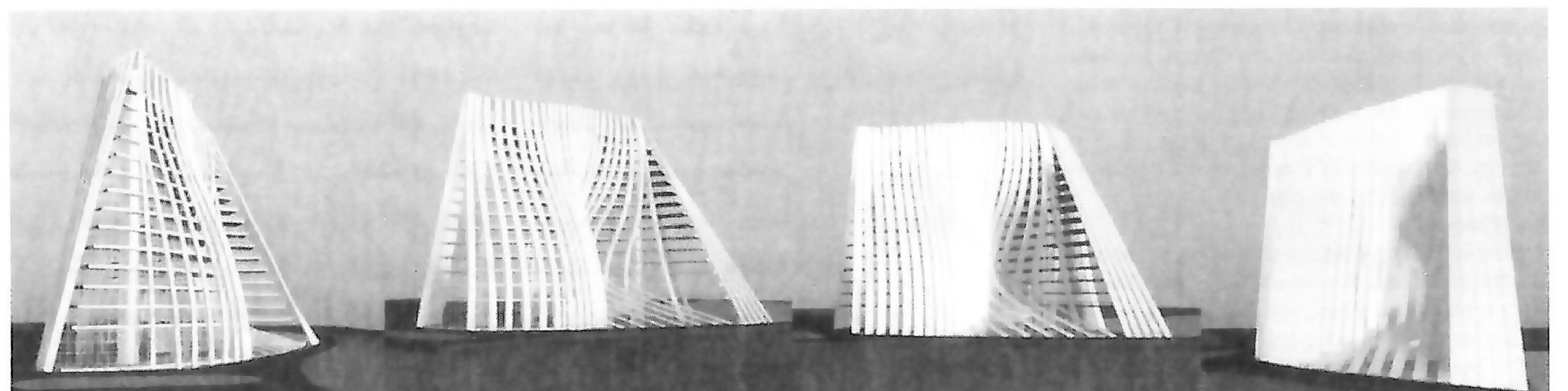
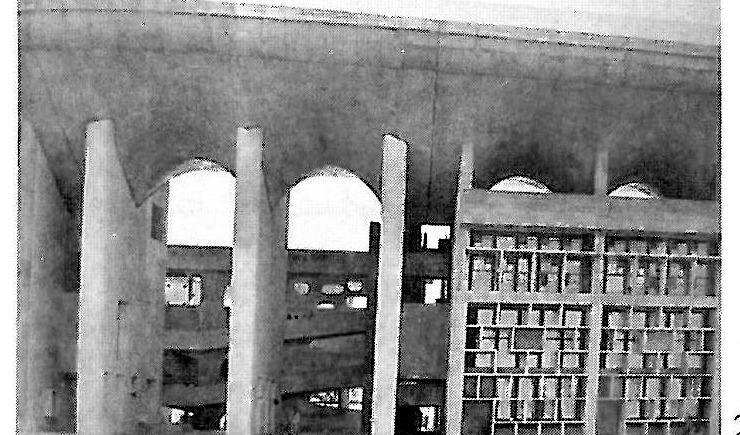
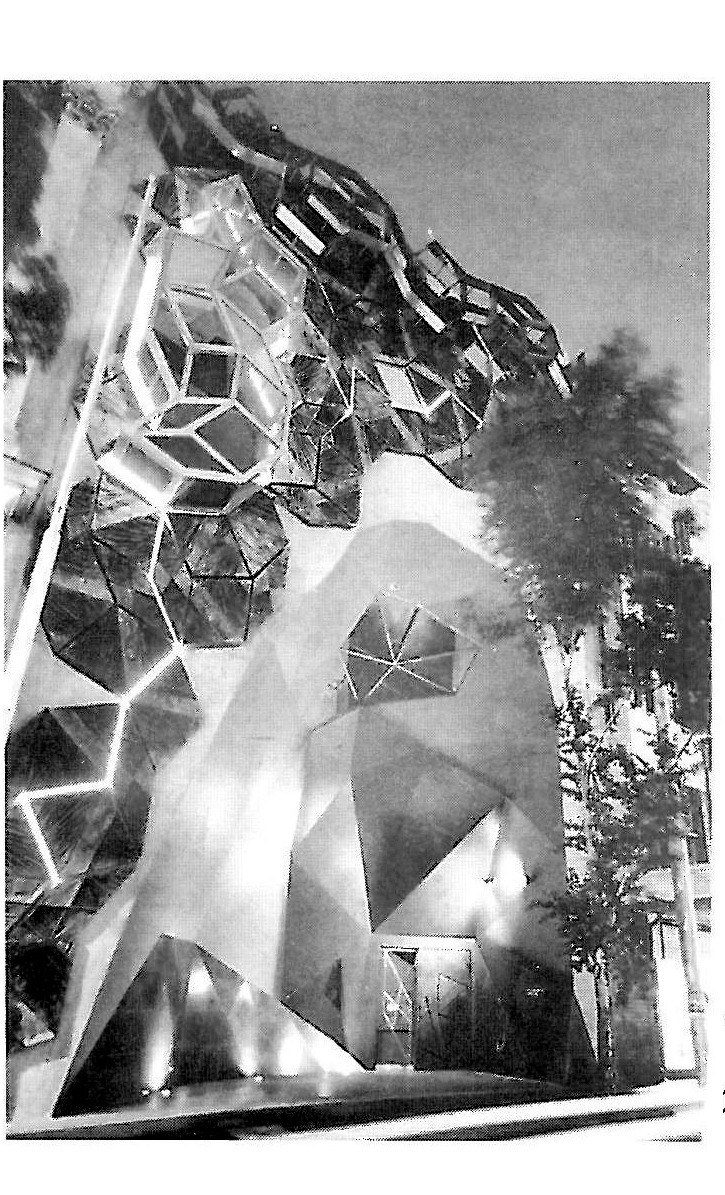
In the toothpaste example, we encountered two main issues. One, that the product should be manufactured in a way that meets the practical needs of the consumer. Two, the manner of presenting the product and its image. In solving both problems, creativity and innovation have been employed, and the final product is a phenomenon that contains all aspects inseparably within itself. In architecture too, we deal with two aspects: one related to the technical and functional requirements of the building, and the other to space, form and aesthetics. In outstanding projects, these two are inseparable and stem from creative thinking. The Export Development Bank project by Bahram Shirdel (1), for example, simultaneously contains striking innovations in spatial organization, form and structure. This building has transformed the traditional concept of the facade. Horizontal elements, in a soft movement, gradually transform
so that it has no front, back or side. At every angle, a new face of the building is discovered, so that sometimes it appears as a closed volume and sometimes transparent. The building introduces a new concept in terms of technology and statics. The apparently repetitive elements of the facade are in fact structural frames, each of which individually lacks stability and have become stable through leaning against one another, like a horizontal arch. Despite the volumetric complexity, the floor-supporting beams throughout the floors and in all sections of the building are identical. The spiral form is simultaneously the response to the spatial organization of the project's irregular site.
Architecture in its authentic sense is engaged with the difficult task of making something that does not already exist. The designer uses the power of imagination in this work. Creativity, which is the subject of our discussion, is something beyond imagination. Imagination can create an idea, image or form, but creativity is invention and innovation. Just as in invention, in creativity too the first condition is the existence of a specific purpose and need. Creativity is meaningful when an effective and novel solution to an important problem is found. Therefore, discovering the problem takes precedence over finding the solution. Generally, if the problem is correctly formulated, a suitable solution will sooner or later be found. Brunelleschi, in his famous project for the dome of Santa Maria del Fiore in Florence, realized that the main problem was not what had remained unanswered for a century. Before him, architects tried to solve the problem of scaffolding and the enormous wooden frameworks needed for the dome. And since the Gothic period had ended and workshops and master craftsmen capable of handling the work could not be found, the enormous span of the cathedral remained uncovered. Brunelleschi realized the problem had to be solved in a new way: a dome that would not need scaffolding or formwork, a dome that would be self-supporting at every stage of construction. And for this reason, after years of study and experimentation, he succeeded in formulating his innovative solution. San Paolesi, the Italian researcher, believes Brunelleschi was inspired by Iranian architecture and specifically by the Sultaniyya dome.
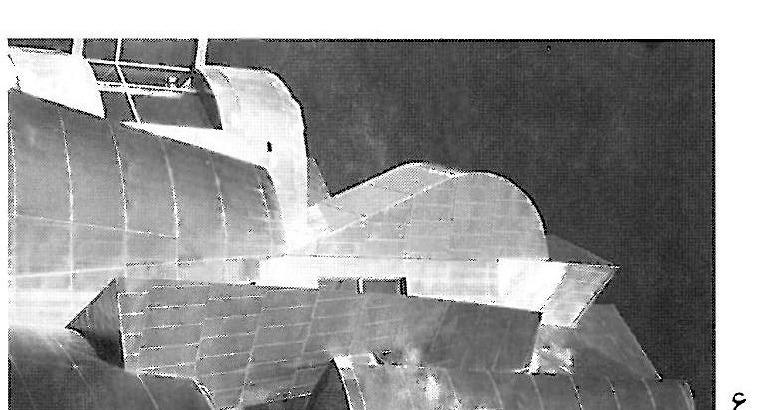
Creativity, like invention, never means creating something one hundred percent new and is based on some achievements of the past. In invention, the use of new capabilities from fields far removed from the subject of invention plays an important role. It suffices to mention the invention of firearms through the use of gunpowder, which had long been used in fireworks. There are several important factors, the first of which is the personality of the inventor. What percentage of a creative personality's emergence depends on social factors and what percentage on genetic factors is outside our discussion. The important point is acknowledging the reality that without specific capabilities, creativity is impossible. Since creativity cannot be limited to a specific profession, it relates in a way to the life of the creative individual and their reactions to their surrounding environment. To strengthen creative ability, one must also practice living creatively and looking at things creatively. In any case, depending on different talents, the type of creativity differs: Jean Prouvé, who had talent in technical matters, devoted his creativity to building and technical issues of architecture, while Frank Gehry, who has a sculptural type of creativity, pays much more attention to aesthetic issues than structural logic. So the important point is understanding one's specific talent and strengthening it, free from false wishes and artificial ideals.
Another factor is experience. Creativity without background and experience in work is impossible because an inexperienced mind lacks the capacity to develop subjects. The next factor is experimentation. Without experimentation and effort, the correct path is not discovered. Architects who are serious about their projects spend a great deal of time on them. In my period of work experience at the Piano office, I never saw a project completed without building dozens of models and even full-scale components. The fourth factor is inspiration: inspiration, or intuitive perception, is the key to creative activity. Intuitive perception, which is the highest level of learning, is the complex activity of the mind to reach the unknown. Intuitive perception takes us to places that science and knowledge have not yet reached. And the last factor is chance. In one of the previous articles, it was mentioned that one day Le Corbusier, upon seeing a crab shell, quite by chance, thought of creating the thick roof of the Ronchamp chapel. Here, chance played the role of a catalyst.
1 - Types of Imagination
As seen in this last example, the prelude to creativity is imagination. Imagination, which is the result of processing memory information, can create an image or form, but creativity is a transformation of imagination: when imagination becomes unique, it transforms into creativity. So in artistic creativity, two important stages exist:
1-1 - Imitative Imagination
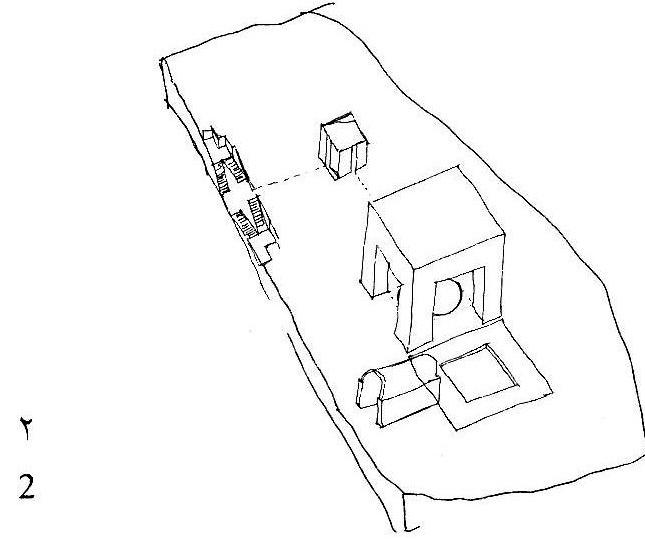
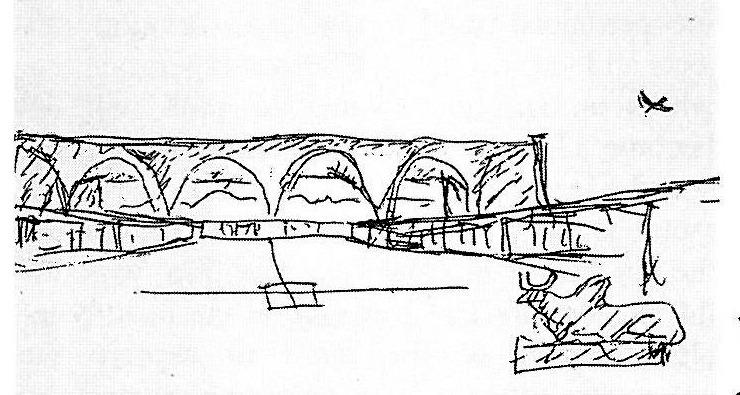
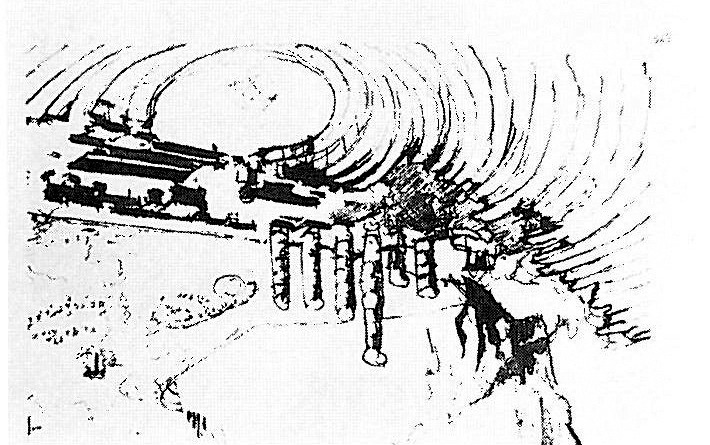
Imagination, which results from processing memory information, in its first stage manifests as the reconstruction of events and mental images in a new framework. At this stage, imagination is still dependent on its information sources and has an imitative aspect. To clarify this issue, I refer to the Iran Academies project by Hadi Mirmiran. The first sketch of this project (2) shows a platform on which two structures resembling Sasanian four-arched structures (chahar-taqis), an arch like the Arch of Ctesiphon, a square courtyard, and beside it a double staircase like the stairs of Persepolis can be seen. This sketch represents the first stage of imagination toward creativity, and for this reason the project elements are identifiable and have direct similarities with existing examples in architectural history.
1-2 - Creative Imagination
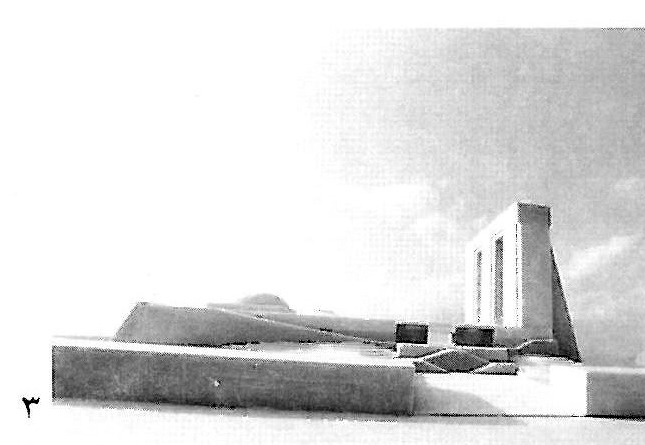
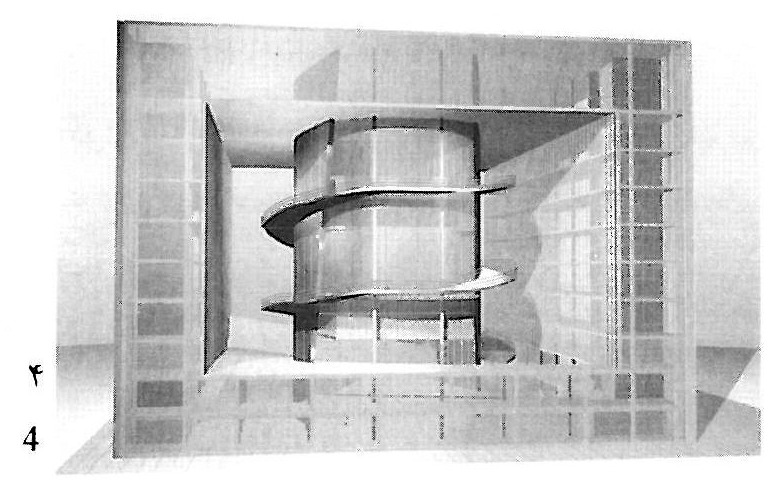
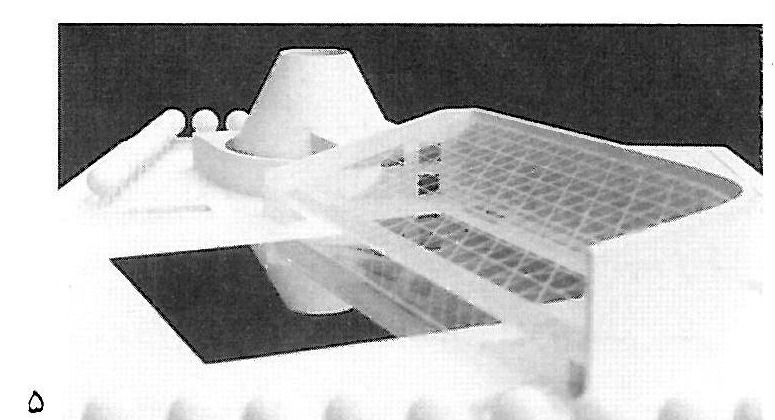
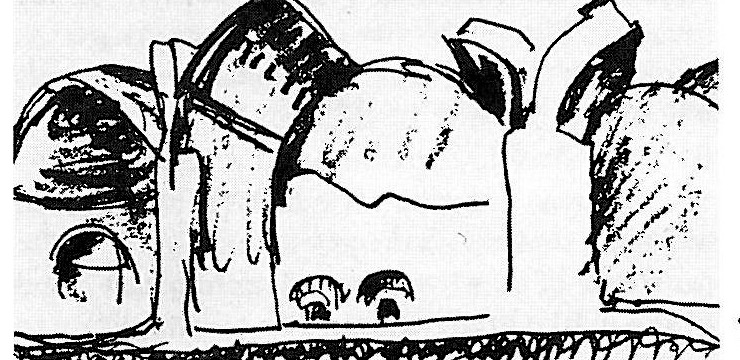
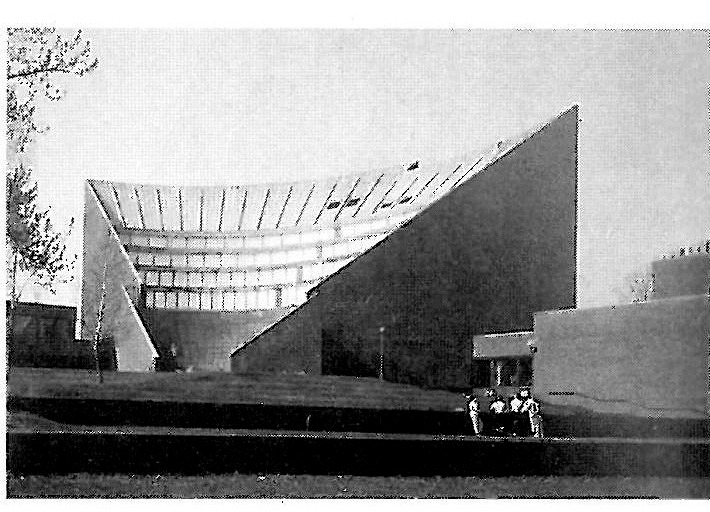
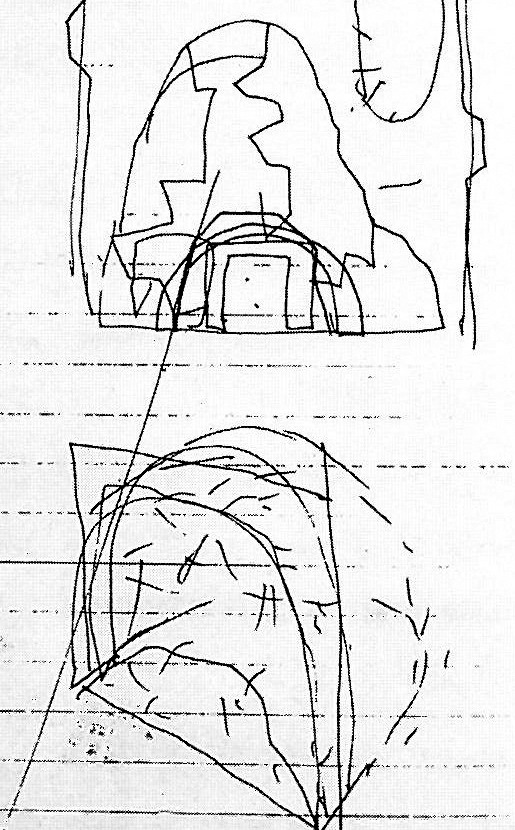
Creative imagination is when, using intuitive perception and reasoning, previous sensory impressions are newly established and organized from the beginning. The rules of initial borrowed patterns become the criteria. For example, in the Academies project (3) we see that in the design process, borrowed elements gradually change and transform into new elements that are an inseparable part of Mirmiran's project and belong nowhere else. General architectural patterns become specific. In the stage of creative imagination, the memories of elements and borrowed patterns are examined and refined until they become their own essence and an abstract idea. In the design process, these ideas are again reconstructed with rules influenced by the specific needs and conditions of the project. In the Ekbatan Cultural Center project (5), whose design was prepared by Shirdel and Associates in collaboration with the author, one of the main issues is the dual-faced nature of the building. Due to the specific placement of the project site beside a large plot of land that separates phases one and two of Ekbatan city, the main view of the building is from the north, from the Tehran-Karaj highway entrance to Ekbatan. The second facade relates to the western side and access from the street.
We needed a covered space at a height of seven to eight meters facing north to take advantage of the mountain scenery. The idea of "two iwans" came to us. In Iranian culture, two types of iwan exist that differ in their function. One is the iwan as a place of passage and the other is the iwan as a place of stopping and contemplation — like the western iwan where the building entrance is located, and the iwan is a place for people to gather and watch the mountain scenery and the Ekbatan complex. In designing these two iwans, the formal connection to the traditional iwan has been severed. The iwan pattern has been decomposed until it becomes a spatial idea. The design process, emerging from the specific issues of the project, offers a new interpretation of the iwan.
Tradition, which is very important in architecture, takes three forms: a) Preservation or reconstruction of what exists: like traditional projects (example: the winning project of the shrine expansion design, where a relationship with architectural history has been established and progress achieved). b) Tradition as transmission: meaning the use of historical patterns and typologies in a new framework, so that they can find a new role in today's changed conditions (like the Rafsanjan Museum project). c) Tradition as transformation: in this type of approach, new values are brought to architecture. This method, which is closer to creativity, transforms the consumptive relationship with culture and history into a productive relationship and allows history to fulfill its main function: historicizing the achievements of the past.
2 - Fields of Creativity
In daily life, for practical reasons, professional divisions have been made and for example industrial design, architecture and urban planning have been separated from each other. Each of these fields has techniques and methods of its own. But the brain, which is responsible for creative power, has no such divisions. Therefore creativity in architecture and in other arts are not separate from each other. Although creativity is the opposite of repetition and imitation, it can be categorized in terms of its field. In the continuation of the article, several important fields of creativity are mentioned:
2-1 - Adaptation
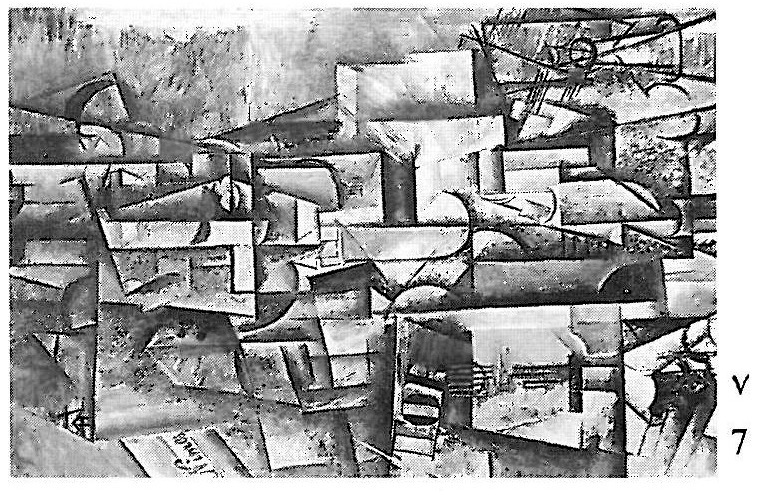
As we said at the beginning, no creativity has ever come from nothing, and creativity is always a stage of history and in some way relates to what came before. In creativity, adaptation is one of the very common and important fields. Adaptation from other arts, from nature, or from industrial and craft products. Regarding adaptation from other arts, one can refer to the relationship of painting and sculpture with architecture at the beginning of Modernism. Frank Gehry's works too are aesthetically close to some paintings by Picasso and Braque. Frank Gehry, unlike Le Corbusier, has not translated Cubism into the language of architecture but employs it with the same dramatic expression and purity of a Cubist painter (images related to the University of Minnesota by Frank Gehry (6) and Picasso painting (7), 1912).
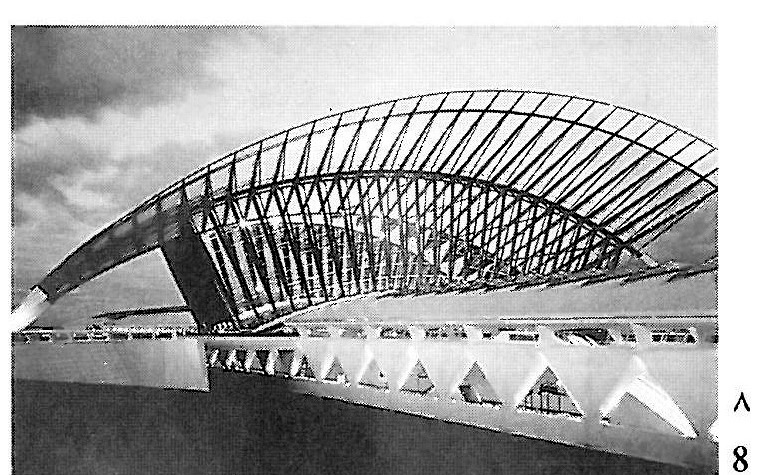
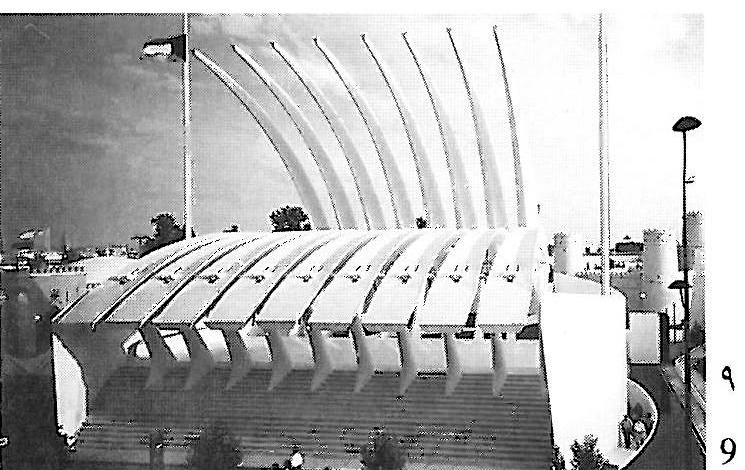
Nature has long been a source of inspiration for architects. Santiago Calatrava is among the architects who have repeatedly used forms belonging to the organisms of living creatures. His TGV train station project in Lyon (8) resembles insect anatomy. In the Kuwait Pavilion project in Barcelona (9), mammalian rib forms have been used.
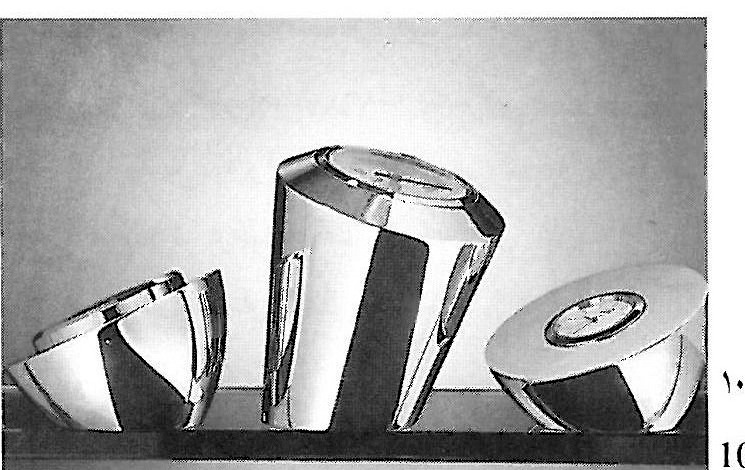
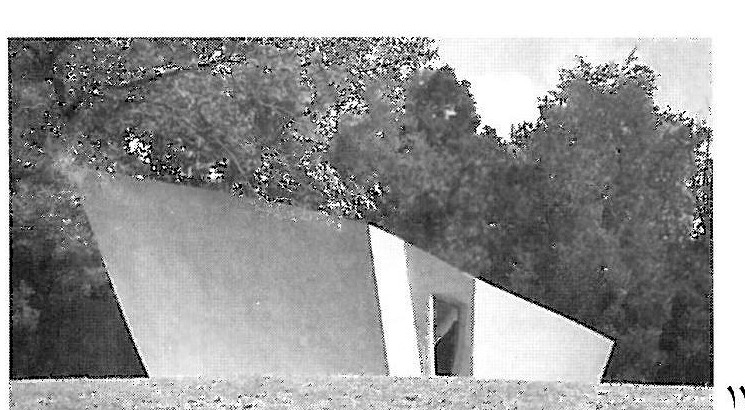
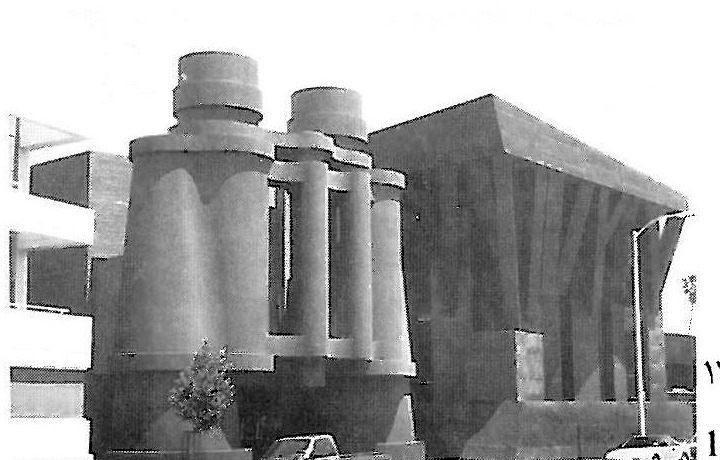
Between architecture and industrial products too, exchanges have always taken place. Today architecture is inseparable from design, and prominent designers such as Norman Foster, Ettore Sottsass, Aldo Rossi and Philippe Starck are simultaneously industrial designers and architects. In this article, images of watches called Fossils by Karim Rashid (10) are compared with the Gate House by Philippe Johnson (Collectibles)(11).
2-2 - Change of Location
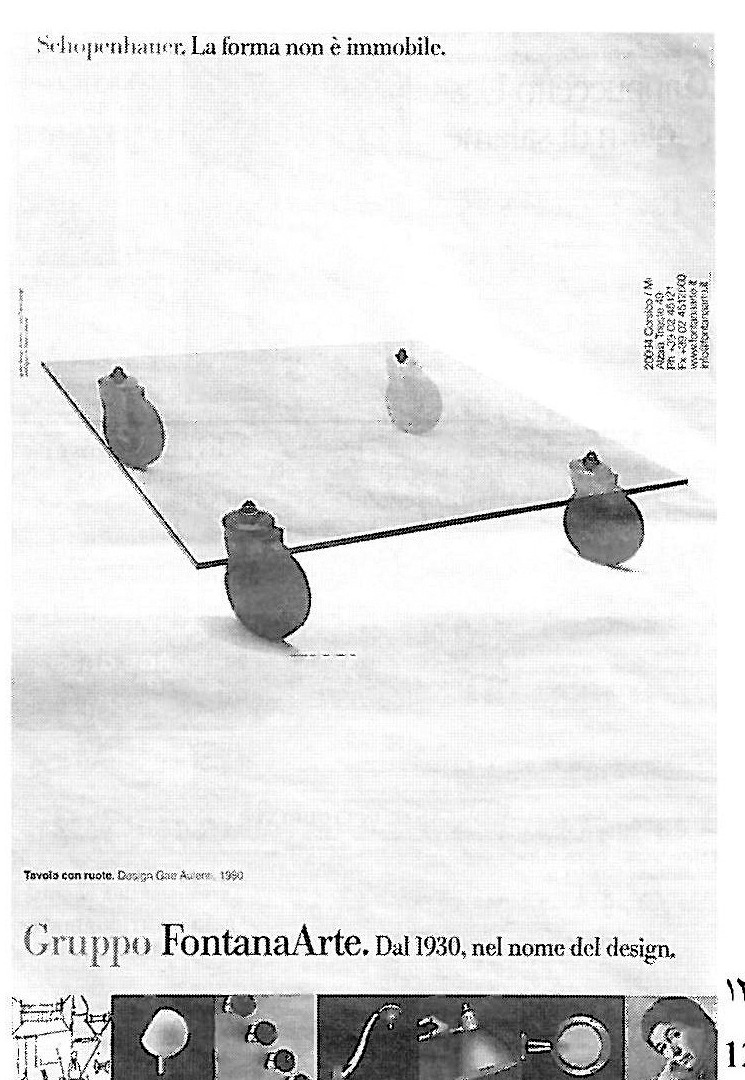
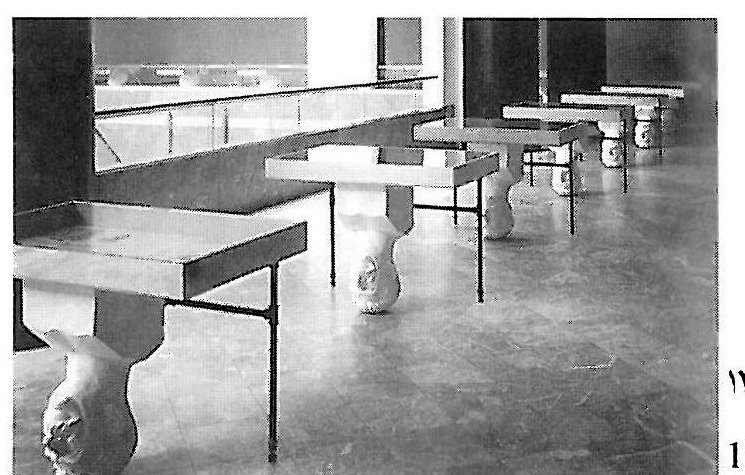
Every object and place in every form and natural environment has its own meaning and concept, and transferring it to a new environment may create new values. A good example of this is the advertising work of the design company named Fontana Arte (17). An advertisement is composed of three parts: 1) a few products of this company, 2) at the top a phrase from Schiller: "Taste is an immovable", 3) a large table in the middle of the page with 4 large wheels instead of legs.
2-3 - Rewriting
Contemporary art moves from one subject to a related one. In this way various subjects overlap and the boundary between them becomes blurred. The works of Derida Kostoraei in 1992 are among the best examples.
Creativity, just like invention, does not mean building a completely new object. It is based mainly on the artist's cultural background. In invention, inspiration from remote fields, directly related to the problem, bears usually an important role. In creativity, just like invention, five elements have a crucial role, the first of which is the personality and character of the inventor. The second factor is experience. Creativity is impossible without experience, because an inexperienced mind is unable to develop subjects. The third factor is experimentation. Without experimentation, the right path will not be found. The fourth factor is inspiration. Inspiration, or intuition, is the highest level of learning; it is the most complex activity of the mind to explore what knowledge has not yet reached. The last factor is chance.