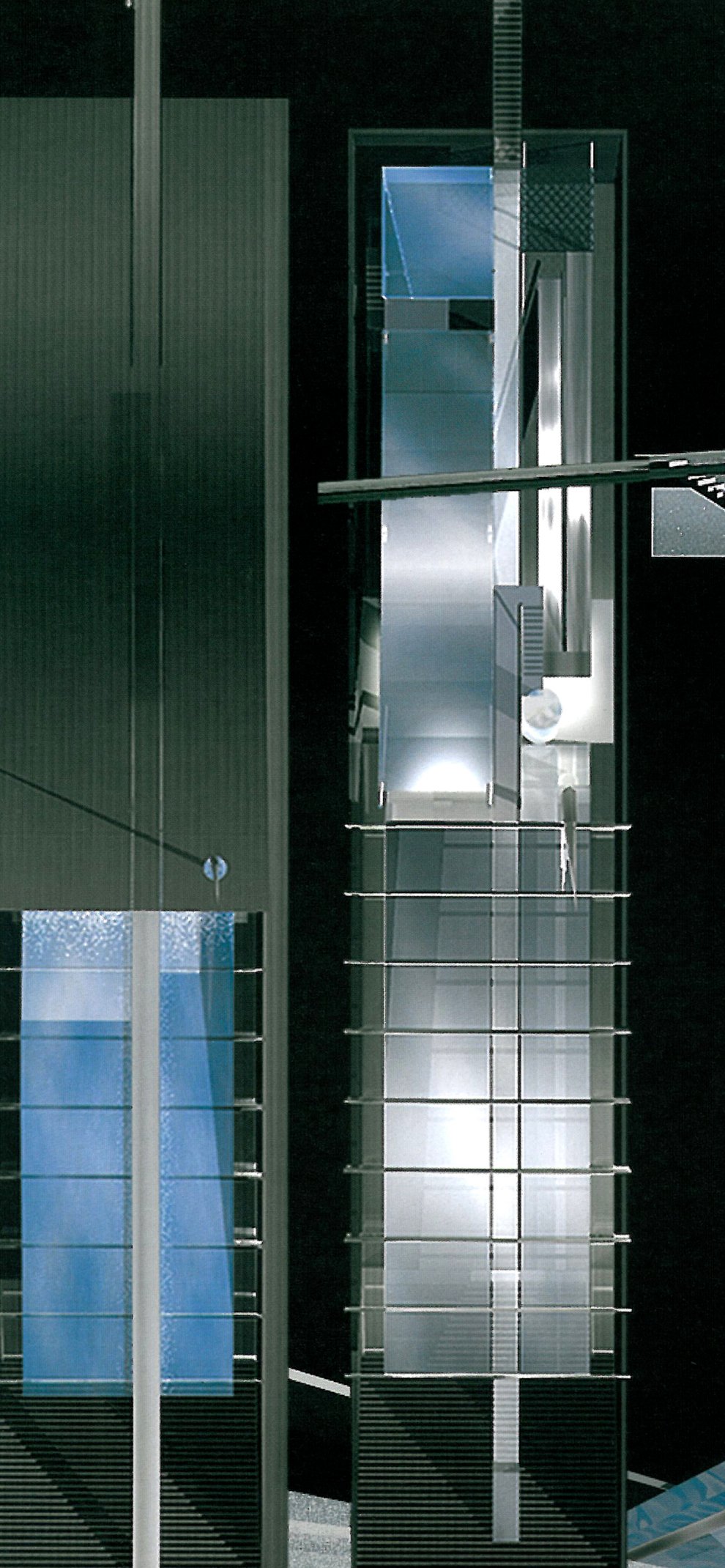
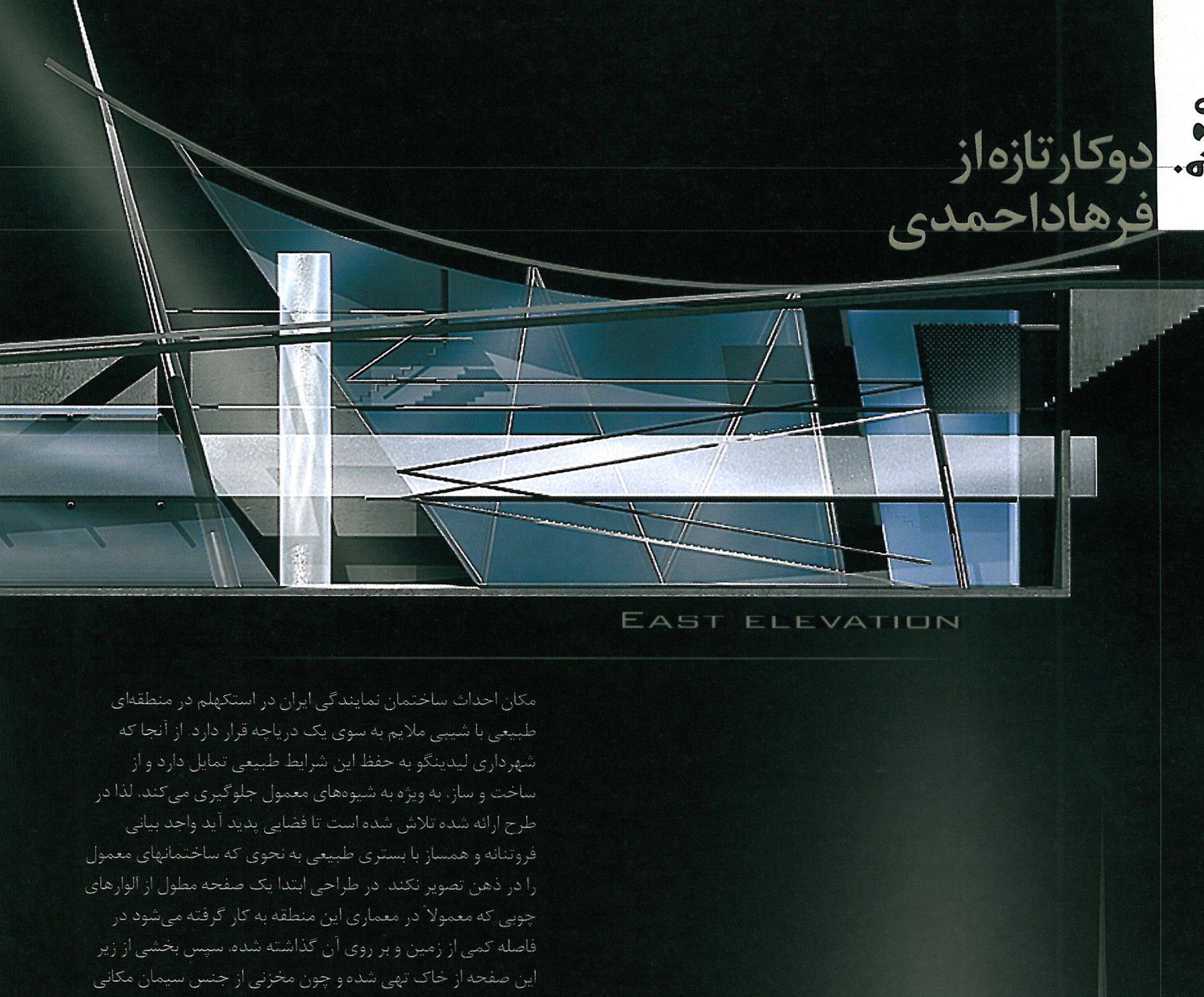
East elevation rendering of the I.R. Iran Embassy in Stockholm
I.R. Iran Embassy, Stockholm, Sweden
Client: Ministry of Foreign Affairs
Architect: Farhad Ahmadi & Associates
Date: May 2001
Collaborators: Reza Ghasemi, Zhaleh Maskouti, Shakiba Tarvijnejad
Structure: Foad Rafighi
The site for the Iranian embassy building in Stockholm is located in a natural area with a gentle breeze facing a lake. Since the municipality is inclined to preserve these natural conditions and therefore restricts conventional construction methods, the submitted design endeavors to present only a building envelope that is harmonious with the natural setting, unlike the typical structures usually found in the architecture of this area.
In the design process, an absolute plane of panels was first placed a short distance above the ground. Then a portion of this surface was disrupted, generating various movements from the ground into a recessed enclosure. This surface rises on one side like a tent and on the other side settles into a volumetric axis in a pleasing manner. Within these surfaces and the volumetric core, a structure was conceived that guides us through a protective shelter gathering spaces of various functions within itself.
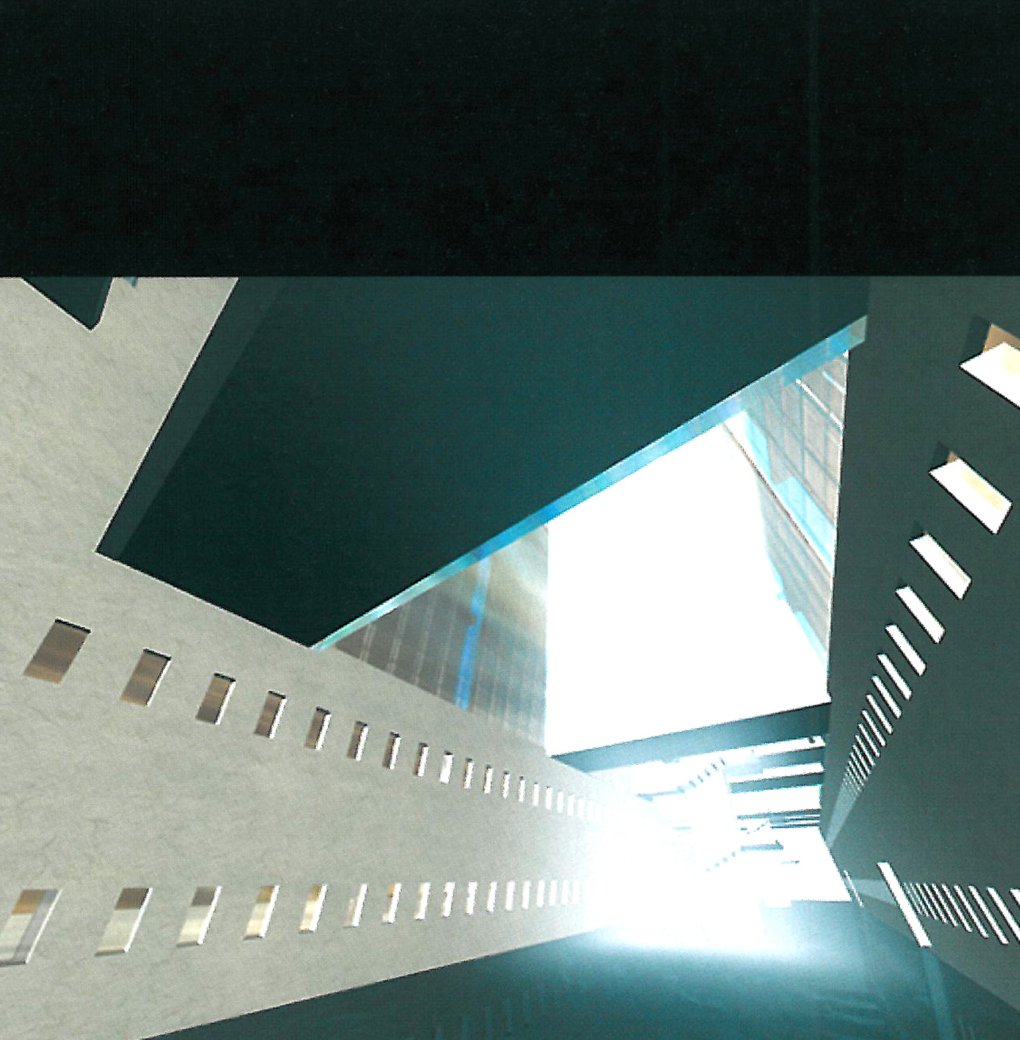
Interior section rendering showing the central atrium and glass facade
This split, which gradually transitions from vertical to a wider incline, creates a central fissure from which the volumetric masses on both sides are separated. The reflection creates a play of opposing volumes displayed throughout the length of the building, drawing inspiration from narrative and storytelling. In this design, nuclear concepts and even symbolic functional elements from the architecture of this land and the architectural vocabulary of the country are interwoven.
Reflective surfaces with expansive volumes — Iran on one side as a crystalline unit derived from contemporary world architecture, utilizing a skeletal framework and natural materials bearing the gravity of the Scandinavian region — are combined to create a meaningful dialogue.
Apartment Building for Parliament Representatives
Client: Ministry of Housing & Urban Development
Architect: Farhad Ahmadi & Associates
Date: February 2001
Collaborators: Ormuzi, Reza Ghasemi, Rad, Ahsani
Angular concrete volumes of the parliament representatives' housing complex
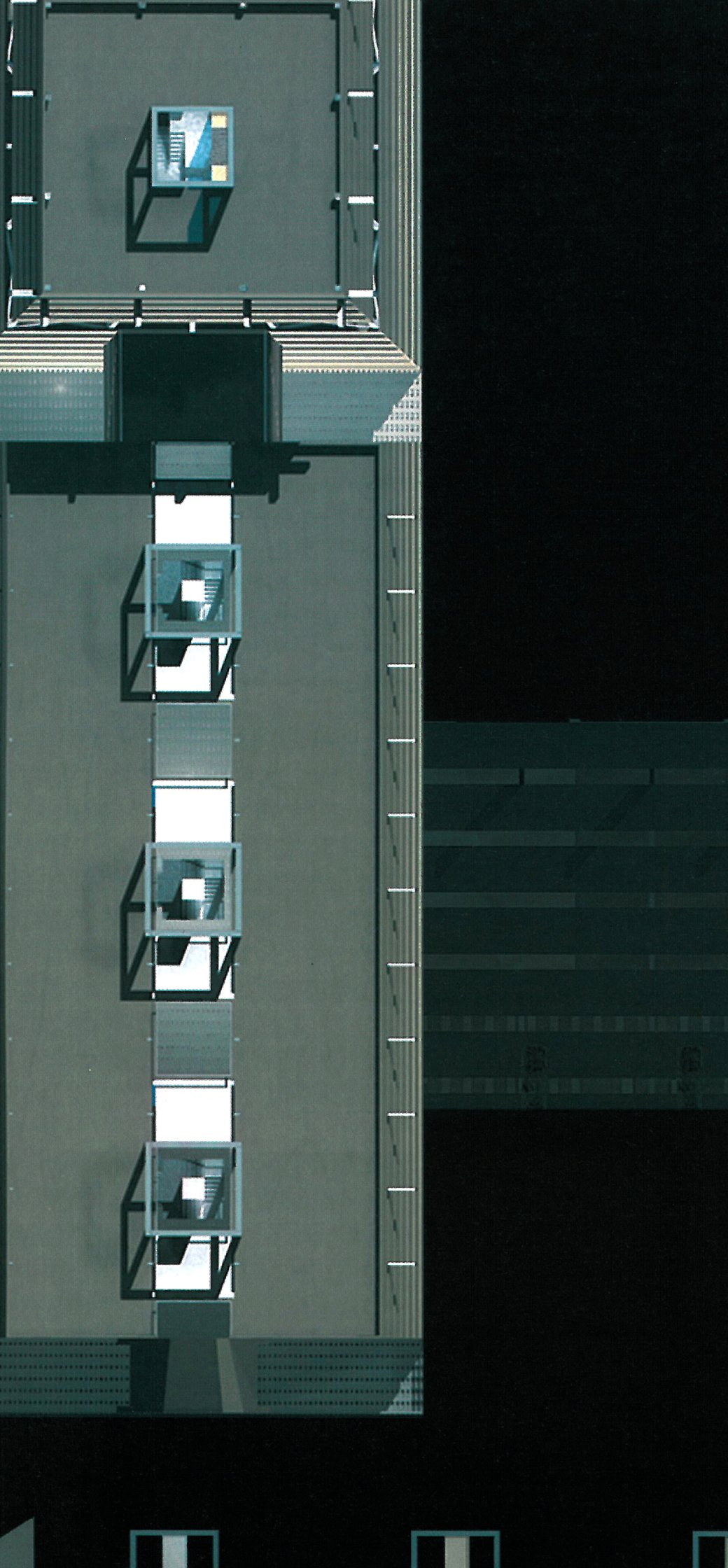
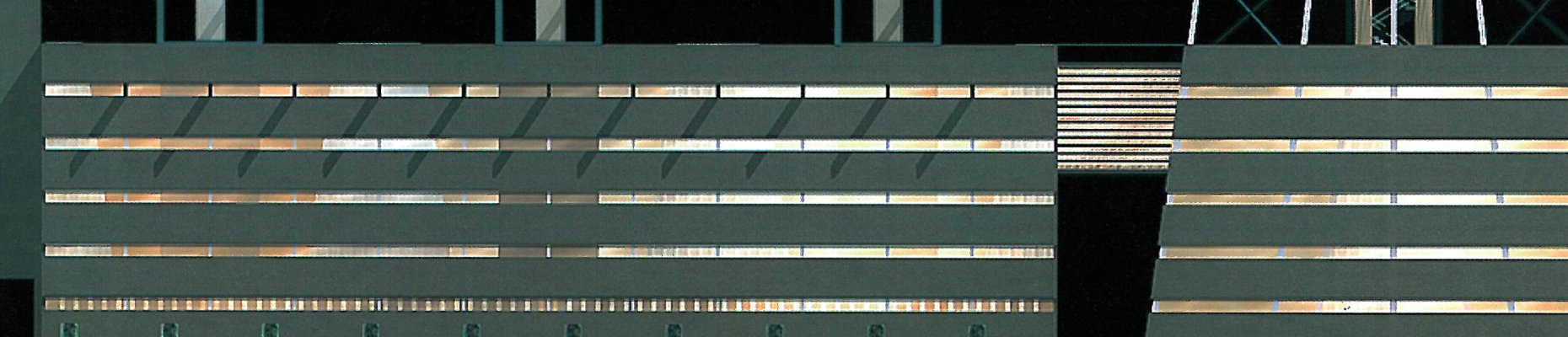
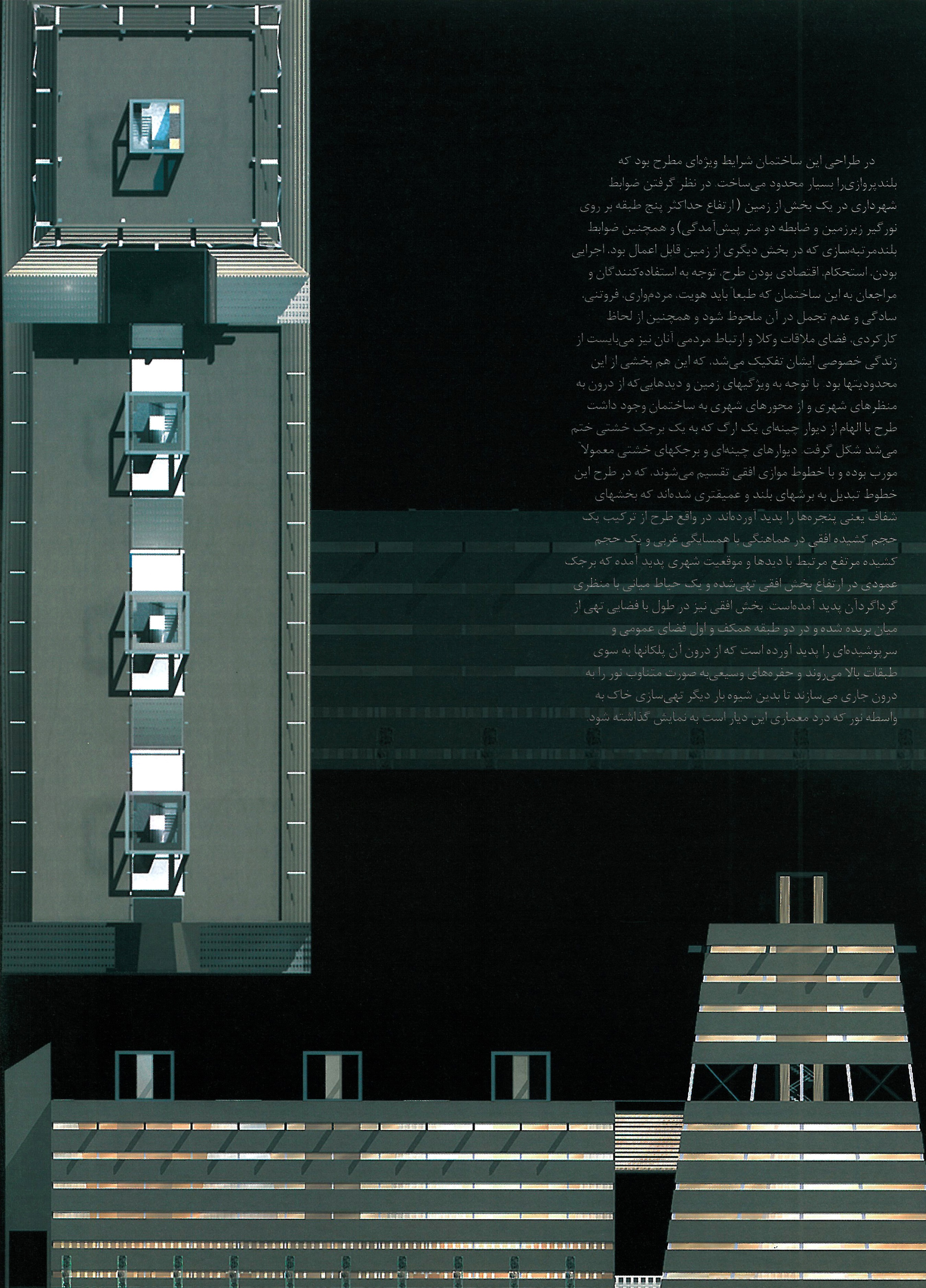
In designing this building, specific conditions were at play that severely limited high-rise construction. Observing municipal regulations in one portion of the land — with a maximum height of five stories above pilotis — along with setback requirements and adjacent building considerations, the residential building form that could be implemented on another part of the site was defined. The economic feasibility of the design required that usability and simplicity be maintained, while floor arrangements, circulation, and service connections follow apartment complex patterns.
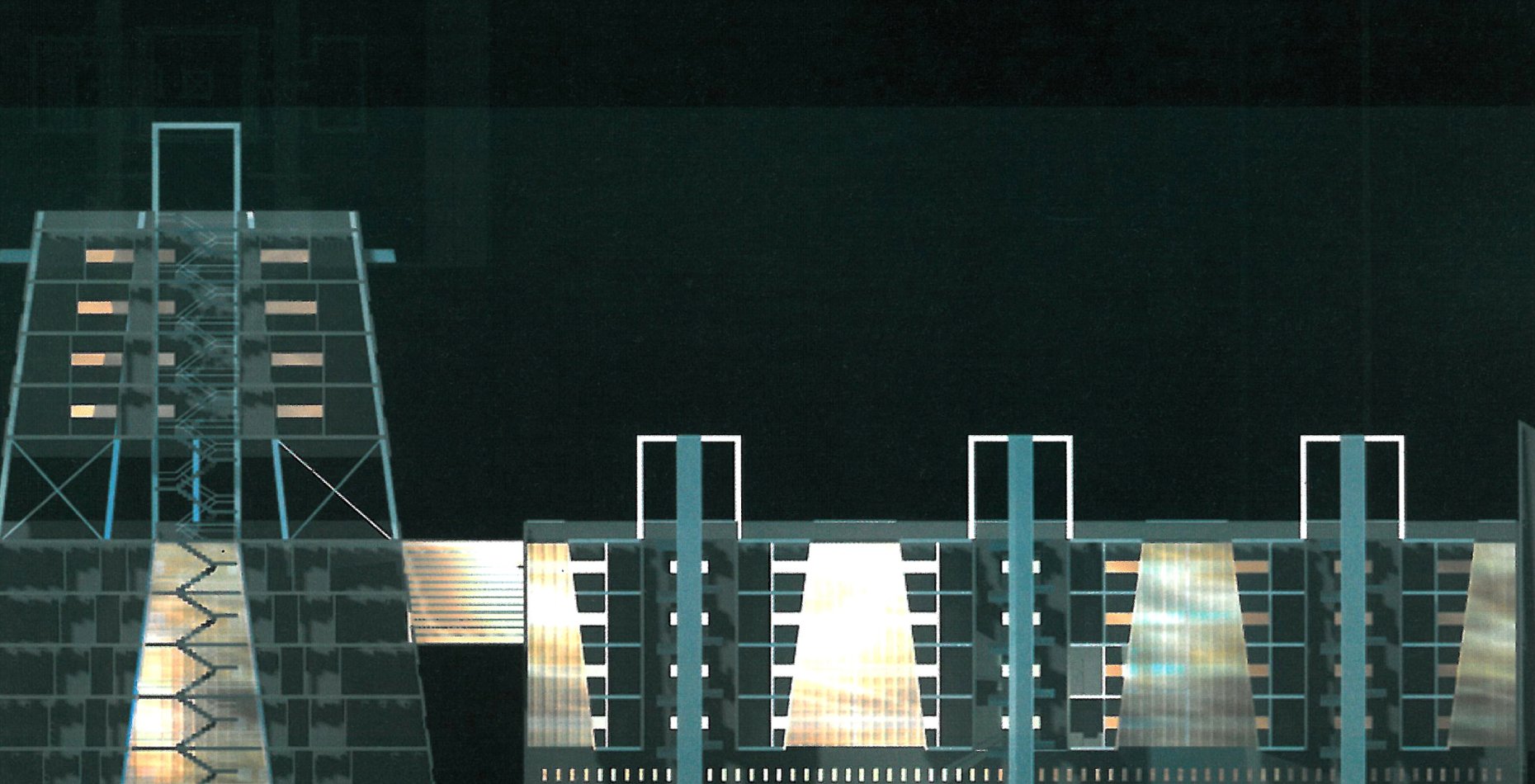
Night rendering of the residential complex showing illuminated volumes and structural framework
Given the characteristics of the land and an understanding of the urban fabric from which the building emerges, the form takes shape from aspects that range from one stone to another. Load-bearing walls and typical structural sections are divided by horizontal parallel planes. In this design, these metaphorical lines extend into tall, flat wall foundations. The surprising point lies in the simultaneity and adjacency of a bearing element with an expanding volumetric body — in reality, extending beyond mere height into a broader, more articulated presence.
Aerial perspective rendering showing the complex's urban integration