Part One: Abdolaziz Farmanfarmaian
Kamran Diba
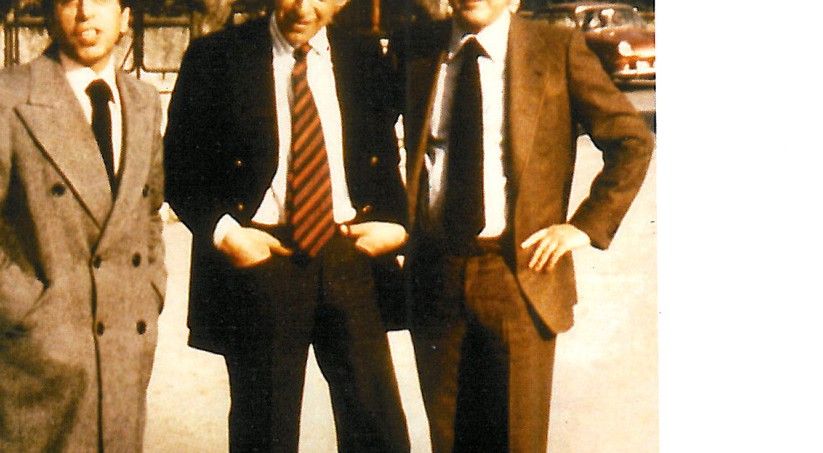
Abdolaziz Farmanfarmaian can rightly be called the 'father of consulting engineering' in Iran. He was the founder of the country's first office of architecture at international scale. Before consulting engineering was given formal standing by the Plan and Budget Organisation, architects worked in the traditional builder's manner: only an outline scheme, no production drawings, with the customary construction methods and the architect's own oversight. That worked well enough for houses, but for large public buildings, particularly those with state funding, it was impossible. The Plan Organisation handed major development schemes to foreign consulting engineers, while Iranian architects were largely confined to small private commissions.
Farmanfarmaian, after his Beaux-Arts training in Paris, began his professional life in his father's garage in the early 1330s SH (1950s), designing houses for relatives and friends. While in the employ of Tehran University's Building Office he designed and oversaw the University Mosque project. He also taught, alongside Aftandilian, Seyhoun and Heydar Ghiai, in one of the architecture studios of the Faculty of Fine Arts, then under Foroughi's directorship.
When the Civil-Servants Conflict-of-Interest Act was passed and government employees could no longer be parties to government contracts, Farmanfarmaian — having a private office — resigned his teaching and university post and set out to expand the office for state work. He went to Abolhassan Ebtehaj, then head of the Plan and Budget Organisation, and asked for work. The Plan Organisation at that time gave its development and construction commissions to internationally recognised foreign consultants. Farmanfarmaian therefore set out to ally himself with foreign engineers, and invited Whiting, the partner of Lichfield, to visit his office. In that brief but decisive meeting, Abdolaziz saw for himself how weak the office's production drawings were and felt humbled, but resolved to take the path of building an office at international level.
Another event made him grasp the importance of the engineering disciplines in architecture: the design of the atomic-reactor building at Tehran University. In 1336 SH (1957), on the occasion of designing the complex, he visited Princeton University, where Einstein had taught and which had a similar reactor. To make sure of his ground he engaged the structural engineer Widelinger in New York, and for the mechanical and electrical work the offices of Guy Panero, who had previously worked on the Princeton scheme. He himself says: 'It was here that I understood how, in certain matters, an architectural scheme and idea can be carried by the marvels of engineering.' The architect of the Princeton reactor had been the American firm S.O.M.
The Asian Games and the Aryamehr Stadium
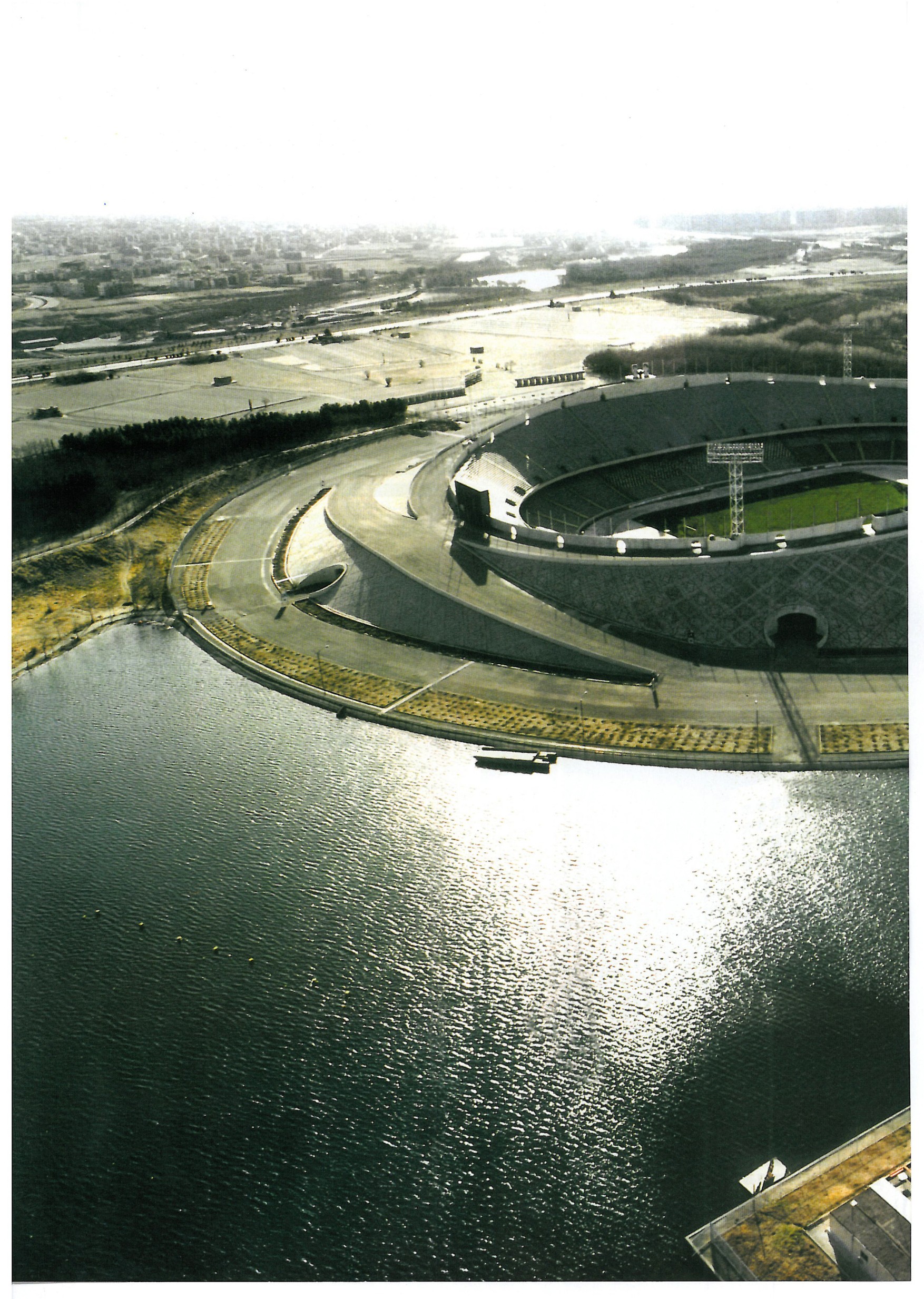
In 1342-43 SH (1963-64), on a trip to Mexico, Farmanfarmaian visited the stadium of Mexico City University. The scheme — in which compacted earth had been used as a structural element — caught his attention. For the 100,000-seat stadium, he decided that, like the Mexico City University stadium, a compacted bed of earth would be made and the complex set on it. The earthworks for the stadium were the ground-clearing for a beautiful artificial lake beside it. The soil engineer was Alireza Radpey, then CEO of Tehran-Boston, later promoted to deputy and then head of the Plan Organisation's technical office.
In 1349 (1970) the Iranian government undertook to host the Asian Games of 1351 (1972). The Ministry of Development and Housing, under Korous Amouzegar, was named as the project's executive arm. The work was led by Farmanfarmaian, with Reza Majd and Farrokh Hirbod as managers and Nader Ardalan as collaborator. The 17-month deadline for design, construction and inauguration of so large a complex was a problem. The office was forced to buy structural drawings from S.O.M.'s California branch, of a similar stadium scheme in Seattle, Washington. The pool was let to the contractor of the Munich Olympic Games. The construction contractor was the Tesa company of engineer Majid A'lam, who formed a consortium with the great French contractor Bouygues and engaged a skilful engineer named Pierre Richard. He revised the S.O.M. steel-structure scheme and recalculated a new structure in prestressed pre-cast concrete; the project was finished on time and inaugurated in 1352 (1973).
The Office's Growth and the Merger Policy
Farmanfarmaian's office grew through these years from 80 to 400 staff. Its partners and directors were the engineers Reza Majd, Farrokh Hirbod, Joseph Zucker, Nader Ardalan, Khosro Mo'aveni, Fereydoun Ghaffari, Harold Burbam, Fereydoun Tabibzadeh; the head of mechanical and electrical was engineer Khalili, and the head of supervision was Mehdi Tosouji. Without exaggeration, his office was at that time without equal in the Middle East in number of staff, professional quality, and capacity to carry out work.
After the first generation of consulting engineers acknowledged by the Plan and Budget Organisation under Safi Asfia, a fresh wave of young engineers came to the field. Under the presidency of Khodadad Farmanfarmaian, the Plan Organisation pursued, through engineer Alireza Radpey, the Asfia-era policy of office-merger to attract and strengthen the country's technical capacity. Offices were directed to expand by taking on more partners, and were then ranked according to the number and record of the partners. In 1345 SH (1966) Farmanfarmaian's office was merged with the consulting engineers Reza Majd and Farrokh Hirbod. Nader Ardalan was a senior collaborator who had joined the office in 1341 (1962).
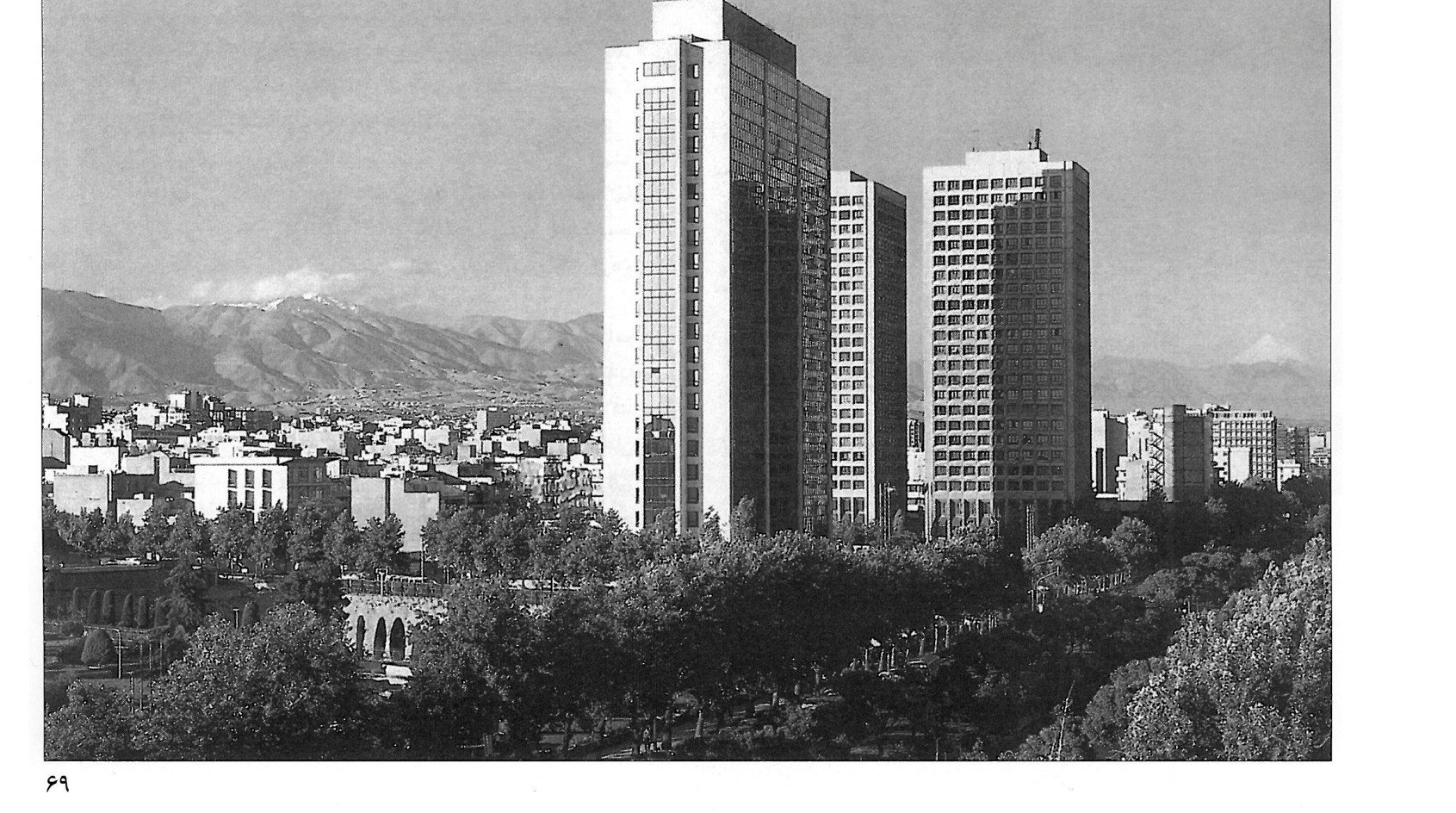
Among Ardalan's projects were the two Saman Towers. The scheme was built with the participation of a pre-cast components company under engineer Ahmad-Ali Ebtehaj, the aim being a building whose façade would be produced as pre-cast units by the Iranian Prefab company and fitted to the structural frame. The presentation of new technology was one of the project's purposes. The next pre-cast project was the Behshahr industrial-group office building, owned by the Lajevardi family. While Ardalan was a senior partner, the brief for the Harvard Management Centre, whose client representative was Habib Lajevardi, was assigned to the office; design and construction supervision were done by it. At the inauguration ceremony, Khordjoo, the chairman of the Centre's board, in his opening address thanked and praised Nader Ardalan but did not name the Farmanfarmaian office. This event sharpened earlier disagreements and led to Ardalan's leaving the office.
Earthquake-Resistant High-Rises and the Tehran Airport
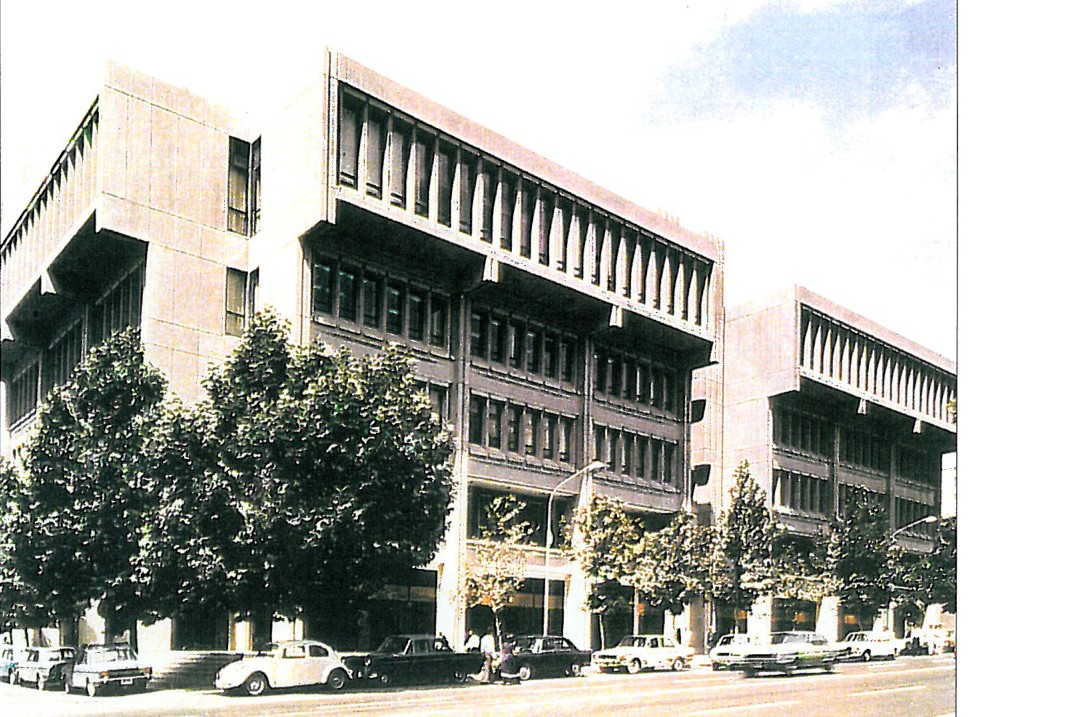
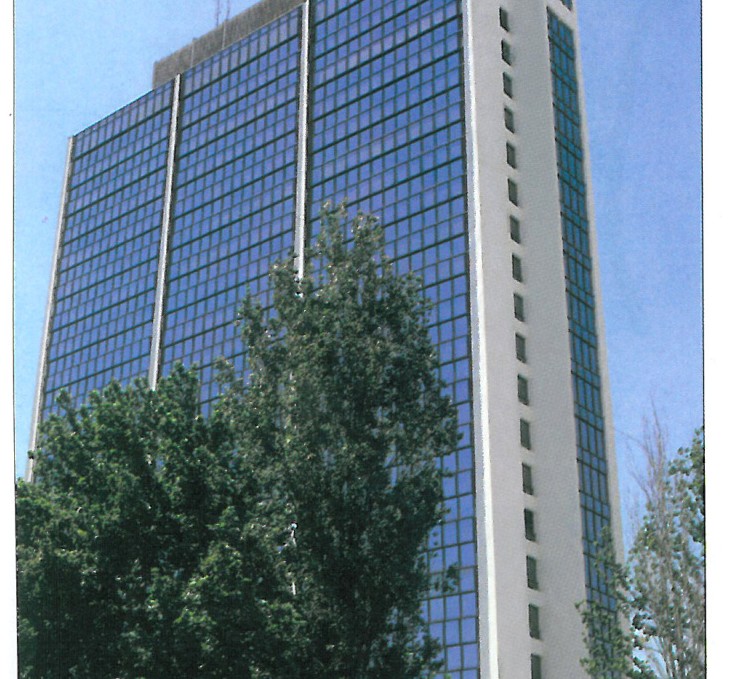
Among the office's achievements was the introduction of advanced technology to high-rise buildings calculated by earthquake-resistant methods. In some of those buildings, the building codes of seismic San Francisco were used for the structural calculation: the National Iranian Oil Company headquarters (with engineer Ettehadieh), the Ministry of Labour, the Ministry of Agriculture, the Saman Towers, the Vanak Park Tower, and the office-residential complex on the Mosalla site (the former Shahestan project), part of which was apparently built and which is the head office of the Foundation for the Oppressed and Veterans.
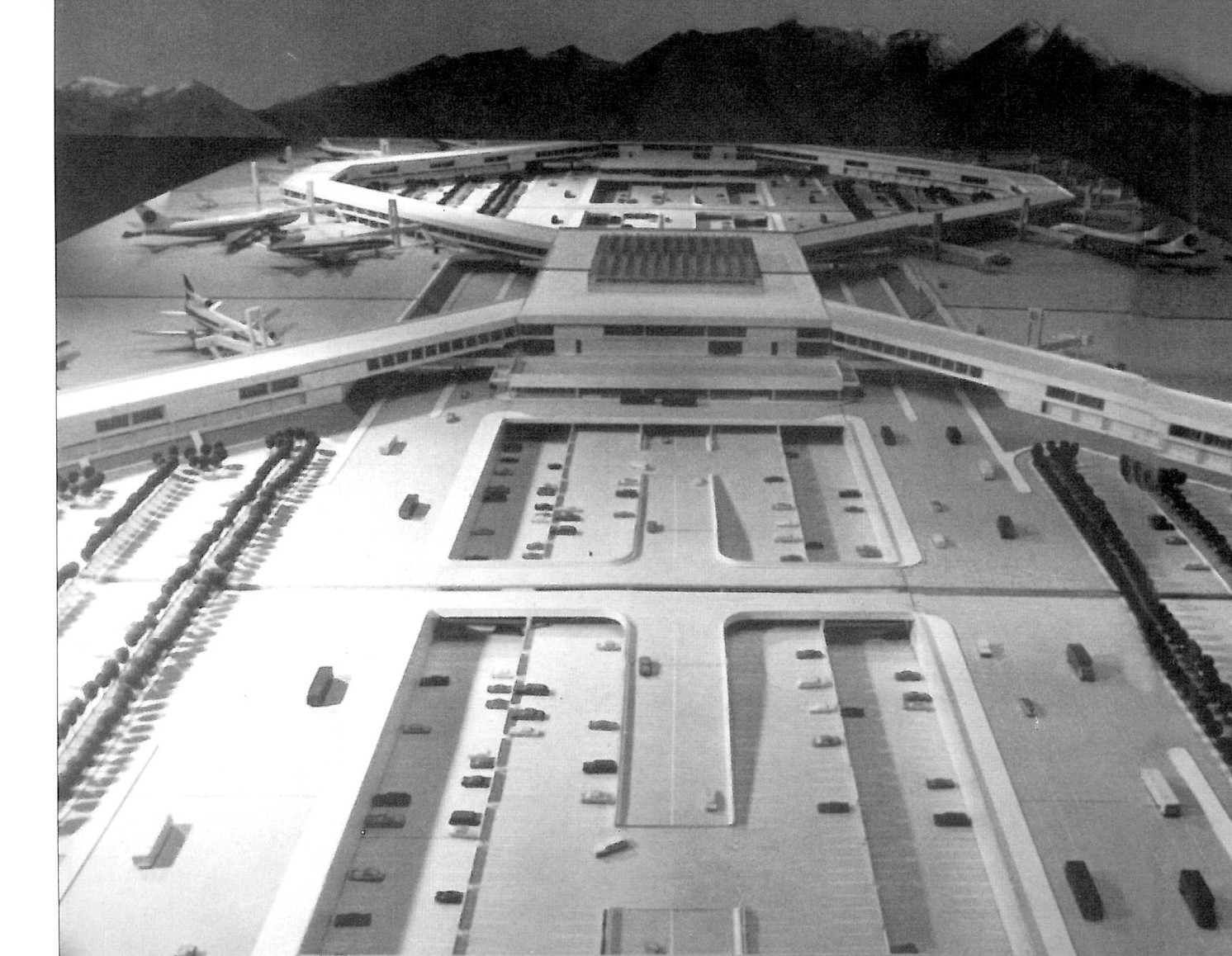
An example of the office's capacity is the preparation of 2,500 working drawings for the Mehrabad airport extension, in collaboration with TAM consultants. The consulting-engineering profession in Iran went through many ups and downs; inadequate laws and regulations and the late payment of fees by the state at times brought offices to the edge of bankruptcy. Pioneers like Abdolaziz Farmanfarmaian smoothed the way of consulting engineering for the generations after them.
The Athens Office and the Tehran Comprehensive Plan
Joseph Zucker joined the office in 1335 (1956). He had begun his career at Oscar Niemeyer's office in Brazil and was one of Farmanfarmaian's earliest and closest partners, in close mutual understanding on most schemes. In 1353-54 (1974-75), with the increase in oil revenues and the abundance of development work, the work of architectural offices grew suddenly to a feverish pitch. The result of that growth was a shortage of professional staff across the country. The phenomenon known as 'staff-stealing' — offering higher salaries and luring staff from other offices — caused instability and threw the profession into crisis. Diba says that at his own office, DAZ Consulting Engineers, he hired technical staff from abroad to handle the problem; without exaggeration, more than 30 percent of the senior staff at that office were foreigners. During those staff crises, Farmanfarmaian and partners set up an Athens office under Joseph Zucker for the production of working and engineering drawings.
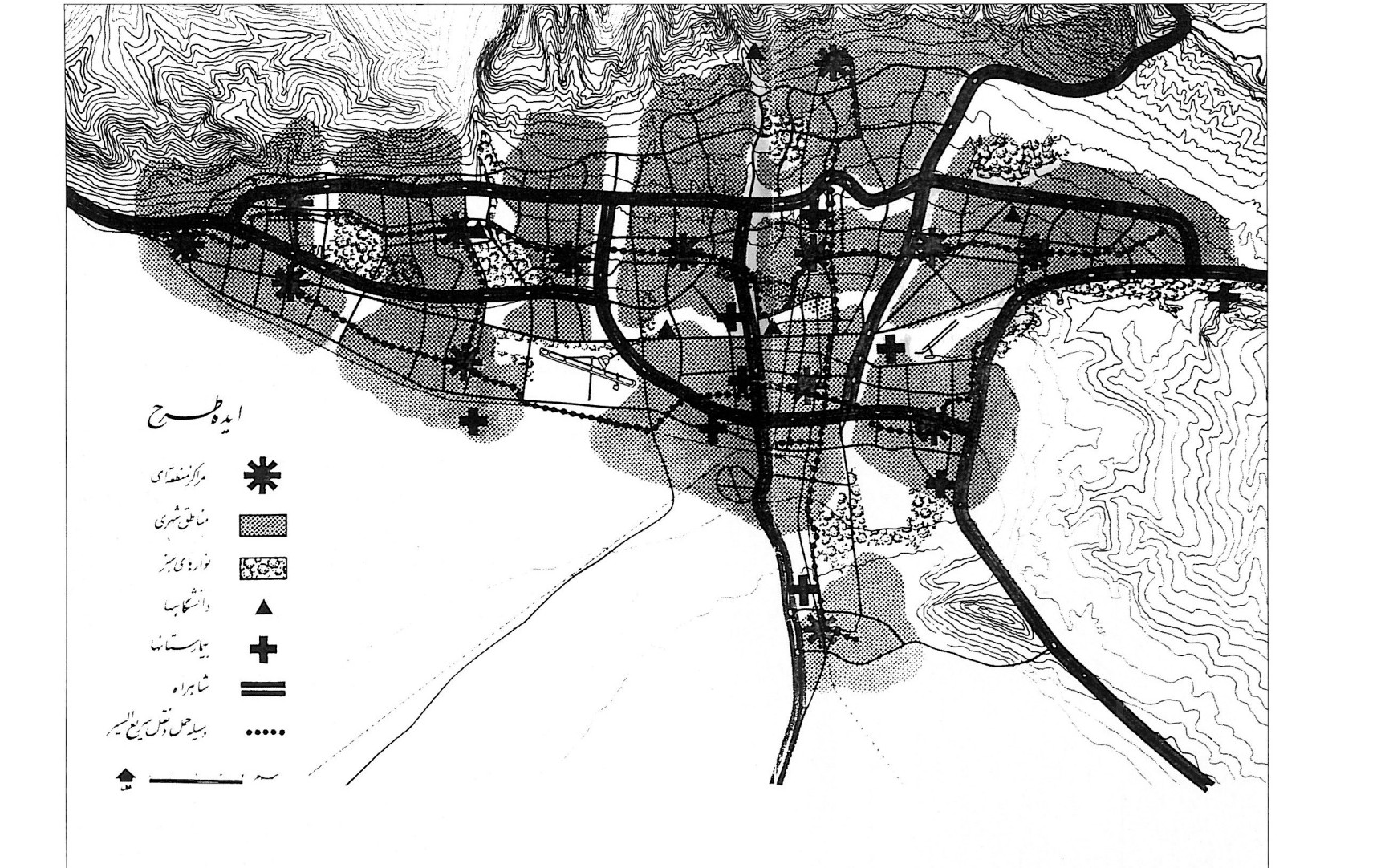
Earlier, under Safi Asfia's presidency at the Plan and Budget Organisation, the comprehensive plans of six large cities had been assigned to consulting engineers. The comprehensive plan for Tehran was given to the Farmanfarmaian office. He invited the American office of Victor Gruen, expert on urban planning and shopping malls, to collaborate. In the early studies, Tehran's 25-year population was estimated at about 9 million; the government, fearing water shortage and infrastructure constraint, insisted that the figure be no more than 5.5 million. Gruen sent one of his specialists, the engineer Cantini, together with engineer Fereydoun Ghaffari, to set up the necessary office under Farmanfarmaian's employ. The plan's policy was to prevent population growth: a 25-year expansion limit and a service boundary for Tehran were defined, and individual building outside that boundary was strictly prevented.
Although most of the comprehensive plan's proposals were never carried out, most of Tehran's expressways were built — even after the Revolution — according to it. One of the proposals was a great administrative centre (Shahestan) at Tehran's heart, in which the Central Bank building was designed by the office.
Montreal '67 and Other Works
Farmanfarmaian says that architectural work in his office was done collectively, and that two of his favourite projects were the Iran Pavilion at the Montreal World's Fair (Expo '67), 1346 / 1967, and his own house, which now belongs to the Belgian Embassy. Farmanfarmaian carried the International Style of the developed countries' architecture into Iran; the result was a body of work that was functional, economical, and marked by honesty and simplicity. Beside the partners already named, his other engineers were Yahya Fyouzi, Houshang Jahed (who later founded the Mandala firm with Ardalan), Farhad Zahedi, Michael Karapetian, Parviz Azad, Siavash Teymouri, and Mohammad Mohajer.
This text is based on the statements of Abdolaziz Farmanfarmaian and some of his colleagues. Many people's names and roles must certainly have fallen out of it; both author and subject, with their apologies, ask their colleagues, by their own recollections, to help complete this report.
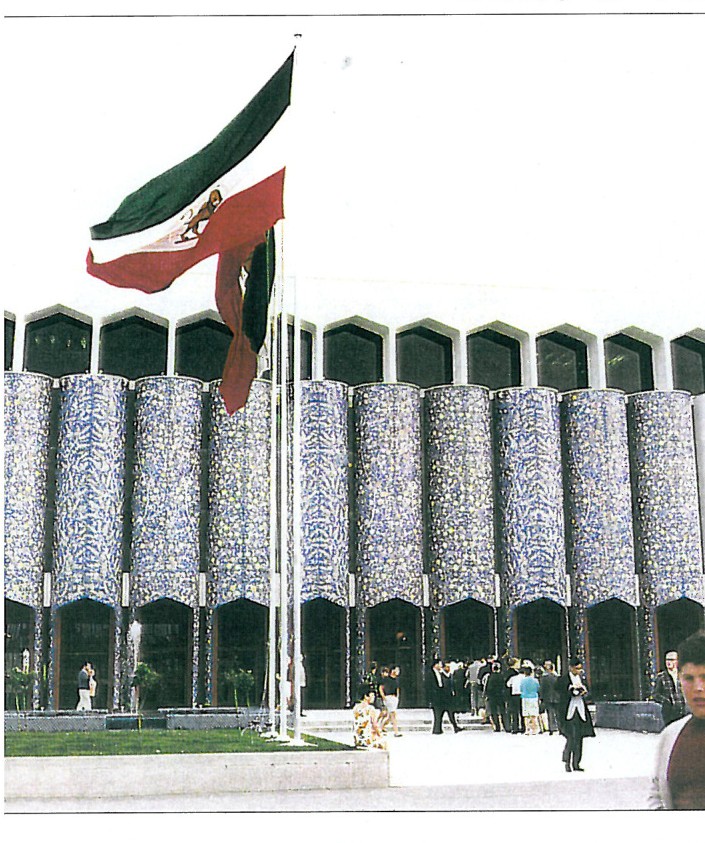

List of Building and Urban-Planning Works, 1333-1347 SH (1954-1968)
Universities and higher schools: Tehran-University Mosque; Karaj Faculty of Agriculture (Hydraulics laboratory; Physics laboratory; Student dormitory); Faculty of Veterinary Medicine north of Karaj road; Faculty of Engineering (new large amphitheatre); the University buildings at Amirabad (the University reactor and laboratories; the Faculty of Engineering electrical lab; the Amirabad dormitory and refectory); the Harvard Management Centre. Schools: vocational schools across the country for the Ministry of Labour, with the Swedish consulting engineers SCAN, over twelve years.
Office buildings: the National Iranian Oil Company headquarters (with Ettehadieh); Ministry of Roads; Ministry of Agriculture; Bank Kar; Iran Credit Bank; Behshahr industrial-group HQ; Women's Organisation; the three 20-storey towers for the Housing Company on the former Shahestan land (built up to the 13th floor); Bank Saderat in Isfahan; the central Iran-TV building with broadcast studios; the central telephone exchange in Tupkhaneh (second batch from Imeg); the office building of the sports complex; the offices of the Tehran Cement Company at the factory site.
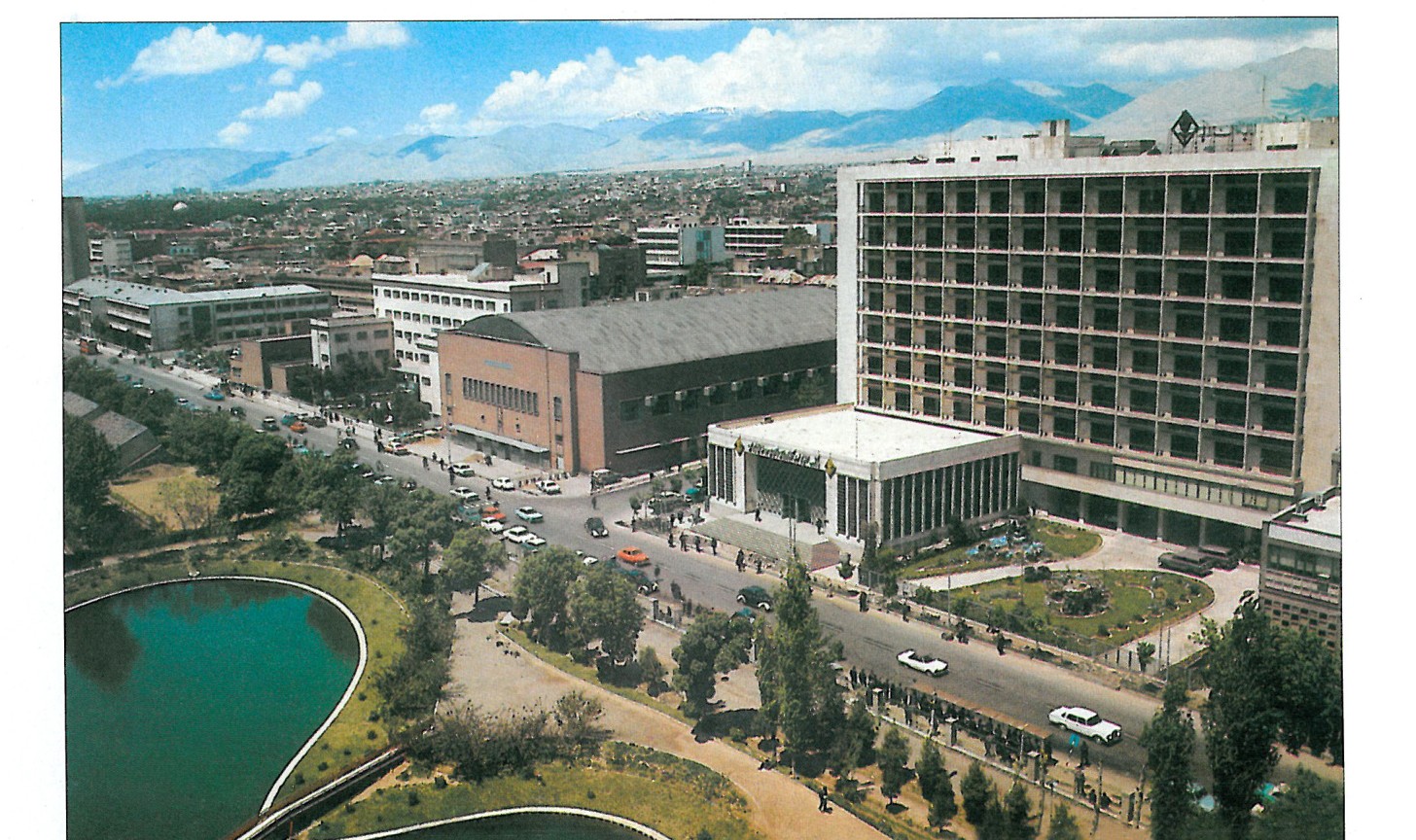
Factories: Arj at Karaj road; Daroupakhsh at Karaj road, with Wilson Mason. Sports complex (Olympic Games): 100,000-seat stadium with lake; 17,000-seat covered stadium with S.O.M.; covered swimming pool; covered training stadium; shooting range; clay-pigeon shooting range; cycling stadium. Hotels: Sepid on Taleghani St.; Tower on Kushk St. Hospitals: 200-bed Army hospital in north Tehran; Ahvaz University hospital with Wilson Mason. Museums and exhibitions: the Iran Pavilion at Expo '67 Montreal; the Carpet Museum in Tehran.
Urban planning and housing: Tehran Comprehensive Plan with Victor Gruen of Los Angeles; planning and housing for the Sar-Cheshmeh copper-company complex, Kerman; planning and housing for the Housing Company in Karaj, in Isfahan, in eastern Tehran. Apartments: the two Saman 1 Towers, Tehran; Saman 2 in Vanak; Vanak Park four-tower complex. Palaces: Niavaran Palace; the Mother's Palace at Sa'dabad. Houses: Farmanfarmaian's own residence (today the Belgian Embassy) and the renovation of palaces at Sa'dabad. Saudi Arabia: Festival Tower, winning entry, Riyadh. Wilson-Mason joint works: playgrounds, schools, amphitheatres, offices and the like in the southern oil regions.
Part Two: Guevrekian's Public-Building Manner
Negar Hakim — and the problem of attributing the Foreign Ministry and the Justice Palace to him.
Building No. 1 of the Foreign Ministry and the Justice Palace are two buildings whose design has, in many sources, been attributed to Gabriel Guevrekian. Two buildings whose classical features do not square with Guevrekian's other work and contradict his modernist ideas. This article examines the architect's archival drawings and compares them with these two completed buildings.
At the invitation of the Iranian government, Gabriel Guevrekian comes to Tehran in 1932 (1311) and founds an architecture office, the Société de Construction Iranienne. The office, under his direction, took part by 1937 (1316) in more than eight competitions for public buildings. In his 1945 résumé he names them: among built work, the Military-School amphitheatre, the War-Ministry Officers' Club, the Tehran Theatre, and administrative buildings in central Tehran; he also mentions his entries to the Industries-Ministry, Justice-Palace and Foreign-Ministry competitions.
The Foreign Ministry, 1934
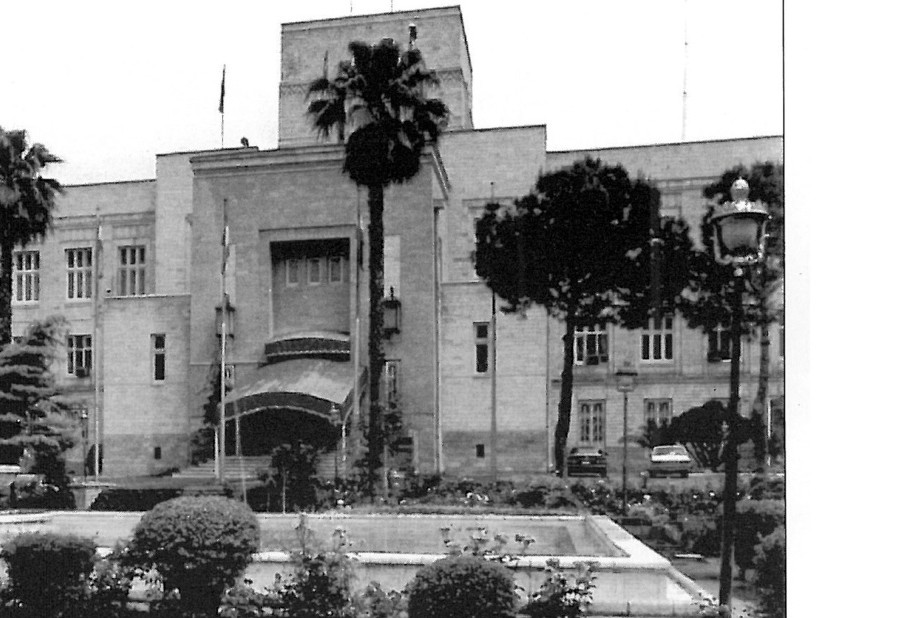
In 1933 (1312) the Iranian government held a competition for the Foreign Ministry, in which Guevrekian took part. On 14 Esfand 1312 the foundation stone of a building was laid west of Mashq Square, south of Foroughi Street, the building later known as 'Building No. 1'. The building is composed of a central element and two flanking elements. The architect emphasises the central element by a set of forward-projecting volumes — vertical, nested rectangular boxes; in the centre, set back, lies the principal entrance. The flanking elements are conceived as inscribed in a square, with a courtyard at the centre of each.
By his measured use of simple geometric volumes — the cube — the architect achieves a modern building. That modern building is converted, by the complexity of the projecting central volume, completed by a small tower, into a monumental piece. Yet on the elevations the architect introduces parts that are taken from the classical pattern: the shape of the window-frames, the continuous stepped pediment, the half-columns without capitals between the windows. The leaning is more to European classicism than to Iranian.
The Industries Ministry, 1936 — the Key to Guevrekian's Manner
In 1936 (1315) Guevrekian entered a scheme in the competition for the Industries Ministry, which the deciding board rejected. The scheme shows two buildings of a three-block group, the three blocks linked by two connecting passages — one of four storeys, the other of one.
The pull of Le Corbusier's Five Points on this scheme is unmistakeable. The first principle — the round concrete pilotis — is well shown. The roofs of both buildings and of the connecting passages are flat: the second principle. The use of reinforced concrete in the structure has allowed the architect free planning at every floor, after the third principle. Guevrekian shows the fourth principle in the design of the windows on the side elevations, and in the design of the front elevations he uses the fifth.
An example of Le-Corbusier work that may have influenced Guevrekian is his 1927 scheme for the League of Nations in Geneva. The likenesses are not only in the Five-Point programme but in the very partitioning of the buildings: Le Corbusier shows a multi-building set joined by connecting passages — exactly what Guevrekian deploys in the Industries-Ministry scheme.
The Difference between the Original Drawing and the Standing Foreign Ministry
Guevrekian's 1934 proposal shows a symmetrical building with a central element and two flanking elements. The flanking elements show a stepped projection in three heights. The architect kept the north flank of the central element straight; in answer, the two flanking elements turn east-west toward their corners. The principal entrance in the centre of the elevation, and the two further entrances in the middle of the flanking elements, brought the visitor into a corridor that ran east to west.
If we compare the perimeter of Guevrekian's drawing with the standing building, alongside an initial likeness in the central element, fundamental differences emerge. Those differences are great enough to put the attribution of the Foreign Ministry to Guevrekian in doubt. Guevrekian's central element was simple, while the standing building is a complex of nested volumes. The solution that Guevrekian proposed for the flanking elements is not seen at all in the standing building. The standing building shows the use of an internal-courtyard idea that did not exist in Guevrekian's scheme. As a final point, the position of the entrances differs in the two designs.
These differences, together with the difference of style, show clearly that the two designs come from two different architectural traditions. The only logical answer seems to be that the building actually built was executed from the design of another architect.
The Justice Palace, 1937-1946
Guevrekian's original drawing, published by Elisabeth Vitou, shows a three-dimensional axonometric projection for the Justice Palace. It is a symmetrical, three-part composition; the central element of the building, holding the entrance, is set back from and is taller than the flanking elements. Square-like elements, each with an internal courtyard, complete the composition on either flank. The scheme shows a multi-storeyed group with the central element rising higher than the rest. The architect treated the southern flank of the central element as a terrace, bounded on three sides by a fourth storey.
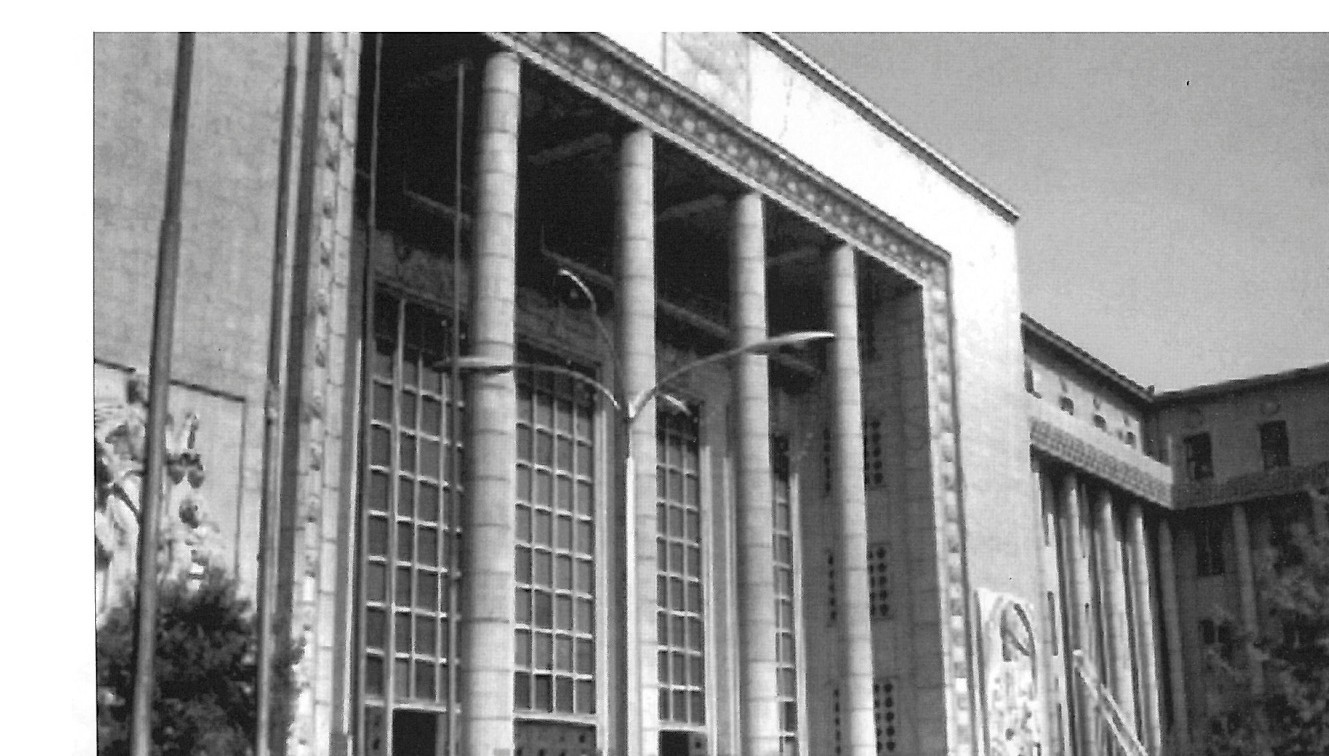
The likenesses and differences between Guevrekian's drawing for the Justice Palace and the standing building, together with the difference of architectural style, show that what was built was a different scheme from Guevrekian's original. The differences are so great in perimeter, overall elevation, internal space-making and even in the position of the entrances that one cannot speak of a modification or a development of Guevrekian's scheme.
Conclusion
The attribution of the Foreign Ministry and the Justice Palace to Gabriel Guevrekian, made in many sources, requires re-examination. A study of the architect's original drawings — gathered by Elisabeth Vitou from the Guevrekian family and published in her book (Vitou E., Gabriel Guévrékian 1900-1970, Paris, 1987) — and a comparison of those drawings with the standing buildings show fundamental differences in perimeter, in the partitioning system, in the manner of internal space-making, and in style. The scale and complexity of the projects were such that changes of this depth could not have been brought in after the start of construction. The only logical answer is that the standing buildings were carried out from the design of another architect. Postscript: with thanks to Keykhosrow Rahatkash, who placed the Guevrekian-family documents in the author's hands, and to the Document Centre archive, Tehran.



