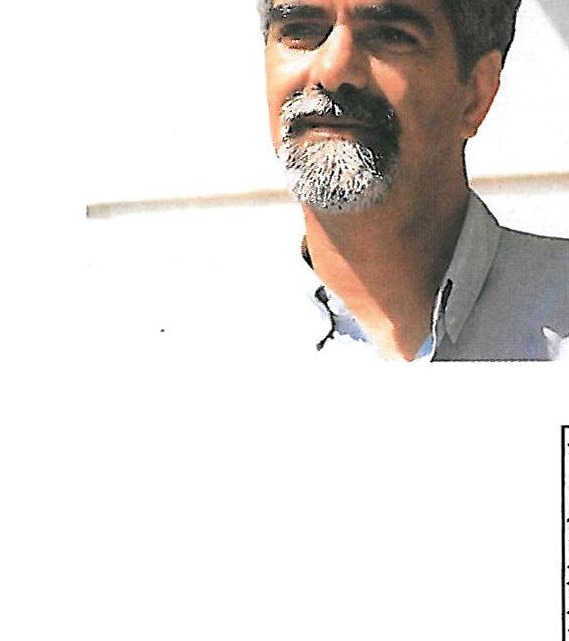
Hossein Naseri
Hossein Naseri, born in 1948 in Kerman, graduated in architecture from the Faculty of Fine Arts, University of Tehran. He began practising from his second year of study, in 1975. After graduation he worked until 1980 (the revolution) as an associate at Kalantari, Daraii & Partners (Bavand) and later as a partner and board member of Bavand Consulting Engineers. Since 1990 he has run his own office in Tehran, working on urban housing and high-rise residential and office buildings.
Three of his built projects in Tehran are presented here.
Projects
1. Residential Building, Tehran, 1987
Consulting engineers: Bavand. Project manager: H. Naseri. Designers: H. Sheikhzeinedin and H. Naseri. Landscape design: F. Abouzia. Construction: M. Soltan Mohammadi. Photographer: Dr. A. Omidvar.
The building stands on a site of roughly 1,000 sq. m and contains twelve dwellings arranged over three upper floors and a basement. At its eastern end the volume steps down to two storeys, freeing a pilotis beneath. The approach is from the end of a narrow lane on the east; from a landing, two vehicle ramps to right and left lead respectively to the northern pilotis parking and the southern basement parking, while a third axis straight ahead gives direct access to the six apartments of the eastern half, and the northern courtyard serves the six of the western half. Above the eastern pilotis, two ordinary units and a large three-bedroom duplex share two floors. The covered area beneath the eastern duplex — connected to the courtyard and the large southern garden — is a pleasant outdoor sitting and play area. In most units the bedrooms and kitchens take southern light while the living rooms take northern light.
Projecting the three eastern apartments forward of the others, placing a pilotis beneath them, and opening a substantial gap in the volume of the nine western apartments, give the building its floating, undulating quality. The façade is of white brick, occasionally framing fields of white travertine. The flues of the boiler rooms and the wall heaters have been worked into the elevation's composition.
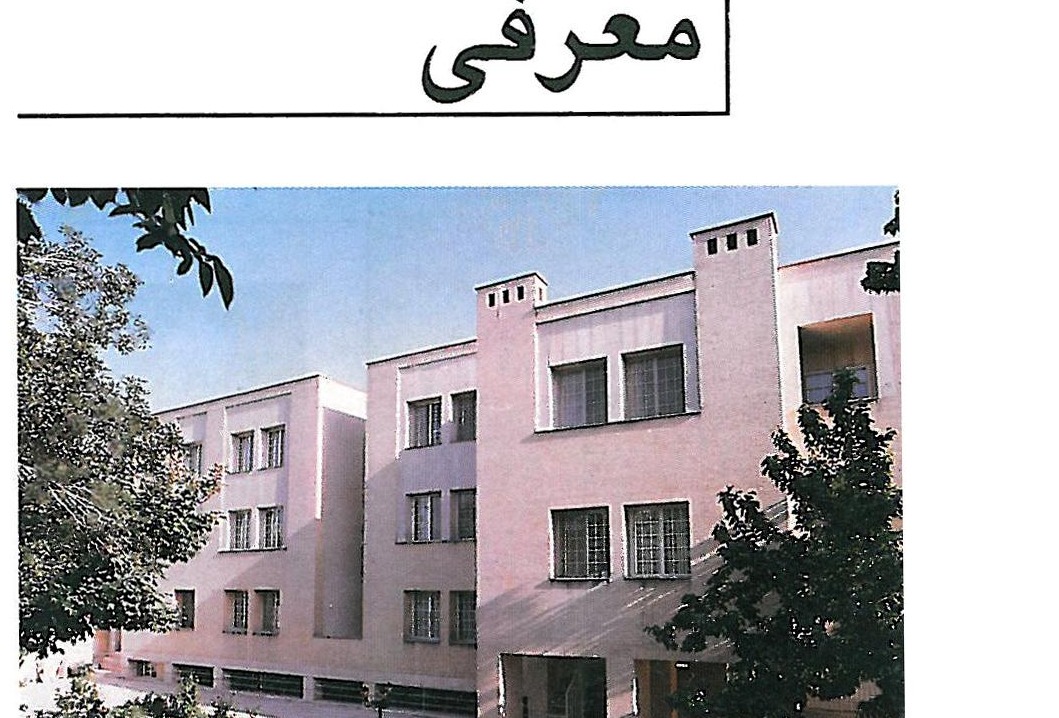
Residential Building, Chamran Highway, Tehran, 1987 — south facade and garden
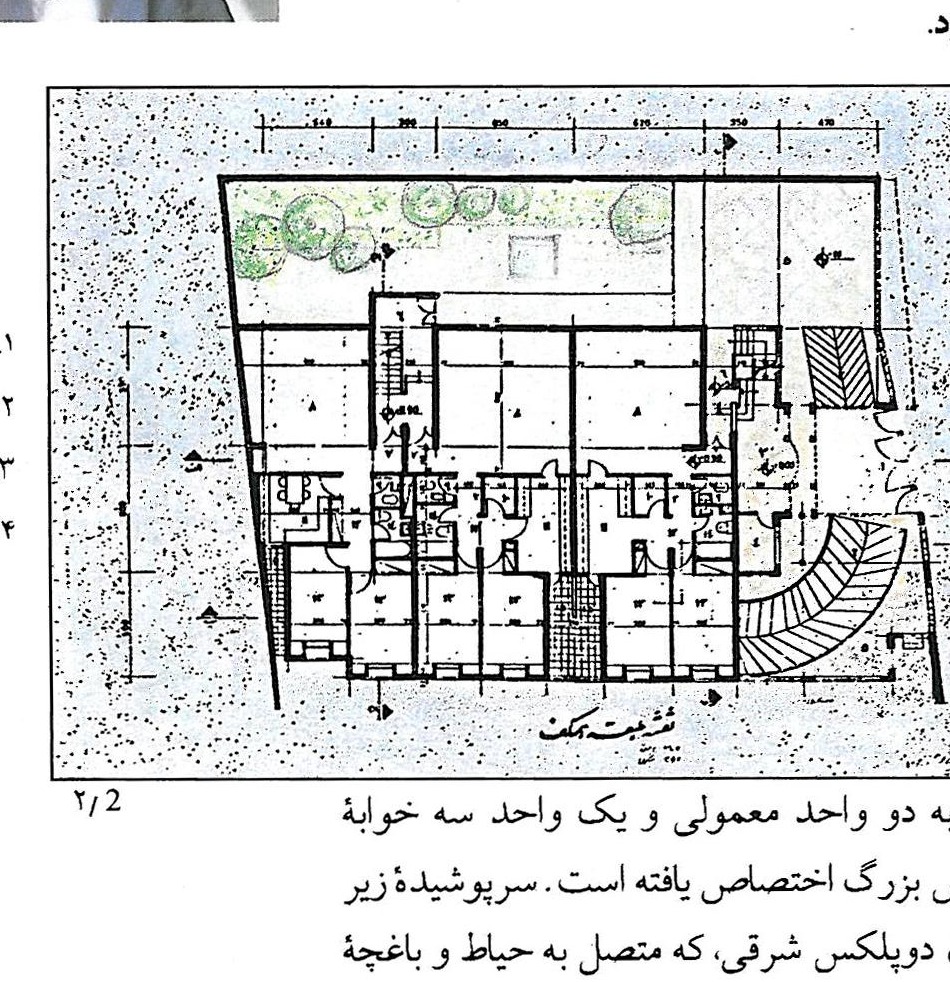
Residential Building, Chamran Highway, Tehran, 1987 — ground floor plan
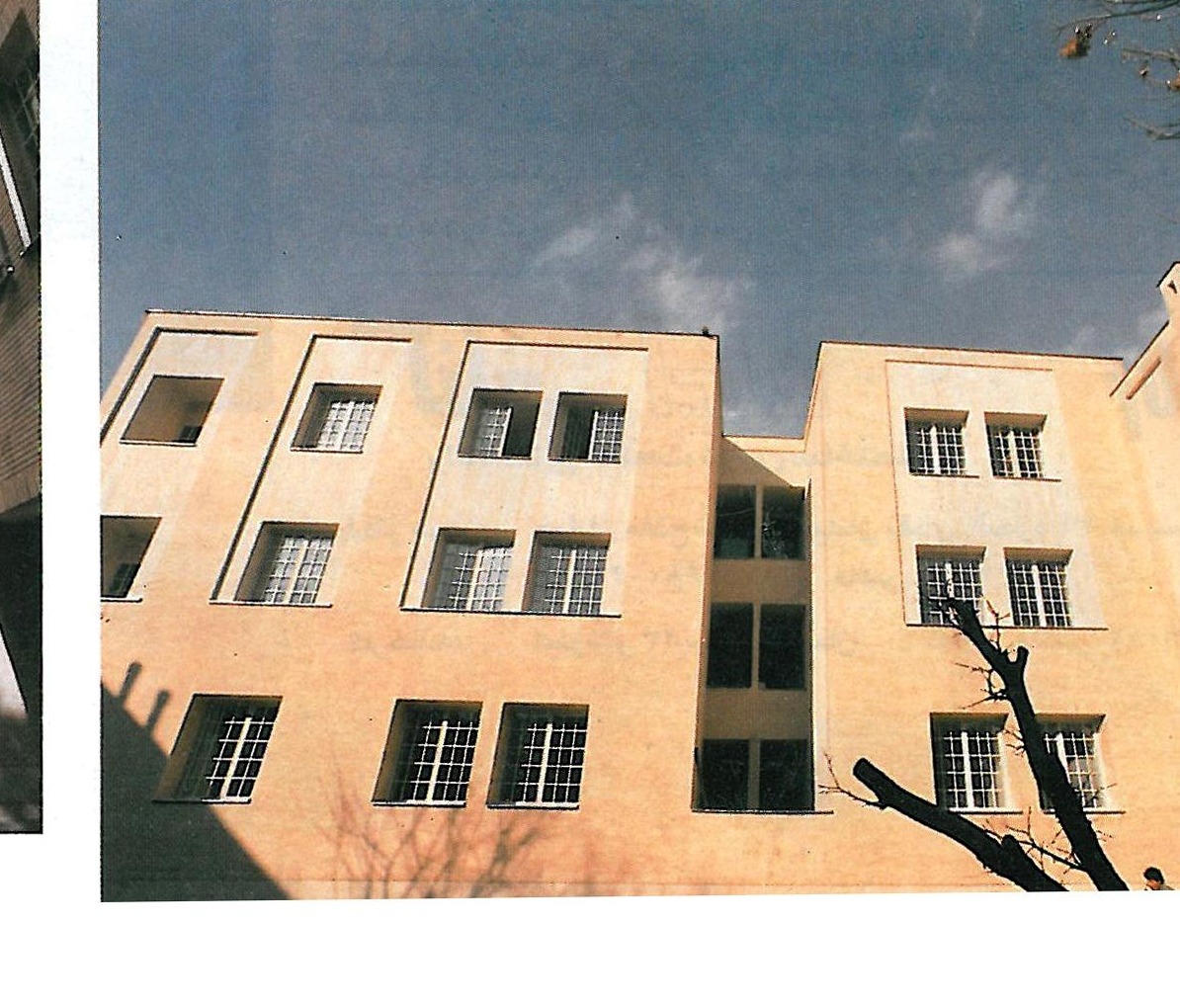
Residential Building, Chamran Highway, Tehran, 1987 — south facade and entrance
2. Office Building, Africa Square, Tehran, 1990
Design: H. Naseri. Construction: M. Soltan Mohammadi. Photographs: Kamran Jebraieli.
The project was built on a plot 35 m long by about 9 m wide, over an existing two-storey residential building from around 1970-71. The client wished to add two further floors and an extension at the front, producing a complex of four office units.
On the ground floor are the main lobby, a single office of about 100 sq. m, and the boiler room. The first and second floors each hold an office of about 200 sq. m comprising entrance foyer, waiting and secretarial area, five workrooms with services, a tea-room and a store.
Setting back the central room on the upper floor to the south and adding a small balcony in front of it have given the building a fresh massing. Two rooms at the north of the first floor look onto an intimate courtyard with a pool and small planting beds. The façade combines a white-brick frame with panels of hand-tooled red travertine from Azarshahr.
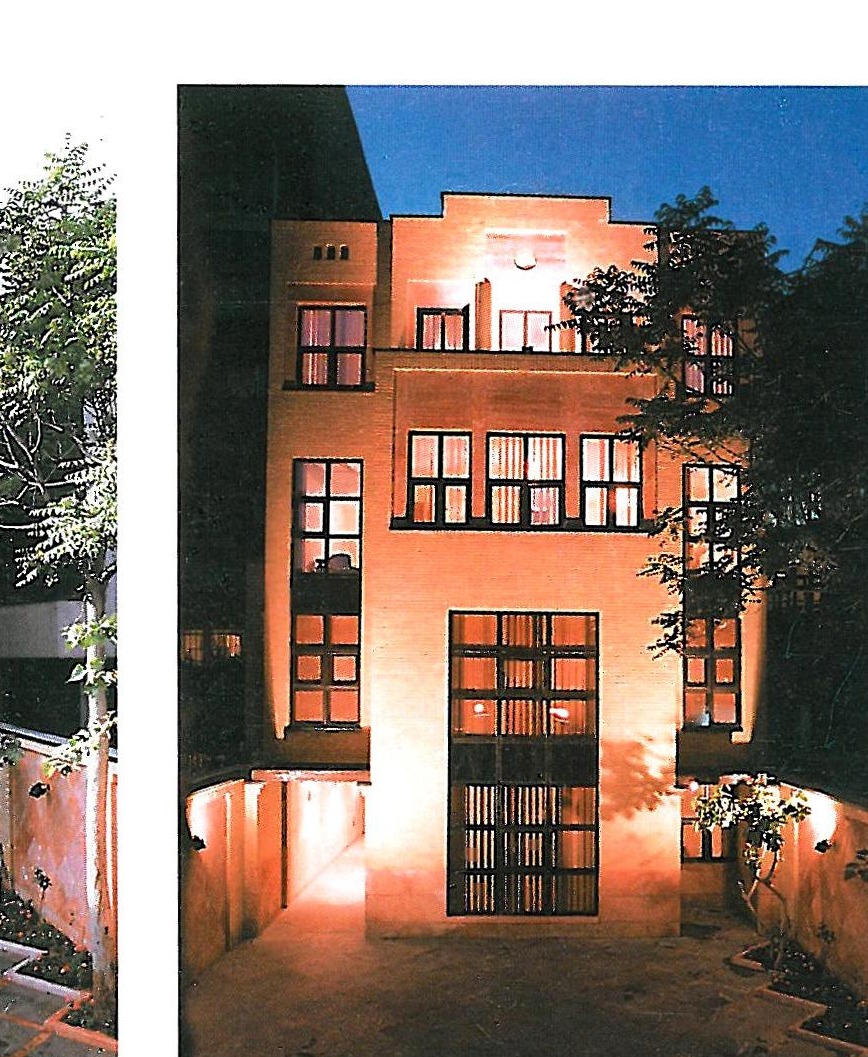
Office Building, Africa Square, Tehran, 1990 — south facade
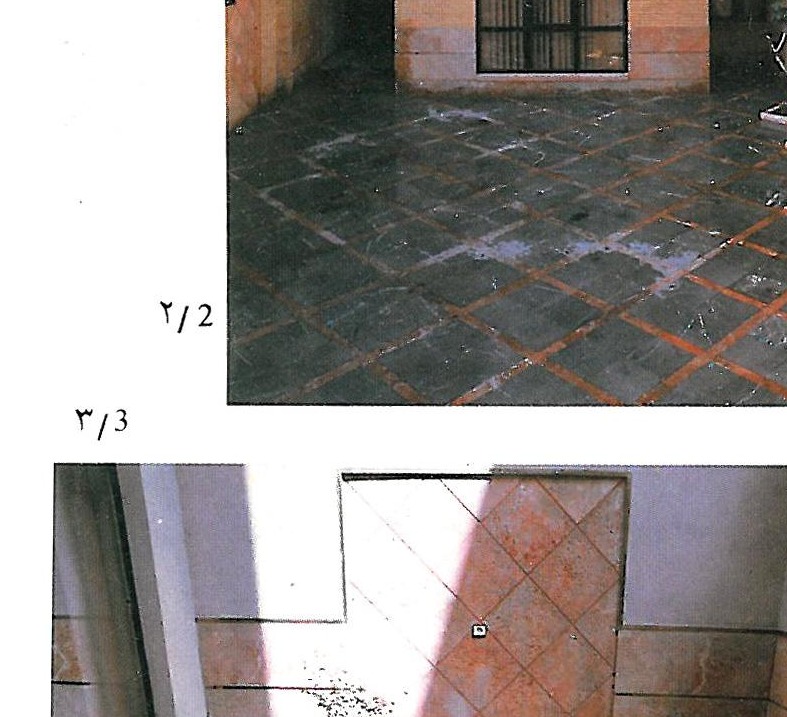
Office Building, Africa Square, Tehran, 1990 — back garden with pool
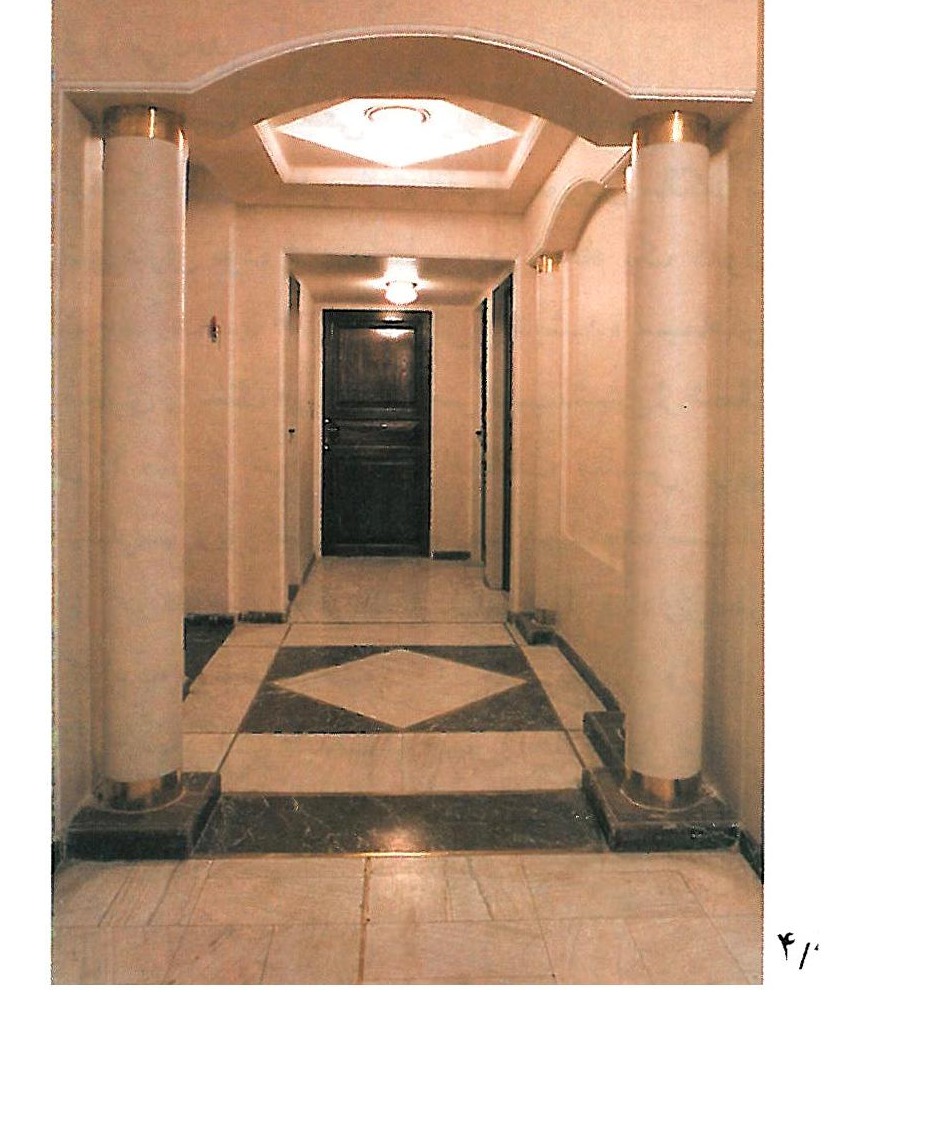
Office Building, Africa Square, Tehran, 1990 — entrance hall
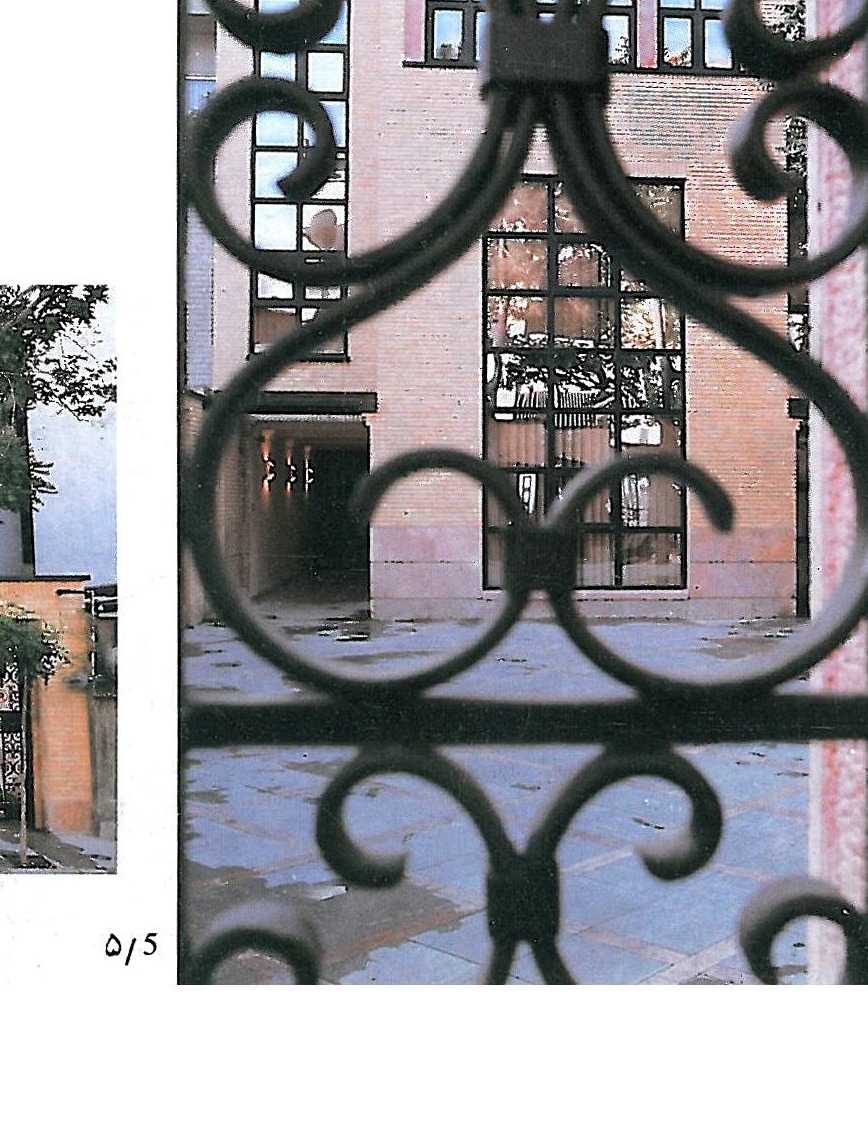
Office Building, Africa Square, Tehran, 1990 — hand-rail in the garden
3. Office Building, Shahid Ahmad Qasir (Bukharest) St., Tehran, 1994-1998
Design: H. Naseri and associates. Structure: Tazand Consulting Engineers. Mechanical services: Energy Consultants. Construction management: M. Soltan Mohammadi. Photographs: H. Naseri.
The first scheme, prepared in 1994, was for a plot of roughly 900 sq. m with eight storeys above a basement; the final scheme was enlarged to twelve storeys containing 39 offices, over two basement levels. Construction was completed at the end of 1997.
Drawing on the architecture of the great Iranian towers and domes — among them the Toghrol Tower in Shahr-e Ray, the Jabaliyya Dome in Kerman, the Abarkuh Tower, and the Soltaniyeh ensemble in Zanjan — the principal concern of the design has been the overall mass of the building: to give an ordinary high-rise, executed with contemporary technology and materials, a genuinely Iranian spirit. The hierarchy of the spatial organisation is expressed by a three-storey cubic base rising into several octagonal floors and finally into a circular volume which ends in a dome. The symmetry and geometric order of the composition, together with softly coloured materials, are used to convey a sense of poise and calm.
The main volume is wrapped in a stone skin enclosing the glazed surfaces, with slight recesses and projections, and terminates at the top in steel-sheet columns rising to a glazed, light-flooded dome. The reflection of a cloudy or rainy sky on the whole building — and above all on the dome — places the composure of the design in a more evocative setting.
The accidental juxtaposition of this building with the Jam-e Jam tower nearby — the result of ad hoc agreements between landowners and the municipality — creates a striking focal point and demonstrates, by contrast, the importance of a more considered approach to the city's skyline. A 5-metre setback to the north and a 3-metre setback to the west afford sufficient access and natural light.
The original scheme had two offices of roughly 200 sq. m per floor; in the final scheme most floors were divided into four units. On the ground floor, alongside a lobby connected both to the main entrance on the east (Bukharest St.) and to the street and courtyards on the south and west, are four offices of 70-100 sq. m each. First- and second-floor overlooks of the ground-floor lobby extend its height, openness and spatial variety. Floors 1 to 8 each contain four offices of 70-100 sq. m; floors 9 and 10 each contain two offices of about 200 sq. m; and the 11th floor, together with three-quarters of the space under the dome (the 12th floor), forms a duplex office of about 300 sq. m. The rest of the dome houses services. By gathering tea-rooms, WCs and the fire-escape stair on the west side, light and view reach all three remaining sides of every office. Parking and services occupy the two basement levels.
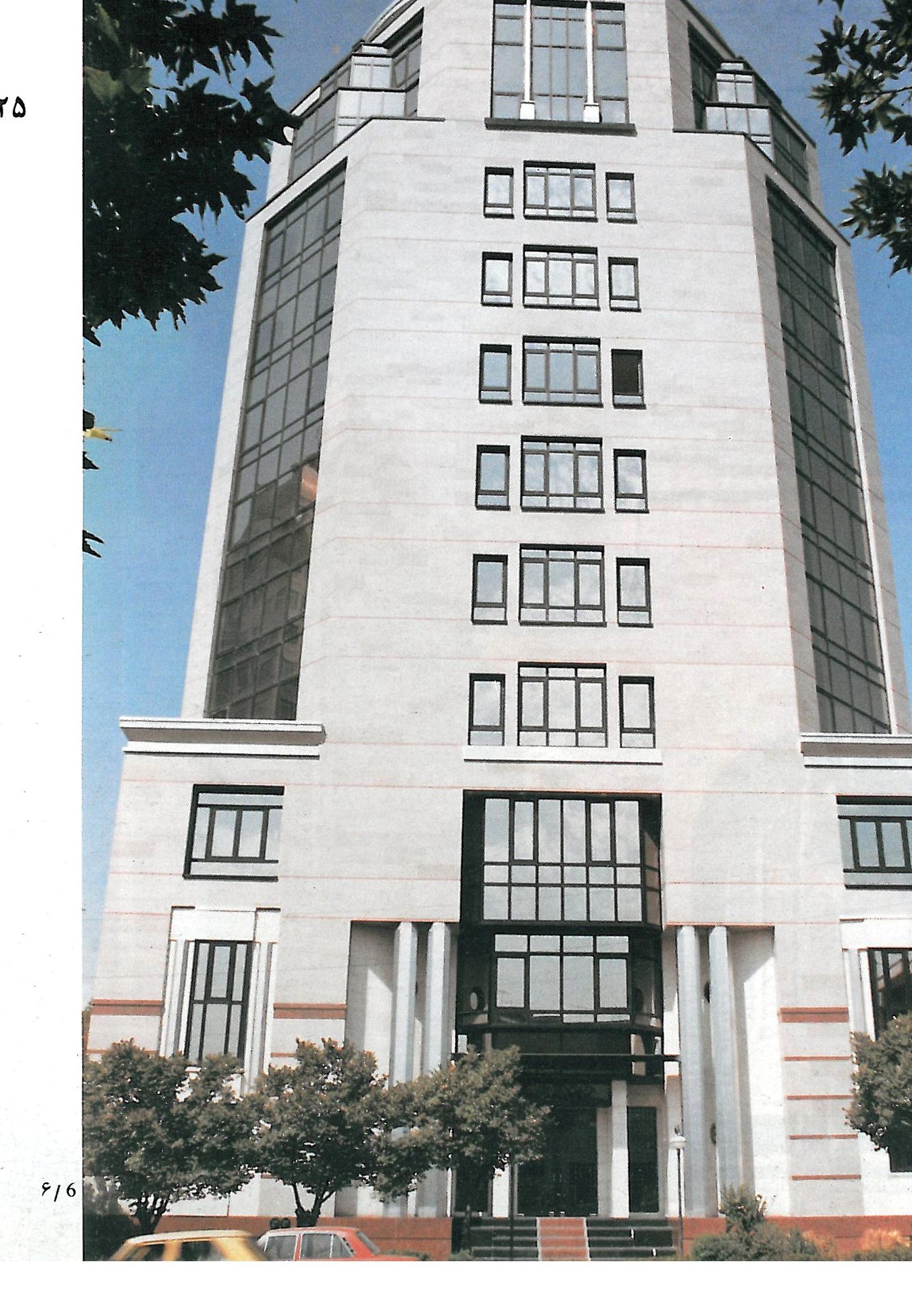
Office Building, Shahid Ahmad Qasir (Bukharest) St., Tehran, 1994-1998 — south view
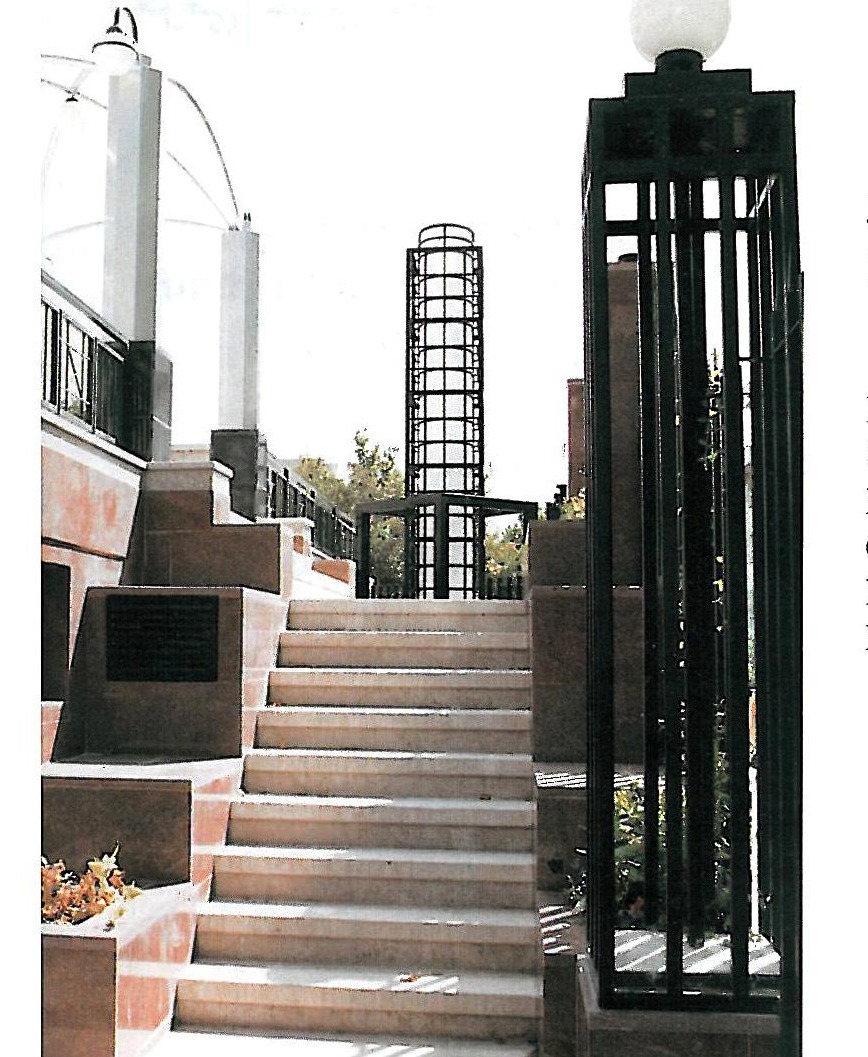
Office Building, Shahid Ahmad Qasir (Bukharest) St., Tehran, 1994-1998 — stairway at the south entrance
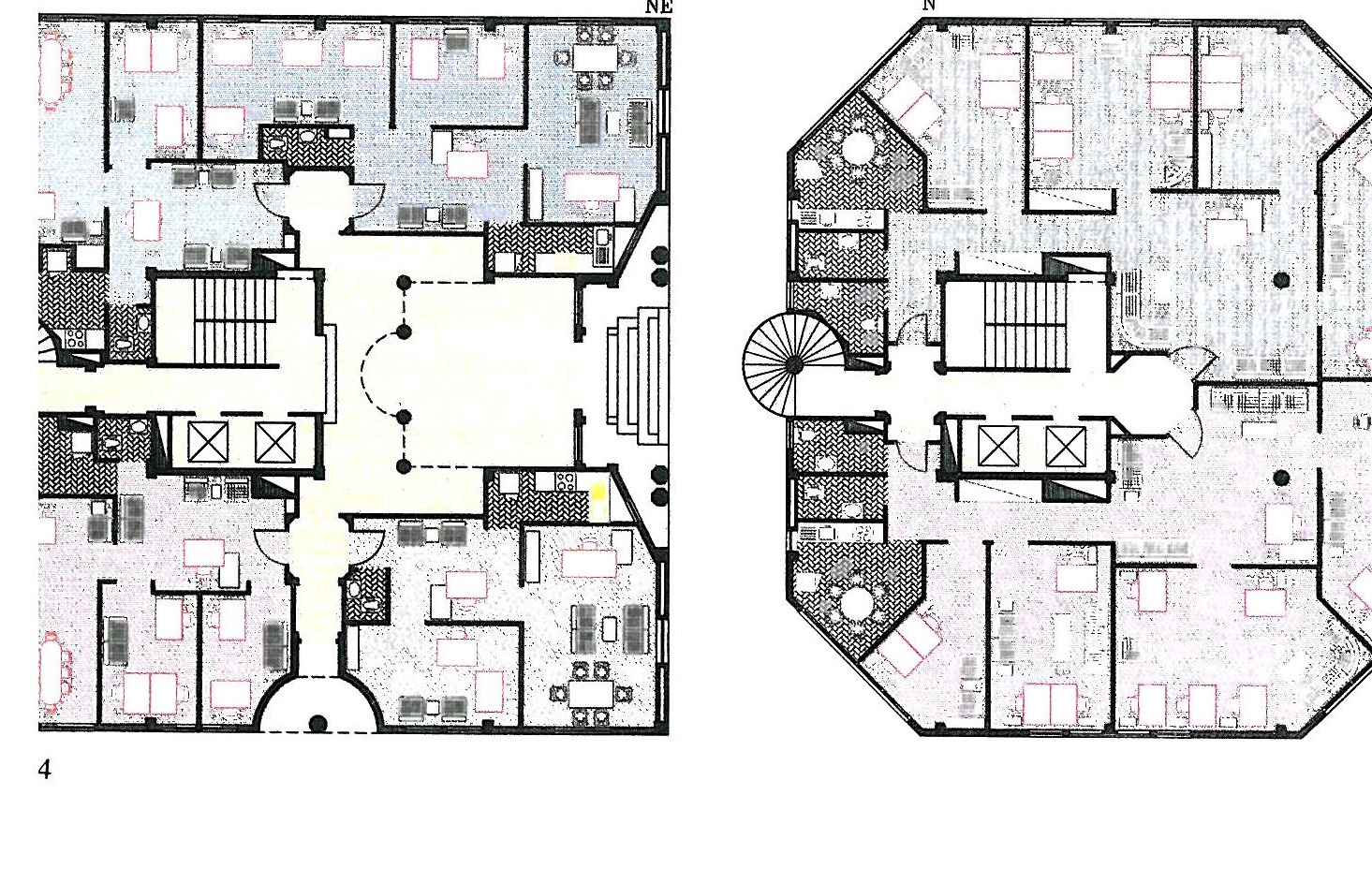
Office Building, Shahid Ahmad Qasir (Bukharest) St., Tehran, 1994-1998 — floor plans
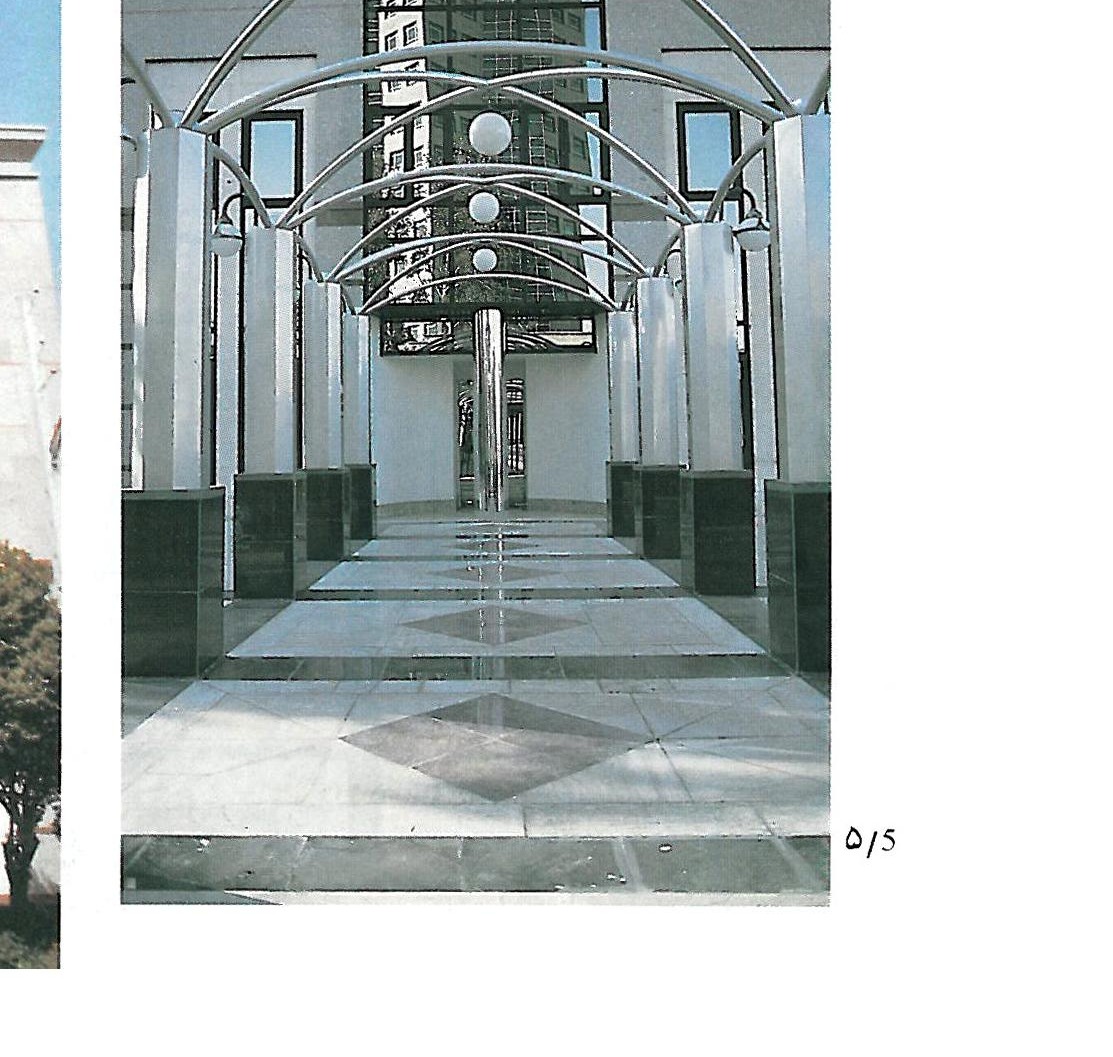
Office Building, Shahid Ahmad Qasir (Bukharest) St., Tehran, 1994-1998 — pillars of the entrance hall
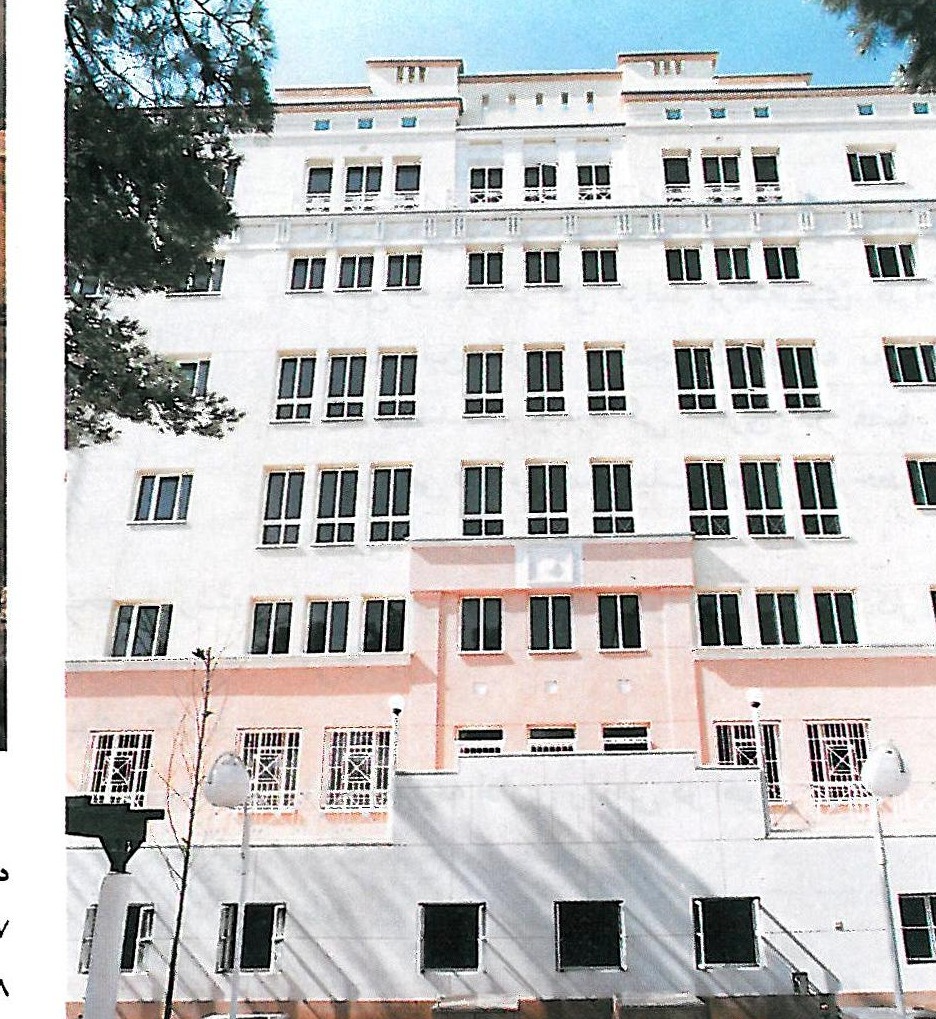
Tafti Building — south facade
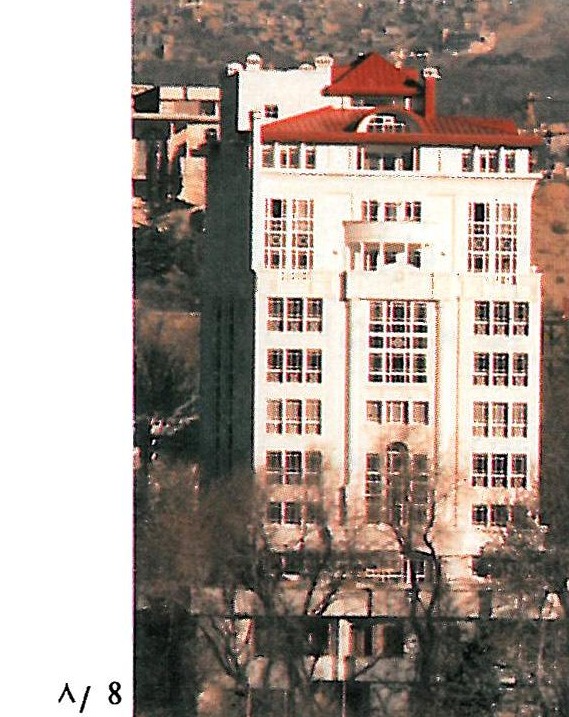
Chemran Building