Khan Khaneh is the product of the interaction between the existing structure of a building and the probable lifestyle of a Khansari family with the dream of “a house for living.”
The subject is an encounter with a masonry house roughly forty years old that no longer answers contemporary needs. This house belongs to a local family in the city of Khansar whose children reside in Tehran and commute to this house on a weekly basis.
They wanted an independent space within the heart of the ancestral home; therefore the principal desire was not merely renovation but the re-creation of a multilayered and contemporary space, together with the addition of a new floor for the children.
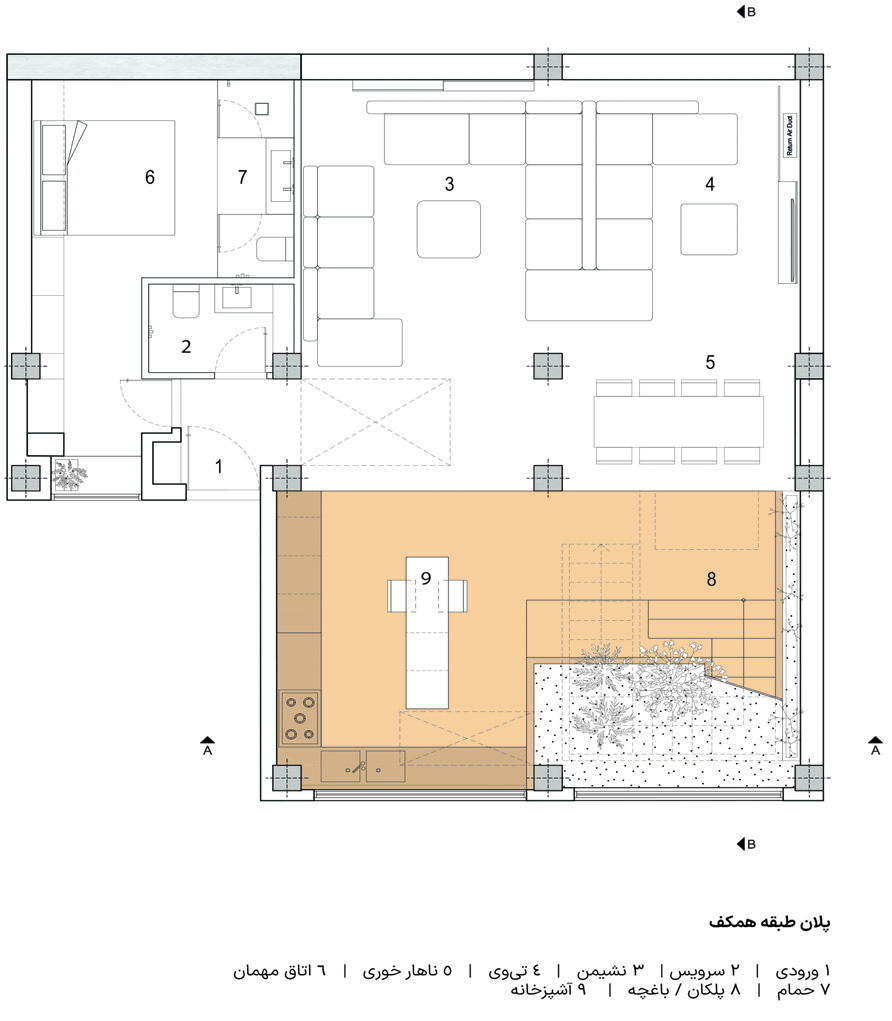
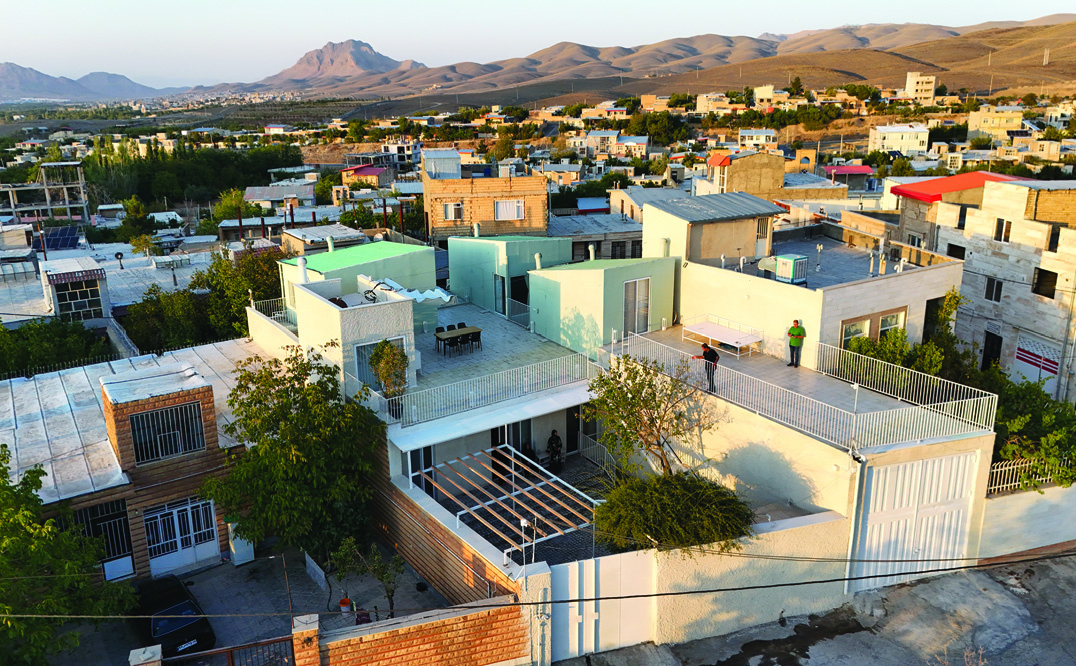
We decided to transform this house — whose structure resembled a single-storey apartment — by subtracting portions of its original mass, converting it into a house with interior courtyards. Our effort was to present this approach as a model for dealing with this category of houses — which are not few in number in the city — an approach grounded in two principles: first, subtracting from the original mass to open up spaces and create interior courtyards; and second, adding density in a minimal fashion and utilising the roof as a new, usable courtyard.
Discovering the Structure
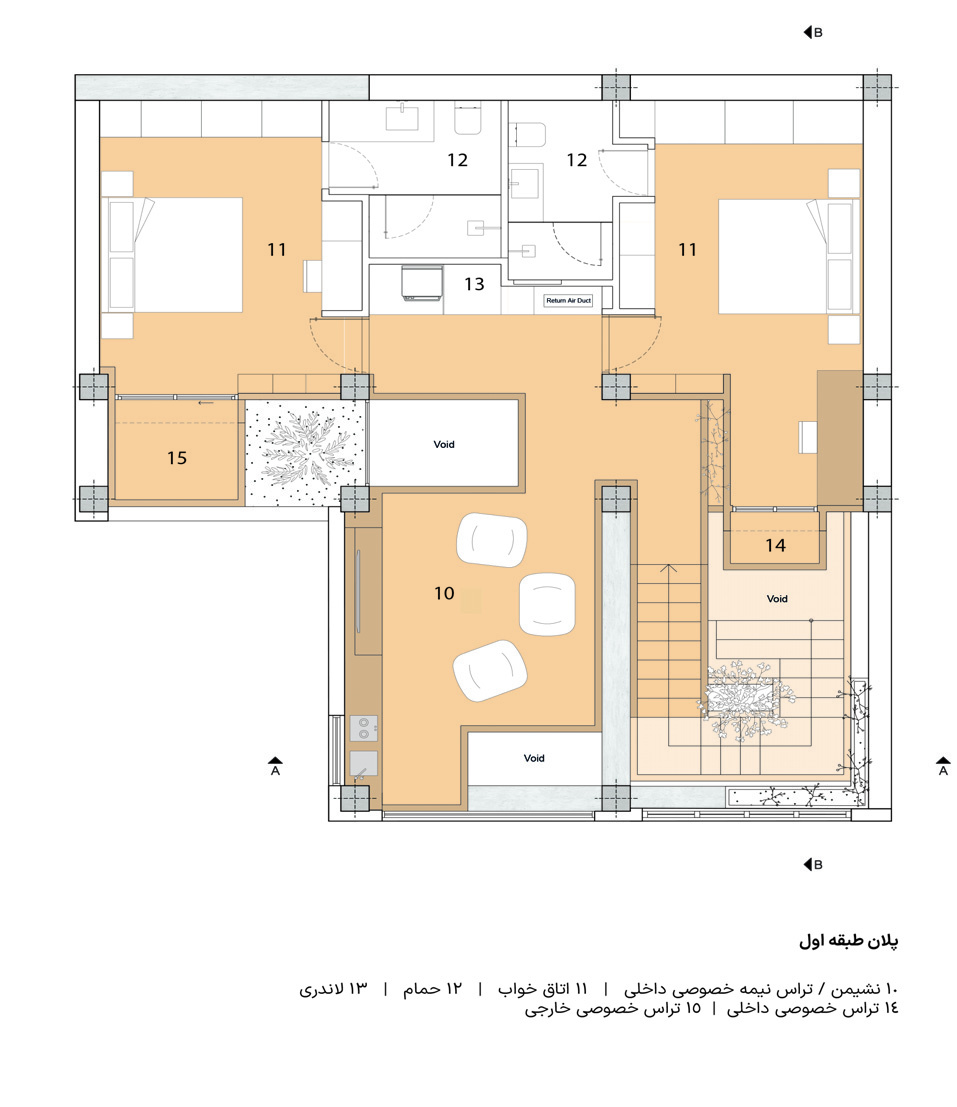
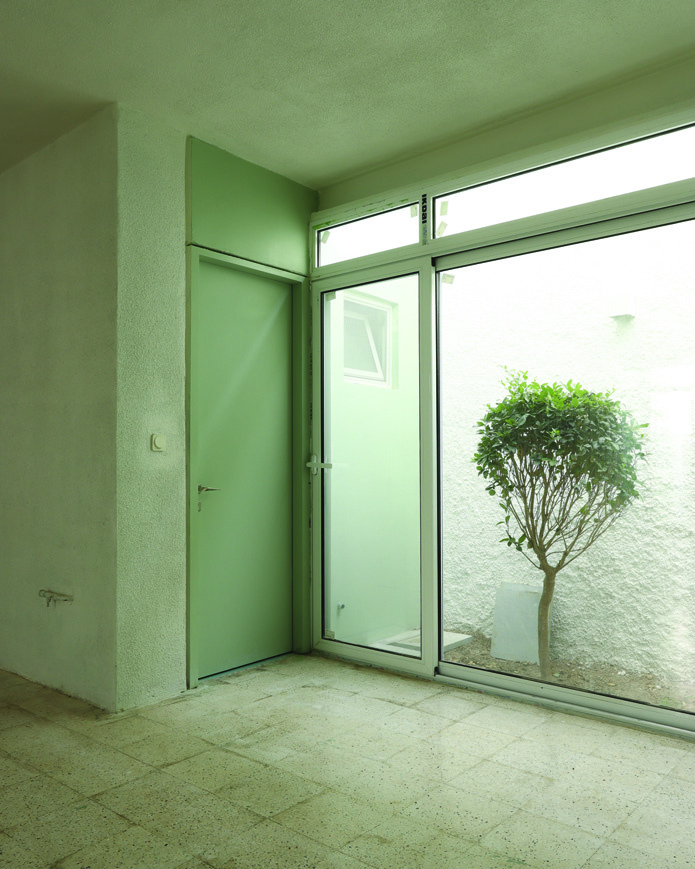
The basis of the design took shape around a nine-square grid that was overlaid upon the existing structure, including its load-bearing walls. This alignment made it possible to carve voids within the dense mass — spaces emptied of matter that admitted light, air, and rain into the intermediate layers of the house, improving its liveability.
Space-Making Walls
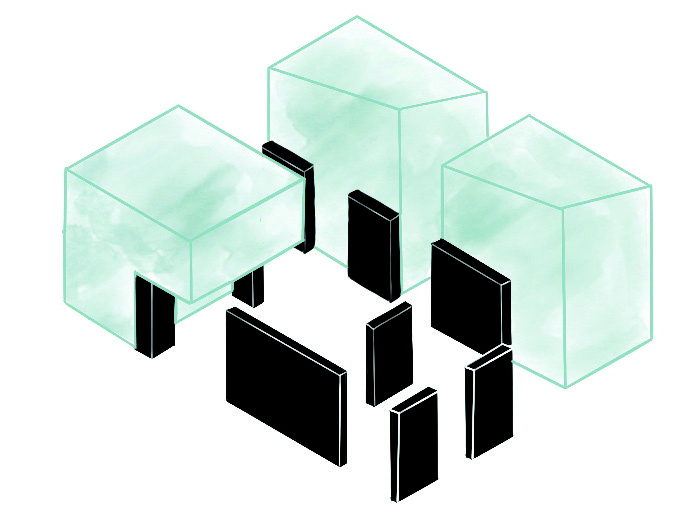
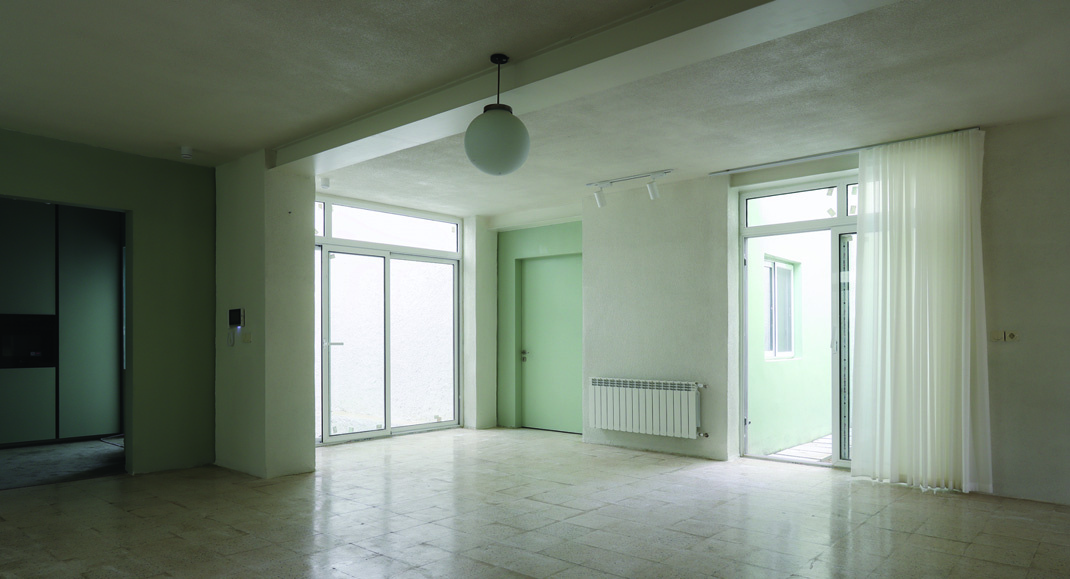
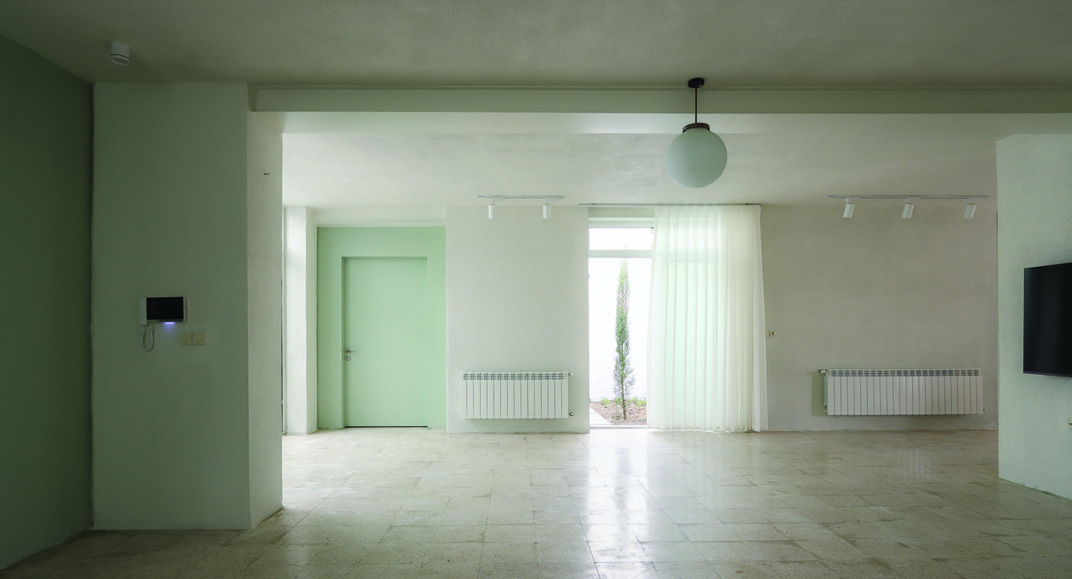
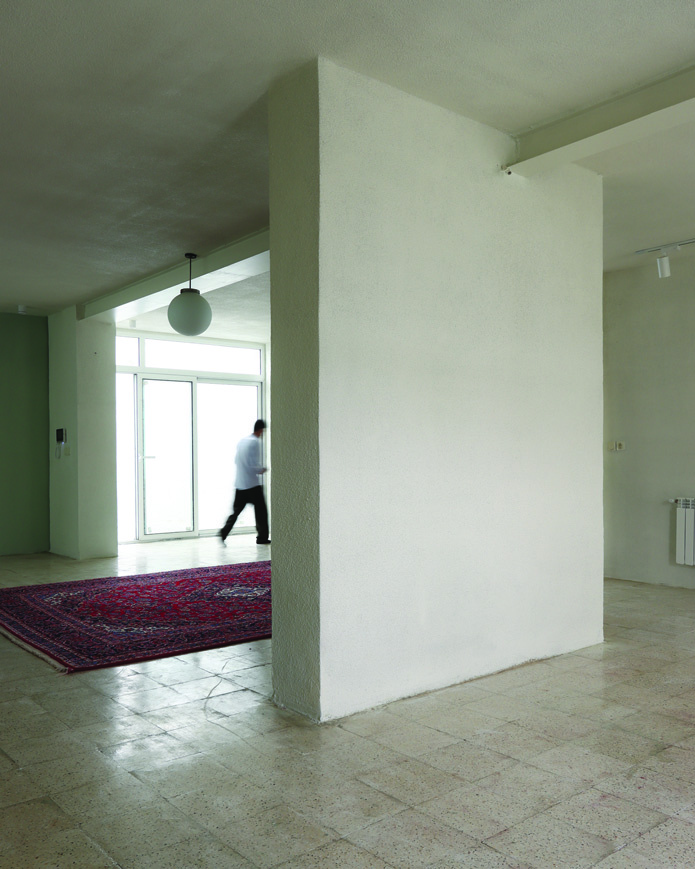
The geometry of the existing load-bearing walls in the building had already created layers; we preserved and exposed these walls within the space, and were then able to insert the necessary spatial boxes — pure volumes placed between these very layers.
Swelling the Mass
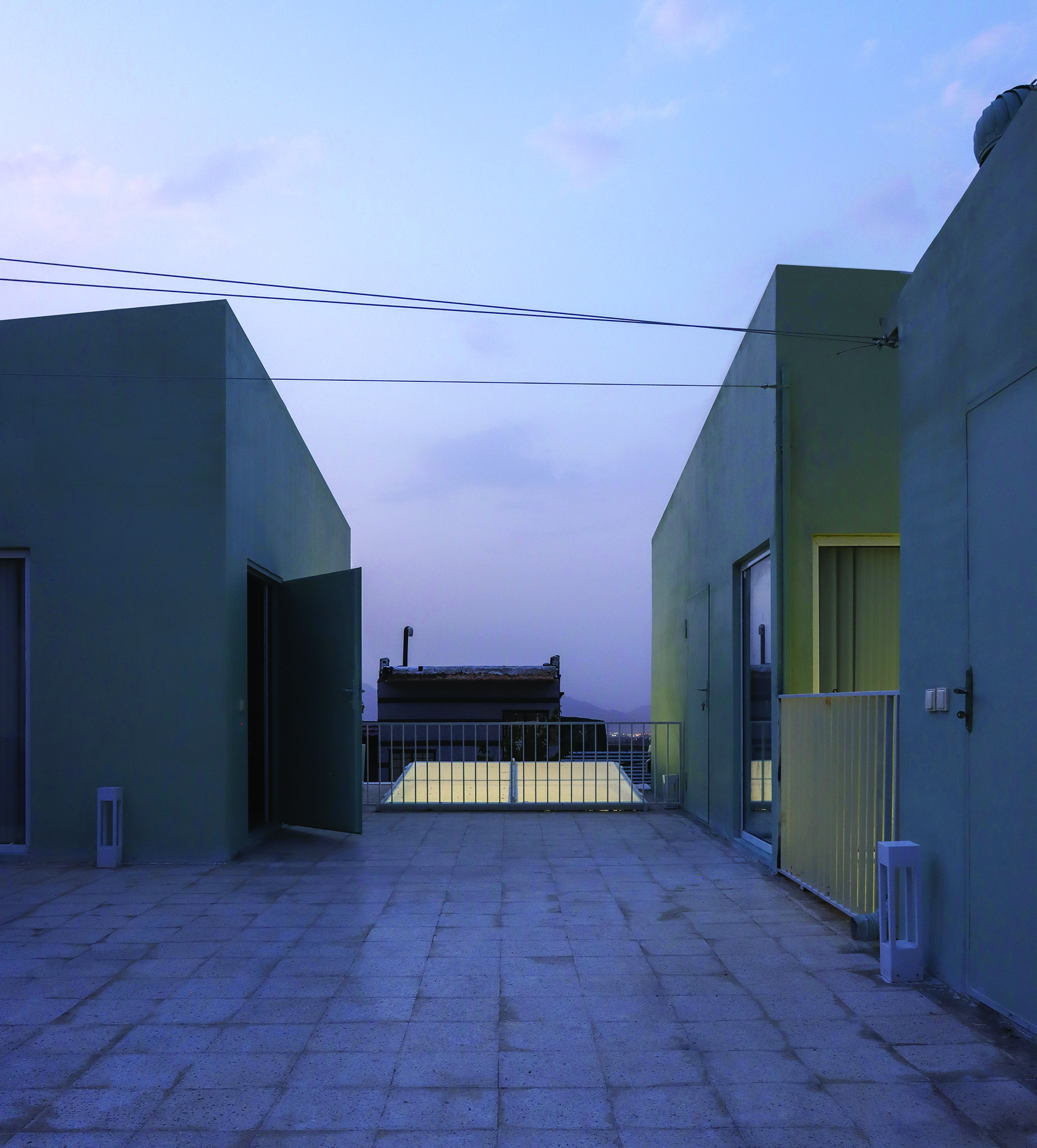
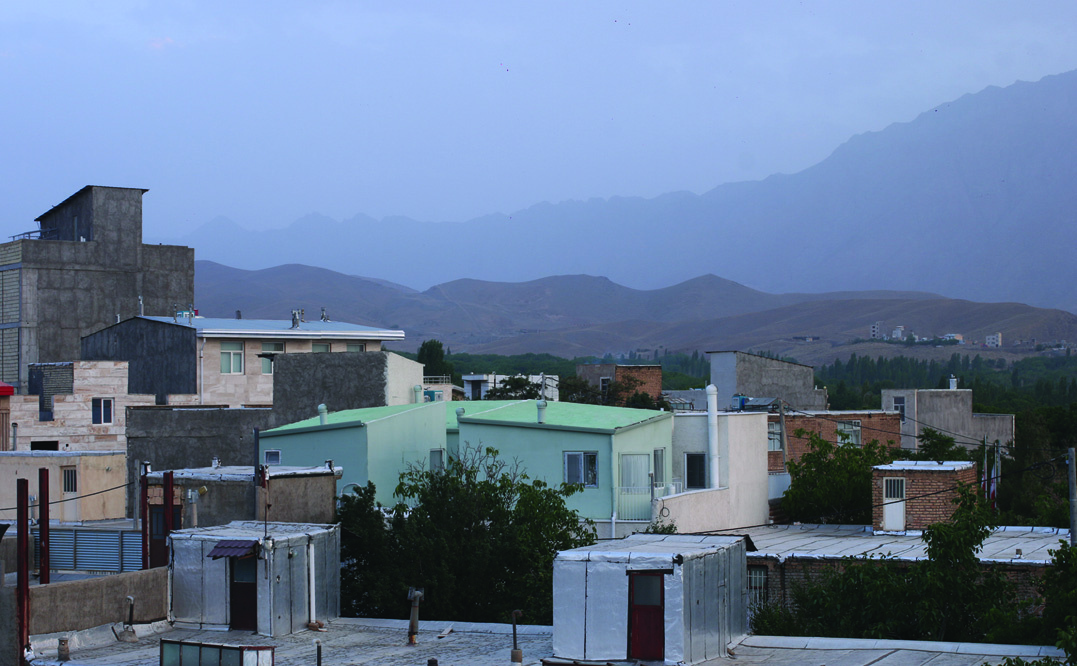
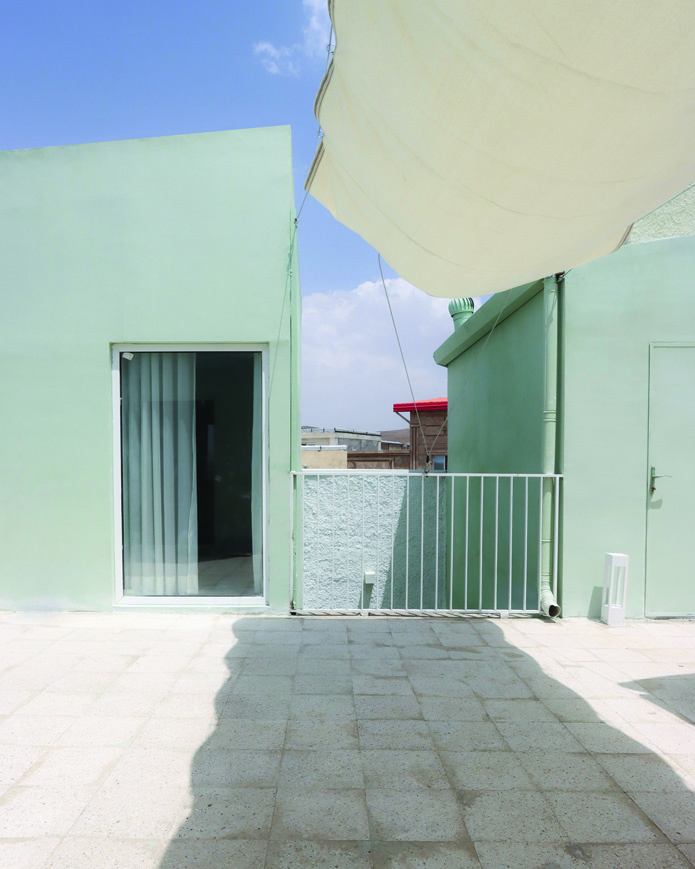
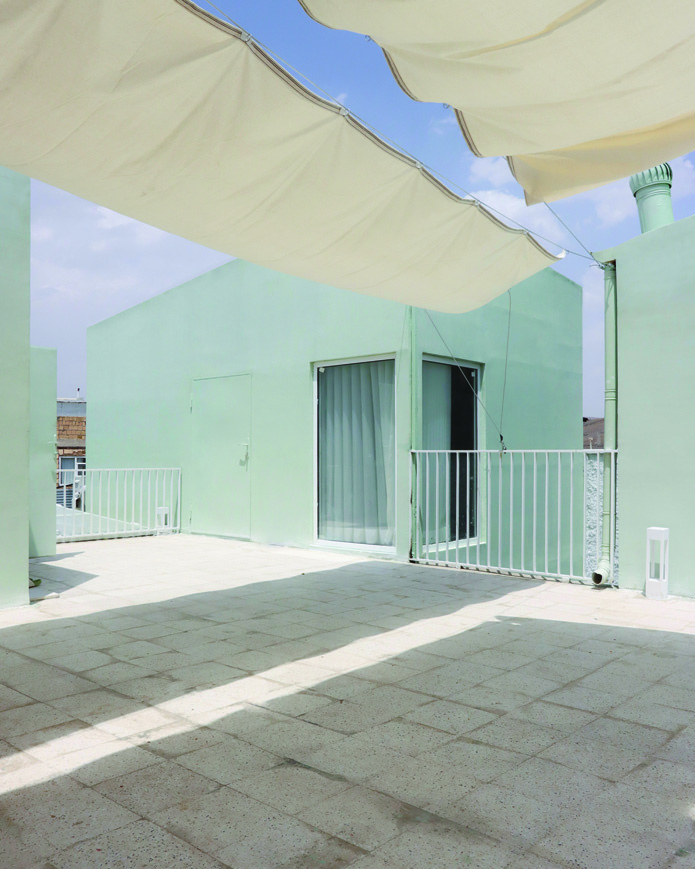
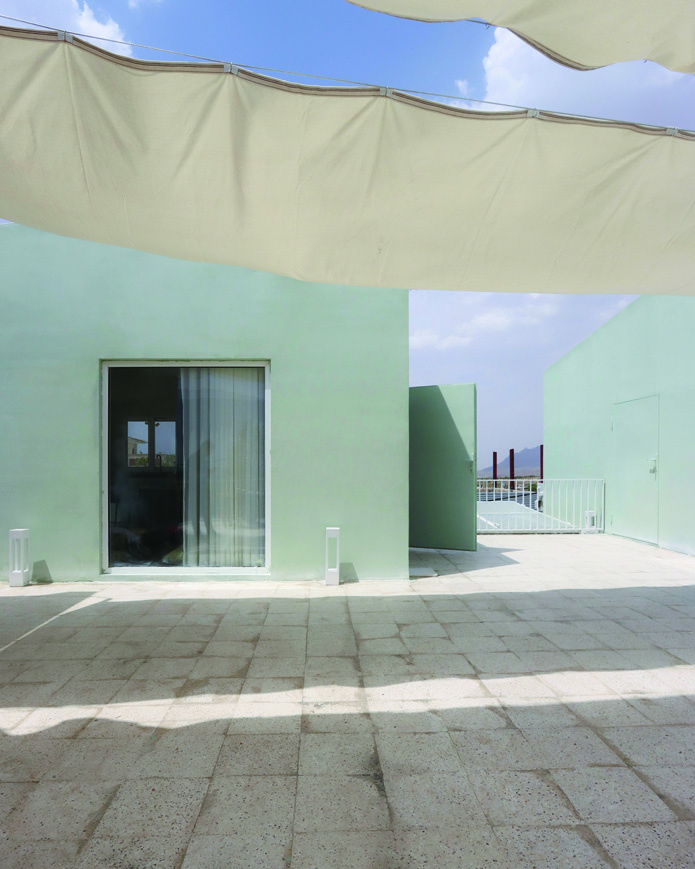
Next, by inflating portions of the mass on the roof — following the same structural grid below — the voids between them were activated and the rooftop was transformed into a usable surface: a courtyard that houses small, independent units within itself.
Cladding
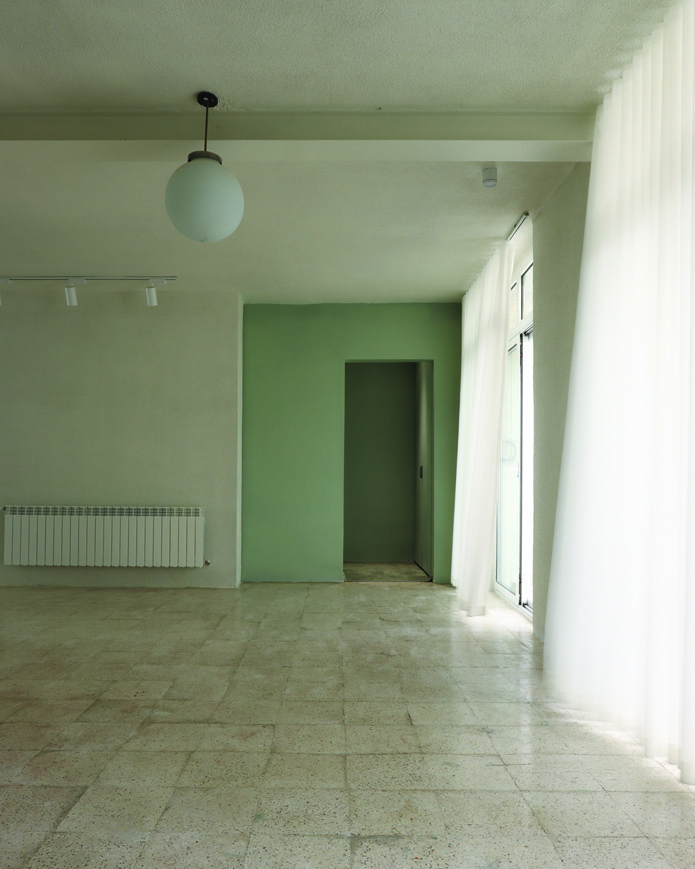
The existing structure, which had been clad in a variety of materials including plaster, stone, cement, and ceramic, was uniformly wrapped — inside and out — in white textured cement, and the new green-coloured volumes were positioned among them. The upper-floor rooms were built using lightweight LSF (light steel frame) construction so as not to impose additional load on the existing structure.
Floor Plans