
The city of Qazvin, by virtue of its geographical and communication position, was a strategic point on the economic highway of the Silk Road and for years a place through which the region's great merchants passed. For this reason it drew much attention from the rulers of the time, to the point that for 57 years Shah Tahmasp the Safavid chose this city as the capital of his government. Numerous valuable historic buildings, such as the Chehelsotun palace, the Ali Qapu portal, the Sardar cistern (the largest single-domed cistern in the world), the Jameh Mosque and also the largest inner-city caravanserai in the country (Sa'd-os-Saltaneh), the bazaars and qeysariehs, are the product of the attention of rulers and the passage of renowned merchants in this city.
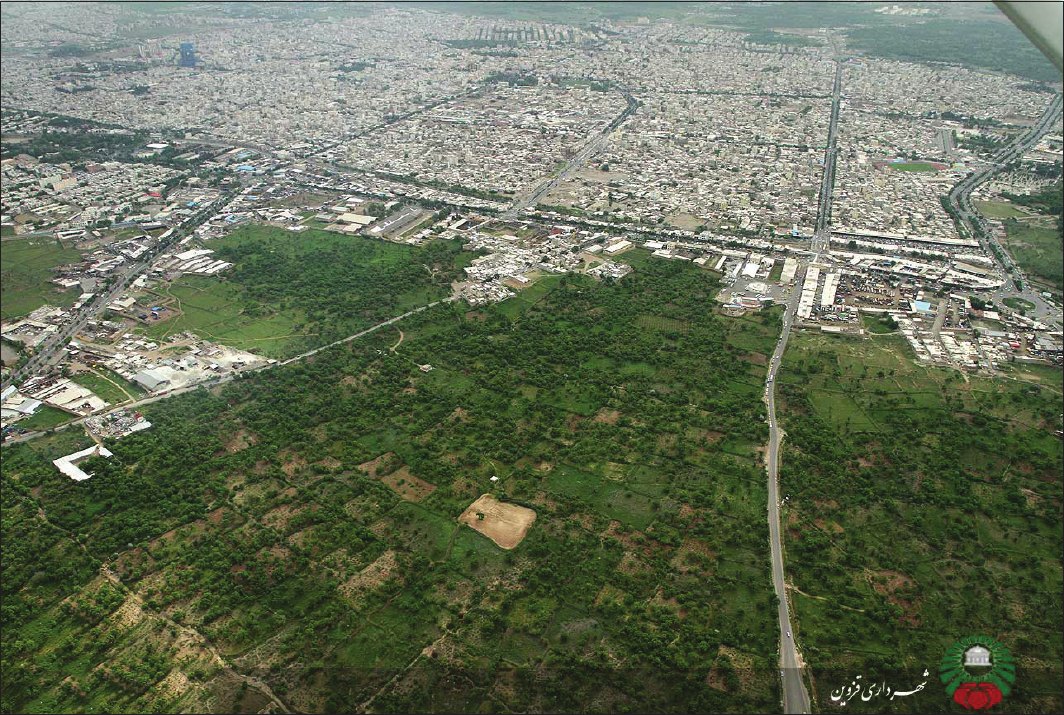
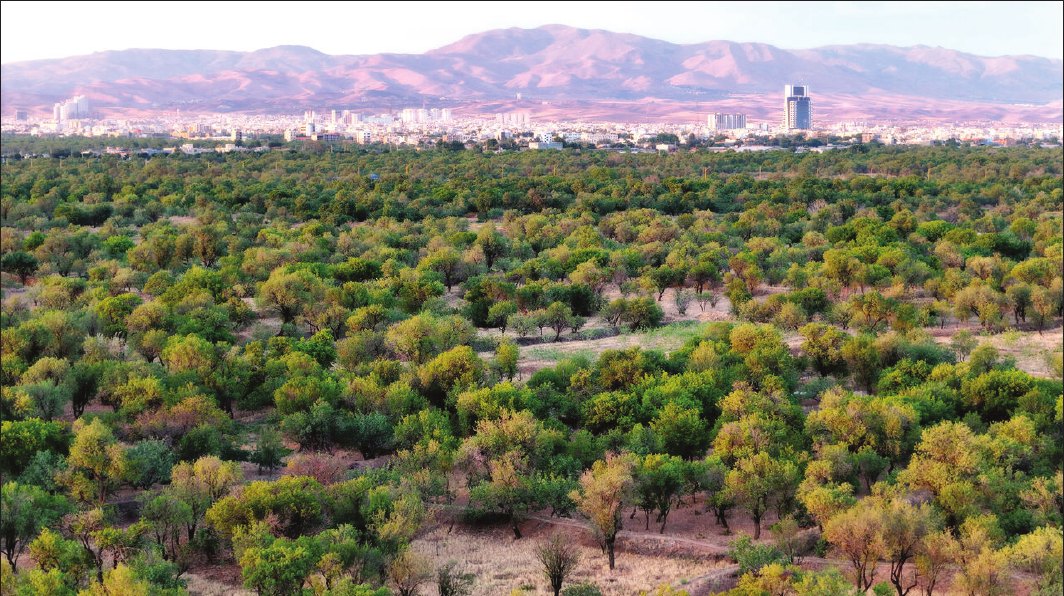
But one important feature of this city that has received less attention is the ring of traditional orchards around the city, which forms the main subject of this text. The orchards of Qazvin differ fundamentally from the walled Iranian gardens (known in the world as the Persian Garden). These orchards were without any building, kushk or residence, and only where necessary were spaces built in them for storing produce or gardening tools (Figures 1 and 2).
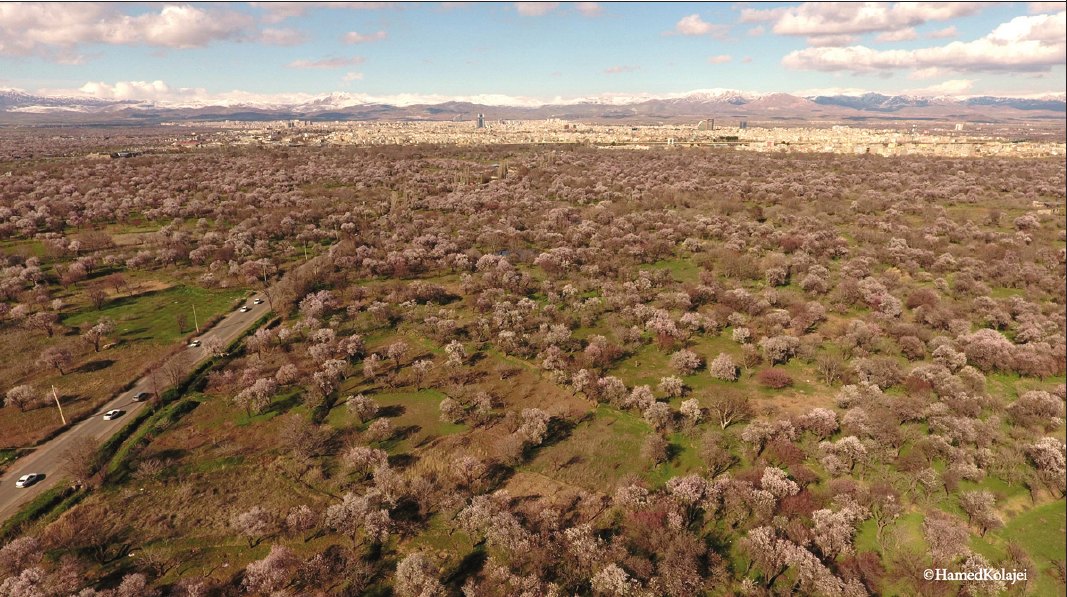
These traditional orchards, as one of the agricultural and ecological heritages of Iran, are a symbol of the balance between people and nature. These historic orchards, more than a thousand years old, have not only played an important role in the livelihood of the people of the region but, as a sustainable environmental system, have had a deep climatic and hydrological impact on the city of Qazvin. However, in recent decades the spread of unprincipled construction, villa building and the change of use of the land on their edges have created serious challenges for the survival of this unique ecosystem (Figures 3 and 4).
This text addresses the connection between the livelihood, social and emotional background of the people of Qazvin in the traditional orchards of their fathers and their growing desire to own and live in a garden, however small, which they bring to life with great difficulty.
The Qazvin plain counts as one of the oldest civilised settlements of Iran. Without doubt one of the grounds for the formation and spread of settlement in it was the presence of water resources suitable for drinking and agriculture (Parhizkari, 1398, p. 166). Although the Qazvin plain holds within it a 9,000-year history of hosting settled people, there has always been the challenge of climatic incompatibilities for creating a sustainable settlement in it... . The main strategy of settled people in the Qazvin plain was to use nature itself to tame nature; among the unique examples of these strategies was the creation of the traditional orchard; a man-made nature created for the sustainability of the city of Qazvin, which to this day continues this vital role despite urban adversities (Dizani, 1395, p. 41). Naser Khosrow in the year 438 AH explicitly mentioned the orchards of Qazvin: "It had many orchards, without walls or thorns, and there was no obstacle to entering the gardens" (Parhizkari, 1398, p. 170).
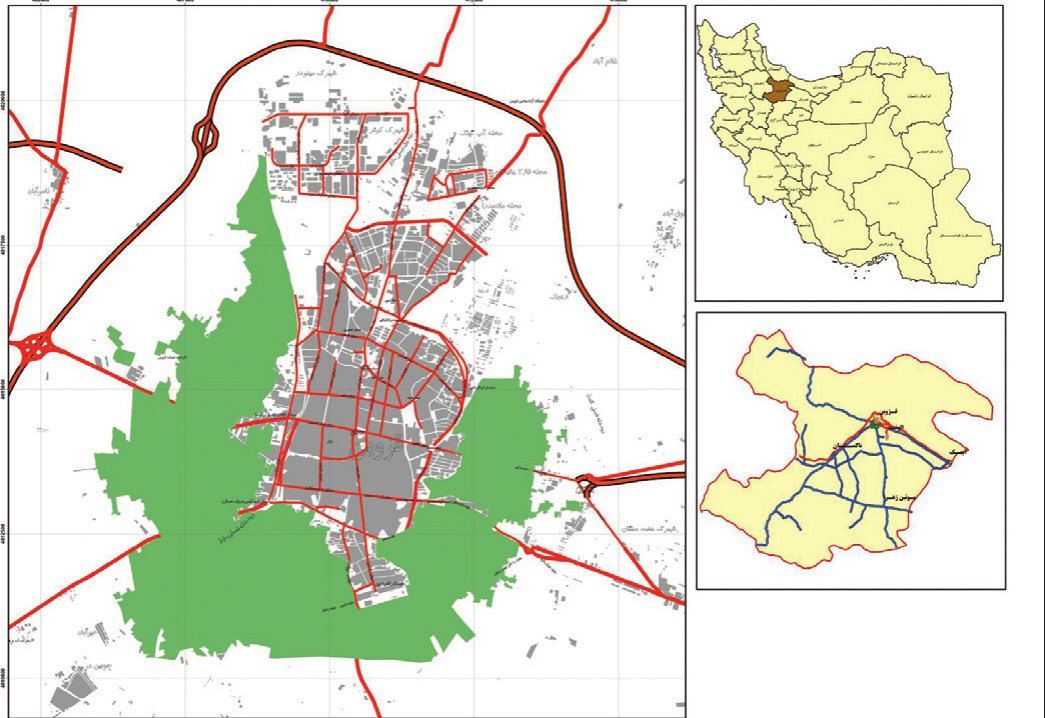
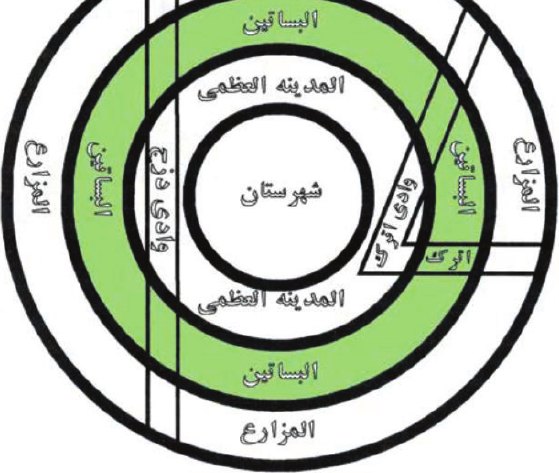
The gardens of Qazvin, according to the writing and map of Zakariya Qazvini in the seventh century, completely surrounded the city (Parhizkari, 1391, p. 65). But today the orchard has lost its ring shape and taken on a horseshoe shape. For in the contemporary period, because of the city's expansion to the north, the orchard of the northern part has given way to the urban fabric, but fortunately the orchards of the eastern and western, and especially the southern, parts live on (Dizani, 1395, p. 42). (Figure 5).
Qazvin's time as capital in the Safavid period was accompanied by a sudden increase in population. This made the need for water more pressing than ever. On the other hand, the building and development of royal gardens and of urban spaces such as squares and avenues planted with trees demanded new water resources. The Safavid state strengthened the city's water network by building new qanats and regularly maintaining the old ones, along with developing cisterns (Parhizkari, 1391, p. 171).
After the decline of the Safavids and the stagnation of the city, Qazvin regained its prosperity from the middle of the Qajar period. Commercial prosperity brought an increase in the city's population and a rise in relative welfare. In step with population growth and economic prosperity, many public-benefit buildings were built. The scale of construction and repair in this period was so wide that the Safavid face of Qazvin was turned into a Qajar city. In the Qajar period the orchard reached its maximum extent and consumed all the water of four rivers, the Dizaj, Arenzak, Deli Chay and Zoyar. In addition, the surplus water of some qanats was also used in the gardens according to endowment deeds. The time for irrigating the gardens was late winter and early spring, that is, the time of high water and flooding of the rivers. In this period the river water had no use in the city, and indeed the floods were considered a threat to the city (Parhizkari, 1398, p. 175).
The building of the orchard around the city, with its own particular irrigation technology, which in the seasons of high river water was irrigated by flooding, directed the floods into the gardens and protected the city from flood. In this technology, while using the water of the rivers, the gardens were large reservoirs for receiving the high volume of river water in the spring season (Parhizkari, 1398, p. 175).
The gardens in the traditional orchards are all joined to one another, have no doors or walls, and the boundary between gardens is marked by a mound whose height is about half a person's height or a little more, which is both a path between the gardens and, like a large basin, takes in and stores the winter and spring floods that every year flow 1 to 3 times from the mountains north of the city, which, besides preventing flood damage, also irrigates the gardens in a rain-fed way and helps the underground aquifers (Zarrabi, 1399; Avarth, 1385; Golriz, 1368) (Figure 6).
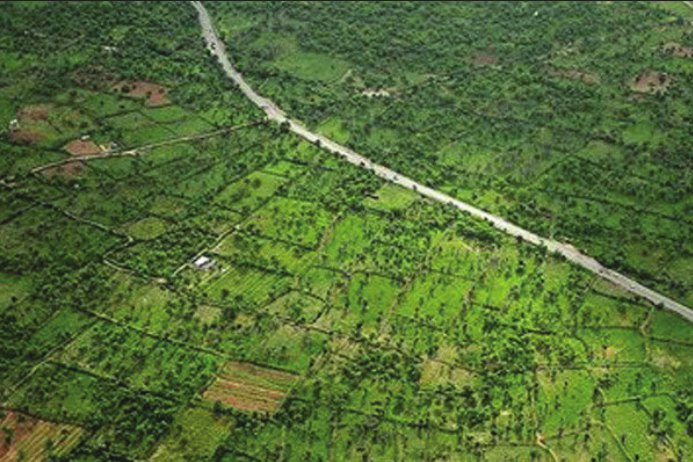
The planting pattern in the traditional orchard is mixed and irregular, and mostly in one garden pistachio, almond, apricot and other trees stand without any particular order. On the floor of the orchard grapevines are also grown.
Chahkhanehs are among the other elements of the orchards, and are in fact counted as the only buildings of these orchards. Chahkhanehs are rooms measuring 4×4 with a height of about 3 metres, with thick walls and zarbi vaults. These buildings were built beside water wells used for drinking and cleaning, and formerly one or more mulberry or umbrella elm trees were also planted beside these wells for public use. Chahkhanehs are the resting places of the gardeners and the place where they store their tools. At irrigation time and in the harvest season, to protect the produce, the gardeners also slept in the chahkhanehs at night. In them a space called the "aleh" was built for the gardeners to keep watch (Zarrabi, 1399; Avarth, 1385; Akhavi Zadegan, 1380; Andaroudi and Sahrakaran, 1396).
The Ecological Role of Qazvin's Traditional Orchards
The traditional orchard of Qazvin, with an area of about 2,500 hectares, counts as one of the largest rain-fed orchards of Iran, consisting mainly of fruit trees such as grape, pistachio, pomegranate and almond; it was formed on the basis of the traditional irrigation system and acts as a "green lung" for the city of Qazvin.
The living area of the citizens of Qazvin is enclosed by fields and gardens, so that the orchard has created a safety margin for the citizens against natural disasters. Floodwater after continuous rainfall on the natural slope of the Qazvin plain first reaches the fields, and usually, if its volume is large, it passes through the fields and reaches the gardens, and the orchard has a suitable way of calming the flood. The orchard's way lies in the type of land use and the division of its plots into beds. The earth banks at the edges of the beds in the orchard's gardens are about as high as, or higher than, the waist of an ordinary person, and the plots stand at various heights according to the natural slope of the land. The floodwater, on reaching each of the plots, fills it and spills into the next plot (Dizani, 1395, p. 43).
The area of the orchard before the contemporary period was roughly more than five times the area of the city, and with its ring shape it held the city within it. Hence floods from every side of the city were contained by the orchard, and throughout the two-thousand-year history of the city of Qazvin, the floods that could pass the city's natural barrier have been few (Dizani, 1395, p. 43).
Moreover, since the Qazvin plain has no permanent river and its annual rainfall is also low, the orchard and the surrounding fields, with their wide area, are responsible for watershed management and the preservation of the underground aquifers. The orchard that holds back the flood turns that same floodwater into a reserve for the city's days of water shortage. The advanced system of water supply by qanats in the city of Qazvin depended on this very water function of the orchard (Dizani, 1395, p. 44).
The orchard, by encircling the city of Qazvin, tames the dust, the speed and the dryness of the Raz wind (a hot desert wind) and turns it into a gentle, soft breeze for the city. Also, in the season when the Meh wind (a cold wind) blows, it reduces its speed and bite and so softens its blowing into the city (Dizani, 1395, p. 44).
The Social and Cultural Role of Qazvin's Traditional Orchards
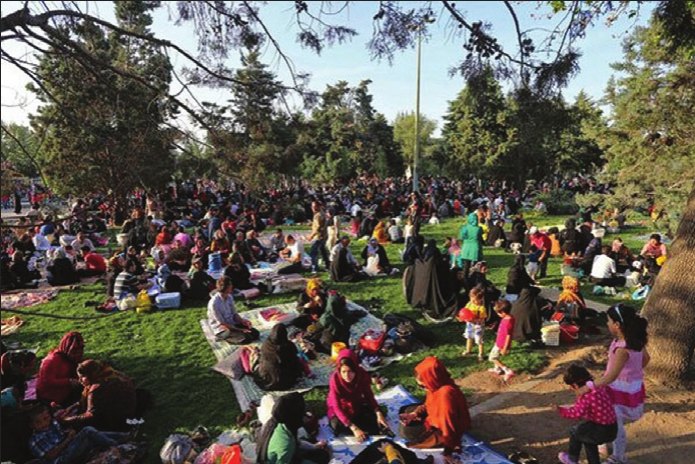
The orchard has been the basis of many cultural and social interactions over time. From the popular management of how water is divided, to the particular literature of the gardeners and the festivals that every year draw the people of the city to the orchard. The "Panjah Badr" ceremony, which has ancient roots, is held by the people of the city on the twentieth day of Ordibehesht, or the fiftieth day of spring, to pray for rain at the "Mosalla of the Orchard". Then people spend the spring afternoon with their families (Figure 7). This ceremony is a clear example of the social features of the traditional orchard, which fortunately has survived to this day (Dizani, 1395, p. 45).
The traditional orchard of Qazvin was registered on the National Heritage List by the country's Cultural Heritage, Handicrafts and Tourism Organisation in 1392. The reports of the orchard's national registration file emphasise the emotional relationship of the people with these gardens.
A documentary entitled "Dried Shadows" is held in the archive of the Qazvin provincial network, presenting a collection of interviews with old gardeners of Qazvin in 1401. In this documentary the sense of nostalgia and the social and emotional connection of the people of Qazvin to the lost gardens and the life that went on in them is clearly evident.
The basic concepts of the cultural landscape, that is, the wise relationship of people with the environment and the formation of cultural manifestations and local traditions, can be well examined in the traditional orchard of Qazvin. The traditional orchard of Qazvin is a sign of the interaction of people with their natural environment throughout history and of the transformation of living obstacles (including the cold climate of the Alborz or the hot climate of the central desert, seasonal rivers and floods) into resources for the formation of the ring of agricultural gardens around the city and cultivation by local methods. (Beheshti, 1390; Andaroudi, 1396, 37).
Life Today in Qazvin's Traditional Orchards
The traditional orchards that remain around the city of Qazvin, although today their area is gradually being reduced and given over to ring roads, roads and urban development, are still a source of agricultural and orchard produce such as pistachios, grapes and almonds, which not only have uses within the city and provide a livelihood for some citizens, but also help the regional economy in the form of exports.
Their environmental effects, such as producing oxygen, reducing the effects of urban warming, preventing dust and floods and preserving water and soil resources, still endure. They are still used as destinations for tourism and recreation and count as part of the historical and social identity of the city.
But the expansion of the city, roads and the infrastructure needed for development, and unprincipled construction, still threaten large parts of these orchards.
The uncontrolled expansion of the city of Qazvin in recent decades has done great damage to the identity and territory of Qazvin's traditional orchard. Factors such as the development of the city, population growth, rising land prices, social and economic changes, the building of a landfill site and, of course, the mistaken approach of urban management have caused this destruction. The lack of a function and use in harmony with, and contemporary to, people's lives, and the absence of a comprehensive plan defining varied functions for these urban plots, have caused the destruction, drying out, change of use and disintegration of this green and vital infrastructure of the city of Qazvin (Zarrabi, 1399).
Although in various seasons, especially Nowruz, this orchard draws the attention of citizens, in the past decade it has been neglected and a large part of its area, especially in the north of the city, has been lost. In recent years, bringing life back to this orchard and making use of it as a potential for the city has received the attention of the Qazvin municipality.
An example of these efforts is the Mollakhalila park, the first park built in the orchard, which, as the largest park in the south of the city of Qazvin, with an area of 6 hectares, was opened in Aban 1394 with the aim of preserving and maintaining the traditional orchard and developing the city's green spaces (Zarrabi, 1399). (Figures 8 and 9).
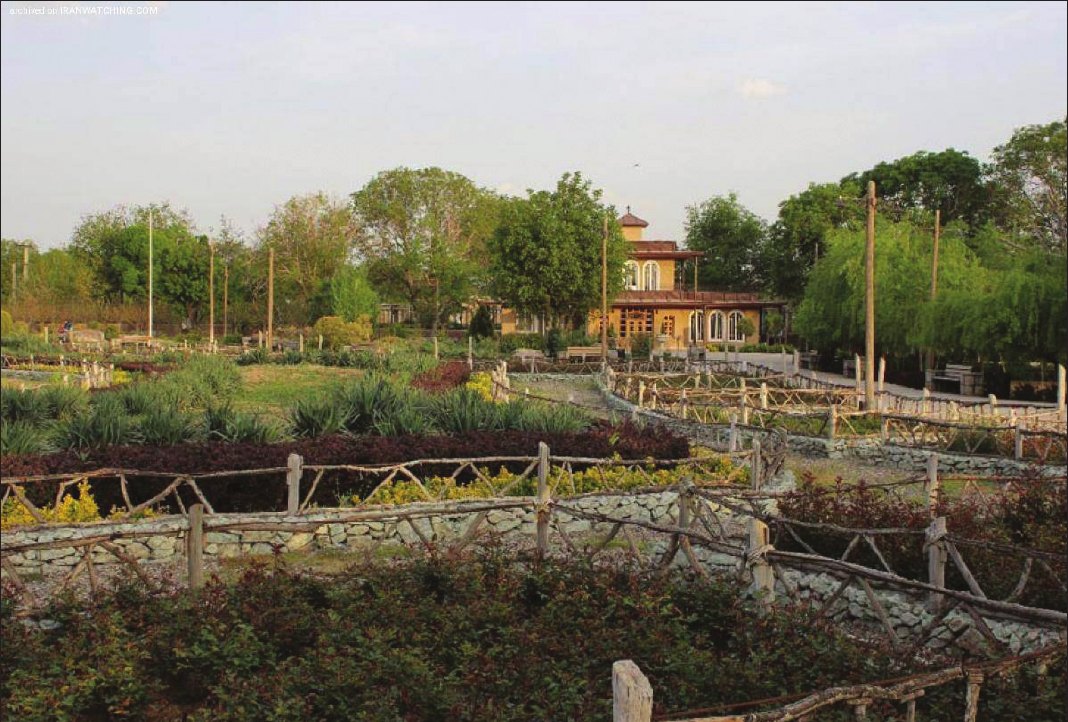
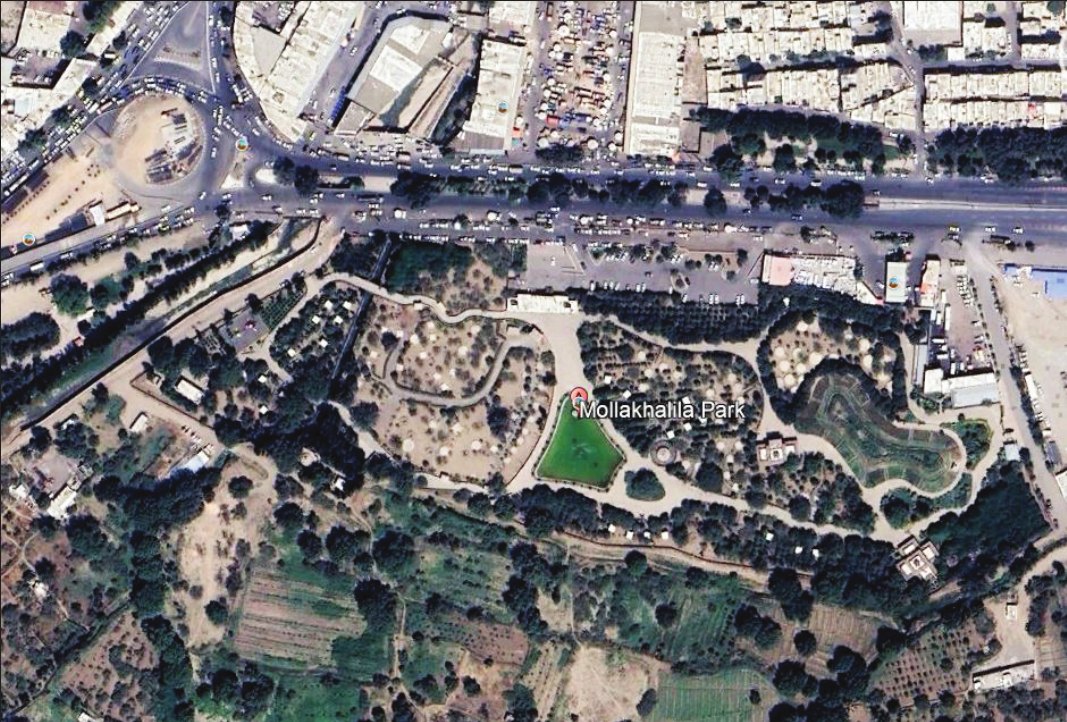
Researchers and analysts believe that the design of this park has in some cases not been faithful to the landscape of the traditional orchard and its original principles. Yet the welcome of citizens and families, who use this park for picnics and recreation, shows the success of its social standing.
But some principles of the traditional orchard, including the flood irrigation system, the orchard's particular boundary-marking, the mixed and irregular planting of trees, and the presence of streams, alehs and chahkhanehs, were not taken into account in it, and it settled merely for preserving the existing trees in an entirely new form.
The Spread of a Garden-Villa Lifestyle in Qazvin
The people of Qazvin, because of their long background in traditional gardening (centred on the historic orchards), have a deep emotional and economic connection with the idea of the garden. This relationship was not only an agricultural activity but was considered part of their cultural identity and lifestyle. Today's desire to build garden-villas on barren land can be analysed in several respects:
-Reproducing collective memory and nostalgia: many inhabitants of Qazvin who grew up as children in their fathers' gardens seek to revive that free and natural space in the form of private gardens. Today people bring agricultural or barren land to life by planting trees, so as to keep their bond with the past in a new form.
-A change in the pattern of livelihood from agriculture to investment: in the past gardens were a source of income, but today, because agriculture has become less profitable, some prefer to turn the gardens into garden-villas so as both to enjoy the green space and to gain the added value of the land in the future. This trend shows the transition from a productive economy to a rent-based economy (land speculation).
- Imitating the historical aristocratic way of life: in Iranian culture the garden has always been a symbol of status and welfare. Like the royal gardens of Qazvin in the Safavid period, or the large traditional orchards of the city's powerful and wealthy families. Today owning a garden-villa has been redefined as a symbol of social standing and power.
-Escape from industrial urban living: urban life today comes with pollution, traffic and population density. So the people of Qazvin, like their ancestors who saw gardens as a place for rest and work, take refuge on the edge of the city.
These are among the reasons that have caused a boom in buying cheap and mostly barren land and turning it first into gardens, by planting trees and irrigating with great difficulty (because of the shortage of water resources), and then building buildings on it, which are either used as villa-gardens or sold.
Today even young Qazvini couples who live in mostly small and rented apartments in the city use their first savings to buy cheap agricultural land around the city; they plant fruit trees on it, build an awning and sometimes even a pool, and little by little bring it to life. The growth of this phenomenon has many reasons besides economic ones. One of these reasons is having a free and natural environment, in good weather, for spending leisure time and for recreations that are not possible in small apartments.
The IRNA news agency in Aban 1401 published a report entitled "Tankerabads, the new challenge of Qazvin province", in which it pointed to the growing phenomenon of turning barren land into gardens and then garden-villas, where, because of the shortage of water resources, even the illegal wells dug on this land cannot supply enough water to irrigate the planted trees, and for this reason the owners of the land buy and install tankers to hold water, then build a small room under the tankers and gradually extend the construction. These tankerabads have created an ugly landscape at the entrance to the city and, on the other hand, have produced harmful environmental effects (Figures 10 and 11).
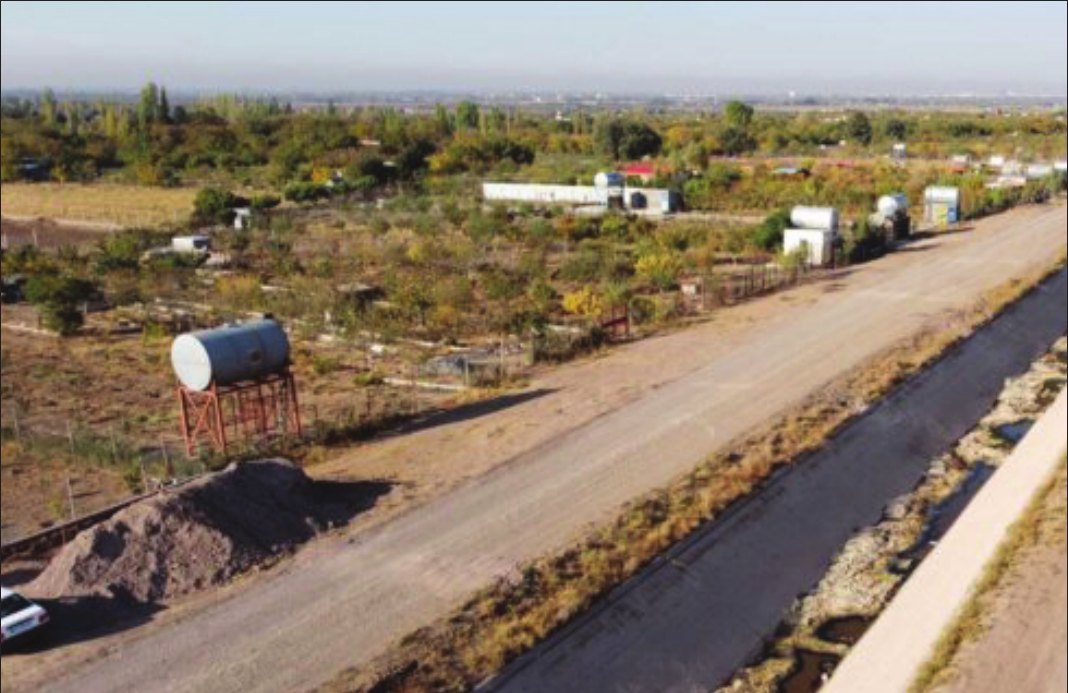
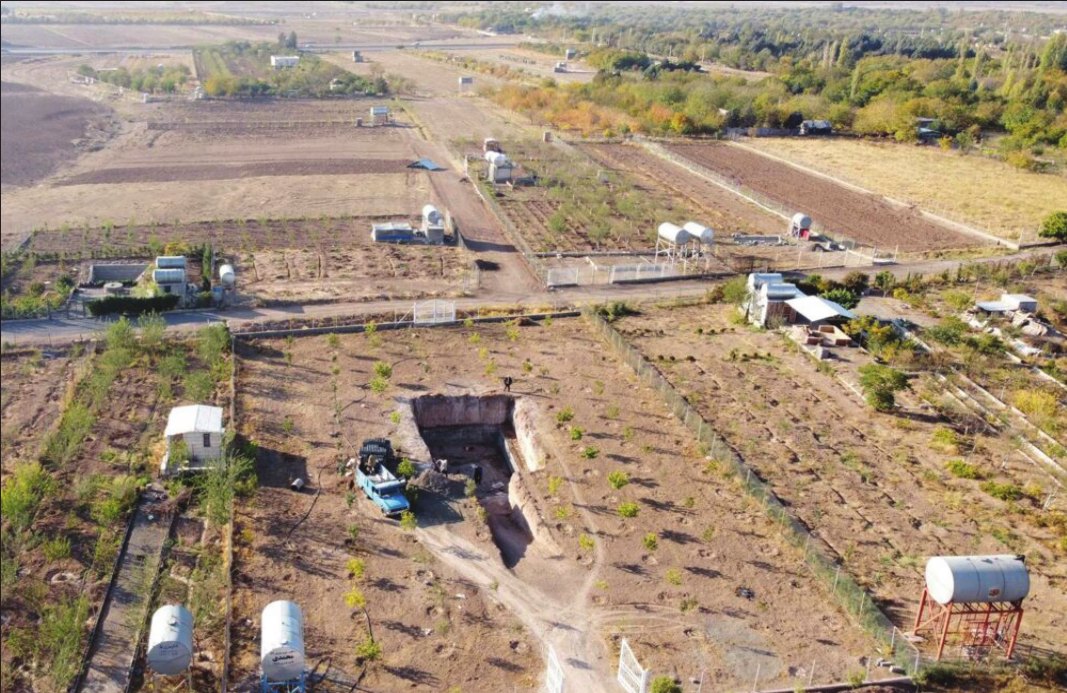
Today the conversion of farmland into garden-villas and tourist and recreational gardens, using tanker irrigation, has become common in the large cities of the province, including the north of Qazvin, which may bring serious social and security harm. On the one hand, given the recent droughts, supplying the water these garden-villas need from existing water rights or underground resources is not possible, and on the other hand demolishing them would cause widespread discontent in society (IRNA, 1401).
But in the meantime there are also towns around the city of Qazvin that have permits to build villa-gardens. Among them are the Haft Sangan, Pardisan and Bagh-e Neshat towns. Or village plots that existed as village houses with large courtyards and are now being turned into luxurious villas by renovating the village house.
The Haft Sangan town has plots of about 2,000 metres that have received permits to build garden-villas. The land of this town is among the most desirable (economically) and valuable land in the city of Qazvin, and usually the wealthy group living in the city builds a villa on one of these plots and uses it occasionally (as a second home) or sometimes permanently, and they have very considerable added value.
The Architecture of Qazvin's Garden-Villas
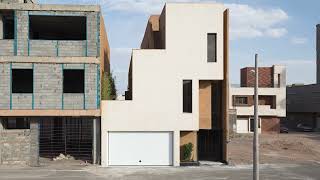
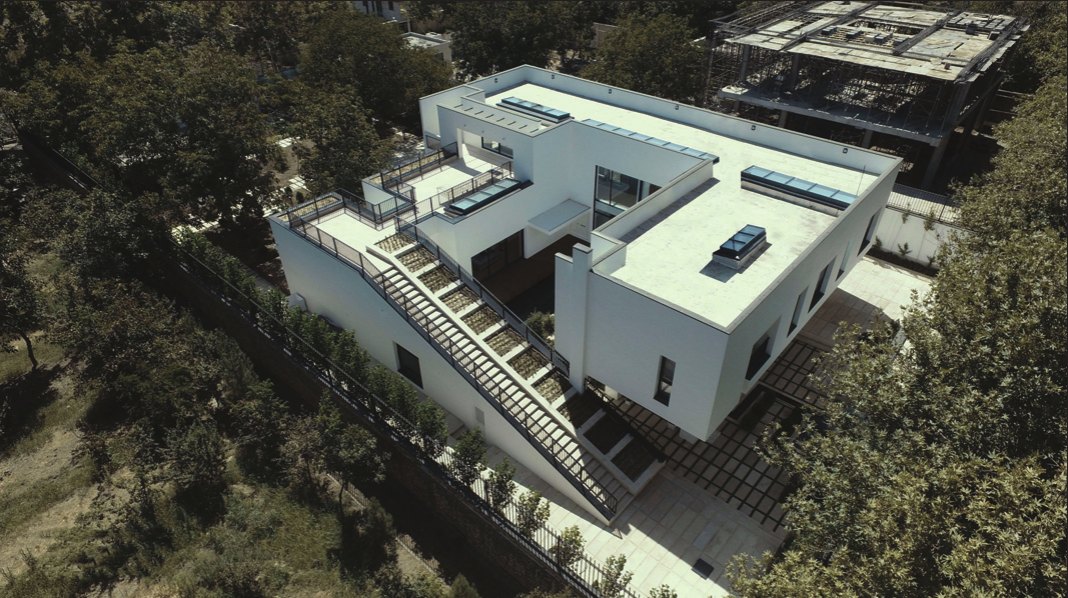
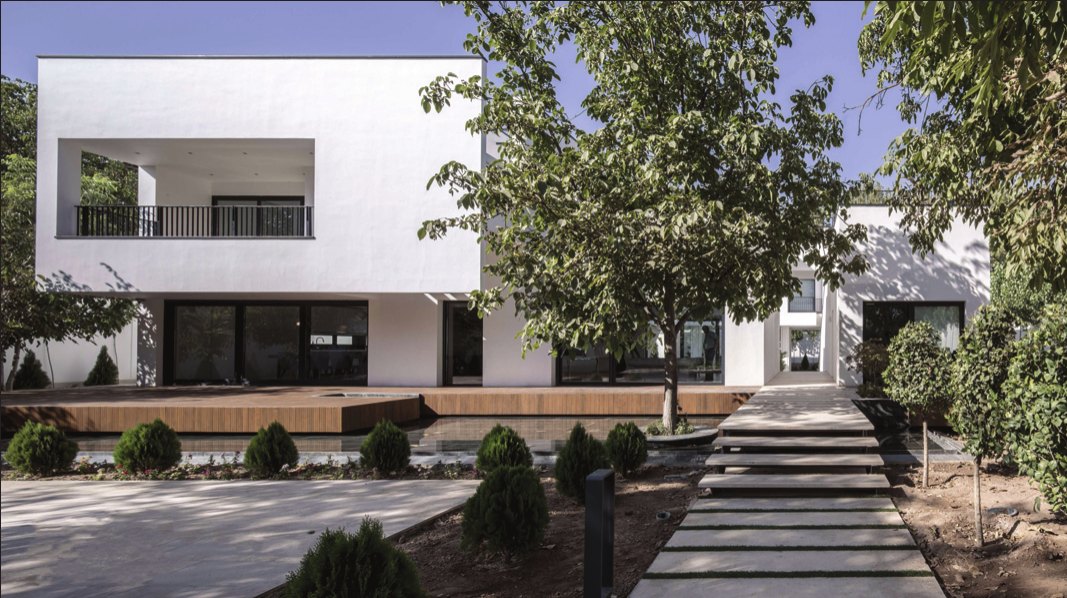
In the villa towns around Qazvin, where building permits for garden-villas are issued on plots of about 1,000 to 2,000 square metres, architects have mostly designed while observing the regulations and permits for designing and building. One of these towns is Haft Sangan, where, for example, one of the villas was designed by the architecture office of Sohrab Rafat for the leisure and recreation of its residents. This villa was built on a 2,000-metre plot with an area of 720 square metres, and its open space (garden) includes green spaces, a pool and a pavilion (Figures 12 and 13).
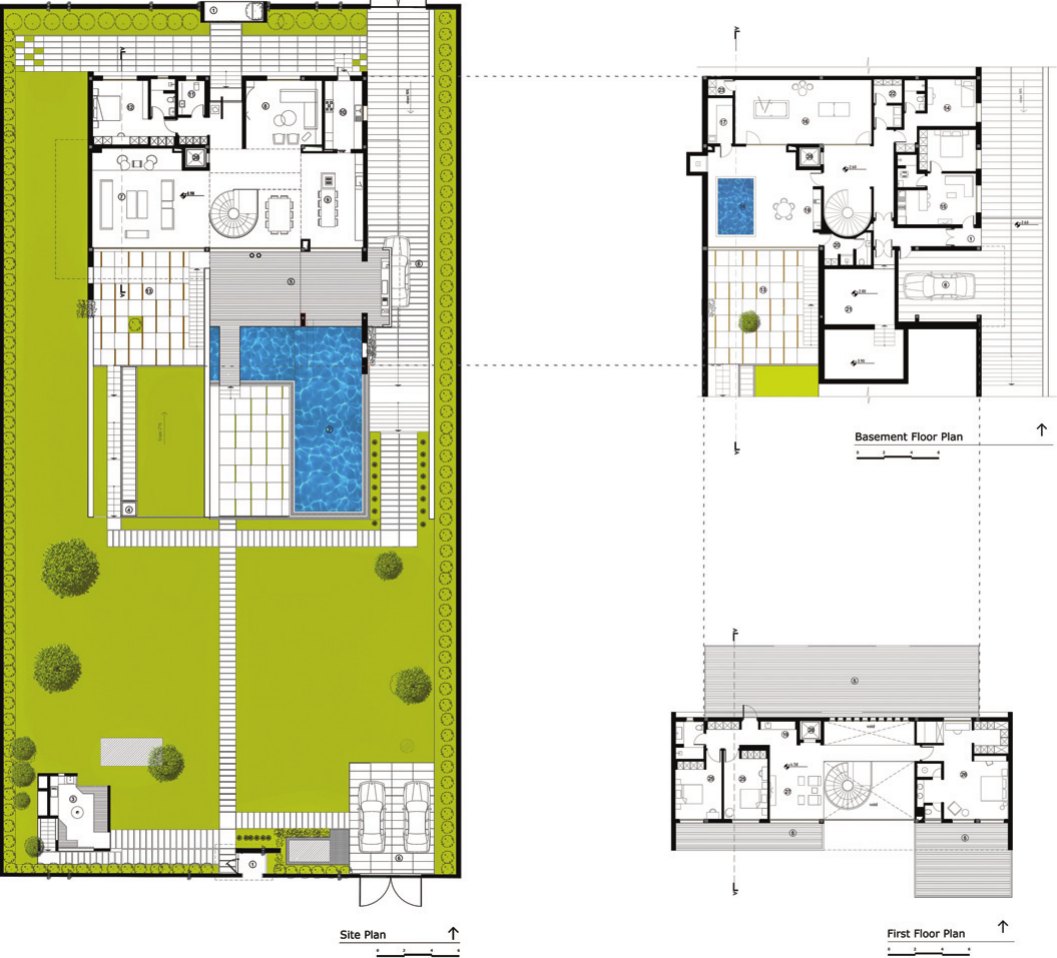
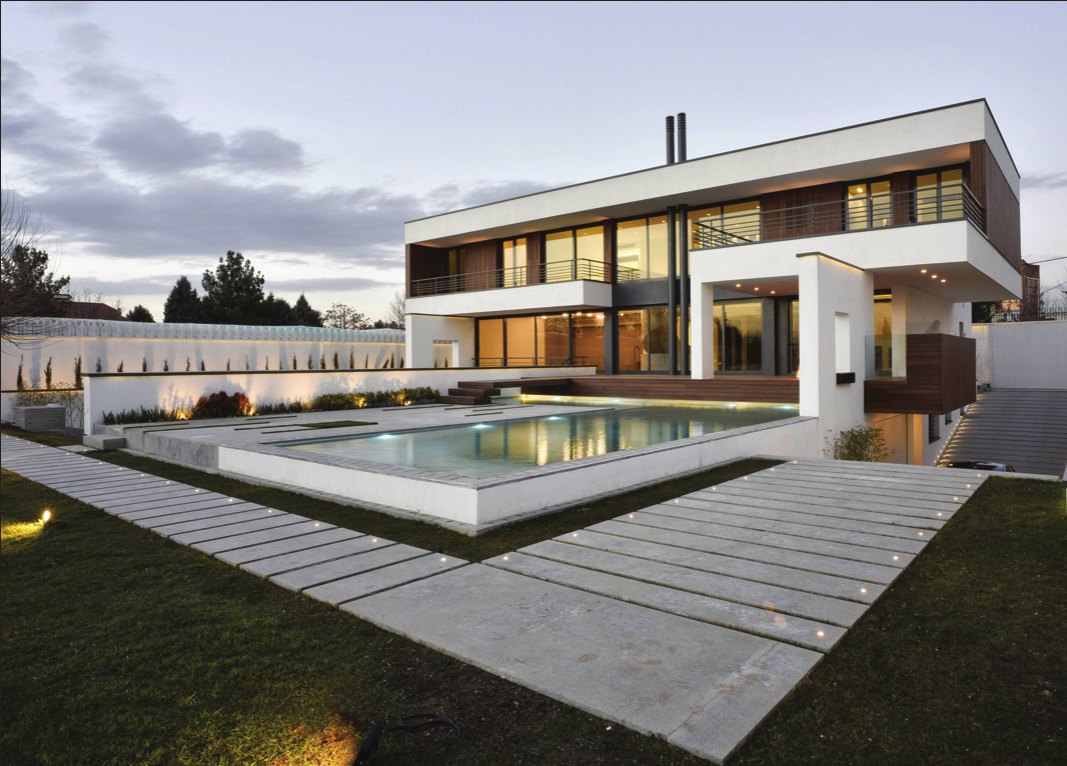
Some of these plots are empty and without previous planting, but some have trees and plants that existed before. Architects often design with regard to the trees within the site boundary and taking their positions into account.
The house-garden project under construction, a work by Mahdi Karimi, is also located in this town. This project was designed on a 1,000-square-metre plot on which no planting had yet been done, and it plans a 450-square-metre house for one family in the form of several half-levels (Figures 14 and 15). On such plots the designer is free to create green space suited to the position of the building, and the garden is planned according to the position of the spaces and the connection they need with open and green space.
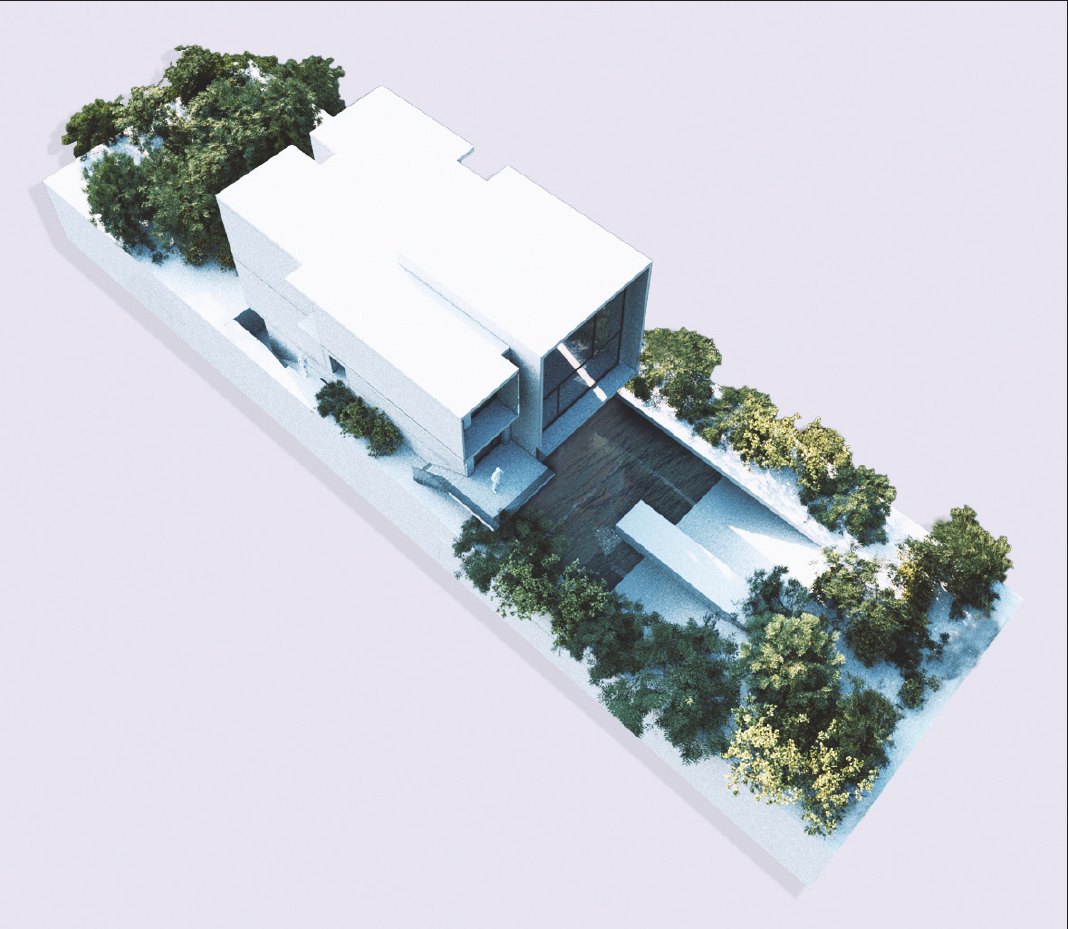
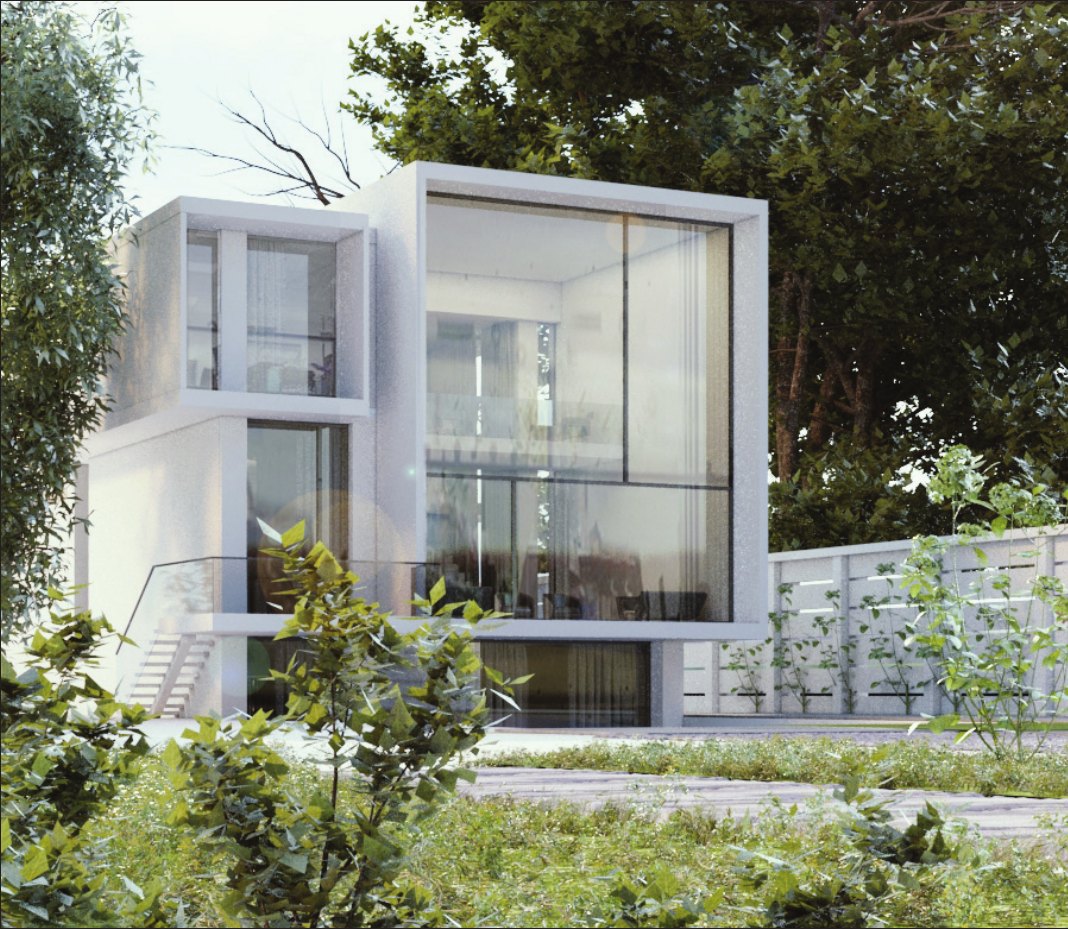
The Parsehgard House, also in the Haft Sangan town of Qazvin, on a plot of 1,900 square metres, was designed by the Nesha company (Negin-e Shahr-e Ayandeh), taking into account the positions of the site's old trees (Figures 16 and 17).
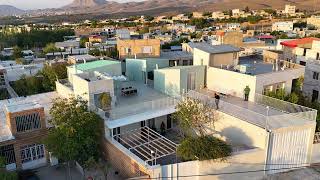
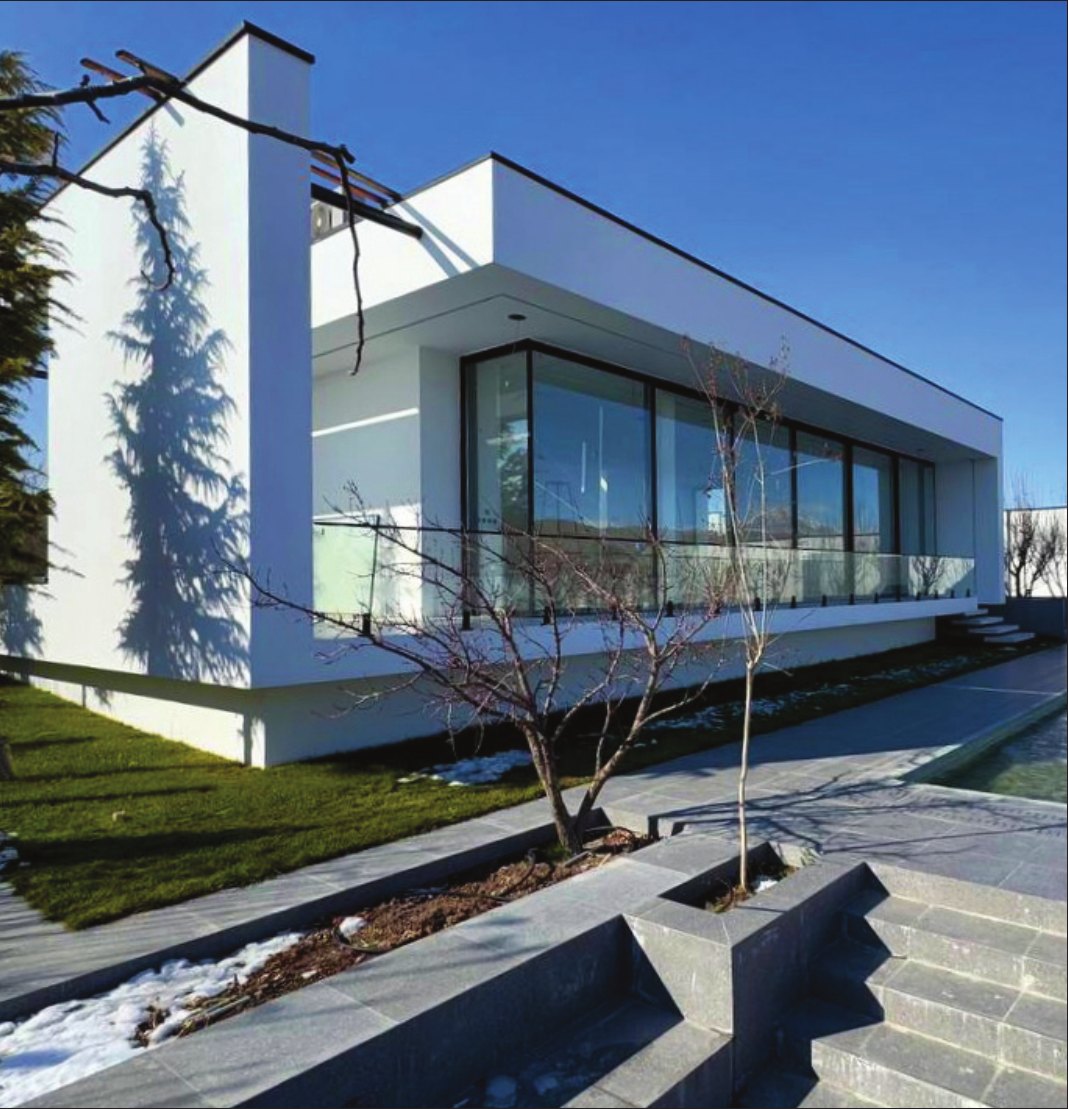
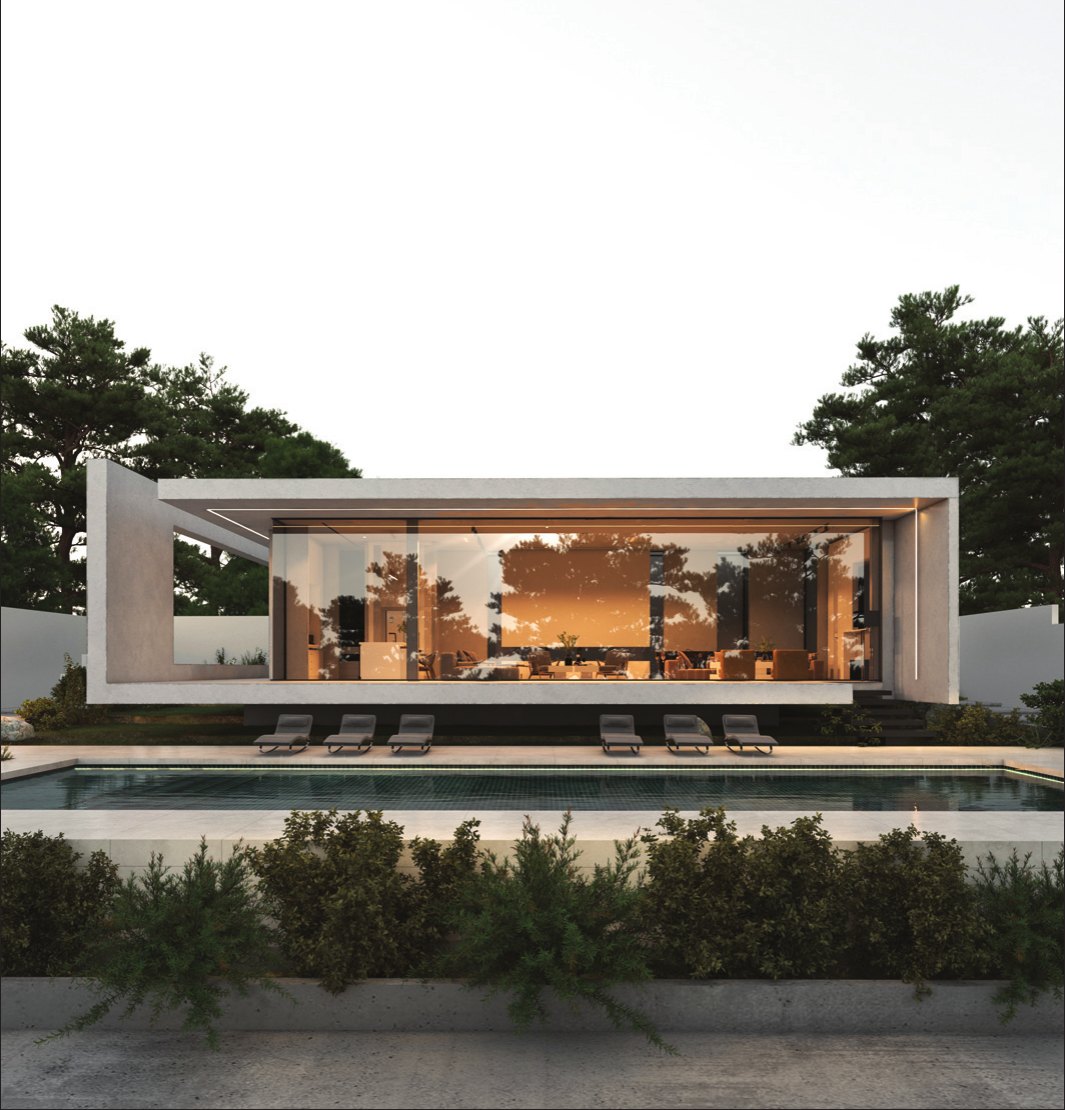
Apart from the villa towns, the renovation of village house-gardens has recently become possible with the permits of the relevant authorities, and in the meantime some of the city's people have become inclined to live in their ancestral villages around the city. One of these examples is the renovation of a house-garden in the village of Hasanabad designed by Mahdi Karimi. The design concern in this project was to preserve the garden's fruit-bearing and non-fruit-bearing trees and at the same time to revive, renovate and extend a house that had to be redefined for today's life (Figures 18 and 19).
In conclusion it must be said that the people of Qazvin are unconsciously seeking to rebuild the lost paradise of their fathers' gardens, and this unconscious desire has led to the spread of sometimes unregulated and unpermitted construction around the city in the form of garden-villas, and in the absence of intelligent laws, this desire, instead of renewing the orchards and continuing the tradition, has become a factor in their destruction.
The uncontrolled drawing of underground aquifers through wells dug to supply enough water for irrigating the gardens is only one of the environmental calamities arising from people's lack of awareness in bringing barren land to life and turning it into gardens.
Although architects always come into a project when the stages of obtaining building permits have passed, and have little influence in the choice of land suitable for building, more influence is expected of them in raising society's awareness. Managers and experts in the city's major decisions must find a suitable and planned response to this growing desire and need of the people.
Architects, through design in harmony with the nature of the site, the creation of pure spaces and the raising of the quality of life in the dwellings they design as villas, have been able to raise society's general taste and its expectation of a quality living environment. This is an important step, but it is not enough to preserve the natural, social and economic infrastructure of cities.
The traditional orchard of Qazvin is not only a historical heritage but an ecological and economic necessity for the region. On the other hand, urban development and the desire to live in nature are also an undeniable reality. The main challenge is to find a way to balance these two needs. If policy-makers, the local community and citizens seek to preserve this natural treasure, it is possible, with careful planning, both to protect the orchard and to steer housing development towards sustainability. Otherwise, the continuation of the current trend will lead to the gradual destruction of this precious heritage.
Sources:
- Parhizkari, Mehrzad, 1398, Pishineh-ye Mohandesi dar Qazvin, Hekayati az Abadani, Tehran: Rahavard-e Mehr.
- Andaroudi, Elham, Batoul Sahrakaran, 1396, "The cultural landscape of Qazvin's traditional orchard: a study of basic concepts and an analysis of elements and characteristics in the physical domain", Bagh-e Nazar journal, no. 50: 44-35.
- Dizani, Ehsan, 1392, "Recreating the Safavid royal city of Qazvin from historical texts and documents", Hoviat-e Shahr journal, no. 14: 70-61.
- Dizani, Ehsan, 1395, "Qazvin's traditional orchard, an urban edge with an efficient nature", Manzar journal, no. 37: 47-40.
- Mojabi, Seyyed Mahdi, 1388, Dar Jostoju-ye Hoviat-e Shahri-ye Qazvin, Centre for Urban Planning and Architecture Studies and Research.
- Varjavand, Parviz, 1377, Sima-ye Tarikh va Farhang-e Qazvin, second volume, Tehran: Nashr-e Ney.
- Varjavand, Parviz, 1349, Sarzamin-e Qazvin, Society for the Cultural Heritage publications.
- Zarrabi, Mohammad Mahdi, Tahereh Salehi, Aida Al-e Hashemi, 1399, "In search of today's life in Qazvin's traditional orchard: an analysis of the Mollakhalila park design", Manzar journal, no. 50: 69-62.