Sacred Foothold, Qeshm
Location: 84 km west of Qeshm City, adjacent to Chahoo Sharqi village, Chahkooh geological site
Client: Qeshm Free Zone
User: Geopark, Qeshm
Architect: Behzad Riazi
Contractor: Farhoud Qeshm Co.
Presentation: Mohammadreza Abedi
Supervision: UNESCO Inspectors, Qeshm Environment Office
Coordinators: Mr Pouzideh (Dehyar of Chahoo Sharqi), Mr Rahimi (Head of Islamic Council of Chahoo Sharqi)
Preparations: Mr Ghasedi
Chahkooh Strait lies 84 km west of Qeshm City; at its end it opens into a cleft between two mountains, at the mouth of which four sweet-water wells are located (whence the name Chahkooh — "well-mountain"). The islanders consider this strait sacred and believe in the presence of Hazrat Khezr there. The site is one of the geological sites of the Qeshm Geopark.
The reminding of the story of Hazrat Khezr's presence in Chahkooh Strait through the restoration of the foothold (qadamgah) gives more attention to the human and natural features that grounded the belief, and that match the Qur'anic narrative:
1. Hazrat Khezr (the Green Prophet) — wherever he passed, that place became green and verdant. (Due to its geography, the Chahkooh Strait is conspicuously greener than the rough nature around it.)
2. Hazrat Khezr was searching for the Water of Life. (At the end of the strait there are several sweet-water wells.)
3. Hazrat Khezr's guide was Eliyas, the boat-builder. (On the west of Qeshm Island there are many lenj-building workshops.)
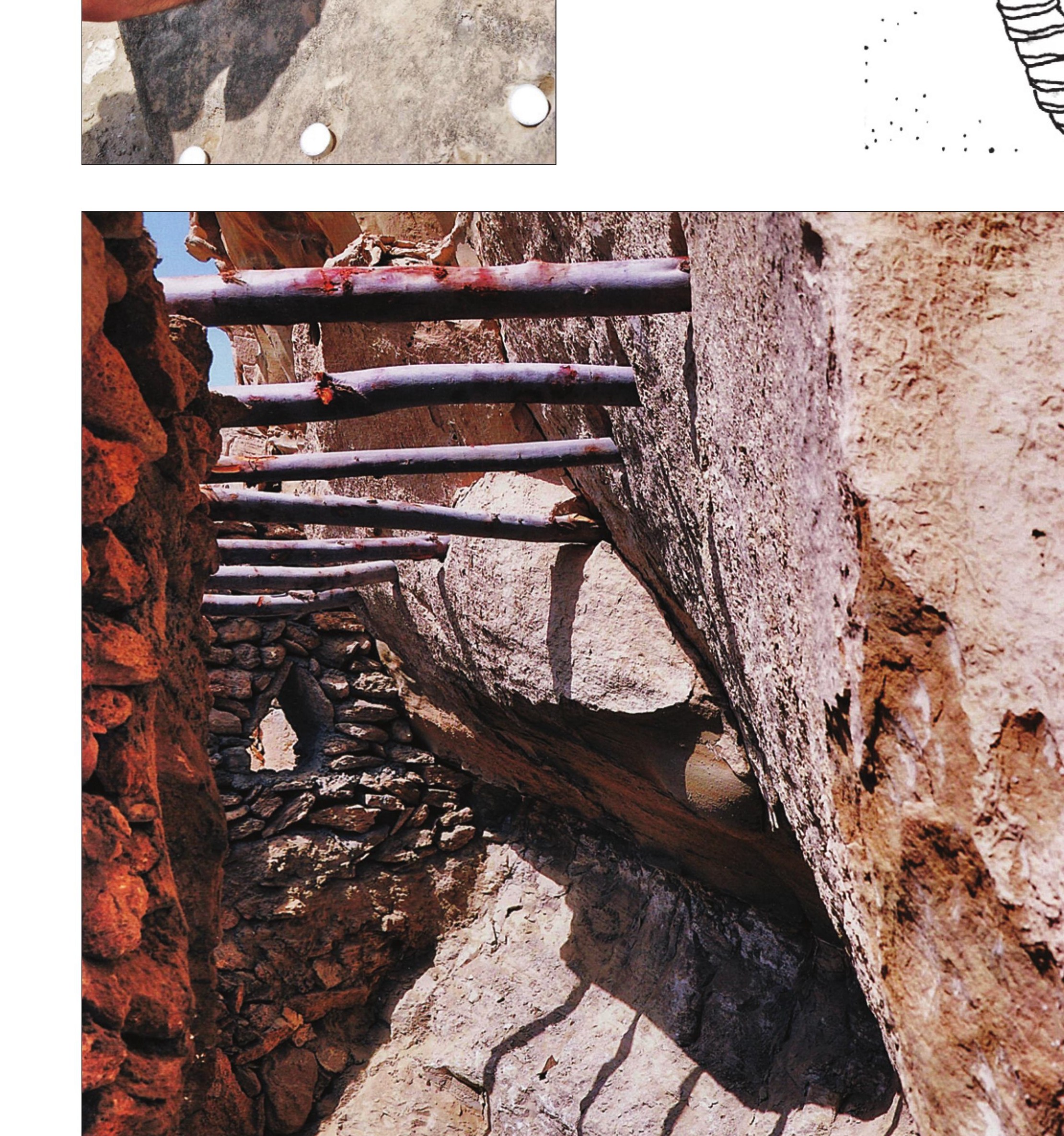
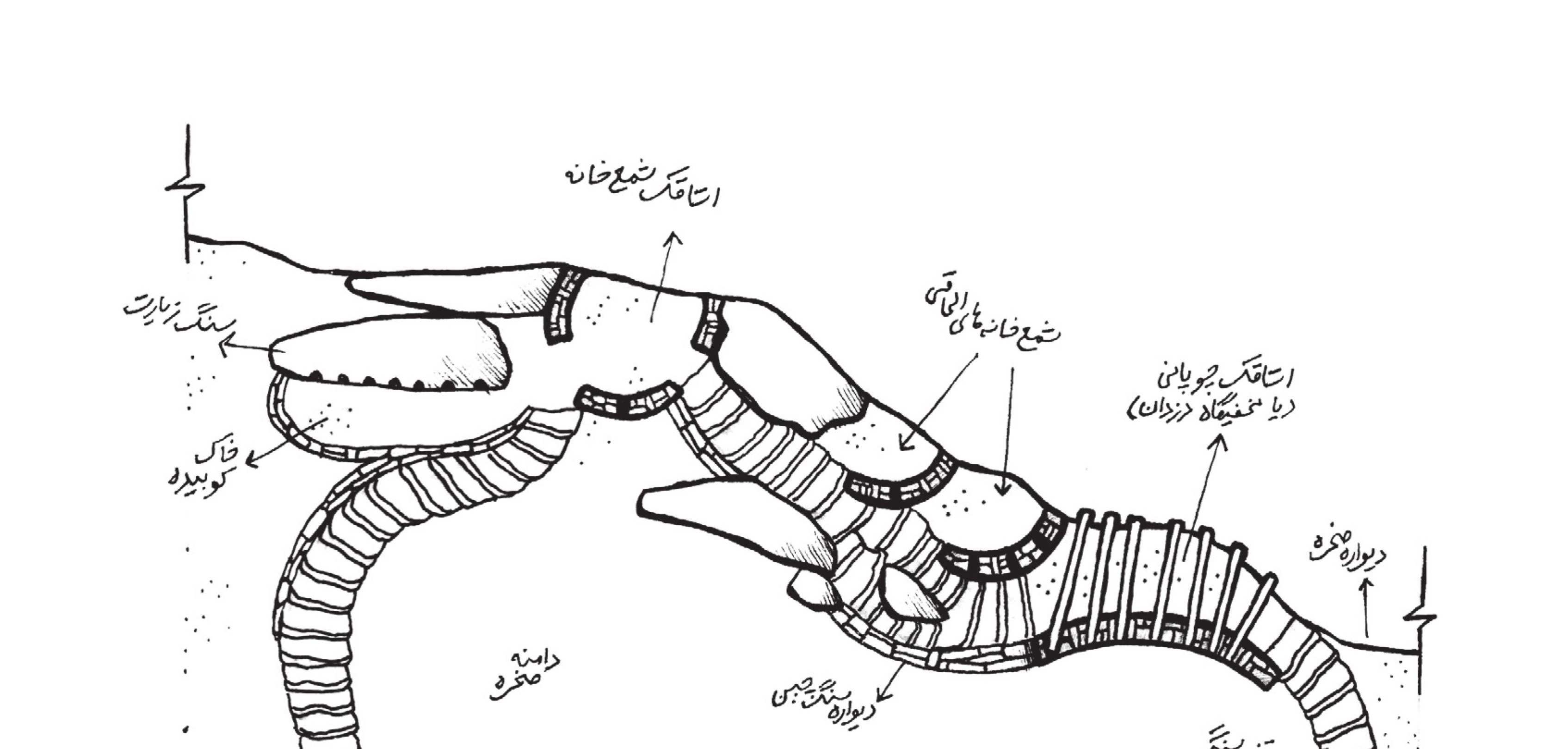
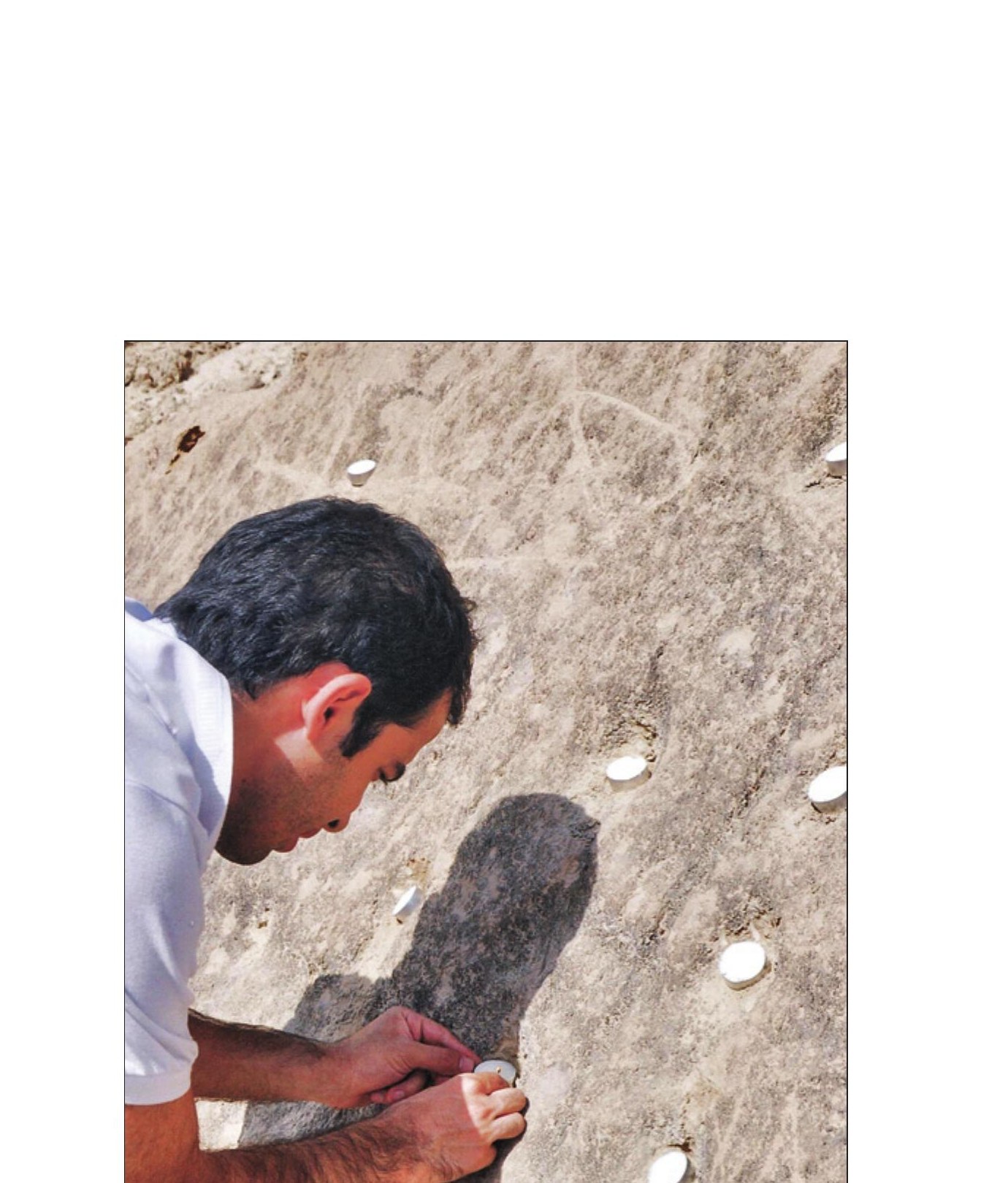
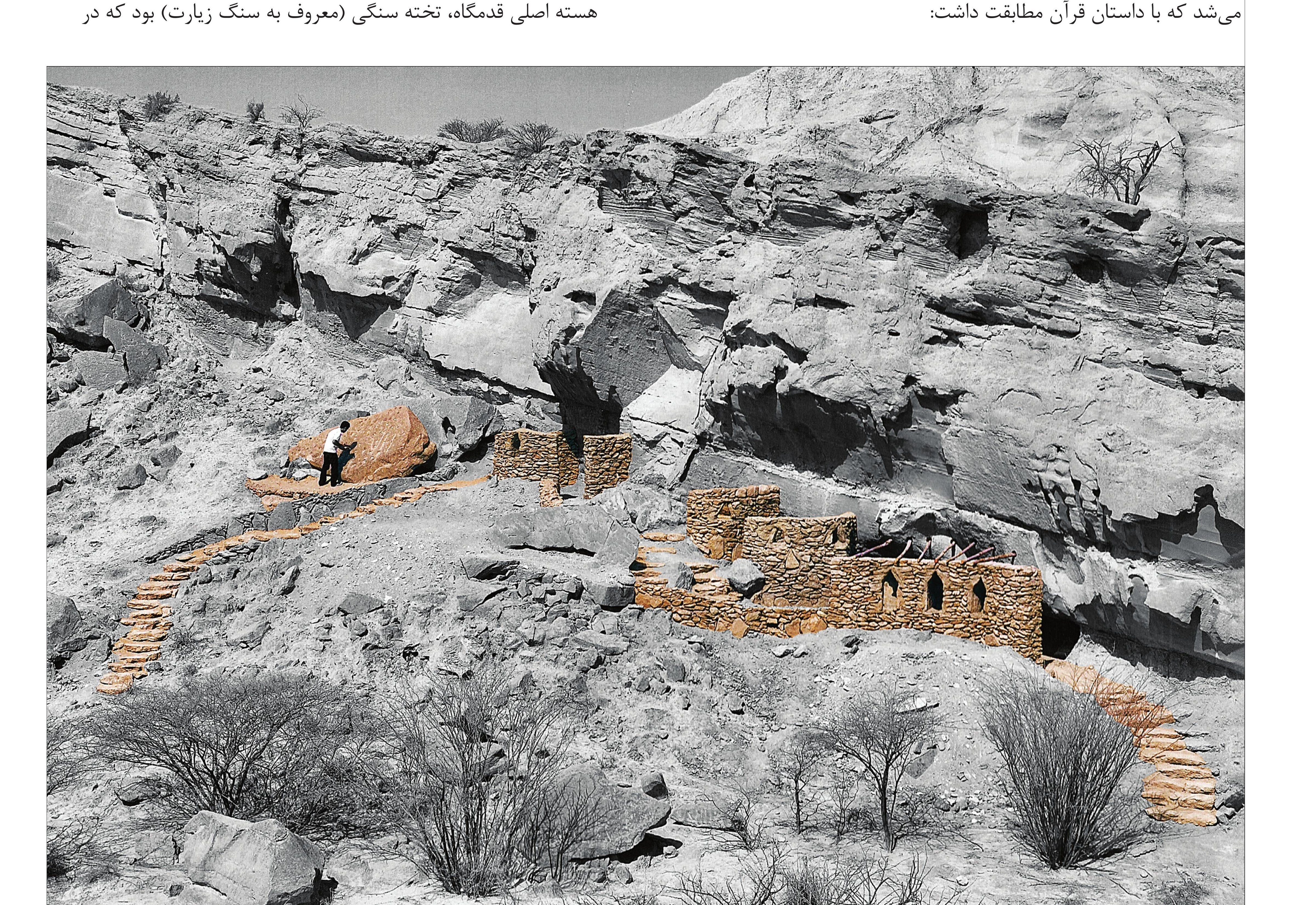
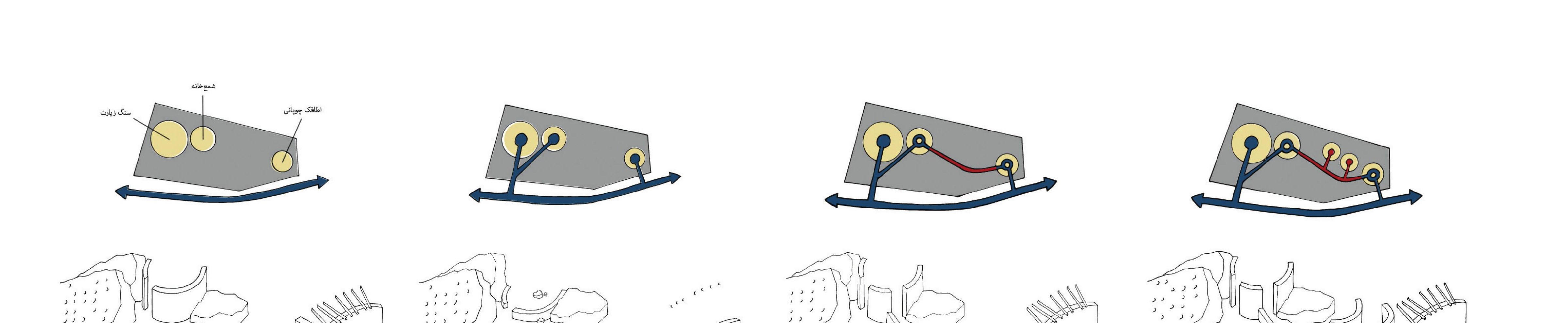
This project — completed in three months on a budget of 30 million tomans — restored the foothold's central element: a slab of rock (the 'pilgrimage stone') which sits 6 m above the main strait path, with 70 shallow holes drilled into its surface for votive candles. Because lighting candles on the slab is not possible in some conditions (e.g. strong winds), a small circular candle-room (shamkhaneh) had been built next to the stone in stone and mud mortar — by the time of our intervention it had completely collapsed, leaving only a chaotic stone foundation of its walls scattered next to the pilgrimage stone.
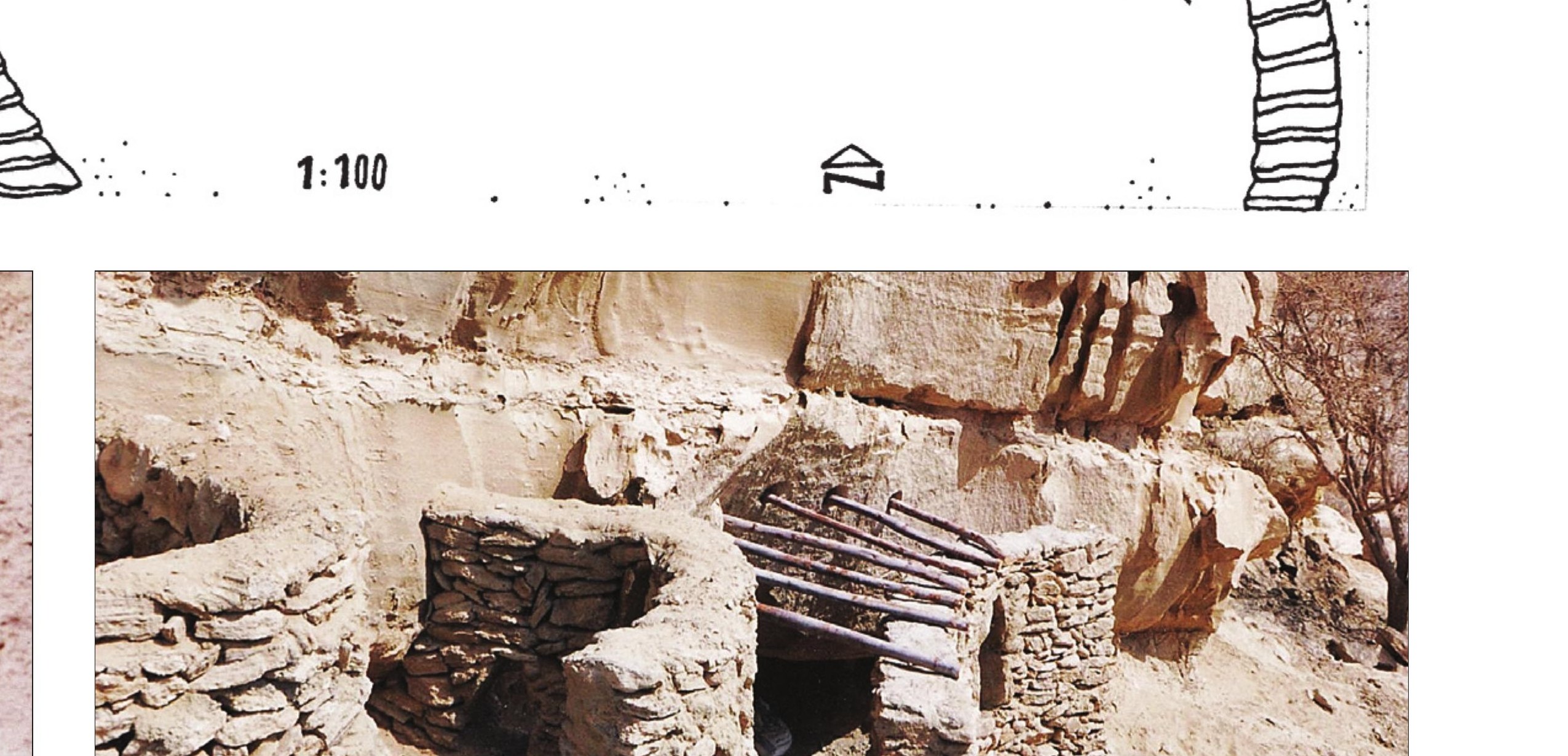
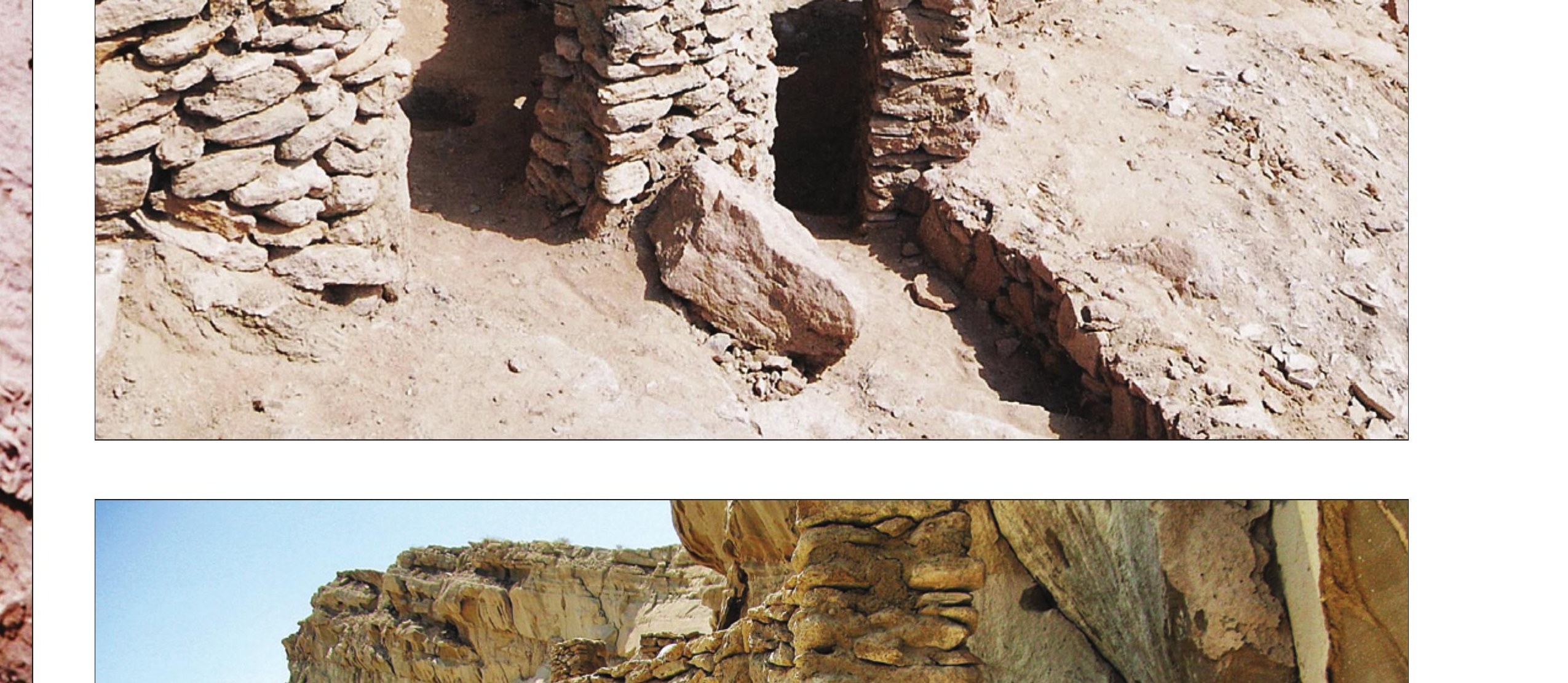
The shamkhaneh re-build follows the original stone and mortar technique, the room sitting 7 m from the visitor path. The interior of the shamkhaneh is connected to a second structure 7 m further along — the remains of a small shepherd's room, lower on the cliff — so that the entry sequence brings tourists past the most important feature of the strait's cultural landscape and then on to the wells.
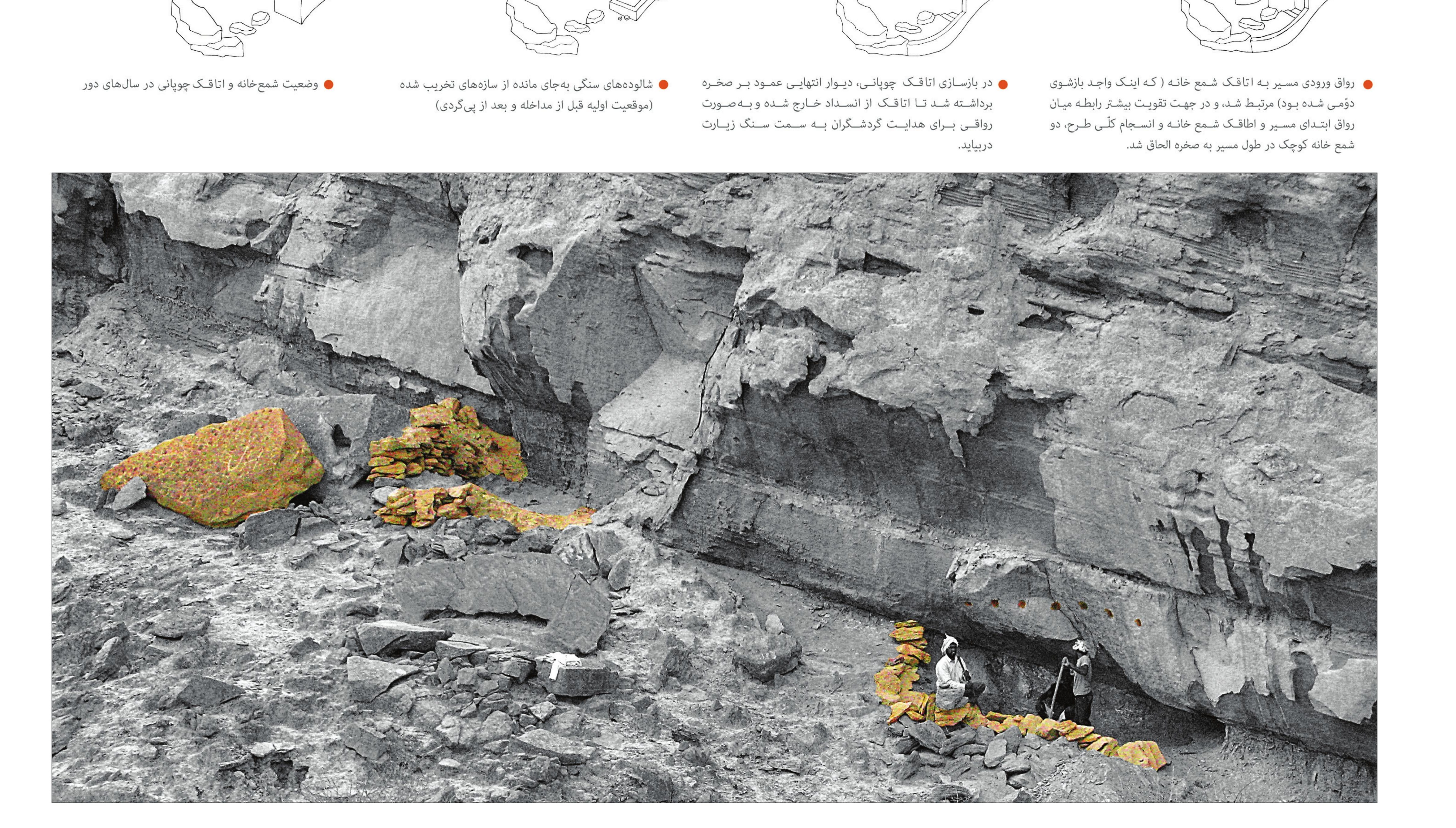
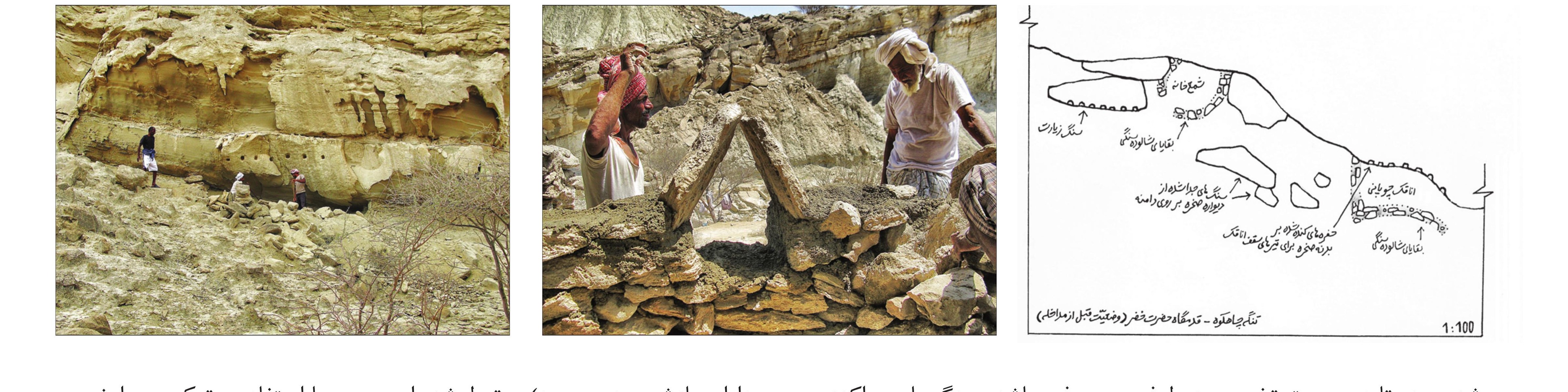
A small budget, native stone and lime-cement-stone mortar matching the surrounding nature, and the engagement of local builders from Chahoo Sharqi village, were the three principal moves in delivering this project with the smallest possible footprint on the natural rock and the cultural memory of the place.