



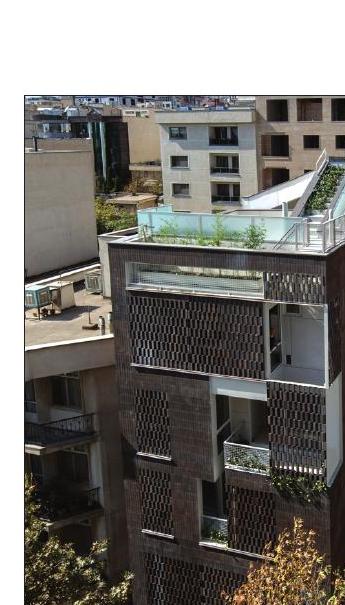
Philosophy, in and of itself, is of no help to architecture; yet academic education has made the survival of every profession so contingent upon acquiring scientific prestige that at times a kind of philosophical complexity and obscurity cannot be attained except by resorting to display. Whereas the architect, once placed in the position of a designer, needs—besides the knowledge related to the program and physics of the building—a taste and skill in whose cultivation philosophy has no share. Even so, today's architect fears distancing himself from the current of pseudo-philosophical academic theorizing more than he fears distancing himself from the problems of society. But since there is no place other than the university for the teaching of architecture, and no literature is produced other than academic literature, until a people-centered critical discourse takes shape—and how much better if the university itself takes on this responsibility—we cannot ignore this literature. On this occasion, in this section of the magazine we first report a very brief selection from an academic conference on the façade in architecture, and then bring to our readers' attention a discussion among a group of the most active young architects, professionals and thinkers alike.
The 2014 Stony Brook Conference on the Façade in Architecture
Stony Brook University in the United States devoted its seventh annual conference on philosophy and art, in 2014, titled “Façade: Architecture Proper,” to a discussion of the façade. The call for papers stated: “The façade—an aspect of a building that both looks onto the street and is seen from the street—sets in play a fruitful philosophical and artistic duality. In terms of purpose and correspondence, the resemblance of the façade to the interior structure is slight or none. One kind of façade may explicitly indicate the building's purpose—like government buildings, restaurants, or grocery stores; some may be merely an outer covering—like the prescribed façades of residential buildings in certain historic neighborhoods; or they may be transparent, ‘invisible,’ or dissembling—like the façade of a ‘speakeasy’ in forbidden districts. The duality arising from the façade is, as it were, a metaphor for the various modes of our relationship with the world. Just as the façade both reveals and conceals the depth of the building behind it, so too the face we turn toward others both discloses and hides our feelings, intentions, and character. We invite artists and scholars to the 2014 conference to re-examine the ups and downs of the façade—its place, importance, and structure. Is it harmful or beneficial? Obligatory or optional? Does it have universality, or is it the reflection of a human-centered tendency? Do the various façade structures constrain or facilitate expression and identity-making? Other aspects of the subject include: the public/professional character of the façade versus the private/personal; the relationship between the façade and the human face; and the political and ethical dimensions of façades.”
The conference comprised five roundtables. The first, under the main title Exteriority, included discussions on the following sub-topics: – The Façade in the Representation of Architectural Art; – Architectural Physiognomies as Urban Ornament. The second roundtable, under the main title Interiority, included: – A Retreat? On the House, Dwelling, and their Permeability; – The Architecture of Dream: A Freudian Interpretation of Tarkovsky's Solaris. The third roundtable, under the main title Surface, included: – The Objective Countenance, Mirror of the Sky: On the Phenomenology of the Objectual Aspects of Bloch's Work; – The Common Boundary and the Emergence of (Digital) Space in the Romantic City; – Façade and Representation: An Encounter of Architecture, Deleuze and Guattari. The fourth roundtable, under the main title Layers, included: – Removing the Boundary between Being and Mode of Appearance: Cosmetics, Self-adornment, and the Authentic Self; – Making a Film about Love in the Islamic Republic, the Appearing of the Iranian Woman; – Ornament and the Graffiti Texts for the Modern Façade. The fifth roundtable, under the main title False Resemblances, included: – Language is an Opening of Fire: An Ontology Condemned to Death in Solitary Confinement; – Our Resemblances Have Become False: Badiou's Juridical Foundations and the Event of Law; – The Imaginary Mentality: Structural Contradiction as a Fixed Tale in the Work of Fred Wilson. Two keynote lectures were delivered, one philosophical by Kent Bloomer and one artistic by Josephine Halvorson. As a sample, we bring here the translated abstracts of two papers from the first roundtable:
Architecture and the Philosophical Model — Bryan Irwin
“Architecture is a child of place; as Heinrich Wölfflin argued, traditional patterns expressed a kind of sense of settlement by situating human beings within a corporeal logic drawn from their public participation in the material world. The traditional patterns of architecture expressed this logic by pressing an assembly of different sensations into service all at once: we sense the built environment in a visual manner, but also a tactile and kinetic one. Nevertheless, with the advent of modernism this dependence on history and place was halted in favor of the utopian notion of historical progress, which imposed geometric abstraction upon the whole of the human being's corporeal engagement with the environment. I [in this essay] will show that this kind of abstraction in modernist design entailed a wholly visual order, one that has no connection with corporeal experience. Then, looking at some recent developments in architecture, we see how the legacy of modernism endures, and how new modes of corporeal engagement emerge. To prove my point, I will show images of the New York skyline, with particular attention to projects that are under construction or will soon be built.”
The Façade in the Representation of Architectural Art — Frank Boardman
“The untrained eye, when confronted with an unfamiliar building, has little difficulty distinguishing its façade (if it has one) from its other exterior aspects or parts. Though perhaps with less certainty, we too can usually recognize, quickly and to the point of our own satisfaction, whether the building in question is a work of art or not. Yet if we wish to determine exactly which properties of the building brought us to that judgment, we come under severe mental pressure. And the necessary and sufficient conditions for any kind of recognition and judgment scarcely fall within our command of the faculty of discernment and judgment. My claim is that the clearer the first—the necessary characteristics of the façade—the more it aids in recognizing the second—the necessary characteristics of architecture's being art. What is needed is to establish a connection between the two. I, in particular, argue as follows: 1– If we regard the façade as possessing artistic quality, on that basis we can regard the whole building as possessing artistic quality. 2– But regarding the other (comparable) parts of the building, it is not the case that if we regard them as possessing artistic quality we can, on that basis, regard the whole building as possessing artistic quality. 3– The façade is distinguished from the other (comparable) parts of the building by virtue of its representational role. 4– Therefore (in a falsifiable manner), attributing artistic quality to the building depends on recognizing a particular kind of representation. The strength of this argument depends on the acceptability of its premises and on the non-accidental character of the connection between them, none of which is self-evident.”
* The full texts of the roundtable papers are available on the website of the Philosophy and Art Conference. For this reason the Latin spelling of names has been omitted.
A Dialogue of Young Architects on the Façade
Urban-Planning Discipline or Architectural Strategy
In the next section, you will read a short report of the 2014 conference of Stony Brook University on the philosophy of the façade and the full text of a dialogue in Farsi between 15 young architects of the past two decades mostly successful designers who have won the Memar Award. Nearly all participants in the discussion reduce the representational role of the façade to a minimum and render it insignificant by assuming a functional and technical role for façade. Although the positions taken in the discussion are diverse, two main approaches can be detected which are not mutually exclusive: one is that, the building façade is part of the building and urban public space, and therefore architects should comply with the respective regulations; the other approach regards the façade as being subordinate to the designer’s strategy, and considers strategic functions superior to aesthetic ones.
Participants: Neshid Nabian, Ali Sheikholeslam, Ali Garmaroudi, Mohammadreza Ghodousi, Rambod Eilkhani, Alireza Sharafati, Afshin Farzin, Ehsan Hosseini, Arash Nasiri, Mohammad Mohammadzadeh, Alireza Taghaboni, Kourosh Dabbagh, Sam Tehranchi, Mohammadreza Roudneshin, Mehran Haghbin.
Seyyed Reza Hashemi: The interior of a building is used by its occupants, but the façade of a building is something that is seen from outside; it forms the urban fabric, and the city and its residents pass judgment on it. In light of the transformations that have occurred in the façade over recent decades—partly arising from building technology and partly from design technology—what is your view, given your own approach to façade design?
Neshid Nabian: I must raise a series of fields for examining the façade: 1– The façade as a skin, or the English word Threshold—that is, the architectural instrument that controls the flows between interior and exterior space. This flow may be visual access to the exterior, or the control of sound, air, or the entry and exit of people. In other words, that part of the architectural mechanism that regulates the movement of whatever can be fluid, from controlled space to uncontrolled space and vice versa. 2– The second case—which in Iran too seems to have been raised as a particular style in one period and to have continued afterward—is a domain for the use of ornament; that is, the part of the building that, under the pressure of the capital market, becomes receptive to ornament. When we speak of this domain, the façade connects with our visual culture. In different kinds of urban cultures, different kinds of ornament come to be favored by people, which is called visual culture. On this point one can cite the example of the Mexican architect who uses red-colored elements in his façades. 3– Another field is design, which is influenced by architectural typology and urban morphology and belongs to the field of disciplinary research. For instance, because the urban morphology of a city like Tehran promotes the five-storey-over-pilotis typology, the subject of the façade enters the field of architects' design.
Ali Sheikholeslam: The façade too is a document and record like the plan, like space, like interior architecture, or any other document that presents the specifications of a part of the project. The question is: why should we attach so much importance to the façade and set it apart from the project? When it too is a document and is no different from the plan.
Perhaps after the Revolution, when the building was used as an instrument for profiteering, the result was a fabric in which, as we see in the cities, the façade turned into an important issue. As Mr. Nabian said, the façade can be a skin that separates interior space from exterior space, or that creates in the volume a quality that conveys a particular feeling to the human being; and it is not something separate from the building that we would want to set apart from the other documents and records. All this importance placed on the façade produces the impression that we regard the façade as separate from the interior space.
Neshid Nabian: So Sheikholeslam adds another category to my categories, and it is this: the façade is merely a method and manner of representation and presentation, and it fits within the same category as the section, the plan, and the other documents.
Ali Garmaroudi: In confirmation of Sheikholeslam's statement that the plan and the façade are documents for presenting architecture, let me add this explanation: the human being fundamentally thinks in two dimensions, whereas architecture is three-dimensional. It is easier for us to begin design from something two-dimensional, and we most often begin with the plan; rarely in a project does the initial sketch start from the façade or the section. Therefore the value of the façade is not equal to that of the plan. Indeed, most of us begin design from the plan and leave the façade for the end of the work, to emerge on its own. We apply the idea and concept in the plan and perspective and so on, and the façade in the end becomes merely a drawn document. All in all, the value of the façade is not on a par with the plan and stands at a lower rank.
Mohammadreza Ghodousi: The façade belongs, to some extent, to the domain of engineering and urban planning, and not much to the domain of architecture. With a strategy we delimit space and, in a way, appropriate a fragment of the boundless for architecture. Given our strategy, a skin results. To regard this skin as possessing independent value calls into question, to a degree, architecture from the standpoint of its spatiality. On the other side, urban planning is permitted to say that this subject belongs to it, because the urban façade and the urban bodies seriously affect urban space. In some European cities they say: do not touch the façade at all; the façade is not for the architect but for the city, and that is how it should be. As an architect, we should not separate the façade from the other parts of architecture; these are all interdependent, and the façade is not a separate thing.
Seyyed Reza Hashemi: Why do you approach this conservatively and fear to say that the façade is a separate thing? On the contrary, the very fact that they say the façade pertains to the city necessitates that its design be carried out separately. Much of the importance attached in the final judgment to the architecture of our era relates to the façade. I am not speaking about whether that judgment is right or wrong, but the importance placed on the façade is entirely clear.
Rambod Eilkhani: The matter of the façade may be correct in all the forms that were discussed, but in any case it is a decision the architect makes about the project—whether it is part of the building, or in connection with the interior, or in any other manner. As Ghodousi said, one cannot speak very much of the façade separately. When we say this façade has no connection with the interior, we have decided that it should have no connection; but this does not mean that the façade is an element separate from the rest of the building and that one can decide about it separately.
Seyyed Reza Hashemi: No one says the façade is separate, but the notion that the façade emerges on its own—or that the urban planner should decide about it—cannot be correct either. Have you ever seen a magazine with the plan of a building on its cover? If instead of façade they say volume, the problem does not change. No one sees the geometric drawing of a façade. Everything people see of the city they call the façade: that is, the exterior representation of architecture.
Alireza Sharafati: I think it is necessary to talk about the façade, but that does not mean the façade is very necessary in architecture. First it is better to talk about the city of Tehran and the context we are in. At present the façade in Iranian architecture is in a pathological condition, and this situation is especially so in Tehran,
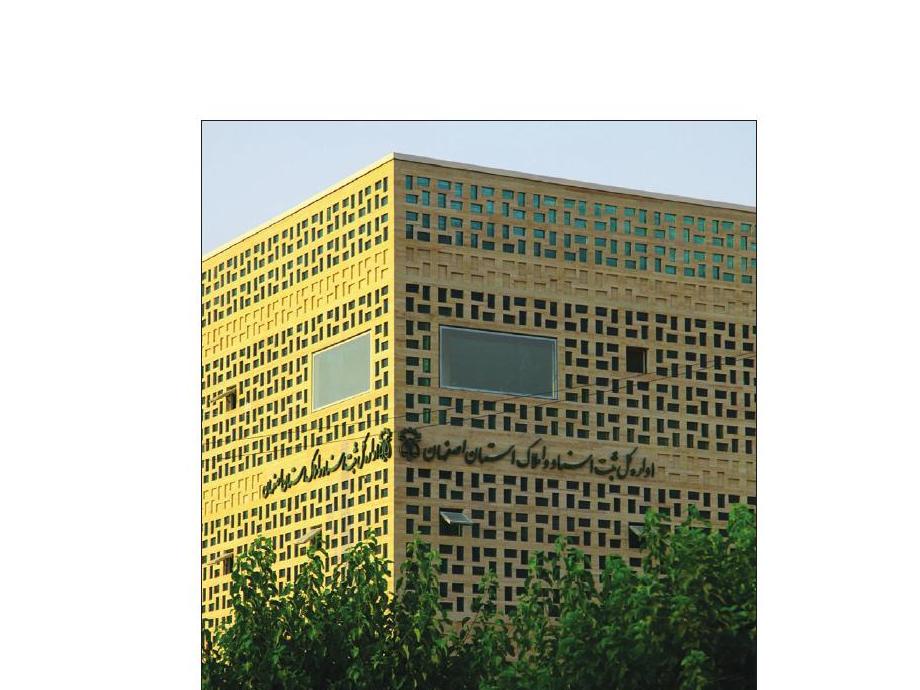
Afshin Farzin: I think the façade's importance is greater than its being merely a skin or an engineering document. I want to look at the subject from another angle. I think this line we draw between the city and architecture—just as Ghodousi said that the façade cannot be separated from architecture—architecture too cannot be separated from the city; and one must really ask, where are the boundaries of these lines? I think the façade is the intermediary between more individual, more private matters on one side and the city—as the organization of people, activities, and social dimensions—on the other; and this façade, whose existence is unavoidable, is the connection of these two to each other. The most conspicuous situation we are in—one that a foreign guest coming to Iran notices—is how great a duality of inside and outside we have,
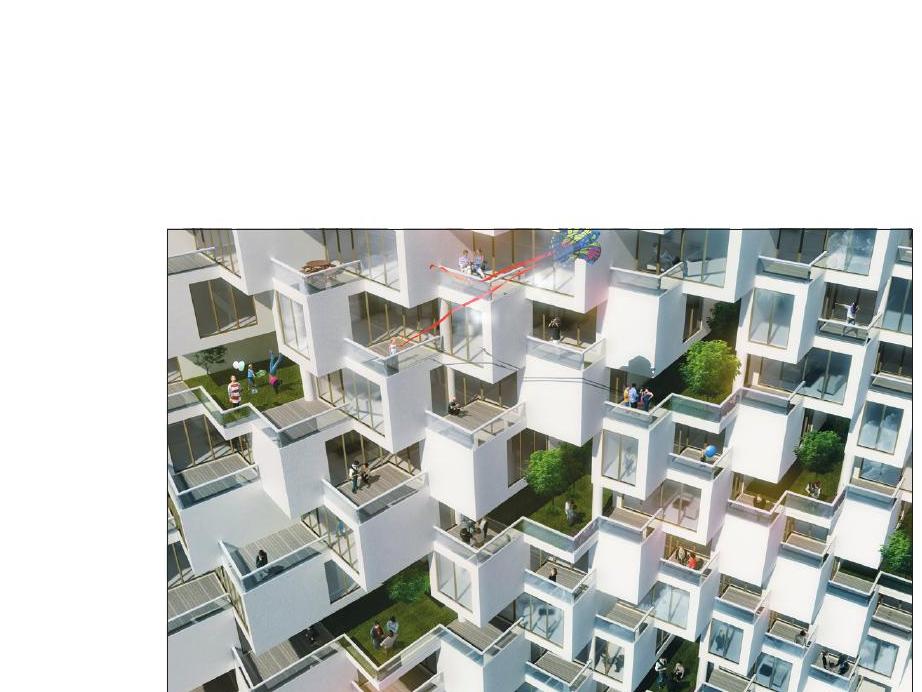
Ehsan Hosseini: I return to the third field of Nabian's categorization, in which the façade takes shape in relation to architectural typology and urban morphology; and in this respect, by “façade” I do not mean the façade of a particular villa outside the city, but rather the façade of a major part of the urban buildings that, under the 60-percent-site-coverage rule, build the urban body. Since this solid-and-void form and this typology have caused us to lack urban space in the true sense and as it once was—urban space now being confined to streets and thoroughfares—perhaps one can also look at it from this angle: that façades can be a domain of design for urban space; that is, how the subject of the façade can play the large role of an urban container, and a set of expectations we had in past architecture—such as the entrance, introversion, and privacy—might perhaps be fulfilled in the façade. Perhaps, beyond these urban and historical matters, one could bring the subject of the façade closer to the subject of the Wall section—that is, the place where we can control the connection of inside and outside, and, very optimistically perhaps, pursue in a skin this thin the very story of the entrance that we had in traditional fabrics.
Neshid Nabian: I feel that the front we have taken up as architects against the façade is due to the fact that we define the façade very superficially. First we must give depth to this word. The most trivial-seeming word, toward which we all have a reaction, is the most historically laden concept in architecture, for the emergence of any architectural event is the way it is seen from outside. The reason some react to this matter is that you limit its definition to a manner of presentation, or mode of representation, and say it is an instrument for thinking, just as the presentation of a perspective is an instrument,
Afshin Farzin: I think architecture is fundamentally a totality, and it is a critical analysis that separates the individual components of architecture from one another. But none of this is a reason to say the façade is unimportant. On the contrary, what matters is which events occur in the historical course that cause the façade gradually to become a secondary subject unrelated to that totality. The façade is connected to all matters—even social, political matters, and matters of urban morphology and visual culture and many other things—and all of these leave their effect on the façade, until one day we arrive at a Tehran that faces this façade situation. It must be examined what has happened, such that today we can say the façade has been separated from architecture; and on the basis of this examination, what critique can we make anew, and return it once more to architecture within new patterns? For example, when Mies van der Rohe's glass house is built, perhaps Mies did not think about the façade separately, but the façade was certainly a very serious subject for that building. Or a thousand other examples.
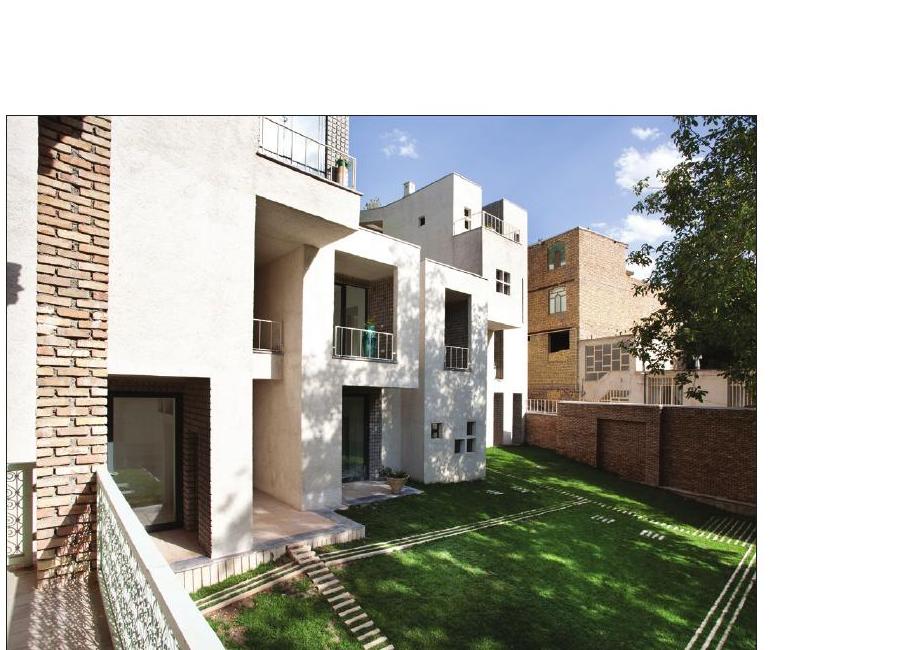
Arash Nasiri: Given the statements of Nabian and Farzin, if we take architecture to be a critical act—that is, if the architect is someone who looks at problems through an aperture through which the other disciplines do not look—then the façade too, like the plan, the volume, or anything else, is part of that battlefield of the architect in the critical act or in problem-solving. In other words, the architect's strategy, whatever it may be, manifests itself in the façade too.
To open up any subject, one must first take a historical view of it—that is, see how this issue has been regarded throughout history. In the way our friends say the façade and the volume and other things should all be one, it seems there is a traditional view arising from the compulsory conformity of structure, framework, form, and everything to one another, which existed in classical architecture—that is, before the modern. Therefore I imagine that before modernism the façade was never an independent part, but rather a component of a whole, and it was naturally organized and planned to answer the problems that, throughout history, pertained to it in the pre-modern period up to the Renaissance. In the modern period the façade becomes a site for critiquing what had taken shape before the modern in relation to the façade, which was a component of the building's structure. That is, the façade emerges from being a skin dependent on the load-bearing wall structure and becomes an independent member and an expression of the freedom the modern human sought. For example, Le Corbusier's obstinacy is entirely evident in the façade of the Domino House, where he sets the columns back a little so that the façade may become wholly unbridled and rebellious against its own structural order. But just as the periods come one after another and critique one another, naturally after the modern too another event occurs, in which the façade becomes part of that battlefield. The post-modern current wants to vent its grudge against the modern, and again it turns to the façade. That is, the façade turns from a freedom-seeking, liberty-loving element in modern architecture into an appended identity borrowed from history or context, and takes the form of a label. This becoming-a-label is at odds with what Mies van der Rohe tried to do in the Seagram—to make the façade, as a façade, a reflection of the modern structure. After that, in the contemporary period two other things have happened: one is the post-modern current, or the same post-modernism we know, which, after contextualizing the façade or connecting the façade with a context that comes from history or anywhere else, attaches it to the skin or the identity of the building; and in effect the façade becomes a place for a battle among identities. Once again a skin-like function is taken away from façades and a formal function takes its place. In fact, in the delay that occurs in post-modernism and in its continuation, we see that nothing called a façade exists at all; rather, the boundaries between outside and inside—which we formerly regarded as the place where the façade joined them, and which was the site of the modern's battle with classicism and the post-modern's with modernism—turn into a place where the building's volumes and volumetric relations move between the boundaries of the building's inside and outside. In effect, the function of the façade, from a plane and a sheet of paper and a skin, turns into a skin-like, three-dimensional space, and in this way the façade becomes the reflector of content. In other words, form equals content, and therefore the façade too equals content.
Mohammad Mohammadzadeh: Continuing Nasiri's remarks about the historical trajectory, I too hold the opinion that for raising such a subject—especially for Tehran—the historical course should not be overlooked; and this is an interesting historical course, up to reaching the present, and we can arrive at a definite proposal or reading concerning the present. If we approach the subject of the façade from a linguistic standpoint—that we say “nama” in Persian, when did it come into being and what did they say before?—the word “nama” (façade) is an apt and entirely correct word, because it shows the representational and displaying, or, in Nabian's term, re-presenting aspect of this element; and this element has played this historical role since modernism and after the modern, and throughout history has been a displayer or re-presenter of mythical and ritual concepts and elements. It has even displayed tectonic or constructional aspects; as in the Roman period, in Greece, in Egypt, and Mesopotamia, you see that part of the façade's task is to display the tectonic and constructional aspect. Until we reach the modern period, which in my view is the turning point at which the façade becomes silent, and a forerunner. This stage is Adolf Loos, who in the Chicago School and American modernism rebels against history and the aspects that seem excessive to him (of course this is happening in America too, and Adolf Loos does not say it extempore), and Adolf Loos raises the cardboard façade—like a sheet of paper with apertures that he sees as openings and
Alireza Taghaboni: windows in it. Therefore we have a zero point, which is Adolf Loos, and in the modern period a number become followers of this view, that is, they move toward this outlook—even up to today—and a number want to solve this problem, like Le Corbusier, in whose various works there is a variety of ways of dealing with this problem, up to the post-modern period. But this display always inclines, one way or another, from the mythical and ritual realm toward the tectonic aspect in its modern sense; and after that, with the dominance of the current of capitalism in the world, the façade in fact becomes a realm for authoritarian pretension in the domain of power and for seductive display in the market. Of course there is also this: that at another level of social interactions, the different social classes always want to bring themselves to public display in this element. As a result, this “nama” is an interesting word, and its emphasis is on the display aspect of architecture, with all the ups and downs of the various historical periods. Modern individuality in the domain of this element, and in its repetition in cities and environments, in fact continues to this day, and it is an issue that does not pertain to Iran alone; and critical currents always exist too. In the very modern period, when the façade was reduced to a one-dimensional, cardboard element, figures like Alvar Aalto rightly realize—just as they realize the other weaknesses of modern architecture and thought—and they rebel against rationalism. Indeed, Alvar Aalto is among those who begin to take this one-dimensional element out of its one-dimensionality, with those curved forms he introduces, and this element turns into an intermediate space, for the relation of the artificial with nature. Likewise, in Le Corbusier's works there is a multiplicity: he first becomes a follower of machine architecture and of the rationalism current of the 1920s, and gradually, as he goes on, those other dimensions become evident, which, at the end of his life, lead to projects like Ronchamp, and he rebels against himself and against those beliefs of his youth and all his experiences concerning the reduction of this element. Let us see what root the English word Elevation or Façade has; or in general, in other languages, where the word “nama” comes from and what standing it has. Let us attend to the broader dimensions of the subject, both in its displaying aspect and in its aspect of being an intermediary between the two realms of private and public, or artificial and nature. In historical periods you see that in Greek temples the interior and exterior space has an intermediary—that is, it has a spatial standing; in the modern period it disappears, though not everywhere. Different people are in the effort to rescue this element. My summary regarding the façade is: a passage from the displaying intermediary element to a silent Medium, or silent spatial intermediary.
Mohammadreza Ghodousi: I said urban space.
Alireza Taghaboni: Or, for example, the pyramids of Egypt, which no longer have any space at all and are only façade, and architecture as façade. These two became one from the time that architecture in ancient Rome became space-centered. In the current era of pluralism, this matter is entirely dependent on strategy, and its critique too is on the basis of the designer's strategy—that is, to critique it one must also refer to the strategy and logic the designer has drawn upon. I think in this discussion it is necessary that our question in the end become more precise: for example, what can be done about the diseases of Tehran's façades today? And perhaps we should arrive at other, more precise questions.
Rambod Eilkhani: My point too is: what exactly is the question of this session? Given the changes that exist over time, and the different strategies that have existed for design in different periods—and are still of value at present—choosing which one is the designer's task. These fine-grained fabrics that exist in Tehran exist everywhere in the world, but there they convey no bad feeling to the individual, whereas in Tehran they convey a bad feeling. One cannot say much about regulation. Do we want to raise a series of existing strategies and say all of these exist, or do we want to say that only this strategy is now valid? I do not think there is a valuable and valid strategy exclusive to our time. It is a decision the architect makes on the basis of his own strategies, and if it is correct the façade can be good, and if not it may not be good; and one cannot say that the historical course is necessarily effective in it.
Kourosh Dabbagh: I think the façade must be examined both from the historical and the technical aspect—
Sam Tehranchi: Let us see what aim we have from this discussion, what problem exists, and let us see how this problem can be solved. All the cities we see and enjoy seeing—I think the reason is the discipline that exists in the city and especially in the urban façade, whose comprehension is not baffling. Good façades are not necessarily designed by good architects; rather, the façade is a defined discipline in the city
Seyyed Reza Hashemi: In comparing the plan with the façade, the plan has no objective reality and is merely a document for building from it; but the façade has objective reality, and they actually design it so that they build it in exactly that form. Sometimes they hold a façade competition—that is, a single structure and spatial framework is distributed among architects so that everyone may design it according to his own taste. So the façade has an independent reality, although various views may exist about it as well.
Neshid Nabian: It seems we are two groups—the timid and the fearless—and we have all gathered to talk about a single word. In this same short conversation several categories were raised under the heading of façade: – the façade as Facade; – the façade as Urban facade; – the façade as Medium; – the façade as Interface (what Nasiri said); – the façade as Elevation; – the façade as Threshold; – the façade as Mode of representation; – the façade as Exterior surface; – the façade as Exterior partition; – the façade as Isolation (which enters the domain of tectonics); – the façade as Manifestation; – the façade as Sight of connotation – Sight of contradiction (what Nasiri says); – the façade only in the sense of the urban façade; – the façade as Symbolic order. If we do not want to be façade-drawers, we must be able to theorize all these categories within a single theoretical framework. Otherwise we cannot understand where to change it outside this theoretical framework.
Ali Sheikholeslam: I did not say the façade is unimportant. I said the façade and the plan and the volume have one value, in that the façade is perhaps a protector of space in relation to its outer environment. For example, in the desert it is thick, like our skin that protects our body; and I agree with Taghaboni that it is the strategy of the whole project that shows itself in the façade too, and the façade is not a separate subject.
Alireza Taghaboni: The benefit of these discussions is that no one comes anymore and says the façade is this and nothing else. This makes us recognize plurality. In design we may say it is this and only this, but in analysis we cannot do such a thing.
Mohammad Mohammadzadeh: Pluralism itself is a kind of ideology.
Alireza Taghaboni: My point is that in analysis we cannot issue a verdict.
Arash Nasiri: Let us look at the subject like an academic case study, and examine the categories, and look at history, and then let everyone have his own approach when working.
Mohammad Mohammadzadeh: Strategy is correct, but can an architect have his own strategy within structures that lead to something else? Does society not have its own strategy in the domain of culture, politics, and economics—such that you, as an architect, would want to clash with them and have your own strategy?
Alireza Taghaboni: Only within the scope of the project; otherwise it is obvious that we are not speaking of strategy at the macro level.
Mohammad Mohammadzadeh: I understand, but when we are to theorize the discussion and speak of strategy, we must step out of a positional view. Our present condition, the confusion of our discussions, and the collisions we have in our projects, all arise from the fact that we live in a society that lacks strategy and lacks the ability to theorize problems, and we are forced to build individual strategies, which, when we set them side by side, we come face to face with a city like Tehran. So Tehran's façade, in his interpretation, is the reflection of our present condition. Now, with the recognition of this position and the fact that we know history and society, let us offer a proposal that is effective. I say that the flat façade has, historically, experientially, and from the standpoint of objectivism, had ominous consequences. When this façade emerges from a flat state and turns into space, a theoretical relation arises from a practical realm, which certainly, anywhere—whether Tehran or New York—gives us a possibility. For example, in a country like Norway, which has a policy for its architecture, accepted in its political and social system—which is a social-liberal or social-democratic system—there is a consensus among the architect, the architecture policymaker, and the architecture user. There are societies that, precisely by not recognizing pluralism, are successful. They critique liberalism—whose meaning is absolute plurality unto infinity. Socialism too—which means becoming homogeneous—they do not regard as absolute. Our problem is that we make positional readings of theory; for example, at some juncture we offer practical proposals that are effective at that juncture, whereas their effects should be examined at the macro scale, across 50 or 100 other cities.
Ehsan Hosseini: These are good and pretty remarks, but I think they are conservative. All of us, because of the fear we have of being façade-drawers or façade designers, want to
Alireza Sharafati: I even believe our approach should be more pragmatic and the scope of the discussion more limited—limited to a few things, of which perhaps the urban image is one. We are used to seeing the façade very personally; we think that within this scope we are permitted to do anything. But perhaps the subject is not so in its essence. I do not think, as Eilkhani said, that if all the façades were given to architects to build, they would build them very well. There are many villages and rural areas—or perhaps all of them—whose buildings are not built by an architect at all, yet they have a very uniform and homogeneous façade; whereas in Europe there are places built by architects, but nothing of them agrees with anything else. Perhaps its cause is not architecture. There are cities that have a body, and that body is coherent along its whole length. But we have no body. If, for instance, a lane were given to each of us to work on, our individual buildings would turn out very well, but there is no chance we would like the resulting body. Why is it so?
Mohammad Mohammadzadeh: Because there is no consensus; on the basis of individuality we do things that are good in themselves, but the result in the aggregate may not be desirable.
Alireza Taghaboni: Let there be no misunderstanding: my view is that strategy can be urban-planning-oriented—that is, if we work together we can hold meetings and coordinate the strategies with one another. In that case, why would we not like that lane? I think
Alireza Sharafati: One cannot gather all the architects of the city so that together they arrive at a single strategy.
Mohammad Mohammadzadeh: This subject is turning into a phenomenon that is out of everyone's control, like some other phenomena in culture.
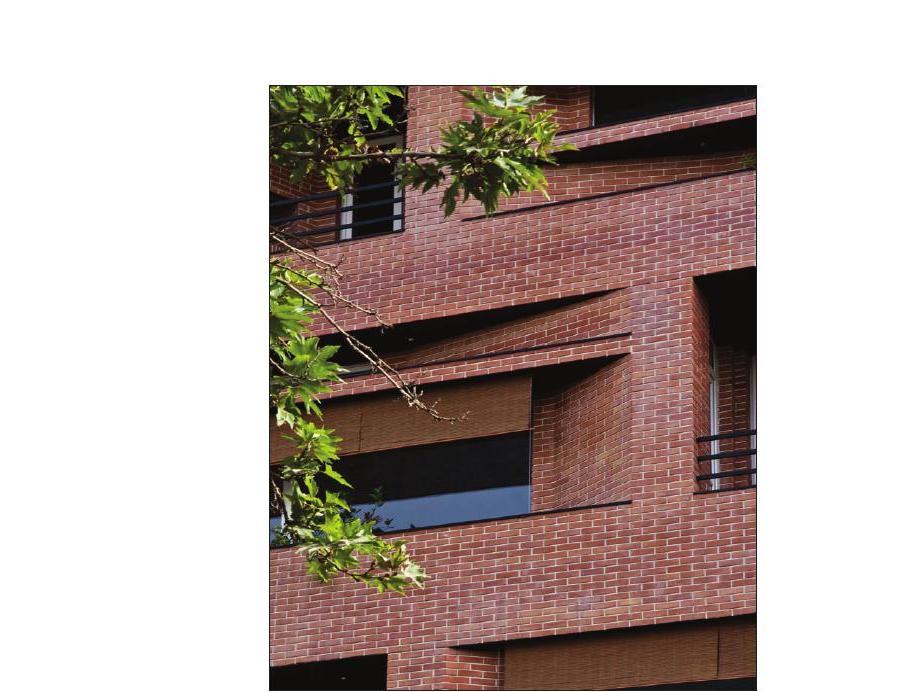
Kourosh Dabbagh: I think this subject is like fashion or taste. For instance, at one time three-centimeter brick and aluminium windows were the fashion; the entire middle class built that way, and lived in it and were fond of it, and a kind of urban image had come into being. Or now, at the level of speculative building, in the luxurious, expensive, and ostentatious kind of the city, Roman façades have become widespread, and the effort of the façade committee of District 1's municipality is to suppress this kind of façade. Whether this committee itself has the capacity to correct this tendency and create a new pattern, or to correct the façades one by one, is another discussion. This negotiation that you speak of must take place among architects—for instance, at the scale of a single lane—and at the level of society it must also exist systematically, for instance through the municipality or the Ministry of Roads and Urban Development. Because in any case, when this discussion is raised at a social level and taken out of the sphere of different people with different tastes, it can reach a result. In my view this gathering can be a beginning for us to say that we are sensitive to the subject of our urban façade, and these things must happen.
Neshid Nabian: The urban façade is not the result of the sum of architectural façades. The urban façade is directly influenced by the morphology of the city. For example, when we walk along Fifth Avenue in New York, do we not see classical façades? 70 to 80 percent of what we call the urban façade on this street relates to nineteenth-century neoclassical buildings. Why do we have no problem with it there, yet we have a problem with it in Tehran?
Sam Tehranchi: We always say that people who draw classical façades are doing bad work. But in my view these are good—what is the problem with them? On the contrary, these are a kind of architecture that has discipline, has a standard, and follows certain rules and principles.
Neshid Nabian: The façade you speak of is Facade, not the façade that Nasiri spoke of earlier.
Sam Tehranchi: I am speaking of the urban façade; I have no concern with affirming or rejecting the classical façade.
Neshid Nabian: In my view, in improving the body that makes the image of the city, not one of us who work on our projects one by one is influential; it is a matter related to regulation—just as a city like Stockholm takes shape under the influence of regulations, not because it has 100 good architects. The wellspring of these regulations is architectural discipline, and in architectural discipline an individual like Arash Nasiri must come and pour out on the table the heart and soul of this critical reading, so that we may then see how those we call architects can have an effect on the architecture of the body, which has never been a subject of architecture. Do the architects build Toronto, which you cite as an example? It is the regulations that have caused Toronto to turn out in that correct way. These regulations rest upon 70 years of the critical history of modern architecture; they rest upon the Seagram. The reason we do not have correct regulations is that even if we have a Seagram, we have not properly analyzed and critiqued this Seagram.
Alireza Sharafati: Regulations speak of codes and technical matters. When we have an architectural style, we can much more easily create a kind of coherence by using a single style. For instance, in the past, because there was a style, this happened; but now we are in a period in which style is dead, and the styles are so numerous that almost anyone can say I have my own style, or I have no style at all. So how can we, in the very absence of style, arrive at a defined style? In the modern and the classical such a thing occurred. In our time style is dead.
Afshin Farzin: In my view style and regulations alone cannot rescue the façade either. Navab is a project that had regulations.
Mohammadreza Roudneshin: As Tehranchi said, regarding the Roman and classical façade a number of people—whether they were architects or not—have managed to gather a series of principles together and, with attention to the fashion of the day and the taste of the general public, to create a discipline that we see operates from the north of the city down to Shush. Around Aran and Bidgol a town has recently been built that is not apartment blocks but single-storey buildings. The units are very
Mehran Haghbin: Since I am fond of categorizing, I categorize this discussion into several areas. If we consult the books on façade design, these books speak mostly about three subjects: 1– materials, 2– proportions, 3– technique. About these three approaches there has been much discussion up to today, and apart from these, the books say nothing about taste, laws, and regulations. I consider three periods—classical, modern, and contemporary—for the façade. Where the façade's function is specifically the separation of the boundary between outside and inside, it refers to the classical period. The modern period goes a step further and acquires a somewhat critical view, and its subject becomes to break the rules and, with the technology at its disposal, to say new things—from what standpoint? From the standpoint of aesthetics. Today the issue is function.¹ What formerly had meaning only as an appearance for being seen, today turns into something that has a function in the building. This function is partly about energy and partly about the placement of architectural elements, such as doors, windows, and changing the proportions between them. These are subjects such that, if we have a material-based approach to the façade—whether it has thickness or not—the façade itself can have much to say, whether from this aspect, or the aspect of urban regulations, or from the view of an architect, or from a larger framework like the form of the city. Each can have its own particular attractions. As architects let us examine one aspect of it, and let there be other friends who can examine it from the standpoint of law and urban regulations, or technical dimensions and mechanical systems, and other friends from the standpoint of the materials used or from the standpoint of ecology. We can give very good examples of vernacular and local façades that, by the mere use of a single kind of technique, can work for us—and these are not few.
Neshid Nabian: I do not say that we, as architects, decide or determine for the city; I say that to our own share we need to do the very work that Nasiri or Taghaboni does.
Arash Nasiri: In my view Haghbin's remarks too were correct, and what I said was my angle of view toward the façade. The point that was interesting to me is the matter of performance, which is a functional matter. Function is a strategic subject, not an aesthetic one. Therefore how interesting it is that the façade in the contemporary era has a strategic function, instead of having an aesthetic function. And when we look at the history of Western thought, we see how strategic function relates to the techniques that maintain the balance of forces in society. In fact, the balance of forces in the contemporary era is established through strategic function, not through aesthetic matters. So being strategic is an important subject in the contemporary period. For this reason the façade turns from a site of battle over aesthetics and shortness and tallness and being historical or modern, into a place for engaging with various functional matters. For example, synchronization with the environment is a strategic function, not an aesthetic one. The façade's being intelligent or flexible, or the façade's being responsive to the environment, is a strategic function, not an aesthetic subject. And if we do not know this, we think the variable façade is an aesthetic subject.
Seyyed Reza Hashemi: How does the façade respond to the environment?
Arash Nasiri: We understood that strategic function is something that plays a role in the transfer of forces and the cycle of power and dominance. We understood that what causes a social structure to take shape is our grasping that the homogenization of power in society proceeds by means of strategic function. Likewise, in the domain of architecture too, the building's skin, the building's façade, and this outer skin of the building, is a strategic function, not an aesthetic one. That is, for example, if you are in Times New York or any center of capitalism in the world, what speaks to you are the functions of things, not their aesthetic aspect. The function of a neoclassical building on Fifth Avenue in New York is no longer a classical function by way of wall and structure; rather it is a message of the capitalist system to whoever passes along that street.
Seyyed Reza Hashemi: You may call the wall of the building a skin or give it any other name and definition, and various factors may be effective in shaping it. But none of these is the façade. The façade is something that is designed. The designer, consciously or unconsciously, is influenced by all these factors, and in the end designs it so that it may be seen in a particular way. It has no bearing on past or present; from the beginning of history the façade
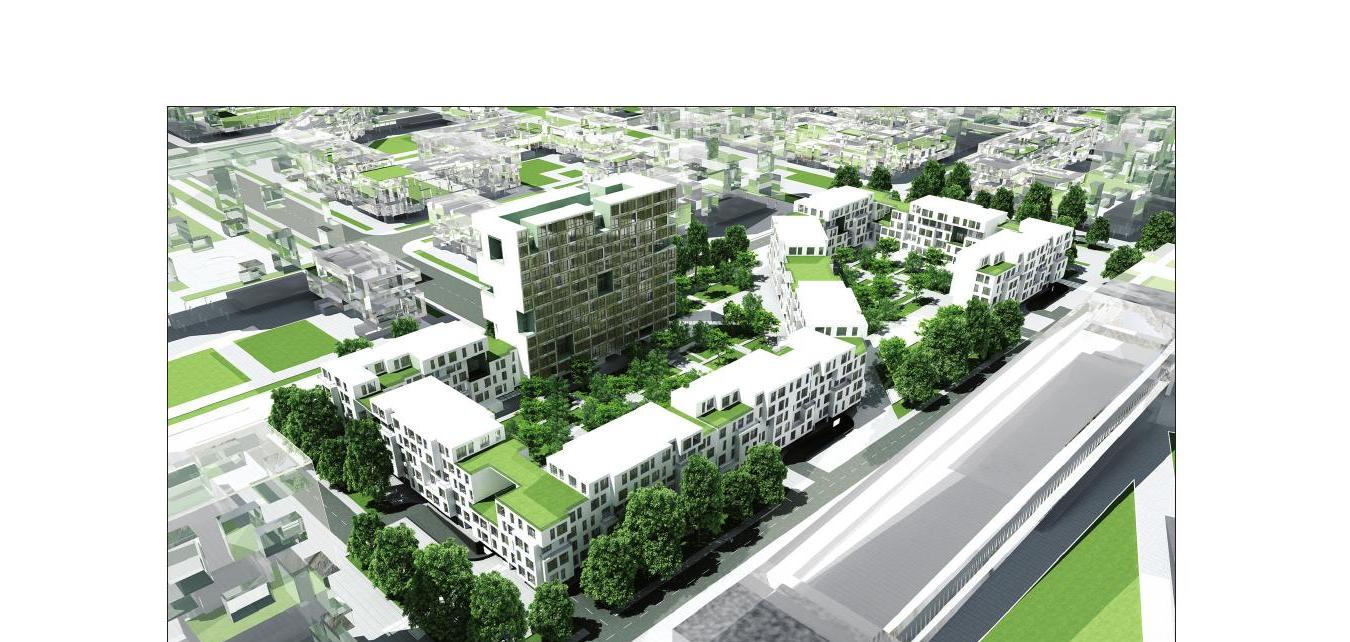
Arash Nasiri: How is that not so? For example, Jean Nouvel's project in Paris, which opens and closes, was among the first façades to have a strategic function—that is, instead of designing it, they thought that this façade could have a performance, and this shifting of it took shape along the same line.
Seyyed Reza Hashemi: In the old walls too the windows opened and closed, and air currents passed through them. In my view the façade is the display aspect of the building's exterior. Between specialists and the general public, when they say “nama” they have nothing to do with its technological and functional discussion; what they mean is something that is seen, and is certainly designed. The calculation of energy and all the connective functions of inside and outside are in place and must be applied in the design. But design, in the end, is something seen from outside. What is wrong with the façade being seen from outside?
Mohammadreza Ghodousi: Nasiri says the aesthetics of the façade can be the offspring of decisions whose effects are purely above taste.
Seyyed Reza Hashemi: I know, but those do not manifest in the façade. All those functions are for the interior. Energy is for the interior, not for the exterior.
Mohammadreza Ghodousi: For example, that you turn the façade of your building entirely into an advertising billboard and say my façade is a large billboard, and I sell it.
Seyyed Reza Hashemi: Again, that advertising too has no connection with the interior function and is independent. I do not know why we are afraid to say that the façade is designed in order to be a façade and to be seen.
Mohammadreza Ghodousi: We say the façade is a discipline.
Seyyed Reza Hashemi: The discipline does its own work; if the discipline were the final determinant, the designer would no longer be needed. These are factors effective in limiting the design of the façade, but in the end someone must design the façade.
Alireza Sharafati: We all, in the end, have a problem with its being independent, because in the final analysis the façade is not independent.
Seyyed Reza Hashemi: On what is it dependent?
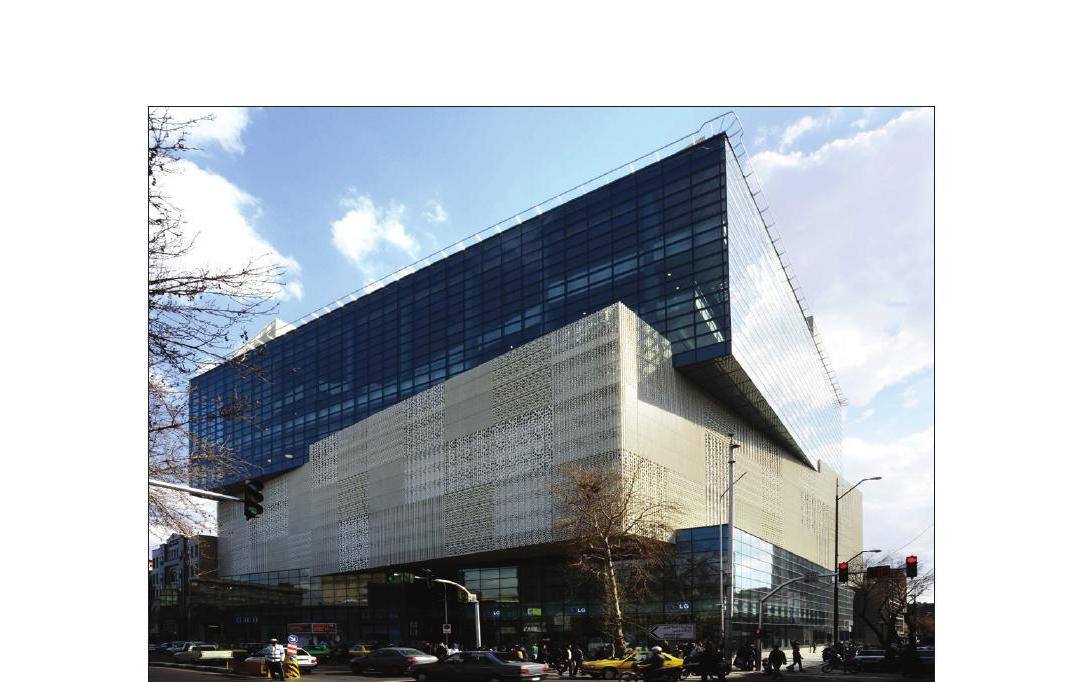
Alireza Sharafati: If I wanted to give an example of the façade's independence—can one very simply define two groups now, one designing the whole project and the other drawing the façade?
Seyyed Reza Hashemi: I am saying no such thing.
Arash Nasiri: Did not the Arg complex, which Sharafati and his group drew, have its façade and its interior designed by two different groups? So it worked—and it did not turn out badly either.
Seyyed Reza Hashemi: I say the function of the façade is representational. The interior of the building has its function for the conduct of life, but the façade is so that everyone may see it from outside.
Alireza Sharafati: For example, in the buildings of traditional fabric, does anyone see anything of the façade?
Seyyed Reza Hashemi: That is a separate discussion. There was a time when, in the cities of Iran, apart from certain distinct points—like the square, the small bazaar, and the neighborhood center—we had nothing. We had no insistence that everywhere have an urban body. Like all the lanes and back-lanes that existed in our traditional fabrics and were merely passages that we passed through, having nothing to display, with the whole façade of the building inside the courtyard. But now we too have acquired an urban façade. You have all been in jury sessions. The jurors' main decision is on the exterior volume, and the exterior volume is shown by the façade; they do not render the plan at all, but they render the façade, because the plan is not seen, whereas the façade is seen, and they want the façade to be good and to be seen the way they want.
Afshin Farzin: I think you have in mind a tension between designing from the interior side and designing from the exterior side of the building. When we design, it often happens that, for example, from the interior view we want to make the window large, but when we go toward the exterior we want it to be small, and there is always this quarrel.
Seyyed Reza Hashemi: The façade is a single image—that is, it must have a complete composition. All those teachings and trainings of aesthetics relate to the façade. But we are afraid to admit this reality.
Mohammadreza Ghodousi: Just as Nasiri says we can make strategic use of the façade, one must also make strategic use of the magazine. There is a current in the country that tries to purchase the façade as a separate element. When we bring out an issue titled “Façade,” automatically everything falls upon that current. In my view, in that issue, instead of saying façade, we should say, for instance, exterior volume, so that many things may happen. Because if we say façade, we probably mean the urban body. Is it so? One must choose this word intelligently.
Seyyed Reza Hashemi: In this session we are not after intelligent devices for this word; rather we want to know what our own judgment about the façade is, and what we understand by the façade. They say every façade must show the particular function of the building—for example, show that this is an office or a residence, which is not a bad thing. There was a time when they said if it has a balcony it is residential, and if not it is an office. These define a kind of habit that people have acquired, but the façade has little to do with these matters. The office and the residential façade can resemble each other, which is bad, because from a home we expect more liveliness and from an office more gravity and seriousness. But the design of the façade is not very subordinate to its interior function. Of course that wall must have all the qualities you mention, because someone might fault you—for example, why is your façade beautiful from outside while inside the light of the rooms is scarce.
Neshid Nabian: In my view it is the market standard. In the Iranian market at present, residential buildings are marketed by means of their façades. But right now a movement has begun toward their being chosen by means of common areas and the quality of mechanical systems.
Seyyed Reza Hashemi: But the very building that has all the advantages of common areas and mechanical systems, if it has a façade to the people's liking, is bought at a higher price, and the façade is not eliminated at the cost of the presence of those factors.
Neshid Nabian: In my view it is.