Contemporary Architecture

Voocho Cultural Complex, Gachsaran

Mohamadreza Tajgardoon·Photos: Mehdi Bonyadinejad·Memar 154 — 25th Memar Award
Voocho Cultural Complex, Gachsaran
Location: Lebanon Neighbourhood, Gachsaran, Kohgiluyeh and Boyer-Ahmad Province · Client: Mashk-o Mallar Institute · Design team: Nika Mosazadeh, Behrooz Bajoghli, Mina Rahimpour · Construction: Atabak Tajgardoon · Supervision & Structure: Mohamadreza Tajgardoon · Photo: Mehdi Bonyadinejad · Total built area: 140 m² · Area: 115 m²

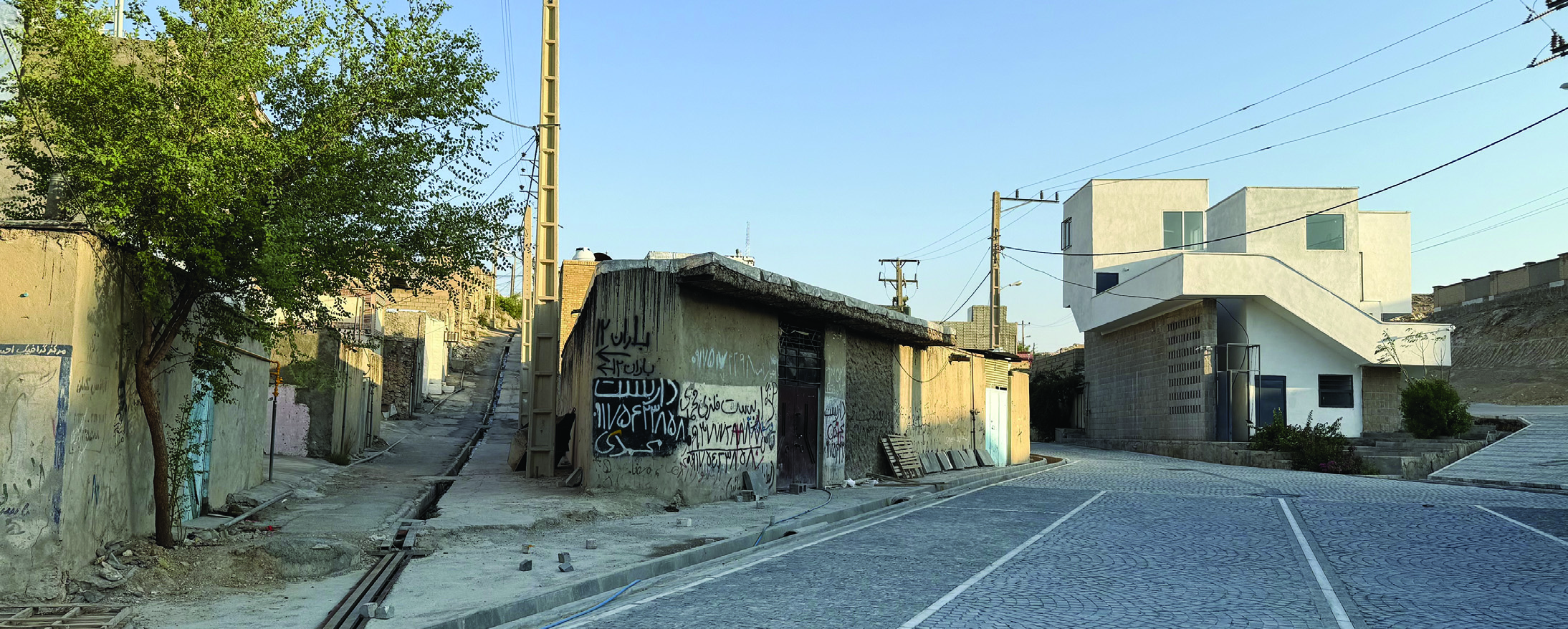
Voocho in the Luri language means “over there.” This complex is situated in the Lebanon Neighbourhood, one of the most deprived areas within the deteriorated urban fabric of the city — a neighbourhood that took shape after the Iran–Iraq War with the arrival of migrants from other cities, and has since been grappling with the social and cultural hardships of poverty, addiction, and deprivation.

The Houneh (“Home”) Cultural Centre in Sadat Neighbourhood, which managed to restore vitality and spirit to its community by creating educational, artistic, and social spaces, inspired the construction of this second complex named Voocho (“Over There”). Drawing on the lessons of Houneh and addressing its shortcomings, Voocho seeks to provide broader cultural and social opportunities for the neighbourhood.
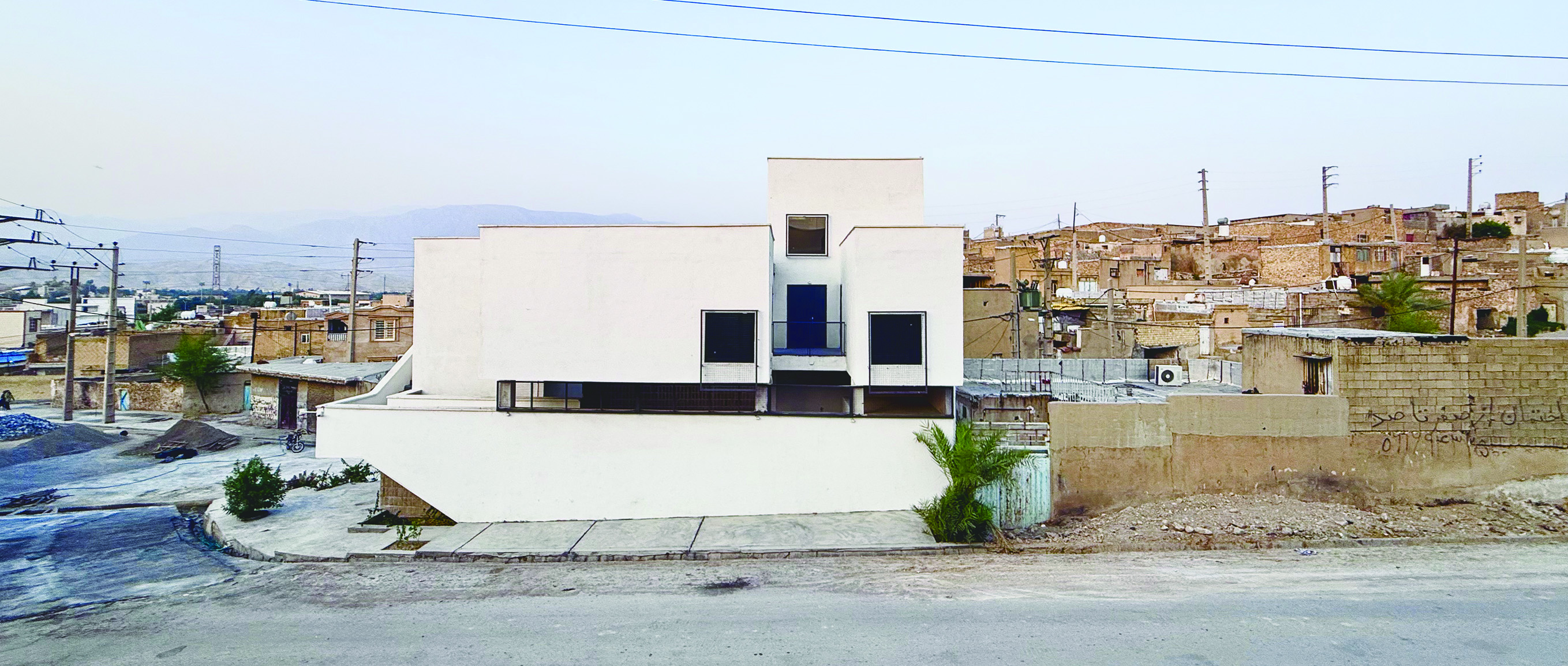
Voocho Cultural Complex viewed from across the road, a white modernist volume sitting atop stone base walls, with the dense low-rise cityscape of Gachsaran stretching behind it
The front facade — the white volume on stone walls, overlooking the hillside city

The complex comprises multi-functional spaces, each with independent management, so that every area can operate without dependency on the others. Creating semi-open, shaded gathering spaces within the building for film screenings, theatre, performances, and group meetings; an independent commercial space to help secure the complex’s financial sustainability; a library with a reading area; classrooms with independent access; and an urban plaza outside the building are among the architectural features of this complex.
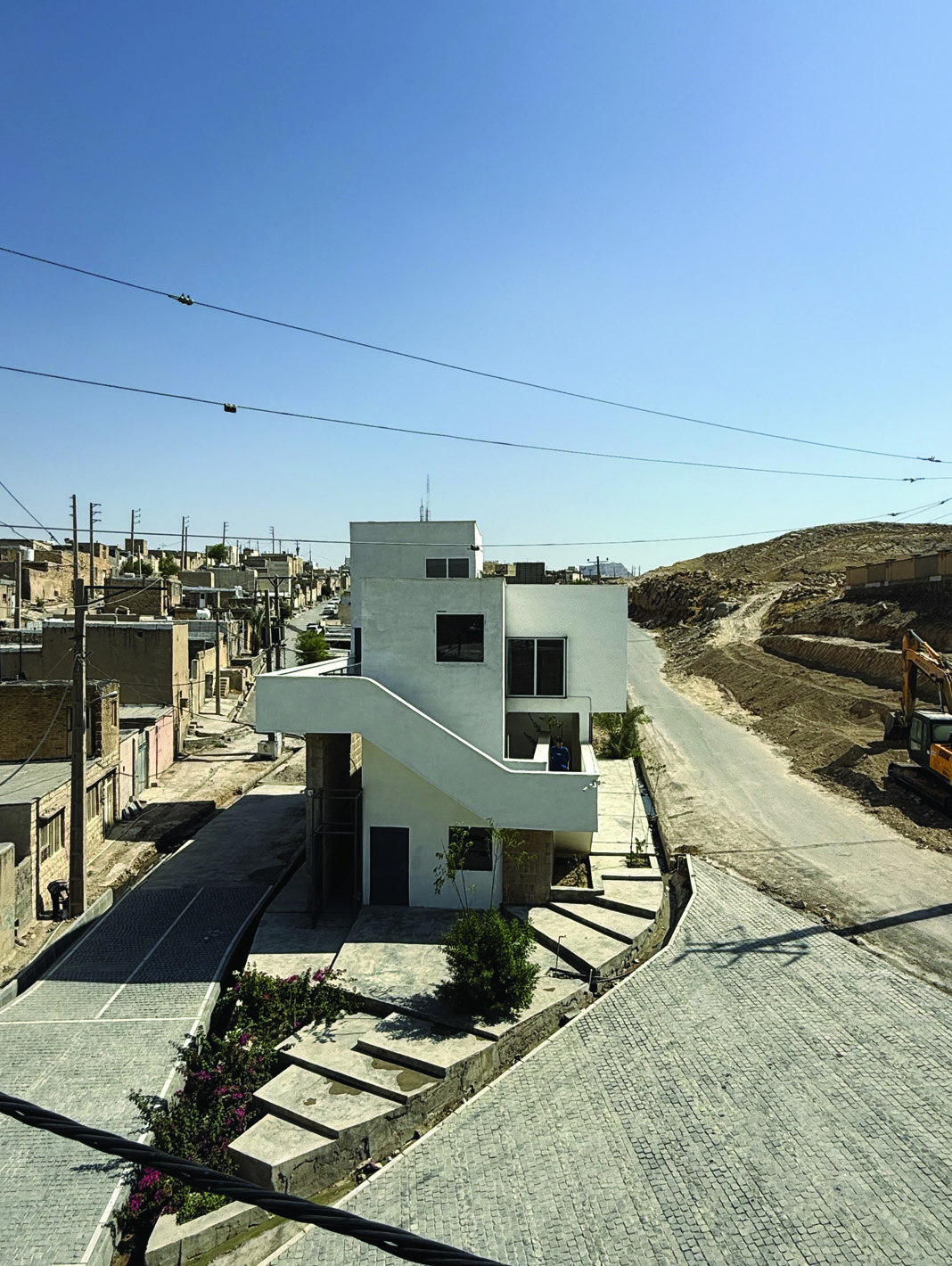
Elevated view of Voocho from above, showing the white stepped volume with an exterior staircase, the dense neighbourhood to the left and a bare hillside to the right, construction equipment visible
Elevated view showing the staircase and surrounding neighbourhood
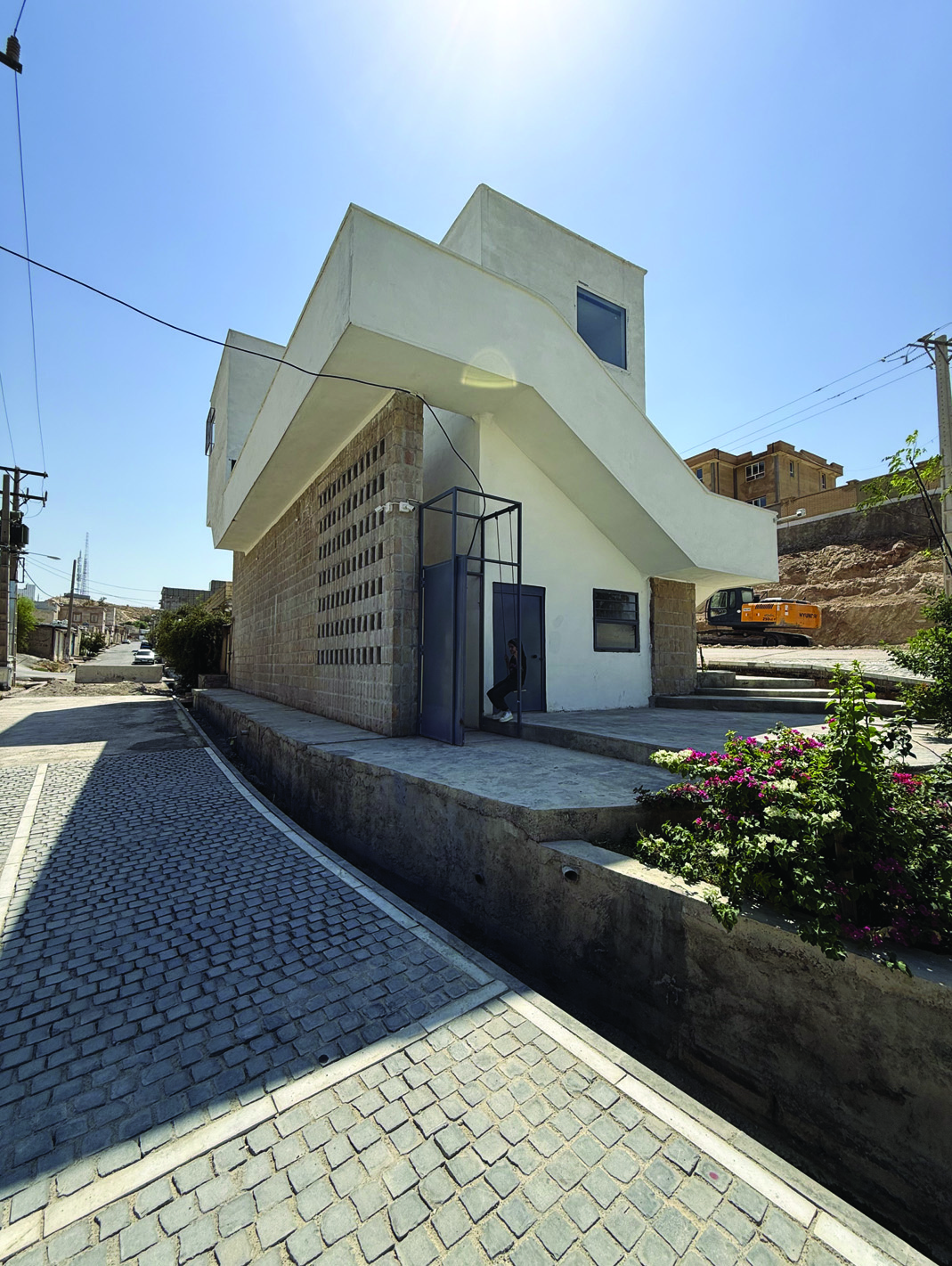
Close-up of the entrance level with hewn stone block walls, white concrete canopy, a glass entrance door, and a bougainvillea bush in the foreground
The entrance level — hewn stone walls and white canopy

Hewn malon stone has been used with care and sensitivity on the walls so that the neighbourhood’s identity is reflected in the building. The pathways and square windows, by creating visual sequences and varied images, display movement and dynamism within the structure. Furthermore, given Gachsaran’s hot and arid climate, the building’s volume has been designed so that natural shade canopies and pleasant air currents are generated through gaps in the building aligned with the prevailing wind direction. The placement of the white volume upon the stone walls is a symbol of a luminous future resting upon the identity of the past.

♦ ♦ ♦

The Courtyard

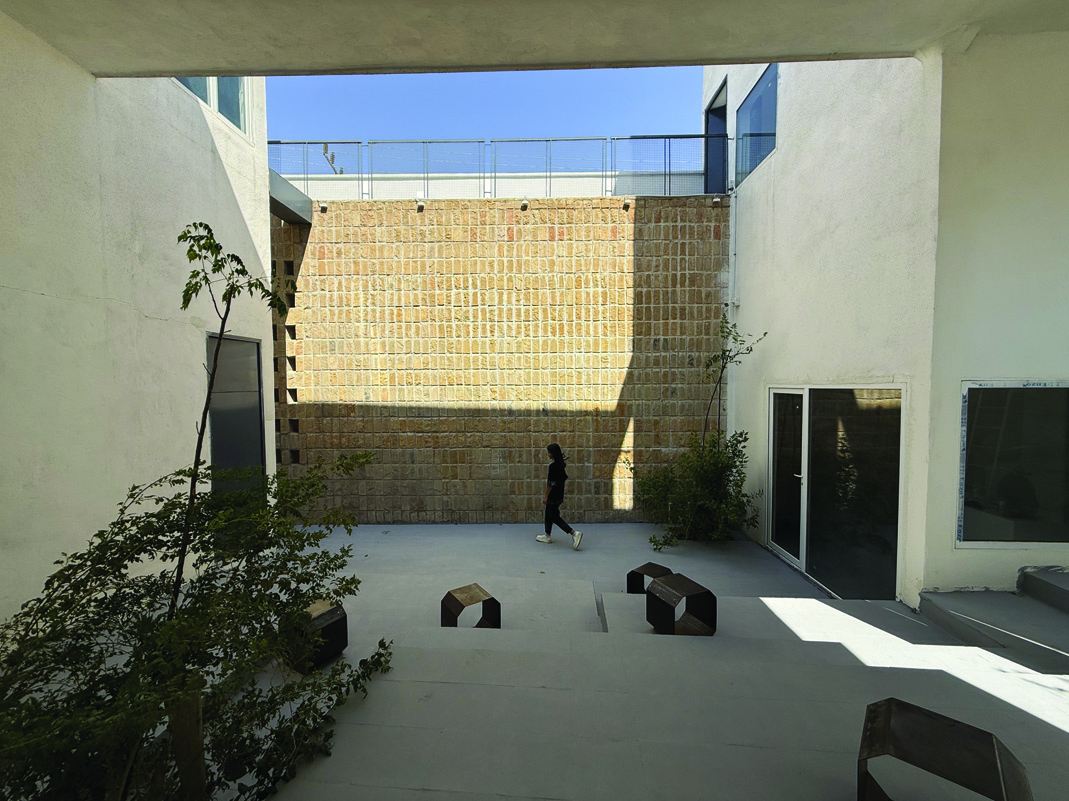
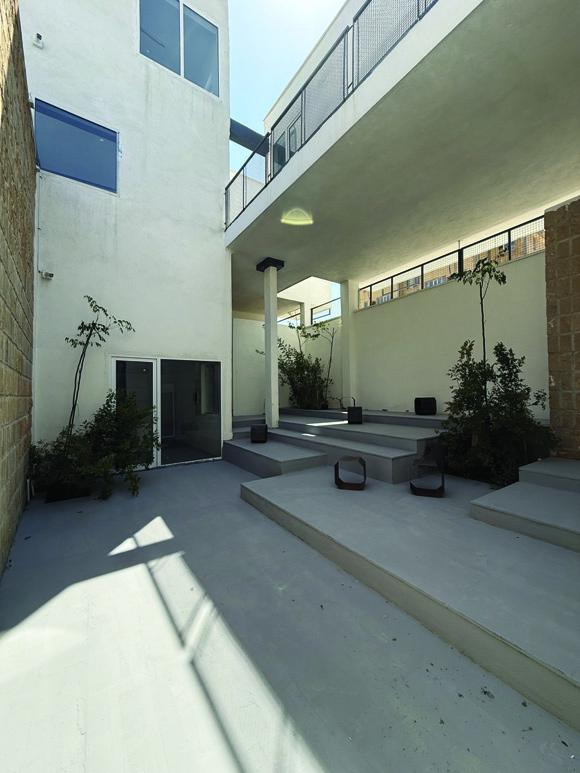
The main courtyard of Voocho seen from under a concrete canopy, with a large hewn stone wall as backdrop, a person walking across the space, angular metal stools scattered on the concrete floor, a young tree, and blue sky above
The courtyard — hewn stone wall, metal stools, and open sky

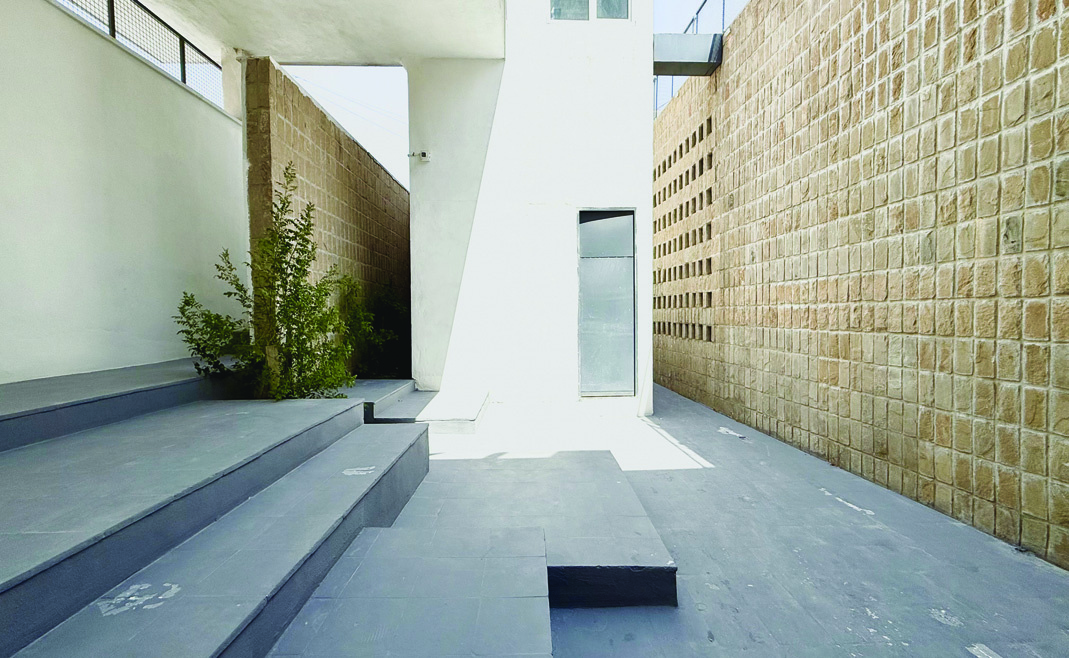
The courtyard was conceived as a functional element: with the use of high ceilings, shade-casting elements, and steps, it functions as a communal space for film screenings, theatre, performances, socialising, and more. Through movement and passage across different zones and layers, and the creation of visual sequences at various heights, the complex seeks to convey dynamism and invitation.
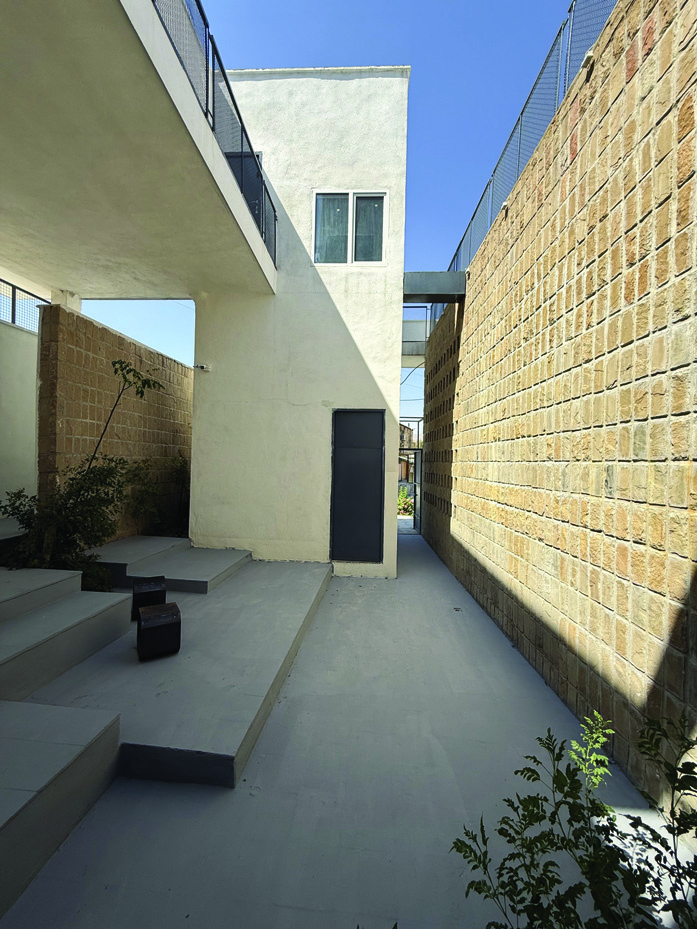
View along the courtyard passage, with a hewn stone wall on the right, white concrete volumes above, steps leading to a dark doorway, and a metal stool in the foreground
Passage alongside the stone wall — steps and layered volumes
Courtyard area with steps, white concrete column, hewn stone wall with a perforated brick section, and lush green planting along the edges
Courtyard steps with column and greenery against stone walls

The windows serve not only as light sources but, through their placement on different surfaces, control views relative to the neighbourhood while creating pictorial sequences toward the complex and its surroundings. The provision of a commercial space at the entrance maintains a continuous relationship with the outside environment, contributing to the complex’s running costs and financial independence.
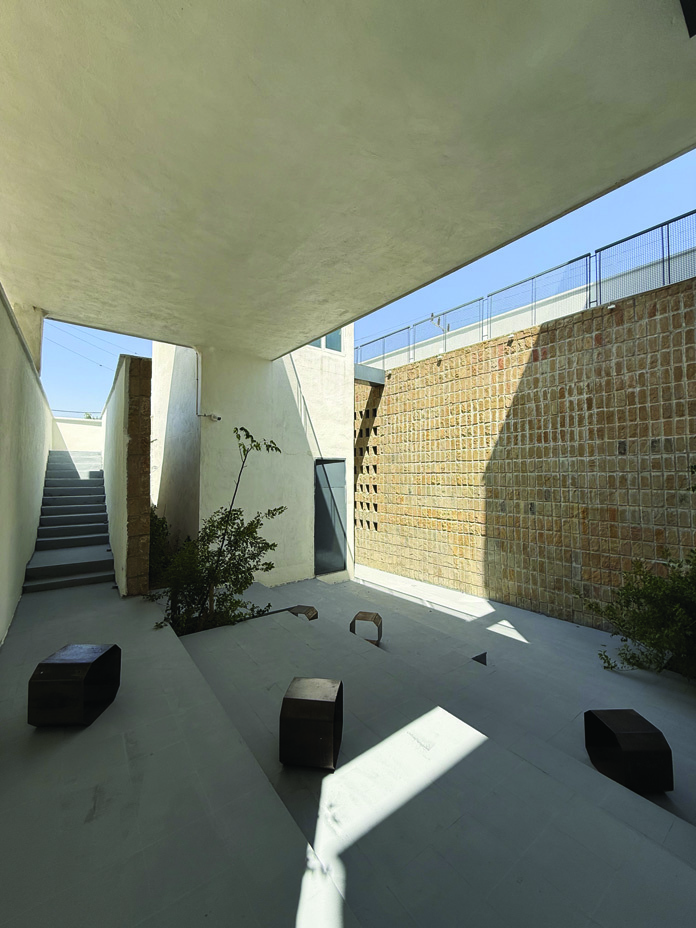
Wide view of the courtyard from beneath the concrete canopy, with the large stone wall catching dramatic sunlight, an exterior staircase visible on the left, metal stools scattered across the floor, and trees growing in raised planters
The courtyard from beneath the canopy — sunlight on the stone wall, staircase rising to the upper level
♦ ♦ ♦

Interior Spaces

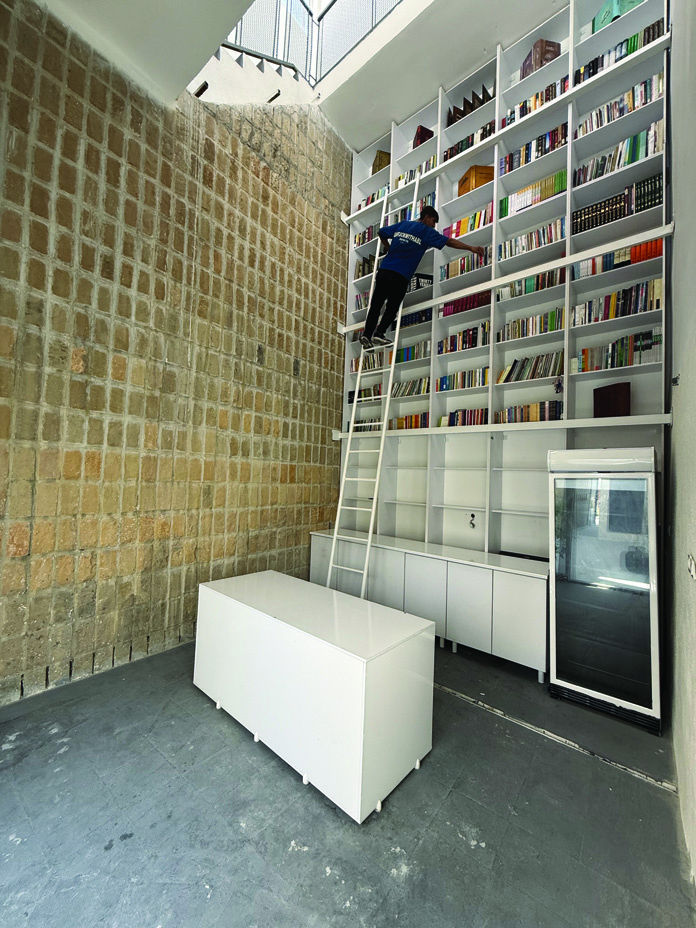
The library interior with a floor-to-ceiling white bookshelf filled with books, a person climbing a rolling ladder, a rough-hewn stone wall on the left, and a white central table below
The library — floor-to-ceiling bookshelves against the stone wall, with rolling ladder

Spaces were designed in layers, drawing on the Houneh experience. The importance of the complex’s management model and its complete independence shaped the spatial organisation: the café, bookshop, and independent courtyard form the second layer; the library constitutes the third zone; and the classrooms form the fourth zone — each with independent access.
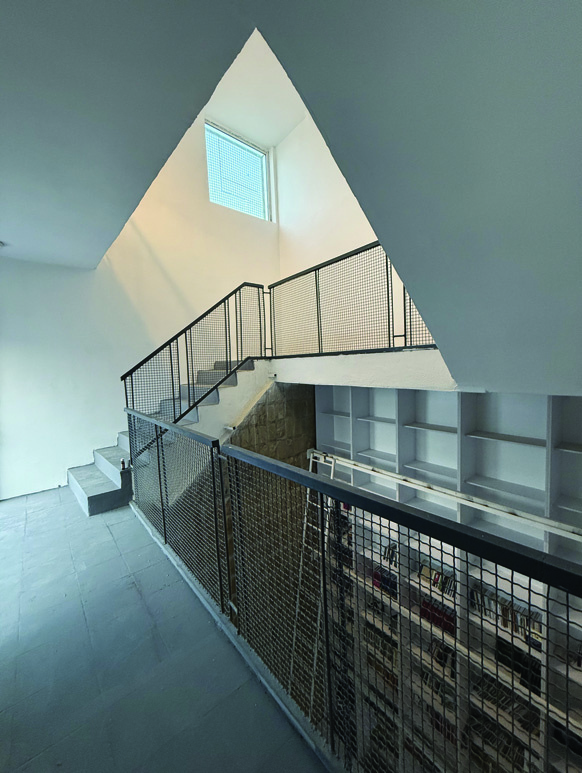
Interior stairwell showing a dramatic triangular skylight above, black mesh railings, concrete stairs, and a view down to the library bookshelves below
The stairwell — triangular skylight above, library shelves below
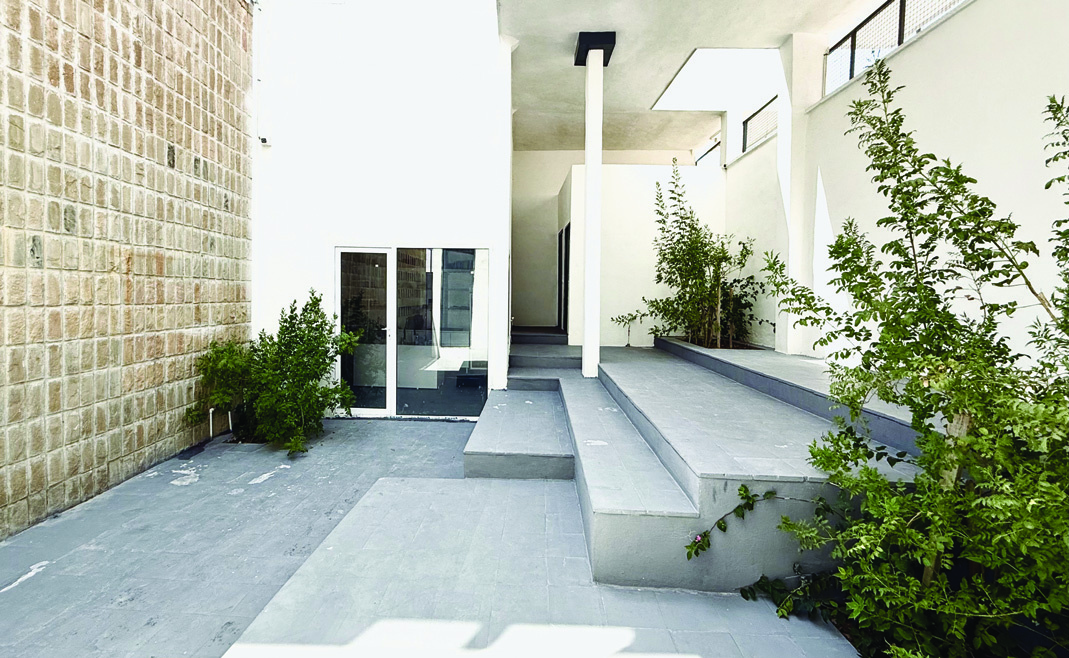
Ground floor area with a glass entrance door, stone wall, white concrete walls, green plants, and stepped platforms
Ground floor entrance with greenery and glass door
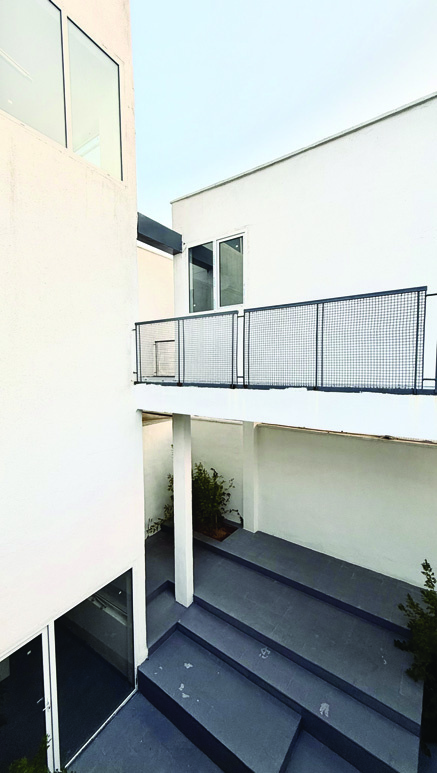
Exterior staircase between white concrete volumes with black mesh railings, viewed from above with the courtyard below
Staircase between white volumes with mesh railings
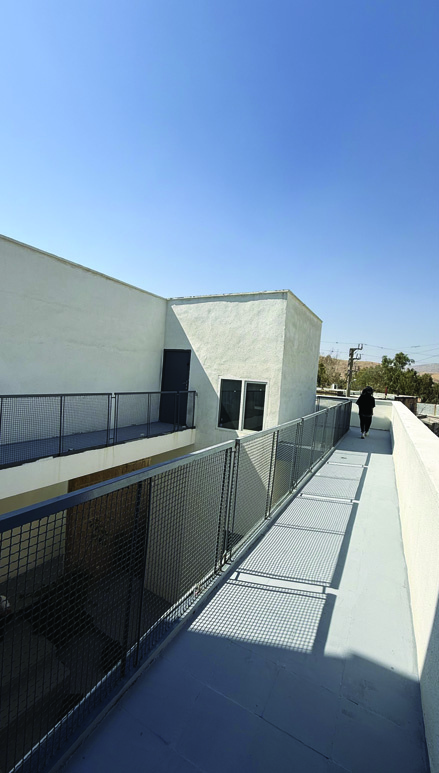
Upper-level walkway with black mesh railings casting geometric shadows, a person walking toward the far end, white concrete walls and blue sky above
Upper walkway — mesh railings casting geometric shadows
View of the courtyard from the upper level, showing stepped concrete platforms, plants growing in built-in planters, the stone wall below, glass doors to interior spaces, and the white volumes above
The courtyard from the upper level — layered platforms, greenery, and stone walls

Voocho, like Houneh, is a charitable and independent project — the second effort by the townspeople, the client, and the architect to nurture thought, hope, and motivation in the neighbourhood’s children and youth, with a vision for a bright and culturally sustainable future.

The architect, as a modest member of this collective, seeks to show this path, not to make a spectacle of it.
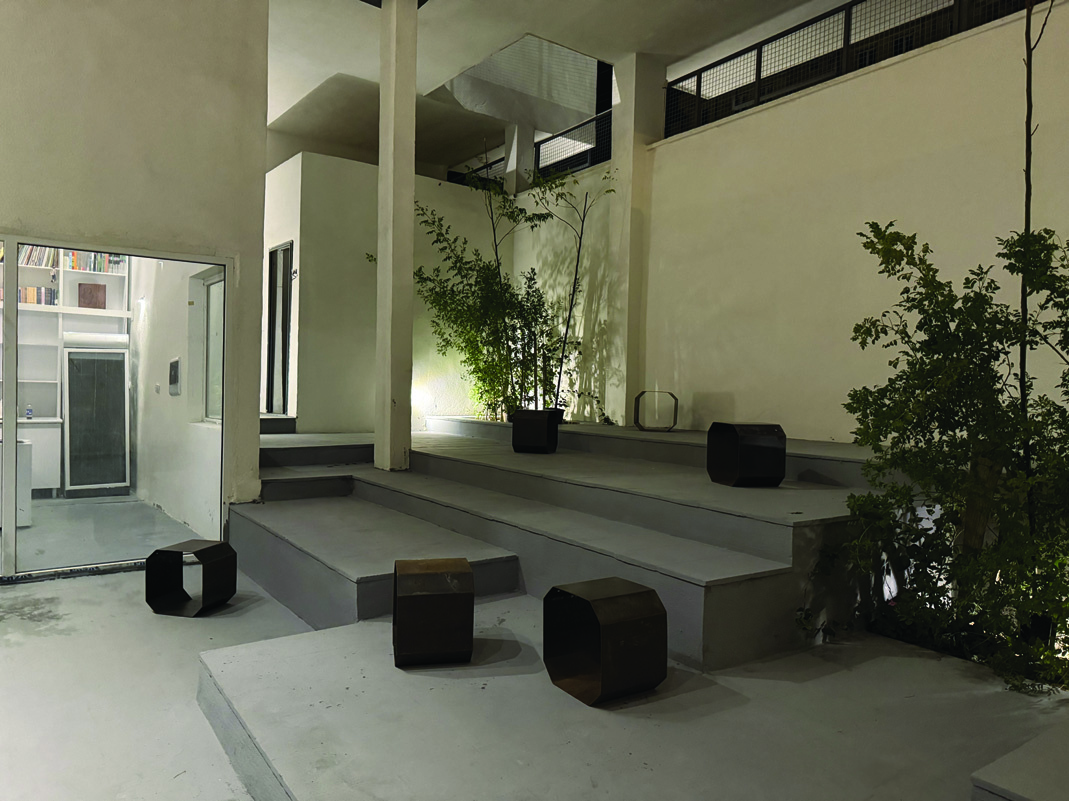
The courtyard at dusk with warm artificial lighting illuminating the stepped platforms, metal stools, potted trees, columns, and a glimpse of the library through a glass wall on the left
The courtyard at dusk — warm light, stepped platforms, and a glimpse of the library
♦ ♦ ♦

Night Views

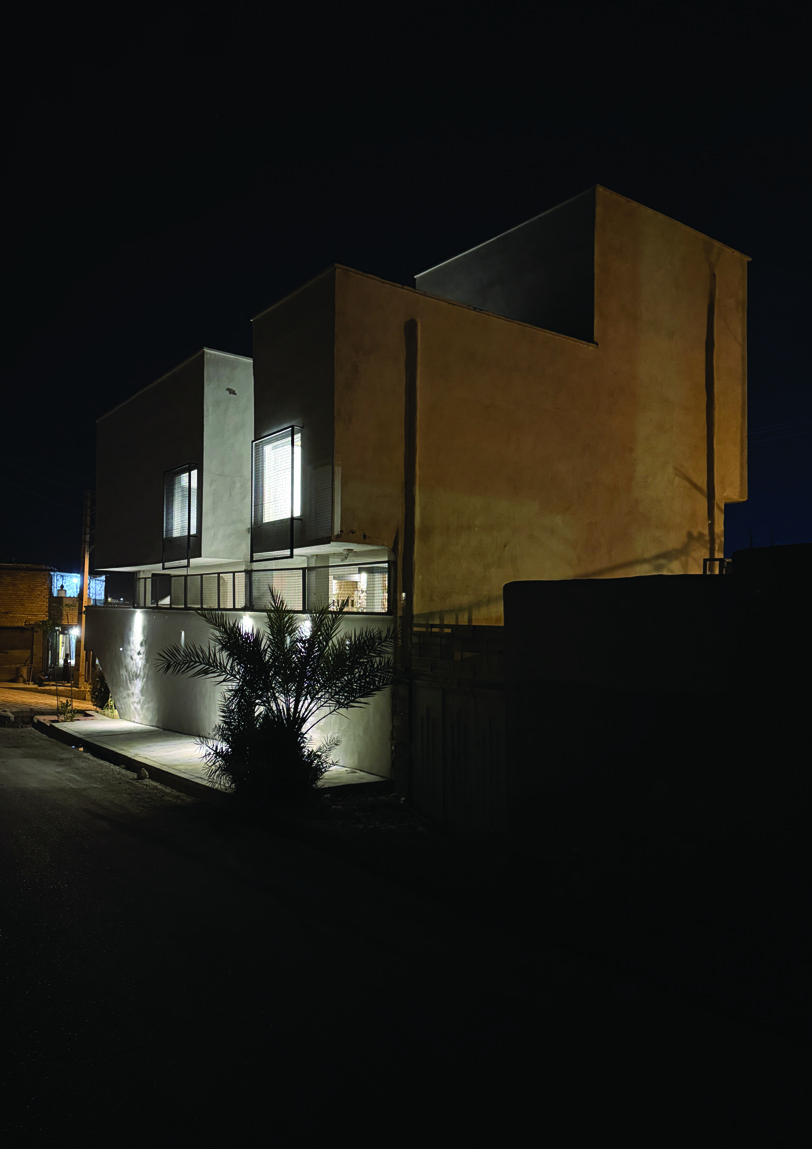
Night view of Voocho from the side, the white and stone volume warmly lit, a palm tree silhouetted in the foreground, the neighbourhood dark around it
Night view — the building warmly illuminated, palm tree in the foreground
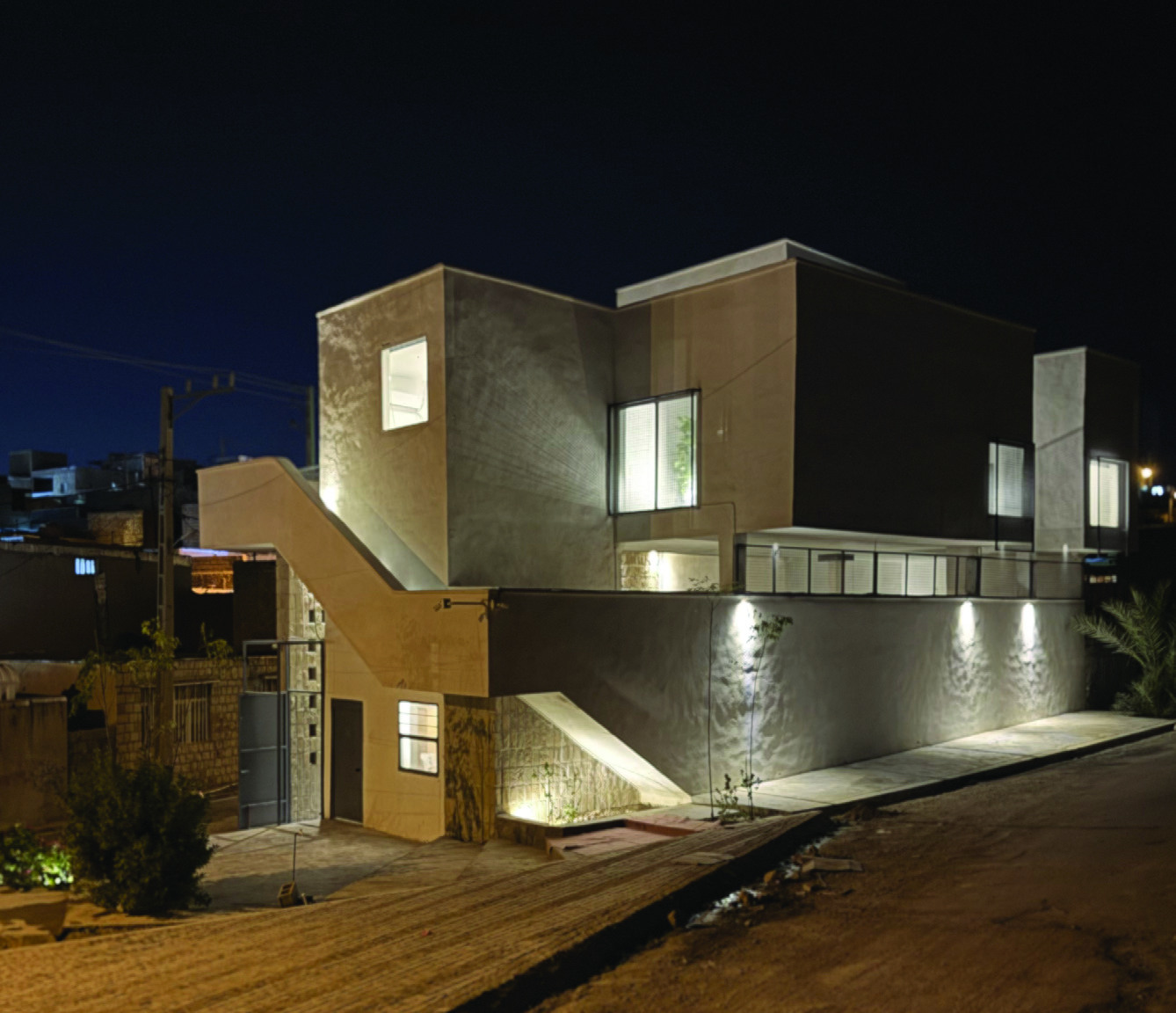
Night view of Voocho from the street showing the full building with the stone base, exterior staircase, and upper white volumes all lit up, the neighbourhood stretching behind
Night view from the street — stone base, staircase, and illuminated volumes
♦ ♦ ♦

Drawings

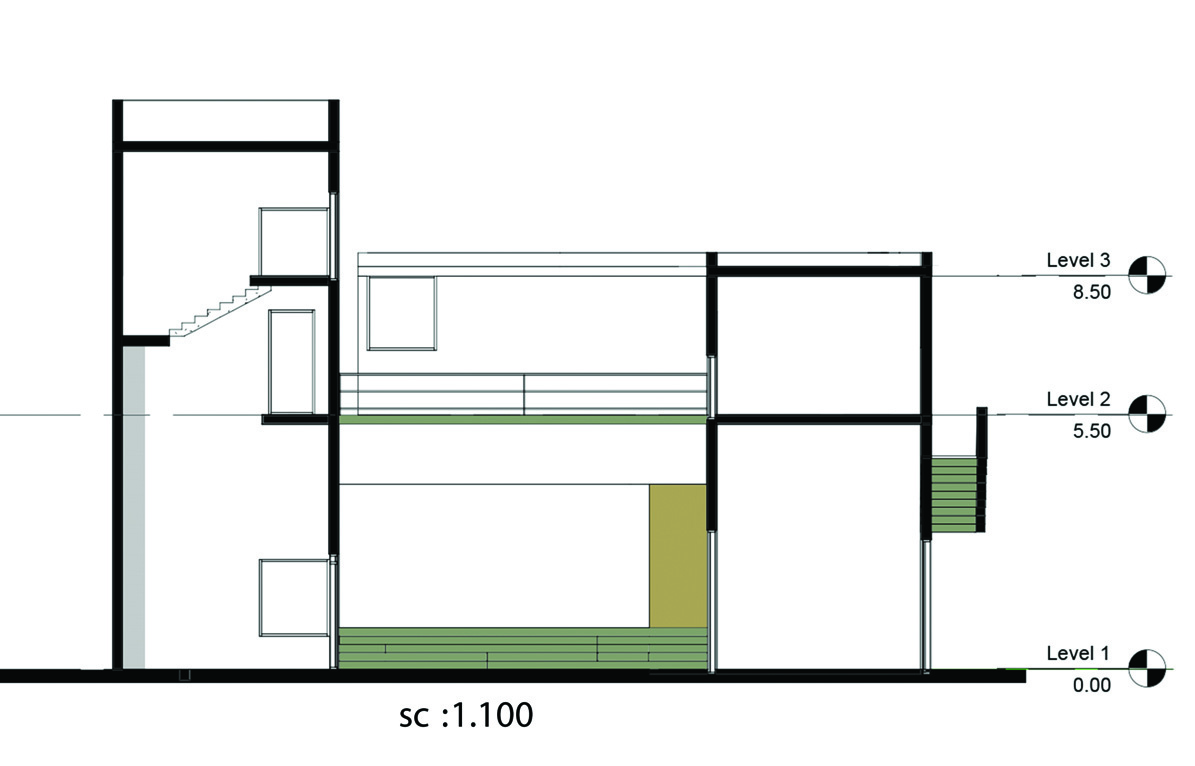
Architectural section drawing A showing three levels of the building at scale 1:100, with Level 1 at 0.00, Level 2 at 5.50, and Level 3 at 8.50
Section A — three levels (sc 1:100)
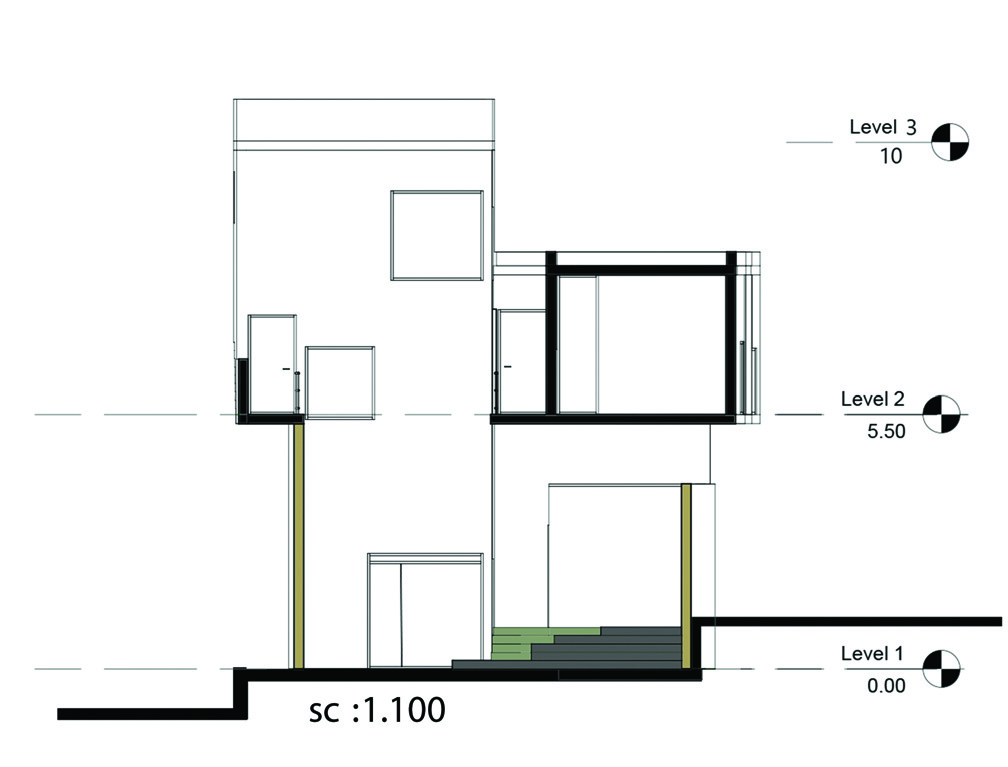
Architectural section drawing B showing three levels at scale 1:100, with Level 1 at 0.00, Level 2 at 5.50, and Level 3 at 10.00
Section B — three levels (sc 1:100)
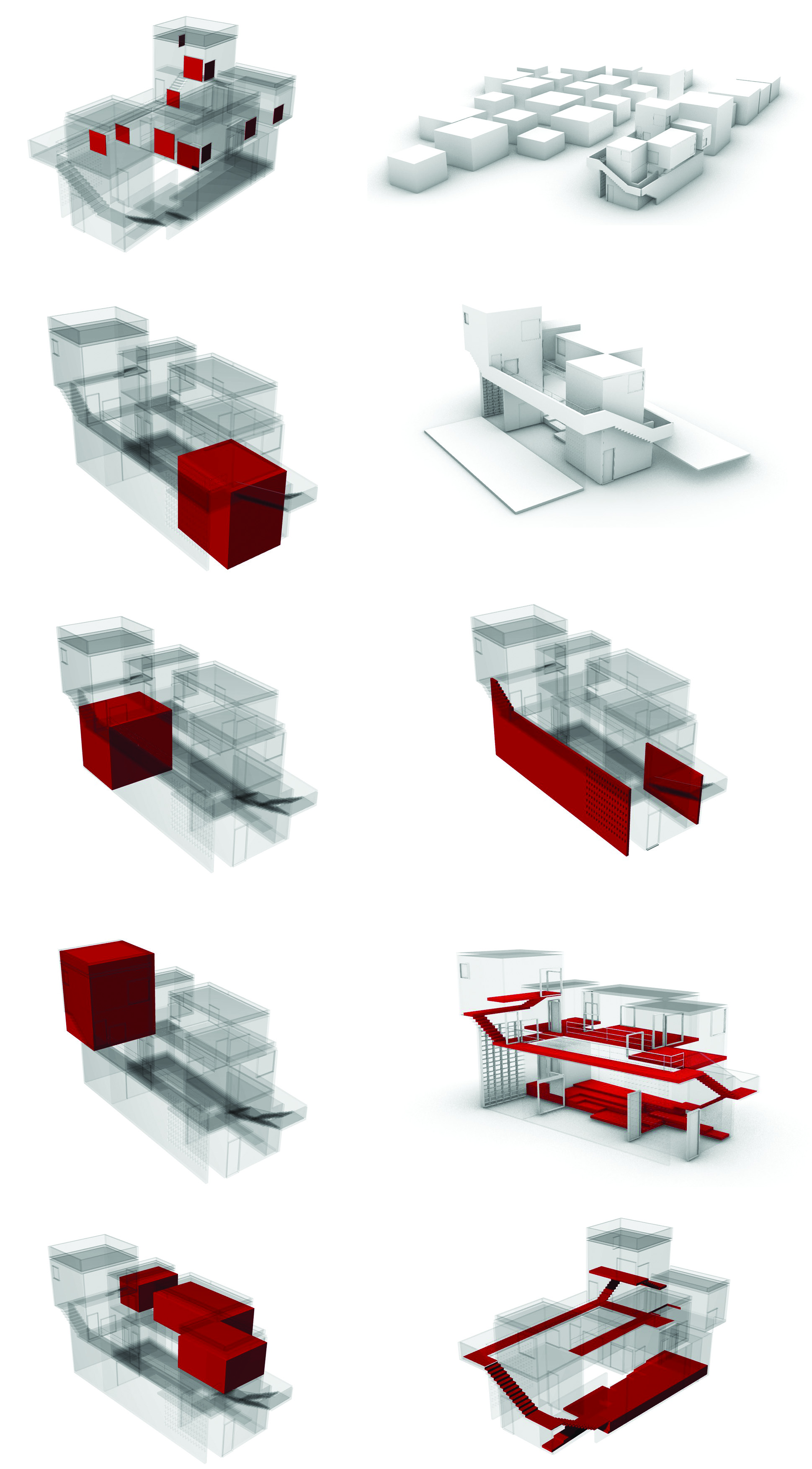
Ten axonometric concept diagrams showing the evolution of the building design, with red-highlighted volumes indicating different functional zones including classrooms, library, cafe, courtyard, and circulation
Axonometric concept diagrams — the evolution of the design with functional zones highlighted in red
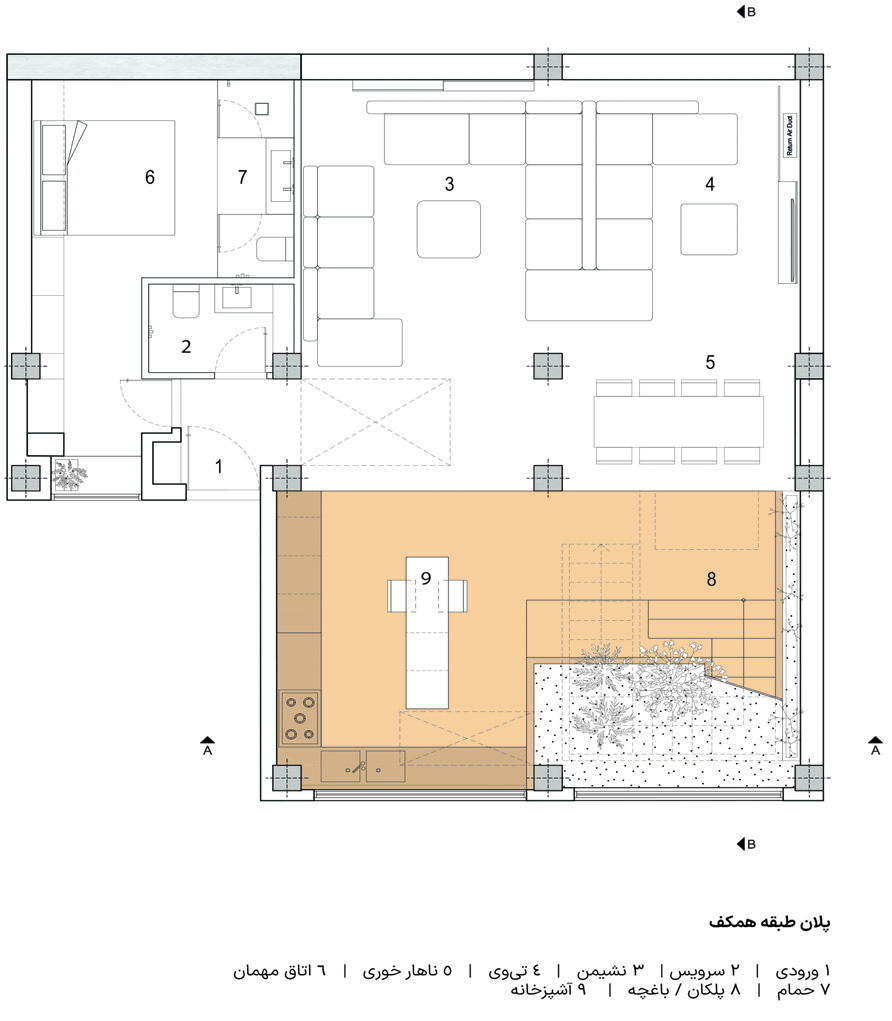
Ground floor plan (Plan 1) at scale 1:100 showing the bakery, cafe, book shop, WC, and courtyard areas with dimensions
Ground floor plan — bakery, café, bookshop (sc 1:100)
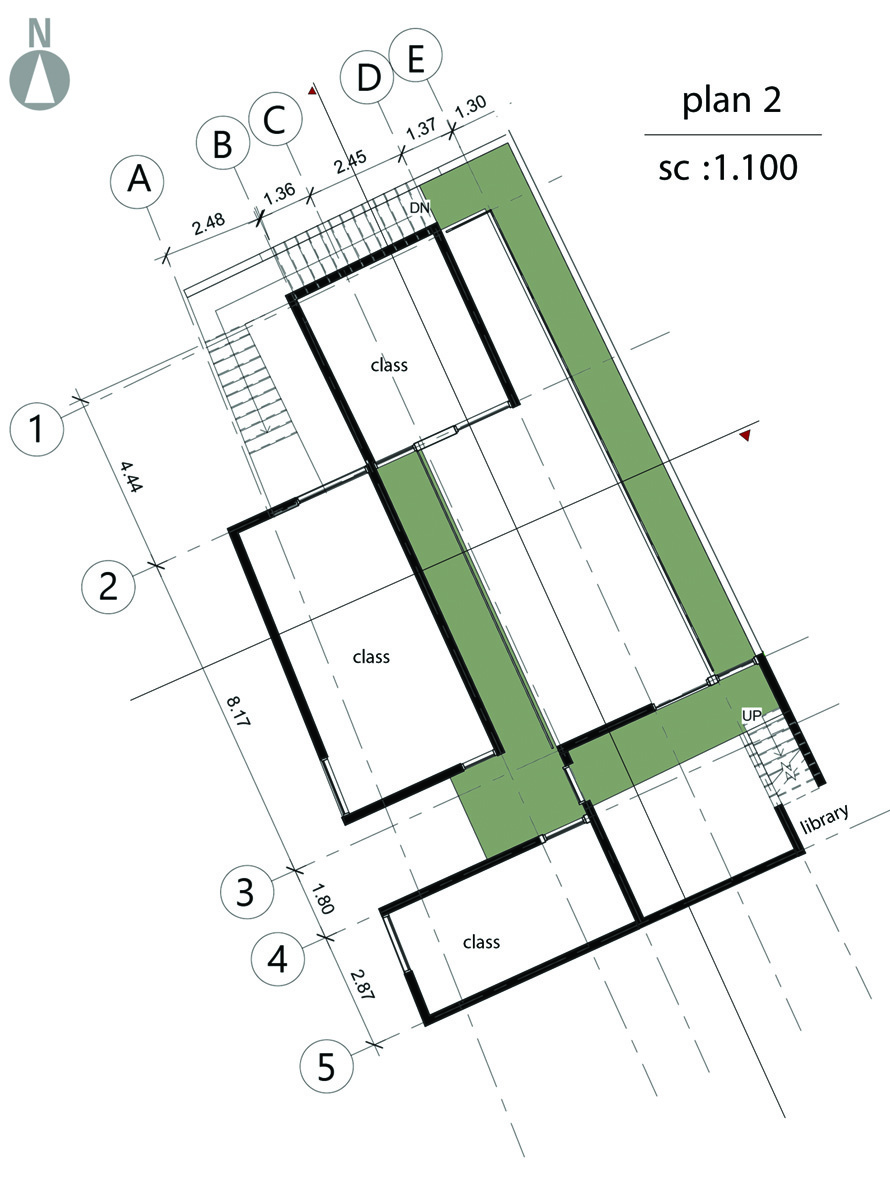
Upper floor plan (Plan 2) at scale 1:100 showing three classrooms, library, and corridor circulation with dimensions
Upper floor plan — classrooms and library (sc 1:100)

Related in Architecture Database