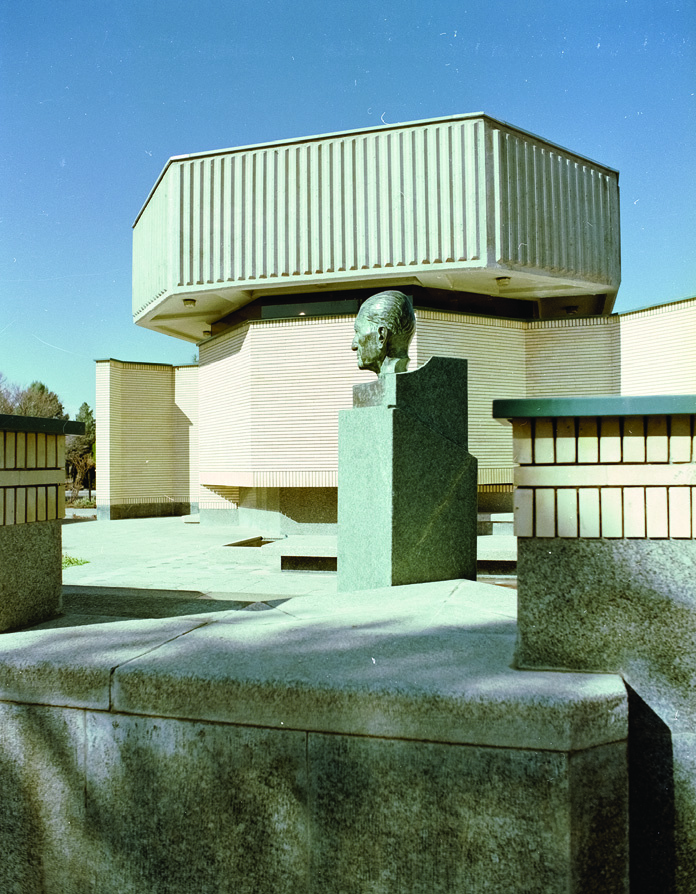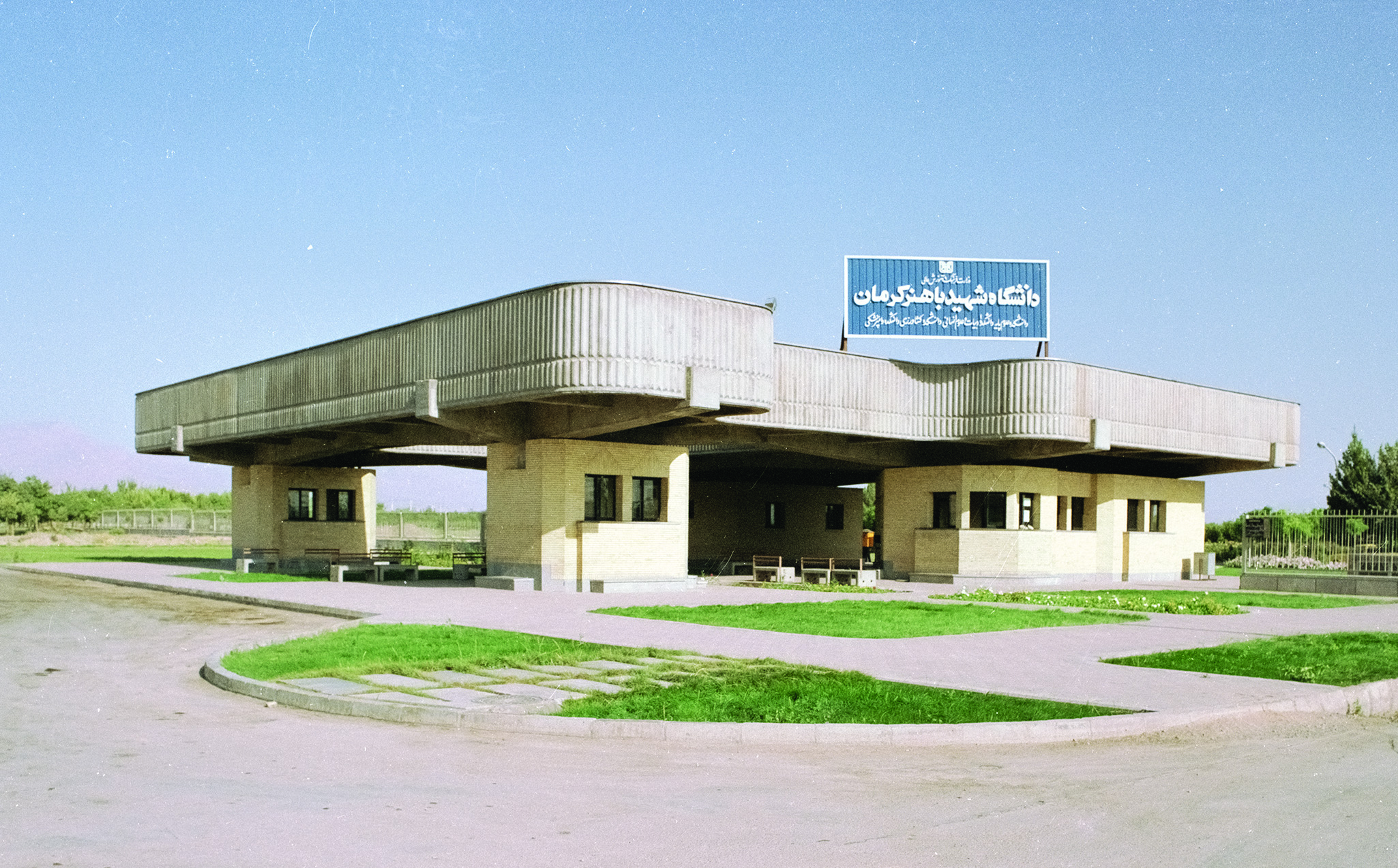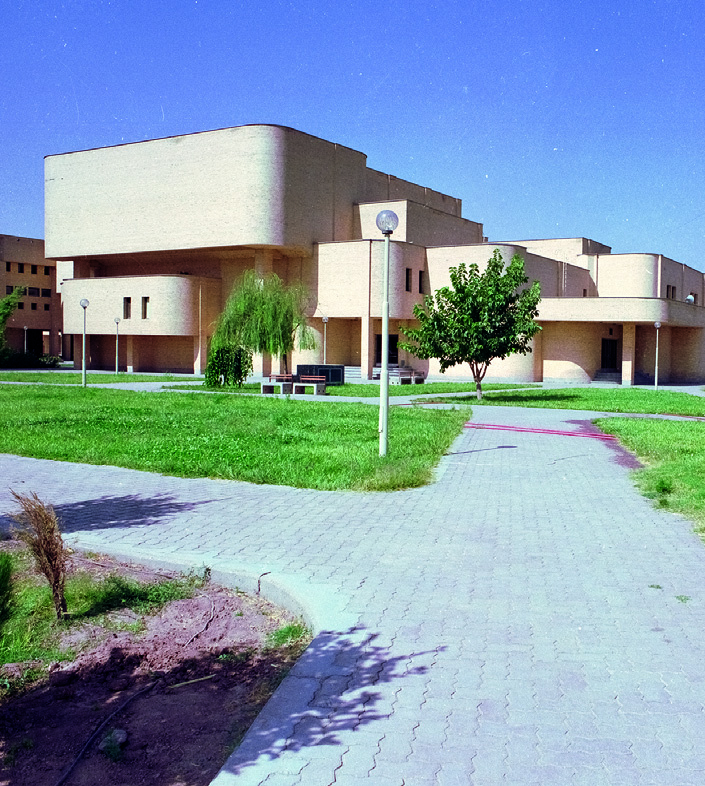
The National University of Kerman (Shahid Bahonar University) is a comprehensive university that was philanthropically founded more than fifty years ago by the late engineer Alireza Afzalipour and his wife, Fakhereh Saba. During this time, the institution has experienced remarkable growth in academic, demographic, and physical terms, to the extent that the Ministry of Science and Research ranks it among Iran's premier universities. Its architecture was also nominated for the Aga Khan Award in 1989 for outstanding university complexes in developing countries.
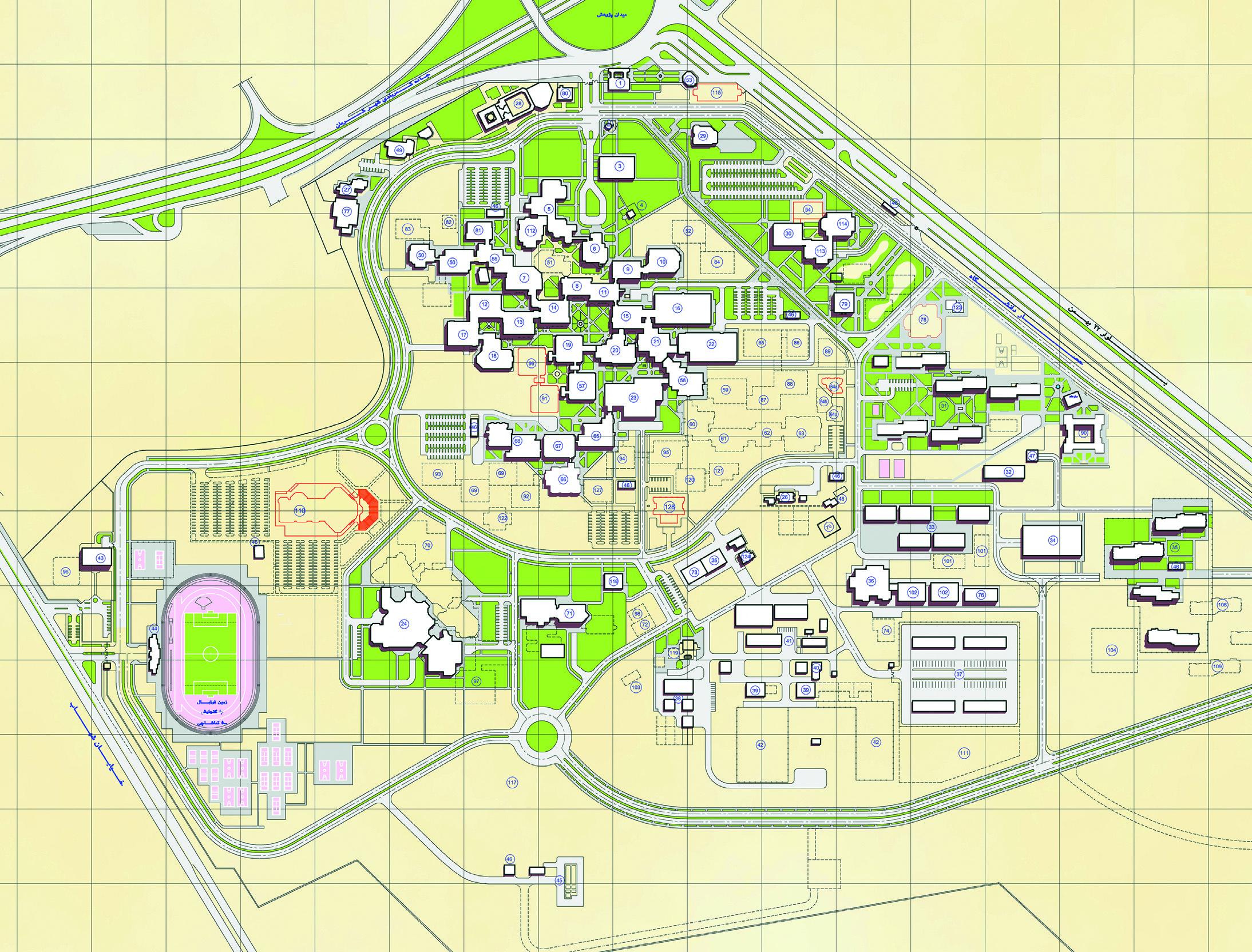
The main campus of the university is situated in the southeastern part of the city of Kerman, covering approximately 400 hectares. The physical planning for the university's master plan encompasses more than 400,000 square meters of built area, of which approximately 230,000 square meters of educational, auxiliary educational, welfare, and support facilities have been constructed to date.
What makes this unparalleled Iranian university distinctive is that from the very beginning it was planned and designed on the basis of comprehensive studies and a unified educational and physical master plan. It has developed dynamically along those same principles, and although the university's administrators have changed over the years — bringing with them varying perspectives and preferences — they have, on the whole, remained largely committed to this master plan. This adherence has had a profoundly positive impact on the realization of the university's educational, cultural, physical, and economic objectives.
History, Designers, Planners, and Key Figures
The client for the master plan and the initial buildings of the university was the late Alireza Afzalipour. In 1351 [1972], he signed the master plan contract with Bonyad Consulting Engineers, under the directorship of Amirnasrat Monaghagh. The design lead for the complex was Yousef Shariatzadeh and the project manager was Mohsen Mirheidar. The educational master plan was carried out by Espandar Advisory Office under the supervision of Dr. Mohammad Moghaddam, serving as the collaborating consultant for Bonyad Consulting Engineers. Sano Consulting Engineers and Dr. Ghalibafian were responsible for the structural design of a portion of the initial buildings.
From 1362 [1983], when Pirraz Consulting Engineers was founded by a number of Bonyad's partners, the responsibility for the university's master plan consultancy has remained with these engineers. From 1364 [1985], following the completion of the initial buildings and their donation by the late Afzalipour to the people of Kerman, the client for the continuation of the project has been Shahid Bahonar University of Kerman.
It is fitting to acknowledge the engineers who, over the past fifty years at Bonyad and Pirraz Consulting Engineers, have held responsibility for the planning, design, and supervision of this project: Bahman Farahvashi, Yadollah Razzaghi, Iraj Vakili, Sedigheh Diba, Heshmatollah Monsef, Younes Gholizadeh, M. Zartoshti, Bizhan Farahvashi, Hood Malekmi, Ahmad Memarzadeh, Mirazim Azimzadeh, Sirous Gharacheh Daghi, Rahim Sheikh al-Eslami, H. Khajeh Nouri, N. Jalili Farshchi, Henri Malekmi, Mahmoudreza Mohajerani, Alireza Mirtaheri, Eisa Salajoghe, Mohsen Rahnama, B. Mehrayin, Farhad Abouzia, Babak Shadrou, Pedram Rahbari, Javad Salajoghe, Morteza Abbasi, Jalaleddin Sajjadian, Parvin Ghaemian, Mohammad Ebrahim Zare Nezhad, Mehdi Mansouri, Ali Rahimi Nezhad, Amin Masoudzadeh, Morteza Ghani Tafreshi, Maziar Salmanzadeh, Ali Hashemi Dezfuli, and Seyedali Razavi.
Characteristics of the University Master Plan
The university master plan comprises two separate yet complementary endeavors: the educational master plan and the physical master plan.
The educational master plan involves the study and determination of the university's educational parameters. Based on the overarching educational objectives, it encompasses the following:
- Regional studies for Kerman Province
- Defining higher education goals for the region
- Proposing an optimal educational system and student enrollment figures for initial and growth phases
- Determining the university's principal activities regarding education, research, student affairs, and the administrative-educational cadre in relation to Kerman's community
- Establishing educational curricula and course planning, including the number of course units and hours for theoretical and practical instruction
- Performing conversion calculations to translate university programs and activities into spatial requirements, specifying the number, capacity, and specifications of spaces
The physical master plan constitutes a set of diverse criteria for giving physical form to the results of educational planning — encompassing area, building form, physical specifications, and infrastructure — and includes the following:
- Establishing criteria for the configuration of buildings
- Defining standards for infrastructural preparations and site development
- Determining the type and volume of buildings
- Establishing proper land use and the capacity for modification and expansion
- Determining the placement of each building and the spatial relationships between them
In the first instance, alongside conventional baseline studies — such as land assessment, qanat conditions, geographical factors, and access routes — which address the preliminary identification of the environment and design context, physical planning calculations based on the educational master plan convert those programs, teaching hours, and educational and research needs into the required floor areas. These areas and their density ratios define the principal zones of the master plan.
Prioritizing Academic Departments
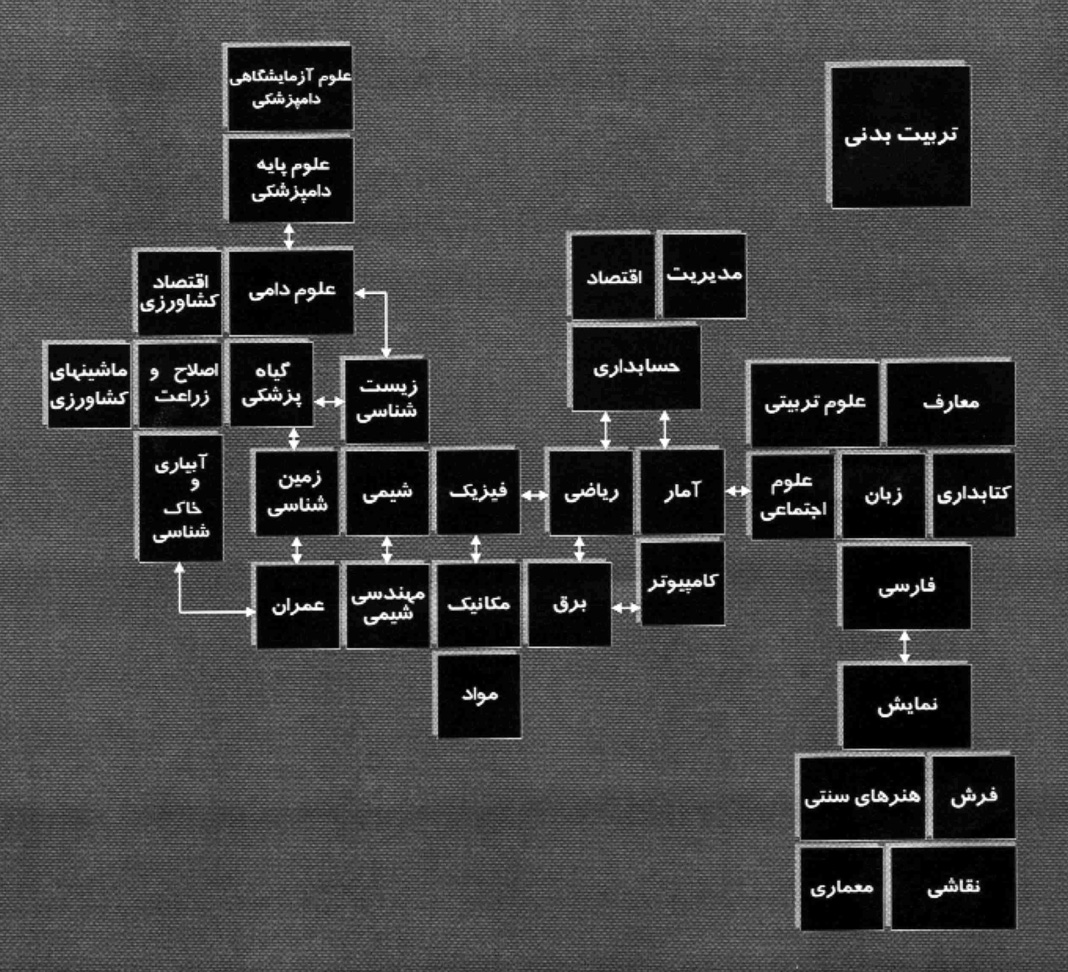
The most significant concept influencing the physical framework of the units (building blocks) that compose the university — one that was proposed from the very outset — is the policy of prioritizing academic departments. This policy, which in any university under planning counts among the earliest decisions, has a fundamental impact on physical planning and the formation of the master plan.
The question is whether the emphasis should be placed on the activities of academic departments, their mutual service provision, and centrally planned utilization of educational facilities and resources, or conversely, on the complete independence of faculties as entirely self-contained and disconnected entities, where each faculty independently provides all necessary facilities for teaching all courses to its students.
At the time of the University of Kerman's design, many Iranian universities, including the mother university — the University of Tehran — followed the faculty-centered approach. Yet the advantage of shared resources and optimal utilization of all facilities dictates that all educational and auxiliary educational amenities be planned and used in a centralized manner. This approach is strongly recommended by UNESCO and was adopted as the basis for the educational master plan; the architecture of the physical master plan was likewise shaped according to this concept.
The units or blocks constituting the plan would be relatively small in scale, each assigned to one or several academic departments, or to a specific auxiliary educational space. These units would have a built area of approximately 2,500 to 4,500 square meters — a notable difference in architectural form and scale compared to a university following the faculty-centered approach, where a faculty building would require a built area of approximately 20,000 to 40,000 square meters.
Another effect of this concept on the overall form of the university is the interconnections between these units, which shape the functional zoning and circulation networks of the campus. The distances between these blocks should not exceed 500 or at most 700 meters. Academic departments that serve other departments most extensively — such as basic sciences and literature — are positioned at the center of the core, in close proximity to one another. As departments become more specialized, they are situated toward the periphery.
Intelligent Architecture of the Building Units
The concept of intelligent architecture that was envisioned by the designers of the University of Kerman complex more than fifty years ago extends well beyond what has become known in recent decades as building management systems. A building designed on the basis of intelligent architecture possesses the capacity to adapt to new spatial, mechanical, and infrastructural needs without requiring demolition or structural alteration.
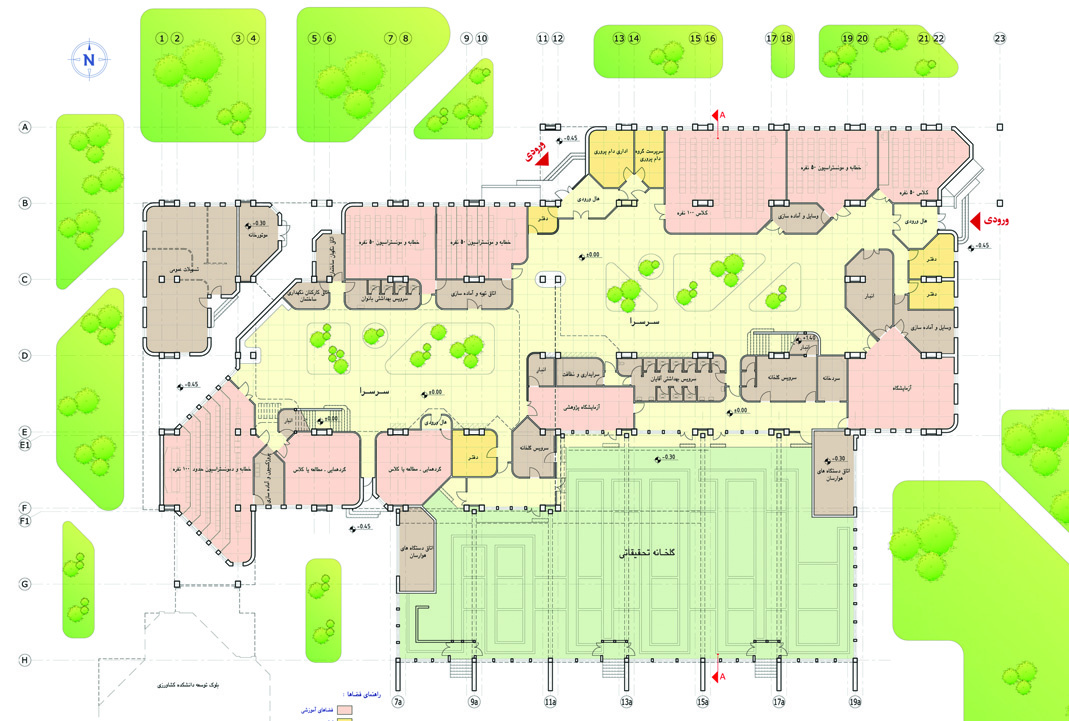
The strategy for achieving such adaptability in the university's building units requires, first and foremost, modular design of the architecture, structure, and mechanical systems. When a building is designed on the basis of an appropriate functional module, all components align with it — including partitions, facade windows, mechanical access panels, light fixtures, and structural elements such as columns, beams, and joists. Accordingly, a base module of 1.5 meters and a macro module of 7.5 meters were adopted based on extensive studies as the optimal dimensions for educational, auxiliary educational, and research functions in the University of Kerman master plan.
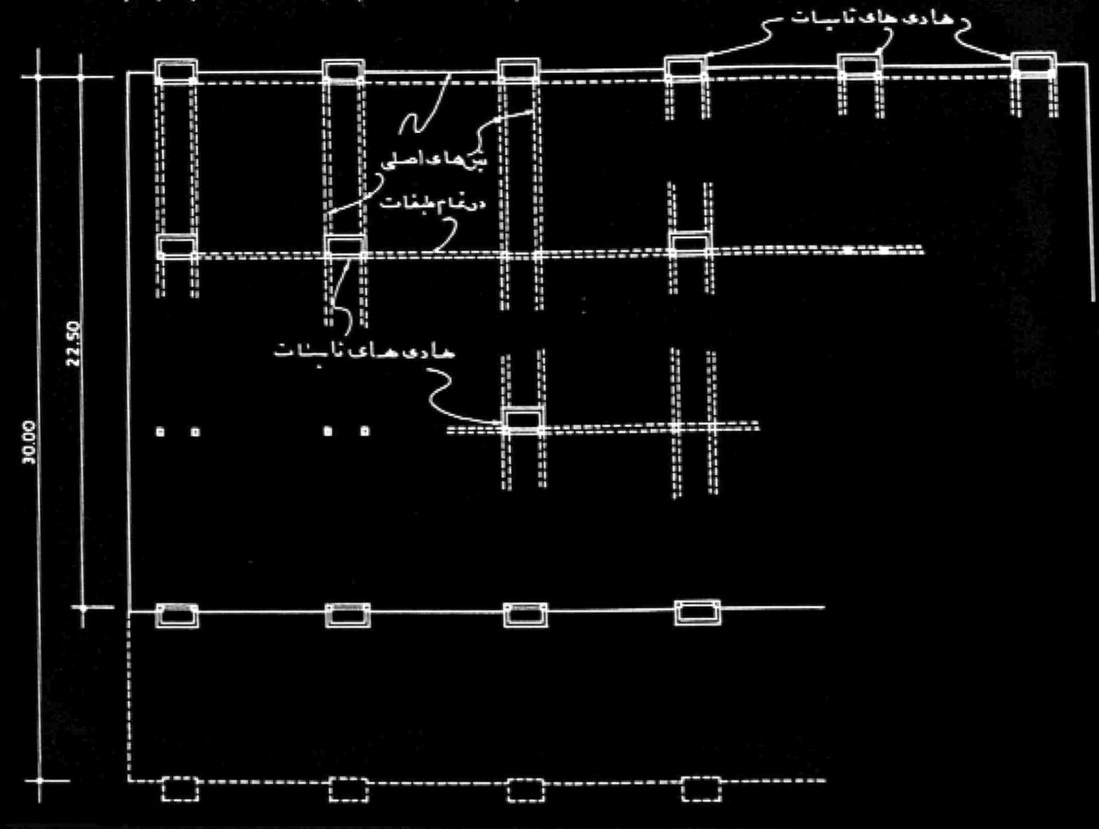
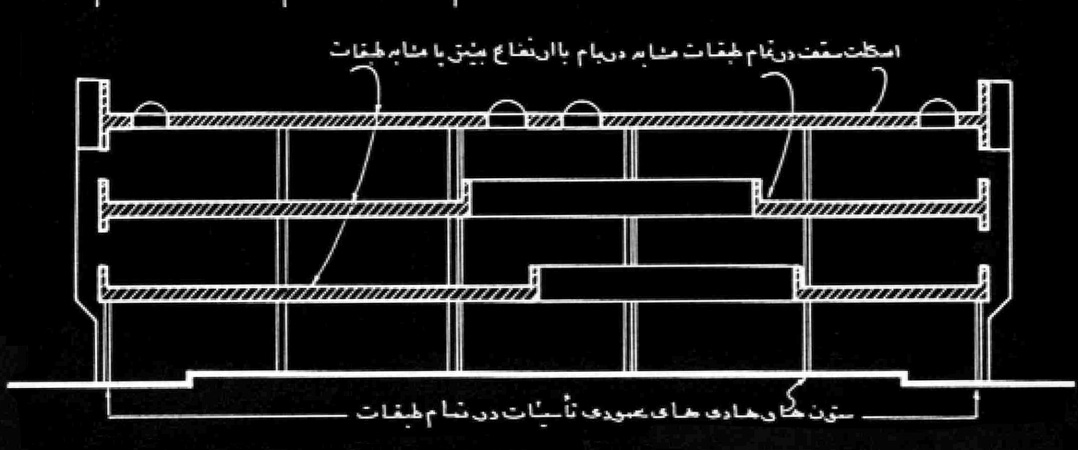
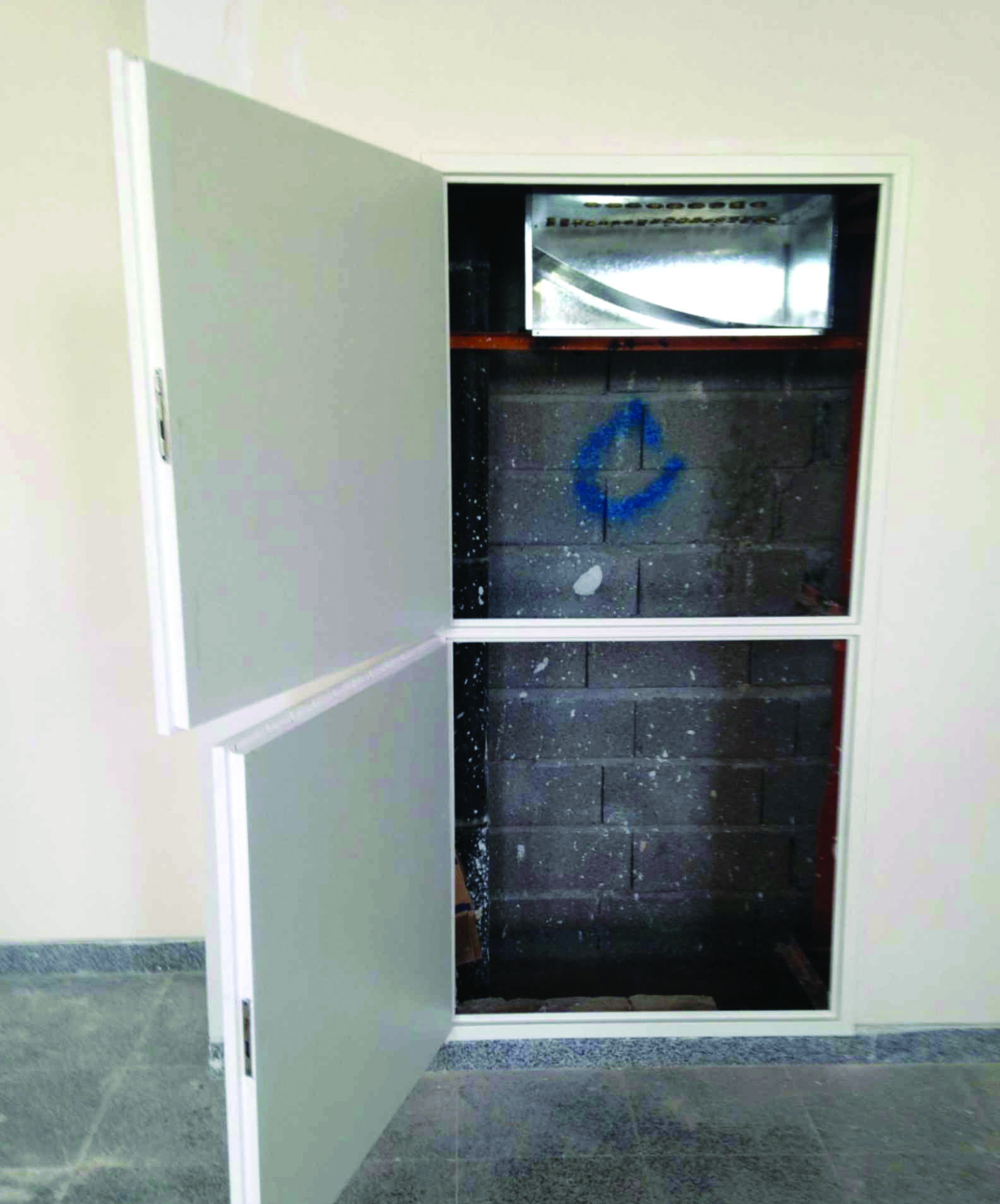
The intelligence of the university buildings extends further still, through the provision of regular vertical and horizontal mechanical conduits at every macro module of the building. With these conduits in place, whenever new mechanical installations are required — such as a new exhaust system for a laboratory or new infrastructure — the building can adapt to the new requirement without demolition.
A striking example is data and computer networks, which have entered the workplace in less than twenty-five years, profoundly affecting all spaces and functions. The intelligent architecture of the university's units, with their vertical and horizontal conduits, adapts seamlessly to these new systems. If one compares the university buildings — more than forty years since the first complex came into operation — with buildings of the same age, it becomes evident that they differ little from their first day. No appended elements, whether mechanical or structural, are visible, and the buildings have largely maintained their original integrity.
Environmental Conditions of the Arid Climate, Vernacular Architecture, and Accessibility
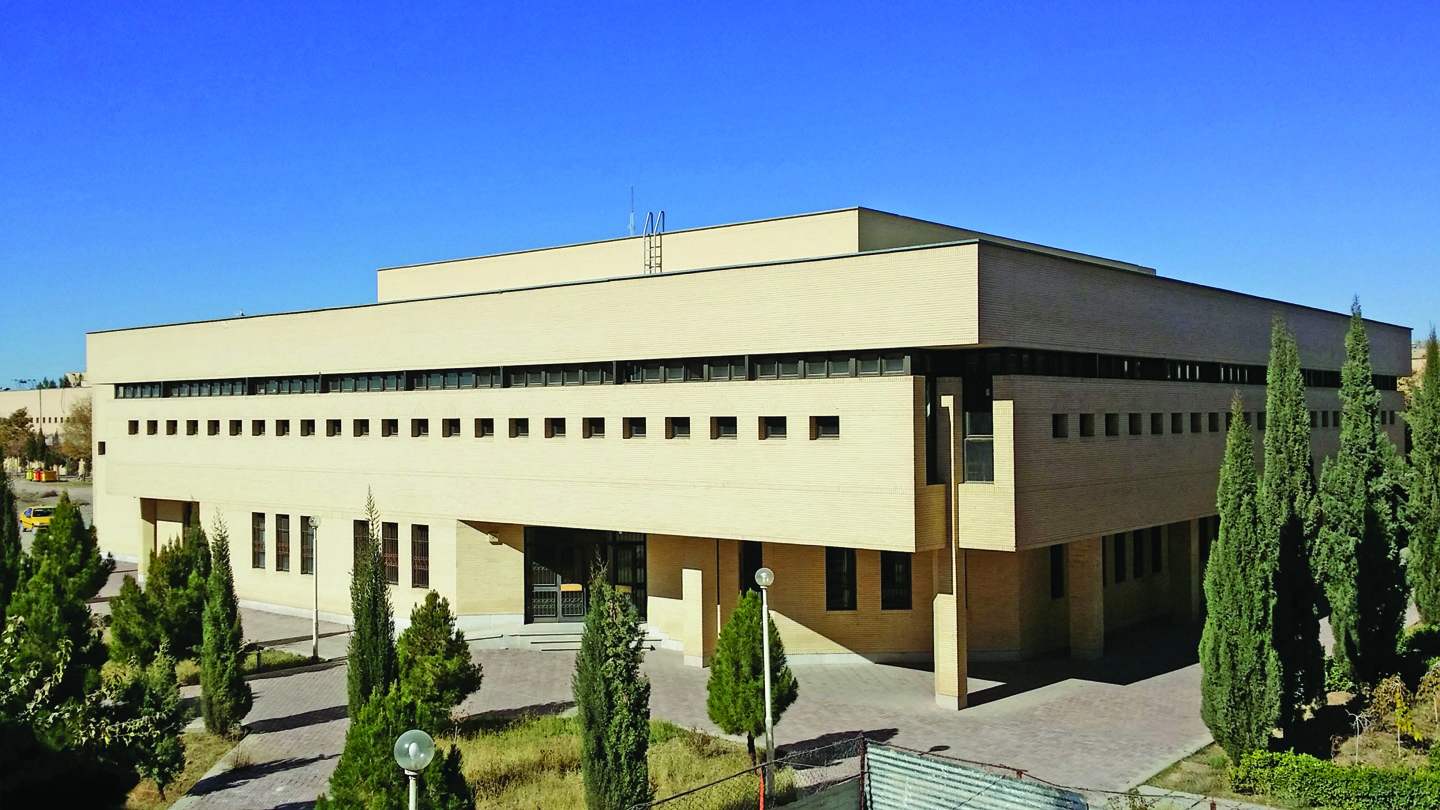
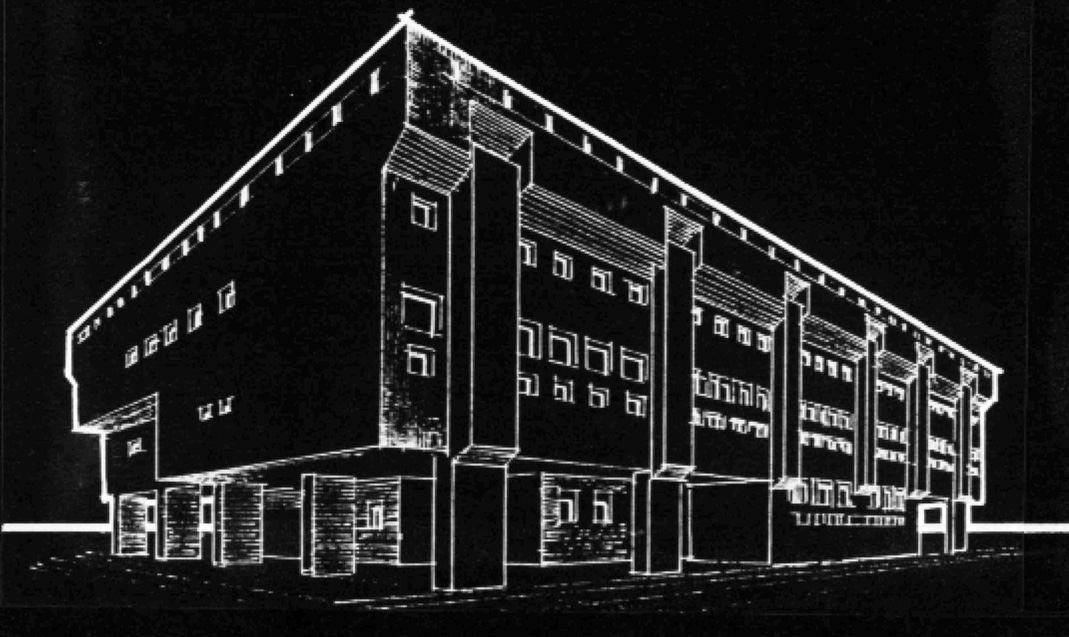
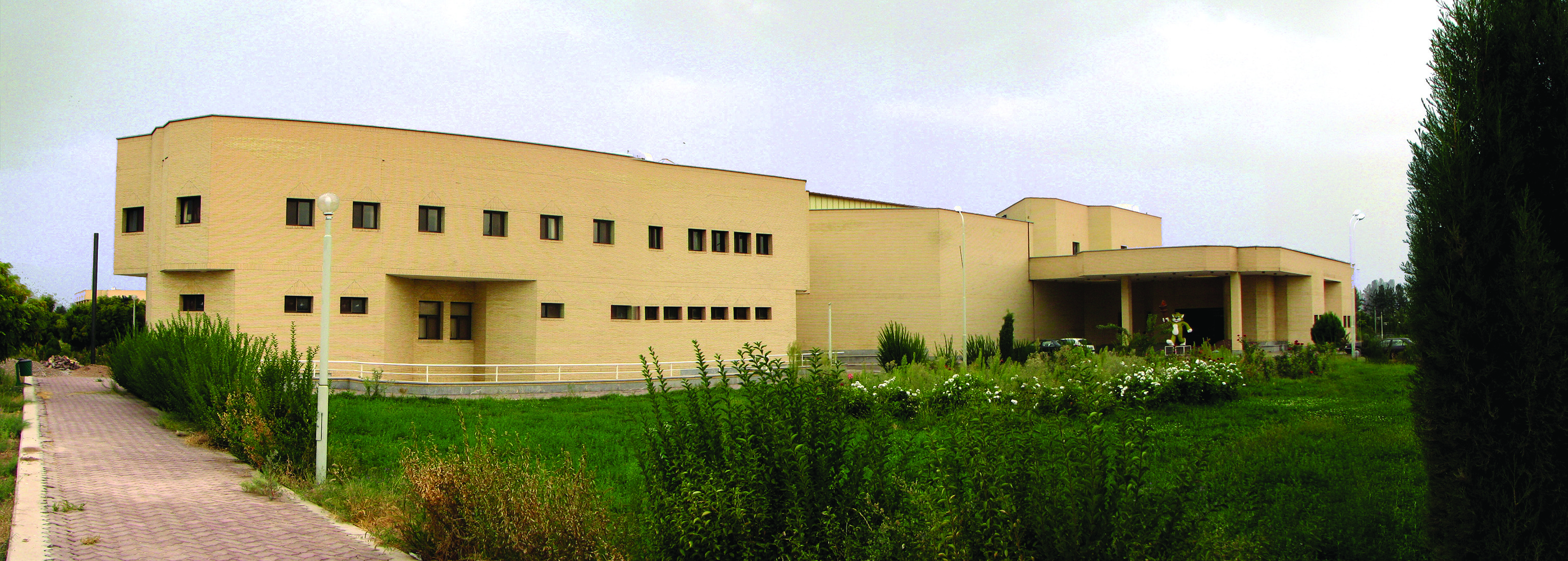
Another principal factor that has influenced the formation of the university complex is the environmental conditions of Kerman's hot and arid climate. The geographical orientation of the buildings — elongated along the east-west axis and facing north and south — the use of natural light from the north and south while avoiding the intrusive light from the west and east, the dimensions and proportions of windows, the number of stories and the height of units, attention to soil bearing capacity and Kerman's seismicity, as well as the costs of constructing tall buildings — all these have been factors leading to the formation of a fabric of buildings rising to a maximum of three stories.
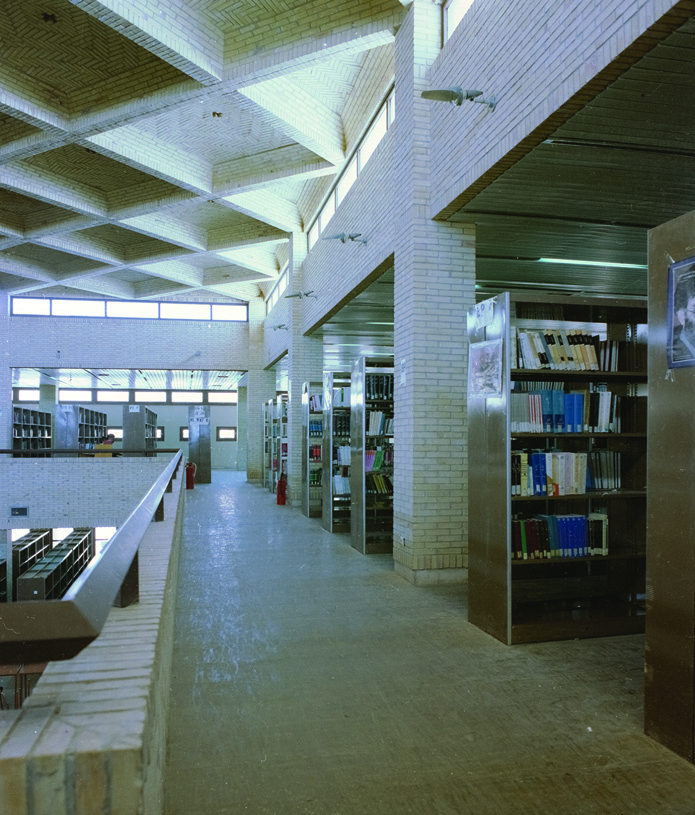
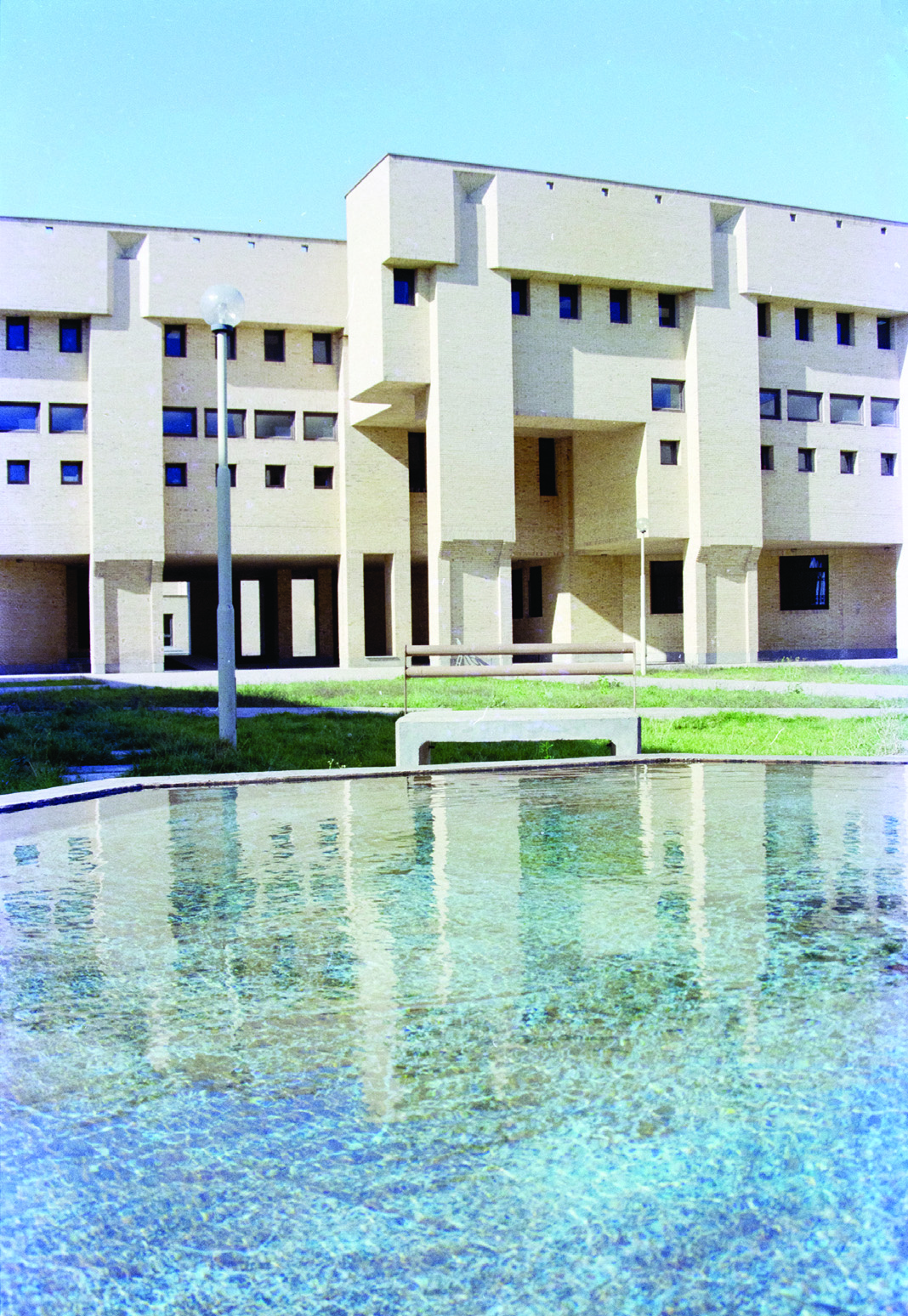
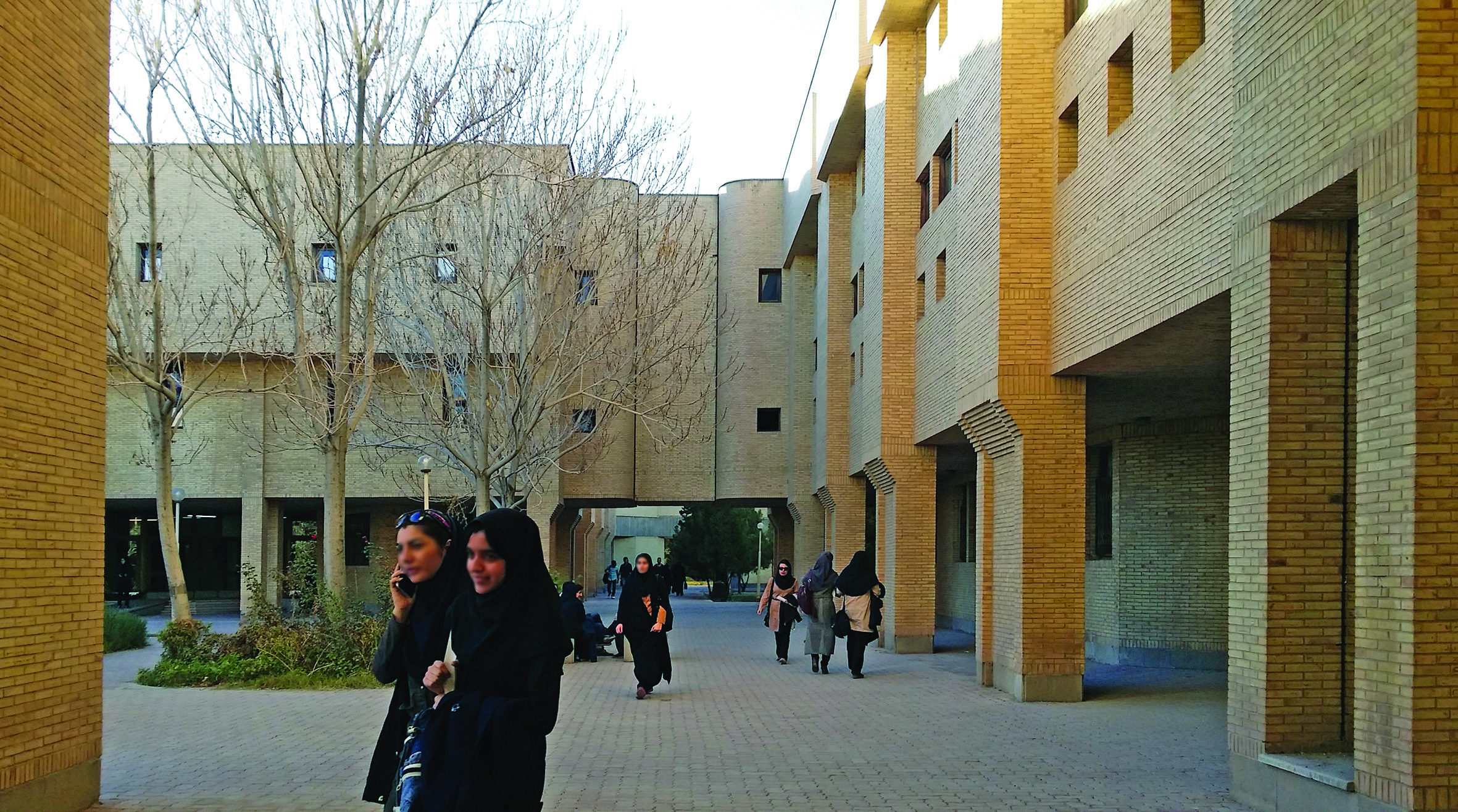
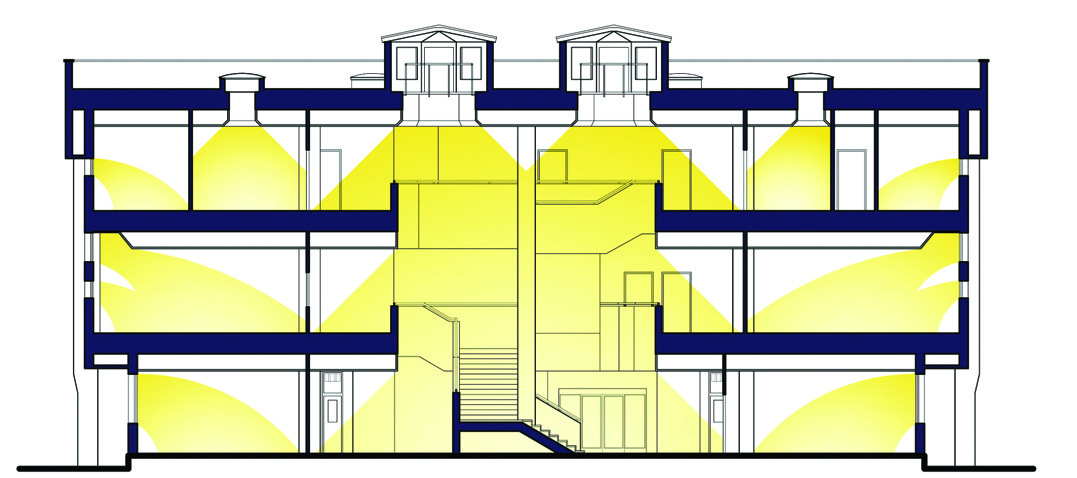
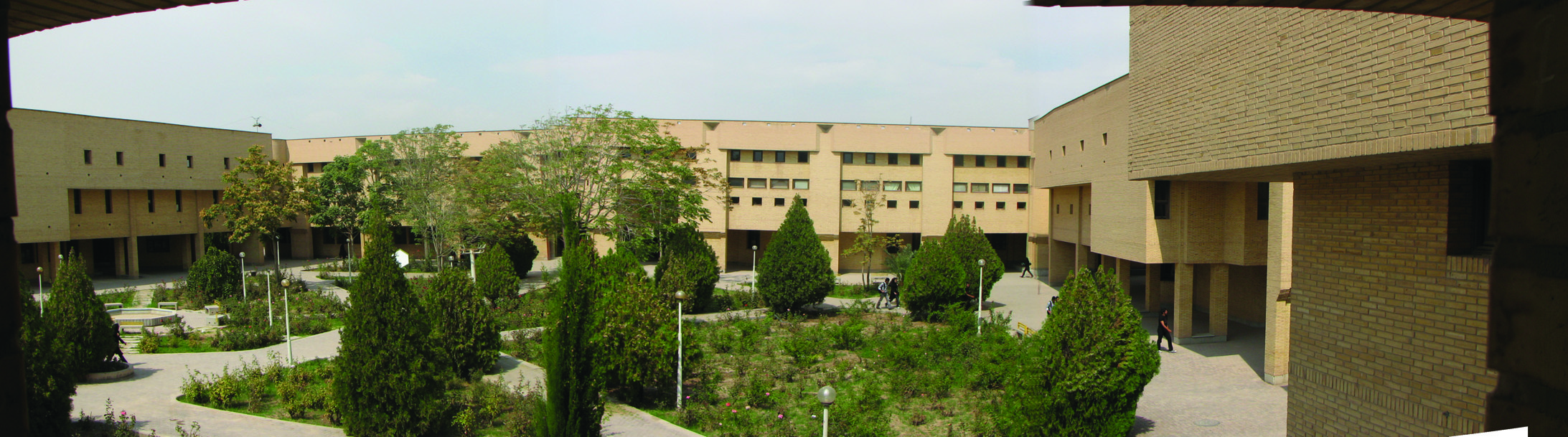
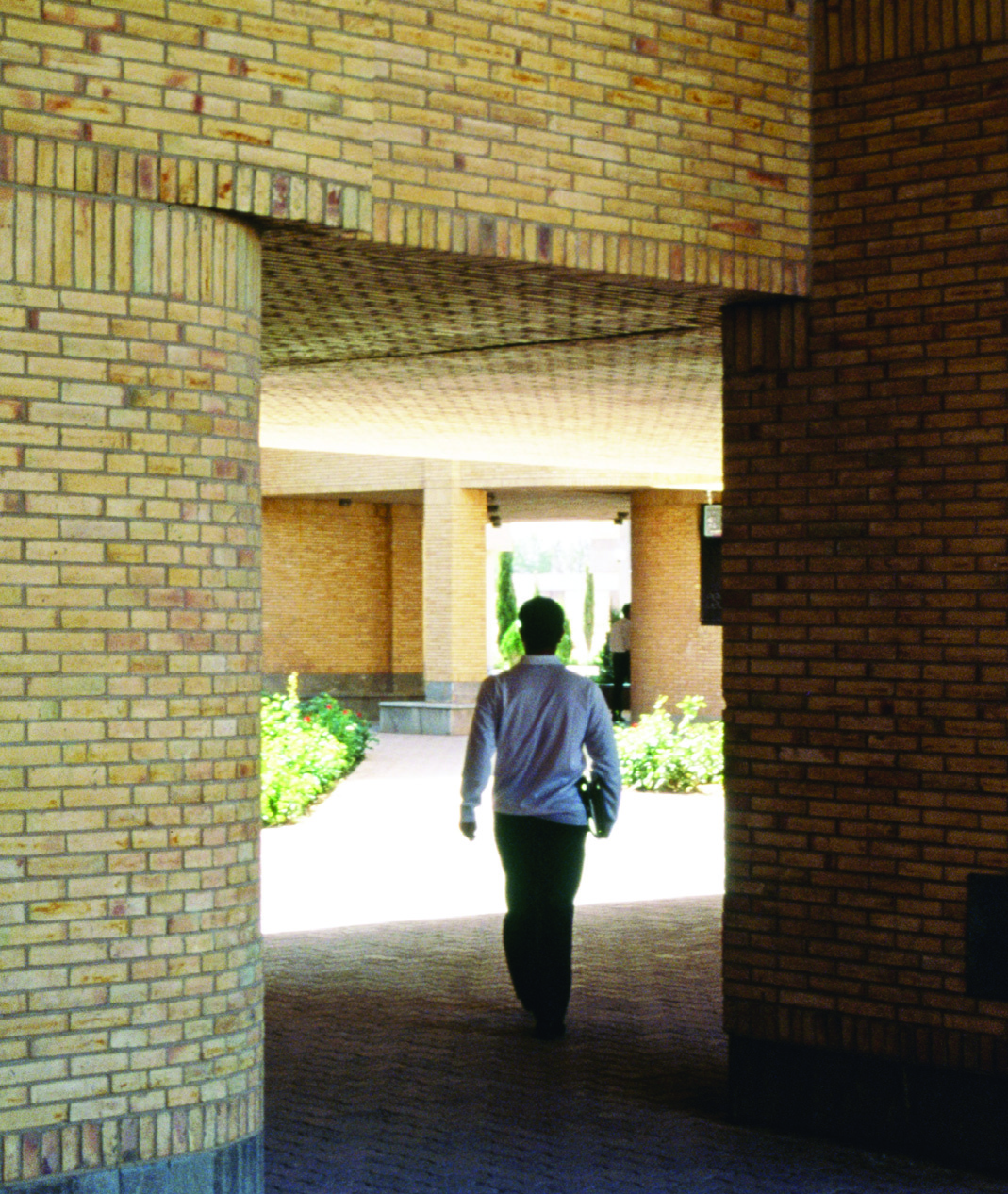
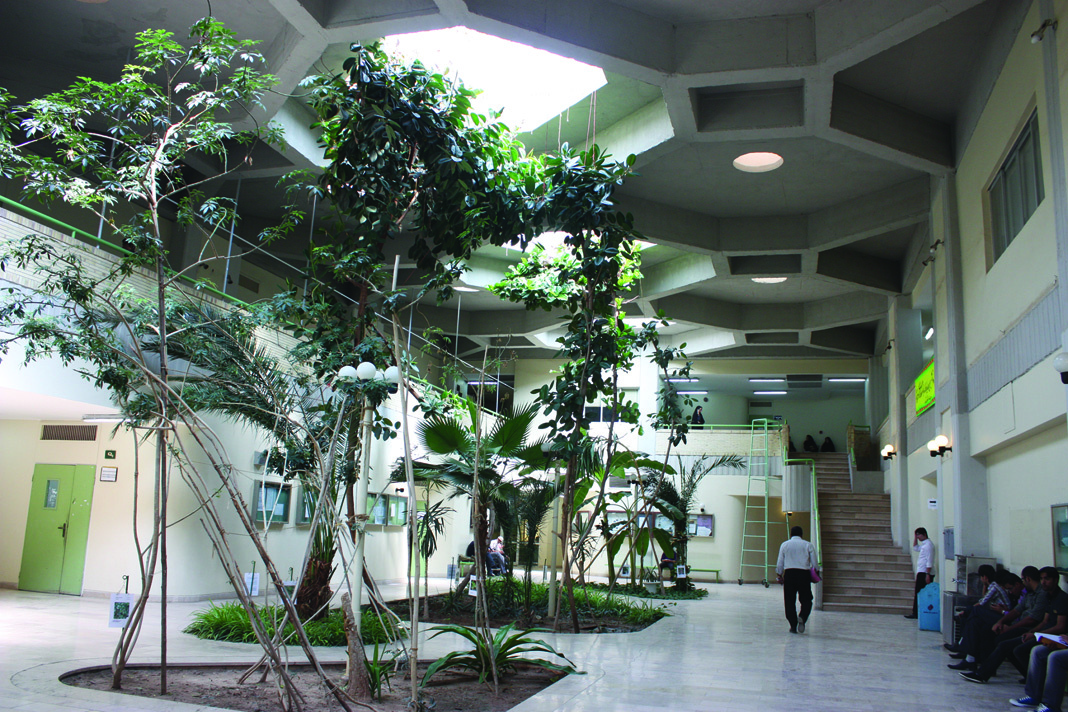
Their composition draws inspiration from the organic traditional fabric of desert cities, arranged around green courtyards of varying dimensions. A principal courtyard, larger than the others, forms the heart of the educational core, surrounded by elements such as the central library, large lecture halls, and basic sciences department units, while other academic departments with smaller courtyards radiate outward from this center.
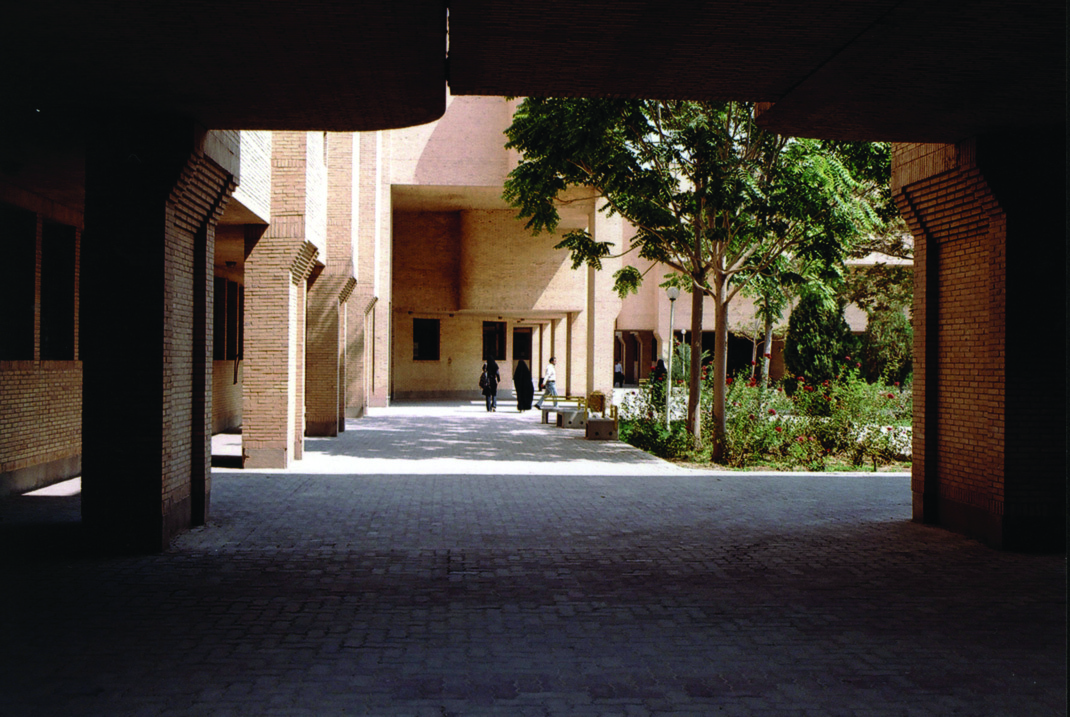
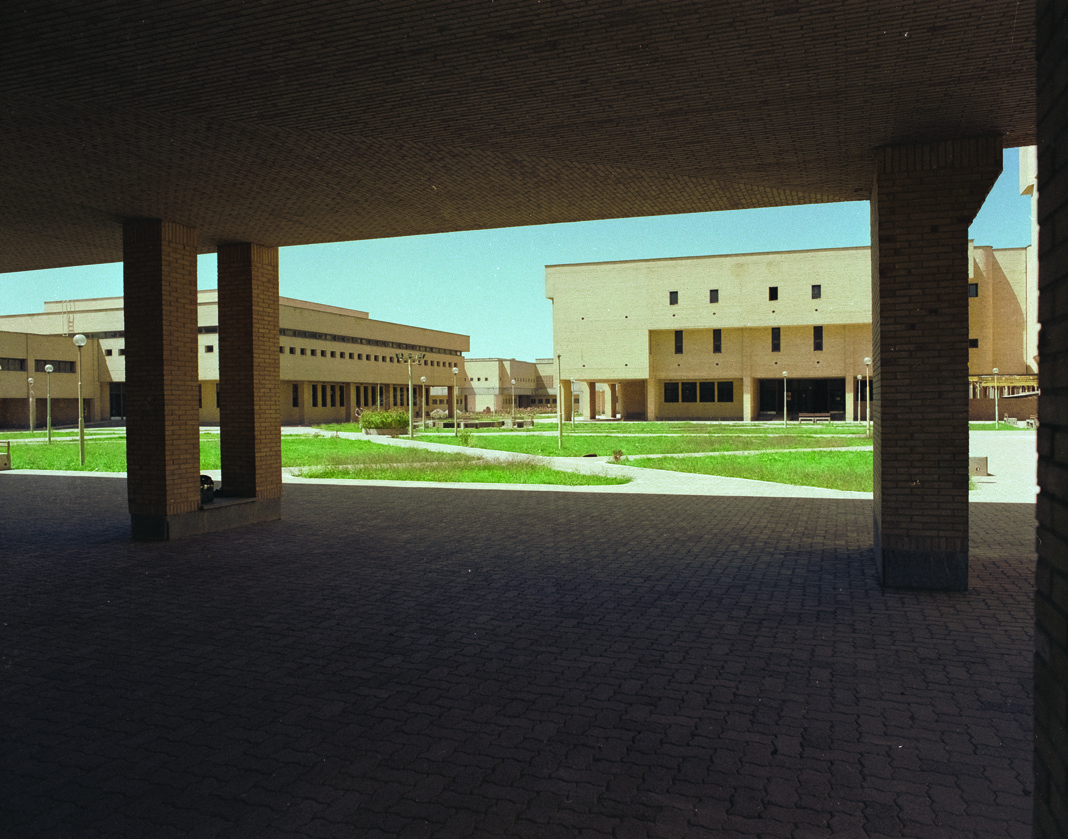
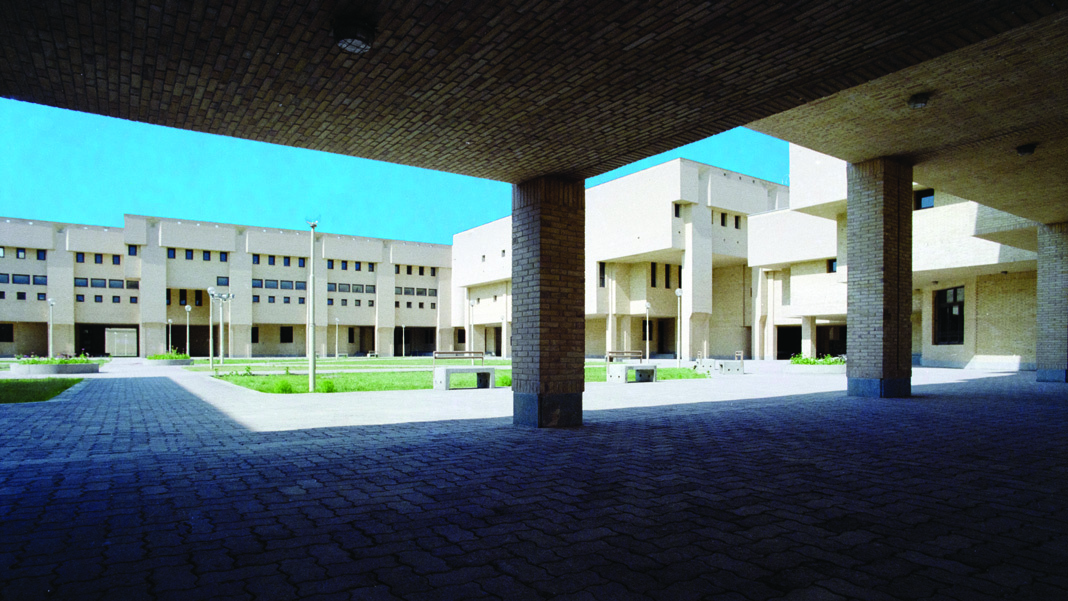
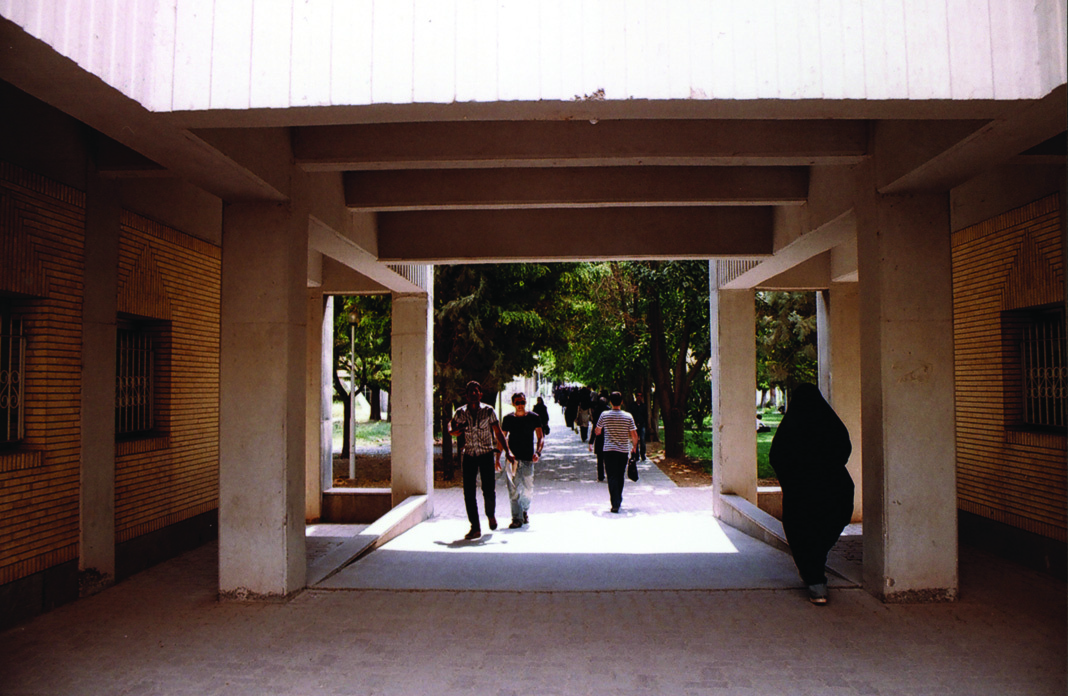
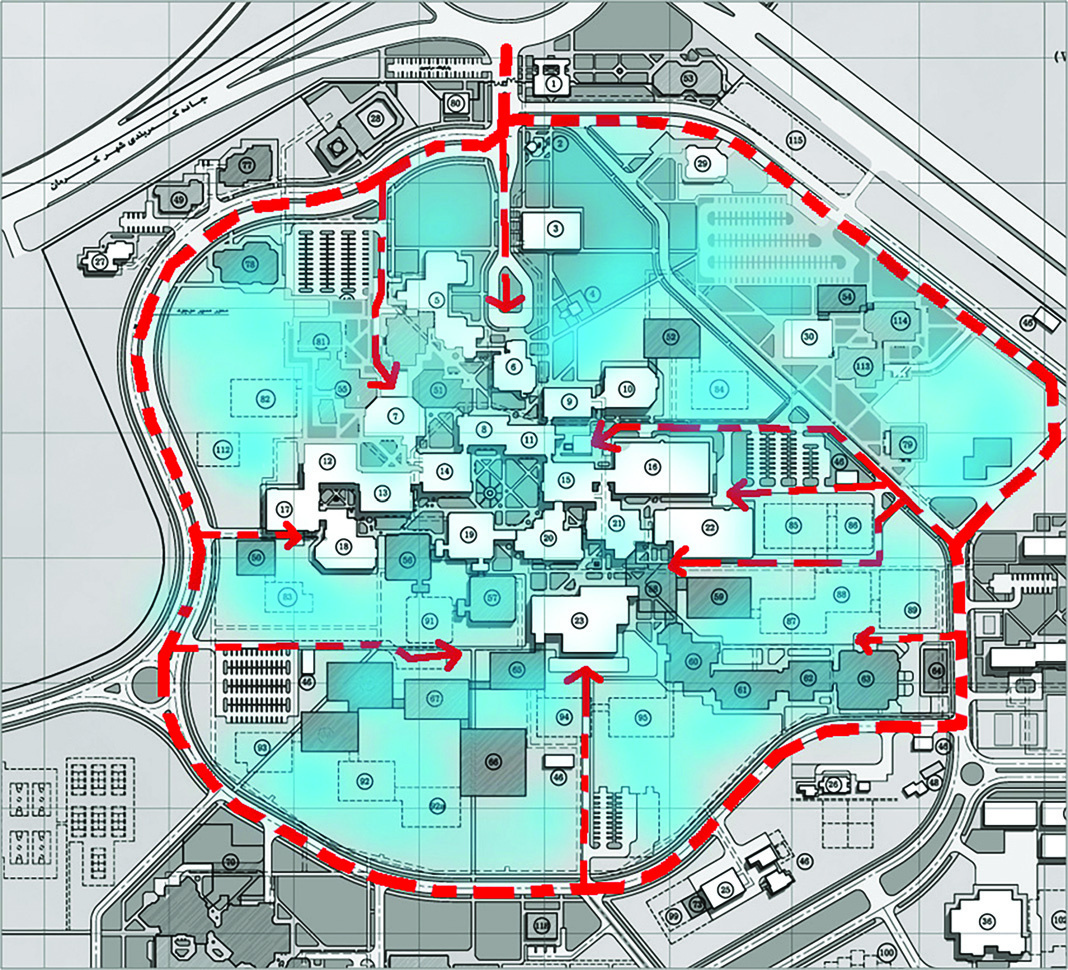
All these courtyards and the educational core constitute a safe passage zone for pedestrians and persons with disabilities. Vehicular and emergency access to the units is provided via a ring road without interference with pedestrian routes. This core is level in elevation, and those entering through the university's main entrance gate — including persons in wheelchairs, the elderly, the visually impaired, and able-bodied individuals — can reach all buildings and grounds with complete safety, without encountering any level change.
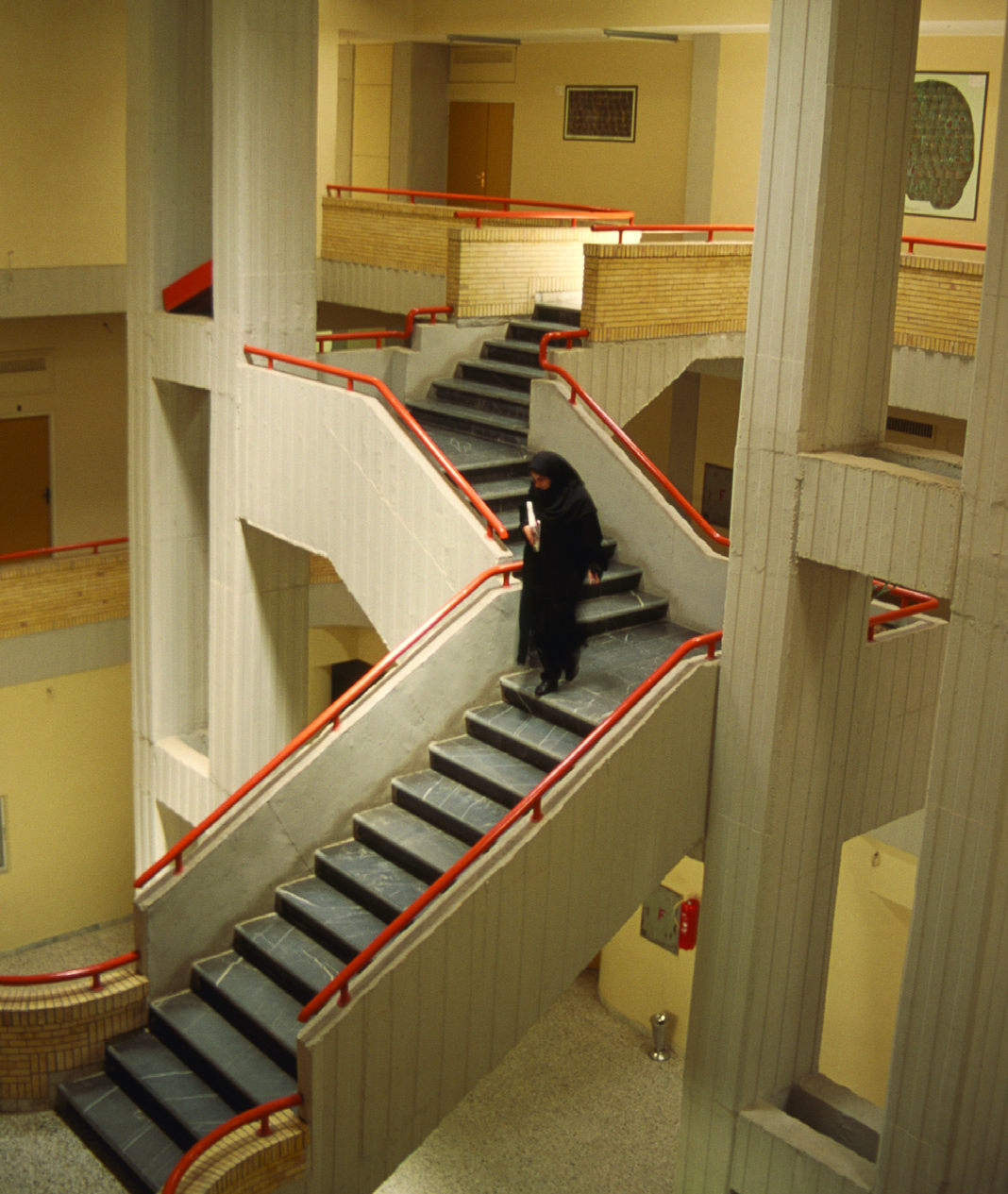
The presence of connecting bridges on the upper floors of the educational blocks transforms the entire educational complex into a continuous structure. This continuity provides further climatic benefits: individuals can access all necessary educational spaces during extremely hot or cold seasons, or in dusty weather, without needing to exit the interior spaces of the buildings. In temperate seasons, these bridges also serve as shelters for people in the open spaces between buildings.
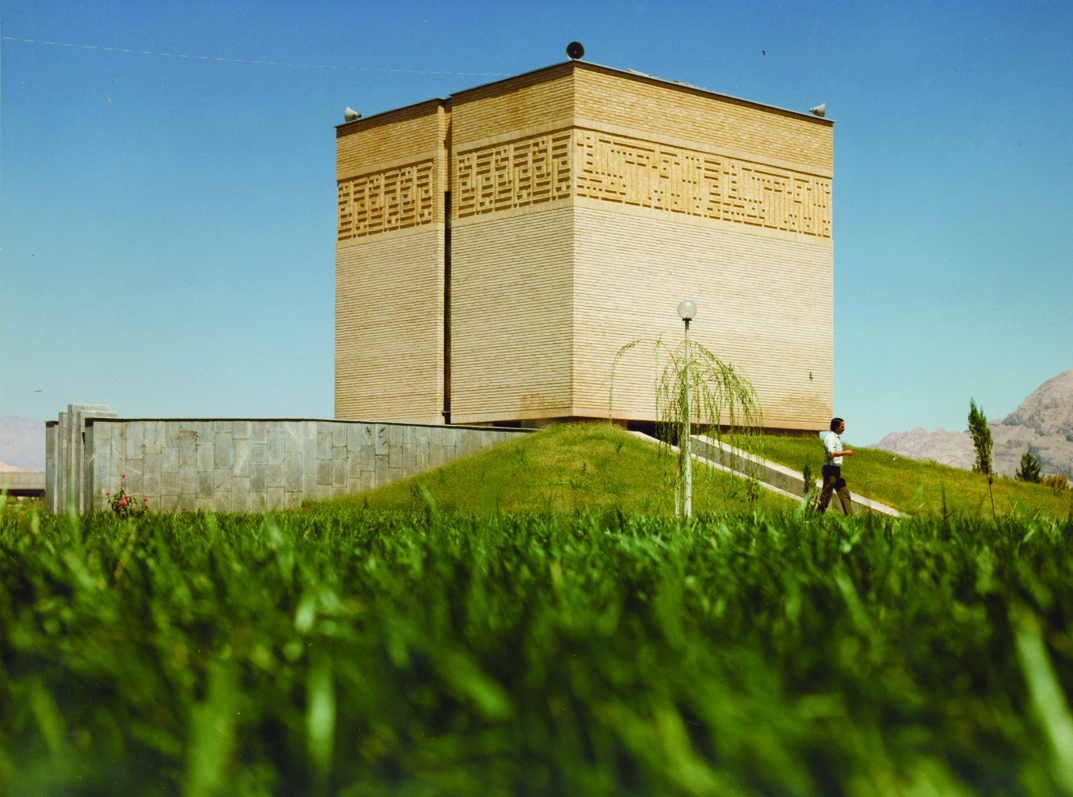
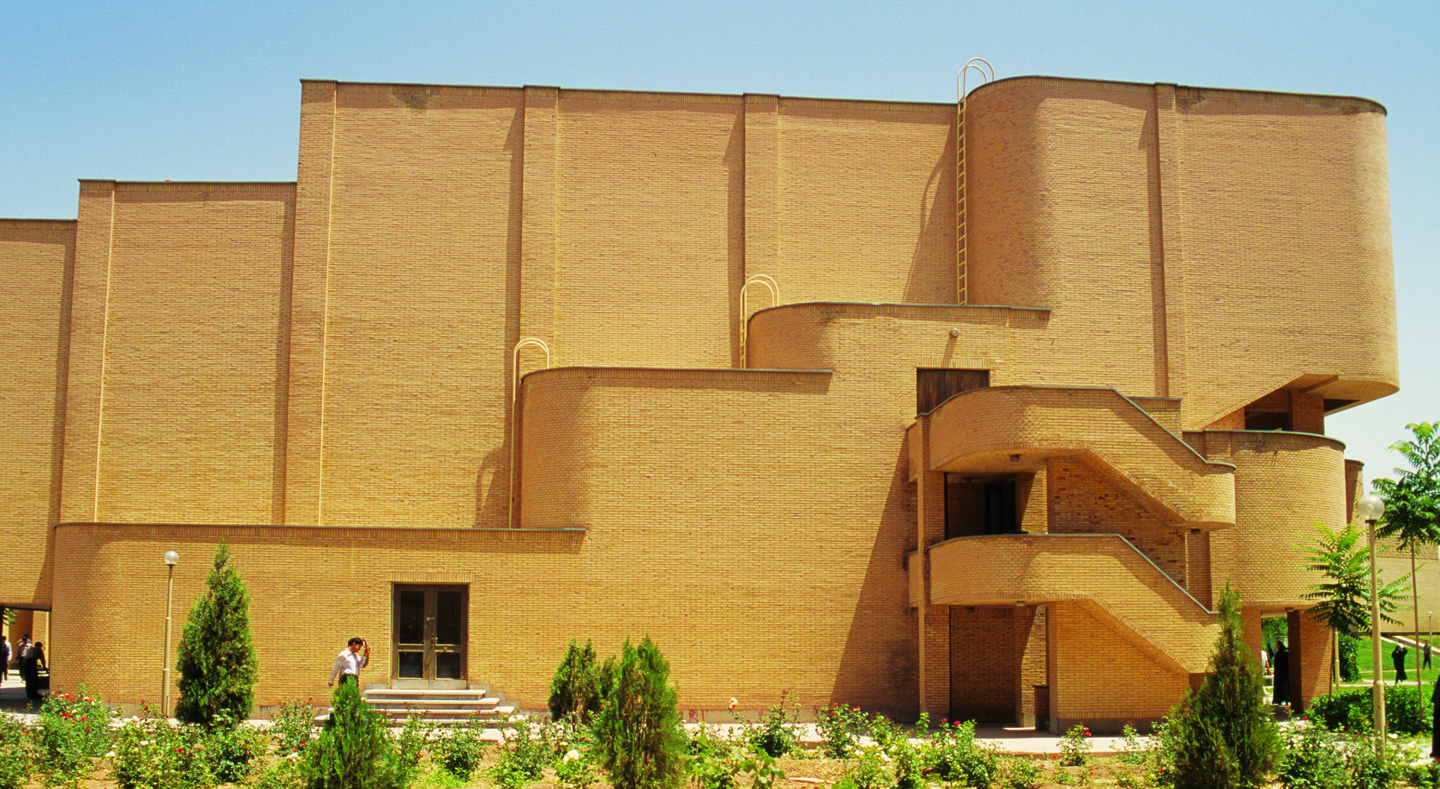
The structural material of the buildings is steel frame, and during the period from 1364 to 1372 [1985–1993], concrete frame was used due to requirements of the Plan and Budget Organization. The predominant infill material in walls and ceilings consists of brick from safal clay — a locally sourced material — and efforts were made not only to create an architecture harmonious with the local environment but also to support the development of local building technologies.
The Role of Architecture in Enhancing Social Encounters
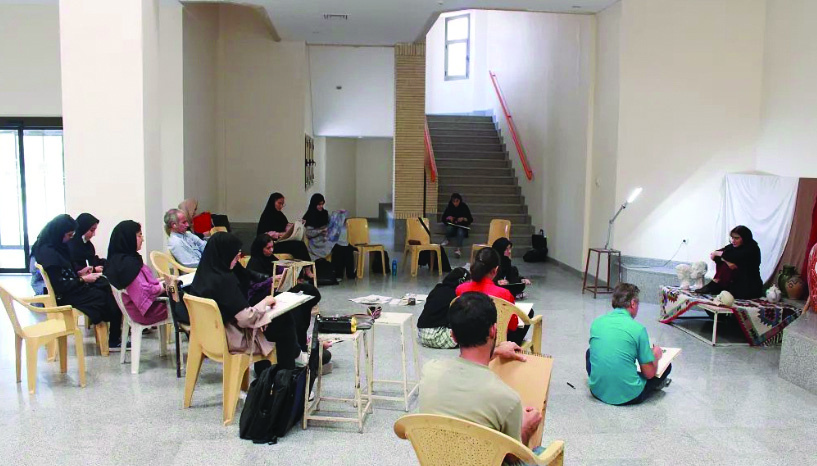
Among the original ideas underlying the formation of the master plan was the creation of opportunities and encouragement for encounters among students, professors, and researchers from different disciplines — in circulation and gathering spaces within buildings, the central library, general classrooms, shared facilities, and courtyards. This was intended to foster greater acquaintance, socialization, and the formation of discussions beyond the prescribed frameworks of the educational program, to elevate the general knowledge of university graduates, and to prevent the emergence of one-dimensional specialists.
This structural continuity and the atrium-bearing buildings of the university encourage such interactions and prevent the emergence of students who engage only with a particular group of academics. A research paper at the University of Yazd, conducted by Dr. Ali Shahabinejad and Zohreh Karimi Nasab, established that at Shahid Bahonar University of Kerman — as a comprehensive university campus with distinctive interconnected buildings — architecture had a profound impact on enhancing social interactions, and the courtyards between blocks were the primary sites of these social interactions among students.
"First of all, we were not extravagant, and we did not pursue the design of ostentatious buildings that would leave our aspirations unfulfilled. Based on the expectations we had, we designed this project for a country that needs an economical and functional university, and it was executed reasonably well. That is to say, no one greatly interfered with it."
— Mohsen Mirheidar, Project Manager
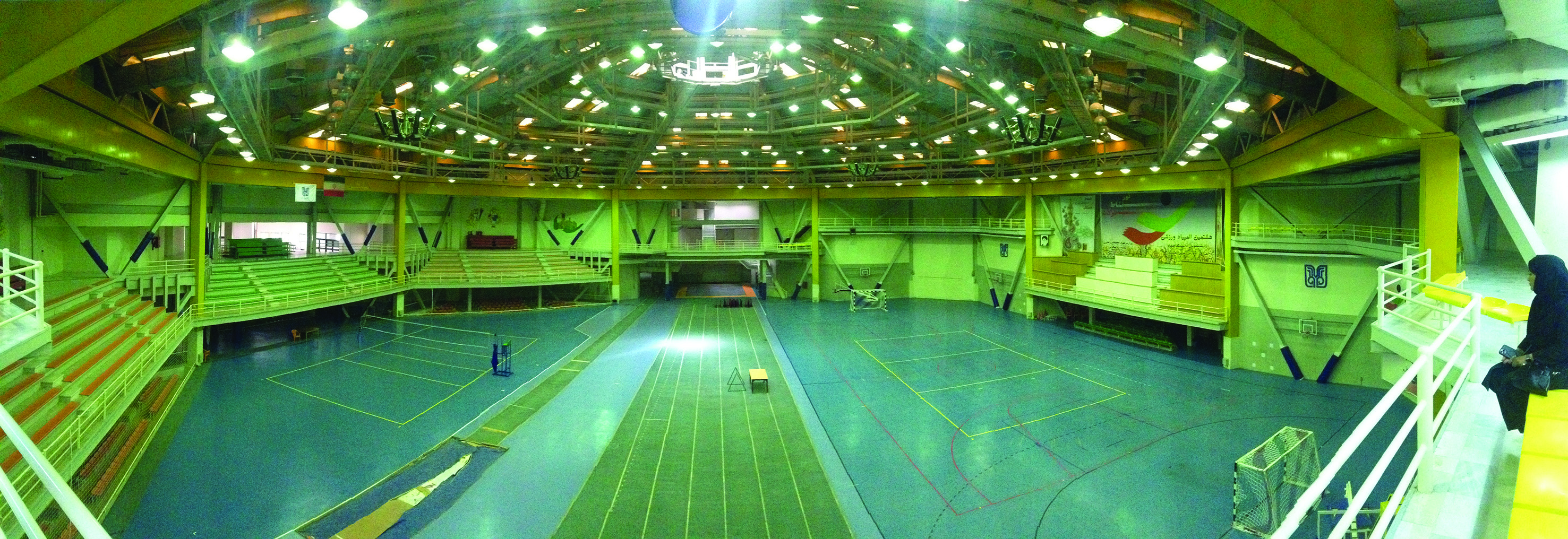
Faculty of Physical Education
Faculty of Agriculture
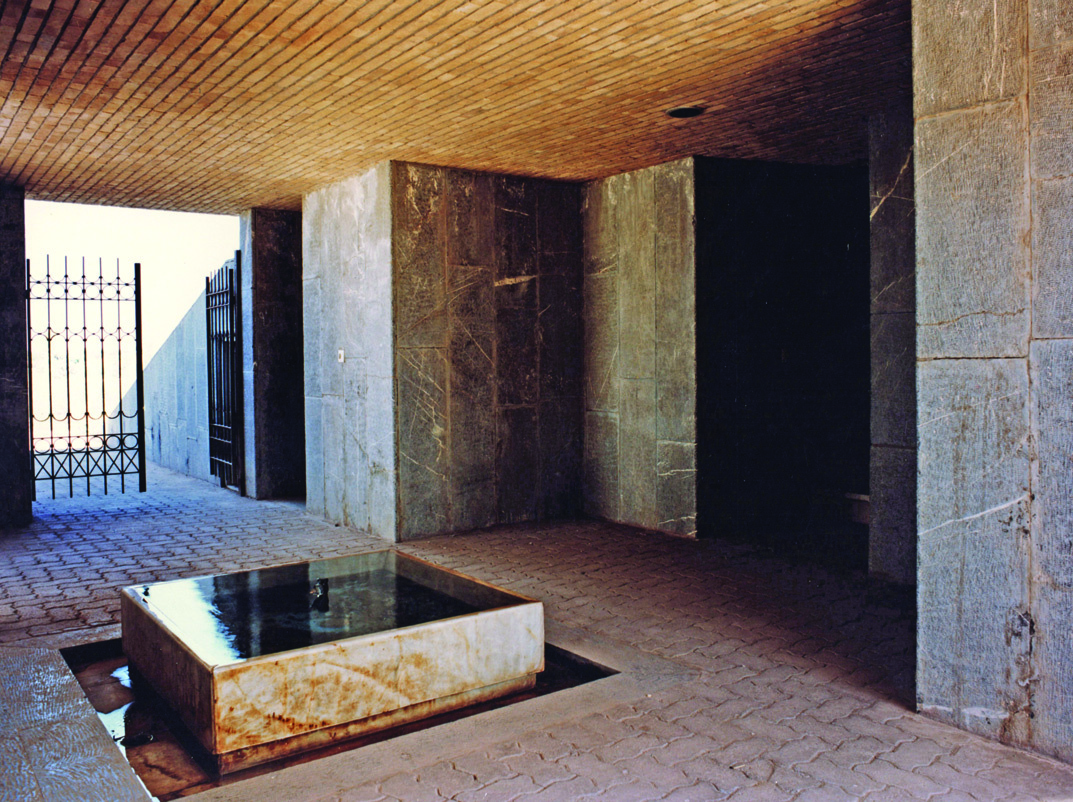
Prayer Hall
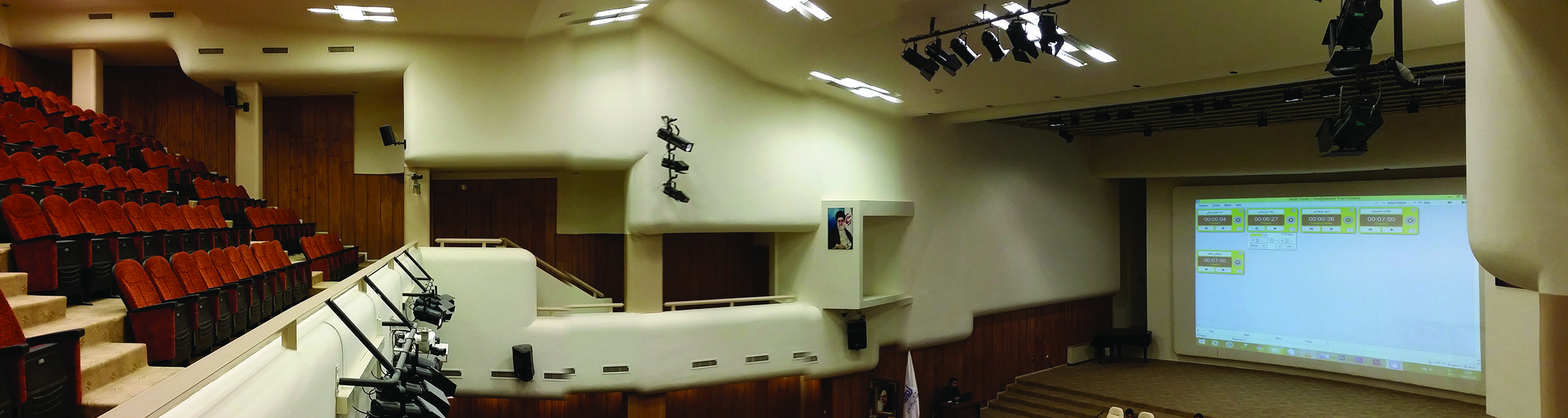
Conference Hall
Afzalipour Museum and Central Library