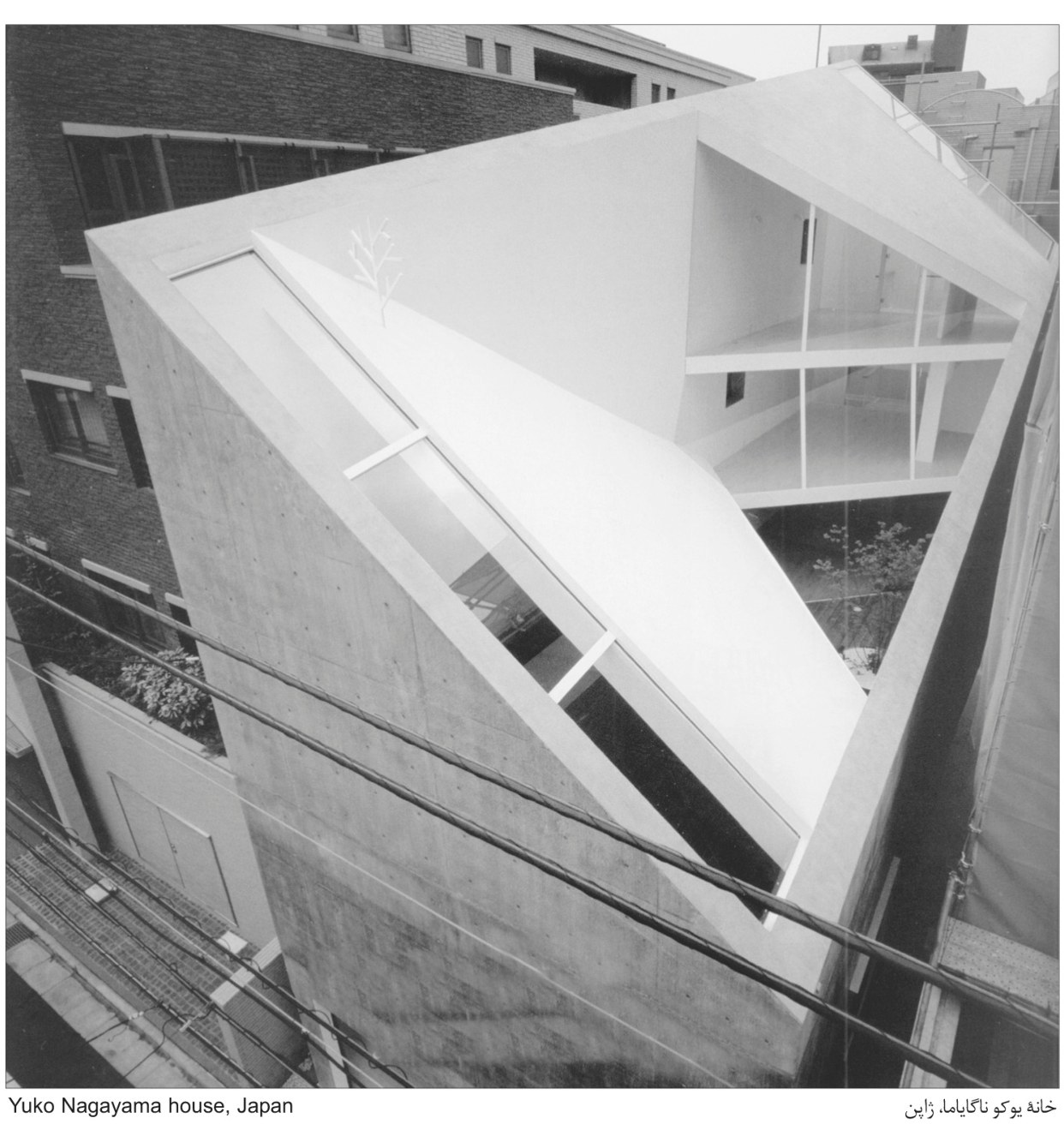
Competition is the lever of professional activities. In societies where the cornerstone of profit-seeking is hidden in life and of course in the economy, in labyrinths and in wrappings such as "service and sacrifice," competition as an unquestionable value is so pervasive and weighty that it has turned life into an almost endless marathon. At the same time, valuing competition and the principle "to each according to their merit" is considered a means of maintaining justice and equity, and an effective lever for improving quality. Awards and competitions find meaning in this context, and although their scale and scope are an indicator of the progress and development of various societies, like all phenomena of life, they are not as simple as they appear.
Architectural competitions, in a general classification, are divided into two groups: design competitions and awards. Design competitions are the arena of direct competition for securing architectural commissions, while awards — which primarily recognize completed works or accomplished efforts — represent the indirect arena. The history of such competitions in Iran dates back to the emergence of modernization processes and the establishment of new civilizational institutions at the beginning of the present century.
General Characteristics of Seven Editions
On 9 November 2007, at a ceremony held in Iran National Library, Tehran, the winners of this year's Memar Award for public buildings were announced. This cycle's award fund was 170,000,000 Rials and 46 projects were presented to the award. The seventh edition was dedicated to public buildings constructed after 2001 that had not previously participated in the Memar Award.
The members of the High Advisory Council for this edition were: Dr. Giti E'temad, and Engineers Seyed Mohammad Beheshti, Manouchehr Shokouhi, Bahram Firouz Sadri, and Ezzatollah Khajeh Nouri, who established the general principles and selected the jury members.
Jury Panel
Submissions & Judging
At the submission deadline, 49 projects were submitted, of which three were set aside due to irrelevance and incomplete documentation. The composition of the remaining 46 projects was: 15 office buildings, 3 factories, 3 banks, 3 commercial-office buildings, 2 educational and multi-purpose complexes, 3 educational buildings, 2 chain restaurants, 3 shopping centers, 2 cinema complexes, 3 museums, 1 library, 1 mosque and kindergarten, and 4 renovation projects.
Jury sessions were held on the 12th and 13th of Aban (November 3-4, 2007) with Engineer Seyed Mohammad Beheshti as the observer from the High Advisory Council. Following the annual judging procedure, first in the elimination round, projects were reduced from 49 to 17 that advanced to the second round as jury selections. Five winning projects were then identified.
Prize Distribution
| Place | Project | Firm / Architects | Prize (Rials) |
|---|---|---|---|
| 1st | Paykar Bonyan Panel Factory, Parand | ARAD Design Co. (Bahram Kalantari, Kourosh Dabagh) | 100,000,000 |
| 2nd | Ehsan Poud Textile Factory, Qom Highway | Abbas Riahi Fard, Kamran Heirati, Hooman Balazadeh | 30,000,000 |
| 3rd | Shali Shop, Amol | Arsh Design Group | 20,000,000 |
| 4th | Pol Roomi Office Building, Tehran | Fluid Motion Architects (Catherine Spiridonoff, Reza Daneshmir) | 10,000,000 |
| 5th | Mehregan Office Building, Tehran | Zavieh Architecture Office (Mehdi Marzyari, Maryam Alavi) | 10,000,000 |
Jury Commentary
The jury's opinions on the seventh edition's participating works can be summarized as follows (Mr. Derakhshani was absent from the first jury session due to a flight delay):



