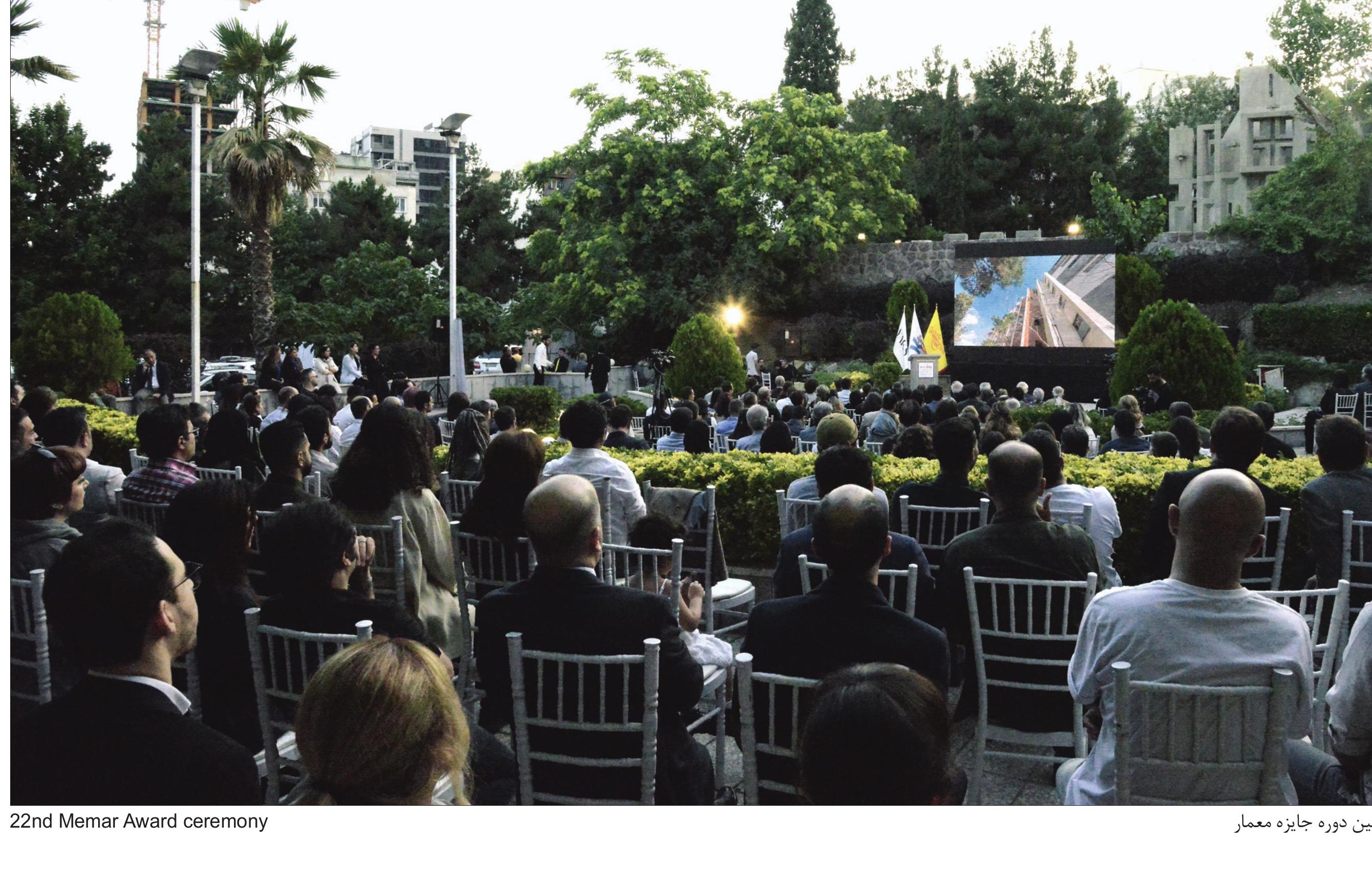
22nd Memar Award Jury Report
Memar Award Report — Memar 140, dedicated to the 22nd Memar Award
Memar 140, dedicated to the 22nd Memar Award, is in fact the complement to Memar 136 — an unprecedented case arising from the particular social conditions and the judging process of 1401 SH (2022). In the editor's note of Memar 136, the magazine's analysis of the social situation and the judging is presented; we do not repeat it here. In that issue, two pages were devoted to every project that had advanced to the second stage. In Memar 140, as in previous years, the winners and the projects that reached the final stage (the finalists) of the 22nd Memar Award are introduced.
As in previous editions, the competition of the 22nd Memar Award was held in two stages. In the first, knockout stage held on 12 and 13 Shahrivar 1401 (3 and 4 September 2022), 66 of the 269 projects whose dossiers had been submitted in the four groups — Single-Unit Residential, Apartment Residential, Renovation, and Public — were advanced to the semi-final stage. Three projects belonging to a single architectural office withdrew from further competition.
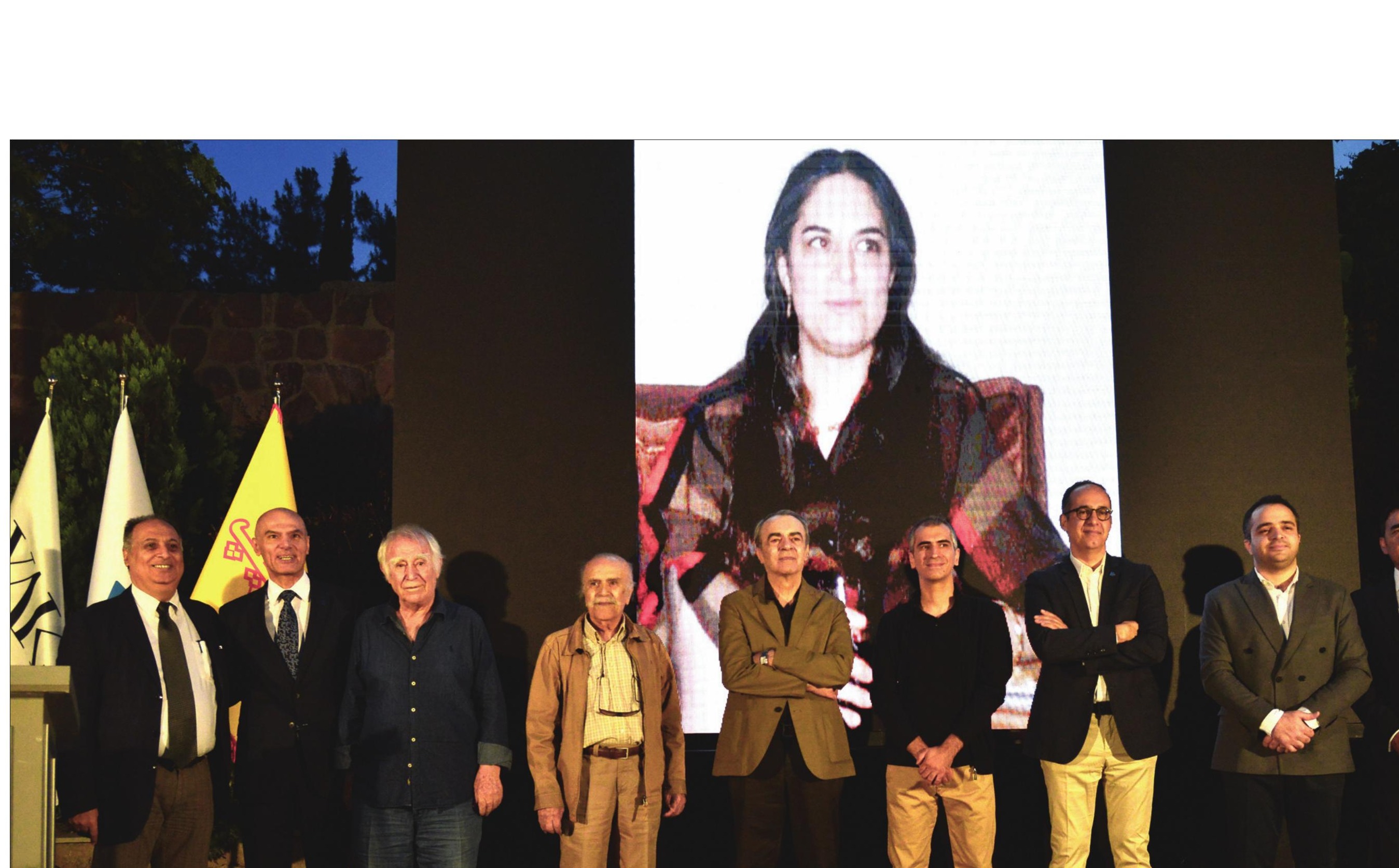
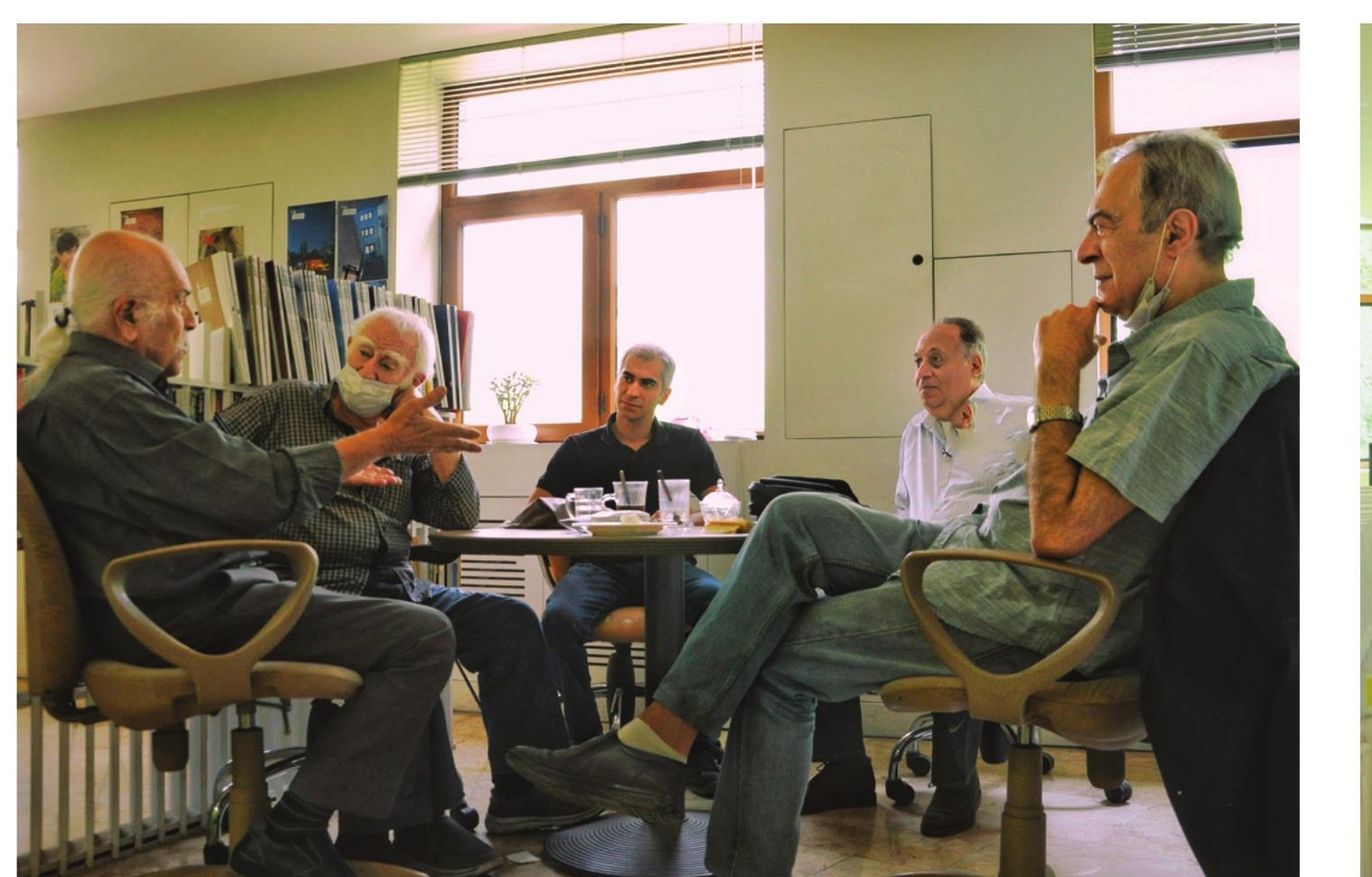
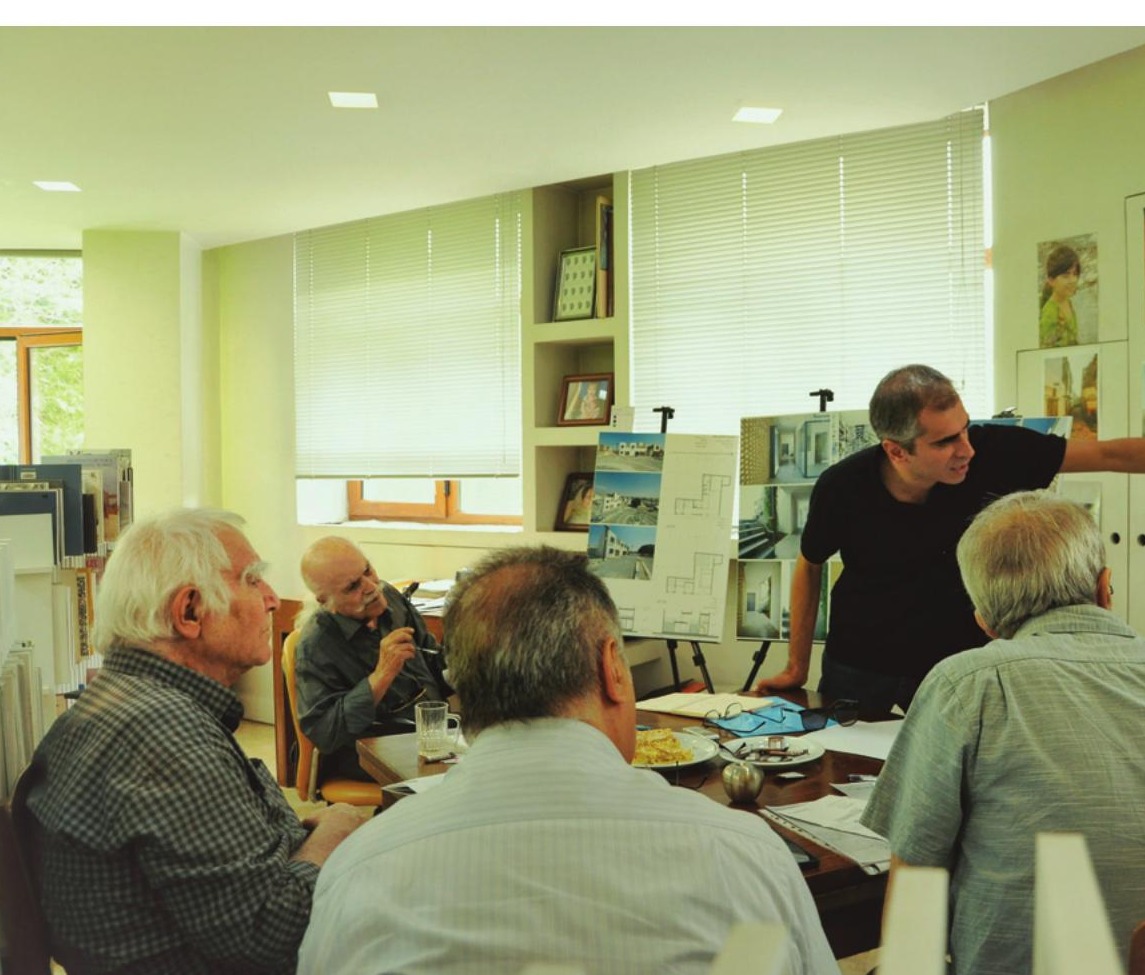
The second-stage judging was held on 8 and 9 Khordad 1402 (29 and 30 May 2023). 41 projects advanced to the final stage, of which 15 were selected as winners. The second-stage jurors of the Memar Award were Mehdi Alizadeh, Cyrus Bavar, Majid Ghamami, Ehsan Hosseini, and Armand Dror.
Those who attended past Memar Award ceremonies will recall that in some years, on suitable occasions, short films about architects, urban spaces, and related subjects have been shown. Among these films: Abdolaziz Farmanfarmaian, Kamran Diba, Suspension, From Hosseiniyeh Ershad to Bagh-e Sefarat-e Englis, Baluchistan, Gileva, and others.
On the occasion of the publication of Memar 135, devoted to Iranian local and vernacular architecture (Bushehr), a film about Bushehr titled In Search of the Wind was produced and screened at the opening of this ceremony. The film is available on the Memar Telegram channel (@memarnashr) and the Memar Instagram page (memar.magazine).
Judging Criteria
The criteria for judging Memar Award projects are as follows:
- Creativity and innovation in design, and innovation in the use of building materials and technology
- Creative engagement with the project's particular constraints, including: economic limitations, special site conditions (dimensions and proportions), legal regulations and procedures (especially in cities), technical difficulties, etc.
- Precision and innovation in the design of details
- Attention to the surrounding environment and climatic conditions, environmental values, and social commitments
It is self-evident that the final judgment of any project is not made by assigning scores in each of these categories and averaging them, but by judging the project as a whole.
Program and Method of Judging Memar Award Projects
The projects are divided into four groups — Apartment Residential, Single-Unit Residential, Public, and Renovation — and the following stages are followed for each group:
- All projects of the same group are presented together for the jurors' review. After all have been seen, the projects that all jurors reject are set aside; even if a single juror argues for a project to remain, it will not be removed. Each juror is given a page of coloured labels in their own colour, and at this stage each label represents that juror's negative vote against a project. The remaining projects advance to the semi-final stage.
- From the semi-final stage projects, each juror selects their preferred projects without ranking, marking them with their own label, which now represents an affirmative vote. Projects that no juror has selected as preferred are removed. The selected projects are considered finalists.
- Each juror separately selects their first, second, and third place choices from among the finalists. 3 points are assigned to first place, 2 points to second, and 1 point to third. The sum of points across all jurors determines the first-, second-, and third-place results.
- The jurors may declare some finalists worthy of special recognition. If the other jurors agree, this designation becomes official. The tables of results follow.
Results — Single-Unit Residential
| Juror | 1st (3 pts) | 2nd (2 pts) | 3rd (1 pt) |
|---|---|---|---|
| Cyrus Bavar | Ordibehesht Garden House | Anar Villa | Sarvestan Villa |
| Ehsan Hosseini | Khaneh-ye Doust | Khaneh-ye Daroun | Mohammad Ghanavati Building |
| Armand Dror | Borj Garden House | Khaneh-ye Daroun | Espeh House |
| Mehdi Alizadeh | Khaneh-ye Daroun | Khaneh-ye Doust | Espeh House |
| Majid Ghamami | Khaneh-ye Daroun | Khaneh-ye Doust | Villa Zi |
Final results: 1. Khaneh-ye Daroun (10 pts); 2. Khaneh-ye Doust (7 pts); 3. Ordibehesht Garden House (3 pts); 3. Borj Garden House (3 pts); 4. Anar Villa (2 pts); 4. Espeh House (2 pts); 5. Sarvestan Villa (1 pt); 5. Mohammad Ghanavati Building (1 pt); 5. Villa Zi (1 pt).
Results — Apartment Residential
| Juror | 1st (3 pts) | 2nd (2 pts) | 3rd (1 pt) |
|---|---|---|---|
| Cyrus Bavar | Iwan-Khaneh | Dolaft Residential Building | Afshar Family Residential Building |
| Ehsan Hosseini | Iwan-Khaneh | Khaneh Do-Bar | Afshar Family Residential Building |
| Armand Dror | Dolaft Residential Building | Small Square | Afshar Family Residential Building |
| Mehdi Alizadeh | Iwan-Khaneh | Dolaft Residential Building | Khaneh Do-Bar |
| Majid Ghamami | Dolaft Residential Building | Mian-Baft 124 Apartments | Khaneh Do-Bar |
Final results: 1. Dolaft Residential Building (10 pts); 2. Iwan-Khaneh (9 pts); 3. Khaneh Do-Bar (4 pts); 4. Afshar Residential Building (3 pts); 5. Small Square (2 pts).
Results — Renovation
| Juror | 1st (3 pts) | 2nd (2 pts) | 3rd (1 pt) |
|---|---|---|---|
| Cyrus Bavar | Henry Corbin | Bersin Café | Tetra Foodhall |
| Ehsan Hosseini | Hooneh Cultural Complex | Henry Corbin | White Renovation |
| Armand Dror | White Renovation | Henry Corbin | Tetra Foodhall |
| Mehdi Alizadeh | Si-o-Panj (35) | Hooneh Cultural Complex | Tetra Foodhall |
| Majid Ghamami | Tetra Foodhall | Hooneh Cultural Complex | White Renovation |
Final results: 1. Henry Corbin (7 pts); 1. Hooneh Cultural Complex (7 pts); 2. Tetra Foodhall (6 pts); 3. White Renovation (5 pts); 4. Si-o-Panj (3 pts); 5. Bersin Café (2 pts).
Results — Public
| Juror | 1st (3 pts) | 2nd (2 pts) | 3rd (1 pt) |
|---|---|---|---|
| Cyrus Bavar | Foodhall Didar | Kia Laboratory | Saman Mahvareh Office Building |
| Ehsan Hosseini | Kia Laboratory | Foodhall Didar | Pouneh-zar (Farm) |
| Armand Dror | Kia Laboratory | Foodhall Didar | Saman Mahvareh Office Building |
| Mehdi Alizadeh | Pouneh-zar (Farm) | Kia Laboratory | Foodhall Didar |
| Majid Ghamami | Foodhall Didar | Saman Mahvareh Office Building | Kia Laboratory |
Final results: 1. Foodhall Didar (11 pts); 1. Kia Laboratory (11 pts); 2. Saman Mahvareh Office Building (4 pts); 2. Pouneh-zar (Farm) (4 pts).
The Final Jurors of the 22nd Memar Award
In alphabetical order:
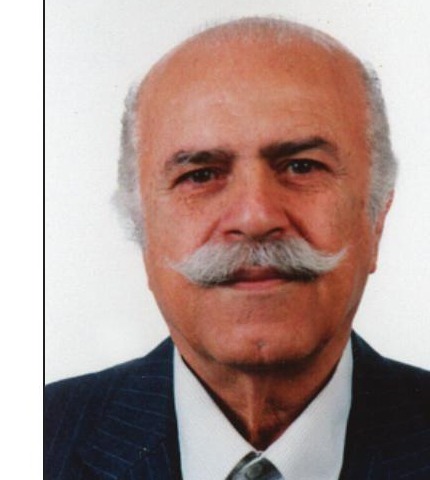
Cyrus Bavar
Born 1313 SH (1934) in Shiraz. Graduated in architecture from the Faculty of Fine Arts, University of Tehran, and earned his doctorate in architecture from the Faculty of Architecture, University of Florence, Italy. In addition to designing many houses and buildings, he has served as head of the Architecture Education group, head of the Urban Planning group, and faculty member of the Faculty of Fine Arts, University of Tehran (1350-58 SH / 1971-79); as a member of the jury for comprehensive urban plans at the Ministry of Housing and Urban Planning (1350-58 SH); as a founding board member of the first Tehran Architecture Council (1356 SH / 1977); and as director and designer of the comprehensive master plans of Shiraz, Yazd, and the industrial city of Saveh. He also participated in the Identity Renewal of Iranian Schools project under the National Schools Renovation Organization.
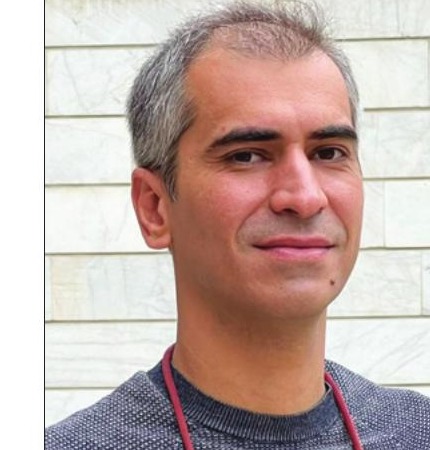
Ehsan Hosseini
Born 1360 SH (1981). Graduated in master of architecture from the University of Art. Since 1385 SH (2006) co-founder and partner of Farayand-e Manteghi office. Through years of professional practice focused on the rational shaping of design processes and human-centred design, he has received numerous awards: first place in the Ministry of Housing architecture and urban-design competition (1386 SH); second place at the Memar Award (1389 SH); second place at the Memar Award (1392 SH) for residential buildings; second place at the Memar Award (1394 SH) for residential buildings; first place at the 2A Asia Award (2016) for public buildings; second place at the 2A Europe Award (2017) for residential; first place at the SARCH 2017 Future Buildings section; third place at the Memar Award 96 (2017); first place in both multi-unit residential and single-unit residential sections of the Memar Award 1400 (2021). After teaching at the University of Art, Isfahan and at Azad universities, in 1394 SH he founded the Maan Memaran institute in Isfahan, a space for the interaction of different generations of architects and the transfer of professional experience. He collaborates as a visiting professor with GUTECH University.
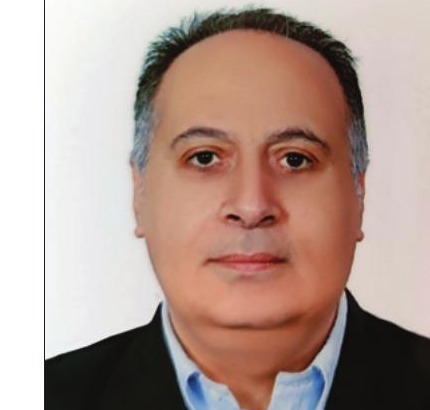
Armand Dror
Graduated in industrial design from the Faculty of Fine Arts, University of Tehran (1372 SH / 1993). Began professional design practice in 1370 SH (1991) with the founding of his own design studio. Has collaborated with Memar Magazine and Shahr Magazine since 1380 SH (2001), and has been a member of the editorial board of Memar Magazine since 1382 SH (2003). He has served as guest editor of five issues of Memar Magazine.
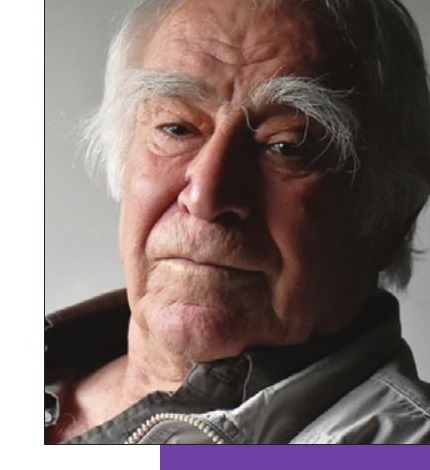
Mehdi Alizadeh
Born 1314 SH (1935). Graduate of the Faculty of Fine Arts, University of Tehran. With 57 years of professional practice and a distinguished portfolio including innovative residential projects and large office and industrial projects.
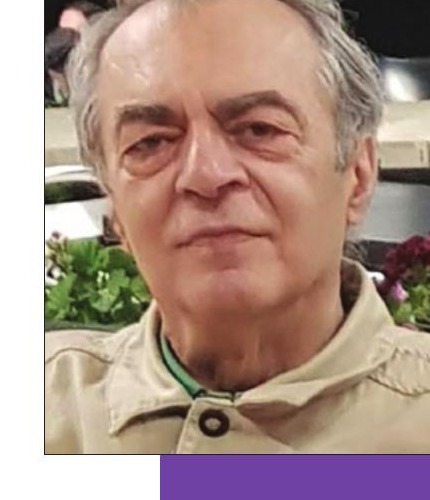
Majid Ghamami
Born 1327 SH (1948), Tehran. Master's in architecture (1354 SH / 1975) and in urban planning (1358 SH / 1979), University of Tehran. His architecture works include: residential and service buildings designed at consulting-engineer offices (1353-56 SH); educational buildings at the National Schools Renovation Organization (1356-64 SH); the design and construction of two single-unit houses in Tabriz and Isfahan (1355-56 SH); a residential apartment building in Tehran (1361-63 SH); and a villa in Mazandaran (1375 SH). He has published more than forty articles in specialist journals including Abadi, Memar, and Shahr; given presentations at numerous seminars and conferences; served on several juries for architecture and urban-design competitions (1370-90 SH); and presented research findings at the “Specialised Seminar on Architecture and the City” at the Andisheh Cultural Centre, Tehran (held by the Architecture Centre of Iran, Aban 1392 SH / November 2013). His urban-planning works include: directing the preparation of numerous urban plans (land preparation, comprehensive and detailed urban plans, new towns, metropolitan complexes, and urban renewal) over 1365-1395 SH; and the authorship and publication of six volumes on issues, programmes, and urban projects (1382-1401 SH).



