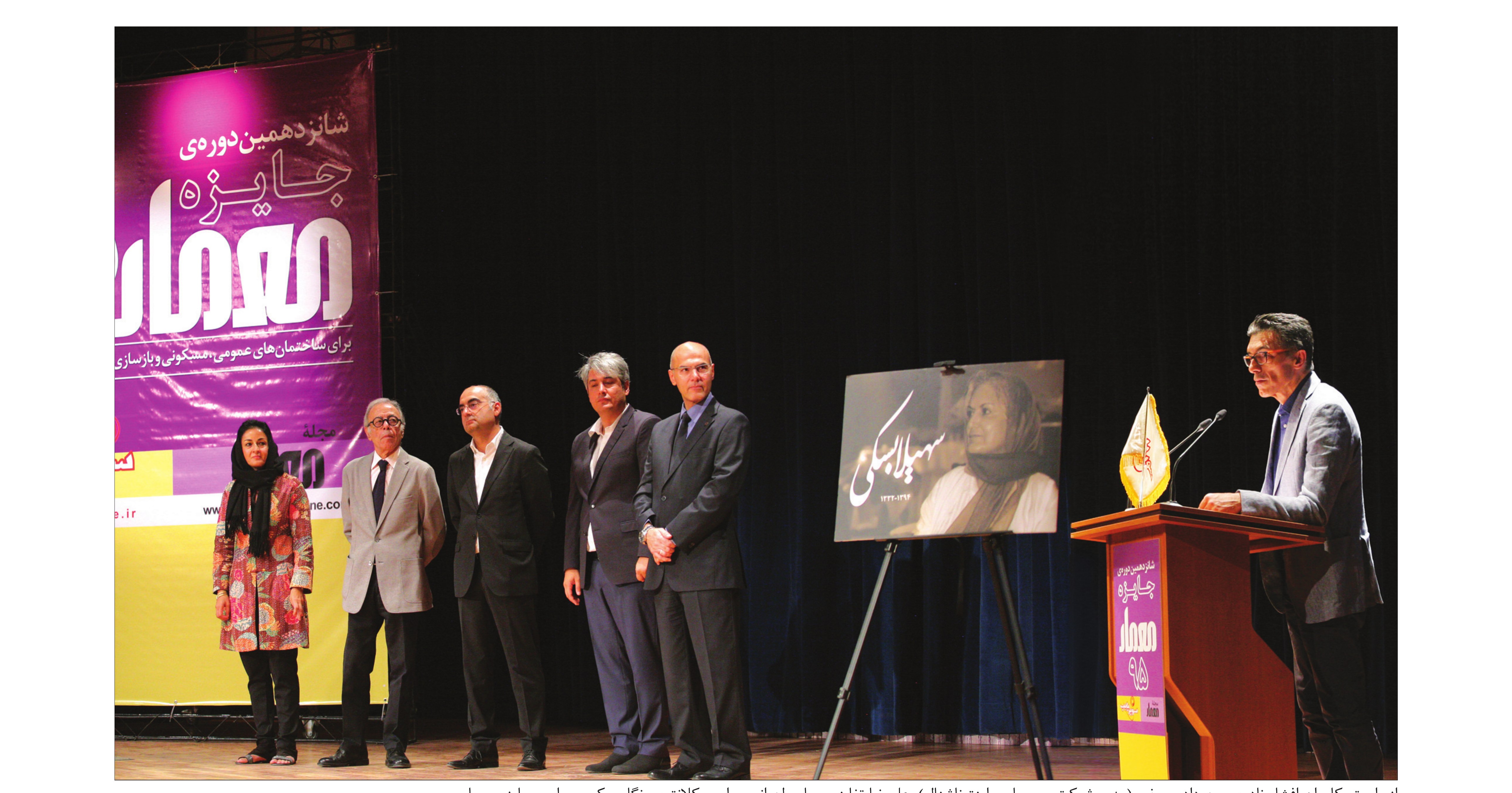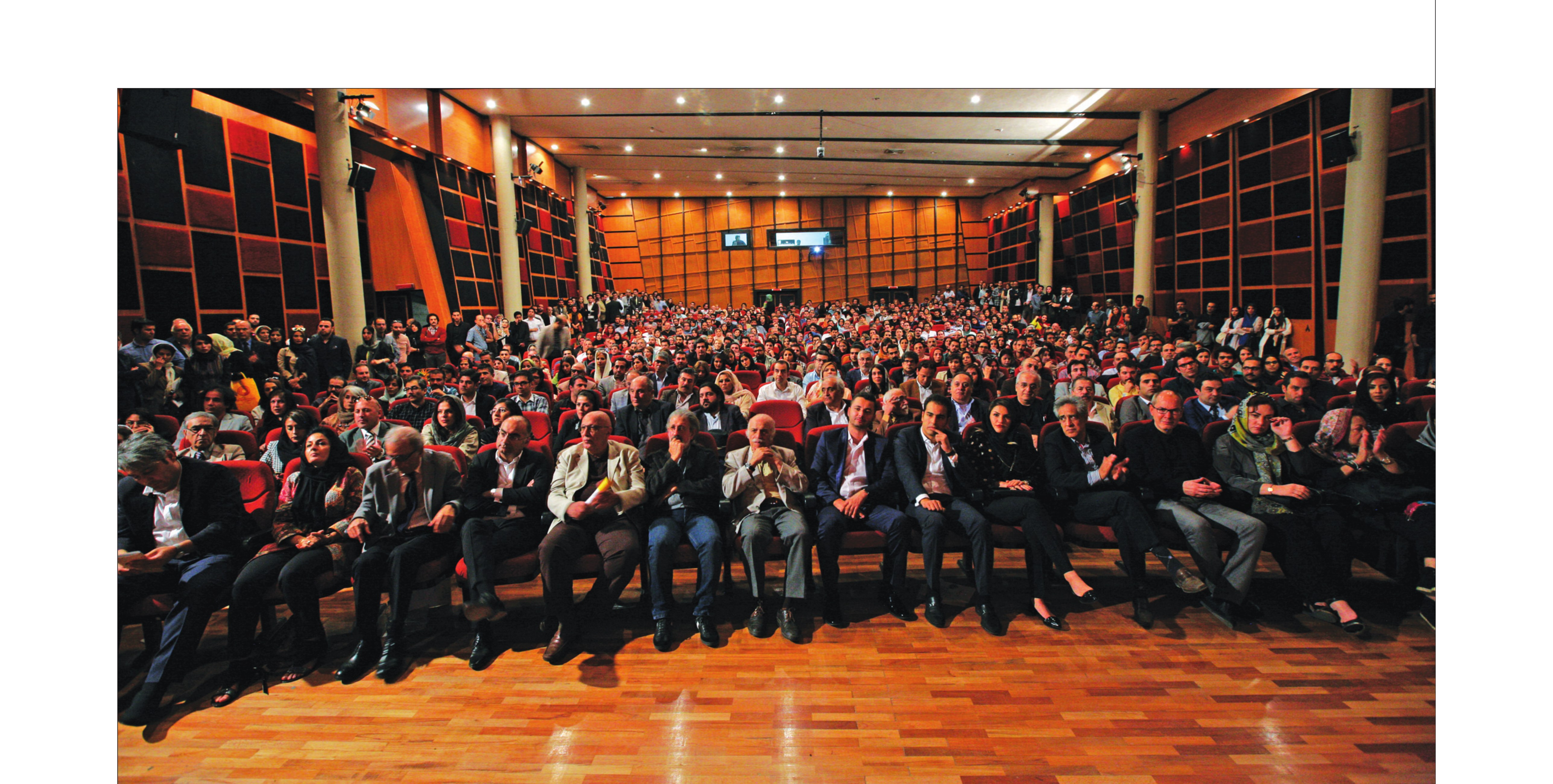
The 16th Memar Award competition was held in two stages with the participation of 300 entries. In the first stage, from among the projects that had submitted their documentation, 139 entries advanced to the semifinal round and were asked to submit their materials for second-stage judging.
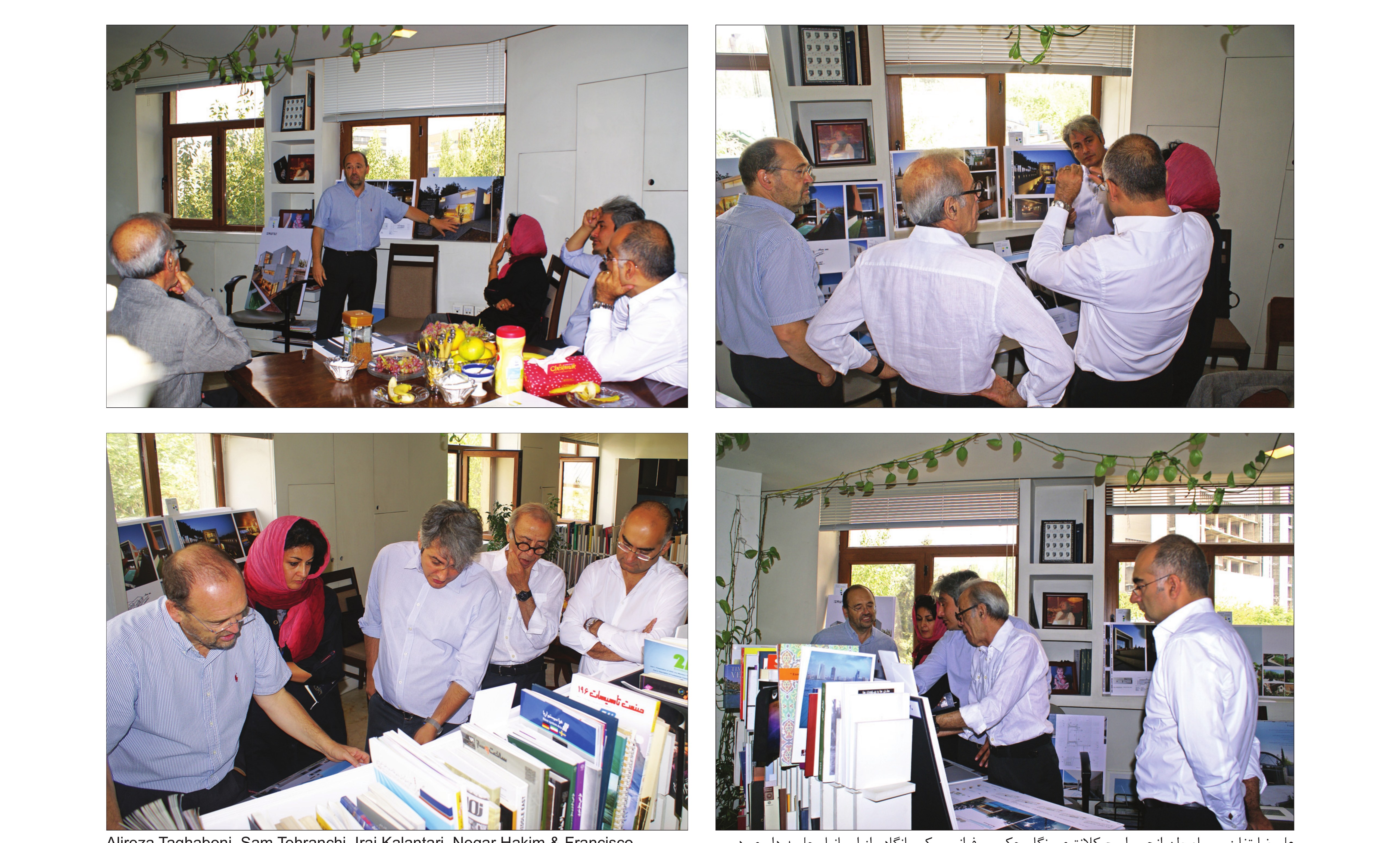
The second stage of judging took place on the 10th and 11th of Mehr (October 2016), with the addition of Francisco Mangado, the Spanish architect, to the jury panel (Iraj Kalantari, Sam Tehranchi, Alireza Taghaboni, and Negar Hakim).
On the first day of second-stage judging, the jurors selected 35 entries as finalists from among the 139 semifinalists. On the second day, after discussion and deliberation on the finalist projects, they selected 20 projects as winners and honorable mentions.
Judging Criteria
- Creativity and innovation in design and innovation in the use of materials and building technology
- Creative confrontation with project-specific challenges including: economic constraints, particular site conditions in terms of dimensions and proportions, legal regulations and procedures (especially in cities), technical difficulties, etc.
- Precision and innovation in detail design
- Attention to the surrounding environment and climatic conditions, environmental values and social commitments
It is evident that the final judgment on each project is not made through scoring each of the above criteria and averaging the scores, but rather through judging the work in its totality.
Judging Program and Method for Memar Award Entries
All projects were divided into four groups: apartment residential, individual residential, public, and renovation. The following stages were followed for projects in each group:
1. All works in the same group are presented together for the jurors to observe. After reviewing all entries, projects unanimously rejected by all jurors are eliminated. Even if one juror votes to keep a project, it will not be eliminated. Each juror has a sheet of colored stickers in their designated color, where each sticker represents their negative vote for a project. Remaining entries advance to the semifinal stage.
2. From among the semifinal entries, each juror selects their preferred entries without ranking, using their designated sticker which now represents a positive vote. Entries not selected by any juror as a top entry are eliminated. The selected entries are considered finalists.
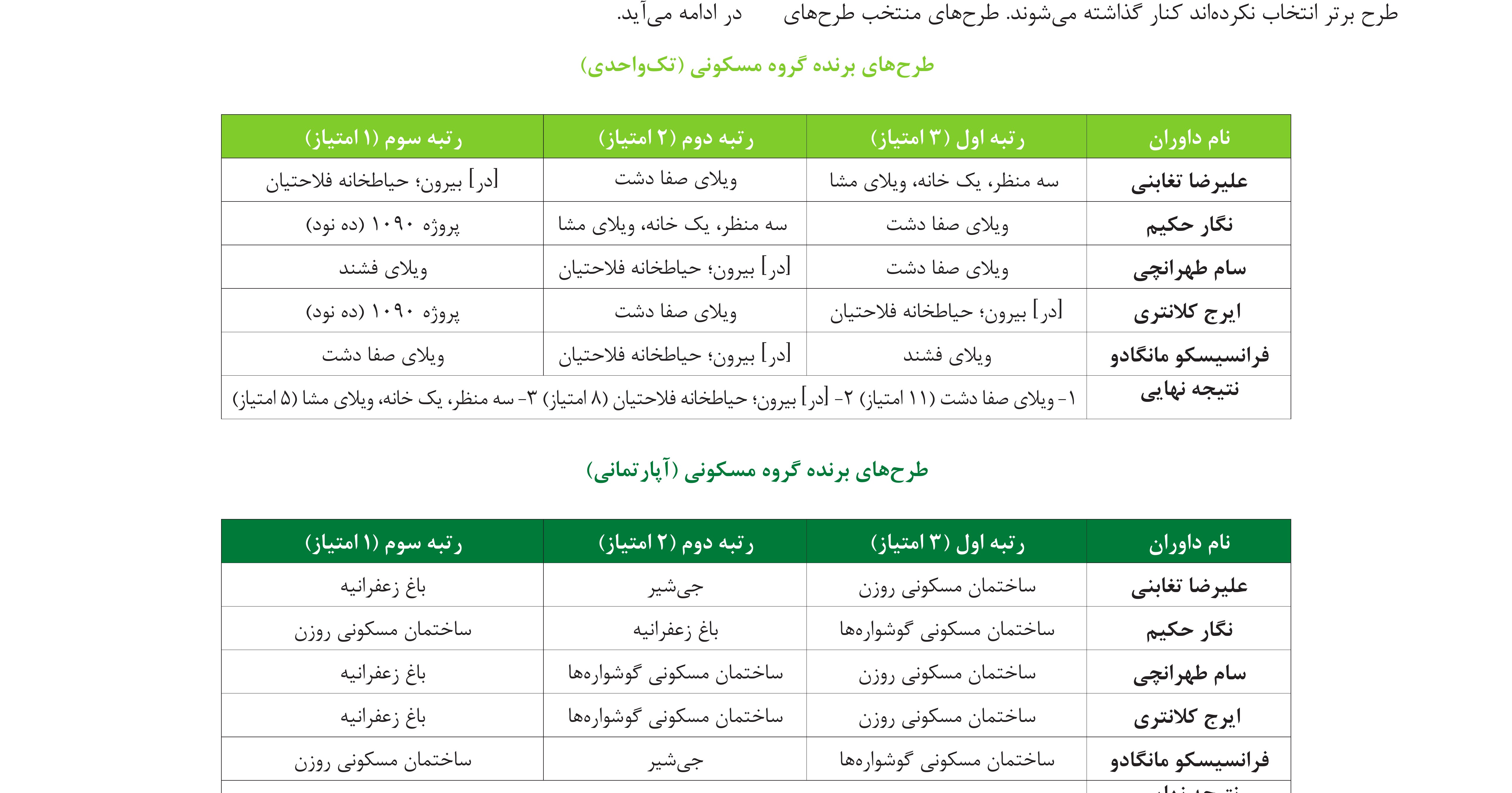
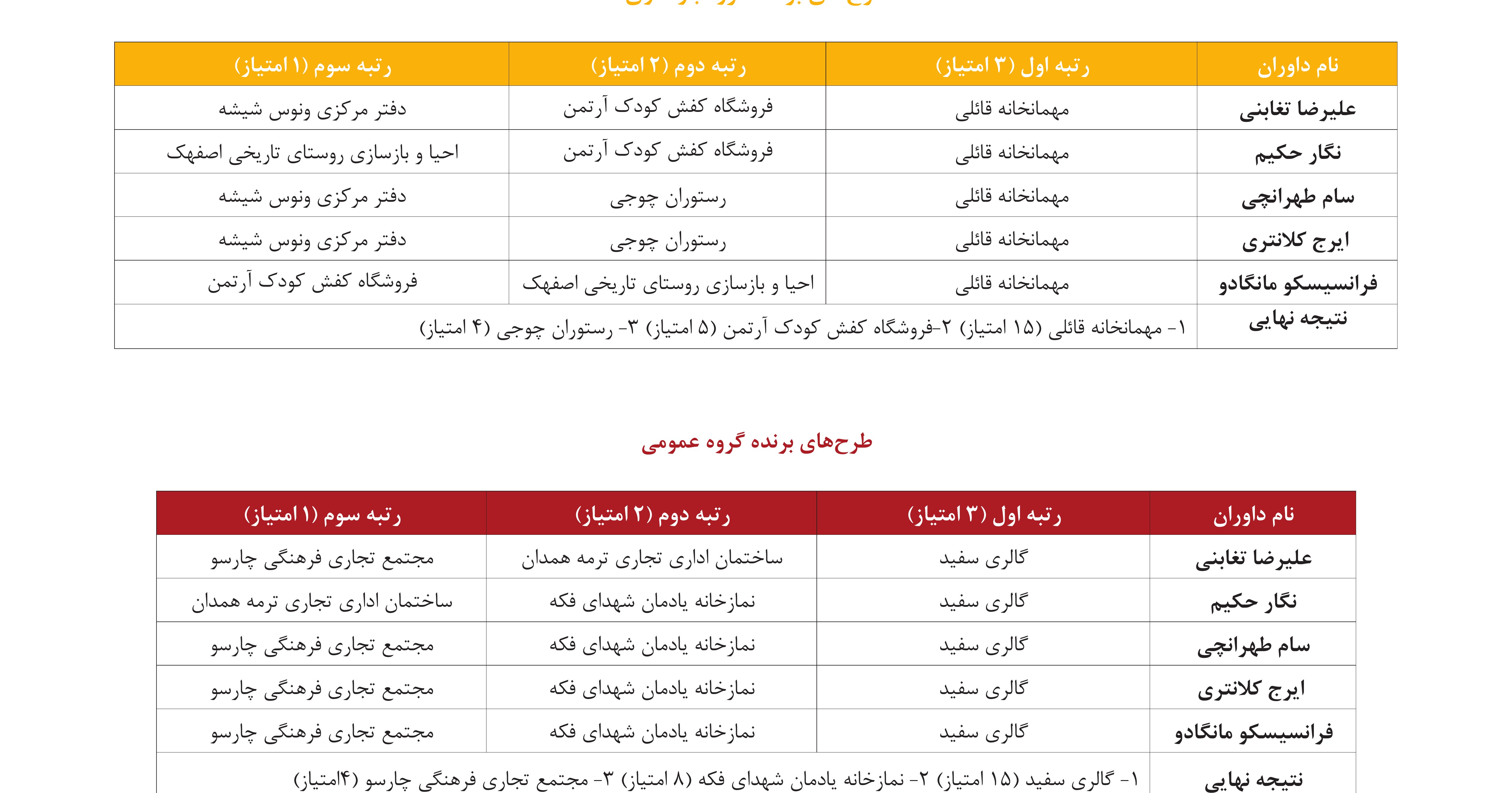
3. Each juror individually selects their first through third place choices from among the finalists. 3 points are awarded to first place, 2 points to second place, and 1 point to third place. The sum of all jurors' scores determines the first through third place rankings.
4. Jurors may declare some finalists worthy of special recognition. This designation becomes final upon agreement of the other jurors.
Excerpts from Jury Deliberations
These deliberations are from the final day of the three-day judging period; the day when winners were selected from among the finalists. The preliminary stage discussions and finalist selection are not included here. In cases where jurors were in agreement, similar discussions have been omitted; naturally, the jurors' final opinions are reflected in the votes they cast for the projects.
Individual Residential Projects
Up Villa / Arsh Fourth Dimension of Space Design Group / Alireza Sharafati, Pantea Eslami
Mangado: The spatial complexity of this project is very interesting, and the way the exterior space is invited into the project; this duality in volume is well expressed, as if two connected villas appear to merge.
Kalantari: The noteworthy aspect for me in this project is that while it tries to create a space outside the city, given the high construction volume within the site, it has reproduced the very same kinds of spaces its residents presumably fled from.
Safadasht Villa / Kamran Heirati
Taghaboni: The spatial diagram of this project shows the engagement of architecture with its open space. This interaction between open and closed spaces is designed so that upon entering, one suddenly stands in a large arch with the pool ahead and the building on either side.
Hakim: This project establishes a good balance between Iranian architecture and contemporary architecture. The axiality and enclosure of the intermediate spaces are fully aligned with the spatial principles of Iranian architecture.
Mangado: The relationship between open and closed space is more mature and richer compared to other projects. The relationship between simple geometry and complex space is a fascinating one that this project has handled well.
Three Views, A House, Mosha Villa / New Wave Architecture / Lida Almassian, Shahin Heidari
Mangado: I personally have no interest in this type of architecture. I am more drawn to other types, namely space-centered architectures. This project is volumetric and plastic, expressive and certainly well-formed, claiming that its rotation derives from three viewpoints, though I am always skeptical of such claims.
Public Projects
Fakkeh Martyrs Monument Prayer Hall / Mohammad Ali Daneshi Rad
Kalantari: It is a very humble project that fully possesses the functions appropriate to a public building, using appropriate structural techniques that enhance harmony with form and content.
Mangado: It is excellent that a space of this quality can be achieved without great expense.
Taghaboni: In this project, it is as though the mosque is narrated through the eyes of war; a symbolic narrative of a spatial structure.
White Gallery / SHIFT Process Practice / Rambod Eilkhani, Nashid Nabian, Ehsan Karimi, Parnian Ghaemi, Dorna Mesrzadeh
Mangado: The project is very consistent with its circulatory and functional logic. The design has been developed down to the details.
Hakim: It is a powerful design. The building appears minimal and almost suspended from the outside. Creating the interior spaces of a museum or gallery has its own complexity. Here, an effort has been made to make the architecture itself a permanent guest and even a rival to the gallery's artworks.
Tehranchi: This project has a single essence. The exterior form, interior space, type of materials, and the organization of the plan and spatial program all shape a unified concept.
Charsou Commercial-Cultural Complex / Bonsar Architecture Group
Hakim: The distinguishing point of this project is the rotation of cubic volumes on top of each other.
Taghaboni: This is a successful urban project that, given the shortage of public and cultural spaces in Tehran, plays a prominent role in the cultural life of the middle class.